



A Typical Historical Drama , With A Not So Typical Twist...
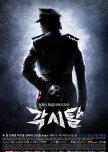
The beginning of the show sets the drama in 1930s Korea during the Japanese occupation . The Male lead, Lee Kang To, is one of the few Korean police officers in the Japanese force, a factor which shuns for not being Korean by his own people, and being an outsider by the Japanese. Kang To becomes determined to capture the Robin-Hood-style vigilante, Bridal Mask, and prove hinself to the police force. When Kang To discovers an ugly truth about the original person behind the mask, he begins to wear the identity of Bridal Mask in an attempt for vengeance against those who wronged him, a fate which drags in his old friend and former high school teacher, Kimura Shinji, and a mysterious Korean woman, Mok Dan, into the mix as well. Undeniably, after a slow start, the show after episode 3, kicked off to an intriguing plot regarding some in predictable moments for Kang To’s redemption.Even in the earlier episodes, the script writers were quick to draw the line that there was a more of a morally “ grey area” to Kang To’s character than everyone presumes as the “ enemy of the people”, none more shown in the relationship between himself and his brother.However, my one fault was that whilst Kang To began to fight for the “ good side”, there was little drawn by the resistance fighters towards some of Kang To’s more violent ideas and actions such as the suicide bomber at the police ceremony event . Undeniably this wasn’t viewed as a “ bad action” in the show by resistance fighters, however, there were some moves even when he became caught up in the cat and mouse game with Shinji, that seemed a little questioning towards the line between injuring and killing even some of his old friends in the academy, something which felt a little out of place considering Kang To’s emotions . Perhaps topping Kang To in characterisation, was Kimura Shinji’s transgression from an amiable schoolteacher to a near sociopath. Whilst there was an obvious drawn line between the “ good” hero of justice, Lee Kang To, and the “ villainous” Japanese officer, Kimura Shinji, there were moments within Shinii’s character,that spoke exposed a more “ human” side to an antagonist. In regards to our female character of the show, Mok Dan had realistic conflicted feelings to Kang To, a Japanese police officer, as well as her duty towards her father’s cause in the Japanese resistance movement. On the other hand, Mok Dan felt a little underdeveloped in terms of her general personality and persona than Kang To and Shinji. Whilst she did seem to have a moral compass, it was difficult to see exactly what made her relatable as an individual. Perhaps the one female character which the scriptwriters did seem to stick out more in terms of personality, was Ueno Rie’s desire for climb up to the top, as well her feelings for Kang To, yet, even then Ueno Rie felt a little more like a dead weight within moments in the drama . By the ending of the show, the script offers a strong hold upon the general objective towards Bridal Mask,however, there were a few technical trip-ups especially in regards to several of the resistance fighters being able to “ shake off” Japanese spies on more than one occasion. The final ending of the drama tied off some very loose ends in regards to the final chase with Bridal Mask and took some shocking decisions as well regarding some main character. Whilst I am conflicted towards the scriptwriters decision , it did deliver a more appropriate ending for an action drama than a lot of other Korean action dramas out there which would end the show upon an entirely idealistic ending than one appropriate for its genre.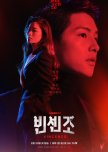
When In Rome ( or Seoul), Take A Leaf Out Of Vincenzo’s Book...
Park Jae Bum’s ( The Fiery Priest, Chief Kim)screenwriting as well as director Kim Hee Won ( The Crowned Clown, Love You) did leave a distinct mark of their combined style by mixing heavy-hitting tension with lighthearted moments throughout the storyline .
Yet whilst the comedy is evidently prominent in the plot to relieve more vigorous themes, it is probably fair to say that typical of Jae Bum’s screenwriting, the comedy often felt slightly juvenile in parts and an unnecessary weight at times. ( In certain episodes, you’d go from having an incredibly intriguing and fierce revelation exposing the mafia’s dark roots, only to have a tiresome gag in the next such as a word play upon Vincenzo’s name in early episodes.)
Admittedly, there are several moments in the drama ( even by the main cast ) which may raise an eyebrow by questionable line deliverances. However, as far as acting is concerned, the main cast were absolutely brilliant as our main leads.Song Joong Ki and Ok Tae’s Yeon headline the drama by their high-profile acting careers, however, even fellow costars Jeon Yeo Bin and Kwan Dong Yeon will quickly win the hearts and affections of the viewers also.
The characterisation in the drama was honestly a mixed bag. Song Joong Ki’s character Vincenzo was undeniably an intriguing protagonist. Whilst initially falling into the trap of the romanticised ‘ good gangster’, it was intriguing to see screenwriter Jae Bum breaking this mould in order to develop Vincenzo with sentience and realistically questionable morality rather than merely being a " hero who saves the day". However, there was a lot which felt vacuous with Vincenzo’s character, not least never going into his actual reasons for joining the mafia as a consigliere ( which was always half-baked) , his bond or relationship with his adopted Italian parents and ultimately exploring the actual reasons why his birth mother gave him up in the first place.
Next, is our main female lead Hong Cha Young ( Jeon Yeo Bin). Cha Young did initially seem to go down the route or being a little irksome in the beginning of the drama, but, her unreserved assertions and loyalty towards Vincenzo soon become defining qualities about the character. For instance, Cha Young has long-held enmity throughout the show towards Kim Yeo Jin’s character Prosecutor Choi Myung Hee. (Or ‘ Zumba Snake’) which certainly was maintained . On the other hand, similar to Vincenzo , Cha-Young is not a flawless character. Sometimes, she struggled to be lifted from being anything more than one- dimensional such as her textbook-style, (rather than emotional) responses initially to the events around her father Hong Yoo Chan ( Yoo Jae Myung) in earlier episodes. ( Which after their initial use in the main storyline, were disregarded completely without Cha-Young even contemplating this significant factor again.)
As far as the relationship between Cha Young and Vincenzo is concerned, it was a fairly predictable formula. There was nothing inherently wrong with it per say and did present some essential bonding moments between the characters, however, it often felt a little enforced for the sake of plot when it was necessary , rather than developing this with the respected characters’ thoughts and feelings in mind.
Antagonists are an intriguing conversation to talk about in the drama. From the cliche cronies, law firm enthusiasts Choi Myung Hee ( arguably one of the most annoying villains in the show) , CEO of the rival law firm Woosang Han Seung Hyuk ( Jo Han Chul) and the " dumb, but not so bad" masqueraded CEO of ‘ Babel Group’( Kwan Dong Yeon), the show has an odd array of trope advisories .
However, finishing up assessing ' Vincenzo’ wouldn’t be completed without talking about the drama’s main villain Jang Jun Woo. This is because, Jun Woo is designed to be the " ultimate twist villain" and " big bad" early on in the series, but, he was often underplayed as a dead weight and minor threat until later events. This wouldn’t have been such a bad screenwriting decision, if the show had used some time to go into Jun Woo’s backstory ( apart from a couple of brief flashbacks) or sketched him out more than just a " villain you’re supposed to hate". Jun Woo is far from romanticised or glossed over and whilst later episodes enjoy going into a " Sherlock Holmes And Moriarty" rivalry between Vincenzo and Jun Woo, there was little sense of actual build or intrigue behind similarities (and even differences) between them. Of course, Jun Woo served his main purpose; a disturbing evildoer, but he could have certainly been so much more than a one-dimensional moustache twirling villain.
The ending did hold the drama in good-stead with a bittersweet cliffhanger which reflected the overall themes and genres of the show. Admittedly, there were a couple of things which could have been tied more concisely in the ending ( despite its long duration), but, it did bring an appropriate finale. With an odd balance between genres and screenwriting decisions, Vincenzo is attractive for viewers’ attention by its main premise and cast. Certainly enjoyable in parts and not unwatchable, but, a little overrated for what its worth.
Surprisingly Divine...
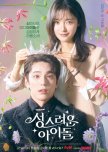
The Heavenly Idol ( alternatively known as The High Priest Rembrary, Holy Idol) has gained a lot of mixed reception from watchers due to its over-the-top plot and narrative. A mixture of personal responsibilities over the past year and drama titles which have yet to appeal has made me slightly disengaged from watching Korean dramas. However, though certainly not without considerable flaws, My Heavenly Idol was a surprisingly engaging and sweet drama at its heart.The tvN drama was written by Lee Chun Geum and directed by Lee So Yoon ( otherwise known for his involvement with the drama special tvN O'PENing: XX+XY). My Heavenly Idol focuses on Pontifex Rembrary ( Kim Min Gue), a divine worshipper in another land. To protect his people, Pontifex has been caught up in fighting The Evil One, who is determined to create havoc and unrest. However, when Pontifex is caught up in conflict, he is transmigrated into the body of an idol singer Woo Yeon Woo. Yeon Woo is a member of an unpopular idol group called Wild Animal. As Pontifex attempts to navigate his newfound situation, he soon finds himself coming face to face with his archenemy ( Lee Jang Woo). With the help of his bandmates and Yeon Woo's long-term fan Kim Dal ( Go Bo Gyeol ), Pontifex is determined to finally bring down The Evil One, once and for all.
The Heavenly Idol has a surprisingly exciting setup for a twelve-episode drama; a fantasy world and lore of magical powers, demonic entities and effectively multiverses where viewers learn different deities exist. One of the biggest problems with the series was how myth and worldbuilding were explored. While there were some fascinating ideas, there were a lot of moments and concepts which could have been more fleshed out further or investigated further. ( Without significant spoilers, two central characters are introduced halfway through the show. While interesting, their existence raises many questions about their relevance in the storyline and what that truly means for other multiverses. In addition, the show takes a lazy approach, with the main lead being able to understand and speak Korean already. Although not out of the question, this would have been interesting to have explored a little more.) Additionally, it became apparent in later episodes that the show was influenced heavily by some well-known fantasy dramas. While not out of the question nor particularly odd considering the show's genre, it did seem a little disappointing because some of the plot's more exciting and original fantasy elements were left unexplored.
The drama series mediates between fantasy, comedy and melodrama. For the most part, the series could interweave these genres reasonably well in the first- half of the series. The final part struggled a little to maintain this balance and often shifted heavily between melodrama and fantasy with little respite or middle ground in later episodes. Surprisingly, the comic relief worked quite well in this series. It was slapstick and reasonably mundane for the most part, but it will likely generate a few genuine chuckles here and there. ( These moments would often consist of the male lead struggling to understand social etiquette or being honest and direct to the point of being perceived as false by others.)
The acting was decent, if not a little wooden in parts. Kim Min Gue is known for his roles in Perfume, Backstreet Rookie and A Business Proposal and for offering one of the series's best performances. He played the role of Pontifex with a reasonably innocent edge, adding to some golden opportunities for comic relief. Another surprisingly fun performance came through Ye Ji Won's ( Thirty But Seventeen, Never Twice and Brain Works)'s performance as Im Sun-ja. It could have been easy for Ye Ji Won's performance to have become grating as the CEO of LLL Entertainment, but her humorous edge and her character's romance added to her charm.
As a character, Pontifex is odd to describe. He is sincere, honest and kindhearted, though his stubbornness and obtuseness can often lead him into trouble. One major weakness of Pontifex's character came from his backstory and beliefs. We learn a few elements of this backstory through passing references. Still, considering one of the significant and most earth-shattering revelations for his character, it seemed odd we ( as viewers) did not get to see this being explored further.
Another major part of Pontifex's character is his relationships with his newfound bandmates and his potential love interest, Kim Dal. For the most part, both connections are lighthearted and sweet. There are moments of tribulation and trouble in both, though where weaknesses lie occurs mainly as a result of writing decisions.
Adding to this, several characters in the show could have been explored a lot more onscreen, Kim Dal being one of the most apparent. Kim Dal has a fascinating backstory, teased in early episodes, though rarely questioned or extended further. It would have been interesting for Kim Dal's past to have been used more to indicate her parallel relationship with Pontifex, which was rarely explored in the series beyond its initial usage. Many of Wild Animal's bandmates were left as background characters rather than building further on the relationship between the main lead and his fellow members. Youngest member Cha Hae-Gyeol ( Shin Kyu Hyun-Cramped Love) and lead vocalist Kasy ( Choi Jae Hyun- Love with Flaws, Dalgona and Peach of Time) had lots of potential to be explored further in parts of the series. The show hinted at both characters having their fair share of character depth and backstory, but this was rarely carried out or delved into further. Fellow bandmates Choi Jeong-seo (Hong Seung-Bum- Show Me the Ghost, Judge vs Judge and My Strange Hero) and Hwang Tae-In (Shin Myung Sung- Extracurricular and Duty After School) as well as antagonist Shin Jo Woon had a lot of potential but were rarely well developed.
The execution of the series varied greatly. The first part of the series introduced an intriguing premise and an array of characters. The plot premise was established early on in the series, and it was apparent from the outset when the plot narrative would be. The second half of the series admittedly struggled to carry the storyline further. Although the series had a reasonably sweet conclusion, it was apparent the drama was rushed in this final part. Significant parts of this storyline in these last episodes were left rushed and somewhat anti-climatic, including how some of the relationships between characters and their fates played out further.
The cinematography of The Heavenly Idol was pretty decent. It was glossy and well-defined for the most part, and the CGI was decent, though the palettes and styling were lacking. The OST of the drama was pretty decent. Some of the songs were admittedly a little forgettable, but there were a few catchy songs, such as "Suddenly (문득 내게 와)" and "Suddenly You Come to Me (문득 넌 내게와)" to name just a few.
The Heavenly Idol was a reasonably engaging show. The writing could have been handled better, especially regarding characters and direction, but the comic relief and fantasy elements were pretty fun. Overall, the series was worth it during a binge-watching session.
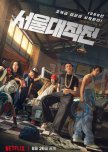
Cruising Through Nostalgia; The Retro Film That Missed A Few Gears…
There’s something about Moon Hyun Sung’s ( ‘ As One’, ‘ The King’s Case Note’) ‘ Seoul Vibe’ that held a lot of potential on paper; a group of 80’s youths caught in between the past memories of the autocratic government of South Korea, as well as the newly democratic era marked by the Olympic Games and economic growth. However , while ‘ Seoul Vibe’ possessed a certain nostalgia of 80’s fashion brands and VHS camcorders, the general progression of the narrative and car chases played out like a paler imitation of a 'Fast & Furious' franchise movie interpolated with a less gritty Scorsese action film .
‘ Seoul Vibe’ opens up inexplicably in 1988 Saudi Arabia, with ace driver Dong Wook ( Yoo Ah-In-‘ Burning’, ‘ Hellbound’) skirting around a rough desert track in his dilapidated Chevy with his videographer and younger brother Joon-Gi ( Ong Seong Wu-‘ Moment At Eighteen’ and ‘Would You Like a Cup Of Coffee?’). Returning back to Seoul, the duo reunite with their old friend and taxi driver friend Bok-nam (Lee Kyu-Hyung - ‘ Life’, ‘ Dr John’ and ‘ May It Please The Court’) , resident DJ John (Go Kyung-pyo) and Dong and Joon’s sister Yoon-hee (Park Ju-hyun), learning that their part of the city has pretty much been demolished to the ground ahead of hosting the Olympic Games. The only thing left is their father’s old auto body garage, somewhere that the group seeks refuge inside.
Enter the big nuisance of the film: Prosecutor Ahn ( Oh Jung-se). Knowing all about Joon’s illegal involvements overseas, Ahn strikes a deal with the group that he will eradicate the group’s criminal records in exchange for the crew bringing down the money laundering operation of underworld kingpin Kang In-sook (Moon So-ri).
As mentioned previously, ‘ Seoul Vibe’ possessed an edge of nostalgia that was as warm and bubbly as its neon palette schemes and Coca Cola bottle shots. However against its sweet and entertaining edge, ‘ Seoul Vibe’ struggled when it came to its execution. The comedy was variable from scene to scene and while the mindless car chases and lack of physics can be taken with a pinch of salt, the writing of the movie was a mixed bag to say the least.
It’s necessarily bad per say that ‘Seoul Vibe’ was heavily inspired by movies such as from the ‘ Fast & Furious’ franchise. However rather than interspersing the film with lively and fleshed-out characters ( aside from a few backstory mentions that rarely play a bigger role), a plot boasting unique, key and central messages against its backdrop of an ever-changing late 1980s South Korea or helping to explore the relationships and dynamics of the group to their full potential ( especially considering most of them or siblings or old friends), the film often felt somewhat cut and pasted from other works. In particular, this was shown by the formulaic events of the narrative; the setup, the big chase scenes, the final showdown and then the fairytale ending for the main characters.
The acting front of ‘ Seoul Vibe’ was fairly consistent. The chemistry between Dong-wook’s gang of old friends and misfits was decent enough but rarely did it feel awe-inspiring. There wasn’t a lot of opportunities given in the movie to actually explore these bonds or for viewers to fully understand the significance of their achievements together. One of the few spotlight performances of the movie was Park Ju-Hyun ( ‘ Extracurricular’) , who starred as the two brothers’ sweet and lively younger sister.
The OST of ‘ Seoul Vibes’ was certainly one of its few soaring prides with tracks such as “You be Illin’” from Run-DMC and " One for the Treble” by Davy DMX, helping to add to the cartoonish and easygoing vibes of ‘ Seoul Vibe’.
‘ Seoul Vibe’ is a fun and energetic action romp which is filled with a lot of lighthearted fun. However while ‘ Seoul Vibe’ was entertaining and did provide a small lens into a bygone era, the storyline felt as though it could’ve been taken from any car chasing action film. Perhaps with better execution, writing and special effects, ‘ Seoul Vibe’ could’ve been a lot more than the finished product.
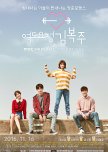
An Untypical Seoul Love Story...
Revisiting Weightlifting Fairy Kim Bok Joo with additional years of knowledge about genres, actors and tropes, it’s intriguing to note exactly how this series has attracted such a cult following , and why certain issues can still be correlated with it as a failure in mainstream South-Korean popular culture as well.
It first must be said that Weightlifting Fairy Kim Bok Joo doesn’t necessarily have an original idea within its concepts of love triangles and trauma in college , but its characters and comedy are surprisingly well- rounded and relevant for its “ youth” sub genre.
Our main female lead is the eponymous Kim Bok Joo ( Lee Sung-Kyung); a self-conscious and kind-hearted female weightlifter who ends up falling for obesity doctor Jung Jae-yi ( Lee Jae Yoon). Her affections become complicated , however, when she meets Jae-yi’s mischievous younger brother and swimmer Jung Joon-hyung ( Nam Joo Hyuk) who in-turn shares a deeply traumatic past and a complicated history with Bok Joo’s new roommate, gymnast Song Shi-ho ( Kyung Soo-Jin).
Perhaps the most appraised element of the show is its sensitivity and portrayal of mental health issues as well as sexism; Joon-Hyung suffers from trauma , Bok Joo lacks self-esteem and is often cited as “ less feminine” (by both genders) for sport choice and despite her nastier flaws, Song Shi Ho is heavily implied to struggle with an eating disorder .
Yet against the more angst-ridden moments of the show, one of the most surprisingly well-portrayed relationships in the drama is shown through Bok Joo and Joon-Hyung. From teasing to an eccentric friendship to something more, it is still fairly refreshing watching this drama again that Bok Joo’s feelings weren’t something which magically ensured she was “ head over heels in love “ with Joon-Hyung ( even by the ending of the show), but something she learnt gradually and naturally . This is for once a touch of freshness and realism to a relationship in a drama; feelings are complicated and whilst it is romanticised to find one’s true love at first glance, it isn’t always a reality .
Yet getting to the more pressing issue , it’s important to note that often there are several “inconsistencies” which are glossed over by drama fans when it comes to this show. The biggest being pacing- whilst viewers get to know the majority of our main characters in the first few episodes, the show sometimes did hit a slag in terms of story development often either being dragged out or just incredibly slow.
Additionally, the other issue is whilst the issues around the characters are fairly well-tackled, some of our characters were lacking depth including our female heroine. Bok Joo did defy a lot of stereotypes compared to many Korean dramas as a female athlete who stands her ground , but is still conscious about makeup and boys, however, this didn’t initially define her as a character. When it boils down to it, Bok Joo always felt a little too roughly drawn-out for her own good. She had all the right elements of being an intriguing heroine but besides being used for angst and comedy during the show, Bok Joo lacked a lot of actual character depth.
Admittedly this isn’t just Bok Joo. Whilst Joon Hyung’s trauma and past were surprisingly well-delivered, Joon Hyung was often played too much as the farce character with Bok Joo- sweet, but lacking an inner core of depth as an individual.
Overall it’s fair to say that Weightlifting Fairy Kim Bok Joo will always have its lovers and haters - whilst undeniably brilliant due to its portrayal of relationships , mental health and youth issues, it’s easy to see why the show is overrated to a certain extent with certain glossed-over issues, poor character writing and slow plot. A fun show and certainly worth a watch, but not flawless.
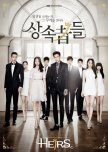
The Heirs ( i.e. How To Write One Of The Most Overrated Korean Dramas Of All Time)...
Nearly every drama watcher out there will at least once probably ask or seek out advice from more experienced drama watchers for their advice or recommendations on dramas. Whilst this may differ from watcher to watcher ( depending on some of their respected tastes), the common pattern for K-Drama watchers will most likely be one or more the following; Goblin, Strong Woman Do Bong, SKY Castle, Descendants Of The Sun ( and/or) The Heirs.The Heirs. Oh, where do you even begin with this one? The warning flags that SBS had to cast several top-notch romance drama actors Lee Min Ho, Park Shin Hye and Kim Woo Bin to attract viewer ratings, or the fact that Kim Eun Sook was involved in the scriptwriting for this show, it is hard to tell.
All joking aside The Heirs is probably what most can classify as a '' hot mess'' ; the show has a brilliant cast of very successful actors and ( whilst Eun Sook's writing can be hit or miss) it did have the potential to actually be a well-written satire upon the wealthy debutants of Korean society. Instead the show rode too heavily upon many cliches and thus lead to too many gender, racial and unrealistic stereotypes within the drama.
In the beginning of the show, the usage of LA as a setting is used as '' exotic'' eye candy for Korean viewers, however, there are two notable things here for international watchers; the first being out of all the beautiful and intriguing cities in the world, they had to chose LA in hope of appeasing the satisfaction and interest of ''young'' audiences. The second most notable trait ( even for non-Americans) is that there are some notable racial stereotypes towards foreigners being a little too ''assertive'' and ''laidback'' as well. Whilst it should be noted that a lot of this setting is used to glorify our hero Kim Tan rather than focus on details of racism, ( as an older comment has mentioned) there is also the notable problem of "sweetening" the reality of youth culture as well.
This is particularly seen of course with Kim Tan. Considering that he spent a lot of time in the U.S. and his backstory is far from being a fairytale, you would still perhaps consider that he would have turned to '' other'' methods ( i.e. drugs or alcohol ) or at least had some signs of realistic emotional trauma considering his upbringing. This isn't to glorify or disrespect elements of modesty in Korean culture, however, Kim Tan is most prominently a character in the story who is an '' outcast'' amongst his family. With years of emotional gaslighting and manipulation (particularly by his brother and father), it was hard to actually see Kim-Tan as being a genuinely developed or well-written male lead, especially towards actually developing a bond with someone as cluelessly naive as Eun Sang.
Our female lead Cha Eun Sang ( Park Shin Hye) was sadly just as badly-written as a character. Female leads don't need to be '' sassy'' or '' fighters'' to be well-written and rounded characters. Instead Eun- Sang was more of a ''ragdoll'' between the two bratty male leads Kim Tan and seeming '' dangerous bad boy'' Choi Yeong Do ( Kim Woo Bin- perhaps one of the few likeable actors and characters in the show, until they did viewers over with that usage of terrible story progression) who just happily let her seams be ripped apart by emotional manipulation rather than actually being something called an '' individual'' and putting her foot down when both characters crossed the line. In fact to make this matter worse, it wasn't just the male leads who stepped over her as Rachel ( Kim Ji Won) slowly allowed Eun- Sang to become her own sandbag of bullying and the dreaded and stereotyped female animosity as well. Perhaps my one note of praise does go to the portrayal of the unusual friendship between Eun- Sung's mute mother Park Hee-nam (Kim Mi Kyung) and Kim Tan's mother Han Ki-ae (Kim Sung-ryung) over the course of the show, which was endearingly more intriguing and heart-rendering than any of our main couples.
As countless reviews have stressed this fact before, however, The Heirs is incredibly overrated for what it is actually worth; a good cast goes to waste with poor story writing, characterisation, inconsistencies , cliches and tropes. The Heirs is no more than Boys Over Flowers repackaged with a couple of tweaks here and there by Eun Sook ( well, about from Lee Min Ho) and more headaches for sensible drama watchers as we try to guide ourselves of sixteen episodes through something which is just a hot mess even in the beginning episode. Certainly a waste of time.
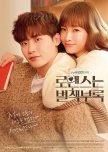
Exploring Kang Dan Yi’s Tale of Redemption, Love and Resilience...
Written by screenwriter Jung Hyun Jung ( I Need Romance), “ Romance Is A Bonus Book” was a light-hearted love story between a divorcee, single mother Kang Dan Yi ( Lee Na Young) and her younger, successful childhood friend Cha Eun Ho ( Lee Jong Suk). Uplifting and sweet, it was notable that the series did have a couple of lose holes within its overarching completion...
Perhaps the most notable thing to say about the series is that its predominating story plays upon prominent cliches of the “ vulnerable and unemployed” female lead, the “ successful male lead with an obvious crush on the female lead ” and the evident lovelorn second male lead Ji Seo Joon (Wi Ha Joon). There was nothing entirely terrible about these cliches per se in the drama, however, the evident reoccurring presence of the “ male lead’s crush” as well as other dominant tropes of “secret dating” and “ jealousy” did become a little tiresome within the drama.
Nevertheless, it is wrong to bring the drama down entirely from its tropes and praise must be given towards the cast through their fairly brilliant performances as a whole .
Taking centre stage of the series, was undeniably main actress Lee Na Young as the female lead, Kang Dan Yi. Na Young was captivating within channeling the eccentric traits as well as optimism behind Dan Yi’s growth throughout the series.
As a character, Dan Yi was fairly likeable for viewers by her kind-heart, resilience and strength in the face of adversity. As a notably older character than her counterpart lover Eun Ho, it was intriguing to see how the show played upon Dan Yi’s age as a challenge towards work, self-confidence and her love life. Nevertheless, it did feel that there was lot left to explore with Dan Yi as an individual, rather than a merely an asset to the plot. Although the show did explore a little about Dan Yi’s previous relationship and her interactions with her daughter Hong Jae Hee ( Lee Ji Won), after their initial use in the beginning of the series, Dan Yi’s emotional reactions and exploring more about this side of her character as a mother and a divorcee , felt half-baked. It is understandable the show didn’t want to become too bogged down in the unnecessary details of Dan Yi’s past, however, it would have allowed us as viewers to see and understand more about Dan Yi’s current emotions and resilience if we’d learnt and seen more interactions with Dan Yi’s former husband and daughter. ( Not least more reasons why Dan Yi was going to marry him in the first place before having cold feet , as well as the lack of communication between Dan Yi and Jae Hee, besides not living together.)
Parallel to Na Young was Lee Jong Suk as the young male lead Cha Eun Ho. Whilst Jong Suk has undeniably had more captivating performances than his role in “ Romance Is A Bonus Book”, he did bring a certain charm within Eun Ho’s suave attitude and heartfelt affections for the female lead.
Cha Eun Ho was undeniably a fairly typical male lead within his framing in the show as the “ childhood friend” and the “ successful, younger lover”. Nevertheless, Eun Ho was a character who respectfully learnt to understand more about Eun Ho by rekindling his long-held crush once more.
The relationship between the two characters did feel cliche in parts by the necessity to prolong telling their colleagues that they were dating for a major proportion of the series, however, Eun Ho and Dan Yi had a symbiotically healthy relationship which did not draw out into emotional gaslighting or manipulation, by learning to respect one another over the course of the series making the pairing undeniably heartwarming for viewers.
Sadly, the side characters of the drama often felt slightly underdeveloped particularly with the associated ensemble of the colleagues such as Song Hae Rin ( Jung Yoo Jin) who harboured romantic feelings for Eun Ho as well as the second male lead Seo Joon who reversely had feelings for Dan Yi. Other characters such as Go Yoo Sun ( Kim Yo Min) and Seo Young Ah ( Kim Sun Young) had interesting roles in the storyline, but nevertheless could have been developed slightly more as individuals ( besides their rushed endings). The overall ending did feel completed and was undeniably sweet for the main characters.
In conclusion, ‘ Romance is A Bonus Book’ was slightly underdeveloped with feeding into cliche tropes and slightly half-baked side characters. On the other hand, the main leads were portrayed as individuals with character growth , the show had intriguing messages against ageism and work discrimination in Korea, as well as a heartfelt romance that could engage viewers without toxicity or unhealthy tropes. Definitely worth a watch for fun.
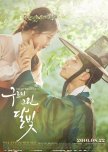
Beautiful Costumes And A Wonderful Cast, But Overrated For What Its Worth...
Since its original airing in 2016, ” Love In the Moonlight ” ( based upon the successful books Moonlight Drawn by Clouds, which was serialized online in 2013 and then published as five separate books in 2015), was a phenomenal success in both South-Korea and amongst the international drama watcher community, drawing particular focus upon the talents of its cast ( particularly Park Bo Gum being critically-acclaimed by netizens for his acting quality) and South-Korean culture. Yet whilst the series is undeniably still popular, there’s something which honestly must be addressed forthright about screenwriters Im Ye Jin and Kim Min Jung’s adapted premise; it is a fairly predictable storyline, anticlimactic in parts and certainly cliche-ridden.
The premise of the drama is set during the 19th century, Joseon era, where female lead Hong Ra-on (played by Kim Yoo-jung), crossdresses as a man in order to support herself. She has multiple jobs but is still struggling with debt. Due to both romantic and comical circumstances, Ra-on comes to meet kind-hearted nobleman Kim Yoon-sung (played by Jung Jin-young) and the seemingly childish and spoilt Crown Prince (played by Park Go-bum).
Due to being sharp-witted, Yoon -sung immediately figures out that she is a woman. The prince is fairly oblivious to Ra-on being a woman , however, after Ra-on is sold to the eunuch’s training academy, she befriends the Prince and his close confidant and personal bodyguard Kim Byung-yeon (Kwak Dong-yeon). As events begin to lead to another, Ra-on finds herself conflicted between Ra-On and the Prince, whilst the Prince begins to feel uncertainty for his growing feelings for the seeming eunuch.
Against all odds of its surreal premise, ” Love In The Moonlight” did follow the typical cliches that you can expect with a cross-dressing scenario, however, it did not prevent the series from being oddly entertaining with a setup mirroring ”Shakespeare’s Twelfth Night ” in a fairly lighthearted way. Ra-on is brazen in her attempts to escape the palace and get back to the city outside by imitating and joking like her male associates in an often over-the-top manner.
Whilst it easy to dismiss the acting of Kim Yoo-Jung, Park Bo-Gum , Jung Jin-Young and Kwak Dong-yeon as an ” ensemble of good-looking people” rather than by their acting alone, the quartet certainly did give an all-around good performance , alongside main stylist and designer Lee Jin-hee’s exquisite artisanship ( especially within the styling of hanboks) perfectly reflecting the time setting, characters and moods of certain scenes.
The second-half of the drama notably shifts towards the political setup behind closed doors. Whilst undeniably intriguing, the biggest problem of this shifted focal point in the series boiled down to pacing and a shift away from developing the characters and their relationships (by regressing in some cases).The heroine Ra-on quickly goes from an intrepid, outgoing heroine to being a demure, angst-ridden soul who is nearly always subject to needing a saviour from a situation.
Then of course there’s the biggest issue with the drama’s long-held and complicated friendship between of the crown prince, his bodyguard, and the prime minister’s grandson ( to clarify Yoo Jung). It is important to add this is a fictionalised romance drama where enmity between male leads is not uncommon and is used to add fuel to the fire of drama and tension. However ( without spoilers), considering the intimacy of the trio during childhood as well as the potential at times towards the characters being able to set aside their differences or at least develop respectful mutuality , was often upturned in favour of enmity at times between both male leads over Ra-on as well as widely forgotten about in the second-half.
The romantic setup becomes overly predictable with forced marriage for the would-be crown princess Ha Yeon (Chae Soo Bin), tormented puppy dog glances and chaste kisses or pecks on lips out of seeming modesty( despite the characters often not batting an eyelid towards the entering private and more intimate spheres of their chambers as well as the more sexualised jokes in the beginning ) which does slowly begin to grow irksome in parts. In addition to this, flashbacks become an incessant feature in later episodes, leading to a formulaic and repetitive structure ( which soon grows a little tiresome). Sadly, not even the soundtrack is entirely spared as the eclectic OST from earlier episodes, begins to shift to pretty the same couple of K-Pop ballads during every pivotal moment or heartbreaking scene.
The ending undeniably will always have mixed reactions among watchers. Some will appreciate the sweet ending as well as denying the cliches of Ha Yeon being unlikeable or vilified as the second female lead whilst others may rise eyebrows at the anticlimactic finale ( and to some extent logical incoherency).
Ultimately it is wrong to suggest that " Love In The Moonlight” is by any means a dire or unwatchable drama, however, inherently it was not entirely common in K-drama’s either; a sweet and intriguing story, but peppered with cliches, and slow-pacing near the final part of the second hand which sometimes felt a little out of place. Nevertheless, it was a fairly enjoyable drama with interesting characters, a phenomenal cast and an oddly heartfelt romance. Entertaining for the most part," Love In The Moonlight" is worth watching if you’re fan of romantic dramas, or simply looking for something to binge-watch and pass the time.
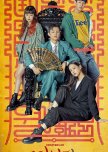
A Scam Artist, A Detective and An Ever-growing Train Wreck Walk Into ‘Café Minamdang’…
On reflection, ‘Café Minamdang’ had a lot of potential to be a good series . Its plot, setup and casting choices seemed to suggest that it was going to be somewhat avant-garde but enjoyable as well as creating potential for some likeable characters along the way for audiences also. However, there are times where reality can be very disappointing. Sadly the eighteen -episode KBS2- Netflix series rarely hit the mark and instead created a show with some very mixed results for the audience.
As suggested previously, this isn’t to say that the concept of the show was bad from the outset. It is important to acknowledge that the screenplay was adapted from “ Minamdang: Case Note”; a fairly successful novel by writer Jung Jae-ha. In charge of adapting Jung’s novel to the small screen were Screenwriter Park Hye Jin and Director Go Jae Hyun. ( Viewers will likely know these familiar names from productions such as ‘ The Emperor: Owner Of The Mask’ , ‘Smoking Gun’, as well as ‘ Black’ and ‘ Dinner Mate’ respectively.)
The narrative of the series predominantly focuses upon scam-artist and former-criminal profiler, Nam Han-joon (Seo In-Guk- ‘Reply 1997’, ‘ High School King Of Savvy’ and ‘ Doom At Your Service’). Pretending to be a shaman at his main base of operation, Café Minamdang, Han-Joon’s talents for decoding body language and micro -expressions has given him the ability to swindle people out of pocket easily and without causing suspicion. Especially thanks to the expertise of his little sister and hacker Nam Hye-joon (Kang Mi-Na- ‘ Dokgo Rewind’, ‘ Hotel del Luna’ and ‘ Moonshine’).
However after snooping around in a hit-and-run incident involving the husband of one of his clients, Han-Joon becomes acquainted with Detective Han Jae-Hee (Oh Yeon-Seo- ‘ My Husband Got A Family’, ‘ Love With Flaws’ and ‘ Mad For Each Other’). Developing a small crush on the investigator, Nam Han-Joon begins to play a cat-and-mouse game with Han-Jae-Hee, leading to many unforeseen consequences for both the detective and the scam -artist .
A lot of viewers have understandably remained divided with one major component of ‘ Café Minamdang’ among many others; its tone and mood. Of course, it isn’t unusual for a show to want to offer leverage between tense and melodramatic moments with more lighthearted or easygoing scenes. However what was noticeable for audiences with regards to Park Hye Jin’s writing, came through some of these underlying moods feelings overly inappropriate at times. To explain this in more depth, ‘ Café Minamdang’ did have its darker and tense moments which while exciting were often heavily overshadowed by strained attempts to offer " comic relief"; even when discussing serious or grave matters or when it didn’t always feel necessary to a moment of scene. However while while forms of comic relief can sometimes work well in this scenario, ‘ Café Minamdang’ often heavily relied on a physical and wacky form of comedy ; commonly found in Korean dramas and productions. Naturally, it isn’t necessarily that this comic relief was bad per say. However, it never seemed to truly flow well against some of the subject matters tackled.
As for the acting and casting choices of the series, Seo-In-Guk’s performance as the main lead is fairly solid here. Although it is fair to say that his onscreen character will either be loved or hated by viewers of equal measure .
Nam Han-Joon was an interesting male lead in his own right. scam artist with a particularly unconventional method of scamming people out of pocket, the male lead had a lot of intriguing elements to his character from the outset. However, where writing issues did become noticeable can often be said to be found through his overall character-arc.
Throughout the course of ‘ Café Minamdang’, there were few and far moments between where viewers truly got to see Nam Han Joon be held accountable for his self-absorbed personality or feel conflicted with his past and current actions. Later episodes admittedly did offer some justification for his current-self and vulnerabilities through his backstory but even then this often somewhat rough around the edges. Instead, a lot of the male lead’s personality traits were often played out for laughs and were rarely interspersed with opportunities for viewers to understand a lot more about Han-Joon.
Similarly, Oh Yeon Seo delivered a decent performance as Seo In Guk’s onscreen counterpart and female lead Han Jae-Hee. Oh Yeon Seo’s performance is admittedly a little wooden at times but this wasn’t entirely the fault of the actress per say. Instead a lot of the blame can probably be put on the writing decisions for the female lead.
Similar to male lead Nam Han-Joon, Han Jae-Hee had a lot of potential to be an intriguing character in her own right. ( Especially as someone involved in a particularly astute field of work such as crime investigation and the male lead’s initial advisory.) However, instead of the female lead having her own moments in the spotlight to be explored as a complex character with her own motivations and flaws, Jae-Hee was often subjugated to the role of being overly fractious, whiney and frivolous character; rarely changing, being explored beyond her surface level or being developed even into later episodes of the series.
In addition to the main characters of ‘ Café Minamdang’, it’s hard not to acknowledge some of the reoccurring side character also. In particular, there should be a special shout-out given to actress Kang Mi-Na. Although her onscreen persona was rarely given her moments to shine in later episodes, the actress delivered a surprisingly charming and lively edge to Nam Hye-Joon.
Acting aside, it is hard to forget one of the show’s most bizarre elements; the superhuman-like abilities of some of the main characters, especially in early episodes of the series. Admittedly, ‘ Café Minamdang’ was never truly aiming for hyper-realism with its setup and premise. However it still seemed inexplicable in a mystery-comedy series to see some of its main characters being able to suddenly run at breakneck speeds and scale buildings without any hassle. Perhaps the show was aiming to play this off for some parodical moments but instead, this often led to some slightly head scratching moments without enough context being given.
One of the major points of intrigue for ‘ Café Minamdang’ came through its crucial plot point of the “cat-and-mouse game” between detective and scam artist. Although there were moments which could be fairly entertaining, it still often seemed that the screenplay’s attempts to build up this “ hype” took a lot longer than expected. While the first few episodes of ‘ Café Minamdang’ did require for some necessary spoon-feeding for viewers towards establishing the identity of main characters as well as the main plot-arc, the tedious duration of episodes at times in addition to some unnecessary plot points could’ve been avoided with harsher writing decisions and editing. ( For example rather than attempting to pad out episodes with a surplus amount of comic relief or unnecessary subplots, the series could’ve used the time in-between to develop characters, intensify the mystery element of the storyline and heighten relationships between characters as well as using these writing points, as a tool for improving the continuity of the narrative in later episodes.) As a result, the final part of the series felt somewhat underdeveloped and lacked a satisfactory feeling of completion for many viewers.
Stylistically and under the directing leadership of Go Jae Hyun, ‘ Café Minamdang’ was fairly conventional for a Korean drama. The quality of filming was decent enough and while there were certainly a few nice moments of cinematography ( especially with contrasting palette schemes such as with natural and vivid hues ) , perhaps it is fair to say that there were was nothing particularly standout with regards to the stylistic approach either. (Perhaps it didn’t help that even for the slightly theatrical and fabricated worlds of K-dramas, the settings and set designs for ‘ Café Minamdang’ felt a bit counterfeit as they rarely felt "lived-in" by the characters.)
Certainly one of the few major and surprising highlights of the series came through its OST. ‘ Café Minamdang’ offered viewers with a surprising array of genres from the surprisingly catchy rap track “ Ghost Buster” by Jo Gwang-il and the beguiling alternative pop song “ Stay Awake” by Nam Young-joo though there were some tracks on the OST which were a little unremarkable also.
‘ Café Minamdang’ started off on a potential high note with an intriguing setup, an impressive cast and characters. Seo In Guk and Kang Mi Na delivered fairly consistent performances but even they couldn’t save the series from crashing and burning as it ran its course. Despite a talented cast and some entertaining moments here and there, ‘ Cafe Minamdang’ felt greatly overshadowed by its flaws ( especially narrative execution and character writing) rather than its strengths.
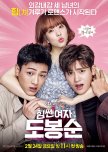
Strong Woman Do Bong Soon is a hilarious rom-com, with an undertone of gender issues. The show has the usual k-drama tropes; the “rich and good looking” chaebol heir, his antagonistic family, the sassy female lead, the love triangle, and the “boy gets the girl story” after overcoming difficulties and obstacles. However, surprisingly “ Strong Woman Bong Soon” was able to deliver a fairly impactful storyline and sociocultural critiques about issues in South-Korean society also.
Do Bong Soon (Park Bo Young) is a woman born with superhuman strength. A hereditary ability running through the matriarch line of her family, it can only be used for good or she can lose her strength forever like her mother ( Shim Hye Jin) did. Despite her abilities, Bong Soon adores her father ( Yoo Jae Myung) who is a gentle warm character, and her twin brother, Do Bong Ki ( Ahn Woo Yeon) , who works as a doctor in a hospital. However, our heroine often struggles to tie down a job as well as desperately yearning to be a game developer .
There are two other men in her life. One is her childhood friend, Guk Doo , a stern police detective played by Ji Soo who has been her long-held secret crush since their teen years . Also she hides her strength around him, since he claims to have a soft spot for tiny, fragile women, just like Bong Soo seems to be at first glance. The other man who enters later into her life is Ahn Min Hyuk (Park Hyung Sik) the baby-faced CEO of AINSOFTware, a gaming company. One day he witnesses Bong Soon's superpowers against a group of gangsters, and he hires her to be his personal bodyguard to protect him against an anonymous caller, who has been making death threats against him. At the same time a serial kidnapper starts taking tiny, fragile women off the streets as Bong Soon soon finds herself finally using her powers for good by trying to hunt down this mysterious criminal .
Written by screenwriter Baek Mi Kyung, “ Strong Woman Do Bong Soon” is a fairly mixed blend of slapstick comedy, old fashioned romance ( with various successful and questionable effects) and a refreshing look at gender roles and sexism . The series does not sugarcoat delivering criticism towards chauvinism associated with the South- Korean Patriarchy: the police office, the youth gang, the gangster mob in the local vicinity , and the patriarch of the chaebol's family, are all absurdly dysfunctional and over-the-top to highlight notable critiques of gender roles within South-Korean society .
Park Bo Young was undeniably a delight as the petite super-strong female lead with line deliverances that were pure comical gold in a similar manner to costar Park Hyung Sik. As a character, Bong Soon was fairly intriguing by challenging traditional gender stereotypes, however, she wasn’t inherently a perfectly-written character either due to often being a little boorish and fractious at times ( especially with her treatment surrounding Ahn Min Hyuk early on in the series) which may annoy viewers in the beginning. However, Bong Soon does grow as a character by learning to mature , respectful herself as an individual as well as develop an endearing romantic relationship with Min Hyuk.
Similarly, Ahn Min Hyuk isn’t without his faults either. He is often slightly naive, sarcastic and equally fractious as Bong Soon. Nevertheless, Min Hyuk is given an equivocal chance like Bong Soon to grow as a character from seemingly shallow at times, towards having a more complicated familial scenario and circumstances.
The side characters can be a bit of a mixed-bag especially in regards to the second male lead and Bong Soon’s mother. Admittedly, Guk Doo does become inherently more respectful towards Bong Soon as the series progresses, however, his early treatment of the main heroine by putting her down often from her physical appearance and emotionally flaring up in her face at times did become slightly irksome. In a similar manner to Guk Doo, Bong Soon’s mother was equally frustrating at times by her problematic treatment towards her own daughter. Whilst the circumstances were suggested and put forwards to some extent for viewers , her overall relationship development with her own daughter seemed slightly lacklustre.
In addition to this, it is arguable that the ending was a little anticlimactic as well as finally putting a stop to the seemingly “ unstoppable killer” did feel a little disappointing . Nevertheless, “ Strong Woman Do Bong Soon” may not have been flawless within its delivered problems of characterisation and comedy ( at times), but it was inherently a lighthearted fantasy, romance tale with intriguing characters, a fairly well-written heroine and romantic pairing as well as prominent messages and critiques towards gender in South-Korean society.
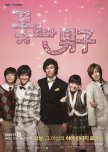
There Are Better Versions Out There..
Boys Over Flowers tells the story of poor, yet hardworking high -schooler Jan- Di ( Ku Hye- Sun) , who attends on a scholarship, a place at a prestigious high school for the rich and famous of Korean society . After angering the leader of the F4( a group of boys consisting of the school’s most notorious heirs) , Gu Jun- Pyo ( Lee Min- Ho) , Jan- Di finds herself cornered by Jun Pyo’s bullying tactics and , in frustration, declares war against the F4. Despite the mayhem around Jun- Pyo’s attempts to make her yield her declaration and give-in, Jan- Di finds comfort within the presence of taciturn and mysterious F4 member , Yoon Ji- Hoo ( Kim Hyun- Joong), however, her comfort may be short lasting when Jun Pyo begins to develop a complicated crush on Jan- Di.
First of all, I will give this adaptation upon reflection one praise; the amount of hours it must have taken the stylists to do Lee Min Ho’s stylists to do that perm. All joking aside, Boys Over Flowers isn’t an entirely dire drama, but, it never ceases to surprise me even now, how many drama watchers overrate this version as the “ best” , with most never having fully watched the original Taiwanese, Japanese ( as well as the unofficial Chinese version ) or even the more recent official Chinese adaptation, to draw this indecisive conclusion together .
Though, let’s not sugarcoat something about any of the adaptations( including some of the more critically - appraised versions such as the original Meteor Garden and Hana Yori Dango) . Boys Over Flowers ( like all the adaptations ) is sourced from the original 90s / 00s romance( or “ shoujo” )manga called Hana Yori Dango ; accounting the romantic cliches seen in all the versions of a poor girl and a rich and spoilt kid who turn from enemies to friends , to of course, eventual lovers. As you can imagine, Boys Over Flowers regurgitates all of the cliches from the original manga ( whether for better or for worse) with natural added changes for Korean audiences ( such as Gun Pyo’s name in the original manga/ Japanese drama , is Domyouji Tsukasa as well as several culture changes such as the “ Puppy Date” in the Japanese version, being updated with a Korean Sauna scene between Jan Di’s brother and father).
Whilst I don’t typically compare original versions or adaptations in my reviews out of respect for the culture or story, I think it is intriguing (especially as it’s not often drawn together when reviewers consider this drama), to particularly compare some differences between the acting choices, plot and characters across some of the adaptations / manga. The first comparison undeniably comes from the choice of Hye- Sun as our female lead. Unlike a lot of adaptations, it took me awhile to find what truly annoyed me about Hye- Sun’s portrayal. It was nothing to do with her physical appearance as some drama watchers have pointed out ( if anything, this made her role seem a little more realistic, as even in the original manga, she’s described as an ‘ everyday girl’) , but, rather the lack of emotional appeal which was put into her portrayal of a supposedly ‘ relatable and ordinary’ female lead, as well as of course, moments of overreacting within emotionally angst- ridden scenes . Naturally, it can’t be said that Hye- Sun was entirely at fault here, as the scriptwriters also played a part as well within her character. To put if simply, there was nothing intrinsically driving about Jan- Di as a character. She was not independent or fierce as shown in the first episode by crumpling too soon rather than progressively over Gun Pyo’s influence, or even the seemingly ‘ kind- hearted’ girl suggested earlier on in the show ( whilst I appreciate she may have been in a state of shock, note the scene in Episode 5 when Gun- Pyo fires a normal and everyday working sales assistant in front of her, she doesn’t even bat an eyelid). In the other adaptations, there is always something driving about the female lead which makes her likeable or at least an approachable character. Consider Inoue Mao’s portrayal as Jan- Di’s earlier counterpart in the Japanese version , Tsukishi Makoto. Love or loathe her portrayal, Mao truly captured Makoto as a fiercely hardworking, and equal to Tsukasa, putting her foot down even when Tsukasa raises his voice at his friends. In a similar manner Barbie Hsu’s version as Shancai had her moments, but, she was still a fiercely strong female lead. Therefore, it’s hard to truly evaluate especially as a seemingly apparent ‘ strong and independent’ female lead, that Hye Sun’s appearance is truly comparable to some of the other versions ( such as the Japanese version).
This of course, moves us onto Lee Min Ho’s portrayal as Gu Jun- Pyo, the Male lead and the leader of the F4. In all honesty, there was a certain essence that Min Ho captured as Jun- Pyo (/ Tsukasa Domyouji) as the lovelorn lead through his comical lines, actions and tender moments towards Jan- Di. In a similar manner to Hye- Sun, however, Min Ho’s role wasn’t particularly profound. In fact whilst Min Ho’s career did kick off after this drama, there was no real approach to depth or apparent seriousness within both Min Ho and the scriptwriters ‘ approach to Gu Jun- Pyo’s character both behaviour-wise and psychologically . Whilst the drama did take the typical ‘ he’s not that bad, after all ’ trope ( as shown in all versions ) and explore a more complex version between Jun- Pyo and his mother ( as seen during his childhood) and his sister , there was still little put together about how this truly impacted upon Gu Jun- Pyo to explore some more vulnerable and challenging moments again his ‘ Macho’ persona. One of the more profound portrayals of the Male lead undeniably goes to the lesser- talked about role by Jun Matsumoto as Domyouji. Whilst having some questionable acting moments in a similar manner to Min Ho, Matsumoto and the scriptwriters did reach out to exploring the Male lead in more vulnerable moments with his estranged relationship with his mother ( as shown in one of the first few episodes when his mother fires a chef on unfair grounds ) and glimpses into Domyouji’s softer side in childhood and the present to the reasons behind his character. Yet even more recent and light- hearted portrayals such as Dylan Wang’s portrayal as Dao Ming Si in the recent version of Meteor Garden (2018), have provided a more realistic approach to this character, highlighting both the fault of Min Ho and the scriptwriting in comparison to some of the other adaptations.
Before talking about Hye- Sun and Min Ho’s chemistry, it is wrong to leave out Hyun- Joong’s portrayal as Ji- Hoo, as the second lead of the drama( let’s ignore the controversies in order to evaluate Hyun Joong as an actor here) . There was nothing entirely wrong with Hyun- Joong’s portrayal of Ji- Hoo. In fact, out of the majority of the cast in this drama, Hyun- Joong probably captured his character the most in a more “boyish “ haze for Jan- Di’s feelings . To an extent, there were even some moves in this drama which I did prefer more than the original versions,( not least the complications between Ji- Hoo and his grandfather adding to some emotional scenes). Yet the Korean version did leave out a core essence of Hyun- Joong’s character compared to other versions, and that was certainly his emotional complexity between his mystery and his equally hidden feelings for the female lead. In the original manga and the Taiwanese version Meteor Garden ;2001 ( portrayed by Vic Chou) , an essence to Rui/ Ze Lei as a character, is that he is mildly autistic and ,consequently , his feelings for both his sister- figure and Makoto/ Shancai remain complex throughout the series. In the Japanese version ( and consequently in the Korean and Chinese versions as well), Oguri Shun’s portrayal of Rui Hanazawa is left out to be a consequence of learning problem, but rather his peculiarity as a character. In the case of Shun’s portrayal, Rui is portrayed in the ‘ cool, mysterious manner’ and is perhaps one of the few versions in which the character’s feelings for the female lead, remain partially open throughout the show.
On a slightly more positive note, the one thing which I must prefer slightly about the Korean Drama in comparison to most of the versions, was the sense of believable ‘ rough and and tumble ‘ bonds between the other F4 members in this version as childhood friends ; portrayed perfectly by Kim Bum and Kim Joon. Whilst there is no doubt that the Japanese version showed us this bond extending out more to Makoto as well, the Korean version did seem to highlight this friendship slightly more profoundly with Jun Pyo, with the other members teasing Gun Pyo over his feelings and Jan Di’s reactions. My other slight personal thought to the drama, was undeniably the greater chemistry between Kim Bum’s role as Yi- Jung and Jan Di’s best friend, Ga- Eul than in other versions ( particularly the Japanese drama between Nishido and Yuki), with more profound moments revealing a backstory to Yi- Jung which is often disregarded in other adaptations.
Moving on to the chemistry between our leads throughout the show, it is undeniable that there was chemistry between our leads, Hye- Sun and Min- Ho as well as the gradual development of their characters. On the other hand, there were less fresh and monumental developments which truly exposed the rocky obstacles within their relationships like other adaptations ( though there were some carried- out traits from the Taiwanese/ Japanese versions such as the visit to the female lead’s house, the ‘ Maid’ storyline from the Japanese drama and the manga as well and of course the betrayal scenes), leaving a less impressionable chemistry than other versions. In addition to this, the ending of the drama certainly hints at the possibilities, but felt a bit of a waste of time within the build- up to their relationship, even when considering with more hinted suggestions such as the walking side by side scene in Meteor Garden or more tied endings like the proposal scenes in Hana Yori Dango and Meteor Garden ( with the Japanese Movie sequel even hinting to Makoto ready to start a family with Domyouji). Overall, it’s fair to say that whilst Boys Over Flowers isn’t unbearable to watch, it’s riddled with cliches from beginning to end copied from other versions with lacking originality, characters and plot inconsistencies, questioning whether it may be better to seek out versions of this show and not waste your time watching the Korean version.
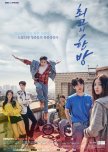
A Time Travelling Pop Idol , That’s A New One, Korea...
Hit the Top was a strange mix of cliche and heartwarming plot to say the least. The beginning of the show was undeniably dragged out. Rather than simply introducing us to our main protagonists in addition to our main protagonist , Hyun Jae,time travelling escapade to 2017 and meeting the gang in maybe two episodes max, the show drags this on for more than three episodes. Like most drama scriptwriting, this does give viewers to see a little more upon the individual circumstances of both past and present versions before and after Hyun Jae’s mysterious death in 1994. The “younger” range of characters who Hyun Jae begins to live with , are Ji Hoon, the studious adopted son of Gwang Tae and the polar opposite of Hyun Jae, (however, he also aspires to be a popular idol, )Woo Seung, a young student desperate to pass her university exam and of course MC Drill, one of Hyun Jae’s best friends and trainees at the same entertainment company. The characters which have connections to Hyun Jae’s past, are probably the characters who go through the most development in the show. Hyun Jae’s former manager and friend, Gwang Tae, juggles between his feelings for Bo Hee , managing the dying company and of course trying to be a paternal figure to Ji Hoon. Bo Hee longs for her glory days but is a washed up star, seemingly narcissistic and less than a maternal figure to her son Ji Hoon, however, her character certainly goes through a lot of development in the course of the plot, most certainly finally letting go of her weighed up guilt to Hyun Jae’s death. Then of course, there’s Sundae. The chairman of one of Korea’s most successful groups, now similarly disregarded by his former contractee, Soon Tae’s growing idol business and battling old age. In terms of development, whilst the show did focus upon the main mystery upon Hyun Jae’s disappearance and to a lesser extent Ji Hoon’s twist parentage, a lot of the cushioned storyline such as the relationship between Woo Seung with Hyun Jae , diminished the focus upon familial relationships within the show. Whilst a lot of critics jump to point out the age difference officially between Woo Seung and Hyun Jae in 2017( I.e Hyun Jae is officially in his 40s and Woo Seung is still only in her 20s), my biggest problem did not come through this. ( Although a lot of critics also forget that Hyun Jae is from 1993, and consequently is still in his 20s.) It was not to do with the lack of chemistry between the leads, but, rather it diminished the main focus upon Hyun Jae’s familial relationships, as well of course trying to overcome the plot hole of the butterfly effect which just drags deeper downwards, near the ending of the show due to of course the error of one of the main plot reveals. Naturally, the ending did offer a happy release for viewers and tied down the fates of the characters , however, it didn’t truly feel connected together as a final and complete ending, considering that one of the main plot’s storylines was nearly erased entirely from its appeal.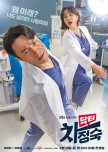
Doctor Cha; How to Ruin A Good Show...
Watching Doctor Cha was similar to Marmite; people either loved or hated the drama's ending, and there was not much in between. However, looking at the series throughout, it was hard not to notice some of the drama's more apparent flaws.
Jung Yeo Rang wrote the series, while Kim Dae Jin and Kim Jung Wook directed it. The plot focuses on Cha Jung Sook (Uhm Jung Hwa), a housewife for more than two decades and the wife of surgeon Seo In Ho (Kim Byung Chul). After a health shock, Jung Sook questions whether she wants to complete her residency as a doctor. Jung Sook can fulfil her dream with the help of the kind-hearted surgeon Roy Kim (Min Woo Hyuk). However, as melodrama brewing elsewhere, Seo In Ho's involvement with an old flame from the past and work colleague Choi Sung Hee ( Myung Se Bin) threatens to create other melodrama.
The series was a mixture of genres. It leaned into medical, romance and melodrama for the most part. The balance between these three genres could sometimes be difficult to mediate, significantly as the series progressed. This often made the show feel like a different watching experience in these various genre shifts, mainly when early profound topics and themes addressed ( such as murder, medical malpractice and treating criminals) were rarely tackled in later episodes.
The drama's acting is admittedly very mixed. Uhm Jung Hwa starred as the main female lead, Cha Jung Sook. Jung Hwa will likely be unfamiliar to newer drama fans, though some drama watchers may recognise her from the movie Dancing Queen and the show Get Karl! Oh, Soo Jung, Witch's Romance and Our Blues. Jung Hwa arguably offers one of the best performances in the series as the main female lead.
As a character, Cha Jung Sook is undoubtedly a mixed bag. She is kind-hearted and sincerely desires to care for patients and those close to her. Nevertheless, Jung Sook's character arc, particularly her relationship with Seo In Ho, remained one of the most problematic areas of the show. The series attempted to delve further into this relationship's complications and difficulties. Still, for the most part, it was an incredibly controlling relationship With In- Ho. Rather than delving into these complications further and allowing Jung Sook an opportunity to get away from him early on in the series, the narrative dragged out this arc beyond its limit, particularly for comical relief and further dramatic tension. Jung Sook's potential relationship with Roy Kim remained one of the most grating elements of the series. The conclusion to this relationship remained a subject of significant criticism by watchers and fans alike, mainly due to Jung Sook's character arc on this front feeling rushed. One of the few strengths of Jung Sook's character development came from her concluding circumstance. Although anti-climactic, it was reasonably befitting for her as a character to follow that particular path.
The series attempted to make In-Ho’s character more ‘’empathic’’ in parts of the drama. This would have been an understandable move if it was not more to do with the fact that In-Ho had little guilt or redemption throughout the series. Even if it had been a case of In-Ho coming to acknowledge or reason with his actions, this would have allowed him to grow as a character. Instead, In-Ho spends most of his time whining about Jung Sook, unable to make his mind over her and Choi Sung Hee, sidling up to his mother, Kwak Ae-sim (Park Joon-geum ) and then letting his anger out by attempting to destroy his daughter's dreams (Lee Seo-yeon). There are a few moments where we see a softer side to In Ho, but considering his attitude throughout the drama, these moments lack impact when faced with his treatment of others.
Roy Kim is another central character in the series. His character's personality acts as a perfect foil to In-Ho. While In-Ho is arrogant, jealous and egocentric, Roy Kim is sincere, kindhearted and cares deeply for his patients. His relationship with Jung Sook, from patient to crush, remains one of the major driving forces of the series. Sadly, Roy's character arc was not given a lot of justice, with a rushed storyline and a potentially intriguing backstory wasted.
Choi Sung Hee enacts as an antagonistic force in the series but is arguably one of the most morally ambiguous. Myung Se Bin offered a surprisingly bittersweet performance as the second female lead. Sung Hee and In Ho's relationship, alongside her rivalry with Jung Sook, remained one of the major driving points of the series. It was surprisingly refreshing to see the connection between Sung Hee and her daughter Choi Eun-seo (So A-rin ) progressing in parts of the series and the unforeseen bond between Sung Hee and Jung Sook's mother, Oh Deok-rye ( Kim Mi-Kyung ). Nevertheless, Sung Hee and Jung Sook's rivalry seemed oddly contrived. It is not out of the question both women would be at odds, but Sung Hee's odd attraction to In Ho, despite throwing her under the bus and her odd resolution with Jung Sook, did not seem to justify her character arc truly.
Seo Jung-min (Song Ji-ho), In-Ho and Jung Sook's eldest child and a first-year medical student, had a minor role in the storyline with his relationship with Jeon So-ra. So-ra and Jung-Min were among the few couples in the series who were worth watching. However, melodrama and limited screentime offscreen time interactions are less significant in later episodes. Later in the series, Jung Min attempts to be given a more complex character arc through a particular circumstance, but a rushed conclusion rarely makes this feel well-developed. To make matters worse, viewers learn from Seo Yi-Rang that Jung-Min did not want to become a medical student and only did so to keep his father happy. This could have been a perfect ground for exploring Jung-min's character and relationship with his parents ( particularly his father) more, though sadly, the series did not take full advantage of this.
Seo Yi-rang had her character arc too. Many more events were shaping Seo Yi-Rang's initial development than some notable characters in the series. Her relationship with her mother had some reconciliation. Still, the series rarely builds on this parallelism between mother and daughter trying to chase their dreams, often leading their interactions to fall somewhat flat. ( Especially as Yi-Rang wants to break the family tradition of attending medical school by becoming an artist.) Another major arc revolves around Yi-Rang and her friendship turned rivalry with Sung Hee's daughter, Choi Eun-Seo. Without major spoilers, it is fair to say a significant revelation divides the characters. Each character acts out independently, but considering how Yi-Rang learns more about her father, it seemed odd that the show did not try to resolve this conflict earlier rather than simply trying to drag it out for filler time until the ending.
Oh, Deok-rye has a minor role in the series alongside Kwak Ae-sim. Both characters have surprisingly sweet moments and squabbles. Another surprising performance was by Jo Ah-ram as Jeon So-ra, Jung-Min's girlfriend and Jung Sook's superior. It could have been easy for the drama to have dragged out the tension between Jung Sook and So-ra, but their bond in later parts of the theatre was oddly sweet. Her performance was remarkably likeable, adding to her onscreen persona's charm. Baek Mi-hee (Baek Joo-hee ) was another minor character as Jung Sook's best friend, though aside from trying to play a matchmaker and listen to some advice, she did not play a significant role as she should have done so.
The execution of the series was mixed. The first half was a little slow to get off the ground, but the narrative could progress further after a few episodes. However, significant proportions of the series relied heavily on dragging out conflict and melodrama rather than exploring or resolving previous character arcs or plots. This was a shame because the series had much time to cover these elements.
The cinematography was decent enough. There was nothing particularly striking, though the scene with Jung Sook joining Roy Kim to go running remains pretty sleek. The OST was okay, with a few decent tracks such as "Shine Like a Star" by Sondia and "A Day For Me" (나를 위한 하루) by Shinae An remaining particularly memorable.
Overall, Doctor Cha was a drama with much potential to be lighthearted and well-developed, but it lacked the correct execution and development. Poor character arcs rushed plot events, and an anti-climatic ending made the drama feel pieced together than a concise watch and an engaging experience. The series certainly had its sweeter moments, though sadly, this was often ignored due to these issues. Overall, a disappointing watch.
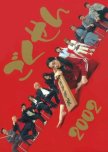
An Undeniable Classic, Though Certainly Cheesy Within “ Manga“ Tropes .
Despite its two additional seasons often seen to “ milk” the storyline , the first season of “ Gokusen” will still stand strong for many J-Drama fans as a “classic” from its later successful and beloved cast ( not least the “rookie” appearances of J-drama actors who would become beloved household names for many fans such as Nakama Yukie, Matsumoto Jun, Oguri Shun, Matsuyama Kenichi and Ito Misaki). Yet, like nearly all drama adaptations based or derived from manga, Gokusen isn’t entirely “ flawless” either...Gokusen is a little over-the-top and often tried to emulate anime and manga during fight scenes ,character interactions and tropes , which often came comes off as ridiculous and surreal in a fictionalised , yet live-action setting. Ultimately, Gokusen builds up the contemporary and beloved Japanese trope of delinquents; a concept which is waning in popularity in more recent dramas and movies, but still touched upon something a fundamentally classic message of individualism and the problems faced by youths deemed “ bad influences” by society .
Nakama Yukie plays the beloved role of Yamaguchi Kumiko; a female-teacher with a hidden secret of her family being part of the Yakuza, but someone who inflicts “ tough love” upon her students when giving them life lessons.
In all honesty, Nakama Yukie’s inexperience within previous acting roles prior to Gokusen does become evident within her sometimes awkward expressions, reflexes and cheesy line deliverances onscreen, yet she quickly makes up for this within her brilliance of revealing her true-self to her students when the glasses come off and during the more light-hearted moments of the show with adding a touch of deadpan humour to her lines.
Yet, refreshingly for a show where the angle of Shin and Kumiko’s relationship became a minor later subplot of the manga , Gokusen scraps this romantic pairing entirely in order the focus on the more didactic messages of the storyline. On the other hand, the show did have the one unnecessary element of Yamaguchi’s character having a crush upon the handsome police officer in favour of playing out an “ adult romance”. Although this is used for comedy rather than depth ( and later becomes a running gag with Yamaguchi developing a “ new crush” in each season), the pairing between Kumiko and the police officer wasn’t interesting or engaging towards the plot, and should have been cast aside in order to focus upon the main storyline.
Parallel to Nakama Yukie, Matsumoto Jun’s role as a rookie remains prominent within certain line deliverances upon screen, however, his role as the stoic heartthrob and delinquent ringleader Sawada Shin still remains one of his most renowned roles in the drama community and is often seen as kick -starting his successful career of acting, with fellow costars Oguri Shun, Matsuyama Kenichi and Ito Misaki into similar stardom.
Even though there are arching story lines, the episodes were often repetitive at times within their setup;
Kumiko’s students get into some form trouble, Yamaguchi ( or “ Yankumi” as she’s dubbed by her students) sticks up for them and ends up showing off her Yakuza inherited/taught fighting skills, and the students learn something either about life or themselves in the process. It is undeniably a generic formula in Gokusen, yet again all odds, there was something surprisingly heartwarming about nearly every episode taking time for viewers to get to know characters as individuals, rather than merely background characters, making the bond between Yamaguchi and her student surprisingly well-developed and consequently making each episode rewarding for viewers in the process.
Gokusen is undeniably cheesy at times within its line deliverances, cliches and contemporary fashion and outfits, yet,there is something prominently strikingly, entertaining and heartwarming about Gokusen. The storyline tackles many themes which are still relevant today ( delinquency, judgement upon appearance and real-life problems for disadvantaged students), the characters are strikingly engaging and the pacing can easily keep you hooked from beginning to end. Although not realistic and often playing out to the realms of fictionalised fantasy, it is easy to see how Gokusen still captivates audiences years after its original release. Certainly worth a watch if you’re looking for something more comical and light-hearted.
The Good Bad Mother; A Good or Bad Watch?
I will be frank in my honest thoughts about this drama; it very much met my expectations. I will be open to saying it
did not exceed them, but it was a reasonably engaging and entertaining watch for the most part.
The Good Bad Mother was written by Bae Se Young ( Intimate Strangers, What a Man Wants and Life Is Beautiful) and directed by Shim Na Yeon ( Hip Hop Teacher, Beyond Evil and Moment at Eighteen). It focuses on pig farmer Jin Young Soon (Ra Mi Ran). Young Soon is left to take after her son and the farm as a single mother after the death of her husband. Her son, Kang Ho ( Lee Do Hyun), is reared by Young Soon to study and succeed, even at the cost of his unhappiness. Kang Ho grows up seemingly unhappy, pushing away his mother and long-term childhood friend and sweetheart, Lee Mi Joo (Ahn Eun Jin), to climb up the social leader as a prosecutor.
However, when Kang Ho is involved in a life-changing accident, Young Soon gets a second chance to spend time with her son. Kang Ho's past soon catches up with him and Young Soon as they find themselves in their sudden change of circumstances.
This is a story we have seen in Korean drama screenplays, where a character is forced to go through difficult circumstances and reconciliation. Mostly, The Good Bad Mother is a melodrama focusing on numerous tragedies but with a more slice-of-life comical edge through the country life trope. One surprisingly profound element of the series came through some of the themes tackled, including disability, illness, political corruption, murder and cover-ups. Admittedly, these themes were only partially addressed to their full potential, but the drama did highlight where characters encountered these issues.
The acting for The Good Mother Bad Mother varied, though most of the main cast was pretty good. Ra Mi Ran ( familiar to some watchers for her performances in Sympathy for Lady Vengeance, Avengers Social Club and Cruel Intern) offered a fairly stellar performance as Jin Young Soon.
Jin Young Soon is a problematic character to explore. On the one hand, she is very multifaceted; it would have been easy for the writer Bae Se Young to have cast Young Soon in a villainous light or wholly attempted to have redeemed her character. Instead, we get a surprisingly good middle ground with Young Soon; she is neither truly forgiven for her actions nor demonized. This was surprisingly refreshing for a Korean drama. Of course, Young Soon is not without her writing flaws, one of the main issues being that while we do get to see her character develop and her ending is teased throughout, it still felt a little anti-climactic against the backdrop of the other events of the series.
Lee Do Hyun ( a familiar face to many for his roles in Sweet Home, 18 Again and The Glory Part 1 & 2) starred as the male lead and son of Young Soon, Kang Ho. Kang Ho goes through a multitude of character arcs throughout the drama. Without major spoilers, Kang Ho starts as a reasonably callous individual at first glance before developing into a more well-rounded and kindhearted individual through his accident. As the narrative progresses, the drama elucidates that Kang Ho is a character that has more to him than meets the eye, and this certainly proves to be true. Perhaps one element which did feel somewhat absent through Kang Ho's character arc came through a very deus ex machina ending; his trauma is unresolved, he goes through issues and then finds a solution. There is nothing wrong with this formula per se, but considering the amount of tension building behind his character arc, it felt a little odd that these circumstances came so quickly.
Another central character to talk about is Lee Mi Joo—Ahn Eun Jin (More Than Friends, The One and Only and Goodbye Earth) plays the role with a calm yet bittersweet edge. Mi Joo's relationship with Kang Ho and the mysterious identity of her children's father remains one of the major driving forces of her character. One element of her character that I felt I was a little lacking was that while her goals and dreams were built up a lot or explored to their full potential, they rarely followed through by the drama's ending.
Then there are the primary antagonists of the drama, Song Woo Byeok (Choi Moo Sung) and Oh Tae Soo (Jung Woong). Their role in the drama plays out similarly to moustache-twirling villains; they are necessary to keep the conflict going, but aside from that, their characters are rarely explored further. Other noticeable characters include Bang Sam Sik (Yoo In Soo- Strong Woman Do Bong Soon, Alchemy of Souls and The Uncanny Counter Season 2: Counter Punch), the childhood frenemy of Kang Ho and Mi Joo, who acts as the primary comic relief of the drama series. ( However, Sam Sik has his surprising redemption arc in parts of the series.) Of course, there are the villagers who help propel the comedy and more lighthearted moments alongside Song Woo Byeok's henchmen. Young Rak's wife (Park Bo Kyung-Shadow Beauty, Little Women and Moving) remained an amusing character. Her gag of constantly wearing odd face masks for beauty routines and eccentric comments fantastically lit the mood. Her character resolution was a little weird, but it seemed befitting of her character's personality.
The execution of the series had an odd progression. The first episode delved into the setup and conflict, then slowed down until the halfway point. Although this was necessary to help flesh out specific plot points, it did cause a scenario where certain teased plot arcs and characters were left free-falling by the second half of the series. As a consequence of this execution, certain plot events were left unaddressed. The one element of the narrative that was achieved came through pacing. There were a few scenes which were unnecessary in parts of the drama. Still, for the most part, The Good Bad Mother was engaging with its narrative due to being able to balance the elements of angst, lighthearted moments and comedy reasonably well.
The cinematography of the series was pretty stylish. It was not particularly innovative, but there were a few striking scenes, such as when Kang-Ho and Ahn Eun Jin were caught in the rain or the final scene with Jin Young Soon. The OST was reasonably upbeat and dynamic for the most part. Admittedly, there were a few more tracks which stuck out more than others, such as ''A Dreamy Town'' by Ha Jin and ''Talk About Love/ 사랑을 말해요'' by Lee Moon Se, which were pretty good.
Overall, The Good Bad Mother was a surprisingly engaging watch. Although it may have borrowed from many tropes in Korean dramas, the series remained engaging through its equilibrated themes and an intriguing array of different characters and plot. Overall, worth a watch.


