
 K-Drama


The Origin Of Nursing As A Profession In Japan
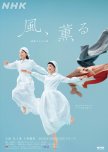
Scent of the Wind is the fictionalized biography of Ozeki Chika (Rin in this drama) and Suzuki Masa (Naomi) who were instrumental in the establishment of nursing as a viable career path for Meiji Era women at the turn of the twentieth century. The stories of the personal lives of the two protagonists here are much looser in comparison to other recent biographical asadoras like The Ghost Writer's Wife or Tora ni Tsubasa; however, the drama is much more historically accurate when it comes to how nursing evolved into a licensed healthcare profession.
The structure of this morning drama is quite similar to that of Tora ni Tsubasa: it centers on a group of women who were in the first university class for the profession and then follows how their subsequent lives shaped the profession as it is now. There have always been healthcare workers, of course, but the discovery of germ theory led to the training of doctors and the establishment of hospitals throughout the world. And subsequently that led to luminaries like Florence Nightingale to shape the profession of nursing. In fact, one of the women that Nightingale trained, Agnes Vetch (Margaret Burns in this drama), came to Japan in 1886 and taught this single class that included Chika and Masa, and the 2nd (1860) edition of Nightingale's book, Notes On Nursing, and its chapter "What Is Nursing?" plays a guiding role throughout this drama.
Rin is the daughter of a high ranking samurai, but her family has fallen on hard times after the Meiji Restoration, and this drama has her fleeing her village and coming to Tokyo to find some way to support her family. Rin is played by Mikami Ai and the character is relentlessly empathetic to the point that it becomes an obstacle that she has to overcome to be a better nurse.
Naomi, played by Kosaka Juri, has the more interesting backstory in the drama, but that backstory is completely different from that of the historical Suzuki Masa. Naomi is prickly and blunt, and the character is quite charming throughout as she becomes a leader in the field.
The looser approach to the personal lives of these two people in this drama is a double-edged sword. On the one hand it allows the drama to introduce relationships and, in particular, romantic possibilities that are not present in the historical record for these two people. On the other hand, one would hope that that those possibilities would lead somewhere, and largely ... they do not. Nevertheless, the two protagonists eventually do form an aromantic relationship and a family together to the point that their children happily and proudly say that they have two moms.
The drama is more successful at addressing its themes of exploring what nursing is and should be, and the first wave feminist issues of establishing career paths for women beyond marriage, sex work or poorly paid factory work. The series is not particularly a medical drama with a different patient case each week, but it delves more deeply into the relationship between the nurses and the people they care for in ways that are quite rewarding.
I must also shout out Taki Nanami who plays the oldest version of Rin's daughter, Tamaki. (The actress is a whopping one year younger than Mikami Ai who plays her mom, but such things are inevitable in asadoras like this one that cover a couple decades of a character's life.) She gets a lovely little arc of her own in the final weeks of the drama.
And I must also mention the music which I rarely do in these reviews. The score by Nomi Yuji is excellent throughout, and in particular he produced a wonderful choral arrangement of the Irish folk song The Last Rose Of Summer which backs key scenes throughout the drama. Unfortunately, that particular version of the song is not available on either of the two cds released for the drama with only an instrumental version to be found there.
Scent of the Wind is a good, solid drama that does not quite reach the peaks of more recent asadoras. I particularly enjoyed the performances of the aforementioned Kosaka Juri and Taki Nanami and will be keeping an eye out for those two actors in the future. If you enjoy asadoras, then this series is well worth the watch.
Was this review helpful to you?


