




A Love Story Between Two Musicians
Yell is the story of Yuichi and Oto who managed to meet, fall in love and marry at a time in Japanese history when most marriages were arranged. The series is a relatively faithful biography of the composer Koseki Yuji whose music is showcased throughout. (There is a one-week arc where the series cheerfully veers into the paranormal, and the historicity of that particular week may be in doubt.) The series follows Yuichi from his childhood where he was bullied for having a stutter through to a happy retirement following a long and successful career in the music industry making hit songs in the pre-war era, writing propaganda songs during the war, and composing the music for radio serials, film and stage productions after the war. Kubota Masataka plays this mild and gentle soul from high school through retirement.Yuichi's soulmate is Oto, the second daughter of a Christian family who had a small business making saddles. She encounters a famous operatic soprano when she is young and decides to become an opera singer. Oto is played by Nikaido Fumi whose voice is surprisingly convincing in the role.
The focus of this series is centered more on Yuichi than Oto mostly because the roles of wives and mothers were comparatively limited in early to mid century Japan, and so there are fewer family anecdotes about her to be incorporated into the series once they settled down and had their daughter Hana. Nevertheless, the show is pretty balanced between the two characters until the war when Yuichi's stories tend to dominate. There are also many lovely side stories involving the couple's siblings, friends and daughter.
The height of this series is Yuichi's involvement in the war. Yuichi proudly writes music for the war effort until late in the war when he makes a fateful morale trip near the front lines in Burma where he is confronted with the consequences of his support of the war - to the point that he stops composing for a period, and eventually writes a now beloved and haunting song for peace. The script really does not pull any punches in its portrayal of wartime Japan , showing the country's military fervor and its dire consequences, and this section of the series is quite moving.
Other than the war years, the tone of the series is pretty light with the dramatic obstacles being those usually associated with trying to establish oneself in the music industry and the expected parental objection to the match of Yuichi and Oto. The series was in production when the pandemic hit and for the first time in decades NHK had to put its asadora on hiatus for a few weeks. I don't think that the hiatus had any noticeable effect on the quality or the story, but the series ended up slightly shorter at 24 weeks instead of 26. A bigger impact on the length of the series arose from the decision to move from six episodes per week down to five, but I believe that decision was made prior to the pandemic and will remain true for the asadoras from Yell on. Thus, Yell has 120 episodes when prior asadora typically had 156.
Yell is an above average asadora with a few a particularly stellar weeks. The last week is a bit of a hodgepodge trying to complete a final romantic arc, doing the final payoff to a setup in Ep. 1, and building to a fanciful denouement in Ep. 119 to match the unusual opening scenes of the series. Ep. 120 is a final concert of Koseki's music with Nikaido concluding the series with a lovely performance of The Bells of Nagasaki.
Was this review helpful to you?
Adventures of the Super Monkey: Journey to the West
5 people found this review helpful
Sakamoto Yuji's Version of a Chinese Classic
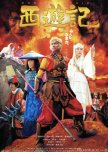
It is surprising that this series is not well known or remembered - it was the most viewed Jdrama on broadcast TV in Japan for all of 2006, is based on an extremely well-known classic of Chinese literature and was written by one of Japan's best screenwriters, Sakamoto Yuji. Part of the reason, undoubtedly, is that it is pitched towards an age range that would be watching and enjoying Power Rangers or Kamen Rider with lots of broad acting, obligatory climactic fight scenes, fart jokes and a surprising amount of male urination. It's almost certainly not the best version of Journey To The West of the last few decades (Steven Chow's first film deconstruction of the story probably takes that crown), but it is a good, wholesome take on the old Buddhist children's story with some unexpected twists along the way.At eleven episodes Saiyuuki is a comparatively brief version of these tales, and, thus, this series skips the origin story of Goku (the Monkey King) and starts with the Japanese version of Tripikata, Sanzo Hoshi, freeing Goku from his 500 years of imprisonment in a rock and the Avenger team of Sa Gojo (Brother Sand) and Cho Hakkai (Brother Pig) already assembled for the journey. Each episode tells the story of the group encountering a demon along the way and overcoming the corresponding challenge with most of the encounters invented for this version (I'm pretty sure, for instance, there was no chapter involving time travel when I read a translation of the books). As is usual, for this series the group seeks to reach a sacred mountain, meet an incarnation of the Buddha and receive sacred scriptures, and no time is spent at all on the return to Chang'an.
Like the famous Japanese version from 1978 (the actor who played Goku in that version, Masski Sakai, appears here in the final episode as the Buddha), Sanzo Hoshi is played by a woman (in this case, Fukatsu Eri) but given he/him pronouns (at least in the version of the subs I watched). As in most versions of Journey To The West, Sanzo Hoshi is repeatedly captured and rescued by the rest of the troupe, but Sakamoto does give the character a bit more agency than usual. Sakamoto also adds an entirely noncanonical character in the form of a female thief, Rinrin, whose path intersects that of the travelers and ultimately becomes one of the team. Rinrin played by Mizukawa Asami is probably one of the best reasons to check out this version of the tale by providing a good, bantering foil and general competence in contrast to the impulsiveness of Goku.
Goku, as usual, is the focus of series, and is played by Katori Shingo who plays the Monkey King as kind of a blustering dumb jock/warrior but with some nice, quieter empathetic moments as well. Most episodes end with a fight scene where Goku's staff ultimately comes down on the head of the demon of the week who is then carted off to hell by a markedly breast-obsessed Taoist deity, Roushi (Lao Tzu) played by Okura Koji.
The 2006 version of Saiyuuki is a broad, largely comedic children's show with some nice lessons about working together and acceptance. Nevertheless, there are some surprisingly strong emotional beats along the way. It is probably worth seeking out, particularly if you enjoy Sakamoto's other series.
Was this review helpful to you?

I am not a K-pop or J-pop fan, and so my review should be fairly free of any emotional investment in those scenes.
Produce 48 is the third Korean installment of a musical survival show produced by Mnet. The prior two seasons resulted in a successful debut of a girl-group and boy-group respectively. What made this particular iteration of the series more interesting from a global perspective was its collaboration with AKS, the parent company responsible for developing AKB48 in Japan and turning it into a wildly successful music group franchising organization. The initial plan was to do a version of the show in which half of the contestants were Korean trainees and half were Japanese idols from the various 48 groups.
That's not quite what we got. Produce 48 initially started with 39 Japanese Idols and 59 Korean trainees, and the show chose not to or was not able to allow people to vote outside of Korea. And so the contest was never particularly structured to be fair for the Japanese contestants.
The early episodes of the series are a quite interesting look at the differences in approach to artistic development and growth between the two systems. In short, the Japanese idols are shocking less well trained at singing and dance in comparison to the Korean trainees in their agency system. Now, that could be a bias of the presentation on this show; however, it's fairly well documented outside the show that the girls in the 48 groups are not, in general, provided with any kind of training while agencies in Korea can invest years of training into performers before their debut (and exact huge debts for from the performers for doing so, but that's a whole other discussion). What the Japanese idols do acquire from AKS is a wealth of stage and general entertainment experience.
Generally, the structure of the show is a couple episodes of the contestants preparing and then performing a song, and then an elimination episode where roughly a third of the current pool is eliminated until at the end of episode 12 we're left with a group of 12 performers to be known as IZONE. Voting for the contestants often begins weeks before a performance is shown, and so much of the fate of individuals is based on how much screen time they've managed to get and how well they present on camera rather than their ability to sing, dance or rap which is ostensibly are the skills upon which they are supposed to be judged. All survival shows are popularity contests, and Produce 48 is no different in that respect, but it's clear that the way the voting on Produce 48 is structured does not particularly serve to select the best performers which might be okay as long as you understand that fact.
The performances throughout this series were uniformly outstanding, but subject to the usual quirks of Korean editing where any notable moment good or bad is repeated immediately two or three times. Were the show more focused on the performances, it would be far better. The training segments are okay and the training staff are generally charismatic and professional. But there's also a lot of fluff around group selection for the performances, inevitable product placement segments and utterly crap and banal game segments that only serve to juice the votes for whomever makes the cut in the final edit. The host, Lee Seung Gi, does an excellent job until the final live episode where he could use a teleprompter and some training to get his head out of the cards in his hand.
In conclusion, Produce 48 was an intriguing cross-national premise that was poorly served by the game structure and production decisions. It was not a unmitigated disaster, and, indeed, resulted in some quality musical performances. However, it did certainly fail to live up to its hype, and it did fail to create a level playing field for the two groups involved. I enjoyed watching it, but it could have been much better with some fairly obvious structural changes.
Was this review helpful to you?
The life stories of a tomboy and a milksop
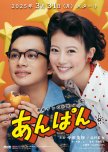
Anpan is the fictionalized biography of Komatsu Nobu and Takashi Yanase the latter of whom was a mangaka and the creator of Anpanman, a character so successful that it overtook the sales of Hello Kitty in 2002. Even from the title it's clear that the draw for this series is Anpanman, but, as the series faithfully documents, Anpanman was not created until Takashi was 50 which happens around week 21 in this series, and, even then, the anime was not created until Takashi was 69. And so the series, appropriately, is more focused on Nobu and her family. To be fair, all the evidence is that she had quite a bit more personality and more interesting jobs than her famous husband (named Yanai in this series).Nobu and Yanai met and grew up together in a small village near to and now a suburb of Kochi City on Shikoku. Young Nobu was a bit of a jock (to the extent that it was possible in the culture at the time) who would always choose to run rather walk. As is common in asadoras, a child actor (Nagase Yuzuna) performs the character in the early episodes and Imada Mio takes over starting in high school. I found Imada's performance throughout to be perfectly fine and professional playing Nobu as upbeat and energetic pretty much throughout though it must be noted that Nobu is the very rare protagonist in an asadora that spans the wars who fully supported the Japanese wars in Asia and the Pacific. She is a grade school teacher during the final years of war, dutifully and enthusiastically drills her students with the war propaganda she is required to teach. And so when Japan finally surrenders, and she sees the cost of what she and others have done, she thoroughly regrets what she had done, quits teaching and sincerely seeks ways to make the world a better place. Indeed, one of the major themes of the series is how the characters respond to their parts in the wars.
Yanai is played by Kitamura Takumi who has the much more difficult role of playing a talented artist who is self-effacing and hesitant to the point of complete and utter inertia at times. The character is unrelentingly uncharismatic, and - absolutely no shade on the actor since that is how the character is written - he effectively portrays Yanai as such throughout.
I must admit that one of the reasons that I watched this series is that Kawai Yuumi plays the oldest of Nobu's two younger sisters, Ranko. As ever, she is an upcoming actress who is one to watch - she has already won the Japanese Film Academy prize for Best Actress (read my review of A Girl Named Ann here on MDL, and then never, ever watch the film). Ranko is a perfectly fine character with her own arc through the series, but there's not all that much for Kawai to do here even as she acquits herself well as usual.
On the other hand, it was Hara Nanoka's performance as Nobu's youngest sister, Meiko, that really caught my eye, and had me searching to see what else she has been in. Her portrayal of Meiko's crush on one of Yanai's friends is both delightful and hilarious. Meiko led the most conventional life of the three sisters, and so there is not that much for character to do in the second half of the series, but her turn in that first half is very fun.
Anpanman itself is a very strange character: a hero who happily offers his head to be eaten by the starving and always nonviolently fights to help people. And so this series is about how that character came to be, and the parts of that character which were drawn from the lives of the people around the real Takashi. I do think the series is successful in telling that story, and I also think it is reasonably fun and entertaining along the way. If you're a fan of Anpanman, then it's probably a must-watch. If you like asadoras as genre then it's well worth the watch: I have this one as above average though not near the greats like Amachan, Tora ni Tsubasa, Oshin and Gochisosan (the latter three of which span roughly the same historical time period). For the general viewer who is unacquainted with the format it's perfectly fine, but there are better ones to introduce you to them.
Was this review helpful to you?
Soapy Middle-school Story Based on a Song
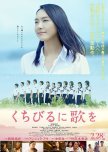
Three years into a very successful career as singer-songwriter in 2008, Angela Aki released her 8th single "Tegami (Haikei Jūgo no Kimi e)" or "Letter: Dear 15-yearold Me". The song was then used in the following year as competition song in a national competition for middle-school choirs and NHK produced four documentaries following Aki to various middle-schools as the children rehearsed the song for the competition. One of those documentaries served as inspiration for a 2011 novel by Nakata Eiichi, a pen-name of the extremely prolific writer Otsuichi, and that novel is the basis for this 2015 film. The song itself has since become the standard graduation song for middle-school graduation ceremonies in Japan.The story is set in a small island town near Nagasaki, and centers around three characters: third-year student Nazuna who is the captain of the choir club, Kashiwagi-sensei who was a well lauded classical pianist and who has returned to the island to serve as a substitute teacher for a year and first-year student Satoru. The film slowly reveals the backstories of these three characters as Kashiwagi disrupts the old way the choir was run by allowing boys with all their cooties to join the group. All three of the characters have very soapy pasts and the plot is overly reliant on convenient plot timings for events that otherwise would have little chance of being conincident. But the film does build to a lovely climax at the provincial choir competition in Nagasaki City with a truly moving performance of Aki's song by the choir.
If you love the song, then this film is probably a must-watch. For the more general viewer, the film is still quite good with some excellent performances by the three main actors as their characters go through a year of growth which does reflect well the dialogue within the lyrics of the original song.
Was this review helpful to you?
This review may contain spoilers
A high-concept asadora let down by subpar writing
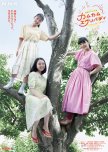
The grand idea of this series was to have an asadora that would span 100 years of Japanese history through the stories of the lives of three generations of women: Yasuko born in 1925 who is the mother of Rui born in 1941 who is the mother of Hinata born in 1965.Yasuko's story (episodes 1-35) is actually quite good if utterly tragic. She is born into a family of confectioners in Okayama, and at age fourteen falls in love with a rich college student. But, don't worry, she isn't married and pregnant until age 16. All of her blood relations (except her unreliable older brother) as well as her husband are all killed in the war, and her mother-in-law irrationally blames Yasuko for her son's death in combat and chases her out of the household. Yasuko tries to raise Rui alone by selling sweets on the streets of Osaka, but when she breaks an arm in a traffic accident she's forced to return to the mansion of her dead husband. A rather ineptly written love pentagram results in her older brother absconding with her savings and fleeing to Osaka chased separately by Yasuko and, yes, independently 6-yearold Rui. Both return return to the mansion in Okayama where Rui tells Ysauko "I hate you" and so Yasuko flees to America with a tall blond officer from the American occupying forces. No, none of that week's episodes make any sense at all.
Rui's story (episodes 36-77) begins after a time leap to her adulthood where with no motivation given whatsoever she leaves the rich household and cuts off all ties with her family. The generation that chased her and her mother out of the house are now dead and she has a perfectly fine relationship with her uncle who is now the head of the household. In Osaka she finds new joy as a laundress, and falls for customer who is a jazz trumpeter, Joe. He wins a bizarre one-off trumpet competition and lands a recording contract in Tokyo. But, unfortunately, his lips break while recording his debut record (as a former trombone player, I have to say that this plot point is utterly bizarre). He distances himself from Rui, and tries to end his life, but she saves him through the power of Satchmo. They get married, move to Kyoto, obviously, and start a shop that only sells kaiten yaki since that's the only recipe she managed to learn from her mother, and, apparently, it's impossible in the 60s to learn any other recipes. They have Hinata and later her brother Momotaro. Joe is happily unemployed for 20-odd years until he suddenly has the bright idea of trying to play another instrument. No, that does not make any sense at all.
Hinata's story (episodes 78 - 112) has her finding a love of samurai dramas as a child and becoming an employee at a local studio's tourist trap where she is given the mission to "save period dramas" in Japan. She has an extended courtship with a samurai drama extra which does not work out after an 8 year time leap in which nothing changed whatsoever in their relationship. Eventually, an American film company comes to town looking to make a big budget Hollywood film in Japan and so Hinata saves the period drama in Japan by serving snacks like any good office lady and speaking the English she has learned via the same radio show that Yasuko and Rui used to study English. The final two weeks of episodes bring all three of women back together in a way that makes even less sense than the rest of the series.
A "drama that spans a century" seems like a solid concept, but the writing utterly fails the concept throughout this series. Like most asadoras there are many fun and interesting side characters, and the performances of the actors are up to the usual high standards for these productions. But the motivations of the characters for the various plot points are FREQUENTLY incomprehensible or non-existent throughout this asadora, and the necessary time leaps almost always reveal zero change in the characters lives in the intervening years. Much of what happens throughout would make sense if the particular arc took place over a year or two, but absurd plot points are spread out sometimes over decades in ways that truly ruin this series.
Was this review helpful to you?
This review may contain spoilers
Like Dad of Light, Yuube wa Otanoshimi Deshita ne is a pretty blatant ad for an MMORPG which serves as a conduit for two people to learn to express their emotions. This time the MMORPG is Dragon Quest X and the emotion is romance here between the stunning Miyako (Honda Tsubasa) and the relentlessly herbivorous Takumi (Okayama Amane). Like Good Morning Call the plot has the two unexpectedly sharing a house together because, in this case, they were guildies in the game and both playing characters of opposite gender and assuming the other was the same gender as their character. Ha. Ha. But that matters for barely an episode before they find that they enjoy each other IRL, and the main boss fight for the series over all is the tired, tropey, ineffectual man-boy character of Takumi which is eventually defeated by virtually every other character in the series including Miyako's ex telling him that, no, she really does like him.Tsubasa shines and Amane whines, and Terrace House's Kakei Miwako has a lovely turn as a comedic vixen playing Ayano, Miyako's best friend. The story is short and sweet, and ends on a kiss.
Was this review helpful to you?
I initially thought this production was nearly as good. My initial criticism of the first ten episodes was only that it makes some elements of the story far more explicit and is somewhat worse for doing so. There are countless examples, but here's one. The protagonist is icy and detached. In the original, the character is simply portrayed that way. In this version, an early minor character remarks that she's icy and detached. Lee Bo Young's performance is excellent and did not need the explicit framing of her character. Everything is similarly spelled out: the extent of the Hye Na's abuse, her birth mother's motivations, her birth mother's boyfriend's motivations, etc. Jung Seo Kung is writing in crayon compared to Sakamoto Yuji. Clarity in writing is generally a good thing, but subtlety can be more effective and that's certainly the case here.
Far worse, however, are episodes 11 and 12 in which Yoon Bok and Soo Jin are literally damselled by the biological mother's boyfriend who is in this version a serial child killer(!). And the two are, of course, rescued repeatedly by men to the point that the series briefly becomes a mediocre police procedural like the hundreds of other such shows produced on this planet each year. The original never limits the agency of the women in the story in this fashion, nor sinks to the use of such pedestrian tropes.
The series recovers a bit in its final episodes. However, it does spin its wheels a bit in the final episode as it lurches to a happy ending. Everyone wants the pair to be a family. That's the point of the shared scenario between the two productions. Call Me Mother is worse for going there. The end of Mother is d-e-v-a-s-t-a-t-i-n-g. I can tear up right now just by bringing it to memory. The end of Call Me Mother is fine: I will never recall it.
The performances and the production are, nevertheless, excellent. Heo Yool deserves the praise she gets. It's unfair to her, however, that Ashida Mana was there first.
You do not have to choose between these two productions: you can watch and enjoy both. But, if you have only seen this one, do yourself a huge favor and watch the original.
Was this review helpful to you?
At the center of the series is a sweet love story of the celestially beautiful heir to an ikebana empire (Momo played by Ishihara Satomi) and an older, poor, "ugly" and humble bicycle repairman (Pooh-san played by Mineta Kazunobu). There is no real sexual chemistry between the two actors, and the trope of a beautiful woman falling for a man "far beneath her station" is a tired one indeed. However, the performances of the two actors are superb and are the primary reason to watch this series. This is largely Ishihara's series and she rocks it. Pooh-san is presented as pretty much saintly having never having had a girlfriend because he had to take care of his bed-ridden but now recently deceased mother. He altruistically helps the people in his neighborhood and is presented as a hidden intellectual genius (he never looses on his shogi app!), but that character trait is largely irrelevant in the end though it does come up now and then.
Surrounding the love-story is a bizarre succession drama in a cutthroat world of flower arranging that does not and could not exist in the real world. The people in that world routinely plot and scheme in ways that take this series immediately to soapville and the "villains" are so over-the-top that you will check to see if this was adapted from a manga, but, no, sadly, it's not. Your enjoyment of this series will probably hinge on how much you can ignore the succession drama or appreciate ironically its machinations. There is a heavy metal boy band ikebana troupe managed by the main antagonist, and, honestly, there is probably a better series than this one to be written around the story of that group and the conflict between modern marketing techniques and the traditional business model of this Japanese art form. But this series decidedly does not go there.
The direction of this series and its aesthetic is Lynchian in a good way. The shot-selection, palate, art-direction and song selection are all well above average. The themes of the series are much less dark than Lynch's material but it is similarly populated with a lot of charmingly quirky tertiary characters that do bring a delightful vividness to this otherwise unrealistic world.
In the end, this is a fable of artistic self-discovery for the main character Momo. Ishihara confidently carries the series on her tiny shoulders and is given ample opportunity to display a wide range within the character's journey. She has the hardest job of convincing us that Momo would choose Pooh-san, and she does achieve the goal of reaching that seemingly out of reach flower.
Was this review helpful to you?
Well-acted but stupid
It's a high school drama with an idiot plot that's not entirely redeemed by some good to excellent performances.Hirose Alice takes the lead as Urumi-sensei who is starting work at a large private school after a long break in her career. As usual, she hits the emotional beats well, playing here a person who is recovering from an incident in her past. Urumi is insightful, blunt but self-aware, and so is constantly biting her tongue until various episodic denouements make her write a speech and speak her mind. The fact that her character almost works is a testament to Hirose's charisma and ability as an actor.
Two of actresses playing students in her class do particularly good jobs conveying nuanced performances of the kind of emotional entanglements that can happen in high school in particular. Seino Asahi is pretty new to television but is excellent here as Hina, the popular mean-girl in the the classroom who is almost completely unaware of how she is treating the others. And her main victim, Iroha, is played by the much more veteran Toyoshima Hana who is really blooming as an actress and is showing good range across her many recent roles.
On the other end of the spectrum, the series features two of the most scenery-chewing villain performances I've seen in years in Ito Atsushi as Moriguchi-sensei and Hagiwara Mamoru as Haruki. I've seen Ito in several other things in which he has done a good, solid, professional acting job, and so I must assume he was acting as directed here and so any blame for his and Hagiwara's OTT performances must directed at the two directors with Uchida Hidemi in particular having helmed the wretched episodes 7 and 10. Ironically, Ito played the nominal lead in 2007's Watashitachi no Kyokasho (Our Textbook) in which he played a parallel role to that of Urumi-sensei here in a far superior drama that covers many of the same issues in a private high school setting.
The writing is pretty bad throughout with the banal themes of "bullying bad" and "over-adherence to hierarchy and collectivism bad" being blared in every episode. As noted above, episode 7 is particularly awful where the script goes full Rashomon for an incredibly stupid set of soap-tastic reveals that are otherwise entirely irrelevant to the series as whole but also results in the same stupid scene being played out at least three times.
There are good jdramas covering this territory in novel and interesting ways. Off the top of my head: Watashitachi no Kyokasho (2007), 3 Nen A Gumi: Ima kara Mina-san wa, Hitojichi Desu (2019) and Saiko no Kyoshi: Ichinengo, Watashi wa Seito ni Sareta (2023). Go watch those instead.
Was this review helpful to you?
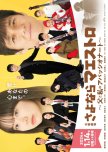
Sayonara Maestro: Chichi to Watashi no Appassionato
4 people found this review helpful
Full of quirk and top of the pops in Classical music
I cannot be objective in my review of this series (and even less so than usual). I can give you eleven reasons why you, a perfectly normal Asian drama watcher, would peg this series as mid even among the usual froth of Japanese dramas. It's series full of quirky characters, fighting the good fight to preserve a community orchestra in a city that could not care less. It's a story of a family broken by an incident 5 years ago that struggles to come back together. It's an episodic series in which almost every episode is structured around a famous, overused piece of the Classical repertoire. It's a tepid romance. It has side plots that resolutely go absolutely nowhere. It has little to say about the realities of orchestral employment and production in the 21st Century. It fetishizes the old masters of the genre presented in a world in which anything composed after the 19th century in Europe does not seem to exist. It accedes a privilege to Classical performers which largely does not and should not be. It promotes stale tropes of following one's dreams and self-discovery. It's Art verses the mundanity of life, man!But ...
I loved it.
And not just for the Manachan of it all.
Of course we in the Cult of Ashida Mana were going to watch it. She has not won an acting award for a whole six months now and we have, naturally, grown anxious. Sadly she will probably not win one for this role even though she brings her usual prodigious strengths to the role of Hibiki, the estranged daughter of the protagonist Shunpei played by Nishijima Hidetoshi. Both of their performances were fine to excellent, and she had her usual moments of reactions to tear at one's heart. But Hibiki is no tragic heroine, and it's actually cool to have the Manachan playing a relatively normal young woman with a few daddy issues who gets to have a smidge of a romantic arc. Angsty, rebellious Manachan is my spirit animal.
Nishijima anchors the series well. His Shunpei is hopeless and clumsy at everything outside of music, but within that sphere his ethics and insights are pretty much spot on. He brings an old, tired community orchestra to life, and injects joy into what had become rote. He inspires people. He challenges people. He reconnects them to the reasons why they love making music. Yes, those are also tired tropes of the genre, but they also result in fun little payoffs throughout the series.
Surrounding the two are over a dozen quirky characters in the two's family and the orchestra. All the actors are promising up-and-comers or polished veterans, and kudos to the production for placing Nishida Toshiyuki in a tasty role as the owner of the local music café despite the fact that the actor clearly has mobility issues even if his character doesn't. I'd give special shout-outs to Miyazawa Hio and Touma Ami for seemingly having genuine musical talents in addition to fulfilling their roles well. Miyazawa sings a jazz standard in English at one point and his American accent is so good that you'll have to click over to his MDL page to learn that he was born in San Francisco. And Touma does really seem to play the violin even if it's just Twinkle Twinkle Little Star: (I'm not crying: you are!).
The writing in this series resolutely avoids having a plot, or, at least, resolutely avoids resolving the mild stakes it sets up in the ways we expect these things to be resolved. And that's a good thing! Will the orchestra be thrown out of its practice space by the evil mayor? Will the evil mayor learn to accept is daughter's love of music? Will the orchestra win the festival that they struggled to get into to convince sponsors to help keep the orchestra going? Will Hibiki and Daiki fall in love? The answers may surprise you, and honestly I found most of payoffs refreshing.
And so if you enjoy Classical music or even dramas about quirky communities coming together to struggle against the usual entropy of living, then you'll likely find the show to be worth your time. As for me, it pretty much hit all the right notes.
Was this review helpful to you?

Babies' First Steps Towards Adulting?
This series is the fourth installment of the Baby Assassins franchise. The set up remains the same throughout the franchise: Chisako (Takaishi Akari) and Mahiro (Izawa Saori) are two young but highly competent assassins who just want a steady flow of work, but they would like to be otherwise left alone by the Assassins Guild that employs them. And the Assassins Guild, like any good, "benevolent" employer in the modern era, would like to develop their employees to have a wider skillset to leverage all the synergies in the assassination business. The entire franchise is a darkly comedic gun-fu martials arts series that obliquely critiques capitalistic corporate culture.This jdrama continues directly from the three prior movies, but other than some shared characters (particularly among the service personnel who clean up after the assassinations) there's not a whole lot of continuity that anyone would need to know in order to enjoy this series. And so (at this point in 2026) if you've got an HBO Max subscription, and are curious whether you can watch this series without watching the prior movies, I'd say dive right in. You can always go back to the movies if you enjoy the characters, the action and the tone of the series.
This series is roughly divided into two halves. In the first half, the pair get reluctantly pulled into a "project" where one of the Guild's legendary assassins wants to come out of retirement to settle an old score. What's really going on in this part is a not so subtle critique of corporate training retreats. The pair's senpai for this section is Takashi (Kusakawa Takuya) who overacts pretty egregiously throughout, but his doing so seems to be as directed. The leads Takaishi and Izawa play things comparatively understated throughout the franchise in contrast to many of the more aggressive foils both within the Guild and without. That fact is is probably fairly essential to maintaining the comedic tone of the series between the action sequences.
The second half of the series has the pair split apart and assigned to two other departments. Mahiro is sent off to learn from and assist one of the Guild's liquidators who are assigned to kill assassins in the organization who have broken the rules. And Chisato is sent to work in Sales where issues of corporate politics and power harassment come to the fore. But the pair continue to live together, and ultimately work together to become partners again.
The acting of the leads remains superb and reaches a new peak in this series. Mahiro, outside of her extreme skills in hand to hand combat, is always mired in her debilitating social anxiety, and Chisato is outgoing, verging on manic at times. But the two actor's chemistry together is excellent to the point that it is natural to wonder if this series is, in fact, a GL. It's left ambiguous throughout the franchise, but I will reveal that there is a truly swoon-worthy moment in the final episode. Takaishi is the better actor as Chisato, and her career has recently gotten a well-deserved additional boost as she was the lead in this past winter's NHK asadora, The Ghost Writer's Wife. Much more surprising is Izawa's performance as Mahiro. Izawa was almost entirely a stunt performer prior to this series, but here she is not only anchoring the action sequences, but at one point she impressively cries directly to camera. She really should get more work, in my opinion.
If you enjoyed the prior movies, then this series is pretty much a must watch. There's probably a bit less time spent on the action sequences compared to the movies, and a bit more time on Chisato and Mahiro's slice-of-life interactions. In fact, one of the best episodes of the series has no diegetic action sequences at all (just a couple of brief flashbacks of memories). Nevertheless, there are good propulsive action sequences throughout the series with the same level of fight choreography that were seen in the movies. Thematically, there's also a bit more depth than the movies as the women take a few more steps towards adulthood, and the pair's relationship which has always been solid gets to bloom just a little.
Was this review helpful to you?
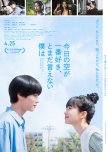
An Arthouse Slice Of College Life About Grief And Kokuhaku
I'm going to begin this review where I usually end a review by telling you who I think will enjoy this film and who will not. Because, more so than usual, this film is hard to rate even on the three dimensions that MDL provides (I never care about the rewatch value).If you are a film studies major or consider yourself a cinephile, then this film is a must-watch. Similarly, if you are a fan of or are following any of the three main actors Ito Aoi, Kawai Yuumi and Hagiwara Riku, the film is also a must-watch. However, if you're not in any of those groups, it's almost certainly not worth your time.
The film tells the story of Toru (Hagiwara Riku) who has returned to college after a break for personal reasons. We never learn that much about him. He has one friend, Yamane, and works a post-closing shift at a family-run bathhouse where he has a nice convivial relationship to the owners. He has little to no interest in his classes and ignores their existence to the extent he can. (He walks into a couple of ongoing lectures and starts full-voiced conversations with his schoolmates in a way I never experienced in giving a couple hundred lectures at a Cal State University. I know Japan has a reputation for college life outside of the major research institutions being very not focused on academics, but I'm not sure how realistic those scenes are given how polite and aware of other's spaces the rest of Japanese society is.)
The two major themes of the film are grief and love confessions (kokuhaku), and that's a very odd and difficult combination to pull off, and which I presume come from the novel that the film is based on. Nevertheless, that combination is a young actor's wet dream for all three of the principals, and the writer/director, Ohku Akiko, gives the cast amazing opportunities to show what they can do with a long monologue for each of them, and each staged and shot in very interesting ways. Saki's monologue is probably the best, but while it could have been shot in a couple of one-takes of Ito, Ohku cuts in reaction shots, and so we can't be certain. Nevertheless, the film also flashes back to it a few times. Hana's monologue is given in an extreme close-up one-take, and, you know, it's Kawai: of course she nails it.
A secondary theme of the film is supposed to be serendipity which we know because The Three Princes Of Serendip is mentioned a few times. But while there are several unplanned discoveries in the course of the story, by no means are all of them fortunate in any sense. In fact, the story largely tilts its umbrella towards the rains of melodrama while maintaining some distant rays of possible romance.
And so we reach the best and worst thing about the film: Ohku's craft. The blocking, the framing, the camera placement, and the camera movements are frequently amazing throughout the film. But she pushes the techniques to the point that it's sometime hard (at least for me) to understand what she is trying to say by using them. She changes the aspect ratio at one point for a bit, and I have no idea why. She does a sudden zoom in to an extreme close up on Kawai's face in her monologue, but the zoom is done a bit into the monologue for reasons? I have seen other pieces of Okhu's work (please, please seek out her series for NHK, Kazoku Dakara Aishitan Janakute, Aishita no ga Kazoku Datta also starring Kawai- it's currently available on Netflix internationally under the name "My Family"), and so I know that she's a master of the art of film and that these choices are intentional, but this particular work is hard to follow in some moments. And sometimes the techniques can call attention to themselves in ways that pull you out of the film.
As a writer, Ohku also chooses to leave some story points ambiguous in ways that will almost certainly be unsatisfying for some viewers. Was that time lapse of Toru sitting on a pole for a day, his being stood up? I'm not certain. Are the cuts to things Hana is saying to her co-workers about Toru reality or his fantasy? I don't really know for sure. And how does Hana react at the end of the film? It's left to our imagination.
Nevertheless, I thoroughly enjoyed the craft and performances in this film. It's a relatively small story with some very moving moments carried by some fantastic young actors.
Was this review helpful to you?

More Yokai Sharehouse
If you've seen the previous two series, then you know the drill. Mio struggles with self esteem while saving the world with her loyalty and steadfastness and, of course, the support of the monsters in her sharehouse. I strongly disliked S2 because it immediately undid all her character growth from S1, and never even brought her back to the same level of maturity she reached at the end of S1. However, the movie here is somewhere in between the two seasons for me in terms of how much I enjoyed it. It's framed around a topical albeit tepid plot about how AI might reshape our world, and kudos for getting this movie out maybe 9 months after the news about chatGPT and AI art generators were breaking news.All the usual suspects are here in addition to the five principal characters. Many of the major secondary youkai from the series show up for at least a cameo. The acting remains broad and OTT like the prior series, but Koshiba as Mio anchors the chaos as always and has some moments to shine. The new ML for the movie, Mochizuki Ayumu as Aito, does as well as one could expect in the tropey AI learns what it means to be human role.
If you liked either of the previous series, it is worth checking out, IMO. And if you just want to sample the world, it is comparatively standalone, though personally I would recommend the first season over it.
Was this review helpful to you?
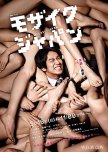
Sakamoto does a shallow dive into the world of AV
Mosaic is a short drama set in the world of AV (adult video) production in Japan, and so of course you can expect a lot of explicit sex, rape scenarios, sexual exploitation, and frank talk about all of those subjects. But the issues with this series have relatively little to do with its subject matter.It begins as a fish out of water story of its antihero protagonist Riichi who has left his job in the world of finance and has returned to his small home town only to discover that it has become a factory town for Galaxyz, a large AV production company. His parents work in post-production applying the mosaics covering the genitals that make AV videos legal in Japan, and Riichi is soon pulled into the company as part of the financial group within the company.
The narrative is conveyed in relatively short vignettes and rapid dialogue, and there is often an intentional confusion between what is meant to be being shown diegetically in Riichi's life and what is being filmed by Galaxyz for release as part of their porn films. At least at the the beginning of the series this ambiguity is meant to reflect Riichi's confusion and disorientation as he returns to find the hometown completely turned upside down by the influence of Galaxyz on the local economy,
As a writer Sakamoto loves to try different things, and here I am guessing that the intention was to write bits of scenes and dialogue that when pieced together would reveal a larger picture. That is, the writing style itself is meant to be a mosaic. Great idea. Does it work? No. Not at all. (In my opinion, of course.) There just is not enough narrative glue to hold this story together. Only two or three of the characters have any kind of back story, and some of the women characters in particular are so poorly limned that it can be hard to tell them apart. And while there is a story here of people being corrupted by money, men being corrupted by readily available sex, and government officials literally getting away with murder, it's one that I think we've all seen before in better and less confusing forms. It also suffers from issues similar that of trying to make a war film with an antiwar message: what you see on screen glorifies the subject no matter what the characters are saying about it.
All that being said, Sakamoto does have things to say that are worth hearing, and if you make it through the first few scenes, I recommend that you stick with it through the final episode: the whole series is shorter than some movies, and Riichi's love interest, Momoko, gets some excellent monologues in episode 5.
Was this review helpful to you?


