



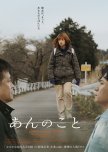
A story of hopeless misery
Kawai Yuumi won the best actress award from the 2024 Japan Academy Film Prize for her performance in this film's depiction of drug addiction, domestic violence, prostitution, addiction recovery programs, self harm, child abandonment, social service failures, and the exploitation of the vulnerable in general. If you enjoy films like 2004's Nobody Knows, then this film is probably exactly the kind of thing you would like. It is a well-produced film based on a true story with all the endless misery and gritty realism one could want with fine performances by Kawai Yuumi as Ann and Sato Jiro as a police detective, Tatara, who tries to pull Ann out of the mire that her life is under the unrelenting abuse from her mother Harumi played by Kawai Aoba.Ann has been forced into prostitution by her mother since she was 14 and has been an intravenous meth addict for a couple of years when the film starts. She gets arrested when an abusive client overdoses, but an idiosyncratic police detective gets her enrolled in his addiction recovery program. She keeps being drawn back in reach of her mother because she loves and worries about what will happen to her disabled grandmother if she completely abandons the family. Any light suggested by Ann's road to recovery is only present in the film to be quashed in the denouement that made the news in Japan.
Both Kawaii Yuumi and Sato Jiro have excellent moments of portraying the anguish, grief and anger of these characters' lives. But, honestly, Kawaii had at least three more effective and moving scenes in her jdrama My Family than anything in this film and I would direct anyone who is catching on to her talent to seek out that series long before diving into this film.
Was this review helpful to you?
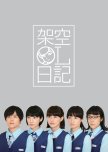
A Slice Of Life With No Dramatic Stakes
Imaginary OL Diary was the 2017 winner of the annual Mukoda Muniko Award given by a small committee of television writers to one such writer each year. Sakamoto Yuji, one of the members of the selection committee, called it his favorite drama series and said it is a "world-class masterpiece". And as much as I stan Sakamoto, I have to disagree with that assessment, and note that both he and Bakarhythm have written series that are much better than than this one. Bakarhythm's Brush Up Life is a world-class masterpiece. This series: not so much.This series is the thoughts of a thirty-something bank teller, and the quotidian details of her and her friends'/co-workers' work life at a bank branch. They get ready at the branch's locker room, talk over lunches and dinners, and occasionally work out or go shopping together afterward. That's it. That's the series.
On the positive side, Bakarhythm is probably the best writer of dialogue currently working in Japan. He has a great ear for the normal dysfluencies of natural speech, and it's flow and repetitions. The series is pretty much focused on the difference between the tatemae of what the women say and do and honne of what they really feel and want. There is a bit of exploration of how they police each other's tatemae, but it never really rises to any level of critique of that policing. It's tone is more, "well, that's just what we do." But you can see the seeds of the conversations, relationships and interactions in Brush Up Life in this work which shares some of the same actors.
The elephant in the room, of course, is that the cishet man Bakarhythm plays the protagonist in a sort of minimal drag: make-up and clothes and that's it. I guess we're supposed to oooh and ahhh at a guy writing and acting from the POV of a woman of his age and at all of the rest of the cast acting like he's just one of the girls. It's a perfectly valid exercise for any writer to try writing from POVs outside of their experience. But do we laud any woman writer for routinely doing exactly that for virtually every series she writes? Have not men played women in classical theater both in Japan and the West for centuries?
And so I had to constantly ask myself as I watched: would this series work with a woman playing the protagonist? I still enjoyed the series with that thought in mind. But I do not think it was any kind of revelation about gender norms, nor do I think it was it trying to be. Instead, it's a deep dive into the minutia of daily work relationships at a bank branch with no dramatic stakes whatsoever. They talk about who has refilled the toilet paper in the woman's room the most often, and collectively deal with a broken space heater in the locker room. And if that's the level of excitement you are looking for in a drama, this series will provide it.
Was this review helpful to you?
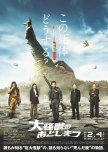
Mostly Forgettable
What to Do with the Dead Kaiju is a parody of kaiju movies in general and a couple of the most well known franchises in that genre in particular. The premise is pretty solid: a large reptilian kaiju has just stomped through Tokyo and died at the mouth of a river and the government neither knows why it died nor what to do with the resulting decaying hill of flesh. The government dithers and various ministerial departments seek to score political points while addressing the threat to the environment.The protagonist is Yukino who is the close aid of the Minister of the Environment and married to Mashiko who is, in turn, similarly the chief flunky of the Prime Minister. Complicating matters is the fact that Yukino is still carrying a torch for Arata who had disappeared in a mysterious white light for a couple years and is now a lieutenant in the Special Forces put together to fight kaiju. The love triangle is neither interesting nor well executed, but it's the only plot linking the scenes together, and so enjoy it to the extent you can.
The humor is fairly low, but not all that effective (but, as always with comedies, YMMV). There are a few slapstick moments that might raise a chuckle. The focus of the film, however, is more on bureaucratic incompetence and malfeasance as issues arise with the decaying mass of flesh. The script telegraphs what kind of ending is coming about halfway through and then sticks with that plan through to a pretty unsatisfying climax. The film is not terrible, but there are better Japanese comedy movies out there.
Was this review helpful to you?
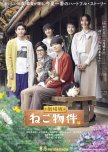
If You Liked The Series, This Is More Of That
All the boys and their cats are back for a tepid continuation of Neko Bukken. If you enjoyed the chill nature of the series, you will likely enjoy this movie that continues from where the series left off. The acting and production quality are pretty much what you saw in the series, but the writing is ... well, let's just say that it's what you might expect for the worst episode of any episodic television series that you like. The script pretty much reverses the character growth of all the housemates in order to bring them back together, and presents a plot objective and obstacle pulled from the dustiest bin of tropeville which the protagonist Yuuto proceeds to address in the stupidest way possible. Because of the wisdom of cats, or some such nonsense. Abetting him as usual is the long-suffering Yumi who manages to get a backstory that is nearly as ridiculous as the larger plot of this "film". And in the end, the people of the Cat Property all come together to live happily ever after. Yay?Was this review helpful to you?

Tomb Raiders in Japanese Occupied Manchuria
An ancient tomb full of treasure guarded by traps and demons! Fanged Zombies! Ninjas! An evil milk-drinking villain! Jenny Zeng in a black leather body suit! What more could one want? Abandon all plot-logic, ye who enter here.That being said, if you're willing to go into the film with low expectations for it making any kind of sense, it's not a terrible romp in the genre. Five mutually antagonistic adventurers seek to liberate the treasure of an ancient Chinese emperor, and encounter unexpected twists along the way. Who will make it out alive? And will the writer remember what they were looking for to begin with?
Expect terrible CGI, shockingly slow fight choreo and one surprising guitar ballad that absolutely does not fit the moment.
Was this review helpful to you?
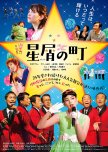
Well. It's a story.
This creaking but light movie tells the story of an aging male singing group, Hello Knights, and their tepid adventure in a country town where they encounter Ai, a young woman who wants to be singer and is interested in joining the group because she thinks there's a chance that her father is in it.Non plays Ai in her first film role after being black-listed by the agency system in Japan after she left her agency following her excellent and much beloved role as Aki in 2013's Amachan. Other than looking gorgeous in 60's styles for the group of enka singers, she's perfectly adequate in a role that is as underwritten as all the rest.
I guess the film was intended to rely on a nostalgia for 60s trot ballads to drive the story, and, indeed, the scenes of petty, internecine conflicts between the band members and Ai's mildly quixotic attempts to join the group are all framed by serviceable performances of songs of that era.
It's mostly harmless, and I did not fall asleep.
Was this review helpful to you?

A Quality Survival Show
Nizi Project 2 is the second half of the survival show that resulted in the creation of the Japanese girl group NiziU ("Needs(y) You"). In this series the selected trainees from part one go to Seoul to train at JYP Entertainment and some of the women are ultimately chosen to debut with the group.Unlike other survival shows, Nizi Project 2 does not emphasize the eliminations at all, and, in fact, almost all of the women are in seriously consideration for the group until the final episode. Instead, the focus is on training, preparation and performance with four new slots for puzzle pieces added to each of the trainee's necklace to be granted when each trainee "levels up" their skills. Once again, the necklace does not matter much because JYP can grant puzzle pieces pretty much whenever he wishes. Of course, it's pretty hard for some of the better candidates to show improvement since they were already performing at fairly high level, but no one would expect JYP to leave those trainees out of the final group, and so there's little suspense for those few.
JYP presents five sets of missions which are covered in sets of two episodes each, and once again the focus of the show remains on the preparation and the performances. Unlike most survival shows there is roughly a month of preparation and training time before each performance which is much more in line with the comeback cycle of modern K-pop groups and the additional time means that the performances are arguably of a higher quality than most survival shows though it must be said that some of these Japanese trainees here have had far less training time in general than their counterparts in the South Korean system who typically appear on survival shows.
We do get to see the interactions of the women in their dorms and in training than in the previous series, and we do get a few additional background segments. But, as in the previous series, the show spends most of its time on the preparation and performances. Thankfully as in the previous series, there are few if any product placement segments. One of the missions is performed in front of a studio audience who are, strangely, allowed to vote once before and once after JYP makes his pronouncements from his lofty desk (I'm not sure that this variation of voting is all that great of an idea since the audience is choosing between two options and so the people who change their minds nullify their own vote and those who don't essentially get two votes. But in no sense does the audience vote matter much in this case because no one's survival on the show is on the line at that point.)
Some Japanese-speaking JYPE talents serve as hosts and commentators for a few of the episodes, but, once again, this is mostly JYP's show, and once again he is mostly insightful and helpful with the occasional critique which seem overly harsh for what appear to be perfectly fine performances.
All in all the show is a fairly delightful promotion for what promises to be interesting foray of a K-Pop-style girl group into the the Japanese market. Several of the women who make the final group are extremely easy to root for and of similar talent and charisma to those in TWICE and IZ*ONE (which were both formed via similar survival shows).
Was this review helpful to you?
Soichi (Hakamada Yoshi) is having an affair with his co-worker Akari (Kakei Miwako) after hours at his office building, and awakens in the morning to find his wife Akari (Tokunaga Eri) stabbed to death on the floor besides him. Hijinks ensue.
Some of the twists you'll see coming pretty much from the beginning, and some are just ridiculous.
Probably not worth watching.
Was this review helpful to you?

This review may contain spoilers
This is an anthology special that suffers severely from a lack of any unifying through-line other than the fact that each segment features dogs. Most of the segments are intended to be comedic but the humor uniformly fails to land. The longest segment is a melodramatic story centered on early onset Alzheimer's which, if you're interested in a J-drama on that topic, go watch Beautiful Rain rather than this barely adequate short film. Ashida Mana does appear in the final story and has maybe three lines, including one which is meant to summarize the whole mess, but, sadly, even her usual delightful performance cannot salvage the film. Not even avid dog people will find much here of interest. Was this review helpful to you?

The central character here is Mamoru/Marumo who decides to take care of the twins of his late friend so that they won't be separated. He is woefully unprepared for being a parent, but learns quickly and soon comes to love his unexpected little family. Abe does a solid job of portraying his character's growth.
As usual, Ashida Mana will bring you to tears in the final episode with a prodigious amount of subtlety and complexity to her performance though, it must be said, Suzuki Fuku does manage some of the heavy lifting that final episode as well.
It's largely a comedic drama, but there is some exploration of meatier issues as well. The okite or rules that serve as a moral for each episode do make the show a bit didactic and tend to push the series into After School Special territory. However, they are also used as a key plot point in the resolution of the drama and so probably can be forgiven.
All in all, the show is well acted, mostly light fare with some emotional punch.
Was this review helpful to you?
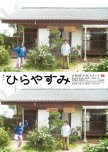
A Chill Slice-of-life With No Interest In Showing Any Of Its Tepid Stakes Being Resolved
Hirayasumi is based on an award-winning manga that continues to be published at the time of this review, and so part of my issues with the writing in this series may well be because the parts of the stories that were available or chosen for this adaptation may well have had good satisfying resolutions in subsequent issues of the manga, but they are decidedly not present here. You will find many more positive opinions about this series in the comments below, and if you liked the manga, this series may well be exactly what you hoped it would be (though there is at least one reader in the comments who disagreed with one aspect of the casting). For me, however, the series had some mildly interesting set-ups that could have led to things like character growth, dramatic confrontations, heart-warming reconciliations, and maybe even romance but all of that takes place off-screen to make room for more quotidian scenes of grocery shopping, cooking and cleaning.The series centers on Hiroto who has recently inherited a small but cozy house in a relatively downscale residential neighborhood of Tokyo. Hiroto is a free spirit who once had successfully launched a career as an actor, but he suffers intense social anxiety in the presence of any woman he finds attractive and so was basically unhireable for any role requiring him to do a scene with one. That could be a very interesting story to tell, but all of that takes place before the start of this series and is only covered in a couple of flashbacks. It's also an interesting set up for his interactions with Yomogi, a pretty realtor in the neighborhood, who he keeps encountering. Do we have a pairing that could lead to Hiroto's overcoming his anxiety and Yomogi opening up her isolated and lonely lifestyle to a broader group of friends? Nope. That might increase one's investment in these characters and we can't have that. There are groceries to be bought, dammit!
Joining Hiroto in the house is Hiroto's cousin Natsumi who has moved from the countryside to start art school. She secretly aspires to be a mangaka despite the fact that she knows in her very soul that if she lets anyone know, it will expose her as a geek. The horror! Natsumi is overly dramatic, happily blunt with Hiroto but very shy with the new people she's meeting in college. Natsumi submits her manga to contests, and gets brought into the system to develop her work for publication. And so obviously her story will be about what she learns about creation for commercial publications and the struggles of becoming a mangaka? Naw. That might be interesting. We need more scenes of her complaining about working parttime at a restaurant.
Also along for the ride is Hideki, Hiroto's best friend from high school who is facing the worries and stress of having his first child in a marriage which may well already be troubled. On top of that, his work life is shit. Surely, we'll get to see him grapple and engage with these issues, right? Eh, well. A little. He does learn to immediately wash their one bottle for formula once the baby is born. Yay?
As you can tell, my issues with this series are pretty much purely with the writing. And even there the characterizations are fine and, in some ways reasonably, interesting. But the series actively avoids putting the resolutions to any of these plot threads on screen. There is a lot of tell and very little show whereas there is plenty of time for random encounters on the streets and eating meat buns while walking from the combini.
The production values for this series are fine, and the acting is quite good throughout given the meagre material the actors are given to work with. Mori Nana as Natsumi brings an energetic physicality to this role which is quite fun, and she has a delightful chemistry with Mitsushima Nazuna (who is pretty new to TV and film) playing Akari, Natsumi's one new friend. (To the point that it's very easy to ship them for a GL which, sadly, would be far, far too engaging of an idea for this project.) Yoshimura Kaito is good as Hideki, an easily unlikeable character who, like everything in this series, is not entirely redeemed in any sense. But he does bring some some intensity and emotions to his scenes which help relieve the stretches entirely devoid of any other interest. Okayama Amane as Hiroto and Yoshioka Riho are both good solid veterans and playing likeable characters here. They might have had some chemistry together had the scripts let them.
All in all, the series is a chill look at a year in lives of a few characters in residential Tokyo. There are generally some good food moments in each week's episodes, but the series is decidedly not one of the many food-based jdramas. The themes are mildly countercultural and against the more typical salaryman culture found in Tokyo and the rest of urban Japan. But there are much better series out there directly addressing that issue in far more interesting ways than you'll find in this series. You may well enjoy this series because of its relaxed pacing and low stakes, and readers of the manga may well enjoy seeing these characters come to life. But if you enjoy dramas for, you know, the slightest bit of drama (or at least, any kind of resolution to said drama), look elsewhere.
Was this review helpful to you?
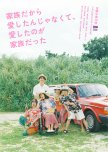
The Best Series On Netflix (at time of writing)
From the series description here on MDL and on Netflix you might think that this series is just another tepid or, perhaps, melodramatic slice-of-life from the third rate drama-producing nation, Japan. Instead, this series is an innovative, uplifting look at one woman's life from her early teens through her 20s, and is a stunningly beautiful depiction of her interesting family in Kobe.My Family is a slightly fictionalized version of the active essayist and humorist Kishida Nami and is based on her writings about her family. (She posts her essays at https://note.kishidanami.com/, and the website ALLWRITE in the series is clearly based on note.com. Most of her old posts are paywalled, but the most recent is generally available for free for a week or two and Google translate works on them reasonably well at this point.) The series was directed and co-written by Ohku Akiko who won Best Director for this series at the Japanese Television Drama Academy Awards.
Here Nami is called Nanami and is portrayed in a revelatory performance by Kawai Yuumi. The series explores how and why Nanami became a writer through a somewhat nonlinear but highly satisfying narration of various challenges that her family has had to face over the years. This series goes deep, and Kawai's performance masterfully exhibits a huge range. And we get two naked scenes of Kawai that will have women-kissers grabbing tissues ... well, along with everyone else: to dab their tears.
Sakai Maki delivers an equally amazing performance as Nanami's mother, Hitomi. She has the most physically demanding role in the piece and has to hit several emotional lows throughout the series which she does with complete commitment.
But beyond the leads, the depth of the acting bench is in this series, frankly, astounding. What does it say about the writing, directing and acting in a series when one of my favorite characters is simply the personal assistant (to the head of ALLWRITE) Saito played by 16th on the MDL call-sheet, Kabashima Hikari?
And, of course, there is Nanami's bff Multi played by Fukuchi Momoko. What can I say: she is delightful and fay.
The key, of course, is that all of the various characters in this series have their own stories that we get flashes of, and often interlock in unexpected but believable ways. They are all living their own lives over the years, and all have their own goals that often support and intersect Nanami's along her way.
And it cannot be said loudly enough: this is the kind of casual representation of differently-abled diversity that is sorely lacking in ALL media throughout the world. It's not just that there are at least 9 actors in this series with Down Syndrome. It's that frequently in the background there are wheel chair users, hearing impaired people signing, and a vision-impaired person just going about their lives.
I almost never touch on re-watchability in my reviews. Mostly, it is not relevant to my media consumption. But since this series was fansubbed a couple of years ago, I've watched through it a few times, and gone back to episode 8 in isolation a few time more. Not because that episode addresses an issue that I have faced in my family, but because the episode is that good. I will state that it still holds up on the Netflix version even though they did not fork out the dough for The Rolling Stones' She's A Rainbow which is the only change I could detect throughout the series from the original broadcast version. The score by Takano Masaki is otherwise excellent throughout.
Oh, and can we talk art direction for once? Look, I'm not sure exactly what blue and orange are supposed to represent here. The blue is clearly linked to the ocean and perhaps the subconscious (thanks, Jung). And maybe the orange is the activity in the world that Nanami represents. (It's certainly her color throughout the series.) But I do know that those two colors feature in many if not most shots, and that the series is visually intriguing throughout with Ohku often putting her camera in unusual places that are clearly chosen to make a point.
My Family is an extremely interesting and rewarding series to watch. Yes: there will occasionally be moments in the edit that you will not understand until later in the episode or the series as whole, but all the questions raised are resoundingly addressed and answered in ways that are often funny, moving, or tearful and quite often all three at the same time. The quintessential question of the series is: is Nanami okay? Watch the series and find out.
Was this review helpful to you?
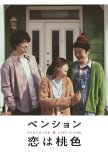
Can a drama be Zen?
It would be hard to argue that nothing happens in this short Jdrama: there's a fist fight, a cleaver attack, a death and multiple people cheating on their relationships. But the tone of the series frames all of these events as rather small ripples in a pond.The drama mostly centers on Shiro (Lily Franky) who is the middle-aged owner of a small pension or bed & breakfast, essentially. He's a bit prurient, but he's also open and accepting, and so he welcomes people into his life and home without judgment which provides space for them to find themselves.
The story is reminiscent of the Zen koan Is That So (https://ashidakim.com/zenkoans/3isthatso.html), and raises the question of whether a drama can or should be Zen since the acceptance of the world as it is and living in the moment is kind of antithetical to the dramatic tension that most people look for in a good drama.
Special mention should be made of Sairi Ito's performance as Shiro's daughter Haru. The climax of the series focusses almost exclusively on her reactions, and she nails it.
Was this review helpful to you?
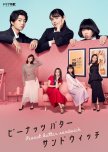
Well Acted, Poorly Written
Based on a manga serialized in the fashion magazine "with" as a way to present the results of laughably awful relationship question surveys, Peanut Butter Sandwich tells the somewhat compelling stories of the love lives of four young women friends within a cringy "comedic" wrapper of a secret government agency which investigates why women in Japan are not getting married at the rates they used to by invasively surveilling the four women while also continuously eating the eponymous sandwiches. (You see, the abbreviation of the name of the bureau ... gah, no one cares, and the bit isn't funny.)The stories of the four friends are reasonably well done, if nothing you haven't seen before. The script is somewhat overly reliant on voice-over to present what the characters are thinking - lots of telling rather than showing - but the primary characters all have reasonably good arcs and most provide the actresses with moments to shine. Takamoto Minori as Miharu gets the most interesting role with the greatest range and does well. Hotta Akane as Sayo makes the most of the least interesting arc by making some really out there choices for behaviors with a light, comedic touch. Kakei Miwako as continues to progress from her days on Terrace House and gets a couple of major emotional scenes which she handles well. This is Niwa Niki's first role in a J-Drama (after also being on Terrace House) and, well, she's a bit wooden, but seems to be hitting her marks and effectively learning her lines as Akane whose story-line might have been more interesting in more veteran hands.
The entire staff of the secret bureau consists of three people: the chief Gonda (Ito Shuko), her flunky Kobayashi (Ito Kentaro, an erstwhile host of Terrace House) and Tsubaki (Yohagi Honoka) who is the only person who does any of the work. (You see, it's a commentary on senpai/kohai relations in the the workplace ... gah, no one cares, and the bit isn't funny.) The wrapper is meant to be comedic and provide context for the stories of the four women, but brings the show to a didactic halt every episode by providing the results of a survey of a whopping 200 women. (You see, most women think their experiences are unique but the surveys show ... gah, no one cares, and the bit isn't funny.)
The one redeeming feature of the series is that it's blessedly short at eight 24-minute episodes, and so it is not much of an investment to check it out, But there are far better ensemble romantic comedies out there which have no need for a secret government agency to halt the actual plot by spewing survey results. Go watch the K-Drama Because This Is My First Life if you want a comedic sismance with a deft injection of real math - it includes a marriage proposal which invokes, I kid you not, Gödel's Incompleteness Theorem. Or if you must have a J-Drama, Nigeru wa Haji da ga Yaku ni Tatsu, which partially inspired that K-drama.
Was this review helpful to you?


