
 Editorials

 12
12 9
9 1
1 1
1 1
1 1
1 2
2 5
5 2
2 2
2


This review may contain spoilers
To let go is to embrace
Hello, dear Wispys~ Most of us have finally reached our destination (i.e. the finale of the story), while some are still 'experiencing' the journey together with Tang Li Ci and others. It was a wonderful journey for me, and I hope it was a splendid experience for you as well! (˶ᵔ ᵕ ᵔ˶)💞
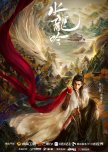
Loosely adapted from the novel “Enduring a Thousand Tribulations” by Teng Ping, the drama follows its sole main character, named ‘Tang Li Ci’, on his journey to accepting certain truths, letting go of obsessions, and sacrificing for the greater good. The story begins with the lavish wedding of a young woman named A-Shui, who allegedly sold herself to City Lord Hao Wen as his concubine to pay for her father’s funeral. However, the wedding is abruptly halted when a devastating tragedy occurs mid-occasion, at the hands of a single man, as if it were a blessing in disguise for the innocent, young girl. This mysterious assailant reveals himself to be Tang Li Ci, a cruel and cunning cultivator who supposedly gouged out the heart of his saviour, who was essentially family for seven whole years. Being accused of the brutal massacre, the true young master Tang embarks on a journey to clear his name, along with his faithful friend, who is more like a devoted follower, Chi Yun. That is how he meets new people, such as A-Shui, Zhong Chun Ji, and Shen Lang Hun, some of whom later become his newfound family… Our male lead will face several confrontations and betrayals as he steers his life towards an almost impossible goal of resurrecting his deceased senior brother, Fang Zhou, and making things right.
Unlike some historical C-dramas we’ve watched, [Whispers Of Fate] draws on a range of philosophical and religious themes closely connected to Buddhism, such as “letting go of the self” and “embracing emptiness”. Therefore, I would humbly like to interpret my review through the lens of Theravada Buddhism (School of the Elders), exploring certain plot points and identifying how they are interconnected with the concepts of “The Four Noble Truths”, “The Wheel of Life”, and “The Eightfold Path”, which I will provide relevant links below to aid further understanding. (..◜ᴗ◝..)✨
More than ten years before the incident at the Hao residence mentioned above took place, Tang Li Ci (formerly known as Ajibaner Tang Jia) was rescued and taken under the wing of a highly revered martial artist, Fang Zhou, who was the eldest disciple and master of the Zhoudi Tower. Fang Zhou bestowed the name 'Tang Li Ci' upon him with the hope that he would become someone special—someone who doesn’t cling to past grievances. Seven years passed, and the bond of brotherhood between them grew deep—so deep that Tang Li Ci could not accept the fact that Fang Zhou was nearing death due to old injuries sustained during a battle with Yi Que Yin Yang at Tiandu Peak. This obsession led him down a dark path, where he practised an unorthodox technique to transfer his healthy life force to Fang Zhou while absorbing the poison harming his senior brother into his own body. However, this attempt ended in disaster, resulting in Fang Zhou's instant de@th due to Liu Yan’s interruption. Still unable to accept this loss, Tang Li Ci clung to a final desperate hope. He dug out his senior brother’s heart crystal to 'nourish' it within his own body, ensuring that it would continue to beat. As if that weren’t enough, this crafty 'fox' even stole the ice coffin belonging to Wangyu Yuedan’s father, the former leader of 'The Palace of Fallen Jade,' to preserve Fang Zhou’s deceased body inside. (Yes, I know… He’s been a naughty boy, stealing other people’s belongings… (ᵕ—ᴗ—) )
All living beings experience suffering, both physical and mental. Tang Li Ci's situation serves as a perfect example of Gautama Buddha's famous quote, "the root of suffering is attachment." This celestial being felt his world crumbling when confronted with the First Noble Truth: suffering or unsatisfactoriness (known as ‘dukkha’). His intense longing and obsession to be with Fang Zhou, who had already passed away, led him to pursue an impossibly dedicated goal of resurrecting his deceased senior brother—this is a clear example of mental suffering.
The Second Noble Truth (‘samudāya’) addresses the origin of dukkha, which is suffering caused by desire and attachment. This suffering arises from craving permanence in an impermanent world. These desires can manifest in wanting to achieve something—such as Tang Li Ci deluding himself into thinking he could bring the deceased Fang Zhou back to life—or in not wanting something, which reflects Tang Li Ci’s unfortunate fate associated with Yi Que Yin Yang. This latter aspect is a significant source of the misfortunes he has encountered.
In episodes 32 and 33, the male lead finally grasped the importance of letting go of his past obsessions, accepting them, and living in harmony with the present. From a Buddhist perspective, these small steps toward understanding one’s cravings and recognising the illusory nature of permanence represent significant progress toward the Third Noble Truth, or 'nirodha,' which means the cessation of suffering. 'Nirodha' signifies the potential to end our suffering and be liberated from the “Wheel of Life” (Bhavacakra). This concept illustrates the Buddhist belief in the cycle of Shengsi (生死), the Chinese transliteration of life and de@th, emphasising the interconnectedness of birth, death, and rebirth, as well as the teachings of karma.
Our male lead is determined to keep everyone by his side and to alter the tragic outcomes he has witnessed—the deaths of many innocent people, including his close friends and acquaintances. It is only when Tang Li Ci comes to understand his own suffering and its origins that he will truly grasp what it means to let go of these desires and embrace emptiness; this is what ‘liberation’ entails. As another quote states, “No one saves us but ourselves. No one can and no one may. We ourselves must walk the path.”
The fourth and final Noble Truth, known as 'magga', explains how individuals can guide themselves to achieve enlightenment by practising "The Eightfold Path". This path consists of right view, right intention, right speech, right action, right livelihood, right effort, right mindfulness, and right concentration. In simple terms, it is a guide that helps us move away from our cravings and towards ultimate freedom. In his final moments, Tang Li Ci reflected on the sincere wish he had made during the Lantern Festival:
“No matter how the world changes as years pass, I hope the people I care about, those who were with me, and friends who fought side by side…, can live peaceful and happy lives.”
When Tang Li Ci focuses on his desires, he becomes ensnared in the Wheel of Life once more, taking on different forms: first as a little white fox, then as a dragon. In the new timeline, he consistently serves as a guardian deity, protecting Shenzhou (神舟), which means Divine Land or Divine Continent, and its remnants. This role has led to the creation of the Legend of the Fox-Dragon. While it can't be said that he has fully achieved enlightenment—since he remains tied to that world by his attachments to friends and those close to him—it can be inferred that this protective Fox-Dragon may have finally grasped the Four Noble Truths before disappearing into the mortal realm. This occurs after he resets the world to a time before the existence of the Tianren realm and Yi Que Yin Yang.
Although time travel does not exist in Buddhism, ancient texts describe countless physical galaxies, solar systems, and worlds similar to ours (**which would be Shenzhou in the drama), collectively referred to as the “Thousand-Fold World System.” With that context in mind, here is my subjective interpretation: What if the Tang-gongzi we knew were reborn as an entirely different being in a world that resembles our own? At some point, he might have regained his memories due to his abundant spiritual powers, allowing him to ‘change the past’ and create a brand-new world filled with happy inhabitants.
And now… CUT! -ˋˏ✄┈┈┈┈ This is getting far-fetched… (๑´>᎑<)~* Let me finally present my humble insights on the drama...
Although the ending of [Whispers of Fate] may not be considered perfectly happy by all viewers, it is a drama that boasts stunning visuals, enchanting music, and a thought-provoking storyline. The production team paid close attention not only to the attractiveness of the main and important supporting characters but also to several minor characters who have only a few minutes of screen time. For instance, this includes the lesser-known members of Feng Liu Dian (House of Pleasures), the two goddesses guarding Ajibaner Tang Jia’s celestial mother during her pregnancy, along with other celestial beings.
One of the most charming aspects that captivated me was the music and the traditional instruments used. I was especially taken by Hong Gu’s arched harp, known as the Zonggaoji (originally called the "Saung-gauk" in Myanmar). This instrument is unique and rare, as it is not commonly seen in historical Chinese dramas. Among all the original soundtracks, my favourite is "春声碎 (Shattered Sounds of Spring)," followed closely by "临风吟 (Ballad to the Breeze)." "Shattered Sounds of Spring" feels like a soulful ode to Tang Li Ci’s longing and false hopes, as well as Liu Yan’s resentment towards him after Fang Zhou’s passing. In contrast, "Ballad to the Breeze" seems to convey that Tang Li Ci has finally come to terms with the truth and has moved past his earlier struggles. Additionally, the wardrobe designs for each character have been thoughtfully chosen not only for their visual impact but also to reflect the rich history of ancient China. Personally, I found Zhong Chun Ji's wardrobe choices less appealing. Unfortunately, her styling came across as somewhat over the top. For instance, her initial hairstyle at her introduction and the purple princess outfit paired with ocean-themed head accessories were particularly striking. (づ˶˃⤙˂˶)
[Whispers of Fate] can be a slow watch, and some viewers might feel that the story drags before reaching certain climactic plotlines. However, as you continue watching, you will find yourself hooked. The drama is undeniably complex, and it would have benefited from more thorough explanations of key events, such as how Ajibaner Tang Jia(Tang Li Ci) was injured and subsequently saved by Fang Zhou, as well as Tang Li Ci’s connections to Yemo and Yi Que Yin Yang. Additionally, the character arcs can be confusing, particularly with A-Shui.
A-Shui had great potential to drive the story forward with her intriguing, mysterious background. She was depicted as a pure-hearted woman who heals those around her with unconditional love and care, without any ulterior motives. However, she came across as a plain, blank sheet of paper left unused on a desk—without intention or purpose. A-Shui was one of the biggest enigmas for both Tang Li Ci and the audience. Unfortunately, her characterisation felt unsatisfactory. It would have been more effective if her relevance and importance had been hinted at in the earlier episodes, rather than being crammed into the later ones.
Despite a few downsides, [Whispers of Fate] is definitely one of the best dramas worth watching. By paying closer attention to the details and themes, we can learn a lot from these characters about their choices and their consequences. The drama offers not only entertainment but also a rich narrative filled with knowledge about ancient Chinese culture, infused with artistic heritage, philosophy, and religious viewpoints.
┈┈┈┈┈┈┈┈┈┈┈┈┈┈┈┈┈┈ . ݁₊ ⊹ . ݁ ⟡ ݁ . ⊹ ₊ ݁. ┈┈┈┈┈┈┈┈┈┈┈┈┈┈┈┈┈┈┈
The following links may help clarify the concepts I used for my review:
The Four Noble Truths-related:
https://www.ebsco.com/research-starters/religion-and-philosophy/four-noble-truths
https://buddhasartofhealing.com/blogs/thangka/dharmachakra-the-wheel-of-law?srsltid=AfmBOorLcTPTx228ED37pwiRx-P8kp8WFuUEg0Ip4NDq-Lu0NHYxWHbu
https://buddho.org/buddhism/#the-truth-of-the-way-that-lead-to-cessation
https://www.worldhistory.org/Four_Noble_Truths/
The Wheel of Life:
https://www.oxfordbibliographies.com/display/document/obo-9780195393521/obo-9780195393521-0072.xml#:~:text=bhava%2Dcakra)%E2%80%94or%2C,concrete%20form%20abstract%20metaphysical%20concepts.
https://www.lionsroar.com/buddhism/wheel-of-life-bhavacakra/
Many-worlds system concept:
https://www.quora.com/Does-Buddhism-support-the-theory-of-parallel-universes
https://www.themindingcentre.org/dharmafarer/wp-content/uploads/2009/12/R450-160524-Parallel-universes-RB150.pdf
Famous Gautam Buddha Quotes:
https://www.vedantu.com/general-knowledge/gautam-buddha-quotes
Loosely adapted from the novel “Enduring a Thousand Tribulations” by Teng Ping, the drama follows its sole main character, named ‘Tang Li Ci’, on his journey to accepting certain truths, letting go of obsessions, and sacrificing for the greater good. The story begins with the lavish wedding of a young woman named A-Shui, who allegedly sold herself to City Lord Hao Wen as his concubine to pay for her father’s funeral. However, the wedding is abruptly halted when a devastating tragedy occurs mid-occasion, at the hands of a single man, as if it were a blessing in disguise for the innocent, young girl. This mysterious assailant reveals himself to be Tang Li Ci, a cruel and cunning cultivator who supposedly gouged out the heart of his saviour, who was essentially family for seven whole years. Being accused of the brutal massacre, the true young master Tang embarks on a journey to clear his name, along with his faithful friend, who is more like a devoted follower, Chi Yun. That is how he meets new people, such as A-Shui, Zhong Chun Ji, and Shen Lang Hun, some of whom later become his newfound family… Our male lead will face several confrontations and betrayals as he steers his life towards an almost impossible goal of resurrecting his deceased senior brother, Fang Zhou, and making things right.
Unlike some historical C-dramas we’ve watched, [Whispers Of Fate] draws on a range of philosophical and religious themes closely connected to Buddhism, such as “letting go of the self” and “embracing emptiness”. Therefore, I would humbly like to interpret my review through the lens of Theravada Buddhism (School of the Elders), exploring certain plot points and identifying how they are interconnected with the concepts of “The Four Noble Truths”, “The Wheel of Life”, and “The Eightfold Path”, which I will provide relevant links below to aid further understanding. (..◜ᴗ◝..)✨
More than ten years before the incident at the Hao residence mentioned above took place, Tang Li Ci (formerly known as Ajibaner Tang Jia) was rescued and taken under the wing of a highly revered martial artist, Fang Zhou, who was the eldest disciple and master of the Zhoudi Tower. Fang Zhou bestowed the name 'Tang Li Ci' upon him with the hope that he would become someone special—someone who doesn’t cling to past grievances. Seven years passed, and the bond of brotherhood between them grew deep—so deep that Tang Li Ci could not accept the fact that Fang Zhou was nearing death due to old injuries sustained during a battle with Yi Que Yin Yang at Tiandu Peak. This obsession led him down a dark path, where he practised an unorthodox technique to transfer his healthy life force to Fang Zhou while absorbing the poison harming his senior brother into his own body. However, this attempt ended in disaster, resulting in Fang Zhou's instant de@th due to Liu Yan’s interruption. Still unable to accept this loss, Tang Li Ci clung to a final desperate hope. He dug out his senior brother’s heart crystal to 'nourish' it within his own body, ensuring that it would continue to beat. As if that weren’t enough, this crafty 'fox' even stole the ice coffin belonging to Wangyu Yuedan’s father, the former leader of 'The Palace of Fallen Jade,' to preserve Fang Zhou’s deceased body inside. (Yes, I know… He’s been a naughty boy, stealing other people’s belongings… (ᵕ—ᴗ—) )
All living beings experience suffering, both physical and mental. Tang Li Ci's situation serves as a perfect example of Gautama Buddha's famous quote, "the root of suffering is attachment." This celestial being felt his world crumbling when confronted with the First Noble Truth: suffering or unsatisfactoriness (known as ‘dukkha’). His intense longing and obsession to be with Fang Zhou, who had already passed away, led him to pursue an impossibly dedicated goal of resurrecting his deceased senior brother—this is a clear example of mental suffering.
The Second Noble Truth (‘samudāya’) addresses the origin of dukkha, which is suffering caused by desire and attachment. This suffering arises from craving permanence in an impermanent world. These desires can manifest in wanting to achieve something—such as Tang Li Ci deluding himself into thinking he could bring the deceased Fang Zhou back to life—or in not wanting something, which reflects Tang Li Ci’s unfortunate fate associated with Yi Que Yin Yang. This latter aspect is a significant source of the misfortunes he has encountered.
In episodes 32 and 33, the male lead finally grasped the importance of letting go of his past obsessions, accepting them, and living in harmony with the present. From a Buddhist perspective, these small steps toward understanding one’s cravings and recognising the illusory nature of permanence represent significant progress toward the Third Noble Truth, or 'nirodha,' which means the cessation of suffering. 'Nirodha' signifies the potential to end our suffering and be liberated from the “Wheel of Life” (Bhavacakra). This concept illustrates the Buddhist belief in the cycle of Shengsi (生死), the Chinese transliteration of life and de@th, emphasising the interconnectedness of birth, death, and rebirth, as well as the teachings of karma.
Our male lead is determined to keep everyone by his side and to alter the tragic outcomes he has witnessed—the deaths of many innocent people, including his close friends and acquaintances. It is only when Tang Li Ci comes to understand his own suffering and its origins that he will truly grasp what it means to let go of these desires and embrace emptiness; this is what ‘liberation’ entails. As another quote states, “No one saves us but ourselves. No one can and no one may. We ourselves must walk the path.”
The fourth and final Noble Truth, known as 'magga', explains how individuals can guide themselves to achieve enlightenment by practising "The Eightfold Path". This path consists of right view, right intention, right speech, right action, right livelihood, right effort, right mindfulness, and right concentration. In simple terms, it is a guide that helps us move away from our cravings and towards ultimate freedom. In his final moments, Tang Li Ci reflected on the sincere wish he had made during the Lantern Festival:
“No matter how the world changes as years pass, I hope the people I care about, those who were with me, and friends who fought side by side…, can live peaceful and happy lives.”
When Tang Li Ci focuses on his desires, he becomes ensnared in the Wheel of Life once more, taking on different forms: first as a little white fox, then as a dragon. In the new timeline, he consistently serves as a guardian deity, protecting Shenzhou (神舟), which means Divine Land or Divine Continent, and its remnants. This role has led to the creation of the Legend of the Fox-Dragon. While it can't be said that he has fully achieved enlightenment—since he remains tied to that world by his attachments to friends and those close to him—it can be inferred that this protective Fox-Dragon may have finally grasped the Four Noble Truths before disappearing into the mortal realm. This occurs after he resets the world to a time before the existence of the Tianren realm and Yi Que Yin Yang.
Although time travel does not exist in Buddhism, ancient texts describe countless physical galaxies, solar systems, and worlds similar to ours (**which would be Shenzhou in the drama), collectively referred to as the “Thousand-Fold World System.” With that context in mind, here is my subjective interpretation: What if the Tang-gongzi we knew were reborn as an entirely different being in a world that resembles our own? At some point, he might have regained his memories due to his abundant spiritual powers, allowing him to ‘change the past’ and create a brand-new world filled with happy inhabitants.
And now… CUT! -ˋˏ✄┈┈┈┈ This is getting far-fetched… (๑´>᎑<)~* Let me finally present my humble insights on the drama...
Although the ending of [Whispers of Fate] may not be considered perfectly happy by all viewers, it is a drama that boasts stunning visuals, enchanting music, and a thought-provoking storyline. The production team paid close attention not only to the attractiveness of the main and important supporting characters but also to several minor characters who have only a few minutes of screen time. For instance, this includes the lesser-known members of Feng Liu Dian (House of Pleasures), the two goddesses guarding Ajibaner Tang Jia’s celestial mother during her pregnancy, along with other celestial beings.
One of the most charming aspects that captivated me was the music and the traditional instruments used. I was especially taken by Hong Gu’s arched harp, known as the Zonggaoji (originally called the "Saung-gauk" in Myanmar). This instrument is unique and rare, as it is not commonly seen in historical Chinese dramas. Among all the original soundtracks, my favourite is "春声碎 (Shattered Sounds of Spring)," followed closely by "临风吟 (Ballad to the Breeze)." "Shattered Sounds of Spring" feels like a soulful ode to Tang Li Ci’s longing and false hopes, as well as Liu Yan’s resentment towards him after Fang Zhou’s passing. In contrast, "Ballad to the Breeze" seems to convey that Tang Li Ci has finally come to terms with the truth and has moved past his earlier struggles. Additionally, the wardrobe designs for each character have been thoughtfully chosen not only for their visual impact but also to reflect the rich history of ancient China. Personally, I found Zhong Chun Ji's wardrobe choices less appealing. Unfortunately, her styling came across as somewhat over the top. For instance, her initial hairstyle at her introduction and the purple princess outfit paired with ocean-themed head accessories were particularly striking. (づ˶˃⤙˂˶)
[Whispers of Fate] can be a slow watch, and some viewers might feel that the story drags before reaching certain climactic plotlines. However, as you continue watching, you will find yourself hooked. The drama is undeniably complex, and it would have benefited from more thorough explanations of key events, such as how Ajibaner Tang Jia(Tang Li Ci) was injured and subsequently saved by Fang Zhou, as well as Tang Li Ci’s connections to Yemo and Yi Que Yin Yang. Additionally, the character arcs can be confusing, particularly with A-Shui.
A-Shui had great potential to drive the story forward with her intriguing, mysterious background. She was depicted as a pure-hearted woman who heals those around her with unconditional love and care, without any ulterior motives. However, she came across as a plain, blank sheet of paper left unused on a desk—without intention or purpose. A-Shui was one of the biggest enigmas for both Tang Li Ci and the audience. Unfortunately, her characterisation felt unsatisfactory. It would have been more effective if her relevance and importance had been hinted at in the earlier episodes, rather than being crammed into the later ones.
Despite a few downsides, [Whispers of Fate] is definitely one of the best dramas worth watching. By paying closer attention to the details and themes, we can learn a lot from these characters about their choices and their consequences. The drama offers not only entertainment but also a rich narrative filled with knowledge about ancient Chinese culture, infused with artistic heritage, philosophy, and religious viewpoints.
┈┈┈┈┈┈┈┈┈┈┈┈┈┈┈┈┈┈ . ݁₊ ⊹ . ݁ ⟡ ݁ . ⊹ ₊ ݁. ┈┈┈┈┈┈┈┈┈┈┈┈┈┈┈┈┈┈┈
The following links may help clarify the concepts I used for my review:
The Four Noble Truths-related:
https://www.ebsco.com/research-starters/religion-and-philosophy/four-noble-truths
https://buddhasartofhealing.com/blogs/thangka/dharmachakra-the-wheel-of-law?srsltid=AfmBOorLcTPTx228ED37pwiRx-P8kp8WFuUEg0Ip4NDq-Lu0NHYxWHbu
https://buddho.org/buddhism/#the-truth-of-the-way-that-lead-to-cessation
https://www.worldhistory.org/Four_Noble_Truths/
The Wheel of Life:
https://www.oxfordbibliographies.com/display/document/obo-9780195393521/obo-9780195393521-0072.xml#:~:text=bhava%2Dcakra)%E2%80%94or%2C,concrete%20form%20abstract%20metaphysical%20concepts.
https://www.lionsroar.com/buddhism/wheel-of-life-bhavacakra/
Many-worlds system concept:
https://www.quora.com/Does-Buddhism-support-the-theory-of-parallel-universes
https://www.themindingcentre.org/dharmafarer/wp-content/uploads/2009/12/R450-160524-Parallel-universes-RB150.pdf
Famous Gautam Buddha Quotes:
https://www.vedantu.com/general-knowledge/gautam-buddha-quotes
Was this review helpful to you?


