
 Editorials


 2
2 2
2


This review may contain spoilers
Lost in translation, stuck in flashback
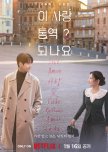
Can This Love Be Translated? grabbed me from the start thanks to its attractive leads, glossy international locations (real or not, they look expensive enough), and a premise that suggested something fresher than the average romantic drama. That promise fades quickly with an opening that is more baffling than moving: Cha Mu-hui flies from Korea to Japan to confront a man who vanished from her life, only to discover he is now happily partnered and expecting a child. It is one of those moments where the drama expects sympathy, but the viewer can only think, girl, if he disappeared without a word, he already translated his feelings loud and clear. Emotional investment never quite recovers from this misstep.
The narrative grows shakier when Joo Ho-jin learns that his brother’s partner is nearby and decides to chase unresolved feelings rather than accept reality and, ideally, mind his own business. What follows is a romantic progression defined less by chemistry than by confusion. The drama relies heavily on what can best be described as retroactive emotional editing — constant flashback inserts and before-and-after scene repetitions that attempt to add depth but instead fracture narrative flow. At times, the structure is so disorienting it makes the viewer question whether a scene was missed or simply replayed with new background music. Add to this dialogue full of riddles and half-statements, and the result is a romance that feels deliberately opaque rather than intriguingly complex.
The drama finally finds some footing around episode ten, when the romantic tension pays off and the kissing scenes are, refreshingly, convincing, no stiff, mannequin-style lip touching here. Unfortunately, the final stretch leans into full melodrama with an especially absurd revelation: Cha Mu-hui’s parents are alive, and her family has been hiding it from her for years — a plot twist that in real life would warrant legal action, not a slow-motion breakdown. Still, strong performances (particularly Go Youn-jung’s emotionally committed turn), elegant set design, and a genuinely romantic stargazing finale prevent the drama from collapsing under its own narrative weight. Frustrating, uneven, and often confusing, In the end, CTLBT is a series whose ambition exceeds its narrative discipline: compelling in moments, frustrating in structure, and emblematic of a romance that struggles not with language, but with clarity.
The narrative grows shakier when Joo Ho-jin learns that his brother’s partner is nearby and decides to chase unresolved feelings rather than accept reality and, ideally, mind his own business. What follows is a romantic progression defined less by chemistry than by confusion. The drama relies heavily on what can best be described as retroactive emotional editing — constant flashback inserts and before-and-after scene repetitions that attempt to add depth but instead fracture narrative flow. At times, the structure is so disorienting it makes the viewer question whether a scene was missed or simply replayed with new background music. Add to this dialogue full of riddles and half-statements, and the result is a romance that feels deliberately opaque rather than intriguingly complex.
The drama finally finds some footing around episode ten, when the romantic tension pays off and the kissing scenes are, refreshingly, convincing, no stiff, mannequin-style lip touching here. Unfortunately, the final stretch leans into full melodrama with an especially absurd revelation: Cha Mu-hui’s parents are alive, and her family has been hiding it from her for years — a plot twist that in real life would warrant legal action, not a slow-motion breakdown. Still, strong performances (particularly Go Youn-jung’s emotionally committed turn), elegant set design, and a genuinely romantic stargazing finale prevent the drama from collapsing under its own narrative weight. Frustrating, uneven, and often confusing, In the end, CTLBT is a series whose ambition exceeds its narrative discipline: compelling in moments, frustrating in structure, and emblematic of a romance that struggles not with language, but with clarity.
Was this review helpful to you?


