



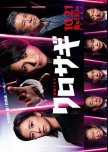
Two of Three Worth Watching
The Black Swindler (2006)Kurosagi: The Movie (2008)
Kurosagi (2022)
This Kurosagi series is about a young man (Kurosaki) whose father got swindled or conned pushing him to kill his family and himself. The son survived and thereafter dedicated himself to revenge on all such swindlers. A straight forward vigilante themed story.
Con men who swindle the innocent financially are called white swindlers (Shirosagi). Con artists who swindle romantically for money are called red swindlers (Akasagi). Our main character only cons white (Shiro) and red (Aka) swindlers (Sagi) so we have a strong Robin Hood theme in order to ensure sympathy with the lead who is after all breaking the law.
All three were written by the same screenwriter and one of a few directors is common to all three.
The cast of both The Black Swindler (2006) and the Movie (2008) are the same. The 2022 version is a reboot with all new cast.
I first watched Kurosagi (2022). Generally Japanese productions can be problematic with exaggerated acting styles and seriously obnoxious background music. However, this 2022 version is very watchable and the music not too distracting.
The 2006 TV Show was at first off-putting due to the acting and background music but I was curious how it compares to the 2022 reboot. It’s very similar following main plot twists - mostly - but has several significant changes in subplots. The result is a nicely done resonation between the two. You’ll get more from watching both than either alone.
The screenwriter loves symbolism. Conning someone is called ‘eating’. A main support character, a mentor to Kurosaki in all three, is shown having difficulty at times eating some thing or other. He is of course the master swindler who is guiding Kurosaki after his survival as a young teen.
The Movie (2008) is a clumsy return to first series (2006) and is essentially a long single episode. It doesn’t work so well and is forgettable. It could be the persistent references to the assassination of Julius Caesar and his betrayal by Brutus (whose mother was Servilia Caesar’s love interest over decades so possibly Caesar was real father of Brutus) or the frequent exposition.
Two out of three are worth the time. The third is for curiosity.
Was this review helpful to you?
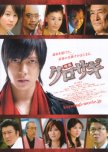
Two of Three Worth Watching
The Black Swindler (2006)Kurosagi: The Movie (2008)
Kurosagi (2022)
This Kurosagi series is about a young man (Kurosaki) whose father got swindled or conned pushing him to kill his family and himself. The son survived and thereafter dedicated himself to revenge on all such swindlers. A straight forward vigilante themed story.
Con men who swindle the innocent financially are called white swindlers (Shirosagi). Con artists who swindle romantically for money are called red swindlers (Akasagi). Our main character only cons white (Shiro) and red (Aka) swindlers (Sagi) so we have a strong Robin Hood theme in order to ensure sympathy with the lead who is after all breaking the law.
All three were written by the same screenwriter and one of a few directors is common to all three.
The cast of both The Black Swindler (2006) and the Movie (2008) are the same. The 2022 version is a reboot with all new cast.
I first watched Kurosagi (2022). Generally Japanese productions can be problematic with exaggerated acting styles and seriously obnoxious background music. However, this 2022 version is very watchable and the music not too distracting.
The 2006 TV Show was at first off-putting due to the acting and background music but I was curious how it compares to the 2022 reboot. It’s very similar following main plot twists - mostly - but has several significant changes in subplots. The result is a nicely done resonation between the two. You’ll get more from watching both than either alone.
The screenwriter loves symbolism. Conning someone is called ‘eating’. A main support character, a mentor to Kurosaki in all three, is shown having difficulty at times eating some thing or other. He is of course the master swindler who is guiding Kurosaki after his survival as a young teen.
The Movie (2008) is a clumsy return to first series (2006) and is essentially a long single episode. It doesn’t work so well and is forgettable. It could be the persistent references to the assassination of Julius Caesar and his betrayal by Brutus (whose mother was Servilia Caesar’s love interest over decades so possibly Caesar was real father of Brutus) or the frequent exposition.
Two out of three are worth the time. The third is for curiosity.
Was this review helpful to you?
Better Than the Rating, Delightfully Surprised
This is a story about an evil bastard who destroys the lives of thousands of people, and how some of those wrecked people organize to bring him down. In the process of getting some payback these people heal each other and themselves. The story emphasizes steep character growth for the many broken individuals involved in the revenge scheme.The plot can be complicated but no overly so. Much of the uneven early presentation may have to do with this being a first script for the author.
I found the first seven episodes OK and good enough to hold my attention. It was the seventh and eighth episodes that I felt really hooked, and then it got better from there as the payoffs in plot development and character growth show up.
Usually the website ratings on shows are a good guide, but not always. Sometimes a particular drama appeals to a niche leaving others cold or indifferent resulting in a lower than deserved score (or the process can work in reverse). It's worth checking if you're in the niche for this one or not.
Was this review helpful to you?
Rewatch Comments
I thoroughly enjoyed this the second time around. The series as completed is excellent and not likely to disappoint.However, this second time around an alternative version of the female lead occurred to me. I don't mean any of this to be taken as criticism and I believe the show deserves my high rating and the overall high average rating.
The lead character, Jang Man Wol played by IU, has a steep development curve as is, but given that she was a murderous, thieving, impulsive, and thoroughly sybaritic immortal being the on screen character we saw was censured leaving out certain pleasures that an immortal would not likely overlook. And, given her penchant often shown in backstory for killing people who crossed her, the young appearing lady we meet in the present day seems mild. The writers have the supporting ghosts talk about how mean she is and how foolish the young male lead is to confront her, but she seems almost meek at times. An immortal being such as Man Wol would likely not have hesitated to enjoy carnal pleasures to just as great an excess as she seemed to collect jewelry and other expensive trinkets. If in the early episodes the young male lead had confronted a more dangerous physically and more aggressive in the bedroom female lead then that much steeper character growth would have been more satisfying.
It's also true of other dramas such as The Goblin and My Roommate Is a Gumiho in which the leads live hundreds of years and remain seemingly celibate.
Was this review helpful to you?
Quirky
This is not for everyone, obviously. You'll know by the end of that first episode if you'll like the main story.Once into second episode I was gripped by the tension and story as it played out.
The problem for me was after the main story fed into the final resolution things fell a bit short of satisfying, and left much to be explained. That ending or final resolution doesn't really fit what comes before. The meat of the series is a good supernatural mystery/detective show, but the ending feels like something from a different supernatural horror movie.
I don't feel cheated and am glad I watched those first 5.5 episodes.
So, if you decide to watch be forewarned.
Was this review helpful to you?
This review may contain spoilers
Creative Borrowing
Within the story it alludes to some search for immortality by a long dead ruler as an inspiration. However, as the story unfolds a connection to another theme comes through as it becomes clear to us and the characters that there is no safe refuge, no home, and that the mobs will hunt Seobok down to exploit him no matter the cost.When the mobs close in and then are defeated the realization takes hold that there is nowhere to flee to and we arrive at another inevitable ending. The story and ending strongly evoked the same emotions and tragic ending of the novel "Of Mice and Men". I hope that doesn't give away too much, but it's that tragic collision at the end that makes the ending work so well and for the same reasons.
The same but different, and a well told story deserving in its own right.
Highly recommend.
Was this review helpful to you?
An Original -Good Outweighs the modest flaws
I'm not a big fan of fantasy so despite the high ratings I put this off. First time I stopped at the beginning of the second episode. However, after several months I gave it another try and this time ended up binging both seasons. Despite some obvious borrowings from other fantasy sources this story comes across as very original and fresh.The first season was well thought out so despite a few questions about the rules of this fantasy world the story, acting, and execution kept me engaged through to the end. The plot points follow believably more often than not.
Jung So Min's performance stands out. Her charisma dominates every scene in which she appears.
In this first season the writers weren't timid about consequences i.e. characters do die.
There was no question about jumping into the second season as the first one ends with a major cliff hanger.
However, the second season was not up to the first. The maturity level was deliberately lowered. There are a few mutilations of characters to achieve some sort of comedic effect and I often felt the plot getting bogged down by contrived situations, and several occasions in which an odd solution was injected to resolve scenes. These didn't stop me from enjoying the story journey, but I suspect the writers either did not have enough time to plot things out more carefully or more likely the suits put pressure on them to inject new elements to broaden the audience.
The first season Naksu character had a fierce introduction early on and ended up trapped within a weaker body without magical powers, and that challenge she faced - to achieve her goals without her usual powers - was entertaining. She had some interesting conflicting feelings emerge as her original desire for revenge ran into new facts that didn't reconcile with what she had been led to believe about the fate of her family.
In the second season that old fierce Naksu personality and that conflict were submerged behind an amnesia leaving a meek mild young girl with minimal magic and little agency, and the whole dilemma that season 1 was so focused on just disappeared. There were new dilemmas but these were not handled as well as the plot at times lurched forward.
Finally, I like a happy ending, but sometimes need one on the dark side because the story and characters demand it. The first season delivered. The second season really fudged on any consequences and we get a just so ending. Characters and story are set up to force hard choices, suffer the consequences, but then get bailed out. And when we see via the spirit of young Jin Bu Yeon that there is a major Devine entity at work this telegraphs a just so ending is coming for the lead couple.
Despite these flaws I found the whole very enjoyable and will rewatch again.
Was this review helpful to you?
Mixed
I usually avoid reading reviews until I finish. However, by E5 I had increasing doubts because the story felt a bit choppy and was losing me. So I checked out a few reviews and one mentioned it doesn't get good until E7! I pushed through to E7 and yes it gets 'better' but that's in part because of an increasing curiosity to find out whether the writing would improve.Key story points would pop up and then oddly characters wouldn't mention them until much later.
Anyway, I did find the characters and the story in the last five episodes engaging but was disappointed many rough edges weren't fixed before this went into production. I don't fault the actors or the production quality, but suspect the problem is with the script and likely the direction.
Was this review helpful to you?
Really Good Story Buried Under Amateurish Execution
The basic story idea is excellent. I found it held my interest and was worth watching once but I doubt I'll come back. There are too many rough edges and I'll forget about it too soon.The series blends vigilantism with a revenge theme plus the supernatural.
At times especially in the latter half I found myself thinking more about the odd twists and some stilted acting than about the story. That's bad.
The script was a draft that needed some drastic editing and smoothing. There are too many lapses in the plot, meaning events pop up and are left hanging, or the scene to scene logic was rough. The main characters' development felt off way too often. The main Yoon Ha Na character was a little too witless and helpless too often.
The writers had some interesting ideas exploring the grey between good vs evil. And I give them credit for following through on the implications of someone 'good' falling into that dark side. A main protagonist does some serious evil and the writers don't push a cliche redemption.
And while the main antagonist never finds redemption he takes directions I didn't expect towards the end.
The opening teaser scene in which Ha Na is chased onto a roof is extremely odd. As the story approaches the end I expected that opening scene to reappear and be explained. Nope. It never gets fitted into the story anywhere at anytime. It should have been cut.
The story takes some weird unexpected directions in the last third that are interesting but don't fit well. I got the feeling that the writers were directed to come up with enough material for 10 episodes when the story kinda wanted to end at about the 7th episode.
None of my negative comments are directed at the cast who did the best they could with the material and direction.
The first half or more of the episodes had some rough subtitling, but towards the last few episodes it really gets bad with consistent failures in basic grammar. The confusion as to when to use past tense vs past perfect is common here and also many TV series, but the most distracting was the frequent use of 'did went' when 'did go' was correct.
Despite the many flaws I found it entertaining if not always for the right reasons.
Was this review helpful to you?
Rewatch Update
After rewatch .... I found this even better the second time around because of the details woven into the story and character development that didn't register the first time around. Upgrade to a 10.*****************
This series is an original that pulls very different genres together in a bold experiment that works on net. There are cases when it fails miserably but these tend to be offset often enough by what works to make it an enjoyable experience.
One one hand it contains a lot of slapstick comedy with the loose plotting that goes with such comedies, but there is also frequent violent action with broken limbs and dead bodies (often done in by Vincenzo) littering the screen. Sometimes the transition from one to the other is jarring. Usually, an action comedy will downplay or hide the violence - think cartoons. And usually a gory action thriller will go light on comedy staying with witty one liners here and there. Vincenzo boldly throws these together and on net it works more often than not.
After a few episodes we get used to outlandish contrivances to get out of deadly situations.
On the serious side Vincenzo is an unapologetic mafia member straight out of southern Italy who by the last episode indulges in some seriously torturous contrived endings for the main villains of the story. The producers did not shy away from showing the blood and gore. In Vincenzo series we've put aside any pretensions to an absolute good vs bad and entered a world where relativistic laws prevail. Someone can be construed as 'good' if they only do bad to someone who is worse, in other words someone who deserves a painful ending delivered outside the law.
The show and character Dexter come to mind. Dexter is also an ostensibly evil character (he kidnaps and tortures people to death with a knife) who is the hero. Dexter in the show was toned down from the character in the book series. In the written version Dexter, in an uneasy alliance with a demon cohabiting in his mind, killed his victims by a long hours long torture - vivisection to be exact. The demon was delighted with the torture and in exchange endowed Dexter with some supernatural perception. Dexter followed a code which limited his hobby to people who really deserved it. For the show in early episodes this torture was alluded to but not shown, and then later it was suppressed entirely with Dexter dispatching each victim with a clean stab to the heart. Was Dexter, the hero of his story, evil? The writer ensures sympathy by making sure the reader is well aware of the sins of Dexter's victims (all serial killers). Dexter becomes a vigilante helping society cleanse itself of the hidden evil its justice system is unable to find and deal with. The TV show producers were not comfortable with the vigilante angle and eventually destroyed the character by portraying him as insane (no demon so no bargain),
In Vincenzo the producers are well aware of the issue of good vs evil and how problematic Vincenzo and his actions are. By the last few episodes there are a few occasions where Vincenzo candidly looks into the mirror and acknowledges that he's often doing what the average person would condemn. He offers a fatalistic justification, but the key is that he, the character, is well aware of the issue. And we the audience more or less are rooting for him.
Was this review helpful to you?
This review may contain spoilers
Heartwarming Gem
There were a few rough edges but lots of heart that shined brightly once things got going.In particular, although the ending was necessarily abbreviated it was satisfying. I’m surprised that this series hasn’t gotten the 12 or 16 hour long episode treatment. The three hours didn’t seem long at all but forced what I felt was a too brief treatment of some twists.
For example, the ending revealed several interesting connections among the living and the dead that deserved to be expanded in more background story developments.
Also the ending revealed a final ending for the main character that could and should have had a longer exploration vs the few minutes it received.
A little jarring for me was that midway through several people talked to a girl they knew died 7 years prior without much of a dramatic ripple. That really needed more context and development - the livings’ reactions and perhaps the formerly dead girl’s adjustments.
This is one that gets better as you go and finishes with a satisfying ending.
Was this review helpful to you?
Maslow Would Approve
This one is bit different. The initial contrivance is a romantic drama, and in the first few episodes the story plays out as might be expected. However, half way through or thereabouts the main story (which revolves around the primary couple plus two other couples) continues but the self reflection and injection of ideas via quotes and allusions to famous and not so famous authors markedly increases (e.g. Maslow, Becker, Goethe). These injections and allusions are in the dialogue and often in the thoughts and or overview narration.This might be off-putting to some as it was to the primary female lead’s mother. In a scene near the last episode the female lead is explaining some unexpected and radical decision to her mother, and she starts saying out loud some of these self absorbed rationales for her decisions and the mother abruptly says, “That’s a load of crap.” If the viewer empathizes with the mother then they probably won’t be watching through until this penultimate episode anyway, but if the viewer appreciates the in depth self reflection of the main character, then this series is for you.
I suspect a lot of autobiographical inspiration for many of the experiences of these sharply drawn characters.
Was this review helpful to you?
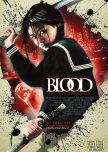
Could have been worse
Lotta flaws in this production but some good parts too.The script sounds like a draft that needs a lot of work. In the right hands the anime might have been a new franchise series, but (I didn't read the anime) I suspect a lot of background material was left out. Some expansion on the why of the characters' motivations and background details would have helped. Given the wide variety of creative inputs it's surprising it worked as well as it did (not very well at all). The Korean and American actresses went on to active careers so they did what they could with the material. The movie was too short (1.5 hours) and even that was padded with excessive chopping and slashing scenes as if someone thought that would distract from the wooden acting and dialogue.
Once the big reveal happens I was curious to see more of the Saya character and what she would to do going forward. This movie should have been the set - up for a great series revolving around Saya.
Was this review helpful to you?
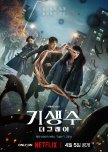
Fun Entertaining Watch
The story and characters got better with each episode such that I hope they continue with the main characters in a part 2. I thought there were a number of plot holes and open questions on how the universe worked, but because the story doesn't take itself too seriously and because of the character growth you don't care about those questions. At the end I was left wanting to see what happens next with these characters.Was this review helpful to you?

Starts Slow, Gets Better
This reminded me of the old CSI series but at times a bit clumsy in weaving the character growth, plots, and crimes into a smooth story. The pilot was slow but as the episodes progressed they got much better. The grating flaw in the production was often the background music which drew attention to itself - was often weird - especially that piano.Was this review helpful to you?


