
 News


 77
 340
 11
 1
 5
 1
 13
 1
 2
 3
 1
 2
 1
 1
 6
 13
 2
 1
 2
 1
 2
 1
 1
 3
 2
 1
 2
 3
 1
 2
 1
 9


It is my way or the highway.
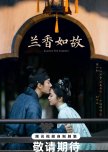
Xu Lanxiang is no ordinary servant. She has a secret—a deep and dangerous secret. No one must find out that she is really Shen Jialan, the peerless young noblewoman who was once engaged to Lin Jinqi. She miraculously survived her family's downfall and assumes the identity of Xu Lanxiang, the daughter of hereditary servants belonging to the noble Lin family. At the Lin mansion, she finds that once again her fate is tied to that of the Lin family, who are buffeted by the treacherous political cross-currents of the time. She has to save them to save herself, and before long she catches the attention of her former fiancé. As they defy many nefarious foes and diabolical plots together, he does the unthinkable and falls for her. He goes to unbelievable lengths to marry her, restoring her to the life path she thought was closed to her.
兰香如故/Lán Xiāng Rúgù or The Fragrance Endures (English title Against the Current) is an infuriating and poignant story about how women rebel—quietly, loudly, cunningly, and at times destructively—against the suffocating feudalism of a fictional setting uncannily similar to the Ming dynasty. Xu Lanxiang is a complicated protagonist who suffers greatly and is quietly broken, never quite able to shed her tragic past. This is a classic Tong Hua story about how there are some things one can never recover from. Like Xiao Yao in Lost You Forever, the only time Lanxiang is truly happy and carefree is when she is living Xu Lanxiang's best life. When she becomes Shen Jialan again all but in name, she becomes quieter and smaller, with an aura of gentle sadness even when she smiles.
Lanxiang is a study in contradiction: she almost too cleverly triumphs over all her enemies, yet she remains emotionally stagnant, so unable to progress or truly open her heart that I found her difficult to connect with. I can't decide if I like her. While she endured an immense tragedy, she is not unique in her suffering. Like many characters in this drama, including the notable antagonists, this was just a terrible era to be a woman. But unlike Zhao Xingtang and Du Cuique, she never seemed to have to acknowledge, much less be restrained by, her time. The rules didn't apply to her, as the narrative allowed her to get away with embracing too many 21st-century values—individual autonomy, open defiance of marital obligation, a modern sense of self—without consequence. This made her at times come across as less empathetic, in the narrative's framing, than the main antagonists, who were at least allowed to be products of their era. It did not help that Li Meng stole the show with her flamboyant and intense portrayal of the willful and passionate Zhao Xingtang. While they detested each other, I felt the pull of unwilling attraction between Li Meng's Zhao Xingtang and Liu Xueyi's Lin Jinqi that was notably missing in the more comfortable chemistry between Liu Xueyi and Tan Songyun.
While Tan Songyun can always be relied upon to deliver a solid performance, she notably misses the mark in the latter half—partly the styling, as she was lost in all the oversized costumes and that gigantic wig that swallowed up her face, and partly the writing, which went too far in emphasizing the now-tired empowerment themes about women not needing men to live well. Her character lost me after she cold-shouldered Lin Jinqi for such a long time, even after he revealed all the risks he had taken for the Shen family. I found her ultimatum—"it is my way or the highway"—especially off-putting. I am not sure I would even call their story a love story; it was too one-sided on his part. Liu Xueyi delivers a compelling and empathetic portrayal but his character is diminished by his tolerant, long suffering and one-sided devotion. While her resentment eventually turns into acceptance, gratitude, and familiarity, she never allowed herself to truly love him. That made me angry at her until I realized it was her survivor's guilt. Her mother urged her to live well, and while she certainly lived long, she never lived for herself.
The best parts of this drama are the side characters—the Lin family who love each other for all their flaws, the hilarious spanking scene, and Lin Jinqi's mom, whose facial expressions are comedy gold. While Xu Lanxiang is the main protagonist, she is a stalled character who is so unable to progress emotionally or truly open her heart that I found her difficult to root for. I found Zhao Xingtang more empathetic because she still dared to live and love. Lin Xiuwan turned out to be the only character who had free will and a growth arc in the story. This was a truly enjoyable drama overall that would have been much better if the narrative didn't overindulge in feminist propaganda. A truly inspiring women's story should be about someone who is able to rise from the ashes to live her own best life rather than a long one full of regret. At least Zhao Xingtang tried and Lin Xiuwan actually pulled it off, making her the true heroine of this story. At the end, I realized that the real Shen Jialan's spirit may have died a long time ago even though she continued to live on.
I rate this 8.5/10.0—my rating reflects the side characters and comedy; the central arc is weaker. It made me laugh a lot, but it is not a happy journey. It is one that left me feeling vaguely depressed instead of triumphant.
Was this review helpful to you?


