
 Editorials


 1


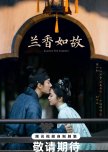
This review may contain spoilers
“A single light is dim. But if we each light a lamp, even fireflies can brighten a street.”
This drama is like poetry in motion. Its beauty truly lies in its simple yet profound storytelling that transcends social classes and ages.
Xu Lan Xiang is such a magnificently crafted character. At a young age, she experienced the deepest sorrows of witnessing her entire family’s massacre and falling to the lowest social status. Despite the harsh vicissitudes of life, her will to live remains stronger than anyone and she refuses to let vengeful thoughts consume her. Lan Xiang is courageous, resilient, smart and resourceful in striving for what she wants, but she's also clear about the moral boundaries that cannot be crossed. It’s extremely fulfilling to see her character development from a well-educated noble girl, to a maidservant and finally the Lin household's madam. As a third-class maid, her sole aim is to survive and provide for her adopted parents. As she gradually rises in social status, Lan Xiang not only wants herself to live well but also to help those around her have a good life. She can act well and hide her talents to survive, but also become very versatile and adapt to any situation to get what she wants. Rather than spiralling into despair as people leave her one by one, she becomes more enlightened about life and death, and focuses on the contentment of what she has achieved for herself and those she loves. Lan Xiang’s name (“orchid fragrance”) is very fitting of her character, which symbolises enduring purity and elegance.
Lin Jin Qi is intelligent and ruthlessly decisive, yet still possesses a deep sense of responsibility and loyalty towards those he cares about. However, he’s not without imperfection. At times, he’s too naïve in expressing his affection and placing blind trust in those with bad intentions. It’s frustrating to see Jin Qi’s mother and grandfather scheming to get what they think is the best marriage prospects, only for those to become catastrophic failures. In particular, his mother is gentle and caring, but her pride and obsession with reputation refuse to let her accept that the “daughter-in-law [she] carefully selected turned out to be a servant”. But in a twist of fate, the only person they reject (Lan Xiang) actually ends up as the Lin family’s savior and best match for Jin Qi. Poor our male lead, who has to fight so hard to marry the love of his life.
I absolutely adore the slow-burn, grounded chemistry between the leads. Their mutual trust is built gradually, but once set, it becomes unshakeable. During Lan Xiang's days as a maid, Jin Qi recognises that she's as capable as his closest aides. After they marry, Jin Qi becomes increasingly besotted by Lan Xiang's immaculate ability to manage the Lin household, and how well-versed she's in both the arts and politics. Jin Qi also owes a lot of his growth to Lan Xiang. She's shown him how to prioritise and protect his family and love ones, rather than blindly follow the Heaven Ways and rely on complete loyalty to the fickle throne. Lan Xiang and Jin Qi share a tacit understanding in whatever they do, both in the good and bad times. The emotions and romance are subtle, but as Seven Tan says in amusement, “As long as they’re in the same frame, it counts as a sweet moment”.
All the female characters are portrayed with such depth in this drama. Jin Qi's mother Shun Hua, sister Xiu Lai and cousin Xin Rui are incredibly strong and independent in their own ways. At the heart of it, they're all women trying to survive and protect their children in a patriarchal society where “a married daughter is like water poured away”. It's heartwarming and awe-inspiring to see Lan Xiang use her wits to fight the system and show women how to band together to lift each other up, becoming each other's "light". This truly reminds me of The Story of Ming Lan and A Dream of Splendor, both of which showcase strong sisterhood dynamics and female empowerment in ancient China. Even the supposed antagonists have complexity and can't be judged at first glance. Initially, we have Zhao Xing Tang (Jin Qi’s ex-wife) and Lu Ji Er (Lan Xiang’s neighbour). One loses her lover and unborn child to fulfil her family’s political marriage, while the other is too ambitious and impatient to get a promotion. Neither is inherently evil, just trapped by their circumstances and temporarily went astray. Whereas, Cui Que (sister of Jin Qi’s lifesaver) and Zheng Man Yi (Jin Qi's marriage match) were too self-absorbed in their own brilliance and arrogance to notice that there’s another path to greatness besides one that tramples on other people. The former are redeemable, whereas the latter don't deserve redemption. As Lan Xiang so wisely reminds us, it’s normal for people to strive for a better life but not at the expense of others. Lan Xiang's relationship with her adopted parents is very touching too. Initially, they rescued her out of gratitude and in memory of their late daughter. But this beautifully blossoms into deep family bonds as they selflessly care for Lan Xiang, and she helps them out of destitution and gain purpose in life.
Admittedly, I hadn’t thought that this lead pairing could be possible, despite being a keen follower of both lead actors. My first impression of Seven Tan (Tan Song Yun) dates back to 2010s during her rom-com phase. Later on, Seven Tan became incredibly adept in the slice-of-life genre. Her heartfelt role in Go Ahead still brings me to tears. Seven Tan doesn’t do many historical dramas, but Under the Power and The Sword and the Brocade have been my soft spots. On the other hand, I’ve seen Liu Xue Yi in so many historical fantasy dramas that I start to think he actually lives in that period. He’s such a charismatic, captivating and powerful actor. His suave monk portrayal in The Blood of Youth is right up there in my hall of fame. Them together in a historical slice-of-life has been nothing short of a treat. Seven Tan and Liu Xue Yi bring the ordinary day-to-day of the lead characters to life with subtle expressions and in-sync acting. It feels natural and heartwarming yet enchanting.
The settings and cinematography are excellent and meticulously planned. I absolutely adore the exquisite and refined aesthetics of the Lin family’s courtyard. Each window view feels like a framed piece of art, with perfect balance and composition. They also carry deep meaning. For example, at the beginning, the red blossoms over the wall signify Jin Qi’s inner conflict over his first/ex-wife’s infidelity (“the red apricots grew over the wall” is a metaphor for cheating wife). But for Lan Xiang, reaching her hands out to the red blossoms amidst the winter snow is akin to embracing her biological mother, whose name Cui Xue Mei means “plum blossoms in the snow” (her adopted mother’s Xue Gui Hua also means “blossoms in the snow”).
The soundtracks are very complementary to the drama. My personal favourites are On the Same Path (同道) by Jess Lee, Fragrance of Orchids Remain (兰香如故) Ye Xuanqing and and The Deeply Entwined Us (深深的我们) by Liu Xijun. They really awaken the mellow and poetic soul within me that I didn’t know existed.
“No longer will I resent the moon for failing to shine its light upon me.
I only hope that the old acquaintance I once knew remains safe and well, growing with the passing years."
“Like the silent fragrance of an orchid.
Lingering through the days and nights at the end of time…
I've searched and wandered again and again.
Yet I can never mend that old dream, leaving only regret behind.
Thankfully, the rise and fall of life have kept me here for a lifetime.
In this life and the next, you will always be the one.
I only pray that fate lets us recognise each other sooner.”
“A deep and enduring bond, binding us together so tightly.
Washing away the dust of this mortal world, even if we must part in the end.
I’ll have no regrets that we met in this life, may we stay together until life’s end.
Every bit of sincerity you’ve shown me has already taken root deep in my heart...
After seeing all the questions life has brought, this love has never faded in the slightest.
A lingering fragrance remains, blessed in this life to have one person by my side.
Through these warm and gentle years, my heart remains as true to you as ever.”
FAVOURITE QUOTES:
“It’s good to be alive. I can still smell the flowers." Lan Xiang
“If you want to rise above your birth and live a better life, perhaps you should abandon your conscience and gamble with your life. In this world, who doesn’t want a better life? I’m greedy, too. But our forebears taught us, 'A gentleman acquires wealth by honorable means'. You can’t trample on others just because you want a better life.” Lan Xiang
“A single light can only illuminate a few feet. But if I light a lamp and you light one, even the light of fireflies gather together can also light up a long street… Let women walking in the dark night see their way clearly.” Lan Xiang
"Father, mother, stop blaming yourselves for not being more capable. As long as you’re both well, that is the greatest support I could ever have. No matter when, I know you’ll always be behind me. As long as I always have a home to return to, I’ll feel secure.” Lan Xiang
"We are husband and wife, sharing both fortune and misfortune… I’m no gentleman. I get scared. I act on impulse. But for as long as I live, I will never betray you [LX].” Jin Qi
"In the heavy snow, when I was on the verge of death, my wife refused to leave my side. In the bitter cold, she stayed with me through an entire day and night and even saved the whole Lin family. My wife has shown me kindness, loyalty, and love. If I betrayed her... what kind of man would I be?” Jin Qi
“When will there be a world where women can be like men, going to school to study, sitting the imperial exams, doing business and earning money, not bound by their husbands, not bound by their sons, just being who they are?” Xing Tang (Jin Qi’s ex-wife)
“Sons and daughters are born to the same parents. Yet sons are naturally entitled to inherit family property, while daughters can only gain a small share of it through marriage [as a dowry]... For a woman in this world, she obeys her father at home and her husband after marriage. No matter how capable she may be, she must depend on a man to have a place in this world. Not a single coin she earns truly belongs to her.” Xing Tang
---
“Perhaps it’s because throughout history, most of those who wrote and shaped these ideas were men. They could never understand a woman’s hardships or what women truly need.” Lan Xiang
Was this review helpful to you?


