
 Editorials


 3
3 3
3 3
3


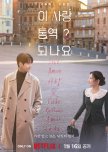
Can This Plot Be Translated??
What is it with kdrama writers and self-sabotaging their own story????!
I’m asking this as someone who wanted this drama to win. I didn’t come in with knives out. I came in wrapped in a scarf, holding a warm drink, ready to settle into what felt like it could’ve been the romcom that set my emotional tone for 2026. And for six glorious episodes, Can This Love Be Translated convinced me it knew exactly what it was doing. Then episode seven happened, and the whole thing drove itself straight into a ditch, set the car on fire, and insisted the flames were actually a metaphor for something profound.
Let’s get this out of the way first: the two leads were excellent. Go Youn-jung as Cha Mu-hee and Kim Seon-ho as Joo Ho-jin did everything right, even when the script actively betrayed them. Their early chemistry wasn’t loud or gimmicky; it was lived-in, observational, and deeply human. Kim Seon-ho’s Ho-jin, a polyglot who could translate every language except his own emotions, was quietly devastating. Go Youn-jung’s Mu-hee, all bravado and humor masking abandonment trauma, felt fragile in ways that never begged for sympathy. Even when their characters devolved into narrative nonsense by episode seven, both actors kept trying to ground the scenes with sincerity. You could practically see them holding the script at arm’s length, whispering, “Are we sure about this?” while still committing fully.
The first six episodes were precision strikes. Every interaction felt intentional. The ramen shop meet-cute in Tokyo wasn’t just funny, it was character work. Their banter wasn’t flirting for the sake of flirting; it was two lonely people circling each other cautiously, testing safety. The show understood the beauty of emotional intimacy before romance. Trauma wasn’t unveiled with dramatic violins and monologues, but slipped into ordinary conversation while driving, walking, eating. Mu-hee casually mentioning her family never liking her. Ho-jin explaining he doesn’t express pain because he doesn’t want to burden others. This was carecore at its finest: gentle, respectful, observant.
And that Calgary separation scene? That was the moment I fully bought in. No histrionics. No overwrought music cues. Just two people standing at an emotional crossroads, saying exactly enough and not a word more. It was autumnal storytelling, quiet ache, crisp air, feelings suspended like breath. For a hot second, I thought, oh wow, this might be a top-tier romcom that actually understands adulthood.
Then episode seven rolled in like a writer’s room panic attack.
Somewhere between episodes six and seven, this drama lost its identity like it misplaced its passport and decided to reinvent itself at the airport. Ho-jin and Mu-hee didn’t evolve; they devolved. They started talking in circles, saying a lot of words that added up to absolutely nothing. Conversations that once felt organic suddenly became riddles masquerading as depth. The emotional clarity that anchored the early episodes evaporated, replaced by vague philosophizing and dialogue that sounded profound until you actually tried to connect it to anything that had come before.
The drama completely lost its identity. The emotional logic that once guided every interaction evaporated. And then came the catastrophic decision: introducing Do Ra-mi as full-blown Dissociative Identity Disorder.
This was, without exaggeration, one of the stupidest plot developments I’ve seen in a while.
Do Ra-mi worked as a hallucination, a manifestation of Cha Mu-hee’s self-sabotage, fear, and inner critic. That’s relatable. That’s grounded. That’s human. Turning her into a front-and-center DID personality this late in the game didn’t deepen the narrative; it obliterated it. Instead of exploring Mu-hee’s trauma with nuance, the show externalized it into a gimmick and then acted like this was always the plan. It wasn’t. You can feel the pivot. You can hear the writers convincing themselves this was clever.
From there, the drama nosedived hard. Scenes stopped building on each other. Characters spoke as if they were auditioning for different shows. Emotional beats were implied but never earned. Plot threads appeared, tangled, and were abandoned mid-thought. Narrative beats that were dressed up with pretty lighting and scenic backdrops, but underneath it all was nothing. And I mean nothing. No continuity. No character logic. Just pretentious bullshit piled on top of pretentious bullshit. You can put a ribbon on garbage, film it at golden hour, and it’s still garbage.
This is where the Hong Sisters’ worst instincts kicked in. This wasn’t a story taking risks; it was a story spinning its wheels and pretending that disorientation equaled depth. No one was following their own internal logic anymore, not the characters, not the themes, and certainly not the plot. Instead of tightening the story, they spun it. Instead of resolving arcs, they abstracted them. Everyone stopped behaving like the people we’d come to know. Ho-jin, whose entire core belief was about not burdening others, suddenly existed in philosophical limbo. Mu-hee, once proactive and emotionally honest, became a narrative prop. The drama wasn’t just confused about what it wanted to say; it was lost, acting like it knew exactly where it was going, and confidently spewing nonsense the whole way there.
I dropped this at episode ten, not because it was merely bad, but because it actively pissed me off. There’s a difference. Plenty of dramas lose the plot and quietly limp to the finish line. This one doubled down on its own confusion with a level of pretension that suggested the writers genuinely believed they were crafting something profound. Here’s the thing: something that looks overly complex isn’t automatically meaningful. Sometimes it’s just a mess wearing a philosophy scarf. Here, it’s also just spiralized nonsense.
And that’s what hurts the most. This drama could’ve been it. It had the bones. It had the performances. It had six near-perfect episodes that made me sing its praises loudly and confidently. I believed in it. I recommended it. I thought it was smarter than most romcoms, warmer than most melodramas, and mature in a way we don’t often get. Watching it implode felt like betrayal, not disappointment.
So no, this wasn’t just a miss. This was self-sabotage on a spectacular level. A drama about translating love forgot how to communicate with its own audience. A story about emotional clarity drowned itself in performative obscurity. By the end, I wasn’t asking “Will they be together?” I was asking, “Can this damn plot be translated at all?”
Personal note, because this part matters: this drama broke my trust. I don’t need perfection. I don’t even need brilliance. What I need, what I expect, is consistency. Respect for the universe you built. Respect for the characters you defined from episode one. I was ready to invest twelve hours of my emotions into this story. Twelve hours of believing in its voice, its rules, its promises. I thought one of the beauties of having a singular writer’s vision, especially compared to Western writers’ rooms, is supposed to be consistency. A clear throughline. Instead, what I got was a story that betrayed its own foundations and asked me to pretend that was intentional artistry.
Verdict: A stunning first half undone by narrative arrogance, late-stage gimmicks, and writers who mistook confusion for depth. Go Youn-jung and Kim Seon-ho deserved better. We deserved better. I’m blacklisting the Hong Sisters going forward, not out of spite, but out of pattern recognition. A drama that had gold in its hands and threw it away with confidence.
This one didn’t just disappoint me. It broke my trust.
I’m asking this as someone who wanted this drama to win. I didn’t come in with knives out. I came in wrapped in a scarf, holding a warm drink, ready to settle into what felt like it could’ve been the romcom that set my emotional tone for 2026. And for six glorious episodes, Can This Love Be Translated convinced me it knew exactly what it was doing. Then episode seven happened, and the whole thing drove itself straight into a ditch, set the car on fire, and insisted the flames were actually a metaphor for something profound.
Let’s get this out of the way first: the two leads were excellent. Go Youn-jung as Cha Mu-hee and Kim Seon-ho as Joo Ho-jin did everything right, even when the script actively betrayed them. Their early chemistry wasn’t loud or gimmicky; it was lived-in, observational, and deeply human. Kim Seon-ho’s Ho-jin, a polyglot who could translate every language except his own emotions, was quietly devastating. Go Youn-jung’s Mu-hee, all bravado and humor masking abandonment trauma, felt fragile in ways that never begged for sympathy. Even when their characters devolved into narrative nonsense by episode seven, both actors kept trying to ground the scenes with sincerity. You could practically see them holding the script at arm’s length, whispering, “Are we sure about this?” while still committing fully.
The first six episodes were precision strikes. Every interaction felt intentional. The ramen shop meet-cute in Tokyo wasn’t just funny, it was character work. Their banter wasn’t flirting for the sake of flirting; it was two lonely people circling each other cautiously, testing safety. The show understood the beauty of emotional intimacy before romance. Trauma wasn’t unveiled with dramatic violins and monologues, but slipped into ordinary conversation while driving, walking, eating. Mu-hee casually mentioning her family never liking her. Ho-jin explaining he doesn’t express pain because he doesn’t want to burden others. This was carecore at its finest: gentle, respectful, observant.
And that Calgary separation scene? That was the moment I fully bought in. No histrionics. No overwrought music cues. Just two people standing at an emotional crossroads, saying exactly enough and not a word more. It was autumnal storytelling, quiet ache, crisp air, feelings suspended like breath. For a hot second, I thought, oh wow, this might be a top-tier romcom that actually understands adulthood.
Then episode seven rolled in like a writer’s room panic attack.
Somewhere between episodes six and seven, this drama lost its identity like it misplaced its passport and decided to reinvent itself at the airport. Ho-jin and Mu-hee didn’t evolve; they devolved. They started talking in circles, saying a lot of words that added up to absolutely nothing. Conversations that once felt organic suddenly became riddles masquerading as depth. The emotional clarity that anchored the early episodes evaporated, replaced by vague philosophizing and dialogue that sounded profound until you actually tried to connect it to anything that had come before.
The drama completely lost its identity. The emotional logic that once guided every interaction evaporated. And then came the catastrophic decision: introducing Do Ra-mi as full-blown Dissociative Identity Disorder.
This was, without exaggeration, one of the stupidest plot developments I’ve seen in a while.
Do Ra-mi worked as a hallucination, a manifestation of Cha Mu-hee’s self-sabotage, fear, and inner critic. That’s relatable. That’s grounded. That’s human. Turning her into a front-and-center DID personality this late in the game didn’t deepen the narrative; it obliterated it. Instead of exploring Mu-hee’s trauma with nuance, the show externalized it into a gimmick and then acted like this was always the plan. It wasn’t. You can feel the pivot. You can hear the writers convincing themselves this was clever.
From there, the drama nosedived hard. Scenes stopped building on each other. Characters spoke as if they were auditioning for different shows. Emotional beats were implied but never earned. Plot threads appeared, tangled, and were abandoned mid-thought. Narrative beats that were dressed up with pretty lighting and scenic backdrops, but underneath it all was nothing. And I mean nothing. No continuity. No character logic. Just pretentious bullshit piled on top of pretentious bullshit. You can put a ribbon on garbage, film it at golden hour, and it’s still garbage.
This is where the Hong Sisters’ worst instincts kicked in. This wasn’t a story taking risks; it was a story spinning its wheels and pretending that disorientation equaled depth. No one was following their own internal logic anymore, not the characters, not the themes, and certainly not the plot. Instead of tightening the story, they spun it. Instead of resolving arcs, they abstracted them. Everyone stopped behaving like the people we’d come to know. Ho-jin, whose entire core belief was about not burdening others, suddenly existed in philosophical limbo. Mu-hee, once proactive and emotionally honest, became a narrative prop. The drama wasn’t just confused about what it wanted to say; it was lost, acting like it knew exactly where it was going, and confidently spewing nonsense the whole way there.
I dropped this at episode ten, not because it was merely bad, but because it actively pissed me off. There’s a difference. Plenty of dramas lose the plot and quietly limp to the finish line. This one doubled down on its own confusion with a level of pretension that suggested the writers genuinely believed they were crafting something profound. Here’s the thing: something that looks overly complex isn’t automatically meaningful. Sometimes it’s just a mess wearing a philosophy scarf. Here, it’s also just spiralized nonsense.
And that’s what hurts the most. This drama could’ve been it. It had the bones. It had the performances. It had six near-perfect episodes that made me sing its praises loudly and confidently. I believed in it. I recommended it. I thought it was smarter than most romcoms, warmer than most melodramas, and mature in a way we don’t often get. Watching it implode felt like betrayal, not disappointment.
So no, this wasn’t just a miss. This was self-sabotage on a spectacular level. A drama about translating love forgot how to communicate with its own audience. A story about emotional clarity drowned itself in performative obscurity. By the end, I wasn’t asking “Will they be together?” I was asking, “Can this damn plot be translated at all?”
Personal note, because this part matters: this drama broke my trust. I don’t need perfection. I don’t even need brilliance. What I need, what I expect, is consistency. Respect for the universe you built. Respect for the characters you defined from episode one. I was ready to invest twelve hours of my emotions into this story. Twelve hours of believing in its voice, its rules, its promises. I thought one of the beauties of having a singular writer’s vision, especially compared to Western writers’ rooms, is supposed to be consistency. A clear throughline. Instead, what I got was a story that betrayed its own foundations and asked me to pretend that was intentional artistry.
Verdict: A stunning first half undone by narrative arrogance, late-stage gimmicks, and writers who mistook confusion for depth. Go Youn-jung and Kim Seon-ho deserved better. We deserved better. I’m blacklisting the Hong Sisters going forward, not out of spite, but out of pattern recognition. A drama that had gold in its hands and threw it away with confidence.
This one didn’t just disappoint me. It broke my trust.
Was this review helpful to you?


