
 News
News 

 1
1



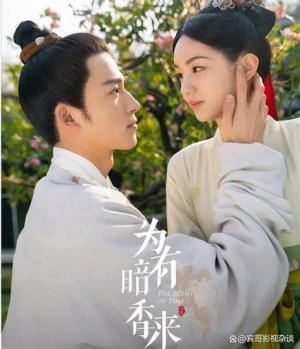
The Female Lead is the emotional center of the drama. Throughout her marriage, she loves her husband wholeheartedly and remains loyal despite the pain he causes her. She is not weak; rather, she is someone who continues to love even when she receives little understanding or affection in return. Her quiet sacrifices, patience, and unwavering devotion make her a deeply tragic character. As the story unfolds, viewers witness how much suffering she carries alone, making her eventual fate heartbreaking to watch.
The Male Lead, portrayed by Liu Xiaoxu, delivers one of the more emotionally complex performances in a short drama. At first, he appears cold, stubborn, and blinded by his own assumptions. He constantly misunderstands his wife and allows his pride and prejudices to dictate his actions. What makes his character compelling, however, is not who he is at the beginning but who he becomes after tragedy strikes. Once he finally learns the truth about her love and sacrifices, the weight of his mistakes crashes down upon him. His grief, regret, and self-blame feel genuine and devastating. Watching him realize that he destroyed the very person who loved him most is both painful and unforgettable. Viewers may find themselves angry at him for much of the drama, yet unable to ignore the depth of his remorse by the end.
What truly elevates *Ruler of My Heart* above many other short dramas is its message about relationships. Too often people believe they will have time later to apologize, to listen, to understand, or to show love. This drama reminds us that "later" is never guaranteed. Words left unsaid and feelings left unexplained can create wounds that become impossible to heal.
The story also touches on an important real-life issue: heartbreak and failed relationships can create overwhelming emotional pain, but ending one's life is never the answer. Relationships can end, marriages can fail, and people can make terrible mistakes, yet life itself is worth far more than any single relationship. Pain is temporary, even when it feels unbearable. Healing, new beginnings, and happiness remain possible as long as we continue moving forward. The drama shows how tragedy leaves lasting scars not only on the person suffering but also on those left behind. It serves as a reminder that seeking support, talking to trusted friends and family, or reaching out for professional help is always a stronger choice than surrendering to despair.
Overall, *Ruler of My Heart* is a heartbreaking but meaningful drama about love, regret, forgiveness, and the value of cherishing those who care for us while we still have the chance. If you enjoy emotional stories that make you cry, reflect on life, and appreciate the people around you a little more, this drama is well worth watching.
Was this review helpful to you?

It's ok, could've been better
A Korean Odyssey* is a unique fantasy romance that reimagines the classic Chinese novel *Journey to the West* in a modern setting. From the very beginning, the drama draws viewers into a world where gods, demons, ghosts, and humans coexist, often unseen by ordinary people.The story begins with Jin Seon-mi as a lonely young girl who possesses the rare ability to see spirits. This gift isolates her from others and makes her vulnerable to supernatural forces. During her childhood, she encounters the mischievous and powerful Son Oh-gong, the Monkey King, whose selfish actions unknowingly shape the course of her life. Their first meeting creates a bond that will continue to influence both of them years later.
As adults, Seon-mi and Oh-gong are brought together again through fate. What starts as a relationship built on magical obligation gradually develops into genuine love. Throughout the drama, both characters are forced to confront their fears, selfish desires, and the sacrifices required to protect those they care about. Seon-mi evolves from a lonely woman burdened by her abilities into someone who accepts her destiny with courage. Meanwhile, Oh-gong's journey is one of redemption, as he slowly learns compassion, loyalty, and selfless love.
The supporting characters add depth and humor to the story, each representing different aspects of mythology while dealing with their own struggles and desires. Their interactions help balance the darker themes of destiny, sacrifice, and mortality.
The ending is bittersweet and deeply symbolic. Rather than offering a simple fairy-tale conclusion, the drama focuses on the idea that true love requires sacrifice. The final episodes highlight how much the characters have grown from the people they were at the beginning of the story. While the ending leaves some questions unanswered, it emphasizes hope, faith, and the belief that love can endure even when separated by fate and time.
Overall, *A Korean Odyssey* is a captivating blend of fantasy, romance, comedy, and tragedy. Its memorable characters, emotional storytelling, and unique interpretation of mythology make it a drama that stays with viewers long after it ends. The journey from Seon-mi's lonely childhood to the drama's emotional conclusion is both heartbreaking and beautiful, making it one of the most distinctive Korean fantasy dramas ever made.
Was this review helpful to you?
Stupid Prince
100 Days My Prince was such a charming and emotional drama that balanced romance, comedy, mystery, and political tension beautifully. What made this drama stand out was how naturally it moved between lighthearted moments and heartbreaking emotional scenes without feeling forced.The story of Crown Prince Lee Yul losing his memory and living as an ordinary man was both funny and touching. Watching someone who was once cold, strict, and distant struggle with everyday village life created so many hilarious moments. But beneath the comedy was also a lonely man carrying years of pain, pressure, and emotional scars from palace life.
The relationship between Lee Yul and Hong Shim was one of the strongest parts of the drama. Their chemistry felt natural, warm, and comforting. Hong Shim was not a weak female lead waiting to be rescued. She was intelligent, independent, outspoken, and emotionally strong, which made her relationship with Lee Yul feel balanced. Together, they slowly healed each other without even realizing it.
D.O.’s performance was honestly one of the highlights of the drama. He perfectly balanced the prince’s cold personality with the awkward innocence of someone trying to survive village life without his memories. Nam Ji Hyun also brought warmth and emotion to Hong Shim, making her easy to love and sympathize with.
The drama also handled palace politics surprisingly well. Behind the romance and humor was a darker story about corruption, betrayal, survival, and the burden of power. Several characters carried hidden pain and difficult choices, which gave the story more emotional depth than expected.
Visually, the drama was beautiful. The cinematography, traditional clothing, village scenery, and soundtrack all created a peaceful and emotional atmosphere that fit the story perfectly.
What made 100 Days My Prince memorable was how comforting it felt. Even during sad or tense moments, the drama never lost its warmth and heart. It’s a story about love, identity, healing, and finding happiness in the simplest moments with the people who truly care for you.
By the end, it leaves you smiling, emotional, and missing the characters long after the final episode ends.
Was this review helpful to you?
Excellent Storyline
As Long As We Both Shall Live (My Happy Marriage, 2023) was such a beautifully painful movie. Set in a world of arranged marriage, family cruelty, and hidden supernatural power, it gave far more emotion than I expected. Miyo Saimori, treated like nothing by her own family, is sent to marry Kiyoka Kudou, a man feared for his cold and ruthless reputation. What starts as fear slowly becomes one of the softest and most healing love stories.What made this movie stand out for me was how quiet the love was. Kiyoka did not love Miyo with grand speeches, but with protection, patience, and respect—things she had never been given before. Watching Miyo slowly learn that she deserved kindness was honestly the most touching part. Their chemistry felt gentle and real, and both Ren Meguro and Mio Imada brought so much emotion to their roles.
The cinematography was stunning, with that soft historical fantasy atmosphere that made every scene feel like a painting. The mix of romance, pain, and supernatural family politics made the story even richer. Sometimes the final conflict felt a little rushed, but the emotional heart of the film never got lost. Reviewers also noted how the story blends abuse, manipulation, military intrigue, and slow-burn romance in a Meiji-era-inspired setting ().
This was not just a romance—it was a story about healing, dignity, and finally being loved the way you should have been all along. Sad, beautiful, and unforgettable.
Was this review helpful to you?

The storyline is strong, the characters are layered
The title of this short drama doesn’t really prepare you for what you’re about to watch. From beginning to end, it’s gripping—every scene pulls you in, and every actor plays their role in a way that makes the story feel raw and real.The male lead is ruthless—cold, calculating, and willing to do whatever it takes to survive in a world built on power and betrayal. But beneath that hardened exterior, there are cracks… especially when it comes to his son. That’s where you see the man behind the mask.
The female lead is driven by revenge. She believes her mother was killed, and at one point, she thinks she’s lost her child as well. Her past is tragic—her mother was a mistreated mistress in the general’s household, forced to live like a servant, and the female lead grew up under that same cruelty.
The general and his household are no better. His first wife is just as vicious, and their daughter proves just as manipulative—using the female lead as a substitute on the eve of her wedding so the prince regent wouldn’t discover her own scandal. That one decision sets everything in motion.
The female lead ends up with the prince regent and becomes pregnant with his child—something he doesn’t know for a long time.
As the story unfolds, the male lead begins to recover fragments of his memory and starts to question everything, including the woman he married. From that point on, his behavior changes—he treats her with care in public, but keeps his distance in private, creating a tension that quietly builds between them.
Meanwhile, the female lead moves forward with her revenge. One by one, she brings down those who destroyed her life—her father, stepmother, sister, and cousin. Each downfall is deliberate, calculated… and earned.
But her path doesn’t stop there.
She also becomes an ally to the prince regent, helping him carry out his own revenge—especially against the emperor’s mother, the true power behind the throne, who had his mother killed and cast aside in the cold palace.
In the end, the male lead makes one final move—he fakes his death. Before disappearing, he acknowledges the truth: that the female lead is the real force behind bringing justice to the empire, exposing the corruption of both the emperor’s mother and the powerful generals.
The ending is quietly satisfying.
The female lead leaves it all behind, moving to a border town with her son. There, she finds peace—and the prince regent, now living a simple life as a teacher. Together, they build something far removed from the chaos they once survived.
Overall, this drama is beautifully put together. The storyline is strong, the characters are layered, and the direction captures each moment with clarity and purpose. Nothing feels wasted—and that’s what makes it so easy to stay hooked until the very end.
Was this review helpful to you?

This review may contain spoilers
Hao Lan’s Legacy: Power, Sacrifice, and the Cost of Love
This drama is one of those rare ones that pulls you into a full-blown love-hate relationship with it. I loved it for its rich storyline, layered characters, and emotional pull—but I hated how it fell back on that old trope of men needing multiple wives. That part always grates on me, no matter how often I see it in historical dramas.The story is inspired by real historical figures, particularly the female lead, Hao Lan, whose life was intertwined with the power struggles of the Warring States period. Of course, the scriptwriters took creative liberties—changing certain events, adding characters, and dramatizing relationships to heighten the emotion—but the essence of her story still carries the weight of history and heartbreak.
What stood out most to me was Hao Lan’s relationship with the King. From the very beginning, he was her protector, shielding her when few dared to stand by her. His love felt genuine, and for a time, it seemed unbreakable. But as he gained more power, greed began to erode the bond they once shared. It was tragic to watch him lose himself in ambition, and in doing so, lose her too.
I also wish the writers had developed the subplot between the doctor and the general more fully. There was so much emotional potential there—moments that hinted at deeper loyalty, compassion, and unspoken love—but the story moved past it too quickly.
One of the most touching parts of the drama was when Hao Lan’s son fell in love with a servant. That relationship echoed his father’s early love for Hao Lan—a beautiful parallel that tied the generational theme together.
However, what truly left me frustrated was how the male lead’s story unfolded after his return to Qin. Despite all that Hao Lan had endured for him, he took another woman to satisfy his mother and the royal court, fathering another son while Hao Lan remained in Zhao with their child. When he finally rose to power as Emperor, he never had more children with Hao Lan, and even in his final moments, he denied her the chance to say goodbye.
Historically, it’s said that he suffered greatly during his years as a hostage, leaving him in poor health for much of his life. But the drama portrayed his final act as one of cold detachment—ordering that all memories and gifts tied to Hao Lan be destroyed upon his death. It was a cruel end to what once felt like an extraordinary love.
I didn’t give this drama a perfect 9 because, once again, the ending felt rushed—especially the final three episodes. After such strong storytelling throughout, it was disappointing to see the conclusion handled so hastily. Still, The Story of Hao Lan remains a captivating blend of history, love, and tragedy—a reminder that even the greatest of romances can be undone by power and pride.
Was this review helpful to you?

A Story That Tested My Patience but Touched My Sou
I’ll be honest—Feud tested my patience. I put it on hold several times because I just couldn’t figure out where the story was going. A few of my followers on MDL encouraged me not to give up and to give it a fair chance, so I did.From episodes 1 through 18, it was a real drag. The pacing was painfully slow, the plot made little sense, and at times it was downright frustrating. But once I reached episode 20—bam!—everything clicked. The story finally took off, and I was hooked.
Episodes 22 to 24 completely broke my heart. That’s when I finally understood her hatred for him—it ran deep, through her entire being. And when he realized the weight of what he’d done, that no amount of effort could undo it, it was gut-wrenching to watch. Seeing him try anyway was both sad and beautiful.
Both the ML and FL gave powerful performances, and the supporting cast did a great job bringing out their emotional depth. The side stories of the additional characters added a real sense of enlightenment to the drama—especially the healer and the fox. Their story was so sad, yet deeply touching, and it tied beautifully into the main storyline’s themes of love, loss, and redemption.
That said, this drama could’ve been phenomenal if the writer and director hadn’t wasted so much time on the first half. It’s fine to build up a storyline—but not at the expense of the audience’s patience. Once it got going, it was absolutely worth it… but getting there felt like a marathon.
Now, I do have a few questions—maybe someone reading this can enlighten me:
When the FL was walking out of the temple with her son, she turned back and looked inside with hatred—but there were tears of blood. Why?
In the final episode, when she told her past self to tell the ML that she was with child, why didn’t that change the outcome in the end?
If she told herself about the child, then shouldn’t the child have lived? Why was there nothing about him afterward?
Was this review helpful to you?

Strong Start, Dragged Middle, Emotional End
Stay tuned after the ending song—there’s a surprise finale waiting.Overall, I enjoyed this drama, though it could have been trimmed down. Instead of 40 episodes, a strong 25 would’ve been enough. Still, the title does not disappoint—it truly is “Love Never Fails.”
From episodes 1 through 15, the story was deeply touching, moving at a steady pace that kept me hooked. Both the ML and FL shined in their roles. Despite the ML’s many titles and hardships, his love for the FL never wavered. Meanwhile, the FL was endearing, passionate, and full of charm.
From episodes 16 to 28, however, the story began to drag with the repeated rebirth cycles. Each round gave the ML and 2ML experience, helping prepare them for the role of Heavenly Emperor—but it stretched longer than necessary. Interestingly, the FL never experienced rebirth until the very end. That raises one lingering question for me: Magpie told her, “You have no soul.” If that’s the case, how was she able to be reborn at all—and only once?
Was this review helpful to you?

Fighting against the injustices
The ML and FL endured endless struggles, carrying deep emotional scars while fighting through betrayal, loss, and manipulation. Every step of their journey was heavy with pain — yet, they never gave up. They faced powerful forces working against them, uncovered shocking secrets, and confronted the injustices that had shaped their lives. Through courage, persistence, and trust in each other, they finally managed to set things right and reclaim the happiness that was stolen from them.However, while the storyline delivered beautifully on character growth and emotional tension, the romantic development felt underwhelming. There were sparks here and there — lingering looks, quiet moments, subtle hints of longing — but they were fleeting, leaving viewers yearning for more. It wasn’t until the very last episode that we finally experienced the raw, genuine emotions between them, the kind that makes your heart ache and your chest tighten. When it came, it was powerful, emotional, and worth the wait — but I couldn’t help wishing the writers had given us more of those heartfelt moments earlier, letting us savor the depth of their love as it slowly bloomed.
Was this review helpful to you?

This review may contain spoilers
When Love Rewrites the Story
I absolutely loved this drama from start to finish! It had me laughing out loud one moment and wiping away tears the next. The main leads (ML & FL) delivered outstanding performances—their chemistry was so natural and believable that it completely pulled me into their world.The supporting cast shined just as brightly, adding depth and charm to every scene. Each actor played a crucial role in making the story feel alive and layered. And can we talk about the filming locations? Absolutely breathtaking! The historical sites in Korea weren’t just a backdrop—they became a character on their own, giving the entire drama a magical, immersive quality.
Honestly, this is one of those rare dramas where everything just clicks—the acting, the pacing, the visuals, the music. And because this is based on a Webtoon, I can definitely see a second season happening. There’s so much potential left to explore!
A modern-day college student suddenly finds her soul transported into the body of Cha Sun Chaek (Seohyun), a minor character in her favorite historical fantasy web novel. Trying to navigate her new reality, she accidentally gets drunk and collides with Yi Beon (Taecyeon)—the cold, sharp, and impossibly handsome Prince Gyeong Seong, who also happens to be the male lead of the novel.
What should have been a passing encounter takes a shocking turn when, after a drunken night together, Yi Beon insists on marrying her! Alarmed and determined to restore the novel’s original plot, Sun Chaek tries to push Yi Beon back toward Cho Eun Ae (Kwon Han Sol), the intended female lead. But Yi Beon refuses to follow the script, completely rewriting the story with his relentless pursuit of her.
Now, Sun Chaek faces an impossible choice:
Will she manage to return to her own world and set the storyline back on track?
Or will she surrender to fate and carve out a new happy ending with the prince?
This drama is a perfect blend of romance, comedy, and emotional depth. It’s visually stunning, wonderfully acted, and keeps you hooked from start to finish. If you enjoy historical fantasy with a modern twist, this is an absolute must-watch!
I’m hoping for a second season—there’s no way this story ends here.
Was this review helpful to you?

This review may contain spoilers
Mental Heartbreak
This more than a revenge drama. For me, it is a heartbreaking story about love, trauma, grief, and what can happen to a person's mind when the one person they love most is violently taken away.The FL suffered a horrific injustice at the hands of four people who believed their wealthy and powerful families placed them above the law. She was sexually assaulted and stabbed and ultimately lost her life because of their cruelty. What makes this part of the story especially disturbing is the sense of entitlement behind their actions. They believed their status and family connections would protect them from consequences.
But they didn't understand what her death would do to Xiao Muchen.
The ML's character is what made this drama unforgettable for me. Xiao Muchen didn't simply lose the woman he loved. He lost the person around whom he had built his future. Her death broke something inside him that could never truly be repaired.
His mental illness is an important part of understanding his character. I didn't see his visions and conversations with the FL as the drama simply portraying him as "crazy." I saw them as his mind's way of surviving something he couldn't accept. His reality became intertwined with the woman he loved. In his world, she could still speak to him, sit beside him, love him, and accompany him.
And together, they had one thing left to accomplish. Revenge.
Xiao Muchen couldn't save her from what those four people did, but he could make sure they didn't escape the consequences. His broken mind, intelligence, grief, and love seemed to become one. He methodically went after the people responsible and made them pay.
That is what made his revenge feel different to me. It wasn't about power or money. It wasn't even simply about anger.
It was the final thing he could still do for the woman he loved.
There is something both beautiful and terribly sad about the relationship between the ML and FL after her death. We know she is gone, yet through Xiao Muchen's eyes she never completely leaves. She continues existing in the private world his mind has created for the two of them.
The ending is where this drama truly stayed with me.
Jonathan Buchanan's "The Prophets" playing over the final scenes was a beautiful choice. Then we see the world Xiao Muchen has created—the ML and FL together, surrounded by flowers, with nobody else around them. It is peaceful and almost dreamlike.
Then reality returns.
Xiao Muchen is in the mental hospital.
But in his mind, she is still beside him.
The writer's final words were the perfect way to end the story. Xiao Muchen's life has settled inside his "sun-drenched cage." To everyone outside, when he repeatedly asks his wife, "What flower is this?", they see a man whose mind has been lost to time.
But Xiao Muchen sees something completely different.
He sees their little home surrounded by flowers. He sees the woman he loves. He talks to her. She has never left him.
The line that affected me most was the idea that what withered was not Xiao Muchen, but the world outside his window.
That completely changed the meaning of the ending for me.
To us, Xiao Muchen is a patient in a mental hospital, forever living inside a reality that doesn't exist. But to him, the outside world no longer matters. The four people responsible for destroying their future have paid for what they did. His revenge is finished.
Now there is only her.
The woman he couldn't save in reality became the woman his mind refused to lose.
And perhaps that is why the title The Dark Side of the Sun fits this story so beautifully. There are darkness, violence, grief, and madness—but somewhere inside Xiao Muchen's broken mind, there is still sunlight, flowers, a little house, and the woman he loves.
The world believes Xiao Muchen lost his mind.
Xiao Muchen believes he went home to his wife.
And in the only world that remains real to him, they will live happily together in that never-ending moment forever.
Was this review helpful to you?

Two Broken Souls Who Found the Strength to Heal Each Other
Some dramas tell a love story. The First Jasmine tells the story of two people who have lost almost everything and slowly learn that love isn't about saving someone—it's about giving them a reason to keep living.Bai Lu delivers one of her strongest performances as Ye Li. Beneath her calm, intelligent, and composed exterior is a woman carrying unimaginable grief. She has lost her family, the people who raised her on Lishan, and the peaceful life she once knew. Every smile she gives feels forced, every decision she makes is driven by the weight of her past. She doesn't descend from the mountain simply seeking revenge; she carries the burden of everyone who can no longer fight for themselves. Bai Lu portrays that quiet pain so beautifully that you can almost feel the loneliness behind her eyes. She never overacts. Instead, she lets the silence, the expressions, and the smallest changes in her face speak louder than words.
Then there is Cheng Lei as Mo Xiuyao, a man whose battles are just as devastating, even if they are less visible. Once a feared and respected prince, he has been left physically broken, betrayed by those he trusted, and stripped of the life he once knew. Confined to a wheelchair, he isn't only fighting the limitations of his body—he is fighting despair, humiliation, and the belief that he has become a burden to everyone around him.
What makes this drama so special is that neither character rescues the other overnight.
Ye Li helps Mo Xiuyao rediscover his confidence long before she helps him regain his physical strength. She never looks at him with pity. She treats him as the capable man he has always been, reminding him of the leader hidden beneath years of pain and betrayal. In return, Mo Xiuyao becomes the one person who sees beyond Ye Li's thirst for revenge. He recognizes the frightened, grieving woman who has spent years convincing herself that vengeance is all she has left. Rather than trying to change her, he walks beside her, sharing the burden she has carried alone for far too long.
Their romance isn't built on grand confessions or dramatic gestures. It grows through trust, quiet understanding, unwavering loyalty, and countless moments where actions speak louder than words. Watching these two wounded souls slowly lower the walls around their hearts is one of the most rewarding journeys the drama has to offer.
The political schemes, battles, and revenge plot are exciting, but they never overshadow the emotional heart of the story. At its core, The First Jasmine is about healing. It reminds us that while revenge may satisfy anger, love is what truly gives people the strength to move forward.
Bai Lu and Cheng Lei don't just have incredible chemistry—they breathe life into two deeply scarred characters whose greatest victory isn't defeating their enemies, but finding hope in each other again.
10/10. One of Bai Lu's finest performances and, without question, one of Cheng Lei's most unforgettable roles.
Was this review helpful to you?

Time and the Bracelet
The entire story revolves around a single bracelet—one shared between the female lead (FL) and the male lead (ML). This bracelet holds the power to move through time, binding their fates across different lifetimes.The FL searches for this bracelet, driven by a haunting question: Who is the man in her dreams—the one she calls her husband?
The ML, an emperor of a small state, once gifted a bracelet, along with its power. In return, the goddess asked only one thing—that he to care for her daughter.
Their story unfolds across three timelines.
In the first two timelines, both the FL and ML lose their memories of what they shared—their love, their pain, their history—each time starting over yet always drawn back to one another.
By the third timeline, the ML no longer remembers her at all. He only catches glimpses of her as she slips through time, like a shadow he cannot quite hold onto. It is here that the FL finally understands the truth—he has always been the one beside her, in every life, in every moment.
When the heavens prepare to strike her down, the ML steps in without hesitation, taking the divine punishment meant for her. He dies in her place.
Refusing to accept this fate, the FL uses the bracelet one final time. She turns back time to the moment before the heavenly strike—but this time, she steps forward.
The punishment was always meant for her. She is the daughter of a goddess.
Standing before the heavens, she defies them, declaring that no one—god or mortal—should be denied the right to love. In response, the heavens strike her one final time, stripping her of her divinity and casting her down. Her punishment is not death, but something more human—a life of her own, without the power of a god.
With her last wish, she asks for only one thing: to be with him again.
The story ends with her returned to a moment just before the ML’s death in battle against his brother. Alone, she is kneeing on the ground in silence… until she hears footsteps.
She turns.
He is walking toward her.
They meet each other’s eyes and smile—both understanding, without needing words, that they have been given one more chance.
Not as gods.
Not as rulers.
Just as two people… finally allowed to love.
Was this review helpful to you?

A Love That Refuses to Be Forgotten
Some movies entertain you.Some make you think.
And then there are the rare ones—the ones that reach into your chest, wrap around your heart, and refuse to let go.
This is one of those movies.
Even now, my eyes are still filled with tears, and my mind feels overwhelmed by how beautifully this story was put together. Without hesitation, I would rank this as my number one Korean film. It carries everything a powerful story should—growth, understanding, love, heartbreak—and blends them together so naturally that you don’t just watch it… you feel it.
The female lead (FL) lives with a condition where her memory resets each day. Every night, she writes down what happened and what she must remember for the next morning. There’s something quietly tragic about that kind of life—starting over again and again, holding onto fragments of yesterday through ink on paper. And yet, there’s also a strange beauty in it… like every day is a chance to rediscover the world.
Then there’s the male lead (ML).
From the very beginning, something about him feels off—not in a bad way, but in a way that makes you pause. Still, you find yourself drawn to him. You want to understand him. And when you finally do, it hits like a wave you didn’t see coming. He’s living with a serious heart condition, fully aware that his time is limited. There’s a quiet sadness in him, a kind of acceptance that makes his smiles feel heavier, more meaningful.
When they fall in love, it doesn’t feel rushed or forced. It feels real. It grows in the spaces between moments—in laughter, in shared experiences, in the small things that slowly become everything.
But love, especially this kind, is never simple.
In what I see as both a loving and selfish act, the ML makes a decision. Knowing he will die, he asks her friend to erase him from her life—to remove the items, the traces, the pieces of him that might cause her pain. Because she forgets each day, he believes he can spare her the heartbreak. He doesn’t want her to wake up to a world that suddenly feels empty, stripped of the joy he brought into it.
And I understand that… but I also don’t.
Because love isn’t just about protecting someone from pain. It’s also about the right to remember.
And that’s where one line from the film stays with me, echoing long after the credits roll:
“Memories don’t just disappear.”
That line… it says everything.
This movie reminded me that even when someone we love is gone, they never truly leave us. They live on in quiet ways—in habits we didn’t realize we picked up, in laughter that sounds like theirs, in moments that feel familiar without explanation.
They remain in us.
That’s what makes this story so powerful. It doesn’t just tell a love story—it honors what love leaves behind.
And for that… this movie isn’t just something you watch.
It’s something you carry with you.
Was this review helpful to you?

Soft Romance, Strong Acting
Before diving into my thoughts on the story itself, I want to clarify something that often gets blown out of proportion: the age difference between the two lead actors had absolutely nothing to do with the storyline. It wasn’t distracting, nor did it affect their chemistry in any negative way.And as for the male lead having previously acted in a BL (Boys’ Love) drama, that doesn’t disqualify him from taking on a straight romance. In fact, in my experience as a viewer, many actors who’ve played same-sex romantic roles often bring more passion and emotional depth into their performances opposite female leads. They tend to be less restrained, more expressive, and not afraid to add that extra spark — whether in a kiss or an emotional moment.
Now, onto the drama itself — I truly think this story had the potential to be expanded into a longer series. There was so much untapped material: the male lead’s younger years, the female lead’s life with her mother, and the emotional weight of time passing with the police officer’s storyline. Those layers could have added more richness and connection for the audience.
Performance-wise, both leads did an excellent job. Their acting felt genuine and emotionally grounded. However, the kissing scenes left something to be desired. They weren’t as passionate as they could’ve been — possibly due to discomfort between the actors, or perhaps the director’s choice to keep things modest. Either way, the lack of intensity slightly dulled what could have been truly memorable romantic moments.
On a brighter note, the ending song by ABC-Z, “Just Romantic!” was an absolute standout. It perfectly captures the dreamy, emotional vibe of the show — so much so that I honestly think it would’ve made a better opening theme than closing track.
Overall, this drama was heartfelt and engaging, but it left me wishing for just a bit more — more time, more depth, and more passion. Still, it’s a lovely watch with strong performances and a great soundtrack.
Was this review helpful to you?


