
 News
News 

 1
1


Reincarnation, an endless loop, or something completely different?
*Meet in Infinite Love* (2025) had an interesting concept, but for me, the storyline left **far too many unanswered questions**, especially surrounding the ML and what was actually happening to him.The beginning gives us very little explanation for the ML's behavior. At first, his actions can be confusing and even frustrating because we don't understand what is motivating him. It isn't until the second half that we finally get more information and begin to understand why he was acting the way he was toward the FL. Once that was revealed, I could look back at some of his earlier actions differently.
However, that explanation created even more questions.
How exactly did the FL appear again and give him this second chance? Did the ML kill himself after losing her and somehow get reborn? Was he sent back in time? Or was he simply given another opportunity to change what happened?
The drama never made that clear enough for me.
Then there is an even bigger question: if this was his second chance, how did he already know the FL was going to die again? He seems to know what is coming and eventually takes her place, sacrificing himself so that she can live. Emotionally, I liked this development because it showed just how deeply the ML loved her and how far he was willing to go to change her fate.
But then comes the ending.
After dying in her place, we see him wake up in bed with her, almost mirroring what happened to him before. That immediately raises another question: Has the cycle started again?
If so, was this actual reincarnation, time travel, an endless loop, or something completely different?
I don't mind a drama leaving a little mystery for viewers to interpret, but there is a difference between an intentionally mysterious ending and simply leaving important pieces of the story unexplained.
The ML's emotional journey and sacrifice were the strongest parts for me, and once his motivations were revealed, his character became much more interesting. Unfortunately, the story surrounding him felt a little all over the place.
Meet in Infinite Love had a fascinating idea and an emotional ML, but I finished it with more questions than answers.
Maybe “Infinite Love” really does mean infinite—because these two might be stuck doing this forever!😂❤️
Was this review helpful to you?

Drag on too long, but good
*Qing Shan Gui Yao Chu* (2025) is one of those Chinese short dramas where the emotional journey between the leads is more important than simply reaching the ending.What stood out to me most was the relationship between the **ML and FL**. Their story isn't built on an easy romance where two people meet, fall in love, and everything magically works out. Their feelings are complicated by misunderstandings, choices, pride, pain, and circumstances that continually test their relationship.
The **FL** was especially enjoyable to watch because she isn't simply a character whose entire purpose is to love the ML. She has her own emotions and reasons behind the decisions she makes. Even when those decisions create distance between them, you can understand that there are feelings underneath that she doesn't always express openly.
The **ML**, on the other hand, is the type of character who sometimes makes you want to reach through the screen and shake some sense into him. 😂 His emotions are there, but understanding them—and understanding the FL—is another matter entirely.
That's also what makes his character development interesting. As the story moves forward, he is forced to look beyond what he assumes to be true and recognize what the FL actually means to him. Watching his emotions change through his actions rather than simply through words made their relationship more believable.
What I liked most is that the drama allows both characters' feelings to carry weight. Love isn't presented as something that automatically erases hurt or fixes every mistake. Their relationship has consequences, and both characters have to live with the choices they've made.
For a short drama, it manages to pack quite a bit of emotion into its limited runtime. There are moments of frustration, sadness, tenderness, and of course those scenes where you're sitting there thinking, **“If you two would just TALK to each other!”** 😂
Overall, *Qing Shan Gui Yao Chu* is an emotional relationship-driven drama that kept me invested in where the ML and FL would ultimately end up.
**Sometimes finding your way back to someone begins with finally understanding the person who was standing beside you all along.** ❤️
Was this review helpful to you?
Emotional distance has quietly taken over his heart.
What I enjoyed most about *Ban Shu Lao Gong* wasn’t the usual romance of two people slowly falling in love. It was watching a husband who believed he understood exactly what his marriage was gradually discover that his wife had become far more important to him than he ever intended.The **male lead** is the character who made this drama interesting for me. In the beginning, he approaches his marriage almost like an arrangement with clearly defined boundaries. He is controlled, emotionally restrained, and very comfortable convincing himself that whatever attraction or attachment he feels toward his wife is simply part of being married.
Love, however, has a funny way of slipping past all those carefully constructed explanations.
Little by little, his actions begin contradicting what he tells himself.
He notices her more.
He becomes concerned about her feelings.
He reacts when she pulls away.
He becomes possessive and jealous without wanting to admit why.
And most importantly, he begins doing things for her not because she is simply **his wife**, but because somewhere along the way she has become **his person**.
That was my favorite part of his character. There isn't one magical moment where he suddenly announces, *“Oh, I'm in love.”* His feelings creep up on him. The audience can see what is happening long before he can.
The **female lead**, meanwhile, gives the relationship its emotional heart. She isn't merely there waiting for her husband to figure himself out. She has her own feelings, disappointments, expectations, and limits. Being married to someone physically present but emotionally difficult to read creates a loneliness of its own. She wants something genuine—not simply the title of wife or the responsibilities that come with marriage.
Their relationship becomes especially interesting when the emotional balance begins to shift. At first, he seems to have all the control because he believes he can keep feelings neatly separated from marriage and physical attraction. But the more emotionally independent she becomes, the more unsettled he becomes.
And the poor man still doesn't understand why. 😂
That's where the ML's character development really worked for me. He doesn't necessarily learn how to love because someone teaches him. **He learns by loving her.**
Protecting her becomes natural.
Missing her becomes natural.
Wanting her attention becomes natural.
Caring whether she's happy becomes natural.
Then eventually he has to face the uncomfortable truth: all those things he has been explaining away aren't obligation, habit, possessiveness, or simple attraction.
**He's in love with his wife. **
I also liked that the FL doesn't need some huge transformation to make him fall for her. He slowly begins seeing the value of the woman who was already beside him. The change happens within **him**.
That makes their romance much more satisfying.
For me, *Ban Shu Lao Gong* is less about watching two strangers fall in love and more about watching a man unknowingly build an emotional attachment to his own wife until one day there is nowhere left for him to hide from his feelings.
The funniest and sweetest part is that everyone—including the viewers—can practically see him falling...
**except him. **
And when a cold, controlled ML finally realizes that the woman he thought he could keep at an emotional distance has quietly taken over his heart?
Yeah. That's exactly the kind of character downfall I watch these short dramas for. 😂❤️
Was this review helpful to you?
Give up herself for love, Betrayed and Revenge.
What I enjoyed most about this drama was watching a woman realize that loving someone should never require her to give up the part of herself that makes her shine.He Yi Mei (FL) is the reason to watch this drama. Dance isn't simply something she is good at—it is part of who she is. Yet she puts that part of herself aside for marriage and the man she loves. That made watching her life fall apart even more painful, because she didn't just lose a relationship. Somewhere along the way, she had also lost herself.
But this is where I really began loving her character.
Instead of allowing betrayal and heartbreak to become the ending of her story, He Yi Mei slowly takes back the woman she used to be. Her return to dancing feels different because now she isn't performing for recognition or anyone else's approval. She's dancing for herself.
Chu Jing Xuan (ML) is the kind of character who made me angry because he doesn't understand the value of the woman beside him until he has already caused too much damage. He Yi Mei gave up something precious for their life together, and instead of protecting what they had, he became the person who hurt her most.
I didn't need to see her become successful just so he could regret losing her. His regret wasn't the victory I was waiting for.
Her becoming He Yi Mei again was.
There is something incredibly satisfying about watching her step back onto that stage stronger, more confident, and no longer defined by being someone's wife.
The best message of Dance of Evergreen is simple: You can love someone deeply, but never abandon yourself to do it.
Sometimes your greatest comeback begins the moment you remember who you were before someone convinced you to become less. 💃
Was this review helpful to you?
The story takes a dramatic turn after a devastating fire nearly costs Xitong her life. What should have been the beginning of a happy marriage between her and the powerful Shen Jincheng instead becomes surrounded by secrets, betrayal, manipulation, and family problems.
What I found interesting about Shen Jincheng is that underneath the powerful CEO image is a man whose emotions often control his decisions. His love for Xitong is obvious, but loving someone doesn't automatically mean knowing how to love them correctly. Throughout the drama, his actions and choices have consequences, and we see him slowly come to understand what Xitong truly means to him.
Xitong also faces an incredible amount of pressure. With her family threatened financially and people manipulating events behind the scenes, she is forced into situations where every choice seems to come with a price. This creates misunderstandings between her and Shen Jincheng that make their already complicated relationship even harder.
The drama does a good job of making you question whether love alone is enough after trust has been damaged. Shen Jincheng may have wealth and power, but neither can guarantee that the woman he loves will remain beside him.
There are definitely moments when you want these characters to simply TALK to each other! 😂 But the emotional struggles are also what keep you watching.
Overall, Love Without Regret is about more than a CEO falling in love. It's about regret, forgiveness, sacrifice, and realizing that sometimes the greatest thing you can lose isn't money or status—it's the person you thought would always be there.
Was this review helpful to you?
Bad Acting
Unfortunately, *East of Eden* just didn’t work for me. I watch a lot of Chinese short dramas, so I’m used to fast pacing, quick scene changes, and storylines that have to fit a lot into a limited amount of time. But even by short-drama standards, this one felt all over the place.The biggest problem for me was the storyline. Instead of flowing naturally from one event to the next, it felt scattered and sometimes difficult to follow. There were moments when the plot seemed to jump ahead without enough explanation or character development. I found myself trying to figure out how we got from one situation to another rather than becoming invested in what was happening.
The acting also didn’t help. Chinese short dramas can have some surprisingly strong performances despite their smaller budgets and shorter runtimes, but I didn’t feel that here. A lot of the emotions felt forced or flat, and some scenes that should have had a strong emotional impact simply didn’t. I never really connected with the characters or their relationships.
I don't expect every short drama to have a huge budget or perfect writing, but I do expect the story and characters to pull me in. Sadly, *East of Eden* never did.
Overall, this was a miss for me. The scattered storyline and weak performances made it difficult to stay interested, and by the end, I was watching more to finish it than because I wanted to know what happened.
Was this review helpful to you?
This review may contain spoilers
Survival, Injustice, and the Life That Could Have Been
2037 is not an easy movie to watch. It deals with rape, trauma, pregnancy, imprisonment, motherhood, friendship, and a justice system that seems unable to understand the young woman at the center of it all.The female lead played her character with **heart, grace, and incredible emotional strength**. This was a very difficult role to portray because she is playing a 19-year-old young woman whose entire life changes after she is raped.
What hurt me most was watching her struggle not only with what her rapist did to her, but with a system that did not seem capable of standing behind her when she needed protection the most.
She did not want what happened to her to become publicly known. She did not want people looking at her with pity or allowing the rape to become the thing that defined her. Then, after killing the man who raped her, she faced another label: **killer**.
That is one of the cruelest parts of her story. She was already trying to survive the trauma of being raped, and then she had to live with the consequences of killing her attacker.
Her situation becomes even more devastating when she discovers that she is pregnant by her rapist.
Instead of being allowed to make a decision based on the trauma she experienced, she finds herself trapped once again by the law and by a system questioning whether the pregnancy resulted from sexual violence. It felt as though decisions about her body and her future were constantly being made around her while she was the one actually living with the pain.
From the moment she learns that she is pregnant, I felt there was something deeper happening inside her. She continued going through the motions and tried to hold herself together, but I never felt that she had truly escaped what happened to her.
To me, there were signs that the pain had become overwhelming and that she was considering ending both her own life and the pregnancy. That makes the kindness she receives from the other women in prison even more important.
They did something the outside world often failed to do:
They saw her as a human being.
Not simply as a prisoner.
Not as a killer.
Not as a rape victim.
Not as a pregnant teenager.
They saw *her*.
Those women gave her kindness, understanding, friendship, protection, and moments of warmth in a place where you would least expect to find them. The letters she leaves for the people who touched her life while she was imprisoned make the ending even more emotional. They show how much their compassion meant to someone who had experienced so much cruelty.
And then there is the ending.
I believe *2037* deliberately leaves it open to interpretation.
One interpretation is hopeful: she survives, her child is being raised by another family, and she is finally able to move forward with her life and prepare for the government exam she once dreamed of taking.
I understand why someone would choose that ending. After everything she endured, we desperately want her to have another chance.
But I saw it differently.
To me, the final scenes felt like **the life she could have had**.
I believe she actually died, and what we are shown afterward is a *“what if”* ending—a glimpse of the future that might have belonged to her if that terrible night had never taken so much away from her.
What if she had survived?
What if she had been able to continue studying?
What if she had taken the government exam?
What if she had been allowed to simply become the young woman she was supposed to become?
That interpretation makes the ending even more heartbreaking because we are not necessarily watching her future.
We may be watching **the future she deserved but never received.**
*2037* stayed with me because it asks uncomfortable questions about justice, trauma, punishment, and how society treats women after sexual violence. Most importantly, it reminds us how powerful simple human kindness can be when someone feels that the rest of the world has abandoned them.
The female lead deserves tremendous credit for portraying such a painful character without making her feel like nothing more than a victim. She gave her dignity, vulnerability, anger, fear, love, and humanity.
For me, *2037* was not simply a prison movie.
It was a story about a young woman trying to hold onto herself after someone else—and then the system around her—took away so many of her choices.
And perhaps the saddest part of the ending is that we are left wondering whether we witnessed her second chance...
**or only the life she should have had.**
Was this review helpful to you?
A Sweet Romance That Doesn't Quite Reach Its Full Potential
*Xing Hao Huan Shi Ni* is one of those Chinese short dramas that is enjoyable enough to finish, even if it doesn't leave a lasting impression. The biggest strength of the series is definitely the romance. The chemistry between the leads keeps the story moving, and there are several sweet moments that make it easy to root for the couple.As with many short-form dramas, the pacing can feel rushed at times. Some scenes would have benefited from more development, and a few emotional moments don't have enough time to fully land. While the story isn't particularly groundbreaking, it stays entertaining enough to hold your attention.
The acting is solid, and the romantic interactions are what make the drama worth watching. If you're looking for a quick romance with a happy escape from reality, this drama delivers that. However, if you want a story with deeper character development, stronger plot twists, or unforgettable emotional impact, you may find it a bit average.
**What I liked:**
* Sweet and enjoyable romance.
* Good chemistry between the main couple.
* Easy to binge because of the short episodes.
**What could have been better:**
* Rushed storytelling.
* Limited character development.
* Doesn't offer much that stands out from other short romance dramas.
**Final Thoughts:**
*Xing Hao Huan Shi Ni* is a pleasant watch if you're in the mood for a light romantic drama without a major time commitment. It may not become a favorite, but the romance is charming enough to make it worth watching once.
Was this review helpful to you?
A Strong ML, But the FL Felt Too Childish
I just finished Stolen Moonlight, and overall, I enjoyed it. The story had enough twists and emotional moments to keep me watching, even though there were a few things that didn't quite work for me.The male lead was definitely the highlight. One thing I've noticed is that this actor almost always seems to be cast as the cold, intimidating, or tough guy. He's become really good at portraying characters that come across as mean, emotionally guarded, or ruthless at first. It's a role he plays well, and he brought the right amount of intensity to this character.
The female lead, however, didn't completely win me over. This is just my personal opinion, but I felt her character came across as too childish at times. There were moments where her reactions and behavior felt immature, which made it difficult for me to connect with her emotionally. I would have liked to see her portrayed with a little more maturity and confidence, especially considering everything her character was going through.
Despite that, the chemistry between the leads had its moments, and the pacing kept me interested enough to finish the drama. The production quality was solid, and for a short drama, it did a good job keeping the story moving without too much filler.
If you're a fan of cold, tough male leads who slowly reveal their softer side, *Stolen Moonlight* is worth watching. Just be aware that the female lead's personality may not appeal to everyone—it certainly wasn't my favorite part of the drama.
Was this review helpful to you?

More Than Another CEO Romance
An enjoyable Chinese mini-drama that blends romance, comedy, and emotional growth into a fast-paced story. While the plot follows a familiar contract-marriage style setup, the chemistry between the leads and their character development make it stand out from many dramas in the same genre.The **female lead** is one of the drama's greatest strengths. Rather than being written as a helpless heroine waiting to be rescued, she comes across as hardworking, kind-hearted, and resilient. Even after experiencing betrayal and humiliation, she refuses to let her circumstances define her. She carries herself with dignity, works hard to improve her situation, and gradually earns the respect of those around her. Her emotional journey feels genuine, and it is satisfying to watch her confidence grow as the story progresses.
The **male lead** initially appears to be the typical cold, wealthy CEO, but there is much more beneath his reserved personality. Although he rarely expresses his emotions openly, his actions consistently show that he cares deeply for the heroine. Instead of making empty promises, he quietly protects her, supports her decisions, and stands beside her whenever she faces difficulties. As the drama unfolds, his walls slowly come down, revealing a loyal, dependable, and surprisingly gentle man who values trust more than appearances.
What truly sells the romance is the chemistry between the two leads. Their relationship develops naturally through shared experiences rather than forced misunderstandings. The playful banter, subtle glances, and gradual shift from strangers to genuine partners make their romance believable and heartwarming. The actors also do an excellent job conveying emotion despite the short runtime of each episode.
The supporting characters add enough conflict to keep the story moving without overwhelming the central romance. The antagonists are easy to dislike, making the moments where justice is served especially rewarding.
For a mini-drama, the pacing is surprisingly good. The story moves quickly but still gives enough time for the audience to connect with the main couple. If you're looking for a light romantic drama with satisfying character growth, heartfelt moments, and a couple you'll find yourself rooting for, **Shan Hun Sha Qi Tian You Ye** is definitely worth watching.
Was this review helpful to you?

A Heartfelt Tale of Love, Sacrifice, and Hope
The Cloud Embracing the Moon is a beautifully crafted historical romance that blends political intrigue, emotional storytelling, and unforgettable characters into a captivating journey. From its opening moments, the drama draws viewers into a world where love must survive betrayal, duty, and the weight of destiny.The female lead shines with quiet strength and resilience. Rather than relying on grand gestures, her courage is revealed through her compassion, intelligence, and determination to protect those she loves. Her emotional growth throughout the story makes every triumph and heartbreak feel genuine.
The male lead is equally compelling, carrying the burdens of responsibility while struggling to follow his heart. His devotion, patience, and willingness to sacrifice for the people he cares about make him a character worth rooting for. Together, the leads share a natural chemistry that grows through trust, mutual respect, and countless emotional moments, creating a romance that feels both sincere and timeless.
Visually, the drama is stunning. The elegant costumes, breathtaking cinematography, and beautifully designed sets immerse viewers in a world filled with grace and tradition. Combined with a moving musical score, every emotional scene leaves a lasting impression.
While palace politics and personal conflicts keep the story engaging, the heart of the drama is its message that love can endure even when fate seems determined to pull two people apart. *The Cloud Embracing the Moon* delivers romance, heartbreak, hope, and healing in equal measure, making it a memorable historical drama that lingers long after the final episode ends.
Was this review helpful to you?
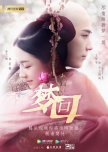
A Journey Through Time, Love, and Destiny
Dreaming Back to the Qing Dynasty is a beautiful blend of romance, historical intrigue, and fantasy that keeps you emotionally invested from beginning to end. What starts as a modern woman's mysterious journey into the Qing Dynasty gradually transforms into a story about destiny, sacrifice, and the choices that shape our lives.The female lead grows from someone simply trying to survive into a strong, compassionate woman whose emotions feel genuine throughout the series. Watching her navigate palace politics, unexpected friendships, and heartbreaking love makes her journey both inspiring and painful.
The male lead delivers a memorable performance, balancing power, vulnerability, and unwavering devotion. His chemistry with the female lead is natural, making every quiet conversation, shared glance, and emotional reunion feel meaningful. Their relationship develops through trust and sacrifice rather than simple attraction, giving the romance real depth.
The Qing Dynasty setting is one of the drama's greatest strengths. The elegant costumes, palace architecture, traditional customs, and political conflicts create a rich atmosphere that pulls viewers into another era. While the story moves at a deliberate pace, it rewards patient viewers with emotional character development and powerful moments that linger long after the final episode.
Although the ending leaves viewers with mixed emotions, it fits the drama's central themes of fate, time, and enduring love. *Dreaming Back to the Qing Dynasty* is not simply a time-travel romance—it is a heartfelt story about finding where you truly belong, even when history itself stands in your way.
Was this review helpful to you?

Seven Personalities, One Unforgettable Masterpiece
Some dramas entertain you, while others leave a lasting impression on your heart. *Kill Me, Heal Me* is one of those rare series that masterfully blends romance, comedy, suspense, and psychological healing into an unforgettable story. At its core, the drama follows **Cha Do-hyun**, the heir to a wealthy conglomerate who secretly lives with Dissociative Identity Disorder (DID) after experiencing severe childhood trauma. Desperate to keep his condition hidden while searching for the truth behind his past, Do-hyun's life changes forever when he meets a determined psychiatric resident, **Oh Ri-jin**.The male lead, **Cha Do-hyun** (Ji Sung), delivers one of the finest performances I've ever seen in a Korean drama. Playing one character is difficult enough, but Ji Sung convincingly portrays seven distinct personalities, each with their own voice, mannerisms, emotions, and motivations. From the fearless and unforgettable Shin Se-gi to the mischievous Perry Park and the innocent Yo-na, every personality feels like a completely different person rather than a simple acting exercise. His performance is emotional, heartbreaking, hilarious, and inspiring all at once. It isn't just about showcasing different personalities—it is about revealing the pain, fear, and resilience of a man desperately trying to survive the wounds of his childhood.
The female lead, **Oh Ri-jin** (Hwang Jung-eum), is much more than the typical romantic heroine. As a psychiatric resident, she becomes Do-hyun's greatest source of comfort, understanding, and strength. Ri-jin refuses to define him by his illness, choosing instead to see the kind and compassionate person hidden beneath years of emotional suffering. Hwang Jung-eum brings warmth, humor, and genuine compassion to the role, creating a heroine who helps heal others while gradually confronting her own painful memories. The chemistry between Ji Sung and Hwang Jung-eum is heartfelt and natural, making their relationship one of the drama's strongest emotional anchors.
The supporting cast adds even more depth to the story, especially **Oh Ri-on** (Park Seo-joon), Ri-jin's protective twin brother. His witty personality provides plenty of comic relief, but beneath his humor lies unwavering loyalty and a deep concern for his family. As the story unfolds, every character plays an important role in uncovering long-buried secrets that connect the past to the present.
What truly makes *Kill Me, Heal Me* extraordinary is that it never treats mental illness as a gimmick. Instead, it explores how childhood trauma can shape a person's life and how healing often begins with compassion, acceptance, and confronting painful truths. The drama balances emotional heartbreak with laugh-out-loud comedy, thrilling mystery, and touching romance, creating a story that keeps you invested from beginning to end.
Ji Sung's performance alone makes this drama worth watching, but it is the emotional storytelling that makes it unforgettable. Every personality represents a different piece of a broken soul, and watching those pieces slowly come together is both heartbreaking and deeply rewarding. Few dramas have made me laugh one moment, cry the next, and leave me reflecting long after the final episode.
*Kill Me, Heal Me* is more than a romance or a psychological drama—it is a story about surviving unimaginable pain, learning to forgive yourself, and discovering that healing is possible when someone finally sees every part of who you are and chooses to stay. It remains one of the greatest character-driven performances in Korean drama history and a series I will never forget.
Was this review helpful to you?
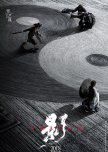
More Than a Wuxia Film—A Beautiful Story of Power and Sacrifice
Directed by acclaimed filmmaker **Zhang Yimou**, *Shadow* is far more than a martial arts epic. It is a visually breathtaking story of power, loyalty, deception, and the price of ambition. Set during China's Three Kingdoms-inspired era, the film follows a kingdom desperate to reclaim a lost city. Behind the political struggles lies a dangerous secret—a powerful commander has hidden himself from the world, allowing a carefully trained "shadow," or double, to stand in his place. As the battle for power unfolds, every character is forced to confront questions of identity, honor, and sacrifice.The male lead, **Jingzhou** (Deng Chao), delivers one of the film's most compelling performances. As the commander's shadow, Jingzhou has spent his life living in another man's image, surrendering his own identity for a purpose he never chose. Deng Chao masterfully portrays his quiet transformation from an obedient replacement into a man determined to control his own destiny. His emotional journey is every bit as gripping as the film's spectacular action sequences, making him a hero whose greatest battle is fought within himself.
The female lead, **Madam Xiao Ai** (Sun Li), is far more than a supporting character. Intelligent, observant, and emotionally resilient, Xiao Ai becomes the moral center of the story. Caught between loyalty to her husband and growing compassion for the man forced to live in his shadow, she navigates impossible choices with remarkable strength. Sun Li delivers a nuanced performance filled with quiet emotion, allowing Xiao Ai's inner conflict to unfold through subtle expressions rather than dramatic speeches. Her relationship with Jingzhou adds emotional depth to a story otherwise dominated by political intrigue and warfare.
One of *Shadow's* greatest achievements is its extraordinary visual style. Zhang Yimou creates an almost monochromatic world inspired by traditional Chinese ink-wash paintings. Shades of black, white, and gray dominate every frame, making bursts of movement and bloodshed feel even more striking. The choreography is equally mesmerizing, particularly the inventive use of umbrella weapons and fluid combat techniques that transform every duel into a work of art.
Beyond its stunning visuals, *Shadow* explores timeless themes about identity, manipulation, and the human desire for freedom. It asks whether a person defined by someone else's life can ever truly become themselves, and whether power is worth the sacrifices required to obtain it. Every alliance is uncertain, every victory comes with a cost, and every decision carries lasting consequences.
If you're expecting nonstop action, *Shadow* may surprise you with its thoughtful pacing and intricate political strategy. But for viewers who appreciate intelligent storytelling, unforgettable cinematography, and layered performances, it stands as one of the most visually distinctive wuxia films ever made. It is a film where every frame resembles a traditional Chinese painting, and every character leaves a shadow upon your heart long after the story ends.
Was this review helpful to you?
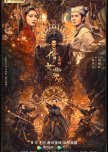
Two Souls Destined to Meet Beyond the Mortal World
The Enchanting Phantom is a visually captivating fantasy romance inspired by one of China's most beloved supernatural tales from *Strange Tales from a Chinese Studio*. Blending romance, mystery, action, and Chinese folklore, the film tells the story of a young scholar whose chance encounter with a mysterious woman leads him into a world where love, sacrifice, and destiny blur the line between the living and the dead.The female lead, **Nie Xiaoqian** (Li Kaixin), is both graceful and tragic. At first, she appears to be an enchanting young woman living in isolation, but beneath her beauty lies a heartbreaking existence filled with loneliness and circumstances beyond her control. Li Kaixin portrays Xiaoqian with elegance and quiet sorrow, making it easy to understand why her kindness shines even in the darkest moments. Rather than being simply a supernatural spirit, she is a woman longing for freedom, genuine love, and the chance to choose her own fate.
The male lead, **Ning Caichen** (Chen Xingxu), is a kind-hearted scholar whose compassion becomes his greatest strength. Unlike heroes who rely solely on martial arts or power, Ning's courage comes from his unwavering belief that people should be judged by their hearts rather than appearances. Chen Xingxu brings warmth, sincerity, and quiet determination to the role, making Ning's growing relationship with Xiaoqian feel believable and deeply emotional. Their chemistry captures the bittersweet feeling of two souls connected by fate despite impossible circumstances.
Supporting the story is the legendary demon hunter **Yan Chixia**, whose wisdom and powerful presence add excitement to the film's action sequences while reminding viewers that not every battle can be won with a sword alone. His character provides an important balance between justice, compassion, and sacrifice.
Visually, *The Enchanting Phantom* is stunning. The ethereal forests, ancient temples, flowing costumes, and supernatural effects create a dreamlike atmosphere that perfectly complements the film's romantic tone. While the action scenes are beautifully choreographed, the movie's greatest strength lies in its emotional storytelling. It asks whether love can survive fear, prejudice, and even death itself.
Although this version reimagines a classic Chinese ghost story with modern visual effects, it never loses sight of what made the original tale endure for generations—the emotional connection between two lonely souls searching for hope in a world filled with darkness.
If you enjoy fantasy romances inspired by Chinese mythology, breathtaking cinematography, and heartfelt performances, *The Enchanting Phantom* is a wonderful watch. It is a story that reminds us true love is not measured by the world we come from, but by the sacrifices we are willing to make for one another.
Was this review helpful to you?


