

 1
1


Salmonella warning
Sushi doesn't need to be cooked. Chicken is a different story. Perhaps if "Delivery" was about a sushi delivery, things would have come out fully cooked, but this show is about chickens, fried chicken and a company that delivers it. It's not an altogether bad concept. But it's not even half baked. Or is it fried?In any event, it starts with a perfectly suitable setup. Mi Yeon is the ace delivery driver. Lee Tae Vin and Kim Jae Won are sidekick material. There's a missing mom, a mysterious hotel room, an alien cult and a ridiculous wig. None of these by themselves are really flaws. But there's not a fully developed show around all this. In eight episodes that run 8-10 minutes each, only the first and last episode have more than a shred of actual action. There's also a brief rehash of the previous episode and credits. All told, there's only about a dozen minutes of legitimate content and a good chunk of that is incoherently edited fighting set pieces.
The main culprit is that there's just no dialogue. Without lines for the actors and almost entire episodes with no forward plot movement, even an 8 minute episode is tiresome. Obviously the budget for this project was extremely limited, but that's no excuse for not having any semblance of a script. In the absence of it, there isn't even much to praise or criticize. It's simply an empty (egg)shell.
Not recommended.
Was this review helpful to you?

This review may contain spoilers
An enjoyable, if messy and uneven, behind-the-stage-curtain adventure
Prior to “Idol: The Coup”, the category of dramas that wanted to feature storylines based around K Pop characters could have been labeled “Irony: The Subgenre”. Why? Because while K Pop has become a global phenomenon with explosive growth and overflowing with powerfully charismatic entertainers, the attempts at capturing it in drama form has been littered with lackluster characters and lukewarm storylines. There’s at least somewhat of a standard-bearer now as “Idol: The Coup” stirs together enough quality drama components to complement the musical background for an above-average production.The primary narrative is based on the five member girl group Cotton Candy and their attempt to salvage a once promising, now wrecked attempt at success. It begins with them attempting to get their agency to get on board with a comeback attempt which only leads to tragic ends and a smoldering feud between a new agency CEO and the Cotton Candy members. Navigating this conflict with the agency whilst simultaneously bootstrapping themselves back in to the limelight makes up act two.
Je Na, fervently played by Ahn Hee Yeon, spends more time than an Australian cattle dog trying to keep her flock from wandering off. Hyun Ji, passionately portrayed by Sol Bin who previously was an idol trainee in “Backstreet Rookie”, has anger management issues that rival The Hulk. Elle, slyly brought to life by EXY, is more often measuring how likely the girls comeback will be and whether she’d be better off starting a solo attempt immediately. Stella, played by Han So Eun, and Chae Ah, by Green, spend almost the entire run as fourth and fifth wheels who way too belatedly get some individual storylines.
There’s also the successful boy band under the same agency and a bunch of management types and producers who are all male. Of course, no idol is without a fan club and, if it’s a drama, the fan club is all female. Ah, but let’s set aside gender momentarily.
As a production intended for viewing pleasure, “Idol: The Coup” does a respectable job through almost its entire run. Kwak Shi Yang, as the sometime nemesis/other times friendly new CEO Cha Jae Hyuk, has a delightful and complicated relationship with his talent and his aunt, in a sparkling guest spot by Yoon Bak In. CEO Cha is not only the most compelling character, but also has more of a transformation than Cotton Candy’s fortunes.
Ahn Hee Yeon and Sol Bin may not have futures as A list leading ladies, but they’re solid actors and have intriguing characters here. The rest of the Cotton Candy members are not on the same level, but they can sing, dance, cry and check the other boxes needed.
This only goes so far, unfortunately, before some flaws start to sink things.
As with any other show in this subgenre, at some point, idols have to perform. But it’s laughable for any song or choreography in a drama to compare to the real thing because, come on, the pros in the K pop industry are a worldwide phenomenon because they’re insanely talented and work nonstop on their craft.
There’s also a severe case of what could best be identified as Chronic Departure Crisis Syndrome which goes like this - Cotton Candy member decides because of [fill in the blank personal reason] that she’s heading for the hills followed by Je Na interchangeably confronting CEO Cha and lassoing the rogue member back to the group dorm ending with a group hug and a period of about ten seconds before the next cycle of CDCS flares back up.
A more permanent and untreatable condition is that the boy banders, Mars, are a necessary plot device requiring regular appearances by five of the most spiritless performers that could be found. Are they ugly? No. Can they deliver a single line of dialogue with a single instance of inflection? Also no. Would they be able to stand out in a supermarket aisle full of nothing else but rows of plain sandwich bread? Probably not.
The most serious issue is, however, that what should have been a show about female-powered success in the face of a hostile male patriarchal organization whiffs badly. As is uniform in idol dramas, the boy band’s fan club is nothing but a mindless, rage-fueled mob bent on obliterating anything that might breathe sideways at Mars. That’s at least got some real world connection to how things are in real life but it’s still not a great look.
What is most problematic is what turns things around for Cotton Candy. The five members have rehearsed, sung, choreographed, begged producers, recorded online videos, reached out to their fans, fought, kicked, scratched, clawed and crawled for episode after episode. Each time that things start to look positive, some new obstacle stands in their way. And then, suddenly everything changes. They start getting positive press and television interviews. The social media following exponentially grows. A signing event brings in a massive crowd. What triggers this overnight explosion of interest? The boy band’s leader, Seo Ji Han, has a press conference and says nice things about them. That’s why they break out. Cute boy flips the switch for the girls and that’s how they make it. That’s the formula for success: a successful male makes everything possible for the females who had flopped before he came to their rescue.
And when the success is imminent, as the final episode begins to roll, there’s the male CEO, the male boy band leader, two male producers, the male agency director and even a male reporter that all get screen time before the first glimpse of a female cast member at the 6:30 mark of the episode. That’s some serious cringe.
“Idol: The Coup”, despite a long list of missteps, has a solid group of characters and actors and the various misadventures that Je Na navigates with her crew create excitement more often than not. It’s a recommended show but be prepared for peaks and valleys.
Was this review helpful to you?
Turns out that Lindsay Lohan is a much better actor than we thought
And whoever directed "Freaky Friday" is a much better director than we thought.And whoever wrote "Freaky Friday" is a much better writer than we thought.
"Branding in Seongsu" is possibly the most baffling, unfunny, incoherent, inconsistent body swap production ever made. There's little evidence that a marketing or PR agency, even one completely consumed by office politics and romances, is a setting that provides much entertainment value. Or maybe one would be if the employees ever did anything but put together Power Point slides and prance around in badly fitting suits.
The characters go through unexplained wholesale changes from one episode to the next and that's even when it's possible to keep track of which person is in which body. Last episode - a naive and clueless spaz. This episode - a protege' of Machiavelli. Next episode - kind and sweet and empathic. Good. Bad. Mean. Nice. Angry. Sweet. It's crazy.
None of the cast really excels here. Kim Ji Eun who normally kills the lighter, comedic material clearly struggled how to approach playing multiple characters that meander through so many forms. Lomon certainly gets the stiff, bossy scheming side but otherwise is pretty lost. Kim Ho Young is probably skilled at something but it is not acting. Jeon Jun Ho presumably was directed to take his gay character as far over the top as possible and he does that. It's meant to be funny. It's not. But that's probably not the actor's fault. Chae Soo Ah is similarly tasked with playing a one-note social media addict. She plays that one note fairly well but it's still just the one note.
Yang Hye Ji, if anyone does, stands out a bit as there's actually a bit of an arc for Yoo Mi as a character - from unappreciated assistant to nefarious backstabber to rehabilitated colleague. It's not a believable arc but it's at least somewhat of a thicker than cardboard cutout portrayal.
That's it. Not a good show. Not recommended.
Was this review helpful to you?
More questions than answers?
In lieu of the more traditional form of review, this author humbly submits the following questions:Why is Hwang Min Hyun a more expressive actor when he is wearing a mask than after he removes it?
How many subplots can be introduced and left unsatisfactorily unresolved in a standard length drama?
Of the many dramas where one of the main characters is an idol, are there any that are actually compelling, complex characters? Why does an industry that is so heavily populated by idols so poor at portraying a fictional version of one?
Has anyone checked the family register of Hwang Min Hyun and Kim So Hyun to determine if they are siblings because if they were, that would at least explain the complete absence of heat in their shared scenes?
Since he didn't through the entirety of filming this show, does anyone know if Seo Ji Hoon has demonstrated any sort of emotional expression since production wrapped?
Has any paparazzi ever cared a whit about an artist who was strictly a songwriter?
Have the agent and casting director who thought Seo Jung Yeon should play a stonefaced, emotionally stunted assemblywoman been sealed in a homemade submersible and dropped to the depths of the Pacific Ocean yet?
Where does Park Kyung Hye rank among the legions of supporting actors that play the mischievous comic side relief best friend of female lead? All hail Queen Park Jin Joo obviously, but how far down the list after her is Park Kyung Hye?
Which creepy K pop agency CEO is the closest real life facsimile to Yun Ji On's Deuk Chan?
None of these are questions that really need to be answered because this is a show that the less it is thought about, the better. A point for novel concept and a strong soundtrack (if that matters) but everything else that followed was lacking. Not recommended.
Was this review helpful to you?
Melancholy & moody
On May 6, 1937, the airship Hindenburg was incinerated in just under forty seconds.Approximately twenty-five years later, a coal seam in a mine under Centralia, West Virginia, caught fire and is still burning. According to one report, it may continue to burn for another two hundred years or more.
These are handy references for a burn rate spectrum. As for the drama “Lost”, on the Hindenburg-Centralia Burn Rate Scale, it falls on the Centralia side. Way, way, WAY over on the Centralia side.
“Lost” is far less about plot than it is about mood. Some things happen. Not as quickly as the viewer might expect them to happen. Sometimes events appear imminent only to recede back to mere possibilities for a long stretch. As for mood, it’s not jovial. Somber? Yes. Melancholy? Definitely. Depressed? That’s where it gets complicated.
Jeon De Yeon’s Boo Jung and Ryu Joon Yeol’s Kang Jae are both emotionally distraught, distant from almost everyone they know and both with only one healthy relationship. Boo Jung with her father, Park In Hwan in a sharp portrayal of an elderly man in decline, and Kang Jae with his friend Sun Joo played by Yoo Soo Bin. Their careers are not what they imagined them to be. Boo Jung’s relationship with her husband is so distant it barely qualifies as a relationship. Kang Jae has lived his life measuring relationships by how much money he gets from it and, despite his natural attributes, has found such a life wanting for meaning.
Chance encounters lead to more meaningful exchanges and openness. As characters seeking human connection, these encounters become more by design and less by chance. Whether it will lead to an escape from loneliness and loss, well, that’s the journey they’re on.
There’s some deft editing as the show alternates smoothly between dialogue and narration. And the dialogue is quite good. The acting as a whole is very strong. Jeon De Yeon is convincing as a naturally quiet but talented writer with an inner fire. Ryu Joon Yeol is aloof and clever and charismatic. There is not a weakness in the supporting cast either. Of particular note, Yoo Soo Bin is a delightfully introverted and naive part-timer at an internet cafe. Son Na Eun is incendiary as a failed idol trainee who sometimes hustles with Kang Jae and has Sun Joo in her sights. Whether she is legitimately interested in him or sees him as a useful mark, her performance is sublimely ambiguous.
“Lost” is, however, a serious test of patience. There’s some long and some really long stretches of very little happening. One subplot involves a celebrity with a long history of abuse so vicious and dangerous that it could not credibly be kept secret. As the backstory is filled in and the arc progresses in the present time, the show doesn’t always telegraph how time is flowing. It’s a minor flaw for most shows, but in “Lost’ where so much is invested in creating this extraordinarily slow build of tension, it’s problematic.
For viewers looking for character study, none of the usual rom-com devices and lots of existential musings, “Lost” is the show. For those looking for comedy or spy thrillers, keep swiping.
Was this review helpful to you?
Deep, deep, deep down, there's something interesting here. But it's not much.
As the Winter Olympics are still in full swing as “Artificial City” comes to a close, there’s an interesting parallel that can be drawn. One of the sports that seems enticing from a thumbnail description is bobsled. Several people hurtling down a sheet of ice at unfathomable speed along a severely twisted course in a plastic shell strapped to a pair of steel blades. YES PLEASE let’s watch! Right? But other than the color of the sled and spandex, there isn’t a lot to distinguish a German bobsled run from a British one to even the Jamaicans. Same run. Same turns. Same ice. And invariably, the team that starts a tenth of a second behind in the first lap time winds up finishing about a half second behind at the end. Compared to almost any other team sport, there’s absolutely no strategy to differentiate one team from another. It’s just “run fast, hop in, don’t crash”. Once the novelty of the ice and the speed wear off, it’s a pretty lousy spectator sport.Chaebol dramas generally encounter similar issues. At first, everything is pretty: the people, the clothes, the bags, the cars, the houses and the locations. There’s the intrigue: corporate and political power grabs, succession rivalries, infidelities, children out of wedlock and corruption. It never hurts a drama to have a full plate of villains to stir up trouble and this genre is an overflowing geyser of troublemakers.
But there’s also only so many affairs and aging chairmen and shady secretaries and indiscreet affairs in swanky compounds before things start to get repetitive. First, there’s never a light moment. And the action is all plotting and scheming and keeping or revealing secrets but there’s little actual action itself that follows. And like the bobsled pinned into a defined track with only a single motivation (go fast), characters fit a narrow description: Buttoned-up. Restrained. Cautious. So there’s only so much variation to build in to one of these shows.
“Artificial City” makes no attempt to break these genre conventions. It centers on a corrupt conglomerate (Sung Jin) with an art gallery among other businesses, an unhealthy amount of political influence, an iron-fisted chairwoman (Kim Mi Sook’s Han Suk), her ruthless aide (Kim Joo Young’s Seon Mi), a reluctant heir (Kim Young Jae’s Joon Il) and a plan to make bank via the redevelopment of an area through questionable means. There’s plots. Backstabs. Affairs. Honest journalism is shut down. Prosecutors are used for corporate family gain. Vaults of secret information.
There’s only two elements of “Artificial City” that sets it apart by any amount - the characters of Park Soo Ae’s Jae Hee and and Lee Yi Dam’s Lee Seol. Jae Hee is the curator of the museum and husband to playboy corporate son Kim Kang Woo’s Joon Hyuk. She is determined to succeed by making him powerful and being his puppetmaster and protector. Lee Seol is an employee of the museum with a secret bad history with the Sung Jin family. Before long, the two develop a connection but Jae Hee’s desire for power and Lee Seol’s aim to draw blood can’t coexist harmoniously.
Of course the two are more connected than they realize and it’s a pretty solid effort by the production in how the pieces are revealed and put together slowly but unwaveringly through the show’s first half. And Lee Yi Dam, especially for an actor with hardly any filmography, and Park Soo Ae work together extremely well. The affection the characters have for each other is palpable.
Where “Artificial City” shines is where it isn’t really anything but a case study on these two main characters. To watch these characters develop - as they come to grips with whether the goals they have dedicated their lives towards remain meaningful or if new discoveries should set them on a new path - that is the hidden gem within “Artificial City”. And the performances by Park Soo Ae and Lee Yi Dam are strong; strong enough to give the production some bursts of powerful emotion.
But regardless of how meaningful character development may be, the hidden gem is far too hidden below everything else. And whenever the focus shifts off of Jae Hee and Lee Seol and their internal conflicts, things become less satisfying viewing-wise.
Not to mention that within the “everything else” there’s plot and logic holes EVERYWHERE. In one episode, Han Suk is damn near omnipotent and ruthless. The next, she’s somehow cornered and conciliatory. Secretary Go always knows where everyone is and is usually lurking in plain view but no one ever notices her. Worse, character after character knows that they’re a target but they make no attempt to be discreet. Or a character knows that this other character is a threat to their safety and happiness, but if they get a call from the danger, they don’t just pick it up, they go and meet the threat in person with not a single precaution. And then there’s the reversals where the weak character suddenly takes charge but it’s not at all clear what fulcrum was the mechanism to elevate them. Then again, it doesn’t really matter because regardless of the churning action on the surface, as soon as the movement pauses, nothing has really changed.
Does a scintillating production value or skilled direction help? Nope.
But it’s a great cast so that makes it worthwhile, right? There’s some strong work in spots here, but in general, ehh, not really.
So is it recommended? Well, if it’s twenty hours of bobsled on a loop or “Artificial City”, opt for the latter. But otherwise, it’s not a must watch.
Was this review helpful to you?
Splendid work by young lead actors, not much else to it
Plenty of dramas could be improved measurably by shortening the number of episodes and episode lengths, tightening the focus and jettisoning secondary storylines and their cast. It isn’t often that a production could have used the opposite. But with only twelve episodes of less than half hour run times, there isn’t much to “Great Shaman Ga Doo Shim” and it has a rather full narrative to build up and a sizable roster of victims and villains. With those and no shortage of tussles between the good guys and bad guys, that leaves little time for backstory or secondary romances or other time fillers.What it does have are solid efforts by Kim Sae Ron and Nam Da Reum as the leads in a rather generic setup for the ghost genre that would be easily overlooked if it had not been so surprisingly well acted. Kim Sae Ron is the title character, a granddaughter of a shaman possessing a natural talent for the supernatural. When she transfers to a new high school, she quickly catches the attention of Nam Da Reum’s Na Woo Soo, the school’s most popular guy and biggest brain. It’s not a pair that would seem to mesh but it’s mirror-imaged “My Fair Lady” theme works. Instead of the rich, refined male incorporating the outcast female into his world, she guides him to become a paranormal pugilist. As Doo Shim gets to be more of the tight-lipped, stoic character that normally fits the male lead, Kim Sae Ron has to play it relatively tight but she deftly exudes a combination of the typical teenage angst with atypical unwanted powers and their associated responsibilities. It’s not a dynamic role but KSR still infuses the character with enough warmth to make Doo Shim a worthy heroine. Nam Da Reum has a less complex character. Woo Soo is a puppy, more or less. Nam Da Reum nails the bright-eyed earnestness and incessant curiosity to set Woo Soo apart from the standard high school male main character.
Beyond these two, there isn’t much to note. The fx are the usual stock ghost makeup and black smoketrails. The high school students and administration are the generic varieties. Characters beyond the school scarcely appear at all. And this might be the easiest show ever to wardrobe - school uniforms and business suits and a couple of shaman robes.
This isn’t a groundbreaking show nor is it a particularly memorable one either. It’s frankly a show that without two well cast leads, would be rather dull. But the charms of Kim Sae Ron and Nam Da Reum are enough to make this an entertaining watch.
Recommended.
Was this review helpful to you?

Kim Hye Yoon stuns and Byeon Woo Seok is great, but after that?
Attempting to keep this brief.Kim Hye Yoon and Im Sol are as perfect a pairing of actor and character as can be achieved by human effort.
Byeon Woo Seok is more than capable as a lead and is particularly good when Seon Jae is uncomfortable and awkwardly trying to make something happen with Im Sol. Somehow, when he's supposed to be cool and under control, doesn't seem as natural.
The two together are fantastic particularly through the first time loop sequences up until Im Sol finally (in present day) comes clean about her feelings and the big scene in her apartment doorway delivers the awaited romantic payoff.
These two can duke it out with the lead couple of just about any drama and hold their own.
But the rest?
Not great.
There's a second couple but 1. it's forgotten almost completely from episodes 4 through 15 and 2. they are clearly intended to be the comic relief in a show where the leads provide plenty of laughs so the second couple has to take their acting to a sketch comedy level that is nails-on-chalkboard grating.
Kim Won Hae is great (as he almost always is) but the relationship between Sun Jae and KWH's father is rarely given any in depth play. What could have been a terrific subplot, particularly when dealing with Sun Jae's swimming career, is ignored.
Tae Sung is a promising character but he needed a bit of backstory and consistency. Like a lot of characters that aren't the main two, Tae Sung is too frequently simply a convenient device that transforms in to whatever the story requires him to be. A bad boy that needs to fake a relationship with Im Sol. Later a buddy for Sun Jae. Then an object of jealousy. Intermittently, a character teased as the third spoke of a triangle (thankfully only teased but even the teasing of it was unwelcome). Finally, a cop to pursue the villain. Although the time loop changes can account for some of this, it's jarring when in one loop he's a successful fashion entrepreneur and then suddenly he's a civil servant.
Back to the villain: it's the most bland villain ever and the final confrontation with him is so painfully anticlimactic.
And the storytelling overall is lacking. It starts after major events that drive the storyline have happened but the context is never adequately exposited. The time loops are fairly well handled but there is absolutely one more loop than there needed to be and it's clear that the writers grew tired of incorporating how the most recent loop back changed the present day circumstances.
It's a show that could have 1. been a show exclusively about the lead couple for about an 8 episode run (like a longer "Soundtrack" drama) or 2. a more traditional 16 episode drama that invested more screen time in the secondary stories and characters. Either way, with this lead couple, it could have been an all-time great show. Instead, it's a fun watch and certainly recommended but falls well short of what it should have been.
[EDIT: Wow. Thanks so much to everyone who has liked this review! The positive feedback is very appreciated :)
The review should have mentioned that Im Sol's grandmother, both the character and the portrayal, were wonderful but, frustratingly underutilized.]
Was this review helpful to you?
This review may contain spoilers
"Grab a brush and put a little makeup"
Some twenty years ago, give or take, an underground music genre exploded into public awareness. Emo became the hot scene with its ironic song titles, asymmetric haircuts, punk influenced guitars and melancholy, introspective themes. At the peak of its popularity, System of a Down released a blistering track titled "Chop Suey!" about drug addiction and death from their album "Toxicity". What does this have to do with the 2022 Korean television drama "Behind Every Star"? Ok, quiz time:Which of the following explains the commonality between the song and the show?
A. Toxicity is the name of the album and an accurate description of almost every character in "Behind Every Star"
B. "Grab a brush and put a little makeup" from the song also describes how the agents in "Behind Every Star" don't really solve anything. They just put a pretty facade on things and hope they go away.
C. The people responsible for both seem to have been heavily influenced by mind-altering substances, with differing outcomes for whether that was a good thing or not.
D. The tone and pacing of both cover the widest possible spectrum.
E. All of the above.
Answer below.
For those reading this review, please know that the song is excellent and to expect any return on the time invested in reading this review, please seek it out. It may not be everyone's style, but it is the absolute only hope to get any entertainment value from anything mentioned here.
Because it will not be found in "Behind Every Star".
It's part procedural drama with guest stars that are generally clients of Method Entertainment's agency. The agents have a more traditional serial arc. The procedural has some modest success with a few guest turns from the likes of Park Ho San, Oh Na Ra, Kim So Hyun and Kim Ji Hoon and more playing themselves as stars with various neuroses. The serial drama portion is a Category 5 hurricane of unpleasantness and odor and boor. Or bore? Both actually.
Seo Hyun Woo's Joong Don and Lee Seo Jin's Director Ma have absolutely zero charm, spine or energy. Kim Gook Hee's Eun Soo is a fairly significant supporting character that is entirely defined by her inexplicable attraction to Director Ma. Choi Yeon Kyu's Won Jae appears every episode multiple times but doesn't speak. Or perhaps he does, but it's meaningless filler. Hwang Se On's Hee Sun has the most potential of any character but her storyline alternates between a unlikely crush and an infinitely more unlikely series of acting misadventures. Shin Hyun Seung's Eun Gyul appears often. Has lines. Does things. Interacts with other characters. Things that should allow a viewer to obtain some impression or evaluation of what he might be like as a person. But he is so bland that absolutely nothing can be gleaned from observing him. He is as shapeless and formless and colorless as an inert gas.
Joo Hyun Young who made a minor character in 'Extraordinary Attorney Woo" into a viral online phenomenon does the opposite here - takes a major character and eliminates any sign of life from it. To her credit, the two portrayals are so incredibly different that it shows incredible range.
But the absolute rotting cherry on top of this reeking sundae is Kwak Sun Young's Je In. She is as self-destructive, shallow, selfish, shortsighted and superficial as any character that has ever leapt from writer's desk to screen. And all of it in a most uninteresting and grating manner possible. Even had the remainder of the show around her been praiseworthy, her presence alone would very likely have torpedoed everything she touched.
Apparently, "Behind Every Star" is an adaptation of a popular and successful French production. But it would be easier to understand the recent breakthrough in nuclear fusion than how this wreck of a drama is in any way associated with something that members of the human species sat through and enjoyed.
Not recommended. Answer to quiz: E
Was this review helpful to you?
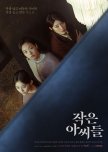
Perhaps the only significant misstep is in the title
There's scant overlap between the source material of "Little Women" and the Korean drama that bears its name. Louisa May Alcott's novel has three sisters that struggle in a family afflicted by poverty, but there's only scattered other parallels between the present drama and either the novel or previous adaptations. And perhaps the most jarring twist in an almost endless string of them is the one that hits quite early on - that this is not at all what a viewer would expect from something called "Little Women".Kim Go Eun, Nami Ji Hyun and Park Ji Hoo play the sisters In Joo, In Kyung and In Hye respectively. In Joo is a bookkeeper in a corporate office but an outcast among the staff. In Kyung is a reporter at a news station where she seems to get the worst possible assignments like covering a typhoon from the middle of the typhoon. In Hye is a prodigy at oil painting but resents that her older sisters sacrifice for her to pursue her art.
The narrative kicks off with In Joo's only friend at work nonchalantly asking her to help with a side business project she's been working on. And then bad things start happening and it's not clear who's behind them, but there's little question that the Won family and Uhm Ki Joon's Park Jae Sang who has married in to the family are involved. Before long, each of the In sisters entangles herself with this clan and it very likely will not be a healthy relationship.
Kim Hee Won directs and does so masterfully. The production value across the board is flawless. It is exceptionally well shot. The sound editing and score are sublime. The wardrobe, hair and makeup crews killed it. Each episode is a compelling watch in isolation and as the tension builds quite quickly early on, it only ratchets tighter as the series progresses.
The cast is led by some big names like Kim Go Eun and Nam Ji Hyun and Wi Ha Joon. Of those three, Nam Ji Hyun stands out, although all are very good. There's some terrific performances by supporting cast too. Gong Min Jung is a viciously combative colleague of In Kyung. Kim Mye Sook plays a distant, wealthy relative of the In sisters and is terrific. Park Bo Kyung is a frightening operative working for Park Jae Sang.
But the most captivating work is by Uhm Ji Won. Her Won Sang A is definitely not a mentally well person. Is she simply a spoiled princess of the powerful Won family? There's a lot more than that (A WHOLE LOT MORE) and while plenty of mystery surrounds the character, when she's on screen, everything else shrinks. It is hands down the best supporting performance in the genre this year.
If there are flaws, it's that the screenplay gets a little too tricksy at times to feint this way and that. Most often, things are adequately explained, but not always. And there's some inconsistencies in how much control a powerful group holds over courts and judges and prosecutors and the media. At times, it is unlimited and a moment later, they are no more powerful than a corner convenience store.
Highly recommended for the above reasons as well as what is unquestionably the cameo appearance of 2022. "Little Women" is almost certainly the best drama of 2022.
Was this review helpful to you?

Han So Hee punches her way to superstardom
Prior to viewing “My Name”, the question begging for an answer was “How is Han So Hee really going to play a character that is more brawl than beauty?” That question is answered so quickly and thoroughly to the affirmative in such short order that immediately after viewing the conclusion, it seems insignificant. It shouldn’t however, as Han So Hee’s performance is outstanding and it makes “My Name” one of the best productions of 2021. As Yoon Ji Woo who joins the Dongcheong drug gang and becomes the mole narcotics detective Oh Hye Jin, Han So Hee bludgeons the screen with desperate rage, crushing isolation and grim determination. If her credentials as an A List star weren’t already established, this performance carves it emphatically in stone.The story of a criminal enterprise planting a mole in a police department is not breaking new ground. The most notable predecessors are “Infernal Affairs”, the 2002 Hong Kong movie and its English adaptation by Martin Scoresese “The Departed” which won multiple Academy Awards. “My Name” has many similarities but the setup is an ingenious twist which is subtly hinted at multiple times but only fully revealed well past the halfway mark.
Beyond Han So Hee, there are two other marvelous performances. Kim Sang Ho is brilliant as the Narcotics Division captain with a murky connection to the murder of Yoon Donghoon which initiates the story. But the most electrifying work is by Yang Jool as Do Gang Jae, a former Dongcheong disciple with plans to take over as the new kingpin. Gang Jae is at the top of the villain heap - a tangle of psychosis, brilliance, theatrics and grudges. The entanglements between Ji Woo and Gang Jae are the finest moments in a very fine show.
Sadly, they are not the centerpiece and once Gang Jae is no longer involved, the tension markedly slackens. Where “My Name” lapses, it is with the finer points of how Ji Woo acts as Detective Oh, some lackluster characters, one casting misfire and a terribly unimaginative conclusion. For the lackluster characters, Ahn Bo Hyun’s Detective Jeon Pil Do varies from the cop stereotype only occasionally and almost imperceptibly. Park Hee Soon’s Choi Mu Jin, the Dongcheong leader is more corporate figurehead than ruthless drug lord. His right hand man, meanwhile, is Jung Tae Joo played by Lee Hak Joo who is entirely unconvincing in the role.
There are some questionable gaffes in logic. Ji Woo is far too reckless with maintaining her secrecy. It is a serious stretch that she is not quickly outed as a mole. One Bond-like near death escape around the halfway point is a mess. Dongcheong rarely seems like an outfit capable of either mass drug commerce, avoiding police entanglements or successful turf warfare against other gangs. Meanwhile, the entire narcotics division could fit in a walk-in closet and the secondary characters who inhabit it show no indication that they could apprehend the most simple minded criminals.
These are flaws but not so glaring to diminish the entertainment value. The production is overall very well done. The HMU work in particular is convincing. It’s not groundbreaking photography work, but it is solid. There is almost no filler or unnecessary flashbacks in the narrative.
With a satisfying conclusion, “My Name” would be in the top echelon of shows. That, however, is where “My Name” whiffs badly. In the final episode, there is a last shocking moment (a good one) and then the narrative veers immediately southward and never recovers. It is a final confrontation that magically combines a wholly unimaginative setup with a total departure from any possible realism. It results in a show that is nearly eight episodes of scintillating entertainment that is deeply marred by the last twenty minutes.
Overall, “My Name” is an excellent show that simply falls short at the end. For an audience that is not fond of violence, it should be avoided. In general, it is just short of being a “must watch”.
Was this review helpful to you?
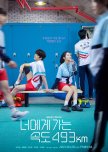
How to Make a Very Solid Breakfast Sandwich
"Love All Play" is like a hearty egg, sausage and cheese sandwich at a neighborhood diner. It doesn't take a culinary school trained chef or a Michelin star restaurant to plate a terrific one. But there are a couple of things that separate an average one from a very good one. First, there's no great sandwich without outstanding bread. It should be freshly baked. None of the spongy, preservative-stuffed, plastic-bagged tasteless kind. The eggs and cheese just have to be fine. But the sausage can't be. It should be spicy and savory with plenty of silky fats.In "Love All Play", the fresh bread is a bevy of likable, complex and organic characters from the two leads and going deep in to the supporting roster of characters.
The spicy meat is an astonishingly strong cast that has a few recognizable faces, but no high-powered stars.
Is the plot a brilliant, novel one with twists and turns and surprises and reveals and climactic moments? No. It certainly places enough credible obstacles in the way of the happiness of the various characters to keep a modest amount of tension going, but there's nothing here that hasn't been seen dozens of times in other dramas.
Is the production value on that viewers will confuse with Bong Joon Ho? That's a very firm "No.". There's a nice theme song and the editing is fine. But the badminton scenes are nauseatingly repetitive. The wardrobe is mostly athletic warmups. In fact, there's nothing in the production design, makeup, hair, lighting, sound, photography, etc. that's noticeable.
Despite such non-noteworthiness, Chae Jong Hyeop is an unfiltered delight as Tae Joon. It's hard to think of a more warmhearted, selfless, strong and mature male protagonist. In fact, if there's a less than credible moment, it would be where Tae Yang's father has any doubts about his character. Is he too good to be true? Perhaps, but there's enough of a self-destructive, reckless element to him that Tae Joon doesn't seem inhuman.
Park Ju Hyun may not have the natural charisma that Chae Jong Hyeop exhibits, but she's a marvelous complement. Park Ji Hyun is scintillating as her Jun Young has to be very delicately layered with resentments and damages and hopes and dreams. This review could list just about every other member of the cast and try to find some unique and effusive praise for each of them. If there is a weak member, it would be In Gyo Jin as an assistant coach who comes across too erratically from one scene to the next.
Special mention, however, must be made for Choi Seung Yoon and Jo Soo Hyang. They are [chef's kiss] pure, distilled magic in virtually every moment they are together on screen. If there is a spinoff of "Love All Play", it must be featuring these two. Or give them their own new concept.
It should be a simple formula. Wonderful, multi-dimensional characters with a solid cast and simply put them in a room and let them have at it. Unfortunately, those two ingredients are trickier than they look. Props to this production for accomplishing it with aplomb here.
Recommended and highly.
Was this review helpful to you?

A not super homage of a superhero story
A rich guy in a powerful position with a vigilante hobby and a tragic backstory. A young protege' that lost his family. A wheelchair bound woman that's a whiz with computers. A coterie of corrupt men in power. A ambiguously good/evil female that to has a romantic interest in the rich guy. A city awash in crime.Figured out yet what story this is? So there's some surface-level differences but the similarities are too numerous to dismiss. It's not a fatal problem, but it does set a bar of expectations fairly high. It's a high-quality setup that requires excellence in execution.
The budget is definitely there. Ample sums of money have been spent here on special effects (lots and lots of fire and explosions and smoke). There's some big set pieces with lots of crowds. There's lots of fancy vehicles and a big house and the wardrobing is wonderful.
The majority of the cast is strong. Ji Sung clearly has the intensity and physicality to play Kang Yo Han. Among the supporting cast, Jang Young Nam, Baek Hyun Jin and Jeon Chae Eun stand out. Kim Min Jung pushes a bit much in to caricature than needed, but is passable. But Park Jin Young is the central character in the narrative and, while he's not the only issue with the character, he's not helping this production with his limited acting skill.
The fatal flaw of "The Devil Judge" is the character of Kim Ga On played by Park Jin Young. This is a show of intrigue. It's a deadly game of five dimensional chess where subterfuge and strategy are critical to survival. Kim Ga On, however, shows no traits that would make him useful in any conceivable way. Ga On doesn't control his emotions. He doesn't keep secrets. He doesn't conceal his intentions. When he attempts to dig up info, he is easily caught. He doesn't listen to simple directions. He is not only useless to someone playing in such a game, he's an obvious liability with no redeeming value. That Kang Yo Han has selected him among a legion of more worthy potentially useful allies to be his sidekick is inconceivably poor scripting. Yo Han is an unforgiving man bent on revenge and a brilliant tactician, but his choice as his wingman would struggle to outsmart an inanimate object.
Even more frustrating is that Ga On is the lifelong friend and object of affection for Park Gyu Young's Detective Yoon Soo Hyun. There's a backstory as to how they were childhood friends but it is entirely unconvincing as to why Soo Hyun has any feelings for Ga On. He has no apparent reason for not returning her feelings despite the fact that does actually like her. There are times when drama characters may not immediately become an item based on sketchy reasoning, but this is over the line of any credible basis.
There's more bad logic in the storyline here than needs to be reviewed. And it should be noted that entertainment or art in general should be permitted license to ask the audience to engage in some degree of suspension of reality. That's part of the point - to disengage from the stress and fatigue of our daily lives. But there's still a requirement that a story have solid footing. A line exists that should not be crossed. "The Devil Judge" crosses it and then sits fire to it and then salts the earth where it once lay.
As an aside, Park Gyu Young still deserves a leading role. It would be a bonus if it was on a show that didn't seem so bent on making her look as bedraggled as possible.
Was this review helpful to you?

Whiplash and the art of motorcycle maintenance
A friend in graduate school at Northwestern during the late 90's and early 00's spent some of his free time working for the college radio station. On occasion, he had the opportunity to interview one of the alternative artists as they would appear in the Chicago metro area. One such artist (Neko Case) not only had performed on stage multiple times during his stint on radio but also had a mutual who regularly hosted parties and they bumped in to each other a few times in this context as well. When Ms. Case was headlining the music stage at the local summer arts festival, I expressed to my friend how much I enjoyed her music and hoped to catch her performance. Surprisingly, my friend had no such warm and fuzzy feelings towards the alt-country singer. He recounted that both as an interview subject and as a person in a personal setting, she was not at all interested in discussing music or seemingly anything else with anyone who was not a fellow musician.This anecdote may not paint Neko Case is the most positive light but her solo music remains magnificent and her vocals with Vancouver's New Pornographers are among the finest to be recorded in the last thirty years. This retelling is not so much about her and her shortcomings as a human being but as a relief upon which to discuss musicians and music in general and art and what's it, y'know music and art, all for? What's so great about it?
In "Glass Heart", Satoh Takeru's main character, Fujitani Naoki, is a genius. Viewers know this not only because viewers see him extemporaneously turn a simple melody in to a Mozart-level composition, but also because every character around him says at every opportunity that he's a genius. The first part of that is enough. The second part gets a bit tiresome. Nevertheless, Naoki is a genius and recruits fellow aces of guitar, keyboard and drums to form his new band. To the extent that "Glass Heart" succeeds, it's thanks to the perfect casting of Machida Keita as the stoic and aloof-on-the-surface guitarist and Miyazaki Yu's ferociously unhinged musical sequences on the drumkit. And the camera work and editing for said musical sequences are legitimately stunning.
But the plot is wafer-thin and meanders in-and-out of Naoki's troubles which never really create any emotional impact because Naoki himself doesn't seem to feel anything other than a compulsion to write more songs, perform once in a while and have somewhat robotic interactions with people who have either supported or antagonized him. Had any of the bandmates showed some exasperation with Naoki like any normal human being would have, it would have added some badly needed connection with how things usually operate here on Planet Earth. And Naoki is exasperating. As a positive, he's somewhat mercurially amusing as this easily distracted, stream of consciousness creator. But he's also sporting some pretty toxic and unhealthy traits that get the "it's ok because he's a genius" treatment.
Further, Saijo is a confounding character. While playing the drums, she's an absolute mastodon. When she puts the drumsticks down, she's a mouse. This character needed to be more mastodon. Much much more mastodon.
Where "Glass Heart" really falters is that it very explicitly wants to express why music is so great and important and how this musical genius' creativity is so wonderful. And it's not at all convincing.
The primary issue is that it's all entirely inward-looking. This wonderful thing that Naoki does is generally accomplished with him in some sort of trance where he's wholly unaware of his surroundings or attempts by his bandmates to communicate with him. The big transformative experience by the members of Tenblank is their realization that their performance as a band IS how they live and that their lives without their shared musical exploits are less meaningful.
Which is great.
For them. The musicians.
But music that is only meaningful for the musicians is just a series of notes and words strung together. "Glass Heart" makes some glancing attempts to involve other characters but it's the half-brother from a rival band (musician), a manager who wanted to be a singer (musician), a sinister record exec who's background is a songwriter (musician) and a messy idol-style singer (musician). None of them nor any audience member or anyone have any impact on what "Glass Heart" proclaims as its message. To be clear, it's great that the creators enjoy their process and are fulfilled in their pursuits. But to "Glass Heart" that's the end of it. Music for the musician. It's enough to be the tree in the zen proverb of the tree falling in the forest when no one is around. Hint: that's not all it's supposed to be.
For those that are interested, "Inside Llewyn Davis" is a master class on a musician discovering fulfillment in his art.
As for "Glass Heart", it's fine as an extremely long form music video but isn't much of anything else.
Was this review helpful to you?

An exceptional work of craftsmanship from script to casting to direction to acting
“Those who do cannot remember the past are condemned to repeat it.” - Harvard philosophy professor George SantayanaSometimes we hear these phrases, like the one above and others, and they sound wise at first glance so we accept them as wholly and universally true. But if there is a whole and universal truth, it is much more likely that there are no whole and universal truths (except for, paradoxically, this one). “Our Beloved Summer” is a show about repeating the past - Woong and Yeon Soo having different values and backgrounds but loving each other despite them. In their past, the differences overcame them and they could not stay together.
Ironically, it was impossible for Woong and Yeon Soo not to remember their past as it was filmed in a documentary which remained popular into their adulthood. Can their familiarity with the past help them not to repeat it? That’s not really the issue though, whether for them or anyone else. Knowing the past but not recognizing how to change the present and future is useless.
The show isn’t built around the soundtrack like an idol drama, nor does it feature innovative or elaborate production design or wardrobe. But the crew for these elements were terrific. V’s “Christmas Tree” was one of many outstanding songs featured. The wardrobe for Woong in particular was stellar. And the locations where this show was shot were tops.
Woong is almost a polar opposite, on the exterior, of a typical male lead. Outwardly, he’s lazy and a coward. In the hands of a less talented actor than Choi Woo Shik, Woong could have been a disaster of a character and sunk the show. But this performance is mesmerizing and further solidifies Choi Woo Shik’s status as one of the most talented actors of any age and hailing from anywhere. That Woong is talented as an artist is made clear from early on but it is his inner emotional strength, that he will shrug off his own troubles and stand beside and lift up someone else who is suffering is where Woong really shines as a character.
If there’s a trope that “Our Beloved Summer” fails to avoid, it’s that if the two main characters had simply communicated openly and honestly with each other, they could have avoided many of their troubles. Well, hard to avoid here since the foundation of the story is that they’re separated after a five year relationship. But the show misses when it spends almost its entire first half focusing on the narrative primarily from Woong’s perspective. Yeon Soo’s inner thoughts are only momentarily illuminated until after the midpoint. The result is that she’s portrayed as an unapologetic bad guy between the two and Woong is the innocent victim. While the reality is that she did break things off, there’s much more nuance to Yeon Soo but it’s not revealed for a long stretch.
Once “Our Beloved Summer” delves further into Yeon Soo’s character, however, she comes alive as a layered character, tragically unselfaware while driven and loyal and smart. As the show proceeds, particularly in the final few episodes, Kim Da Mi’s portrayal gets better and better. She deftly alternates between lighter humorous scenes and raw emotional displays. There are probably examples of a finer pair of performances by both male and female leads in a production, but none spring to mind immediately.
The two secondary leads, unfortunately, do not leave the same impression. Kim Sung Chul and Roh Jeong Nui are both fine actors and perform admirably. The characters they play, however, are lackluster. Kim Sung Chul’s Ji Woong is an emotionally stunted friend of the main characters that is effective only briefly as a prop to move the arc forward between Woong and Yeon Soo. His own storyline is far and away the least compelling portion of the production. Meanwhile, Roh Jeong Nui’s NJ is an atypical idol with a crush on Woong. She has a brief but unnecessary subplot of her own that primarily just whets a viewer’s appetite for a return to focusing on any other part of the show.
An additional note is that “Our Beloved Summer” has one of the finest supporting cast ensembles of any show. If there is an easy layup in drama casting, it is to always, whenever possible, include Park Jin Joo as the female lead’s quirky bff. She’s as marvelous as ever here. But there’s standout performances as well from Ahn Dong Goo as Woong’s manager, Seo Jung Yeon and Park Won Sang as Woong’s parents, Jo Bok Rae as a senior television producer, Jung Kang Hee as a neighborhood hardware store owner and the sublime Kwak Dong Yeon makes several guest appearances as a fellow/rival artist to Woong.
Kim Yoon Jin nails how to handle the key emotional scenes. He lets the actors take over. The soundtrack takes a pause. There’s no moving cameras. The best example is the scene at the end of episode 11 where Yeon Soo struggles to find the words she wants to say to Woong. Technically, it is as simply presented a scene as a viewer will find. But it is an emotional powerhouse of a scene. Narratively, the show only strengthens as it nears its end. It continues to deliver humor, warmth and tenderness until its final moments.
If “Our Beloved Summer” were to be summed up in a single word, it would be warmth. We can all use more of that and so it is most highly recommended.
Was this review helpful to you?


