



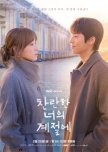
In Your Radiant Season – A Gentle, Introspective Romance
In Your Radiant Season is a drama that unfolds at a deliberately slow, contemplative pace, prioritizing subtlety and emotion over action or dramatic plot twists.
This measured tempo may feel unusual at first, but it perfectly serves the story, allowing the relationship between Ha-ran and Chan to develop naturally and authentically, while giving the characters space to grow and reveal themselves gradually.
The central romance is built through silences, glances, and small everyday moments rather than dramatic confrontations or high-stakes tension. This approach makes every step in their relationship feel genuine and deeply touching, reflecting the show’s core theme: emotional healing and personal growth after past traumas.
The acting is one of the drama’s strongest points.
Lee Sung-kyung delivers a subtle and nuanced performance as Ha-ran, conveying pain, vulnerability, and inner strength through the smallest expressions. Chae Jong-hyeop brings warmth and sincerity to Chan, portraying a gentle and calming presence without exaggeration. Together, their chemistry is understated yet profoundly moving, making their relationship feel real and heartfelt.
Supporting characters also add depth to the story. The family dynamics, in particular, are thoughtfully developed: the grandmother, sisters, and other secondary characters create nuanced relationships, sometimes tense and often marked by unspoken wounds. This humanizes the narrative, even though some secondary arcs could have been explored further.
The soundtrack is another highlight. Filled with soft ballads and delicate piano pieces, the OST complements each scene with subtlety, enhancing the emotions without ever becoming intrusive. Many of the drama’s most poignant moments are elevated by this carefully integrated musical backdrop.
Visually, the drama is beautifully crafted. Soft tones, natural lighting, and contemplative camera work create an almost poetic atmosphere, emphasizing the introspective and melancholic nature of the story. This visual approach immerses viewers in a world that is simultaneously gentle, nostalgic, and emotionally resonant, perfectly matching the show’s measured pace.
The main drawback is its slow rhythm, which may frustrate viewers expecting a faster, more event-driven plot. Some narrative threads are underdeveloped, leaving certain secondary arcs feeling incomplete.
Despite these minor flaws, In Your Radiant Season remains a sincere, emotionally powerful, and deeply human drama—perfect for those who appreciate slow-building romances, introspective storytelling, and an emphasis on emotional resonance.
This measured tempo may feel unusual at first, but it perfectly serves the story, allowing the relationship between Ha-ran and Chan to develop naturally and authentically, while giving the characters space to grow and reveal themselves gradually.
The central romance is built through silences, glances, and small everyday moments rather than dramatic confrontations or high-stakes tension. This approach makes every step in their relationship feel genuine and deeply touching, reflecting the show’s core theme: emotional healing and personal growth after past traumas.
The acting is one of the drama’s strongest points.
Lee Sung-kyung delivers a subtle and nuanced performance as Ha-ran, conveying pain, vulnerability, and inner strength through the smallest expressions. Chae Jong-hyeop brings warmth and sincerity to Chan, portraying a gentle and calming presence without exaggeration. Together, their chemistry is understated yet profoundly moving, making their relationship feel real and heartfelt.
Supporting characters also add depth to the story. The family dynamics, in particular, are thoughtfully developed: the grandmother, sisters, and other secondary characters create nuanced relationships, sometimes tense and often marked by unspoken wounds. This humanizes the narrative, even though some secondary arcs could have been explored further.
The soundtrack is another highlight. Filled with soft ballads and delicate piano pieces, the OST complements each scene with subtlety, enhancing the emotions without ever becoming intrusive. Many of the drama’s most poignant moments are elevated by this carefully integrated musical backdrop.
Visually, the drama is beautifully crafted. Soft tones, natural lighting, and contemplative camera work create an almost poetic atmosphere, emphasizing the introspective and melancholic nature of the story. This visual approach immerses viewers in a world that is simultaneously gentle, nostalgic, and emotionally resonant, perfectly matching the show’s measured pace.
The main drawback is its slow rhythm, which may frustrate viewers expecting a faster, more event-driven plot. Some narrative threads are underdeveloped, leaving certain secondary arcs feeling incomplete.
Despite these minor flaws, In Your Radiant Season remains a sincere, emotionally powerful, and deeply human drama—perfect for those who appreciate slow-building romances, introspective storytelling, and an emphasis on emotional resonance.
Was this review helpful to you?


