
 News


 1


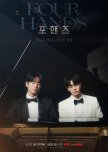
A deeply moving musical tragedy driven by a masterful duo.
Four Hands, Two Sonatas is a massive emotional rollercoaster. The series quickly leaves behind the usual high school clichés to plunge us into a human drama of profound sadness, yet rare beauty. Here, the piano is not just a prop; it is the only way for two broken young men to express what they keep buried deep inside. What makes this drama so powerful is how it shows that music is no longer just art, but a matter of psychological survival for the characters.
The entire intensity of the story rests on the incredible performances of the actors. Song Kang plays the role of Kang Bi-o with impressive restraint. He embodies this wealthy boy, completely suffocated by his mother, who takes refuge in robotic technical perfection to keep from collapsing. Opposite him, Lee Jun-young delivers a raw and visceral performance as Choi Jeong-yo. He is a poor prodigy, deeply wounded by life, who had completely abandoned music. The chemistry between the two is insane; they start by hating each other before realizing they are the only ones in the world who truly understand one another.
The dialogues between them perfectly express the heavy weight of their situation. Far from easy or cliché lines, their exchanges carry rare psychological violence, and every word cuts right where it hurts. This is clear when Jeong-yo, pushed to the brink by his past, screams painful truths at a spiraling Bi-o: "I don't care if your fingers bleed on the keys, your technical perfection sounds like nothing but a coward's cry." Their final confrontation is equally heartbreaking. It is the moment when the secrets of their trip and the truth about their trauma explode, proving that their bond goes far beyond a simple rivalry.
The series is steeped in constant melancholy. The characters' distress can be felt in every frame, especially when Bi-o experiences an immense slump after his burn-out, or when the misery and violence of the past catch up with Jeong-yo. It becomes clear that their friendship is not built on smiles, but on pain, unspoken words, and tears. Certain scenes leave a lasting mark, like the very first time they play a four-hands piece together in a dark room. Without a single word, purely through the power of their eyes, their connection becomes undeniable. The piano becomes their own language to sync the beat of their hearts to the exact same rhythm.
In conclusion, this series stands out as a captivating psychological masterpiece where human distress finds its salvation in the acceptance of the other. By rejecting easy tragic endings in favor of a slow and hopeful healing process, the drama proves that even the most broken lives can eventually find their harmony. It is a powerful work that lingers long after the credits roll, reminding us that the most beautiful music is often born from our shared imperfections.
Was this review helpful to you?


