

 151
151 445
445 17
17 2
2 6
6 3
3 8
8 10
10 3
3 13
13 1
1 1
1 1
1 1
1 2
2 7
7 9
9 6
6 10
10


"...you're trying to catch the train of humanism before it's too late..."
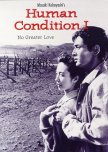
The Human Condition 1: No Greater Love is the 3 ½ hour first installment of a 579 minute three part film. I will admit to being trepidatious at the running time. I may be The Butterfly, but I have the attention span of a gnat and 208 minutes for the first film was pushing it for me. Thankfully, Kobayashi Masaki and Nakadai Tatsuya did not disappoint in this anti-war film.
During WWII, Kaji presents a report to his boss in Manchuria detailing how treating foreign labor humanely could result in a higher production for the company. His boss decides to either let him try or give him enough rope to hang himself. He’s also gifted an exemption from military service. The mine is in a remote section of Manchuria run by the Japanese but worked by the locals. Kaji marries his girlfriend and the two set off in the back of a truck on their honeymoon to the new destination. At the mining camp, Kaji discovers rampant abuse and corruption. Before he can actualize many changes, a feared Kenpeitai military officer delivers 600 Chinese POWs weakened by starvation and dehydration. Kaji’s only support against the vengeful pit bosses is a reluctant Okishima.
Nakadai was perfect casting for the idealistic and dangerously stubborn Kaji. While he attempted to implement better treatment of the workers and POWs, he was still required to do distasteful things, some of which were sanitized. One of those things was being in charge of the Chinese comfort women (I seriously hate that name), these sex slaves came across as cheerful brothel workers instead of the reality of being forced to service numerous men every day, Chinese and Japanese alike. The treatment of the POWs and laborers was rather gentle compared to what the history books imply. Despite my concerns regarding the kinder, cleaner treatment of the women and men forced to work at the mining camp, it was one of the few films I’ve seen where the Japanese acknowledged these humanitarian violations from the war.
While the film did touch on the conditions at the camp, it was Kaji’s external and internal struggles that were the highlight of the film. As anyone who has ever tried to enact a procedural change in an office can attest to resistance, this was similar only on a more violent scale. The Chinese were not seen as human so beating or killing them was not a concern for many of the pit bosses and slave handlers. The Japanese were also stealing the workers’ food rations and what they didn’t eat they sold for a profit. The Kenpeitai were of the mind that torture and execution were the most effective means of motivation flying in the face of Kaji’s more egalitarian beliefs. Kaji’s management style did result in higher production, but that was not enough to convince the pit bosses who preferred the whip. His marriage suffered as Michiko didn’t understand why he always came home late and frustrated. A gift of flour and sugar from the wife of a pit boss earned his ire as he knew that it was taking food out of the workers’ mouths. Ultimately, Kaji had to decide if his beliefs were worth his life.
Every shot was beautifully framed, designed to evoke the highest level of emotion. The film did dig into melodrama but watching Kaji fight to determine what his beliefs were worth even when he often failed was fascinating. Regardless of race, country, ideology, or religion, we all need reminders that everyone is human and deserves to be treated as human and humanely. Depriving others of life and dignity is not a reflection on their humanity, but the perpetrators’ instead. Once I’ve recovered from this draining film, I’ll move on to part 2. I have a bad feeling that part 1 was a just a warm-up for the pain to follow.
“You’ll either be revealed as a murderer wearing the mask of humanism or one worthy of the beautiful name…man”
5 February 2026
During WWII, Kaji presents a report to his boss in Manchuria detailing how treating foreign labor humanely could result in a higher production for the company. His boss decides to either let him try or give him enough rope to hang himself. He’s also gifted an exemption from military service. The mine is in a remote section of Manchuria run by the Japanese but worked by the locals. Kaji marries his girlfriend and the two set off in the back of a truck on their honeymoon to the new destination. At the mining camp, Kaji discovers rampant abuse and corruption. Before he can actualize many changes, a feared Kenpeitai military officer delivers 600 Chinese POWs weakened by starvation and dehydration. Kaji’s only support against the vengeful pit bosses is a reluctant Okishima.
Nakadai was perfect casting for the idealistic and dangerously stubborn Kaji. While he attempted to implement better treatment of the workers and POWs, he was still required to do distasteful things, some of which were sanitized. One of those things was being in charge of the Chinese comfort women (I seriously hate that name), these sex slaves came across as cheerful brothel workers instead of the reality of being forced to service numerous men every day, Chinese and Japanese alike. The treatment of the POWs and laborers was rather gentle compared to what the history books imply. Despite my concerns regarding the kinder, cleaner treatment of the women and men forced to work at the mining camp, it was one of the few films I’ve seen where the Japanese acknowledged these humanitarian violations from the war.
While the film did touch on the conditions at the camp, it was Kaji’s external and internal struggles that were the highlight of the film. As anyone who has ever tried to enact a procedural change in an office can attest to resistance, this was similar only on a more violent scale. The Chinese were not seen as human so beating or killing them was not a concern for many of the pit bosses and slave handlers. The Japanese were also stealing the workers’ food rations and what they didn’t eat they sold for a profit. The Kenpeitai were of the mind that torture and execution were the most effective means of motivation flying in the face of Kaji’s more egalitarian beliefs. Kaji’s management style did result in higher production, but that was not enough to convince the pit bosses who preferred the whip. His marriage suffered as Michiko didn’t understand why he always came home late and frustrated. A gift of flour and sugar from the wife of a pit boss earned his ire as he knew that it was taking food out of the workers’ mouths. Ultimately, Kaji had to decide if his beliefs were worth his life.
Every shot was beautifully framed, designed to evoke the highest level of emotion. The film did dig into melodrama but watching Kaji fight to determine what his beliefs were worth even when he often failed was fascinating. Regardless of race, country, ideology, or religion, we all need reminders that everyone is human and deserves to be treated as human and humanely. Depriving others of life and dignity is not a reflection on their humanity, but the perpetrators’ instead. Once I’ve recovered from this draining film, I’ll move on to part 2. I have a bad feeling that part 1 was a just a warm-up for the pain to follow.
“You’ll either be revealed as a murderer wearing the mask of humanism or one worthy of the beautiful name…man”
5 February 2026
Was this review helpful to you?


