
 Celebrity


 157
 456
 17
 1
 2
 6
 3
 8
 10
 3
 14
 1
 1
 1
 2
 1
 2
 7
 14
 9
 12


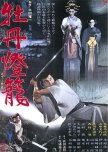
"Who believes in ghosts these days?"
The Bride from Hades is a 1968 film based on the classic ghost story Botan Doro. A kind man from a samurai family finds himself literally entwined with a beautiful ghost. The only problem is that each encounter drains his life force.
Hagiwara Shinzaburo lives away from the comfort of his wealthy and influential samurai family. He has a small hut in the poor section of the village and teaches the children there to read and write, hoping to give them a chance at a better future. He’s appalled at the abusive nature of the upper classes. His family wants him to marry his brother’s widow which he refuses to do. During the lantern festival he assists two women carrying a peony lantern. They follow him home to express their gratitude. The courtesan and her maid recount their tragic story which ended with the lovely Otsuyu being sold into a geisha house. She is being coerced into marrying an old lecherous man. They ask Shinzaburo to privately marry Otsuyu, just during Obon when she is freed from her business responsibilities. Shinzaburo is quite taken with her and agrees. A neighbor catches a glimpse of Shinzaburo and Otsuyu consummating their relationship. To his horror, what he sees is not a beautiful woman, but rather a skeletal ghost!
This story was a study in contradictions. Shinzaburo was compassionate, never failing to help anyone in need. Even the troublemaker Banzo. Lesson learned---no good deed goes unpunished. Shinzaburo’s other neighbors rallied to save him when they realized that the ghosts would eventually kill their friend if they didn’t band together and help protect him during Obon. They exhausted themselves chanting and praying for him through the night. Whatever Shinzaburo needed to survive they were willing to do. Shinzaburo, on the other hand, didn’t seem to be too bothered about death, only caring for the children enough to want to survive. Banzo and his wife Omine, on the other hand, didn’t care about Shinzaburo’s life regardless of all the good he had done for them. They were willing to sell him out in a heartbeat. If this story with a strong Buddhist bent was about karma, I’m not sure everyone got what they deserved. Though some decidedly did.
Bride made good use of 1960’s special effects. Ghosts flew, glided, and disappeared. Their appearance changed depending on who saw them. Poor Shinzaburo’s complexion deteriorated through the application of makeup as the film progressed. The acting was all solid and typical of 1968. While I’m not familiar with director Yamamoto’s work, I’ve watched much of screenwriter Yoda Yoshitaka’s work through his collaborations with Mizoguchi Kenji.
The Bride from Hades was an entertaining if not bittersweet film. It showed the compassionate and generous side of human nature and the greedy, callous side as well. Another lesson I learned from the story was this: If a beautiful woman/man follows you home at night and asks to marry you just for the festival of Obon when the dead walk among us, maybe have a prior commitment until the dead have sauntered off into the sunrise. Just to make sure.
16 October 2026
Trigger warnings: Sexual content though not graphic. Brief glimpse of a nekkid breast in one scene.
Everybody has their kink note: Shinzburo and Otsuyu made love with an audience on more than one occasion.
The most 1960s quote ever: When Omine told Banzo he needed to deal with the female ghosts because, “They won’t trust a woman.” Ahem. One of the reasons why there was a women's rights movement.
Was this review helpful to you?


