
 News


 158
 457
 17
 1
 2
 6
 3
 8
 10
 3
 14
 1
 1
 1
 2
 1
 3
 7
 14
 9
 12


This review may contain spoilers
Safety is Life
The Unjust took direct aim at the abuse of power and systemic corruption from the institutions who were supposed to be arbiters and bastions of justice. No layer within the buildings designed to protect and serve was left unsullied from the top to the bottom. This film was a bleak political thriller and at times, dark comedy.Chief Choi, brilliantly played by Hwang Jung Min, has been repeatedly passed over for promotion. He throws in with his boss never dreaming of the cost. There are cases intertwined that end up in a stranglehold around him. A building development with bribery issues with the prosecutor in league with one gang and Choi working with the rival criminal developer and a serial killer where the suspected perpetrator is killed by a cop with ties to one of the victims whose body must be disposed of and a replacement needed to take his place. The political intrigue and corruption flows from the Blue House down. The two departments end up at war with Choi being illegally investigated by the prosecutor and Choi working with Sang Suk Gu, the criminal developer. Sang has the resources to help Choi find a replacement and clear up loose ends. But in the end, who all will be considered a loose end?
The story was not exactly taut and had pacing issues. There were times when an already complicated and occasionally convoluted story wandered down a violent path not integral to the plot. It could also be difficult watching a film where there weren't any good guys. Well, there was one, but like the original conscience, Jiminy Cricket, he was squashed. The main characters were ready to sacrifice anyone to get ahead or to make a buck. As the conspiracies progressed the stakes grew higher where their lives and freedom were on the line making them all the more dangerous and desperate.
The acting was a mixed bag. Hwang walked the balance between cocky and trapped as he navigated the deadly game. In contrast, Ryu Seung Beom as the corrupt prosecutor, Joo Yang, chewed all the scenery within reach, making his character not only despicable but laughable as well. There was a who's who of today's ahjussis on screen. My favorite was seeing a young Ma Dong Seok, noticeably smaller, but still strong, with a peek into his future muscular best hitter ahjussi status.
The action was plentiful, quickly paced, and bloody. Cho Young Wuk created a fantastic score for the film, perfectly setting the mood for each scene. The film looked and sounded great.
At the disputed building site and the location of several murders, a sign hung that read "Safety is Life". The unprotected played without a safety net to their misfortune. In the end, those with powerful friends and family, and those in the highest levels of power were left untouched by scandal and blood. It was the players on the ground who became crushed by the building they helped maintain.
"Good job, bad job what does it matter at this point. What matters is that we believe it."
2/2/23
Was this review helpful to you?

This review may contain spoilers
It's not what you eat, it's who you eat it with
From the moment the familiar theme song played I immediately relaxed and drifted off to the magical place where the Master will make whatever you want to eat. Open from midnight to seven a.m., the Master not only had his regulars show up, but also some new faces in Midnight Diner 2. Everyone, as always, is served their favorite comfort food, given a few gentle words of encouragement, and leave feeling better about themselves.Midnight Diner 2 opened with the regulars dressed in black. All of the customers had been to different funerals. Only one woman in funeral attire had not. A lonely book editor when frustrated at work wore black and ordered the Master’s fried pork strips. The combination usually lifted her mood and helped her regain her fighting spirit. At a funeral she fell victim to a fetishist and Master helped her with the words she needed to find her way again and a little help from the dish she loved so much.
Story 2 was about a soba noodle restaurant owner unable to let go of her young, but adult son. He had fallen in love with a woman 15 years older than himself. It would take some special udon noodles to help heal this mother-son relationship.
Story 3 was another tale of a woman being scammed. This time an elderly woman fell for a scam involving her son. So desperate was she to help the son she hadn’t seen since he was a boy that she dropped everything and traveled to Tokyo to hand over her money. Master’s pork soup would have to work overtime to bring this woman the closure and redemption she was in desperate need of.
I have watched all of the seasons of this delightful drama and the first movie as well. In all the heartwarming stories, I have never been bored or disappointed. This movie provides a balm to a world-weary spirit. The people who frequent the Master’s establishment have learned to pass on the kindness and acceptance he has given them. Though it may stretch the bounds of believability at times, it’s nice to escape to a place with delicious food where someone will care about your problems and give you a helping hand or an encouraging word.
1/30/23
Was this review helpful to you?
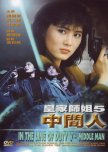
This review may contain spoilers
Lots of high flying kicks not encumbered by a coherent plot!
Cynthia Khan returns to the In the Line of Duty franchise for Middle Man. This 1990 film feels more like an 1980’s Hong Kong martial arts movie. Lots of fighting, very little plot.Cynthia is joined by David Wu in this convoluted story that goes from Hong Kong to Korea. It involves the US military, CIA, HK police, and an underground information spy ring. Wu’s David is accused of spying and the race is on to see who can kill him first. He has to drag around the dumbest girlfriend ever for awhile until the writers mercifully divest him of her. Khan’s Inspector Yang Li Ching helps her cousin elude the murderous gang, CIA, and police so that they can hunt down The General and collect evidence to clear David. David is not the smartest seaman on leave making Inspector Yang’s job even tougher trying to keep him alive.
The thin plot only served to grant space for the fights, lots and lots of fights. Most of them were well choreographed with a minimum of wire-fu and cranking. Khan was quite proficient and believable as she athletically ran, kicked, leapt, slid, and even dangled off of buildings and ropes. She lacked some of the onscreen personality of say Michelle Yeoh, but was likeable enough in this role. Wu was adequate but not terribly charismatic. Lo Lieh, at nearly 60, showed up as the gentle godfather who still had a few moves left. A nice surprise was Australian Kim Penn, a real-life martial artist and member of the Hong Kong Stuntman Association who made a beautiful foil for Khan as they had one of the bloodiest girl on girl fights I’ve seen in some time.
Middle Man was an entertaining martial arts movie if you don’t pay attention to the plot and just enjoy the fight choreography. It’s rare that a female lead is allowed to carry a gun toting, fists and kicks movie, so I bumped it up a bit in my rating.
1/25/23
Was this review helpful to you?
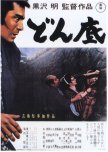
This review may contain spoilers
"You'll learn to love me, the lessons are free." Don't bet on it.
The Lower Depths refers to a group of impoverished tenants living in a building that is propped up with beams and the cliff it leans against. It’s a dark comedy about people who have no hope for tomorrow, living close to the edge of death and pennilessness.The film is based on the Russian playwright Maxim Gorky’s 1902 play. Most of the film is set inside the dilapidated tenement as if it were a play with characters walking on and off stage. The technique can make for a claustrophobic experience as if you were trapped in the room with straw covered floors and unlikeable characters and like them have no means of escape.
The film is one long unending conversation between the different characters. They spend their time complaining about their lot in life and complaining and gossiping about each other. There’s a tinker, a prostitute, a husband and wife, a thief, a cheating gambler, and an alcoholic cohabitating in the great room with bunk beds. Their usual tirades are broken up by the appearance of an older man, nicknamed Grandpa, who brings a bit of wisdom and compassion to the bickering group.
This was my least favorite Kurosawa by far. I didn't find any of the characters or performances particularly compelling. Even the charismatic Mifune Toshiro struggled to bring the thief having an affair with the landlord’s wife to life. The characters complained about their lives incessantly, but even when Grandpa tried to tell them there might be something better away from the toxic environment none of them took a chance to make the move. Only one did and it ended in utter disaster. Kurosawa at least got his consistent view of women out of the way in the first scene by having a character state that all women are liars.
There is much discussion about when telling the truth is bad and telling a lie is good. The benefits and downfalls of money is also discussed. “Money buys your fate in hell.” “Human kindness can’t be bought with pennies or silver.”
I suppose I need more white space, and this film had too many words crammed together from beginning to end with scarcely a breath or compelling action taken between them. Acts of compassion were few and far between causing the characters to not resonate with me. This room full of characters failed to enlighten me on the social plight of the poor, the failings of the state, or how people even in dire situations look out for each other. Though there were moments of almost grudging kindness there weren’t any likeable characters, with the possible exception of Grandpa. Truly by the last moments of the film with its extremely abrupt ending, I wasn’t sure what I was to take away from this story other than a window into a deeply flawed group of impoverished people trying to get through the day knowing that when tomorrow comes it will not be any better.
If you are interested in watching a Kurosawa film, this is not the one to start with. If you are a Kurosawa fan, this is a must see, as it differs from the films preceding it and is worth a look.
1/6/23
Was this review helpful to you?

This review may contain spoilers
Greased Lightning!
99 Cycling Swords is an almost average Taiwanese kung fu film from this era. I say almost average because the plot was particularly obscure even for a 1970's kung fu flick.What this film doesn't give us is 99 of anything. What it does give is a plot that might give you a headache as it goes round and round and round as the main characters try to discover the real identity of the traitorous Chu Er Ming who has been killing off the Four Dragons. There are plenty of mistaken identities, subterfuge, cross-dressing, and double crosses.
Polly Shang-Kuan Ling-Feng ( I know, it's a mouthful of a name) once again cross-dresses to appear as a man while investigating this killer always dressed in white. She runs afoul of Yueh Hua because she always dresses in white, too, and he suspects her/him of being Chu Er Ming. Yueh Hua actually gives a relaxed performance in this role. He can often appear overly uptight. In a small supporting role, Lo Lieh appears as a disciple of her uncle who is looking for her in her female form. Hu Chin plays the comely barmaid who may or may not be colluding with the Big Bad.
The fights seem never-ending from the first scene to the last. Lung Tien Hsiang as the Man in White did a fine job of kicking while fighting, a standout in a rather drab fight choreography overall. The director overused the backward filming and trick filming. I've never seen so much dinnerware kung fu! There were some creative uses of weapons, but much of the fighting came across as kung fu posing. Polly seemed quite slow.
The ending which involved magnets, compasses, green lights, and supposedly 10 of the same bad guy was rather confusing but that may have had to do with the poor dubbing. Then again, maybe not. There were few highlights in this film. I still haven't acquired an appreciation for Polly's acting yet, she tends to ham it up. I'll keep trying as I work through her catalog of films. Lo Lieh, as always, brings a solid presence, even in a small role.
If you enjoy old Taiwanese kung fu films or are a fan of Polly's, this is one to try. If not, you'd be best skipping over it.
12/7/22
Was this review helpful to you?
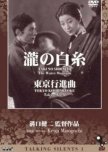
This review may contain spoilers
"It all comes down to chance"
“The river flows on, it always has, it always will.” Director Mizoguchi sent his lovers down the river to the waiting waterfall at the end in this tragic tale. He comes across as an early feminist showing his independent heroine go through many trials all at the hands of men, her every compassionate deed coming back to haunt her. Yet she never gave up or gave in even when there was little left to lose. He seemed to want to shine a light on the fact that women had little say in their lives, they could be abused, sold, and even betrayed by the male judicial system as well.Mizushima Tomo aka Taki No Shiraito performed a mesmerizing water show with a band of traveling entertainers. Known for her beauty she was also twenty-four-years old, an old maid at this time. Fate sent a carriage driver into her path. When a rickshaw passed the horse drawn carriage he drove on the road, the passengers in the carriage demanded he pass the rickshaw. In the process an axle was broken so he carried Tomo on his horse to the next town. She was instantly smitten but feared she’d never see him again. Once more fate intervened, and she found him sleeping on a bridge in the moonlight where she was walking one night. She learned his name was Murakoshi Kinaya. He’d been fired for driving the horses recklessly. His parents had died causing him to leave school in order to earn a living and now he was unemployed. Tomo told him she would help pay for him to finish law school so that he could become a great man. “As long as I breathe, I’ll remember my debt to you,” Kinaya promised.
Going into a Mizoguchi film I know better than to expect a happy ending and he did not fail that expectation. Tomo writes Kinaya letters inclosing cash for his tuition. Kinaya uses her dedication to spur on his studies and desire to succeed. During the winter, the show would have to close down and money became tight. Tomo always found a way to send Kinaya some money. Along the way, she helped two couples suffering at the hands of Minami the knife thrower and Iwabuchi the loan shark. Her generosity emptied her pockets and she had only one other means of earning the money for Kinaya to finish school and it led to the awaited tragedy. Let’s just say there is no leniency for a woman defending herself.
Kinaya and Tomo meet once again, both prepared to die. Tomo finds genuine joy in Kinaya’s success and is complete. Kinaya acknowledges he would still be a laborer if not for her sacrifices. And the water flows on, along with their short and ill-fated love.
The copy I watched of this film was very badly damaged. This was a silent film per se, but also had music and a benshi narration. I found the voiceover to be distracting and ended up muting it to focus on the performances. Even with the fading and scratches, Tomo’s water show was magnificent and a bit of a mystery as well. Irie Takako was beautiful and gave a moving performance as the compassionate woman who just wanted to be loved. Whether showing Tomo performing her water tricks, falling in love, helping those who needed it, or fighting for her life, Irie made Tomo believable and a worthy, if flawed, heroine.
Mizoguchi wasted no chance to show that it was the men in the story who created the problems for Tomo from the knife thrower to the judges. There’s an old saying, “No good deed goes unpunished,” and for Tomo this was true. Despite all she suffered for the ones she loved, she remained resolute to the end, cleansed as if from flowing water, until all that was left was joy and satisfaction.
11/21/22
Was this review helpful to you?
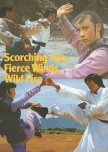
Scorching Sun, Fierce Winds, and Wild Fire
1 people found this review helpful
This review may contain spoilers
A Violet by any other name would still be as fierce!
Scorching Sun, Fierce Wind, Wild Fire boasted an all-star kung fu cast---Angela Mao, Chang Yi, Lo Lieh, Dorian “Flash Legs” Tan, and Roc Tien Peng. Despite a huge cast, most of them familiar Taiwanese film fighters, this made in Taiwan flick fell apart due to haphazard writing. Only an unlikely bromance saved this movie.You would never know this was set during the Chinese Republican Era by looking at it. The costumes for the most part could have been from almost any era used in kung fu movies. Guns were introduced at one point by government officials which brought it into the Republican era. A possibly 1960’s car in one scene took the audience too far forward in time!
This should have featured Angela Mao since she was Violet, the mysterious rebel leader always dressed in….violet…and with her face covered. Sadly, she was only able to shine in the final grand fights. Roc as a rebel leader from the south was rather lackluster in his scenes. Chang Yi is always a good baddie and he didn’t disappoint as Wu Chi, the traitorous head henchman for the local warlord. The best part of the movie for me, were Lo Lieh and Dorian Tan as two escaped prisoners. They formed a reluctant bromance that was both humorous and the most sincere relationship on the screen. I truly enjoyed their interactions and fights. Fights against each other and fights against the baddies.
The story revolved around the rebels and a missing treasure map. Roc had half of the map and the warlord had the other half. 100,000 bars of gold were the prize for whoever could gain both pieces. Honestly, that flimsy story was the excuse for people to fight from beginning to end. Some fights were better than others. Chang Yi was featured in a great many of them. Aside from a fight with Lo Lieh and Dorian against some bandits and officials only the final 20 minutes of fights were worthwhile. Dorian’s legs did most of the heavy lifting, kicking in the fights. Angela finally had some face time on screen during the final fights showing her fierceness. I should mention that the nefarious Wu had a poisoned knife that melted people-quite gruesome.
I have to mention that some of the music sounded like it was lifted from the original Star Wars movie. You never know what you will hear in an old kung fu film!
If you like the cast and Taiwanese kung fu films from the late ‘70s this is one to try out. Don’t expect to see too much of Angela, lower your expectations, and hi-yah!
11/18/22
Was this review helpful to you?
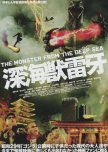
This review may contain spoilers
"Cover your belly button!"
Raiga: The Monster from the Deep was the second in the Raiga trilogy and arguably the best of the three. The actors weren't better, nor the sets, but the monster scenes were much improved.The whole Raiga trilogy was low budget, super sale bargain bin quality. Despite its lack of finesse, story cohesion, and quality CGI, it was apparent how much the director loved this Kaiju. If you've ever seen the third one it leaves no doubt his determination to tell Raiga's story, however convoluted it was.
This Raiga had evolved to be able to walk on land, much to Asakusa's disappointment. The city was torn up not once, but twice in this movie.
The human story revolved around a widower and his three teenage daughters. He had two buddies and all were on the festival committee which is very important to remember when a monster is bent on destroying the town. This widower who hawked T-shirts was interested in a young woman and tried to hide it from his children who were all too aware of his feelings. Commander Kito, he of the eye-patch and deranged personality, led the defense forces. Between his efforts and Raiga's not much was left of Asakusa. All of the acting was over the top with unending mugging for the camera. How well you can stomach this kind of comedy may determine your enjoyment of this movie. For me, it didn't work.
The Bone Fish/Fish Born of the Devil/Dragon Killers made an appearance again, attacking people on boats and land. Raiga battled a sea monster in the opening scenes and later another Raiga. The lightning bolts and fire breath were more spectacular than in the first movie. Aside from the monsters, the rest of the CGI and miniatures were low quality, especially for 2009. The director made liberal use of red and green lights for both human and monster scenes.
Though I would never question the director's passion for Raiga, I might question his abilities for putting a seamless, coherent story together and understanding the film's identity. Was it a parody? Most probably. Was it a comedy? Your mileage/kilometerage may vary. Was it a horror? If you are super sensitive to bone fish tearing people's throats out-then maybe. Was it a Tokusatsu? Yes. An obvious rip-off of Godzilla, at least the Kaiju scenes, for the budget, were not bad.
The synopsis says the movie has something to do with global warming. There actually were a couple of lines wedged into the ending to propose that idea, very ham handedly. This movie was all over the place and hard to take seriously even for the genre. After the final battle much of the city had been destroyed but the main characters were shown laughing and frolicking on a hillside. That weird juxtaposition had me wanting Raiga to come back and mark his territory again right where they were, though I'm not sure they would be deserving of the rainbow.
If you are wanting to try the Raiga movies, this is the one to start with. It shows the best of the clips from the first Raiga and how much the monster development had improved. The third film was more of a fan service and only for the most devoted of Kaiju fans, actually, you'd really have to love Kaiju to attempt to watch this movie. It could almost be put into the it's so bad it's good category...almost.
11/13/22
Was this review helpful to you?
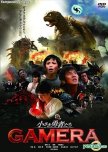
This review may contain spoilers
Gamera-The Friend of All Children
In Gamera's final film, he returns in a new form. Much like Mothra's job of protecting the environment was handed down to her children when she passed on, Gamera's progeny had to take on the mantel of protector in this film. As were the Showa era films, Gamera the Brave was aimed at children with a solid dose of green and purple blood for slightly older children.After sacrificing himself in 1973 to rid the world of the Gyaos the big turtle leaves a Kaiju hole in the world, with no one to look out for Japan. That is, until a young boy, Koru, finds a turtle egg and a red glowing turtle shell. There are lots of cute scenes with the boy and his friends getting to know the flying baby turtle. His mother had died recently and the little turtle begins to open his heart. He names the turtle Toto after the nickname his mother had given him. Nothing stays quiet for long and soon Zedus a man-eating Kaiju with Dilophosaurus like frill comes stomping into town eating people and tearing up the property. Baby Gamera aka Toto instantly grows much larger but well below his fighting weight. He does manage to drive the troublemaker out of town but not before he's badly wounded. The government takes him to a secure location hoping they can make him grow larger to be able to combat the new threat.
As the boys search for Toto, their friend Mai, who had surgery and was given Toto's glowing shell for luck tells the boys that Toto needs the red glowing good luck charm. He needs that luck all too soon as Zedus shows up again looking for Baby Gamera. This scenario starts out tortoise slow, but eventually gains momentum and ends with a relay of small children running the glowing object against the escaping crowd toward the danger in order to try and save their turtle hero.
Gamera the Brave combined guys in rubber suits with competent special effects. The monsters fighting amongst the buildings and perspective were quite good. The fights were done well as each opponent revealed new abilities and upped the ante. Toto's face was cute and expressive which people either seem to love or hate. I thought for a reboot it made sense because he was being portrayed as a juvenile. By the end he was growing into the Gamera he was intended to become.
Though aimed at children, Zedus' bloody teeth and chomping let you know he'd eaten people for lunch. Gamera was also impaled by Zedus' purple tongue at one point. Other than the Kaiju blood spurting, the rest was kiddie friendly. For those who are sensitive to it, there was alcohol served in his dad's café.
The children were all likeable though Tora pushed the envelope of annoying near the end. The children's relay to help Baby Gamera was sweet and surprisingly heartwarming.
This is clearly a movie for children and one for Gamera fans. Unless you fall into either category you may find it difficult to sit through. For Gamera fans it's a bittersweet farewell to the giant turtle. It's also my last Gamera film to watch having saved his swan song for the final one. This would have made a nice reboot for the gentle giant who loves children, but thus far it has not been meant to be. For now it's goodbye Gamera, The Friend of All Children.
10/28/22
Was this review helpful to you?
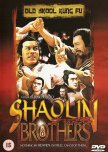
This review may contain spoilers
Two words-Hopping Vampires!
From the moment I saw the dark forest shots and familiar waterfall I knew this Hong Kong movie was filmed in Taiwan. I immediately lowered my expectations. Good thing because the story was almost incomprehensible.My hopes were heightened when the movie began with a line of hopping vampires, hopping through town guided by a Taosist priest. Those hopes came crashing down pretty quickly.
The gist of the plot is Ming rebels trying to survive against their new Ching overlords. Two of the main players David Tang Wei and Carter Wong had studied with the same master and now ten years later were on opposite sides. As he often did in later movies, Carter played the baddie. David’s sister Fan Ling also joined in the fighting. Tung Li was a Ming General working as a rebel, too.
Carter had stolen the masters poisonous needles and the rebels had a secret list. Now that the basics are out of the way, it was time to get down to some fighting. David was poisoned by the secret needles and the rebels sought to send the secret plans via “hopping vampires” as the area was crawling with Chings.
The movie muddled around for a bit with the “hopping vampires” being taken through town and getting into fights. Finally the Ming General and the brother and sister rebels took on Carter and the blood started flowing.
The body count was high, but due to the poor storytelling and often dark scenes I wasn’t emotionally attached to any of the characters.
The initial fights were mostly hack and slack sword fighting. In the grand finale fights we finally got some hand to hand combat. You don’t have Carter Wong in the movie if there wasn’t going to be some kung fu. There was a lot of wire-fu, especially for Fan, but most of it was tolerable.
Joseph Kuo made sure there were some interesting shots but the story was haphazardly put together. The fights weren’t interesting enough either to hold my attention. Only for hard core fans.
10/25/22
Was this review helpful to you?
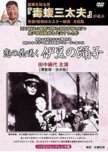
This review may contain spoilers
"I am a wandering bird in tears"
In a chaotic world with war and a financial depression The Dancing Girl of Izu ponders whether love or stability is more important. A happy heart or a full belly? Safe shelter or life on the road?College student Mizahara helped out a band of traveling performers and became friends with the head of the group, Eikichi. As he traveled with them, he fell in love with Eikichi's sister, Kaoru. Eikichi had inherited a gold mine but squandered his money and sold it to Zenbei, a friend of his late father. Now he and his wife and sister are forced to earn money as itinerant entertainers.
A disreputable engineer who had worked with Eikichi, tried to shake down Zenbei for a reward for showing him the vulnerable mine years ago. Zenbei gave him some change and kicked him out. The engineer went to Eikichi telling him that Zenbei had taken advantage of him when he bought the mine so cheaply and motivated Eikichi to ask for more money from the mine owner. Zenbei refused to give Eikichi money outright but offered money to buy his sister. Eikichi, who was furious at losing his reputation along with his money had no problem with throwing his sister to the wolves.
Mizuhara intervened by confronting Zenbei who also happened to be the father of his best friend. At this point, in the movie we find out that all is not as it seems. Mizuhara realized this as well and also realized that Kaoru's best chance for "happiness" was not with him.
Zenbei and Mizuhara made choices for Kaoru, as did her brother. Regardless of their motivations, Kaoru was left without choices, her future in the hands of the men around her, some she didn't even know.
Director Gosho used the beautiful Izu Peninsula to good effect with the mountains and streams often in the background. The character development seemed to come second to the melodramatic plot, leaving me disconnected from their trials. It was hard to see a strong love developing from the short scenes the lovers had. Their feelings came across as more of a holiday crush. Probably best one of them was thinking pragmatically.
This silent film had no music and I'm unaware if it ever did. The film was originally intended to be a talkie but ran short of money. The copy I watched was faded with salt and pepper pocking but it didn't take away from my viewing experience. I was more curious if the sides had been cropped as there were times people's faces were cut off which looked more haphazard than artistic.
The acting bordered on overacting at times as happened with some of these older films but overall they did a good job. I usually enjoy Tanaka Kinuyo's performances and it was interesting watching her in one of her earlier movies. She was required to cry often which could wear thin after the third or fourth crying jag. The tears were understandable as her character was not consulted on her future, but as I said, it started to feel like overkill even for a supposedly very young girl experiencing love and heartache for the first time.
The start-up was misleading with a missing "geisha" which had little to do with the plot, but once it got past that red herring, the story started to gain traction. If you enjoy silent films this is an emotional one of young love to try.
"I am a floating weed
I spend my youth in traveling
In every waking moment
flowers of love and sympathy bloom"
9/17/22
Was this review helpful to you?

This review may contain spoilers
"If you don't change it yourself, one day it'll change you"
The only things special about Special ID were Donnie Yen and the bone crunching fights. The story retread most of the gangster clichés and struggled to be consistent.Donnie Yen played Chen Zi Long, a deep undercover police officer. He's ready to go back to active duty but as always he's required to do one more job. He's trying to bring down Boss Xiong (Ngai Sing) but along comes his old buddy Sunny (Andy On) who has acquired his own gang and gone bonkers evil. Then much to his chagrin he's partnered with a mainland cop, Fang Jing (Jing Tian). Throw in a super tight relationship with his mom that takes up a lot of air time and Chen is afraid that he is close to having his cover blown which would put his mama in danger.
Special ID started out as a gritty gangland drama but then seemed to lose focus. The relationship between Chen and Fang seemed especially confusing as it went back and forth trying to decide if it was going to be a buddy cop adventure or a romance or antagonistic work friends. Without explanation, a lot of time was invested in Chen's relationship with his mother. The movie had a real identity crisis that never quite resolved itself. Thankfully, plot is not the priority in a movie like this. Donnie went all out for his fight choreography. His fight with Ken Lo was brutal and showed that Ken still has it, watch for him to go into the splits! As often happens, one fight multiplied and the next thing you know Donnie was fighting a knife wielding gang. His final fight with Andy mixed in some MMA grappling along with his martial arts, mostly it was a vicious no holds barred fight to the death. Bruce Law's car chase choreography was brilliant. While Fang Jing seemed out of place at times, the car chase with her and Sunny wrestling inside and outside a Land Rover at full speed was death defying and amazingly shot.
Donnie did an excellent job as the battle weary undercover cop, even when his character was passively dragged from one place to the next. Andy's Sunny wasn't very well drawn but he made for a serviceable Baddie. Jing Tian seemed far too slight to be the badass she was supposed to play, but made the most of the female sidekick role with all it's cringey dialogue. It was good to see old timer Ken Lo showing off some of his Muy Thai and Taekwondo moves early in the movie.
As I stated, there wasn't anything creative or consistent about the story but that's not usually the draw to a Donnie Yen movie anyway. The fights were deliciously creative and consistently good showing that Donnie is a master at what he does best. I just wish the story had been stronger so that I could have rated this higher.
9/4/22
Was this review helpful to you?
This review may contain spoilers
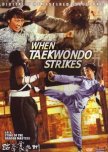
Angela Mao showed why she was one of the best when she fearlessly took on Sammo Hung and Hapkido Grandmaster Hwang In Shik without flinching in this action packed film. The story might have been short on plot but it was long on fight scenes and Angela is always a delight to watch fight.When Taekwondo Strikes was set mostly in Korea around 1930 during the Japanese occupation. Jhoon Rhee (the Father of Taekwondo in America!) in his only lead acting role played the leader of the resistance. Hong Kong actor Carter Wong was the naïve, young pupil and follower. And Taiwanese actress Angela Mao was a transplanted Chinese woman living in Korea with her mother. To round out the international cast, Ann Winton, Rhee's real life American student also played a member of the resistance. Throw in Sammo Hung and Hwang In Shik as Japanese fighters and it was one exciting martial arts party!
Lee Chung Tung (Rhee) and Jin Zheng Zhi (Wong) were accosted by the Japanese in a Catholic church headed by an American priest. Jin had fled there thinking the Japanese wouldn't cause trouble in the foreigner's house of worship. He was wrong. The first of three fights took place there. Wan Ling Ching (Mao) had a marvelous fight in the church when she went looking for the priest after he was captured and a Japanese bad guy accosted her. Big mistake. She and Lee teamed up determined to get a Secret List out of Korea into Manchuria. Nothing ever goes easy in a martial arts movie and eventually there was a big thrown down in Manchuria over ownership of the Secret List.
The story was thin, but the fighting was magnificent. With Hapkido and Taekwondo being highlighted the high flying kicks kept rapidly being thrown. Angela's iconic fight in a restaurant against Sammo and his men is legendary. Jhoon Rhee and Hwang In Shik lent realism and credibility with their expert kicks. Some of Sammo's choreography could venture into what I call kung fu posing where arm movements are unrealistically held too long. The kicks tended to be faster and more creative. And in a fight in the church Angela used objects around her to create an epic beatdown on her Japanese opponent.
Due to a common history of Japanese occupation, this 1974 movie was very anti-Japanese. If you are sensitive to that you might want to avoid it.
The sets could be laughably bad. The same Korean downtown was used for Manchuria as well. There were a few more realistic settings but most were made to be breakaway so that people could be thrown through windows and walls.
Fun fact: Andre Morgan who played the beleaguered priest was an American who ultimately became CEO of Golden Harvest. He helped produce Bruce Lee's Enter the Dragon as well as producing this film.
When Taekwondo Strikes was a fun film to watch. Jhoon Rhee made a properly badass resistance leader. Angela Mao is one of my favorites and I could watch her glare her opponents into submission any day. She always seemed believable when taking on baddies and this movie was no exception. If you aren't looking for a complex plot and simply want to watch some of the best fighting each other this is a good movie to try.
7/30/22
Was this review helpful to you?
This review may contain spoilers
When heaven and Earth are opposed, the result is destruction
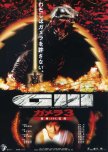
Gamera: The Revenge of Iris is a good old fashioned monster mash with real stakes and believable monsters. I realize the ridiculousness of that statement when talking about a giant tusked turtle. This film is easily the best of the Gamera films I've watched. No annoying 8-year-old, just amazing Kaiju and realistic fights and consequences.The story was complex and at times convoluted. G3 brought back a few characters from the first two of this trilogy, added some teens, a scientist, a priestess, a nihilistic dude, and the requisite small minded bureaucrats and military. Because of the collateral damage caused by Gamera in the beginning of this film and the two previous films, the government has determined he's simply too destructive to let live. Bad timing as the Gyaoses have started popping up all over the world. Even worse a nemesis in a cave is about to hatch and feed on a teenage girl's hatred of Gamera and need for revenge. She names the nemesis Iris after her dearly departed cat. Gamera save us from a vengeful teenage girl!
There is a lot of mumbo-jumbo about Gamera being created to hold Mana, the life energy of the earth and his nemesis being the opposite, a real destroyer. I appreciate the writer's desire to give us some meaning behind the monsters, but honestly, I never did quite grasp all of the talk about their version of The Force. Philosophically, the movie touched on things like is the enemy of my enemy really my friend or a necessary evil? Is Gamera a good guy if his protection costs tens of thousands to lose their lives? And does the cost seem acceptable as long as it's not your loved ones and home destroyed?
More than almost any Kaiju movie since Godzilla 1954 the humans were truly important and integral to the story, in fact the nemesis Iris, would not have been as threatening without Ayana the teenage girl's hatred to feed upon. The acting while not award worthy was enough to draw you into the story and give emotional heft to the actions being played across the screen.
Iris was a lovely, menacing terror to behold, it would make almost any Kaiju envious at the care taken in creating it. Gamera, well, Gamera will always be a giant turtle with tusks that can shoot flames. The fights were immediate, brutal, and up close. The scenes of the humans trapped in a giant building as the two went mano y tentacles was spectacular. The perspective and size of the monsters with the tiny humans below gave real suspense to the scenes. No cardboard buildings destroyed in this film, there was a lot of detail in the buildings crushed during the giants' fights. There were problems with a few scenes during the fights but overall the CGI and miniature work were excellent especially for a pre-2000 movie.
Gamera 3 gave us more compelling humans and stories while not sacrificing what people came to see: visually stunning monster spectacles across the cities and skies. Unlike earlier Gamera movies this one was dark and aimed more at adults. Even with the darker mood, G3 was a fun fast paced ride
7/21/22
Was this review helpful to you?

This review may contain spoilers
Money can be earned...but love rarely happens
Set in Dubai, Love or Money was a story of star-crossed lovers. Overly cliched, with the old debate of "love or money" given central stage.Angelica Panganiban and Coco Martin played Angel and Leon, two people who had a disastrous, but memorable one night stand in the Philippines and later met up again in Dubai. Born into poverty with an unmarried, drug addicted mother, Angel raised her siblings and vowed to not make the same mistakes. For her, money would always come before love. Leon wanted to make enough money to help his family and eventually open his own restaurant and live a simple life. The two clashing life philosophies were not enough to keep the two lovers apart who were inexorably drawn to each other. Their greatest obstacle, aside from Angel's fear of being poor, was that she was the mistress of a wealthy, older, abusive man. Connect the dots and you'll understand the formulaic picture.
Angelica was able to convey many of Angel's conflicted feelings. Coco didn't have quite the same acting range. There were several interesting side characters who gave natural performances as Filipinos working overseas to send money home. Enrique, the evil financier, was played and written poorly. The star of the show was Dubai, a beautiful setting that photo bombed many less than enthralling scenes.
Love or Money wasn't a bad movie, it was just weighted down by an overly used formula that didn't have strong enough performances to elevate it.
Was this review helpful to you?


