
 News


 158
 457
 17
 1
 2
 6
 3
 8
 10
 3
 14
 1
 1
 1
 2
 1
 3
 7
 14
 9
 12


This review may contain spoilers
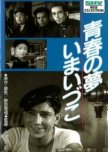
Four fun loving friends have to learn how to navigate their bonds when they are faced with tragedy, hardship and love. Where Now Are the Dreams of Youth is an entertaining silent film about friendship and what it takes to maintain it through life's challenges.Horino, Saeki, Kumada and Shimazaki were buddies at university with Saeki being the most serious minded as he had his mother he wanted to care for. Horino was the bold leader, always up for a good time. Oshige, the local waitress at a bakery was sweet on Horino even if he didn't seem to return her feelings. Horino was forced to quit school when his dad died suddenly throwing him into a role for which he was not immediately equipped at his father's company. The three other boys finished school and after being turned away from most of the places in town came to their buddy to help them. Cheating just as they did in college, Horino gave them the answers to the entrance exam so that they would be hired. The three hired friends slowly began to distance themselves from brash Horino. Saeki and Horino found themselves on a collision course when Horino decided to date Oshige not knowing she was already involved with Saeki.
This film had some humorous moments in the first half without resorting to slapstick humor which can plague some older silent films. The friends seemed to genuinely care for each other, even Horino who could be obtuse at times. Though the friendship was the focus of the film, the spotlight came down squarely on Horino and his experience as being both the leader and the one left out. The three friends who were hired during the economic crisis were afraid to do anything that might get them fired and began to distance themselves from Horino who was now their boss which left him in the dark and increasingly isolated.
There were also some affectionately playful moments between Horino and his dad, especially when the uncle sent over a modern girl he wanted Horino to date. Takeda Harurô was delightful as Horino's father who, like his son, enjoyed the moment. Egawa Ureo as Horino could come across too strong at times but he could still convey the softer side of his character as well. Though much hinged on the character of Saeki, neither the writing nor the acting was able to fill out the important role. I couldn't find a credit for the actress who played Oshige, though a traditional female role, she did manage to tell Horino truths he needed to hear and the actress played the limited part well. The two other friends were never directly called by their names, and only the heavier set actor was given any lines or scenes with any import.
Where Now Are the Dreams of Youth poignantly portrayed the pitfalls of friendship and the necessity for candor and communication. It also highlighted the problem of maintaining a friendship when there is both economic and social inequality. And finally, especially during a dire economic time, it showed the difference between youthful frivolity and hopeful dreams and the harsh economic reality that awaited the young men outside of school. I found the film entertaining with lessons that carry over to modern times, the lesson that every beloved school friendship must face when the days of school are past, whether they will either thrive or fade in the unknown challenges waiting beyond.
Was this review helpful to you?
This review may contain spoilers
Never go against the family!
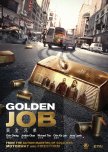
Golden Job was a throwback movie with a big budget. It spared no expense on the cast, filming in spectacular scenery, or blowing up or smashing cars and spraying buckets of blood. It also didn't spend very much time on developing a well thought out script. Of course, most people who watch heist and car chase movies aren't usually looking for a lot of depth. If you are, you're out of luck.This "made family" would have benefited from watching a Godfather movie. Never go against the family! Ask Fredo what happens when you do (Godfather II, it's an old movie but worth checking out). Instead, this family kept giving the wayward "child" chance after chance to repent. Penitence was not easy when a truckload of gold was involved.
There was almost no female presence in this movie except for a few scenes. This was amped up testosterone with shootouts, explosions, and multiple car chases with shooting and explosions. Woe to the innocent civilians who become collateral damage by being crushed, mangled, shot, or blown up as the bad guys and badder guys chased each other through Montenegro, Japan, and anywhere they were.
The music was appropriately jaunty for a boys' heist/rampage movie. I have no complaints about the production values, they were top notch.
The cast did fine with what they were asked to do. Not a lot of room between shootouts and explosions for character growth for the 50-year-old men reunited from the Young and Dangerous series. I enjoyed Kurata Yasuaki's small role especially when he put the beat down on a few younger thugs.
The lack of female presence, the very weak script, the whiny "Dad always liked you better" villain, the ridiculous collateral damage that went unaddressed, and the presence of Eric Tsang (google what happened with Yu Sin Man) lowered my score for a mindless action movie that I would normally enjoy.
If you are a fan of older Hong Kong movies and are yearning for a throwback trip down memory lane with a famous cast, exciting scenery and sets, and don't mind the things I mentioned, this would probably be an exhilarating drive for you. By the end I felt more like I'd been stuck on the side of the road in the rain with a flat tire waiting for AAA to show up.
Was this review helpful to you?

This review may contain spoilers
"They may act kind but will kick us into a ditch"
The Masseurs and a Woman is a gentle slice of life "seen" through the experiences of two blind masseurs. A scenic mountain getaway reveals deep loneliness and even desperation among the guests who visit the inns.Fuku and Toku walk along the mountain road to the mountain inns for the spring season after spending the winter working at the beach. The blind masseurs relish in counting the people they pass along the way. Both use their sense of smell to help them, with Toku seemingly more aware of his surroundings. At one point when a carriage passes, he can smell "a woman of Tokyo" as one of the passengers, a woman he is soon to become entangled with.
The setting for the inns is idyllic nestled in the mountains with waterfalls and a stream nearby. Students hiking in the mountains visit and are attended to by the masseurs. Fuku takes good care of the female students who bouncingly approach the road the next morning. Toku is less gentle with a rude group of male students who can barely walk by the next morning after his treatment. Toku is willing to get physical with those who carelessly run into him.
The film shows the audience that there is more than one way to experience life through our senses. Aside from smell, the sense of touch is also shown when Toku massages the Tokyo woman's shoulders and can tell she has worries. At one point, she tells him he sees too well into her. This woman with a mysterious past and haunting expression evades him as he sees too clearly.
Aside from the Tokyo woman an uncle and his nephew have come to visit his parents' graves. The boy is particularly precocious but takes a liking to the Tokyo woman. He has to stand in line because his uncle is also attracted to her as well as Toku, against his better judgement. The child's parents had recently died, and his uncle also seems melancholy.
All is not well at the inns when a string of thefts occurs. Thefts Toku fears the Tokyo woman is committing. A sense of sorrow and desperation hang over the people in the beautiful, quiet setting.
Filmed during the second Sino-Japanese War, the only comment that might refer to this time of Japan's invasions would be when one of the men comments how more women are working. I wasn't aware that at the time, masseur jobs were reserved for the blind so that they would have a way to provide income for themselves. Something that caught on in Taiwan and Korea after the invasions there.
The Masseurs and a Woman glided over the loneliness and sadness in the people at the inns without delving deeply enough for me to feel emotionally connected to them. Stories ended abruptly; secrets were revealed abruptly without the time and room for me to process them internally and unable to have the emotional reaction the music seemed to be cueing me to have. Even with that, this film is worth checking out if you are a fan of older films or of the director Shimizu Hiroshi. The scenery and themes of love, loneliness, and the need for human connection made up for some of its shortcomings.
Was this review helpful to you?

This review may contain spoilers
The Righteous Fist is an old school kung fu movie with lots of action. It's rarely one-on-one fighting, usually a good school vs bad school all out brawl with bodies flying everywhere type of movie.Kong Yin Ho returns home to start his medical practice, or is he? The bad guys know him to be CID, perhaps an anachronistic term, but blame the dubbing. He comes home to find the town in disarray and his sister kidnapped. He seems to forget about her as do the baddies for a long time. He visits his old school that is under threat from Boss Yu who is the Big Bad and a smuggler in league with the Japanese. Before you can say "hi-yah!", the baddies have nearly decimated the good school. Kong confronts the Big Bad but is overpowered and his hand is crushed. He finally remembers his sister and easily rescues her. He and his old master's daughter (and his love interest), with a handful of students, hideout in a cave. He performs the quickest revenge training session I've ever seen. After that it's time to rampage.
There were some bonkers elements to the story. One bad guy is literally scared to death by the good guys. The Japanese fighter brought in to bring everyone into submission has the gross habit of snorting and spitting. He shall henceforth be called The Spitter. After Kong learns the Iron Palm in one easy lesson some of his moves were gruesome. And a boulder fight took things over the top.
I found Wang Jung's acting to be rather stiff. Chiao Chiao played his love interest, Sam Mai, showing her gentle side and her ferocious side. Big guy, Cheng Fu Hung, played a character named Sham Poo with the dubbing. Pretty sure that was an error.
The fights, with the exception of the final duel were usually group against group. There were kicks and hits that missed by a mile, but most of the time the grand fights were well timed and entertaining. A couple of fights had some bad editing, chopping off key sequences, whether that was done in the initial cut or bad editing by a censor later, I don't know. Chiao Chiao acquitted herself well as she used her fists, feet, and any available weapon to fight greater numbers when the hero ran off to duel with The Spitter. Kong and The Spitter fought near and in a river, some parts were unbelievable, others brutal.
The Righteous Fist had everything an old school kung fu movie should have: A righteous hero, an evil Big Bad, a worthy evil opponent to duel, a beautiful love interest who could take care of herself thank you very much, a traitor, high stakes, and lots of action. Despite some lapses in story continuity, sloppy fight editing at times, and stilted acting, TRF is worth trying if you enjoy old kung fu movies.
Was this review helpful to you?

This review may contain spoilers
I watched this movie under the title "Super Dragon's Dynamo". How could a person turn that title down on late night tv? I probably should have. The plot is very thin. A powerful CEO has a spoiled ne'er do well son who spends his time gambling and losing most of the time. Associates of the CEO keep getting brutally murdered. When the son, Champ (of all names), goes to jail on a trumped-up charge, the bad guy finishes nearly everyone off and takes over the businesses. When Champ (maybe should have been called Chump?) gets out of jail he's looking for revenge. His rampage is momentarily thwarted when he finds out his pregnant sister is married to the Big Bad's hired gun (though he uses a creative array of weapons). Suffice to say, the rampage is bloody and brutal.
The acting is acceptable. The main lead uses martial arts in a somewhat believable style. There are plenty of guns, fireplace pokers, knives, and pickaxes for other mayhem. Pretty sure they must have bought the pickaxes in bulk, I've never seen so many used in a movie that didn't involve mining.
If you are unable to sleep and in the mood for a violent almost incoherent movie with a sky high body count you might want to try this, otherwise, I'd move on to almost any other late night fare.
Was this review helpful to you?

Master of the Shadowless Kick: Wong Kei Ying
1 people found this review helpful
This review may contain spoilers
Even with the Shadowless Kick it's important to remember to duck!
Wong Fei Hung’s father, Wong Kei Ying takes on opium dealers and a corrupt official in this made for TV movie from HBO Asia.As with the other HBO Asia offerings, the production values are quite high. And also, as with other HBO offerings there is a lack magnetism from the main star. Having said that, Shadowless Kick has been the best of the lot for me. The fights were better, though more gruesome. Body parts flew and spewing arteries abounded.
Once again, the opium trade is front and center and the main enemy as various factions fought to control the lucrative business. Wong Kei Ying makes friends with an enemy and is tricked by a friend as the dutiful physician is drawn into the drug battle. When all seems lost, he is given a secret manual (there’s always a secret manual!) and learns the Shadowless Kick to supplement his Southern Shaolin style. The final battle against three separate opponents was entertaining, if a bit long, detracted only by his child screaming and crying through the whole thing. I finally muted it, and just watched the action. The story was more coherent in this movie with the overt melodrama dialed back a notch.
Chen Zhi Hui, as the Big Bad, was perfect as a foil for the bland Sun Hao Ran’s Wong. He did everything but twirl his mustache and made for a proper menacing villain. Sun Hao Ran did fine in the fight scenes, but lacked charisma and energy as the protagonist, even when in an attempt to develop a cure for opium addiction Wong became addicted himself. Jiang Ming Yang had potential as a converted good guy, but didn’t have enough screen time. Zhou Xiao Fei, who played another baddie who throws in with Wong after he saved her son, is a martial arts actress and stuntwoman who made the most with her small role.
The fights were well choreographed, but nothing really new. Plenty of wire-fu but not over the top for a wuxia.
Master of the Shadowless Kick is a perfectly fine made for tv wuxia movie, if keep your expectations low, you may find it entertaining.
Was this review helpful to you?

This review may contain spoilers
Lo Lieh and Carter Wong team up as the super bad guys in this tale of Born Invincible. A traditional revenge trope gets a boost from a slightly different take on the heroes training and retribution stories.The title is somewhat erroneous. Carter Wong was the invincible Big Bad, but he wasn’t born that way, he trained from childhood in the impervious Tai Chi kung fu style (probably not really Tai Chi, but as always, we just go with these things). He had only one place on his body that was vulnerable and he could move it around depending on his mood and time of the day. For the good guys this created a deadly problem when their school let Carter’s prey, an old swords master and his daughter stay with them. Carter and Lo Lieh showed up demanding the swordsman. When the master of the school (Lung Fei playing against type) took them on and was killed it set up the revenge for the master trope. Born Invincible strayed from the typical storytelling and instead of one student training to take on the Big Bads, three different students at three different times trained to battle and find the weakness of the White Haired Invincible fighter.
Carter Wong and Lo Lieh looked like they were having fun playing the Big Bads. The good guys with their bad Bruce Lee wigs seemed rather bland in comparison.
Yuen Woo Ping was the martial arts director and he went out of his way to create inspired fight scenes. His brother, Yuen Shun Yi, played one of the minions who caused problems for the school. The fight scenes were quite good and the action and training scenes kept the story moving at lightning speed.
As always, I grade old niche movies on a curve. Born Invincible was entertaining, dared to alter a tried and true trope, and the fight scenes were good. Not much else to ask from an old kung fu movie.
Was this review helpful to you?

The Rebirth of Mothra gave the beautiful Kaiju a makeover and a trilogy aimed at kids. With the focus on a young brother and sister there's no doubt who the target audience is. The twin priestesses are no longer called the Cosmos and are no longer twins. Their costumes are brightly colored, and they ride a miniature Mothra-like fairy just to up the cute quotient. We are still gifted with the Mosura song, which they would have been remiss to leave out. Their comically evil sister stirs up trouble as she rides what amounts to a miniature dragon. To make sure you know this movie is aimed at a young audience there is also a lot of glitter and rainbow butterflies galore.
The movie really began for me when they got to the heart of the issue. Because of man's greed and short-sightedness, the Desghidorah is released. This monster sucks up the energy from the earth and forests. Where he goes, a shortage of oxygen also follows causing problems for the local humans. Desghidorah looks like a close cousin of King Ghidorah. Mothra at the end of her life is unable to defeat him and her caterpillar son swims to the rescue. I have to say, this was the most beautiful Mothra metamorphosis out of all of the movies. Her son is given extraordinary powers after cocooning on an ancient, mystical tree.
Because the movie is aimed at children, the action begins early with the fairies fighting and never lets up. The best of the action is when Mothra and Desghidorah are fighting. The fairy sisters battling each other wasn't as entertaining for me. In fact, on a second viewing I skimmed much of the initial action until Mothra and Desghidorah showed up. The children are actively involved in helping the fairies and Mothra. For the most part, the kids did a good job and their dominance on the screen didn't prove too annoying for me.
I was disappointed Mothra's child was a male. Mothra being the only female Kaiju, not counting Bolliante, set her apart. If they wanted to make a more powerful Mothra, why not let a female have some new kickass powers?
I don't usually grade niche movies on a curve after the 1980's but this is a children's monster movie, so I did give it a small rating bump. Don't expect too much from the special effects. Honestly, it looked like it could have been made in the late 1970's or early 80's from all the psychedelic colors. And of course, we're treated to a guy in a rubber suit and miniatures. It is Toho after all. This movie is definitely not a movie for everyone. You have to love Mothra, and if you happen to be over the age of 10, it helps if you are still a child at heart and easily entertained.
Mothra reminds us that she isn't just a pretty monster face. She cements herself as a protector and as a defender of the environment. In The Rebirth of Mothra, humans and Desghidorah were reminded why Godzilla gives her a wide berth. She might look like a butterfly, but she stings like a bee (to paraphrase the late great boxer, Mohammed Ali).
23 February 2022
Was this review helpful to you?

This review may contain spoilers
Concrete Jungle is an obscure Hong Kong kung fu flick and rightly so. Even for a martial arts movie it lacked a coherent story. Worse yet, the movie has not been taken care of and is in terrible shape. CJ looked like someone took the movie reel and dragged it behind The White Truck of Doom, taped it back together with masking tape, spilled coffee on it, added white subtitles on an often gray background and then just for grins cut both sides of the film causing 1/3 of the subtitles to not be seen. The scenes shot at night were almost completely dark with green wavy lines running through them. The dialogue and music were also garbled. If you can get past the visual and audio defects, you'll find the storyline defects just as bad.
Not being able to see all of the action and read all of the subtitles did prove a challenge. There's a reason I couldn't find a synopsis on any site. To sum it up-Lo Lieh's character Chen, was driving at night when he saw a woman, Yu Shih, being assaulted and stopped to help. He ended up in a fight against Michael Chan (never given a name except Villain that I could tell) and his goons. Lo Lieh battles them off, killing one in the process. The woman refuses to go to the police because she doesn't want to upset her fiancé. Later the police inspector questions Chen, telling him if it was really self-defense, he needs to provide a witness or he may be prosecuted for murder. After that Michael Chan takes every opportunity to stalk or attack Yu Shih. Inexplicably, she always manages to escape. I say inexplicably because she runs like a two-year-old who hasn't figured out how to use her arms and legs and is just about as clever as a two-year-old. When Chan isn't terrorizing Yu Shih, he and his men attack Chen at every opportunity. This villain has a very full schedule. Even though Chen is constantly having to fight the bad guys whether at work or walking down the street, he never stops to try and figure out what is going on and how to stop it. It's like he's on a conveyor belt of fights he can't get off of. Chen is rapidly seduced by a beautiful woman, a danger sign he can't see, which brings the thrust of the plot finally to the forefront. Most of the movie involves fighting, running-lots of running to nowhere, and shots of Chen driving his car around town. The writer and director had no idea how to connect scenes and even less about character development or story logic.
It's a martial arts movie so I must comment on the fighting. Most of it was rudimentary at best, some fights were better than others.
The only positive thing about this movie for me was Lo Lieh. Even in this horrible mess of a movie he had screen presence. The actors did the best they could with the abysmal dialogue and ridiculous plot.
Unless you are trying to watch all of the movies from this golden kung fu era or all of Lo Lieh's movies, I'd suggest you avoid this chunk of concrete.
Was this review helpful to you?

Turtle vs Bat
Gamera vs Gyaos is the third installment in the Showa era for Gamera. It features the two Kaiju, the requisite annoying child, and a Kaiju merry-go-round with a fountain of pink bubbling "blood".After Gyaos emerges from an active volcano, the giant, bloody battles are on! Gyaos is able to split things in half with his laser-like sonic sounds. He can't turn his head and like a vampire, avoids the sun. Gyaos also enjoys eating people when he's not carving up planes and buildings with his beams. Gamera acts as the good guy in this movie battling this fierce opponent. There is a subplot about people wanting to build a road and the "greedy" farmers and villagers who apparently want to be paid well for their land and being displaced.
The humans, with the exception of the annoying child, do a good job in their various roles trying and failing to stop Gyaos. When there's a terror on the loose only a turtle can handle the job!
The rubber suits were not very good. Gyaos was a poor man's attempt at Rodan. Gamera's wires were visible on several occasions. The special effects, even for 1967 were rudimentary at best. Having said that, Gamera's spinning fiery flying was fun to watch.
The one positive I would say about this movie is that the monsters are on screen more often than not and there were several battles. Though with the exception of the blood letting and people falling to their deaths or being eaten and the giant vat of blood used to lure Gyaos into the daylight, this felt like a children's movie. If you can watch it with a child-like fascination it might prove entertaining. I found it unintentionally humorous, but I'm not sure that is a reason to recommend this movie.
Was this review helpful to you?
Just when you thought it was safe to go back into the water...
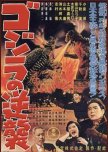
Godzilla Raids Again was the direct sequel to the original 1954 Godzilla. I'd heard it wasn't very good and saved it for my last Godzilla movie to watch. Happily, I was not disappointed with this follow-up to Big G's story.Godzilla had a worthy adversary to complicate his story, Anguilus determined to fight for the title of top Kaiju. After battling on a deserted island with two human pilots as their audience, they took their fight to Osaka and tore up the town.
The human stories are usually the weak part of any Godzilla movie. I found these characters to be quite charming in a 1950's manner and wasn't the least bit annoyed by them. Instead of watching the clock waiting for the big guy to appear I found the time went by quickly as they built interest in the humans who would fight Godzilla and be his victims.
The monster fights were violent and animalistic, no comic boxing and professional wrestling moves that were to come in the movies that would follow. Speeding the film up also helped to distract from the obviousness of two guys in rubber suits. For a 1955 film, the special effects were quite good.
Sato Masaru's score was emotionally evocative hitting the right notes for each scene. Director Oda Motoyoshi also knew when to use silence to intensify the fear in the people waiting in a darkened city with only the sound of the fighter planes attempting to lead Godzilla away from them heard overhead. This was the last black and white Godzilla movie and I think it actually works better than many of the color films. It blurred the lines of the obvious miniatures and rubber suits and allowed for more suspension of disbelief. Regarding the miniatures, they were also much better than the 1960's -1970's Godzilla movies.
I am quite at peace, making nearly a full circle back to the 1950's. Godzilla Raids Again was not a perfect movie, but it was emotionally satisfying and entertaining. Instead of ending on a low note, I ended on a high one. Big G, thanks for the memories, you beautiful giant irradiated lizard.
Was this review helpful to you?

Take That You Dinosaur!
Godzilla vs King Ghidorah is the third movie in the Heisei Godzilla series. Big G gets an upgrade and Ghidorah has a new origin story. The gullible humans once again fall for any story people in a spaceship tell them, much to their detriment.The aliens in this movie turn out to be from Earth's future, called Futurians, because...well, why not? They arrive to tell the people of Japan that Godzilla who up to this time has been a somewhat protector will turn on the them and destroy the island. Back into time the Futurians go with a handful of 1991 characters to try and stop Godzilla from being created. The crew arrives on Lagos island during WWII where a dinosaur helped the Japanese there rout the American fleet because, well, why not? The dinosaur would mutate into Godzilla after nuclear bomb testing in 1954. Godzillasaurus, I kid you not, is transported to the 1991 Bering Strait so that he can't mutate. Of course a Russian nuclear sub starts the whole mutating cycle again. The Futurians turn out to not be the good helpers they originally appeared to be and now have King Ghidorah under their control.
There are plot holes galore in the timey wimey travel stories. Suffice it to say that Godzilla comes back bigger, badder, and madder.
Godzilla's weakness is nearly always the human stories. They weren't all bad in this one and there is a strong female lead who isn't military or a reporter who continually needs rescuing. Miki Saegusa is back as the ESP expert and per usual I am unimpressed with her one facial expression.
I'm never one to criticize guys in rubber suits, I find that to be part of the whimsical fun of these movies. The problem I had with the special effects were the ones unrelated to the monsters. They looked more 1976 than 1991. I was also saddened that they replaced Ghidorah's familiar shriek.
Ifukube Akira's score is a highlight to most Godzilla movies and this one was no exception.
Godzilla Vs Ghidorah was packed with a lot of story. Characters went back and forth in time. There were multiple monster issues and fights. Yet somehow, much of the first hour was dull, the characters were not nearly as compelling as the writers thought they were. Big G didn't stomp onto the scene until the final third of the movie. Godzillasaurus was interesting in his short scenes early on but even he was not what I came to see. It was the battle royale between Godzilla and the King, which turned out to be okay. The battle scenes ramped up as the credits neared making the movie worthwhile to watch. My biggest complaint in the final fight was that the good guys caused a lot of collateral damage and building destroying. It's one thing for monsters to do it, another for humans.
Big G vs The King is entertaining as long as you don't try to make too much sense from the convoluted story.
Was this review helpful to you?
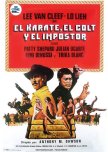
Lo Lieh's Ho was sent to America to find his recently deceased Uncle's booty that ultimately belonged to the warlord back home. Lee Van Cleef's Dakota was a ne're do well thief that landed in prison for trying to break into the uncle's safe ending in the uncle's accidental death. The clues to where the treasure was hidden were tattooed on the backsides of four of the uncle's, uh, female friends. Ho broke Dakota out of jail where he had been canned and they began trying to get to the bottom of the mystery. They were tailed by a murderous religious fanatic sharing a dark history with Dakota.
The movie was not dubbed well, Lo Lieh's voice-over actor sounded like he took a hit of helium before reading his lines. The music as stated above was all over the place and didn't always match up to the mood of the scene. The fight choreography was bad, with fists and kicks clearly missing their marks and not particularly inspired. Lo Lieh has shown in his other work that he was capable of much more. Van Cleef looked like he was having fun, having done this type of role many times before. He and Lo had good chemistry and made believable on-screen comrades in search of the treasure. Ultimately, it was their friendship that made this movie enjoyable for me.
If you are lactose intolerant, best to skip this movie as it is a 1970's cheese fest of the highest order and bare derrieres abound. Some of the gags were funny, others landed on their rear ends, much like the puns I've used in this review. Despite it's many drawbacks, the combination of Lee Van Cleef and Lo Lieh was enough to keep me entertained from beginning to tail end.
Was this review helpful to you?

I was reticent about watching this as I'm not a huge Jimmy Wang Yu fan nor Chang Cheh. To my surprise, I enjoyed this movie. Either lovingly restored or lovingly cared for it was sharp and vibrant. Those who have watched old kung fu movies know what I'm talking about. Some of them look like they've been drug over 20 miles of bad road. While most of the scenery was filmed on a lot, the sets were very nice to look at.
Most of the actors performed well for the time and genre. I was surprised to see Tien Feng and Ku Feng playing good guys, they usually played wicked men. Lisa Chiao Chiao, no stranger to holding a sword in a movie, played the gentle love interest with no desire for her man to ever pick up a sword again. Fortunately, her character just happened to have a secret book on how to fight left-handed hidden away and was able to give it to Wang's character after he lost his right arm and fell into a depression. This role fit Wang's screen personality like a glove and it made him famous.
The sword fights were typical of the time, with quite a few, uh, disarming scenes. Bloodier than movies that came before it, but not as bloody as Chang Cheh would make in the future, the fights were mostly entertaining.
The One Armed Swordsman excelled more in storyline and mood than in the actual fight scenes. The one-armed swordsman received a gift in his loss as he came to learn compassion and affection. Though he lost everything he knew, he gained a way out of the cycle of violence. For martial arts movie enthusiasts, it's a good one to watch in homage to the past and also to see how far these movies have come.
Was this review helpful to you?
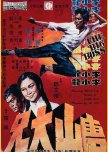
They Didn't Come Home for Dinner!
Bruce Lee made a big splash in Hong Kong with The Big Boss. Set in the contemporary time, bloody, more realistic, and of course centered around Bruce Lee, it was something bold and new.The story had plot holes and was weak despite a good idea. Ice dealers were also drug dealers which put the honorable men working at the ice house and unknowingly for the syndicate in danger. They found out soon enough, as one or two at a time were called into the boss' office and disappeared. These guys were not the sharpest knives in the drawer when it came to figuring out the danger lurking behind the big boss' gated mansion complete with guard dogs and endless armed minions. The only clue friends and family had that something untoward might have happened was that they didn't come home for dinner.
Most of the fights were brawls rather than martial arts conflicts. Cheng Chiu On (Bruce Lee) had taken a vow to not fight, why we don't know, and watched most of the action until the halfway mark in the movie. When the bodies started stacking up he finally decided to enter the fray, though for many it was too little too late. Most of the extras were slow and lumbering compared to Bruce when he took center stage and showed everyone how it was done. There is no overestimating the skill, quickness, and precision he displayed. Han Ying Chieh, the Big Bad, who also choreographed the fights was at least an able opponent in the final conflict.
The fights were brutal and bloody. It was one of the few times I've seen Bruce fight with weapons, aside from nunchaku, as he did in this one. Oddly, director and writer Lo Wei, inserted weirdly comedic moments in scenes at least somewhat grounded in realism. Wuxia flying guard dogs are not to be missed! There was also more wire work than I would have expected, completely unnecessary when dealing with a fighter the caliber of Bruce Lee.
James Tien also gave a notable performance early on as Cheng's friend, Hsu Chien, who tried to stand up for the workers. He had a light and spark that was entertaining to watch. For the most part, the rest of the acting was typical of old kung fu movies, stilted and weak.
Like many kung fu movies, the story was imperfect. The early fight scenes were also flawed. Once the real Big Boss stepped up, the movie became worthwhile for me. Bruce Lee had a grace, magnetism, beauty, and fluidity that I've never seen matched. It was worth sitting through the more stagnant parts of the movie to be able to watch him work.
Was this review helpful to you?


