I enjoyed it a lot. If you're looking for a lighthearted, college romance series, this is it. I'm a new fan of Park Hye Soo, but as to the acting, I have to admit: she's not the best. In particular, I find any scene where she has to cry to be incredibly forced. I felt similarly regarding the other actors: they're all passable-to-good but not amazing.
Why does the first episode feel like I'm watching teenage brains in adult bodies? They're 23 or something right?…
To be fair, if we watched a truly realistic drama about college life, it would be like 90% studying, actually attending classes, working part time jobs, doing reports, writing essays, etc. Aka all the boring stuff that we don't want to do which is why we watch dramas in the first place, hehe
The watchasian English subs are a mess: even some of the actual English dialog is transcribed incorrectly. Is this the version translated from Arabic? There was another fan version floating around that's unavailable now. Is that better?
why are the ratings so low lmao, you all are just 2 episodes in !?!?
Welcome to MDL, where most of the ratings are about the first couple of episodes, the earliest reviews (ones written before the show even ends) get the most likes, and the only possible scores a person can give are 1 or 7-10
I haven't watched the original but based on the comments here and everywhere else, Netflix made the mistake of…
In fairness it's not the only time a Korean production has done a remake: World of the Married is a remake of the BBC Doctor Foster and that was massively popular, with still the highest Nielsen rating of all Cable Kdramas ever. So I can't blame them for trying to do the same with the worldwide phenomenon that is Casa de Papel
As a chinese, I don’t like the cdrama fans making these nonsense allegations. There’s no cultural appropriation…
This is how I feel as well. It might be a problem if they were saying or even implying it was based on 100% SK culture, has SK clothes, etc etc etc....but they're not. It's a fictional world in a fictional country with fictional cities and fictional characters. Asian shows have been copying each other forever and ever - Boys Over Flowers was a Japanese Manga that got adapted by everyone under the sun - is that "cultural appropriation?" I don't think so...
As they say, imitation is the sincerest form of flattery. If Kdramas wanna copy Cdramas, they should. If Cdramas wanna copy Kdramas, they should...
This drama was promoted as a thriller and the first episode is pretty intriguing. After a few eps though, it turns…
I just watched a couple of episodes of this....and the tonal shift is the most jarring I've ever seen in a Kdrama - not that I've seen them all, it's just so abrupt how it goes from a chilling suspense feel to an ethereal melodrama/romance feel.
For being a "super realistic" slice of life drama the portrayal of alcoholism wasn't very realistic. If you are…
The inconsistency between realism and fantasy is probably the main thing that still irks me about this show. I can't "get over it" but not in a good way. So...
If one thinks that the show is about realism, then why does it romanticize depression (imagining the world ending in a flash, general anhedonia, etc. aren't things to be accepted as personality differences...these are signs that a person may be suffering), unethical behavior (the whole Gu doing shady business but there is basically no consequences), and alcoholism (to your point, Gu doesn't get fat or angry or whatnot - maybe in reality he gets confused and beats the crap out of Mi Jeong in a drunken stupor). Moreover, why does it contain so many idealistic elements of things working out...for no reason other than they just magically work out. In real life, Chang Hee and Hyuna might have cussed each other out and ended on bad terms. In real life, Ki Jeong and Tae Hoon would either be engaged in constant discomfort/arguments about Tae Hoon's family situation and/or broken up already (instead, the ending kind of leaves us with "love conquers all").
If one thinks that the show is about fantasy, then why is it so "slice of life", with so many scenes of non-dialog eating, numerous establishing shots, and so many conversations "about nothing". I think this one is more obvious: the show is obviously wanting to be "real life"
To me...ultimately I think what irks me is that this show is smack dab in the middle between idealism and realism and so in my personal opinion...I don't find it all that great. But I still stuck with it for 16 episodes which says something about its draw power. But I'm still disappointed with how it concluded - I think it could have done with fewer storylines so that the individual stories/characters could have been more thoroughly developed.
...yeah. No matter how I cut it, I had high expectations for this one and it didn't meet them. It was only "OK but flawed" to me.
"I mean didn't the previous episodes mean anything to ppl?" Yeah they did, that is the WHOLE reason why the ending…
Thanks for your comments, it's exactly how I feel about the ending. If they had fleshed it out more and shown the character changes, I would have been more OK with it but I agree that it didn't fit the character development we were shown.
I finally finished it and my brain is kind of melting right now, looking at all the 10/10 reviews.What I saw during…
I felt lukewarm about this drama too (funnily enough 6.5 also) but for different reasons. Regarding your philosophical/artsy stuff comment, I saw a criticism that the writer essentially just imbued a bunch of characters with her beliefs...and I can't help but think that, that is true and that the characters themselves are sort of lacking in their own voice.
Just want to point out...숭배 is not the word they focus on in the drama. Did you machine translate "worship"? As I understand it, that word has a more explicitly religious context. Personally, I can't help but wonder about the lost meaning of the production's intentions due to the translation of 추앙 - it seems in English and Chinese it was translated as worship
See and I really cringe with the "life lesson" stuff that some dramas do. I don't love everything about this drama…
I prefer "life lessons," but even without it, I don't feel that the show is cohesive. To your point about realism...I would argue the show is really half-realism: it cherry picks goodness/badness when it suits it. Why did Mi Jeong's ex suddenly agree to pay her back - their relationship over 3 years has already been him outright arguing that he owes her nothing (which we know is untrue but that he is just a lying scumbag)? She helps him once and he changes his tune? He's still lying but he wises up that he should just lie to get out of an argument?
There's more: if we agree alcoholism is problematic, why does the show cherry pick the "good times" and not show any of the bad times (Gu admitted himself he has no idea what he will do to her). Where are the scenes when he is hallucinating with Mi Jeong just like when he's in the car being driven by his underling? Does he ever get physically violent as he does with people he has to manhandle in his job? Why is it always sunshine and rainbows with Mi Jeong?
So I don't buy it. I agree the show is "different" but I don't think it's different in a good way. I think it didn't know what it wanted to be and ended up neither realistic nor "Kdrama idealistic"
I know not everyone agrees, but I cannot get over how disappointed I am with the ending of this show. I tried to write a long form review but got frustrated, so I'll just share my gripes here...
My first main issue is that this show was "aimless" but it never fully committed to being a "random format" show. If you think about a slice of life like Hospital Playlist, it is also sort of "aimless" and the reason that it works is because each episode presents different side characters and plot lines which challenge/clarify the main characters - each episode, we may have seen a completely new side character, but it always ended up showing us some kind of "life lesson" or perhaps even showing us things about the main characters. And even in the end, it "all comes together" in some way where maybe characters will form romantic relationships with each other or reach important pivot points in their life.
My Liberation Notes sort of wanted to be like this....except it also didn't. On the one hand, we also had a lot of setup for that "aimless format" where we had episodes where Chang Hee lost his mind over his annoying, verbose coworker or even crazier ones where Ki Jeong has a dream of a robot carrying her. But on the other hand, it wanted really, really, really much to tell "complete stories": Ki Jeong dealing with the pressure of being an old, unmarried woman and the anxiety she has with it. Chang Hee dealing with the stresses of needing to earn money yet at the same time not being able to afford worldly things. Mi Jeong being overlooked, unloved, and unappreciated despite being deeply responsible/loyal.
...for me, none of these things came to a satisfying conclusion. It wasn't necessarily that it was an open ending, but more to me like it was lazy/needed to wrap things up really fast. Why did Ki Jeong-Tae Hoon's problems that stemmed from his daughter/his sister remain unresolved and seemingly solved by "but actually, we really love each other!" Now that Chang Hee has made peace with the fact that money is not needed/not a big deal anymore...why is he still so deeply unhappy? How did Mi Jeong suddenly become so optimistic despite the fact that she's dating a clear alcoholic and that her core personality has not changed? To me, their positions in Episode 16, even if purposefully left "open" were not deserved: Ki Jeong/Tae Hoon's problems have been ongoing for 3 years -> how did the setup in Episode 15 not lead to an actual breakup? Chang Hee seems to have been deeply unhappy in Episode 15 over his break up yet showed in 16 that he has actually gained real insight into himself -> if there's anyone that could actually get back together with their ex (Hyeon Ah), I actually think it's him.
Mi Jeong deserves a special note IMO: to me, her and Gu's relationship was never super compelling, and at the end, I found it even less so. Firstly, they were there for each other "out of circumstance" and nothing else - if we're talking realism, this is either a "rebound relationship" where both people are lonely or it's a forced romantic relationship, which cannot end well. I've been lonely too...but that doesn't mean I automatically jumped the bones of a close friend that I connected with during those hard times. Secondly, they both seemed to have deep seated issues, one with alcoholism (still unresolved) and the other with depression. That final scene in particular where Mi Jeong is just so happy and says she can love freely now...I just don't buy it. The main changes that she made were she moved and switched jobs and that...solved everything I guess, including the mini-existential crises that she often had in her head. Then we have Gu...what changed for him? Nothing. He started as a miserable alcoholic in Seoul. And he ended as a miserable alcoholic in Seoul (with the same job to boot). Why...? He seems to have learned nothing from his experience in Sanpo and IMO that's not at all realistic to me.
I won't say that this is a terrible show, because it is not. There are certain aspects of it that are just so wonderful that can't be overlooked: the acting is stellar, the cinematography is ethereal and special. However, overall, I think it deeply underperformed towards my personal expectations: I really wanted to find some comfort in this show, but I just couldn't. As a romance, I didn't like it. As a slice of life, I didn't like it. As a commentary on life/realism...I actually don't even know what message the show was trying to send.
MJ and Gu made a cute couple till he left her. I found the vibe of that scene really cold (ya I know he had his…
I too find the show great, but also think that their relationship could have been handled better. Personally, I never saw anything that they did on an emotional level that screamed to me "more than friends" -- for me, it's like they have/had a close friendship. Sometimes, I honestly wonder if both the actors weren't so attractive, would people be shipping them so hard? Like, if Mi Jeong looked like a completely average plain Jane (as her personality has been made out to be) and Gu had the actual issues of an alcoholic (probably fat due to those carbs + maybe a splash of liver issues)...would people still be so into them?
It’s based on the highest ranked number in the top shows page for the ongoing dramas only and the rank is based…
Thanks! This makes a lot more sense now. I was indeed looking at other countries and noticed that their rankings were not highest -> lowest, so this explains everything.

 K-Drama

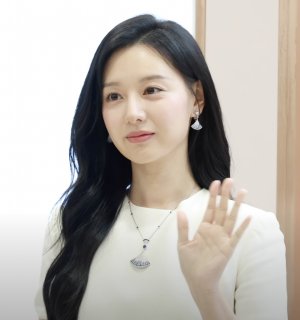


But still, it's worth it IMO.
...and in all fairness, they seem pretty darn popular (same ones of Hotel del Luna fame)
As they say, imitation is the sincerest form of flattery. If Kdramas wanna copy Cdramas, they should. If Cdramas wanna copy Kdramas, they should...
If one thinks that the show is about realism, then why does it romanticize depression (imagining the world ending in a flash, general anhedonia, etc. aren't things to be accepted as personality differences...these are signs that a person may be suffering), unethical behavior (the whole Gu doing shady business but there is basically no consequences), and alcoholism (to your point, Gu doesn't get fat or angry or whatnot - maybe in reality he gets confused and beats the crap out of Mi Jeong in a drunken stupor). Moreover, why does it contain so many idealistic elements of things working out...for no reason other than they just magically work out. In real life, Chang Hee and Hyuna might have cussed each other out and ended on bad terms. In real life, Ki Jeong and Tae Hoon would either be engaged in constant discomfort/arguments about Tae Hoon's family situation and/or broken up already (instead, the ending kind of leaves us with "love conquers all").
If one thinks that the show is about fantasy, then why is it so "slice of life", with so many scenes of non-dialog eating, numerous establishing shots, and so many conversations "about nothing". I think this one is more obvious: the show is obviously wanting to be "real life"
To me...ultimately I think what irks me is that this show is smack dab in the middle between idealism and realism and so in my personal opinion...I don't find it all that great. But I still stuck with it for 16 episodes which says something about its draw power. But I'm still disappointed with how it concluded - I think it could have done with fewer storylines so that the individual stories/characters could have been more thoroughly developed.
...yeah. No matter how I cut it, I had high expectations for this one and it didn't meet them. It was only "OK but flawed" to me.
There's more: if we agree alcoholism is problematic, why does the show cherry pick the "good times" and not show any of the bad times (Gu admitted himself he has no idea what he will do to her). Where are the scenes when he is hallucinating with Mi Jeong just like when he's in the car being driven by his underling? Does he ever get physically violent as he does with people he has to manhandle in his job? Why is it always sunshine and rainbows with Mi Jeong?
So I don't buy it. I agree the show is "different" but I don't think it's different in a good way. I think it didn't know what it wanted to be and ended up neither realistic nor "Kdrama idealistic"
My first main issue is that this show was "aimless" but it never fully committed to being a "random format" show. If you think about a slice of life like Hospital Playlist, it is also sort of "aimless" and the reason that it works is because each episode presents different side characters and plot lines which challenge/clarify the main characters - each episode, we may have seen a completely new side character, but it always ended up showing us some kind of "life lesson" or perhaps even showing us things about the main characters. And even in the end, it "all comes together" in some way where maybe characters will form romantic relationships with each other or reach important pivot points in their life.
My Liberation Notes sort of wanted to be like this....except it also didn't. On the one hand, we also had a lot of setup for that "aimless format" where we had episodes where Chang Hee lost his mind over his annoying, verbose coworker or even crazier ones where Ki Jeong has a dream of a robot carrying her. But on the other hand, it wanted really, really, really much to tell "complete stories": Ki Jeong dealing with the pressure of being an old, unmarried woman and the anxiety she has with it. Chang Hee dealing with the stresses of needing to earn money yet at the same time not being able to afford worldly things. Mi Jeong being overlooked, unloved, and unappreciated despite being deeply responsible/loyal.
...for me, none of these things came to a satisfying conclusion. It wasn't necessarily that it was an open ending, but more to me like it was lazy/needed to wrap things up really fast. Why did Ki Jeong-Tae Hoon's problems that stemmed from his daughter/his sister remain unresolved and seemingly solved by "but actually, we really love each other!" Now that Chang Hee has made peace with the fact that money is not needed/not a big deal anymore...why is he still so deeply unhappy? How did Mi Jeong suddenly become so optimistic despite the fact that she's dating a clear alcoholic and that her core personality has not changed? To me, their positions in Episode 16, even if purposefully left "open" were not deserved: Ki Jeong/Tae Hoon's problems have been ongoing for 3 years -> how did the setup in Episode 15 not lead to an actual breakup? Chang Hee seems to have been deeply unhappy in Episode 15 over his break up yet showed in 16 that he has actually gained real insight into himself -> if there's anyone that could actually get back together with their ex (Hyeon Ah), I actually think it's him.
Mi Jeong deserves a special note IMO: to me, her and Gu's relationship was never super compelling, and at the end, I found it even less so. Firstly, they were there for each other "out of circumstance" and nothing else - if we're talking realism, this is either a "rebound relationship" where both people are lonely or it's a forced romantic relationship, which cannot end well. I've been lonely too...but that doesn't mean I automatically jumped the bones of a close friend that I connected with during those hard times. Secondly, they both seemed to have deep seated issues, one with alcoholism (still unresolved) and the other with depression. That final scene in particular where Mi Jeong is just so happy and says she can love freely now...I just don't buy it. The main changes that she made were she moved and switched jobs and that...solved everything I guess, including the mini-existential crises that she often had in her head. Then we have Gu...what changed for him? Nothing. He started as a miserable alcoholic in Seoul. And he ended as a miserable alcoholic in Seoul (with the same job to boot). Why...? He seems to have learned nothing from his experience in Sanpo and IMO that's not at all realistic to me.
I won't say that this is a terrible show, because it is not. There are certain aspects of it that are just so wonderful that can't be overlooked: the acting is stellar, the cinematography is ethereal and special. However, overall, I think it deeply underperformed towards my personal expectations: I really wanted to find some comfort in this show, but I just couldn't. As a romance, I didn't like it. As a slice of life, I didn't like it. As a commentary on life/realism...I actually don't even know what message the show was trying to send.