

 2
2 2
2 1
1


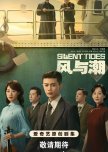
SILENT TIDE — THE SILENT WAR THAT SHOOK MY HEART
──────────────────────
🌊 SILENT TIDE — A DRAMA THAT LEFT ME SPEECHLESS
──────────────────────
I just finished *Silent Tides*, and honestly, I still cannot fully explain what I am feeling right now. It is one of those rare dramas that quietly enters your heart and then completely overwhelms you with emotions before you even realise it. There is sorrow, admiration, patriotism, tension, helplessness, warmth, and hope all mixed. Even after finishing the last episode, my mind is still trapped inside Macau’s “isolated island” during the war years.
What makes this even more surprising is that I rarely watch Republican Era dramas. They are usually not my type at all. Most of the time, I find them heavy, dry, and difficult to connect with. And when I first heard *Silent Tides* was centred around banking, finance, business wars, and wartime economics, I honestly thought this drama would completely bore me. Financial warfare and business negotiations sounded like the last thing I would willingly watch in a drama.
But I was completely wrong.
Dropping this drama would have been one of the biggest mistakes ever.
──────────────────────
🇲🇴 A DIFFERENT KIND OF WAR DRAMA
──────────────────────
What makes *Silent Tides* extraordinary is that it does not tell war through endless battlefield scenes or explosive combat. Instead, it shows another side of war — the invisible war.
The drama takes place during the Second Sino-Japanese War after the Fall of Hong Kong in 1941, when Macau became an “isolated island.” Unlike many anti-war dramas, the story focuses on hidden struggles: financial warfare, trade wars, material transportation, intelligence operations, and psychological battles.
And somehow, all these “quiet wars” became even more intense than actual battlefield fighting.
The drama follows He Xian, a small silver shop owner who moves from Hong Kong to Macau with his family after Hong Kong falls. At first, he is simply trying to survive and protect his loved ones. But as he witnesses starvation, suffering, political corruption, Japanese infiltration, and the misery of ordinary citizens, he slowly transforms from a businessman focused on survival into a patriotic leader willing to risk everything for his people.
That transformation was written beautifully.
This drama constantly asks an important question:
" What Does Patriotism Truly Mean When Survival Itself Becomes Difficult? "
And the answer is shown through actions, sacrifices, and impossible choices.
──────────────────────
🎭 REN JIALUN’S PERFORMANCE AS HE XIAN
──────────────────────
I genuinely think Ren Jialun gave one of the best performances of his career here.
It never felt like acting.
That is the biggest compliment I can give.
Every emotion He Xian experienced felt painfully real — fear, exhaustion, hopelessness, restraint, quiet sorrow, helpless anger, responsibility, and even those tiny moments of happiness. Ren Jialun portrayed them naturally without exaggeration. He did not need dramatic screaming scenes to show pain. Sometimes just his eyes or silence were enough.
He Xian is such a layered character.
He is intelligent but humble. Calm but emotionally burdened. Gentle yet incredibly strong internally. He carries traditional Confucian values deeply within him: integrity, loyalty, keeping promises, protecting dignity, and acting with conscience.
What I loved most was that he never felt like an unrealistic “perfect hero.”
He was afraid.
He hesitated.
He struggled between protecting his family and protecting his country.
And honestly, sometimes I even felt angry at him because of how selfless he was. He had a loving wife, small children, and an elderly father waiting for him at home. Yet he repeatedly risked his life for dangerous missions, financial operations, and resistance activities.
I understood why he did it.
But it still hurt watching him walk toward danger again and again.
That emotional conflict made him feel human.
──────────────────────
💔 THE WOMEN OF SILENT TIDES
──────────────────────
One of the strongest parts of this drama is its female characters.
Guo Qiwen, He Xian’s wife, is honestly one of the greatest wives I have ever seen in a drama. She is gentle, intelligent, emotionally mature, and unbelievably supportive without losing her individuality. She understands her husband’s burdens even when she herself suffers because of them.
There were moments where I felt more emotional for her than for He Xian himself.
Because loving someone like He Xian means constantly fearing you may lose him.
And yet she never became selfish.
Never manipulative.
Never resentful.
She carried her pain quietly with dignity.
Then there is Qiao Yinwan.
Her existence adds another emotional layer to the story. Her feelings for He Xian are restrained, tragic, and heartbreaking. She represents the countless people during wartime who sacrificed personal emotions for a greater cause. Her patriotism through music and underground resistance activities was incredibly moving.
The drama also deserves praise for highlighting women’s contributions during wartime instead of reducing them to romantic accessories.
──────────────────────
😡 VILLAINS THAT FELT TRULY TERRIFYING
──────────────────────
The villains in this drama were phenomenal.
Not because they were “cool,” but because they felt disturbingly real.
Their cruelty, manipulation, greed, and cunning behavior genuinely made me angry while watching. There were moments where I completely forgot I was watching actors because I hated those characters so much.
That is good acting.
The Japanese spies, traitors, corrupt figures, and opportunists were written with terrifying realism. The drama constantly shows how war destroys morality and forces people into impossible choices.
And what makes it even better is that the drama does not portray everyone in simplistic black-and-white morality. Some people hesitate. Some compromise. Some survive through silence. Others awaken slowly.
That complexity made the story feel authentic.
──────────────────────
🎬 CINEMATIC PRODUCTION QUALITY
──────────────────────
This drama looks absolutely stunning.
Not “good for television.”
Actually cinematic.
The production team spent years researching Macau’s wartime history, and it truly shows in every frame. The atmosphere feels immersive and alive. From docks and ferry terminals to teahouses, streets, warehouses, casinos, and marketplaces — every location feels historically authentic.
The lighting and cinematography deserve special praise.
The scenes showing bombed Hong Kong, candlelit nights, blackouts, and wartime fear created an oppressive atmosphere that felt hauntingly realistic. Instead of relying on exaggerated filters, the drama uses shadows, darkness, and silence beautifully.
And the language usage made everything even more immersive.
Portuguese characters speak Portuguese.
British characters speak English.
Chinese characters switch between Mandarin and Cantonese naturally.
That attention to detail added so much realism.
Even the costumes were incredible. The Republican-era styling, long gowns, military uniforms, and traditional Lingnan aesthetics gave the drama such an elegant visual identity.
──────────────────────
🏮 MACAU’S FORGOTTEN ANTI-JAPANESE HISTORY
──────────────────────
One reason this drama affected me so deeply is that it introduced me to a side of history I barely knew about.
Most anti-war dramas focus on open battlefields.
*Silent TideS* focuses on Macau.
Macau was technically neutral during the war, but beneath that neutrality existed chaos, hidden resistance, espionage, starvation, financial warfare, and underground patriotism.
This drama finally gives recognition to Macau’s contribution to the Anti-Japanese War.
And honestly, that feels important.
The story shows how businessmen, artists, musicians, intellectuals, underground agents, workers, and ordinary civilians all became part of resistance efforts in their own ways.
This was not just a war fought with guns.
It was fought with information.
Money.
Transportation routes.
Printing paper.
Food supplies.
Music.
Communication networks.
Human courage.
That perspective felt incredibly fresh and meaningful.
──────────────────────
⚔️ FINANCIAL WARFARE AS PSYCHOLOGICAL WARFARE
──────────────────────
I never imagined business negotiations and financial operations could feel this intense.
Yet *Silent Tides* somehow turns banking wars into high-stakes psychological battles.
Gold transactions.
Currency manipulation.
Material transportation.
Trade routes.
Banknote paper.
Supply chains.
Every negotiation scene feels like a hidden battlefield.
The tension was unbelievable.
Instead of loud action sequences every few minutes, the drama builds suspense through strategy, intelligence, and political manoeuvring. And when action scenes finally appear — naval fights, transportation missions, interceptions — they feel earned and impactful.
This drama proves war stories do not need constant gunfire to feel thrilling.
──────────────────────
🕊️ FAMILY, PATRIOTISM, AND HUMANITY
──────────────────────
At its core, *Silent Tides* is really about humanity.
About ordinary people forced into extraordinary times.
About choosing conscience even when survival becomes difficult.
About balancing “small self” and “greater self.”
The drama constantly contrasts family warmth with national tragedy. He Xian begins as someone trying to protect his small family, but gradually realises he cannot truly protect them while his country collapses around him.
That emotional evolution was incredibly powerful.
One line that stayed with me was essentially the idea that:
" Only Great Love Can Achieve Great Righteousness "
That perfectly summarises the spirit of this drama.
──────────────────────
😭 WHY THIS DRAMA STAYED WITH ME
──────────────────────
There are many dramas that entertain.
Some dramas emotionally move you for a few days.
But *Silent Tides* feels different.
It leaves behind a reflection.
It makes you think about sacrifice, patriotism, morality, fear, and human resilience. It reminds you that peace today exists because countless people in the past endured unimaginable suffering.
And what touched me most is that these characters never felt like distant historical symbols.
They felt human.
They laughed.
They feared death.
They loved their families.
They dreamed of ordinary happiness.
Yet they still chose courage.
That is why this drama feels so powerful.
──────────────────────
🌊 FINAL THOUGHTS
──────────────────────
*Silent Tides* is not simply another Republican-era drama or anti-war series.
It is a deeply emotional historical epic filled with intelligence, humanity, cultural identity, political tension, and emotional realism.
The acting was phenomenal.
The writing was intelligent.
The cinematography was cinematic.
The emotional depth was unforgettable.
And most importantly, it tells a part of history many people rarely discuss.
I started this drama with almost no expectations.
Now I genuinely think it is one of the most meaningful dramas I have watched in recent years.
Even after finishing it, I still feel emotionally trapped inside its world.
And honestly?
I think that is the mark of a truly exceptional drama. 🌊
🌊 SILENT TIDE — A DRAMA THAT LEFT ME SPEECHLESS
──────────────────────
I just finished *Silent Tides*, and honestly, I still cannot fully explain what I am feeling right now. It is one of those rare dramas that quietly enters your heart and then completely overwhelms you with emotions before you even realise it. There is sorrow, admiration, patriotism, tension, helplessness, warmth, and hope all mixed. Even after finishing the last episode, my mind is still trapped inside Macau’s “isolated island” during the war years.
What makes this even more surprising is that I rarely watch Republican Era dramas. They are usually not my type at all. Most of the time, I find them heavy, dry, and difficult to connect with. And when I first heard *Silent Tides* was centred around banking, finance, business wars, and wartime economics, I honestly thought this drama would completely bore me. Financial warfare and business negotiations sounded like the last thing I would willingly watch in a drama.
But I was completely wrong.
Dropping this drama would have been one of the biggest mistakes ever.
──────────────────────
🇲🇴 A DIFFERENT KIND OF WAR DRAMA
──────────────────────
What makes *Silent Tides* extraordinary is that it does not tell war through endless battlefield scenes or explosive combat. Instead, it shows another side of war — the invisible war.
The drama takes place during the Second Sino-Japanese War after the Fall of Hong Kong in 1941, when Macau became an “isolated island.” Unlike many anti-war dramas, the story focuses on hidden struggles: financial warfare, trade wars, material transportation, intelligence operations, and psychological battles.
And somehow, all these “quiet wars” became even more intense than actual battlefield fighting.
The drama follows He Xian, a small silver shop owner who moves from Hong Kong to Macau with his family after Hong Kong falls. At first, he is simply trying to survive and protect his loved ones. But as he witnesses starvation, suffering, political corruption, Japanese infiltration, and the misery of ordinary citizens, he slowly transforms from a businessman focused on survival into a patriotic leader willing to risk everything for his people.
That transformation was written beautifully.
This drama constantly asks an important question:
" What Does Patriotism Truly Mean When Survival Itself Becomes Difficult? "
And the answer is shown through actions, sacrifices, and impossible choices.
──────────────────────
🎭 REN JIALUN’S PERFORMANCE AS HE XIAN
──────────────────────
I genuinely think Ren Jialun gave one of the best performances of his career here.
It never felt like acting.
That is the biggest compliment I can give.
Every emotion He Xian experienced felt painfully real — fear, exhaustion, hopelessness, restraint, quiet sorrow, helpless anger, responsibility, and even those tiny moments of happiness. Ren Jialun portrayed them naturally without exaggeration. He did not need dramatic screaming scenes to show pain. Sometimes just his eyes or silence were enough.
He Xian is such a layered character.
He is intelligent but humble. Calm but emotionally burdened. Gentle yet incredibly strong internally. He carries traditional Confucian values deeply within him: integrity, loyalty, keeping promises, protecting dignity, and acting with conscience.
What I loved most was that he never felt like an unrealistic “perfect hero.”
He was afraid.
He hesitated.
He struggled between protecting his family and protecting his country.
And honestly, sometimes I even felt angry at him because of how selfless he was. He had a loving wife, small children, and an elderly father waiting for him at home. Yet he repeatedly risked his life for dangerous missions, financial operations, and resistance activities.
I understood why he did it.
But it still hurt watching him walk toward danger again and again.
That emotional conflict made him feel human.
──────────────────────
💔 THE WOMEN OF SILENT TIDES
──────────────────────
One of the strongest parts of this drama is its female characters.
Guo Qiwen, He Xian’s wife, is honestly one of the greatest wives I have ever seen in a drama. She is gentle, intelligent, emotionally mature, and unbelievably supportive without losing her individuality. She understands her husband’s burdens even when she herself suffers because of them.
There were moments where I felt more emotional for her than for He Xian himself.
Because loving someone like He Xian means constantly fearing you may lose him.
And yet she never became selfish.
Never manipulative.
Never resentful.
She carried her pain quietly with dignity.
Then there is Qiao Yinwan.
Her existence adds another emotional layer to the story. Her feelings for He Xian are restrained, tragic, and heartbreaking. She represents the countless people during wartime who sacrificed personal emotions for a greater cause. Her patriotism through music and underground resistance activities was incredibly moving.
The drama also deserves praise for highlighting women’s contributions during wartime instead of reducing them to romantic accessories.
──────────────────────
😡 VILLAINS THAT FELT TRULY TERRIFYING
──────────────────────
The villains in this drama were phenomenal.
Not because they were “cool,” but because they felt disturbingly real.
Their cruelty, manipulation, greed, and cunning behavior genuinely made me angry while watching. There were moments where I completely forgot I was watching actors because I hated those characters so much.
That is good acting.
The Japanese spies, traitors, corrupt figures, and opportunists were written with terrifying realism. The drama constantly shows how war destroys morality and forces people into impossible choices.
And what makes it even better is that the drama does not portray everyone in simplistic black-and-white morality. Some people hesitate. Some compromise. Some survive through silence. Others awaken slowly.
That complexity made the story feel authentic.
──────────────────────
🎬 CINEMATIC PRODUCTION QUALITY
──────────────────────
This drama looks absolutely stunning.
Not “good for television.”
Actually cinematic.
The production team spent years researching Macau’s wartime history, and it truly shows in every frame. The atmosphere feels immersive and alive. From docks and ferry terminals to teahouses, streets, warehouses, casinos, and marketplaces — every location feels historically authentic.
The lighting and cinematography deserve special praise.
The scenes showing bombed Hong Kong, candlelit nights, blackouts, and wartime fear created an oppressive atmosphere that felt hauntingly realistic. Instead of relying on exaggerated filters, the drama uses shadows, darkness, and silence beautifully.
And the language usage made everything even more immersive.
Portuguese characters speak Portuguese.
British characters speak English.
Chinese characters switch between Mandarin and Cantonese naturally.
That attention to detail added so much realism.
Even the costumes were incredible. The Republican-era styling, long gowns, military uniforms, and traditional Lingnan aesthetics gave the drama such an elegant visual identity.
──────────────────────
🏮 MACAU’S FORGOTTEN ANTI-JAPANESE HISTORY
──────────────────────
One reason this drama affected me so deeply is that it introduced me to a side of history I barely knew about.
Most anti-war dramas focus on open battlefields.
*Silent TideS* focuses on Macau.
Macau was technically neutral during the war, but beneath that neutrality existed chaos, hidden resistance, espionage, starvation, financial warfare, and underground patriotism.
This drama finally gives recognition to Macau’s contribution to the Anti-Japanese War.
And honestly, that feels important.
The story shows how businessmen, artists, musicians, intellectuals, underground agents, workers, and ordinary civilians all became part of resistance efforts in their own ways.
This was not just a war fought with guns.
It was fought with information.
Money.
Transportation routes.
Printing paper.
Food supplies.
Music.
Communication networks.
Human courage.
That perspective felt incredibly fresh and meaningful.
──────────────────────
⚔️ FINANCIAL WARFARE AS PSYCHOLOGICAL WARFARE
──────────────────────
I never imagined business negotiations and financial operations could feel this intense.
Yet *Silent Tides* somehow turns banking wars into high-stakes psychological battles.
Gold transactions.
Currency manipulation.
Material transportation.
Trade routes.
Banknote paper.
Supply chains.
Every negotiation scene feels like a hidden battlefield.
The tension was unbelievable.
Instead of loud action sequences every few minutes, the drama builds suspense through strategy, intelligence, and political manoeuvring. And when action scenes finally appear — naval fights, transportation missions, interceptions — they feel earned and impactful.
This drama proves war stories do not need constant gunfire to feel thrilling.
──────────────────────
🕊️ FAMILY, PATRIOTISM, AND HUMANITY
──────────────────────
At its core, *Silent Tides* is really about humanity.
About ordinary people forced into extraordinary times.
About choosing conscience even when survival becomes difficult.
About balancing “small self” and “greater self.”
The drama constantly contrasts family warmth with national tragedy. He Xian begins as someone trying to protect his small family, but gradually realises he cannot truly protect them while his country collapses around him.
That emotional evolution was incredibly powerful.
One line that stayed with me was essentially the idea that:
" Only Great Love Can Achieve Great Righteousness "
That perfectly summarises the spirit of this drama.
──────────────────────
😭 WHY THIS DRAMA STAYED WITH ME
──────────────────────
There are many dramas that entertain.
Some dramas emotionally move you for a few days.
But *Silent Tides* feels different.
It leaves behind a reflection.
It makes you think about sacrifice, patriotism, morality, fear, and human resilience. It reminds you that peace today exists because countless people in the past endured unimaginable suffering.
And what touched me most is that these characters never felt like distant historical symbols.
They felt human.
They laughed.
They feared death.
They loved their families.
They dreamed of ordinary happiness.
Yet they still chose courage.
That is why this drama feels so powerful.
──────────────────────
🌊 FINAL THOUGHTS
──────────────────────
*Silent Tides* is not simply another Republican-era drama or anti-war series.
It is a deeply emotional historical epic filled with intelligence, humanity, cultural identity, political tension, and emotional realism.
The acting was phenomenal.
The writing was intelligent.
The cinematography was cinematic.
The emotional depth was unforgettable.
And most importantly, it tells a part of history many people rarely discuss.
I started this drama with almost no expectations.
Now I genuinely think it is one of the most meaningful dramas I have watched in recent years.
Even after finishing it, I still feel emotionally trapped inside its world.
And honestly?
I think that is the mark of a truly exceptional drama. 🌊
Was this review helpful to you?


