

 2
2 2
2 1
1


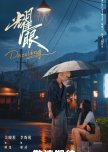
Not My Cup Of Tea, But I Got Why Some People Might Fall For It
I only picked up Dazzling because the watcher count on MDL was crazy, and the two leads are pretty famous. The setup seemed harmless enough — city girl Qing Ye (Guan Xiaotong) gets thrown into a small seaside town called Zha Zha Ting after her dad’s world collapses. There she runs into Xing Wu (Li Yunrui), a local boy carrying way too much on his shoulders, and slowly starts changing his life and the lives of the boys around him. On paper, it’s heartwarming. In reality, for me, it mostly just sat there.Early on, I already caught myself comparing it to Lighter and the Princess. Both dramas revolve around a girl who walks into a broken boy’s life and becomes a force of change. But where Lighter had actual intensity and forward momentum, Dazzling felt like it was spinning its wheels. The first few episodes set up the fish-out-of-water stuff — Qing Ye freaking out over public bathrooms, the noisy morning market, a cockroach sending her into orbit — and I’ll admit, that part was fun. Her “meet-disaster” with white-haired Xing Wu, whom she mistakes for some street thug, had a classic enemies-to-friends setup that could’ve worked. But then it just… stalled.
By the time her laptop gets stolen and retrieved, and some creepy neighbour breaks into the shower, the drama had already settled into a rinse-and-repeat loop: problem pops up, Xing Wu fixes it. Laptop, internet outage, harassment, bullying. Every episode, it’s something new that gets resolved almost immediately, and while it keeps reinforcing that Xing Wu is her protector, it barely moves their emotional connection forward. Honestly, you could condense half the 30 episodes and lose nothing important about their relationship.
And that’s my biggest issue: the chemistry never clicked for me. Guan Xiaotong gives Qing Ye a prickly vulnerability that I actually liked, and Li Yunrui’s Xing Wu is quietly magnetic — the weight of family debt and his crushed dream of becoming a pilot sits on him in a way that feels real. There are even a few subtly beautiful moments: him secretly building her a wardrobe because she complained in her sleep, or choosing to film her in the lavender fields instead of taking a photo so he could “freeze her voice and smile forever,” or the way he panics and grabs her when he thinks she’s disappeared. Those moments hint at something deeper.
But the script never lets those sparks catch. Every time a real connection starts to simmer — like when she asks if she can still come back for New Year’s after university — the drama undercuts it with some outside misunderstanding (Shu Han the “childhood fiancée,” seriously?) or jumps into heavy-handed angst (Xing Wu pulling away after Cao Ping reappears). The romance ends up feeling told to me through grand protective gestures rather than something I could actually feel growing between them. In Lighter, the intensity built and crackled. Here, it stays platonic and safe, mistaking cohabitation and shared chores for genuine romantic growth.
Where the drama actually dazzled for me wasn’t the love story — it was the family. Li Lanfang, Qing Ye’s chaotic aunt, stole a lot of scenes. She starts off shallow, obsessed with the “5000 yuan living fee,” glued to her mahjong table, drowning in debt. But she slowly turns into this resilient, messy, deeply human matriarch. Watching her kneel to beg forgiveness for a botched eyebrow tattoo, then later reinvent herself as a street barber doing “quick cuts” in the park — that arc landed. The moment she finally announces all her debts are paid, handing money back to her loyal girlfriends over cherries, felt genuinely earned. I actually felt something there.
Grandma was a quiet warmth, and the red-haired friends brought a chaotic, obnoxious, yet loyal energy that I didn’t hate. Even minor characters like the teacher Zhu Feng, driving a taxi after his divorce, added texture. When the New Year’s Eve fire destroys their home, and neighbors show up with dumplings and friends photocopy burnt textbooks, the drama finally says something real: home isn’t the building, it’s the people. In those pockets, the meandering, lazy pace actually works. You get to soak in the noisy, messy texture of daily life that Qing Ye falls in love with, and I understood why she’d want to stay.
But then the plot has to do plot things, and it fumbles. The drama keeps throwing new antagonists at us to create tension, and they all fizzle out. Cao Ping, the ex-con brother of Qing Ye’s school rival, is the best example. He shows up late with this brooding menace, motivated by his sister’s perceived slights, and the whole thing is dragged out through Xing Wu’s mysterious withdrawal and some physical fights. Then it wraps up in a blink — tearful stand-down, police sirens, done. All that buildup for nothing. Same with the earlier creepy neighbour and the jealous school bullies. As soon as they appear, they’re dealt with, leaving the drama with a stop-start rhythm that never lets tension truly build.
Because of that, the ending doesn’t hit like a culmination. It just feels like a script obligation. Qing Ye’s father arrives out of nowhere to take her back to Beijing and warns Xing Wu to stay away — it’s the exact beat you’d expect from episode one. It reframes her entire time in Zha Zha Ting as a long, pretty interlude. And while finally in the drama it shows they reunite years later, I was left feeling as if I’d watched a beautiful diorama rather than a living, breathing story.
So here’s the thing. Dazzling is a drama that can’t quite decide what it wants to be. It sells itself as a bright, transformative teen romance but delivers a slow, often repetitive family melodrama instead. For someone like me, who already finds teenage romance a bit nauseating and has zero patience for lazy plotting, it was a real test of endurance — thirty episodes that could’ve been sixteen emotionally tight ones. But I can’t say it’s completely empty. The performances are warm, the seaside setting is gorgeous, and watching a family claw their way out of debt one haircut or repaired laptop at a time has a grounded, almost neorealist charm you rarely see in idol dramas. Every now and then, it really does dazzle — not with romantic fireworks, but with the quiet glow of people just trying to piece their lives back together.
If you love slow-burn family stories tucked inside a youth drama package, this might be a comforting watch. But if you came here for a sweeping, intense romance like I did, you’ll probably leave feeling like the story never truly left the shore.
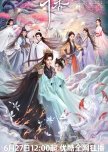
Good and Evil Through the Tragedy of Choice
Waiting for a drama to premiere is an act of faith, and my journey with this one was a test of patience. At first glance, the storytelling felt muddled, a puzzle with pieces that didn't quite seem to fit. It wasn’t until the narrative settled into the familiar rhythm of the academy that it truly found its footing, building a genuinely compelling momentum. If I had to draw a line, the first half of the drama was a solid, engaging watch. The second half, however, wasn’t as satisfying; it stumbled where it should have soared. And yet, even in its imperfection, the final episodes held moments that resonated with a quiet power, leaving a bittersweet taste that lingers longer than a more polished, forgettable finale.
Having seen other adaptations of this author’s work, I was prepared for a certain formula. I tried not to make comparisons, but the echoes were impossible to ignore. The drama leans heavily on familiar, even overused, tropes: the immature and childish female lead who eventually matures, the enemy-to-lovers dynamic, and a collection of obsessed, psychopathic male characters who blur the line between antagonist and outright villain. I had hoped that the second male lead, Ji Tongzhou, would be a complex antagonist rather than a full-blown villain, but the story took a darker, more definitive path—a common tragedy in these sprawling cultivation tales.
What truly anchors this story, however, and what saved it from being a simple trope-fest, is its core theme. Beneath the flashy CGI and frantic pacing lies a poignant exploration of nature versus nurture, of birth versus choice. The drama masterfully deconstructs the very foundation of its world. Everyone speaks in hushed tones of a past catastrophe, a great war between immortals and demons. The elders, draped in the robes of sages, indoctrinate a new generation to hate a faction branded as evil by birth and origin. But the truth they so carefully conceal is far more damning: the sages were never truly sages, and the devils were never born evil.
This hypocrisy is the engine of the drama’s tragedy. The so-called righteous immortals, led by the sanctimonious Cui Xuan, are driven by greed and a hunger for power they mask as divine justice. Cui Xuan’s secret prison, the Xiaoqian World, where he drains the life force of demon spirits to fuel his own cultivation, is a more horrifying evil than any act committed by the demon clan in the show. He didn't just kill Qing Cheng (Wu Gen), the master who chose love and redemption over transcendence; he betrayed the very essence of their brotherhood, exploiting his trust to imprison and eventually murder him. This act of intimate betrayal is the true face of "righteousness" in this world, a far cry from the "evil by birth" he projects onto the demon clan.
At the heart of this conflict stands Lei Xiuyuan, the demon lord Ye Cha. He has every conceivable reason to become the monster the world insists he is. He is born under a curse that forces him to consume the very personification of life, Jianmu (Jiang Lifei), or suffer a soul-shredding death. He is hunted, blackmailed, and manipulated by a scoundrel like Zhen Yunzi, who uses his dying brother Lu Shanhua as a puppet. The world, including the woman he loves, is a constant crucible encouraging him to embrace his inherent darkness. His fight is not just against external enemies, but against his own cursed nature, which drives him to uncontrollably hunger for the very scent of Jiang Lifei’s life force.
And yet, his defining act is defiance. His greatest strength isn't his terrifying demonic power, but his unflinching choice to be good. His iconic line, "Xin zhi suo xiang cai shi xuan ze" (What the heart desires is the true choice), isn't just a slogan; it's his life's thesis. It’s the mantra he clings to when resisting the soul-corrupting magic, when refusing to harm Jiang Lifei even to save himself, and when ultimately sacrificing his life to shatter her chains and set her free. He is a character who embodies the drama’s soul: a person born to be a villain, given every justification for villainy, who instead uses his power to protect the world that despises him. His internal battle is far more compelling than any external sword fight.
Juxtaposed against him is Ji Tongzhou’s downfall, which is a perfect, tragic foil. Unlike Lei Xiuyuan, who resists his cursed bloodline, Ji Tongzhou is consumed by a self-created one: his obsessive love for Jiang Lifei. He starts as a loyal friend but spirals into a demon of his own making, cloaking his possessiveness and ambition in the language of protection. He doesn't need a curse to absorb Jianmu's power; he does it out of a chilling sense of entitlement. His moral decay is so complete that he murders his oldest friends, in a fit of rage after being confronted with his own hypocrisy. In the end, he’s a hollow figure, painting portraits of a woman who will never love him, having destroyed every genuine connection he ever had. His tragedy isn’t his love; it’s his choice to let that love fester into a tyrannical need to possess, turning him into the very monster he claimed to fight.
Jiang Lifei, too, evolves from a source of frustration to a pillar of strength. Her initial childishness is grating, but her journey is one of painful awakening. She learns that the world her master Qing Cheng wanted to protect is full of wolves in sheep’s clothing. Her most powerful moments are when she sheds her naivete, like when she mocks the assembled immortals at her public trial, brilliantly exposing Cui Xuan’s plot to enslave them all with her trap-like chains. Her decision to stand against the sea calamity at the end, not as a sacrifice to a cruel world but as a fulfilment of her master’s dream, completes her arc from a naive girl to a self-possessed woman who understands that true power is not in one's origin but in the sacrifice one is willing to make.
Sadly, this beautiful, thematically rich narrative is trapped in a flawed vessel. The acting is inconsistent, often failing to carry the heavy emotional weight of the plot. But the real villain of the production is the post-production work. The CGI and editing are, to put it bluntly, a hot mess. At times, the garish graphic effects were so blinding that I nearly dropped the drama. The editing gives the show a frantic, breathless pace, butchering scenes that should have been given time to breathe and resonate emotionally, leaving the viewer feeling pummeled rather than moved.
It’s a story that understands that the most profound monsters are not born in the netherworld but in the secret chambers of a hypocrite’s heart, and the truest hero is the one who conquers the monster within himself.
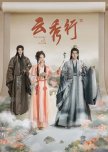
When a Stellar Cast Can't Save a Sinking Script
There’s a particular kind of grief reserved for a drama that had absolutely everything going for it and still managed to crumble into something nearly unwatchable. That’s the bitter taste "The Legend of Rosy Clouds" left behind, a lingering frustration that has nothing to do with a lack of talent or resources and everything to do with a story that seemed determined to sabotage itself at every turn. After years of waiting and a cast that promised sparkle and depth, I sat through all thirty-six episodes hoping for a turnaround that never came. The rating I’d give it now is a reluctant foive out of ten, and even that feels generous once you’ve catalogued all the ways it went wrong.Let’s start with the tragedy of the casting, because that’s where the disappointment cuts deepest. These actors were visually arresting, charismatic, and fully capable of greatness, but they were handed material that kept yanking the rug out from under them. Yi Tong’s Fan Yun was introduced as a noblewoman thrust into a political marriage who would supposedly blossom into a sharp, capable official. Instead, the writing made her a contradiction in human form. One moment she was clever enough to see straight through her husband’s disguise and manipulate cunning merchants; the next she was stumbling into traps so obvious you wanted to reach through the screen and shake her. Her growth into a gate commander felt like a checkbox the plot ticked rather than a journey she actually undertook, and the romance at the center of it all was built on a shaky foundation of lies and manipulation that never evolved into the genuine partnership the story kept insisting it was.
Zeng Shunxi fared no better as Qi Zheng, the supposedly brilliant governor pretending to be a frivolous playboy. I’ve seen what he can do with the right script, and that knowledge made watching him here a mournful experience. His intelligence was told to us far more often than it was shown; the political manoeuvring came off less as strategic genius and more as the writers conveniently opening doors for him. The flatness wasn’t his failing; it was a failure of direction and a script that asked him to play the same few notes on a loop. When you compare this performance to his recent work, it’s like watching a gifted musician handed an instrument that’s out of tune.
And then there’s Deng Wei’s Zheng Shi, the second male lead whose arc I will carry with me as a cautionary tale about how to destroy a promising character. In a proper love triangle, you should feel torn, aching over two equally compelling choices. What we got instead was a slow-motion transformation into an obsessive, emotionally unhinged figure who progressed from charming suitor to manipulative “nice guy” to someone who literally tried to force marriage at swordpoint. He became the shadow master of a terrorist group, deceived his own family for power, and still the drama wanted us to find his final sacrifice tragic. By the time he refused the antidote and slipped away, I felt only relief. Not because the performance was bad—Deng Wei did what he could—but because the character had become a psychological horror subplot wearing the mask of a romantic rival.
The production itself seemed to be fighting its own battle behind the scenes. For a drama that spent three years in limbo between filming and release, the post-production cracks were glaring. Scenes were snipped mid-breath, transitions jarred, and the visual quality lurched from episode to episode as if different teams had worked on them without speaking. There were moments of genuine beauty, of course: the phoenix flowers blazing against a twilight sky, snow dusting the rooftops, costumes that deserved their own applause. But they were islands in a sea of inconsistency. The action choreography often felt weightless, lighting could change within a single conversation, and far too many sequences carried the cramped, hurried energy of a low-budget web drama rather than a full-length historical production. The comedy bits, especially the governor’s antics, belonged in a sketch show and clashed violently with the serious political undertones, creating a tonal whiplash that made it impossible to settle into either mood.
And the plot. The plot deserves its own elegy, because I have rarely seen a story so committed to shooting itself in the foot. The early episodes had a spark—Fan Yun seeing through Qi Zheng’s disguise right away, a poisoning attempt that seemed to promise intrigue—but soon the narrative started piling absurdity upon absurdity. There was the baffling subplot where the couple faked a divorce by pretending Qi Zheng suffered from erectile dysfunction, a creative choice so bewildering it felt like a dare. A simple piece of cloth somehow became an infallible disguise that fooled entire armies, the drama’s own version of Superman’s glasses. And then, gloriously, infamously, the dreaded Crow Army that had been built up as an unstoppable force was defeated with fireworks. Birds. Fireworks. All that tension dissolved into a puff of colored smoke.
Character motivations shifted like sand. Problems were solved through coincidence or a single miraculous discovery, the plague in Tong City being the prime example—a devastating pandemic that evaporated with one herbal remedy. The central relationship cycled through “we trust each other” and “we don’t trust each other” so many times that I lost count, and the political reform storyline, which had genuine conceptual merit, crawled along only to be wrapped up in a rush that made the entire arc feel weightless. The symbolism of the sweet dew tea was hauled out for love declarations, poison antidotes, and marriage rituals alike until it meant nothing at all. The show tried so desperately to make us cry over deaths and sacrifices, but you cannot mourn a character whose soul the script already hollowed out.
In all this wreckage, there was exactly one thing that kept me watching, and it was the second lead couple. Gao Ran and Wei Shisan had a quiet, unforced chemistry that made every shared glance feel like a secret. Their dynamic was built on earned intimacy, a slow-burn understanding that the main romance never managed to replicate. When they worked together, the air shifted, and I found myself resenting every cut back to the central pair. Their subplot wasn’t just a consolation prize; it was the proof that this drama knew how to write a compelling connection and simply chose not to give that gift to the leads. Giving them more screen time or a spin-off wouldn’t just be a treat—it would be a quiet act of justice.
What makes the whole experience so haunting is how clearly you can see the shape of the masterpiece that might have been. The cast, the visual ambition, the kernel of a story about class mobility and women stepping into governance—all the ingredients were measured and waiting. But the execution was a cascade of wrong turns. A love triangle with real stakes, where the second lead was genuinely good and the choice genuinely painful, would have anchored the emotional core. Smarter political manoeuvring that let the characters earn their victories would have given the reform plotline the gravity it aimed for. Consistent characterisation and a steady hand on the tonal rudder would have turned chaos into purpose.
As it stands, the recommendation is narrow. If you are a diehard fan of the cast, you might find enough flickers of their talent to keep you going, though frustration will be your constant companion. If you are someone who finds grim pleasure in watching a beautiful disaster unfold, there is material here in abundance. And if you care only about a side couple and can fast-forward through the rest, you will find a diamond in the rubble. But for anyone seeking a satisfying romance, a coherent political drama, or simply a story that follows its own internal logic, this is a warning, not an invitation.
The final image I’ll hold isn’t of the Phoenix Tree or the snow-dusted farewell, but of a production that had the wind at its back and still steered straight into the rocks. Fan Yun and Qi Zheng should have been a couple to root for; instead, they exhausted me. Zheng Shi started as someone I might have loved and ended as a cautionary tale about what happens when writers mistake obsession for passion. And Gao Ran and Wei Shisan, the true emotional centre, were sidelined in their own show. Five out of ten feels right, a score for the ghost of something wonderful that never quite materialised. What a waste, truly.
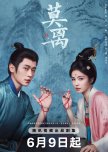
Where Wounds Become Strength and Two Hearts Learn to Beat as One
The First Jasmine begins as what appears to be another arranged-marriage political drama but gradually reveals itself to be a remarkably layered story about trauma, justice, power, and healing. Set in the fictional Dachu Dynasty with Tang-inspired aesthetics, the drama follows Ye Li, a woman released from eight years of isolation on Lishan Mountain to marry the politically disgraced and crippled Prince Ding, Mo Xiuyao.Although it embraces familiar historical romance tropes, the series distinguishes itself through meticulous character writing, emotional maturity, and philosophical depth. Rather than relying on plot twists alone, it builds its story through psychological realism and carefully developed relationships.
YE LI: TRAUMA, REVENGE, AND HEALING
Ye Li is one of the strongest female protagonists in recent historical dramas. Calm, intelligent, and calculating on the surface, she is deeply scarred by the tragedy on Lishan Mountain, where she watched her family and friends die during the plague while remaining powerless to save them.
Bai Lu portrays this duality beautifully. Her hallucinations of the dead are presented not as supernatural events but as believable manifestations of unresolved trauma. The drama never sensationalizes her suffering, instead showing how trauma fragments the mind while allowing someone to continue functioning outwardly.
Her revenge is never driven by blind hatred. The four straw figures she keeps symbolize carefully planned justice rather than impulsive violence. Even her decision to eliminate Empress Dowager Guo Jin last demonstrates patience and political understanding. As the story progresses, revenge gradually transforms into healing as she learns to reclaim agency and build meaningful relationships again.
MO XIUYAO: STRENGTH BEYOND PHYSICAL POWER
Cheng Lei delivers one of his finest performances as Mo Xiuyao. After years of political humiliation, disability, and grief, he remains remarkably restrained, expressing pain through subtle expressions rather than exaggerated emotion.
His character challenges the traditional image of the invincible male lead. Although physically crippled, he possesses extraordinary intelligence, leadership, and emotional maturity. His recovery is satisfying not because he becomes physically powerful again, but because the audience has already learned to admire him before he ever stands.
His relationship with Ye Li develops naturally through trust, mutual respect, and shared suffering. Moments such as quietly caring for each other, cooking together, or simply watching the moon become far more meaningful than dramatic romantic declarations.
EMPRESS DOWAGER GUO JIN: A TRAGIC RULER
Guo Jin is arguably the drama's most fascinating character. Unlike conventional villains, she genuinely improves Dachu through tax reforms, women's education, infrastructure, and social policies. Yet every achievement comes at the cost of countless innocent lives.
Her final conversations with Ye Li explore one of the drama's central questions: does successful governance justify immoral methods?
Ye Li's grandfather once described Guo Jin as talented but lacking benevolence. She understood power but never fully understood compassion. This distinction becomes the philosophical heart of the series, separating effective rule from humane leadership.
Supporting Characters and Moral Ambiguity
The drama refuses to divide its characters into simple heroes and villains.
Mo Jingli's childhood trauma explains—but never excuses—his obsession with power. His final realization that he genuinely loved Ye Li despite originally viewing her as a political asset gives his downfall emotional weight.
Even Xu Wanzhou's controversial decisions stem from desperate attempts to save lives rather than selfish ambition. Throughout the series, good intentions repeatedly produce devastating consequences, creating a world filled with moral ambiguity instead of absolute right and wrong.
Supporting characters such as Lin Tinglan, Qin Cang, Li Feibai, Lady Yusheng, Wen Ran, and Feng Zhiyao all receive satisfying emotional arcs that strengthen the overall narrative rather than existing solely to support the protagonists.
THE CHESSBOARD PHILOSOPHY
Chess serves as the drama's central metaphor. Ye Li's grandfather teaches her about "solitary pieces"—pieces that become isolated from the rest of the board.
This metaphor defines several major characters. Guo Jin isolates herself through power, Mo Jingli through ambition, and Ye Li through trauma. Each discovers that isolation ultimately leads to emptiness, while genuine strength comes from connection and trust.
Rather than celebrating individual achievement, the series argues that relationships are what ultimately give life meaning.
TRAUMA AND RECOVERY
One of the drama's greatest achievements is its portrayal of psychological trauma.
Ye Li's hallucinations, emotional detachment, and gradual healing feel authentic rather than melodramatic. Recovery is portrayed as a slow process supported by understanding, patience, and love rather than miraculous transformation.
Similarly, Mo Xiuyao's hidden disability symbolizes emotional wounds carried in silence. Both protagonists learn that healing requires vulnerability rather than isolation.
The Lishan plague itself is particularly heartbreaking because it has no mastermind behind it. Sometimes tragedy simply happens, making the story's exploration of grief feel even more realistic.
FEMALE AGENCY
The series incorporates meaningful feminist themes without becoming preachy.
Women consistently demonstrate intelligence and leadership. Ye Li repeatedly outmaneuvers experienced politicians. Guo Jin transforms the country through reforms. Lin Tinglan pursues her career independently, while Princess Lingyun and Wen Ran each display remarkable resilience.
However, the drama also acknowledges that female authority often requires tremendous sacrifice. It celebrates women's achievements while recognizing the unequal burdens imposed by society.
THE SLOW-BURN ROMANCE
The romance succeeds because it develops naturally.
Ye Li and Mo Xiuyao begin as political partners before gradually becoming emotional anchors for one another. Their relationship is built through everyday acts of care rather than endless misunderstandings or exaggerated romantic gestures.
Their emotional confessions feel earned because they emerge after episodes of shared hardship. Cheng Lei and Bai Lu rely heavily on subtle acting, making small expressions often more powerful than dramatic speeches.
Secondary romances are equally meaningful. Feng Zhiyao and Princess Lingyun represent love destroyed by politics, while Li Feibai and Lady Yusheng explore freedom, choice, and respect rather than possession.
PERFORMANCES
Cheng Lei gives a career-defining performance. His physical acting convincingly portrays disability, while his emotional restraint makes scenes of vulnerability especially powerful.
Bai Lu delivers one of her most emotionally nuanced performances. Ye Li could easily have become another stereotypical "strong female lead," but Bai Lu instead creates someone whose strength exists alongside profound psychological fragility.
The supporting cast consistently elevates the material, ensuring even secondary characters leave lasting impressions.
PRODUCTION
Visually, the drama favors a restrained style. Warm domestic scenes contrast effectively with the colder political settings, while the dreamlike cinematography during Ye Li's hallucinations subtly reflects her psychological state.
Fight choreography is elegant without becoming excessive, and the soundtrack complements emotional moments without overwhelming them.
Although some CGI backgrounds appear artificial, these issues rarely undermine the overall experience.
## STRENGTHS
* Rich psychological characterization.
* Excellent performances from Bai Lu and Cheng Lei.
* Thoughtful exploration of trauma and healing.
* Mature political and philosophical themes.
* Organic slow-burn romance.
* Strong pacing with very little filler.
## WEAKNESSES
* Some visual effects feel noticeably artificial.
* A few minor supporting characters remain underdeveloped.
* The political resolution is slightly rushed compared to the careful buildup.
The First Jasmine stands out because it treats its audience with intelligence. Rather than relying solely on romance or palace intrigue, it explores grief, justice, political morality, and the importance of human connection with surprising maturity.
Its greatest strength is its refusal to simplify people into heroes or villains. Nearly every major character exists within shades of grey, making their choices feel deeply human. Combined with excellent performances, thoughtful writing, and one of the most satisfying slow-burn romances in recent historical dramas, the series delivers both emotional impact and philosophical depth.
Despite a few production flaws and a somewhat rushed ending, The First Jasmine remains one of the strongest historical dramas of the year. It proves that familiar genre conventions can still produce something memorable when supported by careful writing, nuanced performances, and characters whose emotional journeys feel genuinely earned.
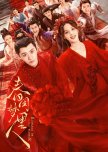
“Twin Trouble & Sweet Romance"
Here’s my personal take on Romance of a Twin Flower. As someone who loves romantic Chinese dramas—and who has watched many since around 2021—I approached this one with hope, especially because I was drawn in by Ding Yuxi and the premise. I’ll say straight up: I enjoyed it more than some, but it still left me with mixed feelings 😊.👍 What I Liked
💞 The Leads & Their Dynamic
Ding Yuxi’s portrayal of Ning Yuxuan is impressive — he’s the brooding, talented heir who slowly opens up as the story unfolds. His investigation into his father’s death adds depth and seriousness to his character.
Peng Xiaoran as Ji Man (and her twin-sister identity twist) brings lively energy to the drama. Her ambition, cleverness, and ability to turn adversity into opportunity make her a joy to watch 🌸.
Their “fish out of water” and “business meets aristocracy” combination feels refreshing. Ji Man’s entrepreneurial streak — her Haoxue Tang cosmetic business 💄 — adds a unique modern flair that I really enjoyed.
🎀 Light-Hearted Romance & Comedic Moments
Unlike many heavy palace intrigue dramas, this one focuses more on romance, humor, and everyday chemistry between the leads. The banter, misunderstandings, and cute moments made it fun to watch 😄.
Visually, the costumes and scenery stand out: the period setting, the fashion, the mansion of Ning Yuxuan’s family—it all helps immerse me.. 🏯✨.
🌼 Novel Elements Within Familiar Tropes
Identity swaps, amnesia, and revenge plots are common in C-dramas, but this story adds a creative business twist that makes it stand out. I loved seeing a female lead build her own cosmetic brand and challenge traditional roles 💪💋.
I also liked that the couple’s journey isn’t all smooth — they face setbacks, secrets, and family politics. It gave the story more emotional depth than a typical “meet-fall-in-love-and-done” romance 💔➡️💖
👎 What I Found Weaker
🌀 Too Many Tropes at Once
The drama tries to include everything — amnesia, twin swaps, family feuds, scheming concubines, romance, and business plots — all at the same time 😅. It sometimes feels overcrowded and loses focus. The pacing also shifts a lot: some episodes rush through key developments, while others drag with filler scenes 🕰️.
💔 Inconsistent Chemistry
While I liked the leads, I felt their growth and bond could have been stronger. Some critics noted that the female lead’s behaviour is overly quirky to the point of annoyance, and the male lead doesn’t always shine as the romantic hero😕.
At times, their trust in each other breaks too easily, and the tension drags out longer than needed. I wanted to see more warmth and connection between them — especially since the story’s heart is supposed to be their love 💞.
🎭 Uneven Tone & Execution
The drama often jumps between comedy and serious drama too abruptly. One moment it’s playful and funny, and the next it’s suddenly full of betrayal and tears 😶🌫️. This uneven tone makes it hard to stay emotionally connected throughout.
Also, certain camera angles and editing choices feel odd in some scenes, slightly breaking the immersion 📷.
🎬 Final Thoughts
Romance of a Twin Flower is a sweet, easy-to-watch drama with charm and heart. It’s not perfect — the plot can feel crowded and the emotional depth isn’t always strong — but it’s visually beautiful and genuinely enjoyable.
For someone like me, who started watching C-dramas in 2021 and loves the idealized, emotional romances they often portray, this drama felt like a comforting, happy escape 💕. It’s not one I’d call a masterpiece, but it left me smiling more often than not.
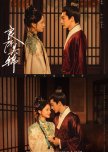
A Drama About Politics, Humanity, Power, and Emotional Survival
I just completed A Splendid Match and honestly… this drama completely exceeded my expectations. 🍂⚔️✨I had no expectations about this drama. I also had no specific intentions about the cast. I did not think they would do a great job. I liked the plot premise but not the cast. Actually, I thought about not watching this drama at all because the cast looked average and not prominent. And I have seen this type of plot before: historical romance with clever female leads, political scheming, wealthy noble families, and the usual marriage alliances.
But somewhere along the way, this story quietly transformed into something far more interesting.
Because beneath its elegant costumes, marriages, dowries, and aristocratic politics, this drama is actually about loneliness, emotional restraint, power struggles, morality, survival, class systems, sacrifice, and the terrifying cost of living inside political machinery.
And what surprised me most is how emotionally intelligent the writing became.
────────────────────────────────────────────
🌑 FIRST IMPRESSIONS — A DRAMA THAT HIDES ITS TRUE DEPTH
────────────────────────────────────────────
At the beginning, I enjoyed the drama, but I did not immediately think it would become something better than expected. The early episodes felt familiar: wealthy households, family rivalries, marriage negotiations, clever female lead, political officials, hidden schemes. And suddenly I realized this was not simply a romance drama. It was a drama about people trapped inside systems. Systems of family. Systems of power. Systems of reputation. Systems of political loyalty.
Every single character is constantly suffocating under expectations. And that is exactly what made the drama feel so human. No character here feels entirely pure. No character feels completely evil. Even the cruelest people often act out of fear, survival instinct, ambition, resentment, or emotional emptiness. This drama understands something many costume dramas forget: people are contradictions. 🎭
────────────────────────────────────────────
🖤 CHEN YANYUN — ONE OF THE MOST COMPOSED YET TRAGIC MALE LEADS
────────────────────────────────────────────
Chen Yanyun became one of the most fascinating male leads I have watched. At first glance, he appears calm, elegant, intelligent, and emotionally controlled — almost untouchable. But underneath that composure is a man constantly walking on political knives. What makes him so compelling is that his suffering is never loud. He rarely raises his voice. Rarely loses emotional control. Rarely dramatizes his pain. Instead, the drama shows his exhaustion through restraint. Through long silences. Through calculated words. Through the way he quietly carries responsibilities that would destroy most people.
One of the most unforgettable moments was the undated divorce letter. That single scene revealed everything about his love for Gu Jinzhao. Instead of trying to possess her after marriage, he gives her freedom. Instead of demanding loyalty, he gives her a safe escape. That is not performative romance. That is trust.
And the tragedy of Chen Yanyun is that he understands power too well. The more politically intelligent he becomes, the lonelier he grows. After the grain scandal arc, you can feel him emotionally distancing himself from Lord Fu while realizing he may eventually stand alone in court. His relationship with power is deeply tragic because he knows survival often requires moral compromise — yet part of him still desperately wants to remain humane. 🥀
────────────────────────────────────────────
🌸 GU JINZHAO — A FEMALE LEAD WRITTEN WITH REAL INTELLIGENCE
────────────────────────────────────────────
Gu Jinzhao — I really loved her as a smart female lead. Not because the drama constantly tells us she is smart. But because the writing consistently proves it. She understands politics, reputation warfare, commerce, law, emotional manipulation, and social psychology. What I loved most is that her intelligence never feels unrealistic. She survives because she observes people carefully. Even during terrifying situations, she remains emotionally composed enough to think strategically.
The Sun Shitao corpse-switch plan was brilliant. Her handling of Madam Wang during the tea gathering was brilliant. Her usury loan trap to neutralize Madam Wang was masterful. But despite all her cleverness, she still feels emotionally human. The night before her wedding day, the way she expressed her real self beneath her cleverness — I really felt it. She fears things. She hesitates. She questions herself. She feels guilt. She feels emotional exhaustion.
What makes Gu Jinzhao special is that she never sacrifices her humanity to become strong. Even when everyone around her prioritizes political survival, she still tries to protect people emotionally. Ren Min did a great job. I did not think she would play her role this perfectly. 👏
────────────────────────────────────────────
⚔️ YE XIAN — THE MOST PAINFUL CHARACTER IN THE ENTIRE DRAMA
────────────────────────────────────────────
Honestly… Ye Xian’s storyline devastated me. 🥲 He is one of the most emotionally tragic second male leads I have seen. The drama never portrays him as merely a romantic obstacle. Instead, he feels like a man constantly arriving too late to his own life. Too late to confess. Too late to protect his family. Too late to save his father. Too late to keep Gu Jinzhao.
The wedding and funeral procession scene was absolutely heartbreaking. A bridal carriage moving toward a new future. A funeral procession carrying away an ending. Ye Xian stepping aside and yielding the road. It symbolized an entire emotional era dying.
His love for Gu Jinzhao feels less like youthful romance and more like emotional grief. Gu Jinzhao and Ye Xian understand each other deeply, but they would have destroyed each other emotionally in the long run. They are too similar. Too stubborn. Too emotionally guarded. Too self-destructive. That realization made their relationship even sadder. Ultimately, he died gloriously and just as he wanted. I cried when he was pierced and hoped he would only be injured, but his death was beautifully tragic. 💔
────────────────────────────────────────────
🏛️ THE DRAMA’S BIGGEST STRENGTH — POLITICS THAT FEEL HUMAN
────────────────────────────────────────────
One thing I deeply appreciated is how political conflicts are never treated as abstract strategy games. Every political decision affects human lives. The grain scandal arc especially elevated the drama enormously. Two hundred thousand dan of relief grain replaced with wheat bran. That single act exposed corruption, faction warfare, bureaucratic cruelty, and the terrifying reality that ordinary starving people become disposable tools for powerful officials.
Lord Fu is especially fascinating. He is intelligent, cultured, patient, visionary, and yet terrifying. Because he genuinely believes sacrificing people is acceptable if it achieves political stability. That complexity made him far more frightening than a simple villain. Chen Yanyun is so underrated because even in the end, it is clear he was a visionary when he chose to take up his mentor’s book. Others might have disagreed, seeing it as the work of an evil man, but he understood that Fu Hailian’s policies weren’t the problem — it was his actions and power hunger that were evil.
────────────────────────────────────────────
💔 THE ROMANCE — BUILT ON TRUST RATHER THAN POSSESSION
────────────────────────────────────────────
One of the best things about this drama is that the romance feels emotionally mature. Chen Yanyun and Gu Jinzhao do not fall in love through endless misunderstandings or exaggerated jealousy. Their relationship develops through mutual respect, emotional understanding, trust, political partnership, and quiet emotional intimacy. They genuinely listen to each other.
Even after marriage, the drama does not suddenly turn them into a perfect fantasy couple. Instead, their marriage becomes another battlefield. Political enemies target them. Families pressure them. Rumors surround them. But they continue choosing each other again and again. Gu Jinzhao’s love for Yanyun is evident as she is willing to take poison and die, which is incredible considering how much she values her life. ❤️
────────────────────────────────────────────
🌑 THE CHEN FAMILY — A HOUSEHOLD BUILT ON SILENCE AND ROT
────────────────────────────────────────────
One of the most fascinating aspects of the drama is how the Chen family slowly transforms into something psychologically unsettling.
At first, they appear like a prestigious noble household.
But beneath the elegance lies emotional decay.
Fourth Master Chen especially shocked me. His confession about drowning the fifth brother completely changed the atmosphere of the drama. Suddenly the household no longer felt politically dangerous alone. It felt emotionally haunted.
And Chen Xuanqing’s gradual deterioration is equally disturbing.
At first, he seems like a melancholic young man trapped by regret.
But slowly: obsession replaces affection, silence replaces sincerity, and emotional instability replaces morality.
After that, he no longer feels romantic. He feels dangerous.
Especially during the kidnapping arc, the earring scene, and his emotional coldness toward Yu Wanxue.
The drama is quietly showing how unresolved desire can become destructive. 🥀
────────────────────────────────────────────
🎥 VISUAL STORYTELLING — POWER, LONELINESS, AND EMOTIONS SPOKEN WITHOUT WORDS
────────────────────────────────────────────
One of the strongest aspects of A Splendid Match is honestly its visual storytelling.
This drama does not rely only on dialogue to explain emotions or political tension. Very often, the directing, framing, lighting, costumes, and even physical distance between characters quietly reveal things before the characters themselves say them aloud.
And that is exactly why many scenes feel emotionally heavy even when very little is happening on the surface. 🍂
Contrast Between Warmth and Isolation 🌓
What impressed me most is how the drama constantly contrasts warmth and isolation.
Chen Yanyun is usually surrounded by grand halls, political officials, luxurious robes, and authority — yet visually, he is often framed alone. Even in crowded rooms, the camera repeatedly isolates him within the frame, reminding us that power in this drama is deeply lonely. He stands at the center of the court, but emotionally he belongs nowhere.
Gu Jinzhao's scenes often feel more "alive." Her environments contain movement, warm candlelight, busy markets, family courtyards, flowing fabrics, and softer colors. Even when she is suffering, the drama visually connects her to humanity and earthly warmth in a way Chen Yanyun lacks.
That contrast becomes one of the drama's quiet emotional foundations.
────────────────────────────────────────────
💎 THE UNIQUE CONNECTION BETWEEN ML AND SML
────────────────────────────────────────────
One thing I noticed in this drama that I have not seen in others is the connection between the male lead and the second male lead. They loved the same woman. They were love rivals. That means they must be enemies. But in their personal lives, yes they fought and were rivals. But beyond that, they worked together for the country. They served under the same ruler. They forgot their personal grudges and fought in the same battle for the empire. They were righteous. They put the people and their country before their personal grudges. When someone faced difficulties, the other helped him. They did not take revenge for love. They worked together against corruption for the sake of the country.
In episode 39, it was so heartfelt and emotional to see Yanyun embrace Ye Xian. The way Yanyun carried him. Even if they did not speak to each other as friends, they were friends at heart. I once thought the most heartfelt scene in the entire drama was the funeral procession meeting the wedding procession. But no, this was the one. Once they fought with each other, then fought together for the country, though they were destined to be enemies hated to the bone, yet Yan Yun cried bitterly for Ye Xian. Ye Xian was jealous of Chen Yanyun but held him in incredible high regard. Towards the end, he thought of him as a teacher and friend. 🫂
────────────────────────────────────────────
🎭 ACTING PERFORMANCES — REN MIN AND CI SHA
────────────────────────────────────────────
Ren Min’s performance can score ninety points. She is charmingly playful yet natural. About the mother’s death scenes: some say she was too wooden. But I think that was just right. When her mother apologized, Jinzhao was shocked, not moved. Her lifelong belief was completely shaken. When her mother died, Jinzhao was grief-stricken but even more enraged. She had no space left to feel sadness. Only after things were accomplished, while listening to Yanyun play the xun and reading her mother’s letter, could she cry quietly. That is nuanced acting. She cried bitterly for Ye Xian, her true friend, and I hope no one criticizes her for that. Too many dramas portray detachment from second male leads who were genuinely good, as if ignoring one relationship diminishes another. He was her best friend and held a special place in her heart. 👏
Ci Sha’s performance gets eighty points. His eyes are especially deep. His mouth is distinctive — sometimes slightly smiling, sometimes seeming not to. I especially love his emotionally exposed scenes: slapping Fourth Master, stumbling when rushing to rescue Jinzhao. His features do not fly wildly — fitting Yanyun’s character. As for his scenes with Jinzhao, those are the drama’s essence. Sending the cloak with eyes that drive you crazy. Confessing love directly. Once aware of his feelings, he never hesitates. 😄
🔥 FINAL VERDICT
Is A Splendid Match perfect? No. The OST is genuinely bad. Some shots are awkward. The ending felt rushed. I wish they had given us a longer ending. Even an extra 10 minutes would have been enough. We never saw Chen Yanyun receive the acknowledgement and rewards he deserved, nor did we get to see them as a couple after all the drama.
But honestly? That is exactly what made this drama memorable for me. Because beneath the beautiful costumes lies a deeply human story about loneliness, power, emotional survival, sacrifice, trust, and the painful cost of remaining humane inside cruel systems.
This drama does not simply ask who loves whom. It asks what kind of person can survive this world without losing themselves. And that question stayed with me.
Overall, it is an incredible drama. I hope the couple give us some special episodes, even if just 10 minutes.
Layered political storytelling ✨ Emotionally intelligent characters ✨ Mature romance ✨ Complex morality ✨ Beautiful symbolism ✨ Quiet but powerful acting ✨ Deep emotional atmosphere ✨
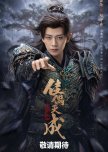
A Drama About Loneliness, Humanity, and Sacrifice Disguised as Xianxia
I just completed the drama *Fate Choose You* and honestly… this drama completely surprised me. 🌙✨It was never on my anticipation list. In fact, when I first started watching it, I had very low expectations. Recently, I’ve been struggling to enjoy many cultivation/Xianxia and Xuanhua dramas because a lot of them feel repetitive — same worlds, same overpowered characters, same empty romance with flashy CGI but no emotional soul. At the very beginning, I almost dropped this drama too.
Now? I’m genuinely glad I didn’t.
Because beneath its Xuanhua shell, this drama turned out to be something much deeper — a story about humanity, loneliness, morality, power, sacrifice, class systems, and the painful weight of living. ⚔️🍂
──────────────────────
🌑 FIRST IMPRESSIONS — A DRAMA THAT SLOWLY PEELS ITS LAYERS
──────────────────────
This is not the kind of drama that immediately throws excitement at your face. Instead, it slowly unfolds itself layer by layer. At first, I had mixed feelings. The cultivation world, the sects, the demons, the immortality themes — I thought I had seen all of this before.
But as the story progressed, I realized this drama’s biggest strength is not the world-building alone.
It is the CHARACTERS.
Almost every important character in this drama has multiple layers. The people you dislike at the beginning become understandable later. The people who appear righteous are not completely pure. The people who seem cold and cruel hide unbearable suffering beneath their masks.
And that is what made this drama so compelling to me.
Nobody here exists just to support the main couple. Every character feels like the protagonist of their own story.
──────────────────────
🖤 LU QIANQIAO — ONE OF THE MOST LAYERED MALE LEADS
──────────────────────
Ren Jialun absolutely carried this role with incredible subtlety.
Lu QianQiao is not a loud or expressive character. He is a War Demon cursed by the Five Senses Curse — unable to truly taste food, feel pain, experience warmth, or even see colors properly for decades. Imagine living like that for hundreds of years. Existing, but never truly *living*.
And Ren Jialun portrayed this emptiness so naturally.
Not through dramatic screaming scenes.
Not through exaggerated crying.
But through silence.
Through tired eyes.
Through restrained expressions.
Through subtle changes in breathing and tone.
That is why his acting hit me so hard. 🥲
At the beginning, Lu QianQiao almost feels detached from humanity itself. His eyes carry this unsettling emptiness, like someone merely pretending to be human. Yet sometimes, for a split second, there is a tiny flicker of emotion hidden underneath all that numbness.
And slowly, episode by episode, we watch him transform.
We see a man who lived like a dying corpse finally begin to feel alive again.
The scene where he sees colors for the first time genuinely stayed with me. Instead of giving us a dramatic reaction, Ren Jialun only lets out a small, almost confused smile — like someone discovering happiness for the very first time.
That subtlety made the moment far more emotional.
This drama understood something many others fail to understand:
Quiet suffering can sometimes be louder than dramatic suffering.
And Lu QianQiao’s entire character arc was heartbreaking and beautiful at the same time. Watching him slowly regain his humanity, learn to love, trust people again, and open himself emotionally after decades of loneliness was one of the best parts of the drama.
──────────────────────
🌸 XIN MEI — A GENTLE BUT STRONG FEMALE LEAD
──────────────────────
I had never watched Wang Herun as a female lead before this drama, so I didn’t know what to expect.
But she genuinely surprised me.
Xin Mei could have easily become one of those overly naïve “pure-hearted” heroines that become frustrating after a few episodes. Instead, the actress balanced her softness and strength beautifully.
Xin Mei is compassionate, emotional, kind, and gentle — but she is NOT weak.
That is the important difference.
She follows her heart even when the world tells her not to. She questions rules. She refuses to ignore injustice simply because society says it is “necessary.” Even when her choices damage her cultivation or put her life at risk, she still chooses humanity over cold discipline.
And honestly? That made her feel very refreshing.
Her relationship with Lu QianQiao also felt mature compared to many Xianxia couples. Their romance was not built purely on physical attraction or misunderstandings. It grew from understanding each other’s pain.
Both of them entered the marriage with hidden motives. Both carried emotional wounds. Both suffered in different ways.
But instead of endless toxic misunderstandings, they communicated.
They listened to each other.
They learned each other.
They healed each other.
That emotional maturity made their relationship extremely satisfying to watch. ❤️
──────────────────────
⚖️ THE DRAMA’S BIGGEST STRENGTH — MORALLY COMPLEX CHARACTERS
──────────────────────
One thing I loved is how this drama constantly challenged my opinions about characters.
Take Jin Lun for example.
Sometimes I absolutely loved him. Sometimes I wanted to shake him and ask, “What are you even doing?” 😭
He was frustrating, confusing, emotional, selfish, loyal, foolish, sympathetic — all at once. And that complexity made him feel real.
The same goes for A’Sheng.
At times I genuinely hated her actions. Some of her choices caused terrible suffering for others. Yet the drama never wrote her as purely evil either. It showed the reasons behind her behavior, her loneliness, her desires, and her emotional contradictions.
That is what this drama does best:
It humanizes everyone.
Even side characters are written with motivations, ideologies, desires, and emotional depth.
People constantly switch positions throughout the story. Enemies become allies. Characters you once disliked become tragic. Characters you trusted reveal darker truths.
It feels very human because real people are also contradictory.
──────────────────────
⚔️ THE WRITING — PHILOSOPHICAL, LAYERED, AND THOUGHT-PROVOKING
──────────────────────
This drama is far more than just romance.
Underneath the fantasy setting, the writing constantly explores philosophical questions:
✨ Rules vs Morality
✨ Justice vs Obedience
✨ Mortality vs Immortality
✨ Humanity vs Power
✨ Compassion vs Discipline
And the drama never gives simple answers.
For example, Xin Mei repeatedly interferes in mortal affairs because she cannot tolerate injustice. Technically, according to cultivation rules, she is wrong. But emotionally, the audience understands why she does it.
The writer constantly forces viewers to question their own beliefs.
Even the immortality theme was fascinating.
The drama asks:
Is immortality truly a blessing?
Or is endless existence without emotional connection actually a curse?
Lu QianQiao’s life itself becomes the answer to this question.
Another thing I appreciated is how carefully the writer planted clues throughout the story. Small details from early episodes become important much later. Character backstories connect beautifully. Plot twists feel surprising but still logical because the groundwork was already there.
Nothing feels random.
And honestly, that level of layered writing is becoming rare in many modern costume dramas.
──────────────────────
🎥 THE DIRECTING & CINEMATOGRAPHY
──────────────────────
The directing deserves huge praise too.
The visual storytelling in this drama was absolutely beautiful. 🍂
The use of lighting, color symbolism, scenery, and framing constantly added emotional meaning to scenes.
One of my favorite visual motifs was how Lu QianQiao was often shown standing alone in darkness while light focused only on him — symbolizing how the world viewed him as a monster while the drama quietly hinted at his hidden innocence.
The color symbolism was also excellent.
Especially when Xin Mei wore the crimson red dress after Lu QianQiao regained his ability to see colors. The reflection of that red in his eyes made the scene unforgettable.
The directing never felt overly flashy. Instead, it quietly enhanced emotions and atmosphere.
The pacing also deserves praise.
The drama moved quickly enough to stay engaging, but still allowed emotional scenes room to breathe. There were very few filler moments. Almost every scene had narrative purpose.
──────────────────────
💔 THE ROMANCE — HEALTHY, MATURE, AND EMOTIONAL
──────────────────────
The romance in this drama honestly felt like a bonus rather than the sole focus.
And that made it even better.
Lu QianQiao and Xin Mei understood each other on a very deep level. Their love was built through shared pain, trust, sacrifice, and emotional honesty.
They never felt like two characters forced together simply because the script demanded romance.
They genuinely complemented each other.
Xin Mei gave warmth to someone who had forgotten how to feel alive.
And Lu QianQiao gave understanding to someone constantly struggling against the world’s rigid rules.
Their relationship felt peaceful, healing, and emotionally intimate rather than overly dramatic.
──────────────────────
🌍 THE SOCIAL COMMENTARY
──────────────────────
One thing that truly surprised me was how much social commentary existed beneath the fantasy setting.
The drama subtly critiques:
▪️ Class systems
▪️ Abuse of power
▪️ Political hypocrisy
▪️ Blind obedience
▪️ Systematic oppression
▪️ The suffering of ordinary people
The War Demon clan’s curse especially felt symbolic.
An entire race suffered for centuries simply because higher powers ignored their pain.
That storyline honestly felt less like fantasy and more like commentary on how society often ignores marginalized people until it becomes convenient to care.
Even many side stories reflected real-world struggles — poverty, injustice, inequality, sacrifice, and survival.
And the drama handled these themes without becoming preachy.
It trusted the audience to think for themselves.
──────────────────────
🔥 THE FINAL VERDICT
──────────────────────
Is this drama perfect?
No.
There are flaws. Some CGI moments were weak. Certain side relationships were difficult to fully understand. Some viewers may also feel the romance chemistry is softer compared to typical passionate Xianxia couples.
But despite all of that…
This drama felt sincere.
It genuinely wanted to tell a meaningful story instead of relying only on visual aesthetics or fanservice.
And nowadays, that sincerity itself feels rare.
This is one of those dramas that slowly grows on you until suddenly you realize you are emotionally attached to every character, every conflict, and every sacrifice.
By the end, I was not only invested in the romance — I was invested in the people, their philosophies, their pain, and the world itself.
And honestly, that is what makes a story memorable.
✨ A Xianxia drama with layered characters
✨ Strong writing
✨ Thought-provoking themes
✨ Beautiful visual storytelling
✨ Mature relationships
✨ Emotional performances
Definitely one of the best costume dramas I’ve watched this year. 🌙⚔️🍂
If you dropped it early, I genuinely recommend giving it another chance.
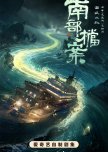
All Sugar, No Soul
I’m not the target audience for this kind of fantasy, especially in a Republican-era setting. However, a good plot and strong acting can win me over for any genre. I came into this with fresh eyes, knowing nothing about the Daomu Biji universe, and was drawn in by the visuals of Ding Yuxi in uniform and the promise of a compelling partnership. What I found was a production of immense effort that ultimately left me feeling completely disengaged.From the very first episode, the drama throws you into the deep end with no introduction. It’s a constant barrage of fights—well-choreographed fights, yes—but it’s all action with no anchor. The story doesn't give you a moment to understand the world, the history of the Zhang family, or who these characters are. It's like walking into a movie halfway through, and the film never bothers to catch you up. The narrative just crams information and events into a frantic, non-stop pace before you even know what you’re looking at.
The core of a story like this, especially one tagged with "bromance," must be the relationship. The most successful examples, from Guardian to The Untamed to Word of Honor, all took extensive time to introduce characters individually, building their relationship from suspicion or rivalry into an unbreakable bond. They earned the audience's emotional investment. This drama does the opposite. The two male leads are immediately a "perfectly oiled team," bantering in life-threatening situations with overly dramatic slow-motion shots. It feels like the production is trying to force-feed us sugar instead of crafting a genuine connection. The chemistry between the actors, Ding Yuxi and Zhang Xincheng, doesn’t shine, not because they lack effort—their physical dedication to the fight sequences is clear—but because the storytelling treats them as a commodity to be sold, not characters to be developed. The result is a sense that the narrative has the eagerness of a brothel owner, pushing forward the prettiest faces without a shred of integrity for the story.
This lack of grounding makes the entire viewing experience a hollow one. The plot is a jumble of scary case beginnings that end sloppily, with reasoning based entirely on dialogue and loopholes easily glossed over. The gloomy, mystical Nanyang atmosphere is completely lost, smoothed over by filters that blur facial features into a soft, generic handsomeness. There's no realism; the characters’ flawless hair and makeup remain perfect in deep-sea dives and dangerous caves. It investigates a case like it’s a fashion show, making the whole production feel like an assembly-line routine, piled with popular templates.
Ultimately, I feel bad for the actors. They clearly poured a lot of physical effort into the demanding, non-stop action sequences, but the opportunity was wasted. The script fails them, the direction fails them, and even their specific pairing, while featuring two good-looking leads, lacks the contrasting "puzzle-piece" fit that makes for an entrancing on-screen couple. The result is a pretty production with pretty people, but a story and characters I simply couldn't bring myself to care about. It’s a drama where you watch a lot of busy, noisy people jumping around and doing things, and you just sit on the side, feeling completely unattached to anything happening on the screen. The most genuine feeling it evoked was a deep sense of regret for Zhang Haixia’s fate—a character punished for something that wasn't his wish, a consequence of a plot that never cared to make his struggles truly resonate.
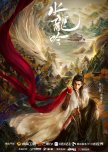
Through the Mist of Destiny: My Thoughts on Water Dragon Chant (水龙吟)
Okay, so I finally finished Whispers of Fate / Shui Long Yin, and… I’m conflicted. There was so much promise, but somewhere along the way, it slipped into “almost-but-not-quite” territory for me.✨ First Impressions & What Drew Me In
I never planned to watch this. Seriously. It wasn’t even on my “must-see” list. But then I saw Luo Yunxi (罗云熙) in the cast, and my inner drama nerd just gave up resistance. His last big project, Till the End of the Moon, felt a little underwhelming for me — so I went in this time with cautious optimism.
And at first? It delivered. The world they built is lush and mysterious — a heavy, fate-laden martial‑spirit realm that felt both epic and intimate. Yunxi’s entrance? Iconic. He’s graceful, sharp, with that refined, otherworldly aura. Exactly the kind of “wuxia royalty” I’ve come to adore.
🔥The Good Stuff (Because There Is Plenty)
1. Worldbuilding & Stakes
The plot is layered. There are sect rivalries, conspiracies, power games — not just shallow sword-fights-for-show. Critics have noted how the story keeps momentum and constantly throws in twists, making it “immersive like a real-time mystery.”
Adapted from Teng Ping’s Enduring a Thousand Tribulations, the story isn’t just about swords — it’s about identity, betrayal, and fate.
2. Luo Yunxi’s Performance
As already felt, Yunxi is the highlight. His grace is not just for show — his wirework is insane, and he grounds the character’s emotional arc really well. Fans comment on how his ballet background helps him move like a “living dragon god.”I also think the same way.
There’s real depth when he’s silent — just his eyes communicating guilt, strength, or sorrow. That balance of elegance + intensity is exactly why I started watching in the first place.
3. Production & Visuals
Visually, oh man — the costumes are stunning. According to reports, there are hundreds of meticulously designed outfits, some pieces crafted with incredible detail.
Special effects are ambitious, especially for a TV drama. According to Sohu, they brought in a major VFX team, and each episode reportedly has hundreds of heavy‑effect shots.
Even the world-building has real weight: set design, the architecture, the “玄侠” (xuanxia) feel comes through strongly. There’s a behind‑the‑scenes video that shows how deeply they thought about the realm’s aesthetics.
👻But … Here’s Why I’m Disappointed (Yes, There’s a But)
1. Unfulfilled Emotional Payoff
After finishing, I feel a weird emptiness — like I should feel satisfied, but I don’t. The first half had more spark, more mystery, more “what even is his destiny?” vibes. By the end, some of that fizzled out into something more… safe.
There were threads (especially emotional ones) that I expected to be pulled tight by the finale, but they were either dropped too quickly or resolved in ways that felt a little flat. I wanted more rawness, more internal conflict — not just glam sword fights and power plays.
2. Pacing & Depth Issues
While reviews praise how “tight” the plot is with constant reversals
, that might have been its curse too. Sometimes it felt like the show was rushing to be twisty, not to give characters room to breathe.
Some character moments felt undercooked. Yes, there are many side‑characters with interesting potential, but their arcs weren’t always fully developed. A few relationships (friendship, loyalty, betrayal) needed more emotional weight.
3. Visual vs Emotional Disconnect
A lot of the aesthetics lean into looking pretty (and they absolutely do), but sometimes that beauty feels superficial. The fight-cinematography is gorgeous, but the emotion behind the fights — the stakes, the regrets — didn’t always land as deeply as I’d hoped.
There were times CGI or wirework felt artificial or floaty (just like you mentioned), and that pulls me out of the immersion. It’s like watching a painting more than a living, breathing world.
4. Character Weight Imbalance
While Tang Lici (Luo Yunxi) is deeply compelling, some supporting characters felt like decorative pieces rather than integral players. They exist to make things flashy, not necessarily to grow meaningfully.
Also, despite the grand world, I didn’t always feel the cost of the power struggles. What really happens when a sect falls, or when betrayal is exposed? Sometimes the consequences feel muted for such a heavy narrative.
5. Underused Themes
The theme of “fate versus choice” is present, but not always explored with the nuance I hoped for. I kept waiting for moments where Tang Lici would desperately fight his destiny — not just wield cool sword‑magic, but break down, question, sacrifice. That raw existential struggle didn’t hit me as hard as I thought it would.
Redemption and sacrifice are teased, but I sometimes felt they were more talked about than lived. There were big moments, but they didn’t always resonate emotionally.
☯️ Final Thoughts & (Some Sarcastic) Conclusions
Whispers of Fate is like a beautifully wrapped sword — the packaging is stunning, the blade is sharp, but sometimes it doesn’t cut as deeply as you think it will.
I respect the ambition: major VFX, complex world, layered conspiracies, a morally ambiguous hero. That kind of scale is hard to pull off.
But ambition alone doesn’t equal emotional satisfaction. For all its twists and spectacle, I kept wanting more — more vulnerability, more real sacrifice, more of the “why does fate demand so much” kind of weight.
At the end of the day, I’m glad I watched it. Luo Yunxi carried it in ways only he could. But I also can’t shake off a little disappointment.
If I were to recommend it: yes, watch it — especially if you love wuxia, fantasy, and morally complex heroes. But don’t go in expecting flawless emotional closure.
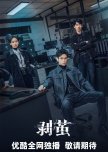
When Evidence Speaks: The Power of Forensic Logic in The Truth Within
After two years of grieving the death of his girlfriend, Qi Si Zhe joins the Licheng Police as the youngest forensic medical examiner, driven by one goal—to uncover the truth behind her mysterious death. From the very first episode, The Truth Within pulls you into a tightly constructed world of crime, grief, and relentless investigation. The premise itself is compelling, but what truly elevates this drama is how meticulously it executes its suspense and logic 🧠🕵️♀️.Although the only actor I was familiar with before starting this drama was Luo Yunxi, every actor and actress delivered a solid performance. No one felt out of place or underwhelming. The cast worked as a cohesive unit, especially the investigative trio, creating a strong sense of teamwork and realism. Even though I noticed a few minor illogical moments, they never broke immersion. Overall, the plot remains strong, engaging, and consistently intriguing.
I also want to talk about the drama’s title. Personally, I think the Chinese name Peel of the Cocoon (剥茧) suits the drama far better than the English title The Truth Within. “剥茧” perfectly captures the core of the story—layer by layer, truth is revealed through evidence, deduction, and patience. Every case reflects this idea, respecting the audience’s intelligence and allowing viewers to experience the joy of solving the mystery alongside the characters 🧩.
Directed by Golden Bell Award winner Zhuang Xuanwei (The Victims’ Game), The Truth Within is a high-quality, hardcore suspense drama with strong narrative control. Despite having just over 21 episodes, the drama weaves together six independent cases without rushing or dragging. The pacing is tight, there is no filler, and each case is packed with clues, reversals, and logical progression. Visually, the drama has a cinematic texture—cold tones, damp caves, intricate crime scenes—all contributing to an oppressive yet immersive atmosphere 🎥❄️.
What impressed me most was the drama’s dedication to classic fair-play mystery storytelling. Evidence is always presented clearly, reasoning is logical, and solutions are earned—not forced. The first case, the “Lolita Murder,” is especially striking, full of layered clues that demand attention. The second case, “The Deadly Funnel-Web Spider,” is a perfect embodiment of the drama’s title: just when you think you have the answer, another layer of truth emerges, and then another. The constant reversals are thrilling without feeling cheap.
One of the most refreshing elements is the use of the armchair detective method. Qi Si Zhe solves a murder remotely using pure reasoning, a rare approach in modern visual media. This respectful nod to classic detective fiction makes the drama stand out, especially in an era where shock value often replaces logic 🔍📖.
As a forensic-centred drama, The Truth Within excels in professional authenticity. From microscopic evidence and chemical reactions to autopsy procedures, every detail feels grounded and purposeful. The forensic evidence is not decorative—it actively drives the plot forward. Small details, such as algae in the lungs or residue hidden in fingernails, become decisive turning points, making the viewing experience deeply satisfying.
Luo Yunxi is undeniably a highlight. Known for his ethereal presence in costume dramas, he proves here that he can fully command a realistic, modern role. His portrayal of Qi Si Zhe is calm, precise, and emotionally restrained, yet deeply wounded beneath the surface. His eyes carry layers of grief, obsession, and intelligence, making the character feel both distant and fragile. The silver-rimmed glasses and clean styling only enhance his high-IQ aura—this is peak “intellectual attraction” energy 🖤🧠.
The supporting characters are equally well-written. The female deputy captain is sharp, composed, and authoritative—free from the usual stereotypes often imposed on women in crime dramas. The team leader is steady and grounded, carrying his own scars from the past. Together, they form a perfectly balanced investigative trio, each contributing without overshadowing the others.
Beyond suspense, the drama dives deep into human nature and social realities. Revenge, guilt, obsession, and moral collapse are recurring themes. One case explores how love can mutate into violence; another exposes the long-term trauma of bullying, drug crimes, and social neglect. The drama does not excuse evil, but it forces viewers to confront uncomfortable questions about justice, responsibility, and redemption ⚖️🕯️.
Ultimately, The Truth Within is not just about solving crimes—it is about peeling away the cocoons people build around trauma, hatred, and guilt. The title “剥茧” becomes both a method and a metaphor. A scalpel can dissect a body, but can it truly dissect the chaos of the human heart? This drama dares to ask that question—and does so with confidence, intelligence, and emotional depth.
If you are a suspense lover, this is absolutely a must-watch. Sharp writing, strong performances, immersive visuals, and deep thematic weight—The Truth Within is a rare gem in modern crime dramas. Highly recommended. ⭐🔥
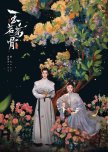
Beyond Romance: Strategy, Ambition, and Female Authority
First, I must admit: comparing two dramas starring the same actor, aired simultaneously, is almost inevitable. As someone who recently reviewed Unclouded Soul (also starring Hou Minghao), I approached Glory with a conscious effort to judge it on its own merits. However, the overwhelming popularity and unique narrative of Glory make the comparison a fascinating study in contrast and quality.Where Unclouded Soul offered a familiar, well-executed xianxia (fantasy) template, Glory presents something rarer: a truly innovative plot within the historical genre. Having watched hundreds of Chinese dramas, I can confidently say this storyline is a chef's kiss—an absolute masterpiece of intrigue and subversion.
🔥The Plot: A Breathtaking Game of Power and Tea
The plot is the undisputed star. Set against the backdrop of the Ming Dynasty tea trade, it centres on the Rong family—a powerful matriarchal clan where women hold absolute power. This simple premise unlocks a narrative treasure trove:
👑A Sisterhood at War: The core conflict isn't about women fighting for a man's favour, but sisters strategically battling for the inheritance and leadership of their family empire. Their competition is intellectual, ruthless, and deeply compelling.
🐍 "Marrying In" - A Role Reversal: The concept of men competing in contests to be chosen as husbands, essentially "marrying into" the powerful Rong family, is brilliantly subversive. It turns centuries of gendered tropes on their head.
♟️Calculated Moves in a Grey World: This is not a reverse harem drama, nor is it a mindless “girlboss” fantasy. Every character, from the leads to the supporting cast, operates in shades of grey or black. They are strategists, each with hidden agendas and personal trump cards. There are no naive "white lotus" characters to pity—only players in a high-stakes game.
🖤 Mystery and Romance: Woven through the family politics is a year-old missing person case investigated by the male lead, Magistrate Lu Jianglai (Hou Minghao). His path—losing his memory, being saved by the formidable eldest Rong daughter, Rong Shanbao (Gulnazar), and their ensuing chess game of love and suspicion—adds layers of suspense and slow-burn romance.
⚔️Female Lead: True Agency, Not Romantic Validation
Rong Shanbao is what a true “strong female lead” should be.
Her decisions are driven by ambition and responsibility, not romance. Her goal is clear: to expand the tea empire and secure her position. Love is secondary—almost optional.
What I appreciated most is that female rivalry here is not about men. The sisters compete for power, voice, and control of the future. Female ambition is not demonised, and that alone makes this drama refreshing.
💥Romance: Two Red Flags, One Brilliant Dynamic
The relationship between Rong Shanbao and Lu Jianglai is layered and fascinating.
They test each other, manipulate each other, and yet understand each other deeply. Their dynamic evolves from “female-dominant, male-subtle” to “two equally cunning strategists.” This is intellectual attraction at its finest.
🧩Acting: A Showcase of Talent and Transformation
The performances are top-notch across the board.
🌱Hou Minghao proves his remarkable range. While beloved as an immortal or demon in fantasy roles, here he delivers a nuanced, "tea-scented" performance. His ability to shift from the righteous, sharp-eyed magistrate to the seemingly docile, amnesiac servant—his "change of face"—is masterful. He embodies the clever, sometimes scheming, yet ultimately captivating Lu Jianglai perfectly.
💅Gulnazar owns the screen as Rong Shanbao. She portrays cold authority, strategic brilliance, and hidden vulnerability with equal conviction. Her famous "three slaps" scene is already an iconic moment of cathartic justice.
🍵 The Supporting Cast is exceptional. Cheng Xiao (as Second Sister), Zhao Jia-min (Fourth Sister), Chen Ruoxuan, and others bring their A-game, making every family feud and side plot engaging. The chemistry among the entire ensemble, especially the volatile mix of potential suitors and ambitious sisters, crackles with energy.
🎬Production: A Feast for the Senses
The production quality is outstanding. The director's vision shines through in the deliberate cinematography:
🫖 Symbolic Framing: The use of high/low angles to establish power dynamics, symmetrical compositions to create tension, and intimate subjective shots to draw the viewer into the characters' perspectives is brilliant.
🍃Atmospheric Lighting: The careful use of "golden tones" for opulence, crisp "daylight tones" for intrigue, and cold "moonlight tones" for mystery builds a rich, immersive world. The achievement of creating convincing outdoor daylight scenes within a studio is particularly impressive.
🥂 Authentic Detailing: The sets, costumes, and props related to tea culture feel authentic and lavish, grounding the high-stakes drama in a tangible, beautiful historical setting.
🥲A Few Minor Considerations
No drama is flawless, and Glory has a very high bar it sets for itself.
🧶Pacing and Complexity: The dense web of schemes and large cast might require closer attention from viewers. It's not a casual watch; you need to engage with the plot to fully appreciate its intricacies.
🎃Niche Appeal: Its stark, "no truly good people" approach and intense focus on political manoeuvring might not appeal to those seeking a more traditionally romantic or hero-centric story.
🍁Final Verdict
Glory is a triumph. It is a smart, stylish, and powerfully subversive drama that respects its audience's intelligence. It takes the historical genre and infuses it with fresh ideas—matriarchal power structures, role-reversed romance, and unapologetically ambitious female characters. The combination of a gripping, masterful plot, superb acting (led by a transformative Hou Minghao), and exquisite production makes it not just the better of the two concurrent Hou Minghao dramas, but a standout masterpiece likely to be remembered for years to come.
For anyone tired of repetitive tropes and craving a historical drama with bite, brain, and breathtaking execution, Jade Tea Bones is an essential brew. Don't miss it.
An Evergreen Love: Why This Drama Quietly Stole My Heart
I honestly did not know how to start this review, because I am completely obsessed with this drama. This is the best idol drama I have watched in recent times. I usually find many flaws when watching dramas—plot holes, forced conflicts, illogical character choices—but this time, I could not even bring myself to look for mistakes. From the very first episode to the latest one, the story kept me fully hooked. I genuinely feel lucky that I ended 2025 with this drama and started 2026 with it. It feels like a gift.Before writing this review, I spent a long time thinking about why this drama affected me so deeply. And eventually, I found my answers.
The Male Lead: When Casting Becomes Perfection 🌿
The biggest reason for my obsession is the male lead. Dramas are full of handsome actors, but what truly matters is how well an actor’s appearance, aura, and inner temperament match the character. Here, SWL does not just play Lin Yusen—he becomes him.
Lin Yusen is portrayed as the ideal man many women admire: intelligent, wealthy, accomplished, and emotionally grounded. An elite neurosurgeon with a PhD before the age of 27—this alone already makes the character extraordinary. As a sapiosexual, this aspect absolutely drives me crazy. But beyond his résumé, what captivates me is his personality: his restraint, his decency, his calm confidence, and his precise, gentle way of speaking. He is an evergreen rainforest—quietly rich, deeply layered, and endlessly comforting.
SWL’s acting makes all of this believable. His expressions are controlled but expressive, his masculinity is composed rather than aggressive, and his emotional delivery is subtle yet powerful. Lin Yusen’s pursuit of love is respectful, patient, and sincere—and SWL matches these traits so perfectly that I truly have no words.
Equal Social Standing: A Relationship That Feels Real 💼🤍
One thing I deeply appreciated is that both main characters come from the same social strata. This is rare in idol dramas, which often rely on exaggerated class gaps. Personally, I prefer relationships where both leads understand each other’s world naturally.
Because Lin Yusen and Xi Guang share similar educational backgrounds, values, and social experiences, they do not need to “adjust” themselves to fit each other. Their love grows in a space of mutual understanding, comfort, and emotional safety. This equality allows the romance to feel mature, grounded, and genuinely sweet, rather than dramatic for the sake of drama.
Healthy Love and Professional Boundaries 🌱
Another standout strength of this drama is how it handles workplace dynamics and romance. Lin Yusen is technically Xi Guang’s superior, yet neither of them confuses professional responsibilities with personal feelings. Their relationship never infringes on individual freedom, ambition, or integrity.
This portrayal of a high-quality, healthy romantic relationship is refreshing. It shows love that supports growth rather than limits it. Watching two competent adults fall in love without sacrificing professionalism felt both comforting and inspiring.
Xi Guang’s Emotional Journey: Pain, Growth, and Healing 💔➡️💖
Xi Guang’s emotional arc resonated with me on a deeply personal level. Her feelings and confession toward the second male lead reminded me of a situation I experienced about a year ago. That familiarity made her pain feel painfully real.
I loved how the drama portrayed her transformation. She begins as a lively, confident, warm, and friendly girl. After rejection, she becomes quieter and more reserved—not exaggeratedly broken, but realistically wounded. And most importantly, she does not stay there. She heals, regains herself, and learns how to love again.
Her acceptance of Lin Yusen’s love feels earned, gentle, and sincere. Watching her grow back into herself—and then choose happiness—was incredibly satisfying.
Slow-Burning Romance Done Right 🔥
I personally love slow-burn romances, especially those with fewer intimate scenes and more emotional buildup. This drama fits my taste perfectly.
Although Lin Yusen falls in love early, the relationship develops gradually. When he confesses, Xi Guang is still emotionally confused. Instead of pushing her, he waits. He respects her pace. He gives her space while staying emotionally present.
That patience—the quiet companionship, the friendly collaboration, the unspoken care—is what makes their romance so beautiful. This is not loud love. It is steady, warm, and deeply reassuring.
Writing Quality: Thoughtful, Layered, and Consistent ✍️
The story writing deserves serious praise. What initially feels “slow” later reveals itself as careful groundwork. The script is full of long-term foreshadowing, emotional logic, and consistent character behavior.
Many narrative threads are planted early and only fully pay off much later, which makes rewatching incredibly rewarding. Lin Yusen’s behavior, which may seem cold or confusing at first, becomes completely understandable once the truth is revealed. This level of narrative discipline is rare in idol dramas.
The drama does not rush emotions or rely on cheap misunderstandings. Instead, it trusts the audience to observe, feel, and connect.
Acting and Production Quality 🎬
The acting across the board is restrained and natural, especially from the leads. SWL’s performance stands out for its emotional precision, while the female lead delivers vulnerability and strength with equal grace.
Production-wise, the drama is clean, polished, and visually pleasing. The workplace settings feel realistic, the pacing is intentional, and the overall tone remains consistent. Nothing feels sloppy or careless.
And surprisingly, the OSTs left a strong impression on me. I usually do not pay much attention to soundtracks, but here, the music blended beautifully with the emotional atmosphere and elevated key scenes.
The Second Male Lead: My Only Complaint 😤
If I had to name the worst part of the drama, it would be the second male lead. He was, without exaggeration, the most annoying SML of 2025. Emotionally immature, unable to communicate properly, and constantly hurting the person he claimed to love—he represents everything that fails in relationships.
While his storyline has its own bittersweet charm, I firmly believe that someone who cannot speak honestly or take responsibility will never truly “get the girl.”
Final Thoughts: Why I Love This Drama 🌞
This drama is not just about romance—it is about growth, respect, patience, and emotionally mature love. It is slow, but never empty. Sweet, but never shallow. Idealized, yet grounded in reality.
I truly, genuinely love this drama. And if you are willing to watch patiently, I believe you might understand why it touched me so deeply.
Strongly recommended. 💛
Romance Without Warmth: A Study in Misunderstandings and Emotional Abuse
It has been a month since I finished this drama, and honestly, I thought I had already moved on. But after accidentally coming across a short clip today, all the frustration came rushing back, and I felt the urge to write this out finally. 😮💨When I first started watching, I had genuinely high expectations. I personally like Allen Ren, and I was also interested in Xiao Ran as a character. I really wanted this drama to be good. Unfortunately, what I got instead was pure chaos. I still cannot understand how a professional scriptwriter could create a story that is this illogical and exhausting. The entire plot survives on endless misunderstandings, forced conflicts, and emotional torture. This is not love. There is no warmth, no growth, no sense of destiny or emotional depth. Everything that makes a romance meaningful is completely missing. 💔
What made it worse is that the drama is non-stop and stressful. There are no calm moments, no sweet pauses, no breathing space for the audience. From beginning to end, it feels like emotional punishment. The main couple spends more than half of the story fighting. The female lead constantly hates and misunderstands the male lead, and when you think things might improve, the suffering only intensifies. By the second half, watching it felt more like endurance than enjoyment. 😵💫
Visually, the drama strangely reminded me of early-2000s productions. The videography, background design, and overall texture felt outdated, almost like a shelved drama finally pushed out without care. The only reason this drama remains watchable at all is because of the actors. They carried the entire show on their shoulders. Without them, there would be absolutely nothing left to defend.
From the female lead’s perspective, the story is especially disturbing. She is surrounded by betrayal from every direction — a corrupted father who uses her as a tool, a trusted master who turns out to be a villain, and a so-called political marriage that traps her like a bird in a gilded cage. Her world is carefully constructed to deceive and control her. In such circumstances, how is she supposed to feel trust or safety toward a man who threatens her entire clan to force marriage? Expecting her to immediately submit emotionally is not romance — it is cruelty. 🕊️
What angers me most is how some viewers attack the female lead while standing in a god-like perspective, blaming her for not being “obedient enough” or “grateful enough.” Just because she refuses to place romantic love above her family’s survival, she is labelled unlikable. Meanwhile, the same people romanticise the male lead’s actions and even use female side characters to step on the heroine. That double standard is exhausting and unfair. 😤
The irony is painful. Even male-oriented writers have managed to write complex, conflicted female characters with dignity and humanity. Yet here, a female-oriented writer openly suggests that “loving a woman means giving her a good husband.” That mindset is outdated, insulting, and deeply regressive. Loving a woman means giving her autonomy, safety, power, financial independence, emotional respect, and a full sense of self — not handing her a man and calling it a reward. 🚫👑
Now, credit where it is due: Allen Ren’s acting is the one true highlight. His eye acting is exceptional. In moments of confrontation, his restrained expressions — the pain, the hesitation, the unspoken truth — add layers that the script completely fails to provide. He portrays a man who uses coldness as armor and hides tenderness beneath control and silence. Even his jealousy remains restrained and dignified. Through subtle micro-expressions alone, he brings depth to a character that would otherwise be painfully flat. 🎭✨
Despite some performance controversies, Allen Ren undeniably carries his role with skill and professionalism. He once again proves his strength in historical dramas and succeeds in making a deeply flawed character emotionally compelling — something the writing itself never manages to achieve.
So let me be clear: this drama is bad. Very bad.
The “tyrannical emperor falls in love with me” trope feels ancient and lazy. The styling is inconsistent and often unattractive. The dialogue is childish and embarrassing. The sets look fake, the CGI is poor, and the overall production quality is shockingly low. Even the opening song is unbearable. 🚫🎬
I do not recommend this drama to anyone. Not for romance, not for plot, not for emotional satisfaction. Watching it feels like stress disguised as entertainment. Save your time, save your emotions, and do yourself a favour.
Love in the Clouds : Defeat, Disguise, and Desire:
Okay, this is my rewritten review after finishing the full drama 💫. Honestly, Love in the Clouds didn’t disappoint me. It had its flaws, but it also gave me so many things to love.When we talk about the story, it begins with two warriors facing each other in a grand tournament ⚔️. One wins, one loses. But here’s the twist — the one who lost is actually a girl disguised as a man, and she has been the undefeated champion for years. This time, not only does she lose, but she’s also poisoned. The winner, Ji Bozai, becomes the rising star of his realm overnight 🌙, while Ming Yi, the fallen champion, believes he was the one who poisoned her. To find the antidote, she disguises herself as a dancer in a brothel — the very place her opponent often visits. And from there, the story unfolds with fate, revenge, and a growing tenderness that caught me completely off guard 💕.
I really love this kind of setup — it’s dramatic, mysterious, and full of emotional tension.
❤️ Chemistry & Leads
Now, my favorite part — the main couple. Ahh I’m dead 😭. I absolutely love both the ML and FL. Together, they’re breathtaking. Their chemistry feels like gold melting with mercury — radiant, fluid, and inseparable ✨. Every time they appear together, I get butterflies in my stomach 🦋.
Hou Minghao and Lu Yuxiao are perfect in their roles. Their eyes say everything — full of pain, longing, and unspoken emotions. Just one glance between them can tell an entire love story 💞. Maybe I’m biased because I already love both actors, but their connection feels so alive that I completely forget they’re acting.
Honestly, the best part of the whole drama for me was them — Ji Bozai & Ming Yi. Their chemistry is the reason this drama became a success 🌹. Separately, they’re good — but together, they’re absolutely stunning.
✨ Supporting Cast
The second male lead really tested my patience 😤. At first, he seemed pitiful and I felt sorry for him. I even thought, “Okay, he might be annoying but not evil.” But later… he really disappointed me. Still, I couldn’t fully hate him because I liked that actor in his previous dramas 😅.
The third male lead was the opposite — I actually started liking him from the beginning, even when he appeared to be a villain. But as the story went on, it turned out he wasn’t bad at all, and I really appreciated his character growth 🩵.
As for the second female lead, oh gosh, she was super annoying at first 🙄. I didn’t like her at all. But later, she softened and became really sweet — it surprised me in a good way. The third female lead, on the other hand, broke my heart 💔. She did so much for the man she loved, but he never returned her feelings. I really felt for her.
🤔 Pacing & Production
If I have to mention a flaw, it’s definitely the pacing. The first few episodes were quite slow, full of teasing and buildup before the real plot started. The main story only picked up around episode 4 or 5.
And I have to talk about the background settings. The Jixiu Abyss looked fine, but Yaoguang Mountain... hmm 😬 I really didn’t like it. Inconsistent set design, cheap background CGI, and awkward visual effects — maybe I’m picky, but it didn’t look right to me. Some side characters who appeared just once or twice were also quite cringe 😅. Their acting didn’t feel natural. acting was stiff
But aside from those few weak points, I loved the costumes, the story progression, and how well the main roles were written. The character growth was clear and satisfying, and even though some camera angles felt awkward, it didn’t ruin my overall experience 🎥.
🌸 Overall
Love in the Clouds is a gorgeous, emotional, and engaging fantasy drama. It gave me everything I love — a mix of disguise, revenge, fate, and a deep emotional connection between the leads 🌧️. It’s beautifully shot, romantically written, and full of tension that keeps your heart hooked.
If you like xianxia romance with beautiful chemistry, intense emotions, and a touch of mystery, this one is absolutely worth watching 💕.
The Noblest Fool and the Tinkerer Bride
Key to the Phoenix Heart is an uneven drama—but even at its weakest, it remains one of the best historical dramas of the year for me. I did have expectations for this drama, although my anticipation was mixed with curiosity. From the moment it was announced, the casting became controversial because of the age gap between the leads, particularly because Ai Mi was still a minor when filming began. I was therefore curious to see how the drama would handle the controversy, especially in the romantic framing of the story. Despite its relatively limited promotion, the drama ultimately delivered an impressive result. For me, this was an S++ effort from an A+ drama—not flawless, but ambitious, intelligent, and remarkably complete.A REMARKABLY COMPACT STORY
When I saw that the drama had only 28 episodes, I was worried. With political intrigue, warfare, family conflict, romance, hidden identities, revenge, and extensive character development, I expected the story to feel rushed. Instead, the compact structure became one of its greatest strengths.
Because this is an original story rather than an adaptation, the narrative feels specifically designed for this format. The drama rarely wastes time. Almost every scene and line contributes to the larger story. Political schemes introduced early return later with new meanings, while characters who initially seem secondary eventually become essential to the central conflict. The pacing is not always perfectly even, and some developments inevitably feel compressed, but considering the scale of the narrative, the writers accomplished something genuinely difficult.
In only 28 episodes, the drama tells a story about a country, a royal family, military reform, political corruption, class barriers, war, family, friendship, love, betrayal, and identity.
A STORY BUILT ON CONSEQUENCES
The drama's greatest strength is its understanding of the long-term consequences of human decisions. The story is not simply about Xiao Wuyi and Xie Jiayu, but also about the people surrounding them—the people who influence, betray, love, manipulate, protect, and ultimately change because of them.
A decision made decades earlier with supposedly good intentions can create unimaginable suffering in the present. Someone who once acted to protect the majority may unintentionally destroy individual lives. A mother can sacrifice her own child for power and later discover that the power she fought for has brought her no happiness. A person can spend decades pursuing revenge, only to discover that achieving it cannot restore what was lost.
The drama does not simply present villains who create problems for heroes to solve. Instead, it shows people becoming trapped by their own choices, trauma, ambitions, loyalties, and regrets. Even the most villainous characters often have histories that make their actions understandable, even when they are unforgivable. The characters are not simply good people doing good things and bad people doing bad things. They are human beings making choices—sometimes noble, sometimes terrible, and often both at the same time.
XIE JIAYU: FROM SHELTERED GIRL TO WOMAN WITH HER OWN PURPOSE
Xie Jiayu was one of the most interesting characters to follow. She begins as a noblewoman, the daughter of the Grand Tutor and niece of the late emperor, but she is far from the stereotypical refined aristocratic lady. She is clever, mischievous, money-minded, adventurous, and obsessed with mechanical inventions. She does not want to live according to the expectations of her social position.
Then, almost overnight, her entire world changes. She marries one man while loving another, becomes entangled in a military conspiracy, discovers that her own invention contributed to the deaths of thousands of soldiers, learns that people she trusted manipulated her, loses her mother, and becomes involved in political struggles far beyond the sheltered world she once knew.
Her growth is therefore not simply about becoming more mature. It is about discovering the real world. At the beginning, Jiayu is intelligent but naïve. Over time, she becomes sharper, more politically aware, more independent, and more responsible. Importantly, she never loses the qualities that make her herself. She remains inventive, mischievous, bold, and free-spirited, but gradually learns to use her abilities with greater awareness.
Her development from a sheltered noble girl into an engineer, inventor, businesswoman, traveller, and woman with a purpose of her own is one of the drama's most satisfying arcs. She was never simply a damsel in distress. She gradually learns to understand schemes, make plans, anticipate other people's actions, and fight back against the systems trying to control her.
Ai Mi did an impressive job, especially considering that this was her first female lead role. Jiayu is youthful, naïve, playful, and sometimes chaotic, but also sincere, strong-willed, intelligent, and capable. Her age and inexperience are part of the character rather than something the drama tries to hide, making her emotional development feel gradual rather than artificial.
XIAO WUYI: THE NOBLEST FOOL
Somewhere, I saw someone describe Xiao Wuyi as “the noblest fool,” and honestly, I understand why. There were so many moments when I wanted to tell him, Please, just be a little selfish.
Xiao Wuyi is a feared and seemingly ruthless military commander. He is intelligent, calculating, politically capable, and powerful enough that any ruler would naturally fear him. He could potentially seize power and become a ruler, but he does not want power for himself.
His true identity as the former Crown Prince is hidden, yet he never seeks to reclaim the throne. His goal is to reform the military, establish a fairer system, protect the country, avenge the soldiers who died because of corruption and treason, and create a better future for the people.
He is willing to be misunderstood as a villain if necessary to achieve those goals. Xiao Wuyi is not a saint. He can be ruthless, makes morally questionable decisions, and manipulates situations and people when necessary. But his actions remain consistent with his overwhelming sense of responsibility. He is a man born with a responsibility he never asked for, yet refuses to abandon.
His illness constantly reminds the audience that he is racing against time. He has spent years living as though his own happiness is irrelevant because there are always more important things to accomplish. Then he meets Xie Jiayu. Slowly, he begins to experience something beyond duty. He starts to imagine a future for himself and finally encounters someone who sees beyond the ruthless general everyone else fears.
Hou Minghao gave one of his strongest performances here. He combines restraint, subtle micro-expressions, controlled emotional delivery, and an intimidating military presence. Xiao Wuyi often says very little, but his eyes reveal exhaustion, pain, affection, and restraint.
His action performance is another highlight. His fighting style feels heavier and more deliberate than the lighter, more fluid wuxia movements associated with some of his previous roles. His swordplay and battle stances reflect a seasoned military commander who fights with lethal precision rather than elegance for its own sake.
LI MAO: THE WILD CARD
Li Mao's journey from a powerless nominal prince to an emperor was one of the drama's most unpredictable arcs. At the beginning, he is relatively weak, innocent, and politically powerless. But the more he suffers, the more he changes. He is one of the few characters I could both love and hate with equal intensity.
He betrays people, regrets his decisions, suffers, gains power, and makes terrible choices for reasons that are sometimes understandable and sometimes selfish. The tragedy of Li Mao is that his transformation is not entirely artificial. He has spent his life being treated as a piece on someone else's chessboard. Eventually, he decides that he will become the player instead.
Once he gains power, however, he begins to resemble the very people who once controlled him. His relationship with Xiao Wuyi is particularly tragic. They begin as brothers and closest friends, fighting for the same ideals. But as their circumstances change, their methods and priorities diverge. Neither of them completely stops caring about the other, which makes their eventual conflict all the more painful.
THE ROMANCE: A RELATIONSHIP BUILT THROUGH ACTIONS
The romance between Xiao Wuyi and Xie Jiayu is one of the drama's greatest achievements. It begins with a political marriage and mutual suspicion. Their relationship develops through shared danger, cooperation, understanding, and countless small acts of care. They move from political strangers to suspicious enemies, reluctant allies, comrades, friends, and eventually lovers.
What I particularly appreciated is that the romance is not built primarily on grand declarations. It is built through actions.
Xiao Wuyi helps Jiayu pursue her dreams, protects her reputation, buys a shop so she can establish her own business, sells his beloved horse and personal possessions to provide her with money, and gives her the freedom to travel for years even though he does not want her to leave. He repeatedly chooses her happiness over his own desires.
Jiayu gradually becomes the person who tries to carry some of the weight Xiao Wuyi has been carrying alone. She encourages him to live for himself and stop treating his life as expendable. She becomes his strongest supporter and eventually his partner in every sense of the word.
Their chemistry comes through bickering, banter, awkwardness, eye contact, body language, acts of service, emotional vulnerability, and gradual trust. By the time they acknowledge their feelings, the relationship feels earned. They become a genuine power couple because they complement each other. He understands strategy, warfare, politics, and responsibility; she understands engineering, invention, mechanics, and practical creativity.
Despite the controversy surrounding the casting, I think the drama handled the central romance with considerable restraint and care. The relationship was built around emotional connection, mutual respect, trust, acts of service, and the gradual development of genuine love.
POLITICAL INTRIGUE AND SUPPORTING CHARACTERS
The depth of the supporting characters is another major strength. The story contains friendship, romance, brotherhood, family love, betrayal, regret, revenge, and lifelong pain. A loyal friend can become a mortal enemy, while a betrayer can spend years seeking a chance to repay the person they betrayed.
The relationship between Xiao Wuyi and He Yuanji is particularly interesting because of the mutual respect between them. He respects her choices and happiness even when it hurts him, and the story does not force their relationship into a conventional romantic conclusion. The relationship between Rui Sheng and Xiao Wuyi is also deeply moving. What appears to be an inappropriate marriage is revealed to be Xiao Wuyi's attempt to protect a vulnerable woman and her unborn child. He carries the reputation of having taken her by force, while the reality is far more complicated.
The political writing is equally ambitious. The story is not simply about who will sit on the throne, but about the systems that allow corruption and inequality to survive. It explores military corruption, poor governance, aristocratic privilege, the monopolisation of power by elite families, women's lack of autonomy, political manipulation, and the difficulty of reforming a system that benefits the powerful.
The military reform storyline is especially interesting. Xiao Wuyi does not simply defeat enemies on the battlefield; he also tries to change the internal structure of the army. Li Mao's eventual decision to abolish the old elite-dominated system and establish the Spring Examination represents another major structural change.
The drama repeatedly asks difficult questions: Can a good goal justify morally questionable actions? Can someone who has done terrible things still be capable of love? Can a person who was once a victim become an oppressor after gaining power? Can a nation truly reform itself without confronting the crimes of its past?
The drama does not offer simple answers.
VISUALS, ACTION AND FINAL THOUGHTS
The cinematography is another aspect I really enjoyed. After watching hundreds of dramas, many camera angles and visual techniques can begin to feel familiar, but this drama still offered many creative and memorable visual choices. I particularly loved Xie Jiayu's costumes. Her wardrobe changes according to her circumstances, emotional development, and social position, reflecting her transformation from a sheltered noble girl into a woman who travels, invents, fights, and eventually becomes respected in her own right.
The makeup design effectively communicates the passage of time, while the action and war scenes were another major highlight. The battles felt energetic and cinematic, and Xiao Wuyi's action scenes in particular were outstanding. The choreography, camera movement, horseback sequences, swordplay, and military staging all contributed to the scale of the story.
Key to the Phoenix Heart is not a flawless drama. Its pacing and flow are occasionally uneven, and its enormous scale means that certain developments inevitably feel more compressed than they might have in a longer series. But its ambition is extraordinary.
This is a drama about war, politics, family, love, friendship, betrayal, revenge, reform, social change, responsibility, and the consequences of decisions made across generations. It is also about two people who begin as strangers bound by a political marriage and gradually become partners who choose to stand beside one another because they genuinely understand and respect each other's dreams.
The strongest aspect of the drama is its character writing. Almost everyone has layers, a history, and choices that can be understood even when they cannot be forgiven. The drama is visually beautiful, politically ambitious, tightly written, and filled with memorable performances.
Hou Minghao gave one of his strongest performances as Xiao Wuyi, while Ai Mi made an impressive transition into her first female lead role. Together, they created a relationship that was emotionally convincing, gradual, and beautifully handled.
Despite its flaws, Key to the Phoenix Heart is one of the best historical dramas of the year for me. It is beautifully ambitious, emotionally layered, politically intricate, visually impressive, and genuinely memorable.
I enjoyed it immensely. It is uneven, but even at its weakest, it is still an extraordinary drama.
I hope Hou Minghao and Ai Mi collaborate again in the future because this pairing worked far better than I ever expected.


