

 2
2 2
2 1
1


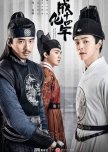
Shadows Beneath the Ming Court
I picked this drama because I absolutely love historical-mystery dramas 🏯🔍 — and The Sleuth of Ming Dynasty delivers that perfectly! Set in the Ming dynasty, it’s filled with thrilling cases, political intrigue, and those dark secrets hidden behind the palace walls ⚖️🕵️♀️. It’s actually adapted from a BL original novel, but the series itself focuses more on bromance than any explicit romance 💞👬.What really drew me in was that detective element — the thrill of solving mysteries, the clever logic, and the teamwork between three men from totally different backgrounds 🧠✨. You’ve got the witty and food-loving magistrate 🍜, the loyal embroidered guard ⚔️, and the sharp-eyed eunuch with mysterious motives 👀. Together they form such an interesting trio! The combination of humor, tension, and emotional depth between them made the story both intense and enjoyable ❤️🔥.
🏯 Synopsis & Setting
The story unfolds during the 14th year of the Chenghua Emperor’s reign in the Ming dynasty 🕰️ — a time full of imperial secrets, political schemes, and silent power struggles. Amid this chaotic era, three men from very different worlds cross paths and form an unlikely alliance 💫.
Tang Fan (汤斐) — a sixth-rank civil official 👨🎓 — is witty, intelligent, and a bit carefree on the surface 😌. But beneath that relaxed charm lies a sharp mind that can see through lies and unravel the most complicated crimes 🧩🕵️♂️.
Sui Zhou (隋州) — a Jinyiwei (锦衣卫), part of the elite embroidered guards ⚔️ — is serious, disciplined, and loyal to his duty. At first, he seems distant and cold ❄️, but as the story progresses, his hidden kindness and warmth start to show 🌤️.
Wang Zhi (汪直) — the powerful eunuch and head of the Western Depot 🏰 — is both fascinating and dangerous 😼. In history, he’s known as a cunning strategist, and in the drama, he’s portrayed as charming yet unpredictable — the kind of character you can’t help but love and fear at the same time ❤️🔥🖤.
At first, these three men have nothing in common — an official, a guard, and an eunuch 🤝. But fate pulls them together as a series of mysterious murders and conspiracies begin to shake the empire ⚡. What starts as small, isolated cases soon reveals a vast and chilling web of corruption and betrayal threatening the entire court 👑🔥.
With palace politics, detective work, secret missions, and covert agencies all woven into the story 🧶, the world feels alive, rich, and full of danger. It’s exactly the kind of intricate, suspenseful setting I love — every corner hides a secret, every smile masks an agenda 😏💭.
🎭 Acting & Characters
My absolute favourite character is Wang Zhi (汪直) 💫 — he completely stole the spotlight for me! There’s something magnetic about him: handsome, calculative, and enigmatic all at once 🖤. He can make you smile in one moment 😍 and send chills down your spine in the next 😳. The way the actor portrayed him — smooth, elegant, yet dangerous — was just brilliant 🎬.
Knowing the real history of Wang Zhi (as a powerful eunuch who led the Western Depot and influenced court affairs) made his character even more intriguing 📜⚔️. Every scene he appeared in carried that aura of hidden power and strategic brilliance. I often caught myself thinking, “Can I really trust him?” 😏 That uncertainty made him one of the most captivating characters in the entire show.
Then there’s Tang Fan (汤斐) 🧠🍜 — the witty, cheerful magistrate with a sharp mind and a big appetite! His lighthearted personality brings balance to the darker tones of the series. I really liked how he could be humorous and kind yet completely serious when it came to solving cases 🔍💡. He’s the type of character who hides deep intelligence behind an easygoing smile.
Sui Zhou (隋州), the disciplined Jinyiwei officer ⚔️, adds the perfect contrast — quiet, loyal, and protective. He’s the emotional backbone of the team, often expressing more through his eyes than his words 👀❤️. I loved his calm, composed energy and the sense of justice he carried throughout the drama.
Together, Tang Fan and Sui Zhou form an amazing duo 🤝. Their chemistry feels natural — the mix of brains and brawn, reason and instinct, humor and discipline ⚖️✨. Their investigation teamwork was one of my favorite aspects! However, I did feel that some of the romantic hints added between them (and with others) . I could tell the show tried to shift focus due to censorship and production choices, but personally, I preferred when it stuck to their detective partnership rather than forced romance.
Even the supporting cast deserves praise 👏. Many secondary roles — from side officials to villains — felt alive and memorable. The antagonists weren’t just evil for the sake of being evil; they often had clever motives or tragic backstories 🌀. But I’ll admit, a few moments felt a bit “script convenient,” where some characters acted in unrealistic ways just to move the plot forward 🤔. Still, overall, the performances were consistent and added a lot of emotional texture to the story.
🕵️♀️ Story & Mystery (What I Loved & What I Found Distracting)
One of the best parts of The Sleuth of Ming Dynasty for me was the case-by-case structure 🧩. Each mystery starts small — a simple death, a missing person, a rumor — but soon unravels into something deeper and darker 😮💨. The way Tang Fan connects the clues and exposes the web of corruption felt so clever and satisfying 💥.
The drama shines most when it focuses on detective logic, palace intrigue, and moral dilemmas 🧠⚖️. Each case reveals another layer of the Ming court — hidden loyalties, secret deals, and how justice can be twisted by power. It really gave that satisfying “ancient Sherlock Holmes” vibe I was hoping for 🕵️♂️✨.
But not everything hit perfectly 😕. Sometimes the story lost its mystery focus and drifted toward romantic or emotional subplots that didn’t fit the tone. You can tell the creators were trying to meet censorship demands — maybe replacing some BL undertones with awkward straight romance scenes 💔. Personally, those moments felt out of place and even distracting from the main plot.
Despite that, I think the series redeemed itself towards the final arc 🔥. The tension escalates, political stakes grow higher, and the trio’s bond is tested more than ever. Everything ties together with more intensity, and the mystery aspect regains strength. Watching all the clues come full circle gave me that rewarding sense of closure 🌌.
In short, The Sleuth of Ming Dynasty works best when it stays true to its roots — mystery, politics, and brotherhood. When it does that, it’s clever, emotional, and totally addictive 💖.
Production, Visuals & Atmosphere
The production value is solid: costumes, set-design, location work all contribute to that Ming-dynasty feel. Many viewers appreciate the darker, more grounded palette compared to the over-glam versions of period dramas.
The action and detective sequences are also believable rather than overly flashy. Knowing that the drama is produced by Jackie Chan (yes!) gives it some extra credibility.
The mood often matches the investigative tone: more restrained, less “over-the-top” spectacle, which I personally liked. Soundtrack and suspense are also good, building appropriate atmosphere. That said, some special effects or action sequences (when they pushed more towards spectacle) felt less convincing. If you prefer mystery over big action-scenes, those moments might feel a little jarring.
All things considered: I enjoyed The Sleuth of Ming Dynasty quite a lot — especially because its mystery, historical setting, and the triad of main characters aligned with my preferences.
Was this review helpful to you?
This review may contain spoilers
From Innocence to Influence
I wasn’t initially drawn to Destined: the cast didn’t grab me at first, and the synopsis seemed fairly standard. But finally giving it a go turned out to be a surprise in a good way. I found myself invested more than I expected.🧾 Synopsis / Setting
The story begins with Liu Yuru, the legitimate eldest daughter of a cloth merchant family in Yangzhou, who has endured mistreatment from her father’s concubine. She ends up in a forced marriage to Gu Jiusi, a wealthy, carefree young master from Jiangnan known more for his playboy lifestyle than ambition.
From that starting point, the drama shifts into business, marriage dynamics, personal growth, and societal status — all against a backdrop of merchant families, politics and ambition.
🎭 Acting & Characters
When it comes to characters, Destined really shines 🌟. Every major and side role seems to have its own story, transformation, and emotional rhythm — that’s what made me enjoy it the most.
👩🦰 Liu Yuru (宋轶) — At first, I honestly didn’t like her. She felt too timid, too bound by the image of the “perfect wife-to-be” — her entire life goal was to marry her friend’s brother, which made her look small-minded and dependent. 😒 But as the story unfolded, I started respecting her. The way she endured humiliation, learned to survive in a man’s world, and eventually built her own business empire 💼 — it was such a satisfying evolution. She grew from a caged bird 🕊️ to a woman who could stand tall in any crowd.
👨💼 Gu Jiusi (白敬亭) — He began as the typical spoiled young master 🏯: wealthy, playful, charming but irresponsible. Yet his journey is what made me stay — watching him slowly shed his carefree arrogance and take on real responsibility, both in his marriage and the world outside, felt genuine. When he eventually became a chancellor ⚖️, it wasn’t just a title — it symbolized the man he grew into. His love also matured from shallow attraction to quiet respect and deep partnership ❤️.
🤝 Supporting Cast — One of the most impressive things about Destined is how even the side characters get proper arcs. Every person, whether friend or rival, changes with time. I especially liked how the illegitimate son — once disregarded and powerless — ended up becoming the emperor 👑. It gave me the feeling that everyone’s destiny was truly in motion, like ripples spreading from one decision to another.
🎬 Performance-wise, both Song Yi and Bai Jingting delivered emotional authenticity. Their chemistry wasn’t explosive but steady, like two people learning to grow together — which fits the tone of the drama perfectly. The villains (especially Liu Xueyi 🖤) were complex — I loved and hated him equally, which just proves how well he played his part.
🧩 Story / Plot & Structure
The first arc, centred around business and marriage setup, really hooked me — I enjoyed the merchant world, the humour and the budding dynamic between FL and ML. But I’ll admit: my patience wavered in parts.
The beginning was strong: fresh premise, business dealings, clever manoeuvres.
Then, after marriage and as the plot moved into politics and court intrigue, I felt the momentum sometimes sank. “great first half, less engaging second half.”
The strengths lie in development: characters don’t stay static — but sometimes the transitions felt a little loose; motivations could use heavier emotional weight.
Still: because I was invested in the characters and their paths, I kept watching, and many of the arcs rewarded patience.
🎵 Music & Production Value
I found the music and production side to be very appealing. The setting (merchant halls, court scenes, marriage ceremonies) feels authentic and immersive.
The OST complements the mood: business bustle, emotional turning points, quiet triumphs — all with appropriate musical framing.
Visually, costumes and sets are strong: the shift from humble merchant beginnings to grander court interiors reflects the journey of characters well.
💭 My Emotional Take
I entered Destined with low expectations and ended up pleasantly surprised 👍.
It’s not flawless: the second half dips a bit, some motivations could’ve been stronger, and at certain points I wished for tighter pacing. But the journey is what sold it for me.
If I were to summarise my emotional curve: 😀 intrigued → 😊 engaged → 🧐 sometimes critical → 🙂 satisfied.
Was this review helpful to you?
Expected Magic, Got Meh
First of all, I just want to say — if you haven’t watched Lighter and Princess, go watch it 🔥. But if you have already seen it, then please don’t keep too many expectations for this one. I had huge anticipation for Eat Run Love, mainly because I’ve liked Arthur Chen ever since Lighter and Princess 💖. Even though I don’t usually watch this kind of modern romance genre, I still gave it a try… and ahh, what a disappointment it turned out to be 😔.The story follows Ding Zhi Tong (Zhuang Da Fei), a young woman fresh out of college, who’s passionate about work, running, and building a future through her own strength 🏃♀️💼. She meets Gan Yang (Arthur Chen Feiyu) — a cheerful rich boy who falls for her despite their very different worlds. Everything seems sweet and healing until Gan Yang’s family faces a huge financial downfall 💸. Instead of facing it together, he hides the truth and chooses to break up with her 💔. Ten years later, fate brings them back together, but both have changed. It’s no longer about puppy love — it’s about second chances, forgiveness, and growing up through love 🌧️❤️.
Honestly, the premise was initially influential and gave me hope 🌟. I liked seeing Zhi Tong’s determination — she wasn’t some clingy FL waiting for love to fix her life. She had dreams, a career, and her own pace. That part really resonated with me.
The first few episodes had a nice charm. The running scenes, the way they met, their natural banter — it actually felt refreshing 🏃♀️✨. And Arthur Chen? Still charming as ever 😍. Even if the script wasn’t perfect, his screen presence carried a lot of warmth.
Also, visually, the drama looks good 🎨 — the city shots, the lighting, the youthful mood, everything felt modern and comforting. For a few moments, I thought this could be another Lighter and Princess type story — emotional but real.
But ahh... after those early episodes, things started falling apart 💔. The writing just couldn’t keep the same energy. The pacing slowed down, and the story began to feel draggy. So many misunderstandings that could’ve been solved with one honest conversation 😩.
The chemistry between the leads also didn’t shine as much as I expected. I kept waiting for that spark 🔥 — the kind of connection that makes your heart ache like in Lighter and Princess — but it never really came. Instead, it felt like the emotions were forced in some scenes, especially after the time-skip.
And seriously, the plot tried to do too much: business collapse, emotional trauma, family drama, career struggle, reunion romance... everything at once 😵💫. Instead of being emotional and healing, it felt confusing and scattered.
I also didn’t like how some moments were made overly dramatic just for tears 😢. Like, give me pain with meaning, not just endless sad faces and background music trying too hard.
If you loved The Lighter and the Princess and want something similar, I’d say: give this a try only if you lower your expectations a little. If you expect peak romantic ❤️🔥 drama with crisp writing and sizzling chemistry, you might come away feeling like me — a bit let-down.😔
Was this review helpful to you?
A Drama About Love, Lies, and Lost Brain Cells
When this drama was announced, it instantly went on my most anticipated list for 2023 🌟 — and that’s rare, because I hardly ever get hyped for modern dramas! The cast was just too good to ignore 😍 — the FL, ML, and even the supporting roles were played by actors I genuinely love.So, when it finally aired, I was ready for a great ride 🎬✨ …but what I got instead was one confusing, cringe-filled mess 😭.
🚫 What Went Wrong
🌀 A Chaotic, Nonsensical Plot
The FL’s boyfriend breaks up with her because he finds a niece of a wealthy CEO — and what does she do? She suddenly decides to chase that CEO out of revenge or pride. Like… girl, what? 😭 The logic of her decisions is so bizarre. In her job, she’s portrayed as a professional, respected woman 👩💻 — but in her personal life, she acts like a character from a low-budget revenge web drama 💅.
🤯 Misunderstandings Everywhere
This drama is literally built on misunderstanding, misleading, and misinformation. Half the time, I had no clue what was happening. It’s like the writers just threw random conflicts to keep the story moving. Every few episodes, I was like, “What the hell is going on now??” 😩
💔 The Chemistry That Never Caught Fire
With this cast, I expected sizzling chemistry 🔥, but the romance felt forced and awkward. The ML was charming but too bland 😶, and the FL’s emotional reactions were all over the place. The secondary couple even had more genuine sparks than the leads 😬.
😵💫 Tonal Confusion
It tries to be everything — workplace drama, revenge romance, modern fairy tale, emotional healing story — but ends up doing none of them well. The pacing jumps between chaotic office politics and cheesy love tropes with no flow 🥴.
💫 What I Actually Liked
🌸 The Visuals & Styling
Okay, I’ll give credit where it’s due — the drama looks beautiful. The outfits, the cinematography, and the color palette were really polished 🎨✨. If only the plot matched the aesthetics!
🎭 The Cast Tried Their Best
Even with the messy script, the leads put in effort. You can tell they wanted to make the story work 🥺. And a few emotional moments — especially the quieter scenes — almost saved it.
🎬 Final Verdict
Only for Love had all the right ingredients 💔 — an amazing cast, gorgeous visuals, and a promising setup. But the story fell apart under poor writing, weird logic, and paper-thin emotional development 😩.
If you’re just here for pretty faces, nice outfits, and surface-level romance 👗💄💞 — it’s watchable. But if you expect a meaningful, coherent love story… this one’s a total letdown 🚫🥀.
Was this review helpful to you?
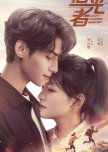
“Chasing Light in the Dark: A Story of Heroes and Humanity ”
I chose to watch this drama because it’s about firefighters and rescue missions 🚒🔥 — And of course, the other reason was Luo Yunxi 😍. Just like its name, every character in this drama is a light chaser — someone searching for hope even in the darkest places.This is not a fluffy drama at all 💭💔. It’s mature, emotional, and sometimes painfully real. The story is inspired by the real-life China Blue Sky Rescue Team, and that realism can be felt in the way the missions, characters, and emotions are portrayed.
💖 What I Loved
✨ The theme of humanity and healing — The drama beautifully captures the essence of people who were once broken but learn to heal through helping others. The six main characters all come from different worlds, carrying scars and regrets, yet they find light through rescue. It’s about growth, redemption, and human warmth.
🔥 The rescue missions — From earthquakes to floods, every rescue scene feels intense and heartfelt. They’re not overly dramatic, but genuine and grounded. You can feel the weight of real lives being saved.
💞 The chemistry between Luo Ben (Luo Yunxi) and Zhan Yan (Wu Qian) — Their relationship is quiet, mature, and deeply emotional. It’s not the kind of romance filled with clichés, but one built on mutual respect, pain, and understanding. Sometimes just a look between them says everything.
🎬 The realism and visuals — The production quality is great — realistic rescue sets, emotional camera work, and meaningful background music. It truly made me respect those who work in rescue fields in real life.
🌈 The message — “Everyone carries a bit of light, and together we illuminate the dark.” That’s how this drama made me feel — hopeful yet grounded in reality.
😔 What Disappointed Me
⏳ Pacing issues — Some episodes felt slow, and I wished for more thrilling rescue sequences. The middle part leaned too much into side stories and romance, losing a bit of that early intensity.
💔 Not enough action — Considering it’s a rescue drama, I expected more high-energy missions and team dynamics. Instead, it focuses more on personal struggles.
😶 Uneven emotional tone — The drama starts heavy and serious, but sometimes the flow between emotional moments and daily life scenes felt disjointed. I wanted more closure, especially for the main couple.
🕯️ Final Thought
Light Chaser Rescue isn’t about chasing fame or success. It’s about chasing light — within ourselves and others. It teaches that no matter how dark the world seems, someone, somewhere, will still reach out a hand. 🤝✨
Was this review helpful to you?
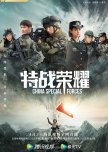
Glory of Special Forces — "A Battle of Pride, Discipline, and Growth"
As someone whose favourite modern-drama genres include military and rescue stories, I was particularly drawn to this series — especially since the lead is Yang Yang playing Yan Poyue, the young man from a military family whose journey we follow. Here’s my take on it from my vantage point.Yan Poyue’s background (from a soldier family, joining a military school to prove himself) sets up the type of arc I enjoy: ambition → struggle → transformation.
Yang Yang in a serious military setting role sounded refreshing compared to more standard romance-heavy dramas.
⚔️ Strengths — Where the Show Really Worked for Me
Authentic military feel 🪖
The training, drills, and missions felt real. You could sense the exhaustion, pain, and pride. The actors actually went through real-life drills, which made every scene look more believable. Explosions, rescue ops, and tactical teamwork were all executed with detail.
Strong main character arc 🌱
Yan Poyue starts as an arrogant, confident prodigy but learns humility and teamwork the hard way. His conflict with his father and his internal growth added emotional weight. Watching him evolve from “solo hero” to a team player was deeply satisfying.
Teamwork and camaraderie 🤝
The show emphasises that no soldier stands alone — it’s all about trust and unity.I loved seeing how each team member supported one another during both training and missions. Their bond felt genuine and inspiring.
Visuals and production 🎬
From deserts to forests, every mission looked cinematic and immersive. You can tell the crew worked hard on the physical stunts and tactical realism. The large-scale sequences gave that big-screen military vibe.
⚖️Weaknesses — What didn’t work as well for me
Pacing issues/filler episodes 🕰️
In a 45-episode series, there are stretches where the pace slows down, or the focus shifts more on training or academics than on actual missions or rescue operations.
Mission-to-mission ratio 🎯
Although the series has some major missions (drug cartel, rescue operations), the number of full-scale, realistic missions is fewer than one might hope in a “special forces” drama.
Character skill leaps 🚀
At times, Yan Poyue or others seem to advance extremely fast — which makes sense for drama, but from a realism standpoint, it occasionally felt a little convenient.
Less focus on the emotional fallout 💭
While the drill/training scenes are strong, sometimes I wished the show would dwell more on the psychological cost of missions, the trauma, or the aftermath. There are moments of that, but I felt they could have been deeper.
🎯 Final thoughts
Given my love for military/rescue dramas, this one was absolutely super.
It had the right mix of action, discipline, growth, and brotherhood.
If you enjoy soldier arcs, teamwork, and realistic missions, this drama won’t disappoint.
Yan Poyue’s transformation from ego to empathy made the story truly meaningful.
Though a few episodes slowed down, the heart of the drama — courage, loyalty, and honor — shone brightly.
🏅🔥🇨🇳
"Glory of Special Forces" isn’t just about war — it’s about becoming someone worthy of wearing the uniform.
Was this review helpful to you?
This review may contain spoilers
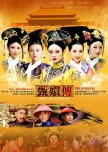
Empresses in the Palace: “Survival Beneath the Golden Roof”
🏯 This is the longest chinese drama i have ever watched. From start to finish I felt stress—yes, stress, stress, and more stress—but also fascination. At the same time I found it absolutely a masterpiece. Here’s my full take, in the way I experienced it.🧡 The protagonist, Zhen Huan, starts off as a young, kind, somewhat naïve girl from a noble family (the Eight Banners) who enters the imperial harem as a first-class attendant. That arc—innocence → survival → power—is deeply compelling..
The production, costumes, set design—all of it lifts you into that world. But the glamour is deceptive: under it lies a grinding system of survival and politics.
The moral and emotional weight of what’s depicted. The drama doesn’t spare you the darker sides of palace life: power, manipulation, forced intimacy, substitution, sacrifice. The series ends with Zhen Huan in the role of empress dowager, but even that is tinged with the cost she paid to get there.
⚠️What troubled me (and why I felt so uneasy)
💔Before watching this drama a long time ago, I had already studied abt something abt Chinese history. Historical practices that are deeply uncomfortable by today’s standards. And I have to accept and watch a lot of disgusting things.For example: girls married young, often for status or power rather than love. The emperor having many concubines. The idea of “service” in the harem meaning seduction and submission as part of politics. Seeing those made me cringe and think “what the hell”.
💔The relationships are not what I expected when I went in hoping for romance in the usual sense. The ML-FL (male lead / female lead) romance is twisted by context: duty, power, fear, surveillance. It’s not simple or reassuring. Instead it often becomes a tool, a trap, or a burden. That made me uneasy because I like “sweet” romance; here I got something else entirely.
💔The so-called sisterhood and loyalty among the women in the harem: they calling each other sisters, yet turning murderous, plotting one another’s downfall. That hypocrisy, that betrayal, made my blood boil. Because on one level they perform “we are serving his majesty”, yet the energy under the surface is survival, competition, fear. That duality made me angry and anxious.
💔The insidious nature of power. You see characters who have nothing, striving, scheming. Others who have status, scrambling to keep it. The stakes feel constant, sometimes crushing.
🔥Why I Loved It (Despite—or Because of—the Stress)
💫I felt immersed. Because I was constantly on edge: What will happen next? Who will fall? Who will survive? That tension is intense; it means I was actively engaged, not passively watching.
💫I respected the narrative honesty. It didn’t pretend the palace was glamorous in a harmless way. It showed the cost—every victory, every favour, every shift in status came with danger.
💫I appreciated how Zhen Huan grows. It’s one thing watching a kind girl become hardened. It’s another watching HOW: through betrayal, loss, scheming, survival. That path felt real. I found myself rooting for her, even when I questioned her choices.
💫The show made me think. About history, about gender, about power. For instance, academics note that the show navigates how women in the Qing-era harem had little choice, yet even within those constraints they tried to assert agency—and often paid a heavy price.
💫Because I felt the discomfort—the marriage of young girls, the illicit relationships, the service disguised as subservience—I also felt the stakes of the show’s critique. It is not celebration of that world; it is exposition. I may not have liked everything I saw, but I felt the weight of it and in that weight lies its greatness.
🎯 Final Verdict
If I were to summarise: Empresses in the Palace is not an easy watch. It is long. It demands attention. It makes you feel uneasy. It forces you to watch characters trapped in systems bigger than themselves, making painful choices. But that is also why it is masterful. Because it doesn’t sugar-coat, it doesn’t simplify, and it keeps you in the tension until the very end.
🧩So from my perspective:
✅Did I love it? Yes.
✅Was I comfortable throughout? No, If I was a heart patient, I would be hospitalized.
✅Would I recommend it? Absolutely—with this caveat: go in expecting drama with weight, not easy romance.
✅Will it stay with me? Definitely—many scenes and feelings already linger.
Was this review helpful to you?
This review may contain spoilers
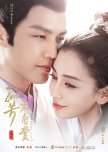
When the Sound of War Met the Sound of the Guqin
It’s been around three years since I finished this drama — and looking back, it remains one of those rare series, that time I picked up against my usual taste and still ended up invested in. Before starting it, the drama had lingered on my “maybe one day” list for a while after I read a review in my native language. At that time, I was a big fan of wuxia / xianxia stories with martial-arts sects, demons/deities/supernatural powers, and multiple realms. That time, I was not so much into political intrigue, generals, emperors, harems, or large-scale wars between kingdoms. And with a whopping 62 episodes, this drama was not exactly “my deal.”🌸 Story & Setting
The drama begins with a grand battle for the land of the Central Plain. Two armies — from two rival kingdoms. A duel is about to begin between their commanders. These two are not ordinary men. One is He Xia, the prince of Jin; the other is Chu Bei Jie, Jin’s greatest general and the nation’s most beloved prince.
And on the fortress wall, a woman is sitting quietly, playing a guqin. Even when an arrow whizzes past her, she doesn’t flinch — her music continues, calm and steady. That woman is Bai Pingting — a servant in the prince’s mansion, but not an ordinary one. She’s a brilliant strategist whose mind can shift the tides of war.
From that very moment, I knew this drama wasn’t just another war story. It had something different — a woman’s quiet strength hidden beneath layers of chaos and bloodshed.
⚔️ About the Leads
This was my first drama with both the male lead and the female lead. So, I wasn’t anyone’s fan before watching.
The story of two people on opposing sides who gradually come to understand each other, who shift from adversaries to lovers.
Chu Bei Jie, played by Wallace Chung, has such a commanding presence — calm, loyal, and powerful, yet full of emotion when it comes to love. Bai Pingting, played by Angelababy, is elegant and intelligent, a woman who can face armies not with weapons but with her mind. Their story — from being enemies standing on opposite sides of the battlefield to becoming lovers tied by fate.
🌿 My Thoughts
Of course, it’s not a perfect drama. The pacing sometimes feels slow, and there are moments that drag — especially in the middle episodes. 20+ episode separation of the main couple. Many side plots and focus shifting away from the main couple, diluting the emotional core. The CGI and some battle scenes could’ve been better too.
I can’t say it became my favorite, but it’s one that left an echo even years later. If you love stories about loyalty, destiny, and love that withstands the cruelty of war, General and I is definitely worth giving a try.
Was this review helpful to you?
“Sword and Beloved: Gorgeous but Emotionally Empty”
I jumped into Sword and Beloved without watching the previous dramas in the Fox Spirit Matchmaker universe, so I went in completely fresh 😅. I don’t watch many xianxia dramas these days, so my expectations were moderate… yet the first half pleasantly surprised me ✨. The writing was solid, the world-building elegant 🌸, and Cheng Yi once again nailed the calm yet tragic hero type 💫. The story felt layered, pacing smooth, and the family + romance dynamics were charming 💖. At that point, I even rated it 9/10 🌟.But as the episodes went on… my excitement slowly turned into confusion and disappointment 😞. The second half lost its soul — events happened, but I didn’t feel anything 😵💫. All the beauty and charm of the first half seemed to vanish 💔, leaving me frustrated and unable to fully enjoy the drama 😢.
It’s such a shame because the opening episodes showed real potential 🌿. By the end, it felt like the drama forgot what it wanted to be, leaving a hollow experience despite strong performances and a captivating first half 🎭💥.
⚔️ Story & Script — A Promising Beginning That Fell Apart
The writing in Sword and Beloved is where everything goes wrong. The first half built a world of tension and emotion — humans and demons caught between duty, fate, and forbidden love. It was poetic, full of promise 🌙. But halfway through, the entire story lost its soul.
The pacing fell apart. The emotional threads between the characters were cut off. The story jumped from one subplot to another with no clear direction. It’s like the scriptwriters had no idea what they wanted to tell — was it a tragic romance, a war epic, or a political fantasy? They tried to do everything and ended up doing nothing well 😩.
The second half felt like someone tore out the heart of the script and replaced it with random scenes. Plot twists appeared out of nowhere, emotional buildups vanished, and dialogue turned into empty poetry — lines that sounded deep but meant absolutely nothing. The characters stopped evolving and started existing only to push the story forward.
🌀 The Vanishing Male Lead
One of the biggest disasters was how they handled the male lead, Fugui. Cheng Yi started the drama as the emotional center — burdened by duty, torn by destiny. But suddenly, he began to disappear. Entire episodes passed with barely a trace of him. Instead, side characters and secondary couples took over the screen.
By the time Fugui returned in the final stretch, the emotional bond between him and Qingtong was already gone. The audience couldn’t reconnect because the writers had already replaced the heart of the show with filler content. It’s honestly shocking that a drama built around Cheng Yi’s character managed to push him out of his own story 😤.
💔 Empty Drama Disguised as Depth
The writing tried to appear profound but ended up being hollow. Every big scene was heavy with “important” lines about destiny, love, and sacrifice — yet none of them felt real. The characters didn’t act like humans anymore; they acted like puppets performing someone else’s bad poetry 🎭.
Even the emotional peaks — deaths, sacrifices, heartbreaks — were meaningless because they weren’t earned. You can’t just throw in tragic moments and expect the audience to cry when there’s no emotional buildup. Everything was happening, but nothing hit.
🎭 How the Cast and Production Tried to Save a Dying Script
The most heartbreaking part is that everyone else tried so hard to make it work. Cheng Yi and Li Yitong gave far more emotion than the script deserved 💔. Cheng Yi carried pain and restraint in his eyes even when the dialogue was nonsense. You could see him trying to turn broken lines into feelings. Li Yitong brought warmth, humor, and grace, even though her character’s motivations kept changing every few episodes.
The production team also did their best — the visuals were breathtaking, the sword fights beautifully shot, and the lighting was cinematic 🌌. Every scene screamed effort: “We know the story is dying, but look how beautiful we can make it!”
But sadly, no amount of beauty or talent can save a hollow core. The cast and crew were fighting to keep the drama alive, yet the script had already bled out. You could feel their effort, but you couldn’t feel the story.
🔥 The Finale — Beautiful but Soulless
By the final episodes, the drama became an empty shell. The plot rushed to its ending, throwing in every cliché it could find. The visuals were stunning — glowing swords, elegant costumes, emotional music — but everything felt fake. It was like watching a puppet show with no soul behind it.
I finished the finale completely numb 🫥. Not happy, not sad, just empty. The ending wasn’t tragic — it was meaningless. That’s far worse.
💭 Final Thoughts
Sword and Beloved had the foundation to be an incredible xianxia drama — strong actors, emotional potential, and visual brilliance 🌙. But the writing destroyed it. The story lost its rhythm, wasted its leads, and traded emotional truth for dramatic chaos.
If I had to describe it in one line:
“A beautiful sword, dulled by a broken script.” ⚔️word, dulled by a broken script.” ⚔️
Was this review helpful to you?
This review may contain spoilers
Chasing Jade (逐玉)
“Zhu Yu” (逐玉) — Pursing Jade — is a title layered with quiet poetry. Jade, in Chinese culture, is not merely a stone; it embodies purity, virtue, and inner worth. In this story, Fan Changyu is unpolished jade — raw, resilient, and shaped by hardship — while Xie Zheng is already refined, yet fractured within. Their journeys, both individual and intertwined, reflect a pursuit not just of identity and justice, but of each other. This symbolic foundation is one of the drama’s most beautiful strengths.📖 Story & Writing
At its core, the drama blends romance with a backdrop of long-buried secrets — especially the massacre that occurred seventeen years ago. The plot is engaging, but not groundbreaking. It is neither unparalleled nor truly unique, and I wouldn’t call it a masterpiece.
However, if you watch it simply for the experience — the romance, action, and emotional beats — it becomes undeniably enjoyable. For viewers like me who tend to dig deeper, analysing layers and details, both strengths and flaws become more visible.
The screenplay is solid, though not flawless. Some unrealistic elements — exaggerated fighting skills, overly polished appearances in battlefield settings — are noticeable. Still, considering its origin as a web novel, these choices feel somewhat justified.
What concerns me more is the lack of clarity in the later episodes. Key elements — like Meng Shuanyuan’s memorial tablet, the mention of the Sixteenth Prince, and the true motives of the villains — were introduced too abruptly and insufficiently explained. For viewers who haven’t read the novel, this becomes confusing. Compressing a long novel into 40 episodes was always going to be difficult, but the rushed execution here is a clear weakness.
⏳ Pacing & Structure
The pacing is uneven.
First quarter: Slow, but beautifully immersive. The calm atmosphere, growing emotional tension, and gradual uncovering of past secrets were genuinely enjoyable.
Final quarter: Noticeably rushed. Political conflicts, twists, and character arcs felt compressed, especially in the 30s episodes.
This imbalance makes the narrative feel slightly chaotic toward the end, despite a strong start.
💞 Romance & Chemistry
Even though I’m not someone who focuses heavily on romance, I have to admit — the chemistry between the leads is captivating. It’s tender yet passionate, soft yet intense. Some moments genuinely gave me butterflies 🦋.
That said, some transitions felt abrupt — particularly the emotional escalation in Episode 17. The shift in their dynamic didn’t feel fully earned.
The second lead couple also deserves attention. Their relationship carries a different tone — more tension, more emotional friction — and adds another engaging layer to the story.
🌾 Slice of Life vs War Narrative
One of my biggest frustrations is the imbalance between the slice-of-life elements and the larger plot.
The early episodes hint at a rich, grounded world — the female lead’s life as a butcher, village routines, local traditions — but this is never fully explored. These details could have added depth and authenticity. Instead, just as we begin to settle into that world, the story abruptly shifts toward military and political themes.
A more structured approach — deepening the small-town life first, then transitioning into war and ambition — would have made the narrative far more impactful.
⚔️ Politics & Themes
The political landscape is complex and, at times, deeply unsettling.
Different factions manipulate one another — some willingly, others out of desperation. Relationships between family members, lovers, and allies become entangled in power struggles, betrayal, and survival.
This emotional weight — the suffering, sacrifices, and moral conflicts — is one of the drama’s strongest thematic elements. It shows how lives continue to flow through war, palace intrigue, and societal pressures.
🎭 Acting Performances
The leads have shown remarkable growth compared to their earlier works. Their performances here feel more mature, more controlled, and more emotionally convincing.
The main couple handles both romance and action convincingly.
The second female lead delivers a strong performance.
The second male lead, though familiar with such roles, brings a particularly refined execution this time.
There are still minor flaws, but overall, the acting is solid and commendable.
🎥 Cinematography & Visuals
This is where the drama truly shines ✨
The cinematography is stunning — poetic, artistic, and visually immersive. As someone who has watched many C-dramas, I often notice repetitive camera work. But here, there’s a refreshing sense of originality.
Some shots even feel slightly AI-enhanced, adding a modern visual texture without breaking immersion. The director clearly has an artistic vision, and it shows in every frame.
🥋 Action & Fight Choreography
The fight scenes in the first half are dynamic and well-executed — they draw you in and elevate the drama’s intensity.
Unfortunately, the later fight sequences lose that same energy and become less engaging. This decline contributes to the rushed feeling of the final episodes.
⚖️ Final Thoughts
This is not a masterpiece — but it is absolutely watchable and highly likeable.
If you approach it casually, it’s an enjoyable drama filled with romance, action, and beautiful visuals. If you analyse it deeply, you’ll notice its structural flaws, pacing issues, and missed opportunities.
Still, its emotional resonance, compelling chemistry, and breathtaking cinematography make it worth the journey 💫
Was this review helpful to you?
This review may contain spoilers
A Drama About Humanity, Loyalty, Power, and the Price of Righteousness
I was waiting for this drama for so long. This is a wuxia drama that remembers what wuxia is supposed to be—not overproduced CGI spectacles with blinding filters and cartoonish costumes—𝘡𝘩𝘢𝘯 𝘡𝘩𝘢𝘰 𝘈𝘥𝘷𝘦𝘯𝘵𝘶𝘳𝘦𝘴 arrived like a long-awaited rainfall on parched earth. This is not a perfect drama. But it is a 𝘴𝘪𝘯𝘤𝘦𝘳𝘦 one. And in today's landscape of assembly-line costume dramas, sincerity itself has become rare.At first glance, it looks like a straightforward wuxia adventure centred around the legendary Zhan Zhao. A heroic swordsman. A conspiracy. Martial arts sects. A journey across the jianghu.
But beneath that surface lies something much deeper.
This is not simply a story about defeating villains.
It is a story about how good people survive in a world that constantly punishes goodness.
It is about loyalty in an age of betrayal.
It is about the loneliness of righteousness.
It is about the endless conflict between personal feelings and public duty.
And most importantly, it is about how human beings continue choosing kindness even when the world repeatedly proves that kindness is costly.
_____________________________________________________________________
⚔️𝗧𝗛𝗘 𝗥𝗘𝗔𝗟 𝗣𝗥𝗢𝗧𝗔𝗚𝗢𝗡𝗜𝗦𝗧 𝗜𝗦 𝗡𝗢𝗧 𝗭𝗛𝗔𝗡 𝗭𝗛𝗔𝗢
_____________________________________________________________________
The real protagonist is 𝗿𝗶𝗴𝗵𝘁𝗲𝗼𝘂𝘀𝗻𝗲𝘀𝘀 𝗶𝘁𝘀𝗲𝗹𝗳.
Throughout the drama, every major character is forced to answer the same question:
"𝗪𝗵𝗮𝘁 𝗮𝗿𝗲 𝘆𝗼𝘂 𝘄𝗶𝗹𝗹𝗶𝗻𝗴 𝘁𝗼 𝘀𝗮𝗰𝗿𝗶𝗳𝗶𝗰𝗲 𝘁𝗼 𝗿𝗲𝗺𝗮𝗶𝗻 𝗮 𝗴𝗼𝗼𝗱 𝗽𝗲𝗿𝘀𝗼𝗻?"
Some sacrifice wealth.
Some sacrifice freedom.
Some sacrifice love.
Some sacrifice reputation.
Some sacrifice their lives.
The drama repeatedly shows that goodness does not guarantee happiness.
In fact, goodness often invites suffering.
Liu Hongyi dies.
Fan Zhongyu's family is destroyed.
Countless ordinary women are trafficked and forgotten.
Victims are silenced.
Witnesses are murdered.
Truth is buried.
Yet despite everything, some people continue fighting.
That is the central spirit of the drama.
Not victory.
Not revenge.
But perseverance.
_____________________________________________________________________
🐱 𝗭𝗛𝗔𝗡 𝗭𝗛𝗔𝗢 - 𝗧𝗛𝗘 𝗧𝗥𝗔𝗚𝗘𝗗𝗬 𝗢𝗙 𝗧𝗛𝗘 𝗜𝗗𝗘𝗔𝗟 𝗠𝗔𝗡
_____________________________________________________________________
Many dramas create heroes.
Very few create a genuinely admirable man.
Zhan Zhao is one of those rare characters.
He is not interesting because he is strong.
He is interesting because he never stops taking responsibility.
Throughout the drama, he is constantly suffering:
* poisoned
* hunted
* framed
* tortured
* betrayed
Yet he never becomes bitter.
That is what makes him extraordinary.
Most heroes fight because they hate evil.
Zhan Zhao fights because he loves justice.
There is a huge difference.
Even when facing enemies who deserve death, he repeatedly chooses restraint.
Many viewers may interpret this as naivety.
I think it represents something deeper.
The drama is asking:
"𝗜𝗳 𝗿𝗶𝗴𝗵𝘁𝗲𝗼𝘂𝘀𝗻𝗲𝘀𝘀 𝗼𝗻𝗹𝘆 𝗲𝘅𝗶𝘀𝘁𝘀 𝘄𝗵𝗲𝗻 𝗰𝗼𝗻𝘃𝗲𝗻𝗶𝗲𝗻𝘁, 𝗶𝘀 𝗶𝘁 𝘁𝗿𝘂𝗹𝘆 𝗿𝗶𝗴𝗵𝘁𝗲𝗼𝘂𝘀𝗻𝗲𝘀𝘀?"
Zhan Zhao refuses to become his enemies.
He refuses to allow hatred to redefine him.
That is why the story repeatedly places him in impossible situations.
Because true morality only reveals itself when there is a reason to abandon it.
_____________________________________________________________________
🐭 𝗕𝗔𝗜 𝗬𝗨 𝗧𝗔𝗡𝗚 - 𝗙𝗥𝗘𝗘𝗗𝗢𝗠'𝗦 𝗥𝗘𝗕𝗘𝗟𝗟𝗜𝗢𝗡 𝗔𝗚𝗔𝗜𝗡𝗦𝗧 𝗢𝗥𝗗𝗘𝗥
_____________________________________________________________________
If Zhan Zhao represents the law,
Bai Yutang represents freedom.
If Zhan Zhao is responsible,
Bai Yutang is an individual.
If Zhan Zhao is civilisation,
Bai Yutang is human instinct.
And that is why their relationship becomes the emotional core of the entire drama.
The famous Cat and Rat dynamic is not merely comedy.
It is a philosophical debate.
Both men are good.
Both seek justice.
But their methods are completely different.
Bai Yutang constantly challenges institutions.
Zhan Zhao constantly protects them.
Neither is entirely right.
Neither is entirely wrong.
The drama understands that society needs both kinds of people.
It needs those who preserve order.
And it needs those who question order.
Their friendship becomes beautiful because neither tries to change the other.
Instead, they slowly learn respect.
That mutual respect feels more meaningful than many romances.
_____________________________________________________________________
🌸 𝗛𝗨𝗢 𝗟𝗜𝗡𝗚𝗟𝗢𝗡𝗚 - 𝗔 𝗪𝗢𝗠𝗔𝗡 𝗦𝗘𝗔𝗥𝗖𝗛𝗜𝗡𝗚 𝗙𝗢𝗥 𝗛𝗘𝗥 𝗢𝗪𝗡 𝗜𝗗𝗘𝗡𝗧𝗜𝗧𝗬
_____________________________________________________________________
One of the strongest aspects of the drama is Huo Linglong.
She initially appears like a typical adventurous heroine.
But her journey is much more profound.
Everyone attempts to define her:
* her family
* Shao Jizu
* political forces
* martial arts sects
Everyone wants something from her.
Very few ask what she wants.
Her story becomes a struggle for autonomy.
She is not fighting merely against villains.
She is fighting against becoming someone else's possession.
That makes her surprisingly modern despite the historical setting.
She gradually learns that strength is not simply defeating opponents.
𝗦𝘁𝗿𝗲𝗻𝗴𝘁𝗵 𝗶𝘀 𝗰𝗵𝗼𝗼𝘀𝗶𝗻𝗴 𝘆𝗼𝘂𝗿 𝗼𝘄𝗻 𝗽𝗮𝘁𝗵.
_____________________________________________________________________
☠️ 𝗧𝗛𝗘 𝗩𝗜𝗟𝗟𝗔𝗜𝗡𝗦 𝗔𝗥𝗘 𝗣𝗥𝗢𝗗𝗨𝗖𝗧𝗦 𝗢𝗙 𝗛𝗨𝗠𝗔𝗡 𝗗𝗘𝗦𝗜𝗥𝗘
_____________________________________________________________________
One thing I appreciated about this drama is that evil rarely appears as pure evil.
Most antagonists are driven by recognisable 𝘩𝘶𝘮𝘢𝘯 𝘥𝘦𝘴𝘪𝘳𝘦𝘴.
Power.
Fear.
Ambition.
Status.
Greed.
Survival.
The Lord of Xiangyang's conspiracy is not simply rebellion.
It represents what happens when ambition grows beyond morality.
Many villains begin as ordinary people pursuing understandable goals.
But eventually those goals consume their humanity.
The drama repeatedly reminds us:
𝗠𝗼𝗻𝘀𝘁𝗲𝗿𝘀 𝗮𝗿𝗲 𝗻𝗼𝘁 𝗯𝗼𝗿𝗻.
𝗧𝗵𝗲𝘆 𝗮𝗿𝗲 𝗰𝗿𝗲𝗮𝘁𝗲𝗱 𝘁𝗵𝗿𝗼𝘂𝗴𝗵 𝗰𝗵𝗼𝗶𝗰𝗲𝘀.
_____________________________________________________________________
🏮 𝗧𝗛𝗘 𝗛𝗜𝗗𝗗𝗘𝗡 𝗦𝗢𝗖𝗜𝗔𝗟 𝗖𝗢𝗠𝗠𝗘𝗡𝗧𝗔𝗥𝗬
_____________________________________________________________________
Beneath all the martial arts and adventure, the drama contains surprisingly sharp social criticism.
~~~
𝗧𝗵𝗲 𝗙𝗼𝗿𝗴𝗼𝘁𝘁𝗲𝗻 𝗩𝗶𝗰𝘁𝗶𝗺𝘀
The story repeatedly focuses on ordinary people.
Missing women.
Dead constables.
Poor scholars.
Boatmen.
Servants.
Workers.
These people have little power.
Yet they suffer the most whenever powerful individuals fight.
The drama quietly asks:
" 𝘞𝘩𝘰 𝘱𝘢𝘺𝘴 𝘵𝘩𝘦 𝘱𝘳𝘪𝘤𝘦 𝘧𝘰𝘳 𝘱𝘰𝘭𝘪𝘵𝘪𝘤𝘢𝘭 𝘨𝘢𝘮𝘦𝘴?"
The answer is always the common people.
~~~
𝗖𝗼𝗿𝗿𝘂𝗽𝘁𝗶𝗼𝗻 𝗜𝘀 𝗡𝗼𝘁 𝗝𝘂𝘀𝘁 𝗕𝗿𝗶𝗯𝗲𝗿𝘆
The drama presents a more dangerous form of corruption.
Not officials accepting money.
But officials are manipulating the truth.
Cheng Hao is frightening because he understands the legal system.
He weaponises law itself.
This is a much deeper criticism.
The drama suggests that institutions become dangerous when they prioritise power over justice.
~~~
𝗥𝗲𝗽𝘂𝘁𝗮𝘁𝗶𝗼𝗻 𝗩𝗲𝗿𝘀𝘂𝘀 𝗥𝗲𝗮𝗹𝗶𝘁𝘆
Almost every major character suffers because of their reputation.
Bai Yutang is misunderstood.
Zhan Zhao is framed.
Women are silenced.
Victims are ignored.
Truth becomes less important than appearances.
This feels surprisingly relevant even today.
_____________________________________________________________________
🌊 𝗧𝗛𝗘 𝗪𝗢𝗥𝗟𝗗 𝗢𝗙 𝗝𝗜𝗔𝗡𝗚𝗛𝗨 𝗠𝗜𝗥𝗥𝗢𝗥𝗦 𝗛𝗨𝗠𝗔𝗡 𝗦𝗢𝗖𝗜𝗘𝗧𝗬
_____________________________________________________________________
The jianghu in this drama is not romanticised.
It is chaotic.
Dangerous.
Hypocritical.
Yet strangely beautiful.
Just like real life.
Many sects preach virtue while committing atrocities.
Many criminals show greater honour than respected officials.
Many heroes make mistakes.
Many villains tell partial truths.
The world exists in shades of 𝗴𝗿𝗲𝘆.
The drama understands a fundamental truth:
' 𝘏𝘶𝘮𝘢𝘯 𝘣𝘦𝘪𝘯𝘨𝘴 𝘢𝘳𝘦 𝘳𝘢𝘳𝘦𝘭𝘺 𝘦𝘯𝘵𝘪𝘳𝘦𝘭𝘺 𝘨𝘰𝘰𝘥 𝘰𝘳 𝘦𝘯𝘵𝘪𝘳𝘦𝘭𝘺 𝘦𝘷𝘪𝘭.'
Most people exist somewhere in between.
_____________________________________________________________________
🍂 𝗧𝗛𝗘 𝗟𝗢𝗡𝗘𝗟𝗜𝗡𝗘𝗦𝗦 𝗢𝗙 𝗚𝗢𝗢𝗗 𝗣𝗘𝗢𝗣𝗟𝗘
_____________________________________________________________________
One theme repeatedly appears throughout the story.
Good people are lonely.
Liu Hongyi.
Zhan Zhao.
Fan Zhongyu.
Even Huo Linglong.
Doing the right thing often isolates them.
Others mock them.
Exploit them.
Betray them.
Yet they continue.
The drama does not portray goodness as glorious.
It portrays goodness as difficult.
And because of that, it feels authentic.
_____________________________________________________________________
❤️ 𝗥𝗢𝗠𝗔𝗡𝗖𝗘 𝗜𝗦 𝗡𝗢𝗧 𝗧𝗛𝗘 𝗠𝗔𝗜𝗡 𝗦𝗧𝗢𝗥𝗬
_____________________________________________________________________
Ironically, one of the drama's strengths is that romance is not its greatest focus.
The emotional centre is actually trust.
Friendship.
Loyalty.
Shared ideals.
The relationship between Zhan Zhao and Bai Yutang often feels more emotionally powerful than many romantic storylines because it develops through actions rather than words.
𝘙𝘦𝘴𝘱𝘦𝘤𝘵 𝘮𝘶𝘴𝘵 𝘣𝘦 𝘦𝘢𝘳𝘯𝘦𝘥.
𝘈𝘯𝘥 𝘣𝘰𝘵𝘩 𝘮𝘦𝘯 𝘦𝘢𝘳𝘯𝘦𝘥 𝘪𝘵.
_____________________________________________________________________
🌙 𝗧𝗛𝗘 𝗗𝗘𝗘𝗣𝗘𝗦𝗧 𝗠𝗘𝗦𝗦𝗔𝗚𝗘 𝗢𝗙 𝗧𝗛𝗘 𝗗𝗥𝗔𝗠𝗔
_____________________________________________________________________
After finishing all 37 episodes, I think the drama's deepest message is this:
The world will never become perfect.
Corruption will always exist.
Greed will always exist.
Betrayal will always exist.
But that does not mean goodness is meaningless.
The value of righteousness does not come from winning.
The value of righteousness comes from continuing to choose it.
Again.
And again.
And again.
Even when nobody rewards you for it.
That is the lesson embodied by Zhan Zhao.
_____________________________________________________________________
⭐ 𝗙𝗜𝗡𝗔𝗟 𝗧𝗛𝗢𝗨𝗚𝗛𝗧𝗦
_____________________________________________________________________
𝘡𝘩𝘢𝘯 𝘡𝘩𝘢𝘰 𝘈𝘥𝘷𝘦𝘯𝘵𝘶𝘳𝘦𝘴 is not merely a wuxia adventure.
It is a meditation on morality.
A study of friendship.
A criticism of power.
A reflection on justice.
And a surprisingly thoughtful examination of what it means to remain human in an imperfect world.
Its greatest strength is not its martial arts.
Not its conspiracies.
Not even its characters.
Its greatest strength is that beneath every sword fight lies a question about human nature.
And those questions remain long after the final episode ends.
A drama about heroes, villains, friendship, corruption, loyalty, and power—but above all, a drama about the difficult choice to remain righteous when the world gives you every reason not to.
Was this review helpful to you?
SILENT TIDE — THE SILENT WAR THAT SHOOK MY HEART
──────────────────────🌊 SILENT TIDE — A DRAMA THAT LEFT ME SPEECHLESS
──────────────────────
I just finished *Silent Tides*, and honestly, I still cannot fully explain what I am feeling right now. It is one of those rare dramas that quietly enters your heart and then completely overwhelms you with emotions before you even realise it. There is sorrow, admiration, patriotism, tension, helplessness, warmth, and hope all mixed. Even after finishing the last episode, my mind is still trapped inside Macau’s “isolated island” during the war years.
What makes this even more surprising is that I rarely watch Republican Era dramas. They are usually not my type at all. Most of the time, I find them heavy, dry, and difficult to connect with. And when I first heard *Silent Tides* was centred around banking, finance, business wars, and wartime economics, I honestly thought this drama would completely bore me. Financial warfare and business negotiations sounded like the last thing I would willingly watch in a drama.
But I was completely wrong.
Dropping this drama would have been one of the biggest mistakes ever.
──────────────────────
🇲🇴 A DIFFERENT KIND OF WAR DRAMA
──────────────────────
What makes *Silent Tides* extraordinary is that it does not tell war through endless battlefield scenes or explosive combat. Instead, it shows another side of war — the invisible war.
The drama takes place during the Second Sino-Japanese War after the Fall of Hong Kong in 1941, when Macau became an “isolated island.” Unlike many anti-war dramas, the story focuses on hidden struggles: financial warfare, trade wars, material transportation, intelligence operations, and psychological battles.
And somehow, all these “quiet wars” became even more intense than actual battlefield fighting.
The drama follows He Xian, a small silver shop owner who moves from Hong Kong to Macau with his family after Hong Kong falls. At first, he is simply trying to survive and protect his loved ones. But as he witnesses starvation, suffering, political corruption, Japanese infiltration, and the misery of ordinary citizens, he slowly transforms from a businessman focused on survival into a patriotic leader willing to risk everything for his people.
That transformation was written beautifully.
This drama constantly asks an important question:
" What Does Patriotism Truly Mean When Survival Itself Becomes Difficult? "
And the answer is shown through actions, sacrifices, and impossible choices.
──────────────────────
🎭 REN JIALUN’S PERFORMANCE AS HE XIAN
──────────────────────
I genuinely think Ren Jialun gave one of the best performances of his career here.
It never felt like acting.
That is the biggest compliment I can give.
Every emotion He Xian experienced felt painfully real — fear, exhaustion, hopelessness, restraint, quiet sorrow, helpless anger, responsibility, and even those tiny moments of happiness. Ren Jialun portrayed them naturally without exaggeration. He did not need dramatic screaming scenes to show pain. Sometimes just his eyes or silence were enough.
He Xian is such a layered character.
He is intelligent but humble. Calm but emotionally burdened. Gentle yet incredibly strong internally. He carries traditional Confucian values deeply within him: integrity, loyalty, keeping promises, protecting dignity, and acting with conscience.
What I loved most was that he never felt like an unrealistic “perfect hero.”
He was afraid.
He hesitated.
He struggled between protecting his family and protecting his country.
And honestly, sometimes I even felt angry at him because of how selfless he was. He had a loving wife, small children, and an elderly father waiting for him at home. Yet he repeatedly risked his life for dangerous missions, financial operations, and resistance activities.
I understood why he did it.
But it still hurt watching him walk toward danger again and again.
That emotional conflict made him feel human.
──────────────────────
💔 THE WOMEN OF SILENT TIDES
──────────────────────
One of the strongest parts of this drama is its female characters.
Guo Qiwen, He Xian’s wife, is honestly one of the greatest wives I have ever seen in a drama. She is gentle, intelligent, emotionally mature, and unbelievably supportive without losing her individuality. She understands her husband’s burdens even when she herself suffers because of them.
There were moments where I felt more emotional for her than for He Xian himself.
Because loving someone like He Xian means constantly fearing you may lose him.
And yet she never became selfish.
Never manipulative.
Never resentful.
She carried her pain quietly with dignity.
Then there is Qiao Yinwan.
Her existence adds another emotional layer to the story. Her feelings for He Xian are restrained, tragic, and heartbreaking. She represents the countless people during wartime who sacrificed personal emotions for a greater cause. Her patriotism through music and underground resistance activities was incredibly moving.
The drama also deserves praise for highlighting women’s contributions during wartime instead of reducing them to romantic accessories.
──────────────────────
😡 VILLAINS THAT FELT TRULY TERRIFYING
──────────────────────
The villains in this drama were phenomenal.
Not because they were “cool,” but because they felt disturbingly real.
Their cruelty, manipulation, greed, and cunning behavior genuinely made me angry while watching. There were moments where I completely forgot I was watching actors because I hated those characters so much.
That is good acting.
The Japanese spies, traitors, corrupt figures, and opportunists were written with terrifying realism. The drama constantly shows how war destroys morality and forces people into impossible choices.
And what makes it even better is that the drama does not portray everyone in simplistic black-and-white morality. Some people hesitate. Some compromise. Some survive through silence. Others awaken slowly.
That complexity made the story feel authentic.
──────────────────────
🎬 CINEMATIC PRODUCTION QUALITY
──────────────────────
This drama looks absolutely stunning.
Not “good for television.”
Actually cinematic.
The production team spent years researching Macau’s wartime history, and it truly shows in every frame. The atmosphere feels immersive and alive. From docks and ferry terminals to teahouses, streets, warehouses, casinos, and marketplaces — every location feels historically authentic.
The lighting and cinematography deserve special praise.
The scenes showing bombed Hong Kong, candlelit nights, blackouts, and wartime fear created an oppressive atmosphere that felt hauntingly realistic. Instead of relying on exaggerated filters, the drama uses shadows, darkness, and silence beautifully.
And the language usage made everything even more immersive.
Portuguese characters speak Portuguese.
British characters speak English.
Chinese characters switch between Mandarin and Cantonese naturally.
That attention to detail added so much realism.
Even the costumes were incredible. The Republican-era styling, long gowns, military uniforms, and traditional Lingnan aesthetics gave the drama such an elegant visual identity.
──────────────────────
🏮 MACAU’S FORGOTTEN ANTI-JAPANESE HISTORY
──────────────────────
One reason this drama affected me so deeply is that it introduced me to a side of history I barely knew about.
Most anti-war dramas focus on open battlefields.
*Silent TideS* focuses on Macau.
Macau was technically neutral during the war, but beneath that neutrality existed chaos, hidden resistance, espionage, starvation, financial warfare, and underground patriotism.
This drama finally gives recognition to Macau’s contribution to the Anti-Japanese War.
And honestly, that feels important.
The story shows how businessmen, artists, musicians, intellectuals, underground agents, workers, and ordinary civilians all became part of resistance efforts in their own ways.
This was not just a war fought with guns.
It was fought with information.
Money.
Transportation routes.
Printing paper.
Food supplies.
Music.
Communication networks.
Human courage.
That perspective felt incredibly fresh and meaningful.
──────────────────────
⚔️ FINANCIAL WARFARE AS PSYCHOLOGICAL WARFARE
──────────────────────
I never imagined business negotiations and financial operations could feel this intense.
Yet *Silent Tides* somehow turns banking wars into high-stakes psychological battles.
Gold transactions.
Currency manipulation.
Material transportation.
Trade routes.
Banknote paper.
Supply chains.
Every negotiation scene feels like a hidden battlefield.
The tension was unbelievable.
Instead of loud action sequences every few minutes, the drama builds suspense through strategy, intelligence, and political manoeuvring. And when action scenes finally appear — naval fights, transportation missions, interceptions — they feel earned and impactful.
This drama proves war stories do not need constant gunfire to feel thrilling.
──────────────────────
🕊️ FAMILY, PATRIOTISM, AND HUMANITY
──────────────────────
At its core, *Silent Tides* is really about humanity.
About ordinary people forced into extraordinary times.
About choosing conscience even when survival becomes difficult.
About balancing “small self” and “greater self.”
The drama constantly contrasts family warmth with national tragedy. He Xian begins as someone trying to protect his small family, but gradually realises he cannot truly protect them while his country collapses around him.
That emotional evolution was incredibly powerful.
One line that stayed with me was essentially the idea that:
" Only Great Love Can Achieve Great Righteousness "
That perfectly summarises the spirit of this drama.
──────────────────────
😭 WHY THIS DRAMA STAYED WITH ME
──────────────────────
There are many dramas that entertain.
Some dramas emotionally move you for a few days.
But *Silent Tides* feels different.
It leaves behind a reflection.
It makes you think about sacrifice, patriotism, morality, fear, and human resilience. It reminds you that peace today exists because countless people in the past endured unimaginable suffering.
And what touched me most is that these characters never felt like distant historical symbols.
They felt human.
They laughed.
They feared death.
They loved their families.
They dreamed of ordinary happiness.
Yet they still chose courage.
That is why this drama feels so powerful.
──────────────────────
🌊 FINAL THOUGHTS
──────────────────────
*Silent Tides* is not simply another Republican-era drama or anti-war series.
It is a deeply emotional historical epic filled with intelligence, humanity, cultural identity, political tension, and emotional realism.
The acting was phenomenal.
The writing was intelligent.
The cinematography was cinematic.
The emotional depth was unforgettable.
And most importantly, it tells a part of history many people rarely discuss.
I started this drama with almost no expectations.
Now I genuinely think it is one of the most meaningful dramas I have watched in recent years.
Even after finishing it, I still feel emotionally trapped inside its world.
And honestly?
I think that is the mark of a truly exceptional drama. 🌊
Was this review helpful to you?
Watched it for the aesthetics, not the story
I watched this drama because of its high ratings and beautiful posters — but after finishing it, I honestly regret it 😩. I only completed it because I had already downloaded all the episodes and used a lot of my data, so I didn’t want it to go to waste.🌸 The basic stuff (so you know what I watched)
It’s set in the Song dynasty and follows Zhao Pan’er and two other women who go to the capital and build a restaurant/teahouse business together. The cast includes Liu Yifei (Pan’er) and Chen Xiao, and the drama focuses a lot on female friendship, business, and social struggles rather than nonstop action.
✅ What worked (for others… and a little for me too)
I can admit the visuals are stunning 🌸 — the costumes, sets, and whole Song dynasty atmosphere are absolutely beautiful. Every frame looks refined and artistic (and yeah, reviewers from Tumblr, ElizabethTai.com, and Chasing Dramas also praised this).
The drama focuses on a strong female lead, Zhao Pan’er, who rises from humble beginnings and builds her own business 💪. That’s refreshing compared to the usual palace-intrigue or fantasy-heavy dramas. I really loved this part about her.
It also highlights female solidarity — Pan’er, Song Yin Zhang, and Sun San Niang helping each other survive in a male-dominated world. That sisterhood theme was nice to see, even though I didn’t personally connect with those two characters much.
The script also tries to explore topics like justice, class prejudice, and women’s independence, not just romance or fighting. It’s clear they wanted to make something with depth.
❌ What disappointed me (and honestly, frustrated me)
The pacing was painfully slow 🐢. Many people called it a “slow burn,” but for me, it was just slow. The story started fine, then lost energy completely. Every episode felt stretched, and it was hard to stay interested.
The main couple — sorry, but I didn’t feel anything. 💔
People said they had mature chemistry, but I only felt boredom when they were together. No spark, no emotion, nothing beautiful or wow. I’m not a fan of either lead, but still, I expected more feelings between them.
The business plot, which could have been exciting, felt repetitive. They open a teahouse, face problems, talk business… yet it’s still dull. The restaurant scenes weren’t engaging, and the customers’ dialogue often felt meaningless.
As for the side characters: Yin Zhang was just too foolish for me 🙄, and San Niang didn’t have any charm either. Their subplots were weak and didn’t add much to the main story.
There were no good-looking male characters, no great action scenes, and no “wow” moments at all. For a drama that was so hyped, I honestly don’t understand why.
🎯 Why it probably got high ratings (even if I disagree)
I can see why some people loved it. It’s different from typical costume dramas — no fantasy, no over-the-top martial arts, but more grounded realism. It focuses on female empowerment and social messages, and critics admired that.
Also, the production quality is top-tier 🎥. The sets, costumes, and cinematography are gorgeous. And of course, Liu Yifei’s popularity helped it gain attention. So, from a “quality” viewpoint, it’s understandable why it got high ratings — just not from my taste.
💬 My honest feelings
For me, it was just boring. I expected something emotionally moving or exciting, but instead, it gave me subtle emotions and slow pacing. Maybe that’s the style they aimed for, but it didn’t suit what I enjoy in dramas.
I prefer when there’s either a strong romance, powerful chemistry, or thrilling tension — something that keeps me hooked. This one had none of that. So even though it’s well-made, it simply didn’t connect with me.
Was this review helpful to you?
“Healing Hearts and Minds: Why Dream Garden is More Than Just a Romance”
I decided to watch Dream Garden because I’m a huge fan of Gong Jun, and I’ve always been fascinated by psychology 🧠. The moment I heard this drama explored human emotions and mental healing through a romantic storyline, I knew it was something I had to see. And honestly, it didn’t disappoint — it’s a drama that feels thoughtful, mature, and full of emotional insight.💭 Story & Themes
The story revolves around Lin Shen, a professional psychologist 🧑⚕️, and Xiao Xiao, a self-media emotions blogger 📱. Their contrasting personalities make for a compelling dynamic as they navigate emotional wounds, trauma, attachment issues, and personal boundaries. Lin Shen shows that even a “helper” needs help sometimes 🪞, which is such a thoughtful and realistic portrayal.
The drama also deals with grounded issues like controlling behavior and underlying depression, making the characters’ experiences feel real rather than over-dramatic 🎭. For me, it was fascinating to see how past hurts and vulnerability shape who we are, reminding me that what we see on the outside is rarely the whole story 🌌.
🎭 Acting & Chemistry
Gong Jun was excellent as Lin Shen, capturing both his professional calm and personal shadows 😌💔. The chemistry between him and Xiao Xiao, played by Qiao Xin, is palpable ✨. Their initial friction evolving into trust, partnership, and subtle romance is so satisfying 💕. I loved that the drama doesn’t rush their relationship but lets it grow naturally 🌱.
🌿 Symbolism & Meaning
The drama cleverly uses hypnosis 💤, emotional mirroring 👥, masking 🎭, and memory suppression 🧩 as metaphors. These plot devices make it more than just a romance; they turn it into a “mind game” of sorts. The idea that love itself can be a form of hypnosis, or that people sometimes mimic others’ behaviors (the “chameleon effect” 🦎), was fascinating and added depth. The symbolic imagery really resonated with me 🌸.
⚖️ What Could’ve Been Better
Pacing & Genre Blending ⏳
Sometimes the drama shifts between romance ❤️, psychological suspense 🕵️♂️, and case-of-the-week stories 📖, which can feel uneven. The transition from client cases back to the main characters occasionally felt abrupt 😅. If you prefer a pure romance or a strict psychological drama, the mix may feel a little jarring.
Romance Develops Slowly 💌
The romantic element builds gradually and takes a backseat to emotional exploration. If you were expecting constant romantic sweetness 🍬💖, this might feel understated. But for me, the slow-burn approach allowed for richer character growth and emotional stakes 🪴.
Stylized Psychology 🎭
Some psychological scenarios, like hypnosis revealing truths or characters conveniently opening up, felt dramatized. While not fully realistic, these moments served the emotional story well ❤️🩹.
🌟 Final Thoughts
Dream Garden is a refreshing drama that combines romance ❤️ with psychological insight 🧠. It explores healing, helping, and self-discovery, showing that love isn’t just about falling for someone but also about growth 🌱💞. The performances, especially Gong Jun and Qiao Xin, bring the characters’ emotional journeys to life ✨.
✅ Would I Recommend It?
Absolutely 👍. If you love psychology 🧠, symbolic imagery 🌸, and realistic emotional storytelling 💖, this drama is perfect. It’s thoughtful, moving, and offers more than just a typical love story 🌌.
Was this review helpful to you?
This review may contain spoilers
“Four Years Later, and Ashes of Love Still Owns My Heart.”
For me, this drama wasn’t just another C-drama. It was the one that launched my C drama obsession. Even after about 4½ years since watching it, the story, the emotions, and especially the characters still fill my mind. When I think of Xu Feng and Jin Mi, it feels like all of me — heart, mind, soul — is wrapped up in their love.💫 From the beginning, the show offers a light-hearted and humorous start: Jin Mi is emotionally blank (thanks to the pill her mother gave her), and her efforts to “improve her cultivation” feel innocent and naive.
But as the series progresses, it evolves into a full-blown xianxia epic: heartbreak, betrayal, tears, romance, countless hardships and sacrifices. The love story between Xu Feng and Jin Mi spans lifetimes, lives, realms — strangers → enemies → lovers — enduring calamities after calamities.
🔥 Xu Feng, born as the fire deity and the son of the heavenly emperor, carries immense power (his form as the phoenix) and even more burden.
🌷 Jin Mi starts out as a seemingly weak spirit (a grape-spirit), because of secrets about her identity (daughter of the flower goddess & water deity), her journey becomes far more than simple cultivation.
In the midst of a love triangle, two brothers turn into villains: fight for a one-woman, fight for a one-throne. A deity becomes a demon-king. An innocent becomes the cruelest. What begins with gentle tones is flipped upside down by the end.
🌟 Why it resonated
The production value is truly excellent — lush costumes, vivid sets, CGI that pulls you into the realms.
The acting stands out — I remember the characters years later because they are deeply portrayed, not merely pretty faces.
The emotional stakes are high. “When I think of this drama, Xu Feng and Jin Mi, I feel like my heart… fill in completely with love”
The story isn’t simple or linear. It takes you on a long journey across realms and lifetimes; their love is not leisurely but hard-earned and painful.
💭Ashes of Love is more than a drama. It’s a wild emotional journey — where love is tested by time, worn down by fate, carried across worlds,
Was this review helpful to you?


