
 K-Drama


 2
 3
 1


This review may contain spoilers
Going Against the Current: A Love Story Beyond Romance
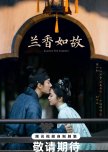
“When I became engaged to my wife, her name was Shen Jialan. When I married her, her name was Xu Lanxiang. The red thread has always bound me to the same person.” Those are Jin Qi’s last words to Lanxiang, and honestly, I think they explain their relationship better than any romantic confession could. He loved her intensely and almost completely. He went against his family, society and even his own interests for her. I would not necessarily call him the perfect lover, but I can confidently say he was the best husband for her. Yet throughout the drama, I kept asking myself: what exactly did Lanxiang feel for him?
For a long time, I genuinely wondered whether she loved him at all. Jin Qi’s eyes were always full of love when he looked at her, while Lanxiang’s feelings were much harder to read. She was a good daughter, mother, wife and daughter-in-law. She cared about him and his family, protected them and stood beside them, but so much of what she did seemed to come from responsibility, principles and righteousness rather than romance. At one point, I thought perhaps they were simply life partners and companions who understood each other, rather than soulmates in the conventional romantic sense.
By the end, I changed my mind. Lanxiang did love him. But her love was never going to look like Jin Qi’s because romance was never the centre of her existence. Jin Qi could love one woman as if she were his entire world. Lanxiang could not live that way because life had already taught her that love was only one part of existence. Her family was destroyed, her engagement broken, she was forced into slavery, betrayed, humiliated and eventually forced into another marriage by imperial authority. Her mother’s last word to her was simply “live.” After surviving all that, how could romance possibly become the most important thing in her life?
She wanted freedom before she wanted romance. She wanted her parents to live peacefully. She wanted to protect the people she considered family. She wanted to write her own stories. She wanted to survive without becoming another person controlled by power. And perhaps most importantly, she refused to let revenge consume the rest of her life. She had every reason to hate the Lin family. She had a blood feud with them, yet she did not spend her life trying to destroy them. That alone makes her different from the countless revenge-driven protagonists we see in historical dramas. She suffered injustice without becoming obsessed with reproducing that injustice onto someone else.
That is also why I stopped blaming her for not loving Jin Qi in the same way he loved her. Love is not a transaction. Someone loving you ten times more intensely does not create a debt that you have to repay. They loved each other, became husband and wife, raised children and shared an entire life. For me, that is enough. Their relationship becomes more meaningful precisely because they are not the usual “two people who live only for each other” couple.
Their marriage also begins with a serious problem: Jin Qi forced it. He genuinely believed he was protecting her by giving her security through an imperial edict, but his good intention does not erase what he did. From Lanxiang’s perspective, he was still another powerful man making a life-changing decision on her behalf. That is why her emotional distance makes sense. It takes years before she can separate the man he becomes from the man who once took away her choice.
This becomes one of the most interesting contradictions between them. Jin Qi’s rebellion against the world is often about protecting Lanxiang, while Lanxiang’s rebellion is about refusing to be controlled by anyone, including Jin Qi. He thinks love gives him a reason to act. She thinks love should never become a reason to control another person. Their is different. Even when Jin Qi eventually understands this, he can never completely experience the world the way she does because he has never lived through the same loss of identity and freedom.
That is why the scene in which he finally discovers who Lanxiang really is works so well for me. He does not expose her or use her identity against her. Instead, he burns the evidence and essentially tells her that from now on she is simply Lanxiang, his wife, regardless of where she came from. There is no grand romantic speech necessary. They just look at each other. That quietness means more to me than a dramatic confession would have. It is almost as if, after everything, he finally understands that loving her means allowing her to exist as the person she chose to become.
And then there is the red thread. Jin Qi literally ties himself to Lanxiang and wishes that in another life he could still marry her. It is incredibly romantic, but what makes the scene painful is that Lanxiang’s life continues after his ends. He dies before fifty, while she lives on for many more years, losing almost everyone around her one by one. She does not die because her husband died. She continues living. She continues writing. She continues raising the next generation. Eventually she finishes the story of the Shen family and dies peacefully at old age. That ending is very Lanxiang. Jin Qi’s love may have been the great romance of his life, but Lanxiang’s life was much larger than her romance.
This is why “Against the Current” fits them so well. Jin Qi goes against the current loudly. He was expected to become a scholar but chose the sword, married the woman he loved despite the circumstances, resigned from an important position when he no longer believed in the court, and repeatedly put himself between his family and danger. He even trains his daughter in swordsmanship rather than deciding that being a girl should limit her.
Lanxiang goes against the current much more quietly. She does not want wealth or political power. She simply wants to live freely, and in her circumstances even that is a radical desire. She survives through intelligence, observation and patience. She writes under another name, finds ways around rules rather than simply smashing them, helps women escape terrible marriages and repeatedly chooses solutions that minimise bloodshed. Her rebellion is not always loud, but it is constant.
I especially loved the way her intelligence is connected to writing. Lanxiang cannot physically change the entire society around her, but she can write stories. The woman who once had to survive by hiding her identity eventually becomes someone who records the experiences of women living under that society. At first she writes about herself and the Shen family. Later her perspective expands. She begins recording the lives of women more broadly. That makes her writing almost an alternative form of resistance. History may be written by those in power, but Lanxiang preserves the experiences of people who otherwise might disappear from history.
The drama also understands that “freedom” does not mean the same thing to every woman. That is one of the strongest aspects of its female ensemble for me. Some women want financial independence, women who want love, women who want status, women who want to escape an abusive marriage, women who want children, women who want careers and women who simply want a peaceful family. Lanxiang does not represent every possible version of womanhood. She is simply one version. That is important because sometimes dramas become so obsessed with creating one “perfect independent woman” that every other woman is reduced to a lesson designed to make the heroine look better.
Du Cuique, Zhao Xingtang, Lü Jier, the Lin sisters and others all have their own desires and reasons for trying to escape their circumstances. Their choices are not always admirable, but that does not mean their desires are meaningless. Du Cuique’s ambition, for example, comes partly from wanting to escape the position assigned to her. Zhao Xingtang’s obsession with money is also understandable when you realise how little control she has over her marriage, family and reproductive life. Even when these women make terrible choices, their desperation is often recognisable.
That is why I found the drama most interesting when it allowed different women to pursue freedom in different ways. It becomes weaker whenever it seems to say, “This is the correct way for a woman to live.” Lanxiang’s philosophy is powerful precisely because she arrived at it through her own experiences. It does not need to become a universal instruction manual.
What I cannot deny how much the drama gave me outside the central romance. It genuinely feels like a whole-life story. We see a girl become a young woman, then a wife, mother and eventually grandmother. We see people enter her life, change her, leave her and eventually die. The drama does not treat time as something that exists only between major plot events. It makes time visible.
One of my favourite examples is the woman selling chrysanthemum greens. First she is a young girl selling vegetables. Years later she is selling the same greens with her newborn. Years later she is still selling them, now with a girl and a boy running beside her. Nothing dramatic has to happen in those moments. The vegetables remain the same while the people change. That is such a simple way of showing that life keeps moving even when the characters themselves are caught up in huge personal struggles.
That idea affected me more than I expected. Watching Lanxiang see women from her own generation slowly disappear into old age made me think about my own life. I am in my early twenties, my mother is in her fifties, and my grandmother is in her eighties. Watching this drama made me realise that the woman I see as “my mother” was once a young girl too. My grandmother was once young, active and carefree. One day I will also look back at this period of my life from somewhere much further away. I find that kind of reflection difficult, and this drama made me confront it.
That is why the later parts hit me much harder than I expected. The deaths are not only there to create tragedy. They create a sense of time passing. People who were once central characters become memories. Families change. Children become adults. People who were once enemies end up helping one another’s families. A woman who began as a carefree girl becomes a mother. A former servant becomes a respected wife. A divorced woman builds a different life. Someone who once betrayed another person eventually helps that person’s family. Life is messy like that.
The drama repeatedly shows that everyone is trapped by something. Lanxiang is trapped by her identity and history. Jin Qi is trapped by family responsibility and political power. Other women are trapped by marriage, money, social status or reproductive expectations. Even people who appear powerful are negotiating with someone above them. That makes the world feel more believable than a simple good-versus-evil story.
I also appreciated that Lanxiang often chooses strategic resistance rather than simply relying on Jin Qi’s authority. The divorce storyline is a good example. Instead of having the powerful male lead crush everyone for her, she looks for a legal route within the existing system. The rules may be unfair, but understanding them gives her another kind of power. That fits her character much better than simply becoming someone who solves every problem through status.That philosophy is one of the reasons I think the drama's social commentary is stronger when it is embedded in the story than when it is spoken directly.
The production is another major strength. The costumes, sets, cinematography and historical atmosphere are beautiful, and I particularly liked the visual sense of time passing. The drama often feels like someone actually thought about how to frame a historical household rather than simply putting actors into expensive costumes.
Liu Xueyi absolutely surprised me as Jin Qi. He could easily have become frustrating because of the forced marriage and the intensity of his love, but Liu Xueyi gives him enough restraint that his internal conflict is visible even when he barely moves. His eyes do an absurd amount of work. I could see his love, jealousy, guilt, worry and helplessness without needing a speech.
I had a more complicated reaction to Tan Songyun’s Lanxiang. I understood her intellectually before I always felt her emotionally. The character deliberately hides a lot of her feelings, which suits Lanxiang, but in a romance where one person loves so intensely, I sometimes wanted clearer evidence of what was happening inside her. Her eventual realisation that she loved Jin Qi therefore felt meaningful, but it was also something I often had to infer.
Ironically, that emotional imbalance may also be part of why I became so attached to Jin Qi. Because his feelings were so visible, I kept waiting for Lanxiang to meet him somewhere emotionally. She did, eventually, but on her own terms and at her own pace. I don't think that makes their love unequal. It makes their lives different.
The supporting relationships were another major reason I stayed invested. The friendships among the maids, the siblings, the parents, the children, and even former rivals often felt more alive than many dramas make their secondary romances. I particularly liked the way women helped other women survive, whether through small acts of kindness, sharing information, protecting each other or simply making life slightly less miserable. The little household interactions often gave the drama warmth when the larger political story became heavy.
What ultimately makes this drama special to me is that it is not really a love story disguised as a historical drama. It is a life story in which love is one part of a much larger existence. It is about family, friendship, responsibility, survival, social position, injustice, ambition, motherhood, ageing and the choices people make when every available choice is imperfect. It allows its characters to live with consequences instead of resetting their lives after every arc.
Lanxiang is especially memorable because she does not spend her entire life trying to win. Sometimes she simply wants to survive. Sometimes she wants to protect someone. Sometimes she wants to walk away. Sometimes she accepts poverty over power. She can be stubborn, complicated and even selfish, but I think that is part of why I believe in her. She does not owe the world a perfectly inspirational version of womanhood.
So yes, this is probably my drama of the year. Not because every part is flawless. The heroine can be too capable, the themes are sometimes overexplained, some supporting characters are underdeveloped, and the later story becomes more exaggerated than I would have liked. But the ambition of telling an entire life instead of just one romance is something I rarely get from historical dramas.
I started watching it wanting to understand why it was called Against the Current. By the end, I realised the answer was not simply that Jin Qi and Lanxiang rebelled against society. They were both trying to decide what kind of people they would become inside a world that had already decided what they were supposed to be. Jin Qi fought the current loudly. Lanxiang moved against it quietly. Neither escaped completely, but they found their own way to live.
And maybe that is enough. They loved each other, even if they did not love in the same way. They became husband and wife, raised children, lost people, endured hardship and eventually reached the end of their lives. Jin Qi wanted the red thread to continue into another lifetime. Lanxiang simply continued living in this one. For me, that difference is not a flaw in their love story. It is the reason I will remember them.
Was this review helpful to you?


