
 News


 3
 3
 1


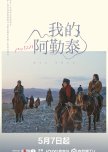
The Summer We Cannot Hold Forever
I avoided watching this drama several times because of its seemingly poor background setting. Personally, I am quite interested in countryside dramas and slice-of-life stories, but I have a particular dislike for poverty and uneducated, backward-minded characters. So, despite my interest in this genre, I kept putting it aside. However, after noticing its impressive Douban ratings, achievements, and the fact that it had only eight episodes, I eventually decided to give it a try.
The first two episodes were honestly a struggle. They were mainly focused on establishing the characters and their circumstances, and I found them extremely boring. I also wasn't particularly fond of the people initially. However, things gradually became more interesting, and by the end, I understood why this short series had received so much appreciation. Interestingly, I started watching partly because of Ba Tai's actor, whom I vaguely recognised as a handsome face. I certainly didn't expect to discover such an impressive performance.
One of the greatest strengths is its natural and almost documentary-like portrayal of everyday life. Through the interactions between a Han Chinese family and the Kazakh community, we get a glimpse of different ethnic traditions, lifestyles, values and ways of understanding the world. Rather than presenting everyone as idealised people living in a picturesque paradise, the characters have their own flaws, stubbornness and contradictions. The relationship between Wenxiu and Ba Tai is particularly refreshing. Their interactions develop naturally, without relying on exaggerated romantic gestures or unnecessary dramatic conflicts. It feels like watching two young people gradually discovering their feelings.
However, I found the treatment of Wenxiu's character and the tragedy surrounding Ta Xue particularly interesting, although I have mixed feelings about how the story handles responsibility. Wenxiu begins as an insecure girl who struggles to stand up for herself. Gradually, she learns to express her opinions and fight for what she believes is right. But there is a difference between finding your voice and understanding when, where and how to use it. Her intervention in other people's family matters and her later decision to confront Gao Xiaoliang alone reveal that she has not entirely developed that judgement. Her courage sometimes becomes recklessness.
I also think Zhang Fengxia's unconditional understanding of her daughter has another side. She is a loving and supportive mother, but constantly comforting Wenxiu without correcting her mistakes leaves an important gap in her growth. Being young does not mean being exempt from responsibility. At the same time, I wouldn't place the entire blame for Ta Xue's death on Wenxiu. Gao Xiaoliang's greed and dangerous behaviour, alongside the unpredictable circumstances, matter too. Nevertheless, the tragedy becomes more complicated when everyone repeatedly dismisses it as an accident without allowing Wenxiu to confront the consequences of her decisions. Sympathy and accountability should be able to coexist.
Ta Xue's death also gives the series a much deeper meaning. What initially appears to be a peaceful countryside story gradually reveals the conflict between tradition and modernisation, nature and technological progress, and individual desires and unavoidable responsibilities. Ta Xue, a psychologically troubled horse that gradually recovers in the summer pasture, represents something fragile that cannot simply be protected from the changing world. Ba Tai's decision to shoot the horse to save human life is heartbreaking precisely because there is no easy alternative. His identity as a hunter's son suddenly becomes meaningful. The scene is not merely about losing a horse; it symbolises the painful choices people must make when different values collide.
I particularly appreciated that the series did not portray the traditional way of life as an uncomplicated paradise. The Kazakh community has its own rules, patriarchal structures and generational conflicts. Sulitan's eventual willingness to accept change reflects the difficulty of adapting without completely abandoning one's identity. Similarly, Ba Tai's departure and eventual return to the pasture suggest that choosing a way of life also means accepting its responsibilities and sacrifices. Three years pass, but we are deliberately left without knowing everything that happened during that period. His final choice matters more than an explanation of every feeling behind it.
Another highlight for me was the cinematography and the remarkable portrayal of horse riding and horseback archery. I have watched countless historical dramas featuring horseback riding, so it is not something particularly unusual for me. However, Ba Tai's riding and archery felt genuinely different. Later, discovering that Yu Shi is actually a gold medallist in horseback archery made everything even more impressive. His physical ability brings an authenticity to the character that ordinary acting and stunt performances cannot easily reproduce.
The entire cast deserves appreciation. Yu Shi, in particular, brought Ba Tai to life with an effortless naturalness. His performance never felt like someone deliberately trying to look attractive or charismatic. Instead, his physical presence, expressions and interactions made Ba Tai believable. Zhou Yiran also suited Wenxiu's character well.
Ultimately, I unexpectedly found a thoughtful story about growing up, belonging, cultural identity, love and the inevitability of change. The first two episodes nearly made me abandon it, but the final episode completely changed my perspective. Eight episodes might seem too short for such a broad collection of ideas, yet the details planted throughout the story give its conclusion considerable emotional weight.
The summer pasture is beautiful, but it is not a place outside the reach of time. Perhaps growing up means realising that we cannot preserve everything we love, nor can we escape the consequences of our choices. We can only decide what is worth protecting and learn to live with what those decisions cost us.
Was this review helpful to you?


