
 News



This review may contain spoilers
Sometimes the Person Who Changes Your Life Is the One You Never Expected
*Romance of a Twin Flower* isn't simply a romance. At its heart, it's a story about transformation—how love, trust, forgiveness, and companionship can change people.Ji Man is such a refreshing heroine. She's intelligent, capable, independent, practical, and resourceful, yet she has a warm and compassionate heart. I love that she never loses her independence even after falling in love. She doesn't try to win Ning Yuxuan over; she simply lives her life, and eventually, he falls for the person she truly is.
Ning Yuxuan's transformation is probably my favorite part. He begins as a guarded man carrying resentment, responsibility, and the pain of his past. Through Ji Man, he slowly discovers that happiness can be found in the simplest things.
The Liu Village arc was especially beautiful. Watching them repair the villagers' broken things, laugh and dance around the fire, and seeing Ji Man help Ning Yuxuan overcome his fear of fire was one of the most touching parts of the drama. Those moments showed that emotional support doesn't always come through grand gestures. Sometimes, simply having someone beside you can make life feel lighter.
Their relationship also has such a satisfying "push-and-pull dynamic". The woman who once pursued him becomes the woman who wants her independence, while the man who once wanted nothing to do with her gradually becomes terrified of losing her. And what makes it even better is that Ji Man isn't playing hard to get—she genuinely wants to build a life of her own. Ning Yuxuan has to learn that if he wants her love, he has to earn her trust.
And the emotional payoff was incredible. Ding Yuxi's acting deserves special praise. His breakdown when he thought he might lose Ji Man was heartbreaking. The intensity of his grief, helplessness, fear, and love felt so raw that I couldn't help but feel it with him. That scene alone showed how far Ning Yuxuan had come—from a man who once wanted nothing to do with her to a man who couldn't imagine losing her.
What makes the ending so satisfying is that their love doesn't merely bring two people together. It helps them break free from the hatred, pain, and burdens inherited from the previous generation**. They choose forgiveness and a future together instead of allowing the past to determine their lives.
There are certainly moments when the plot becomes complicated, and some side stories could have been developed better, but the emotional journey made it worthwhile for me.
In the end, this is a drama about learning to trust, learning to forgive, and discovering that happiness can sometimes be much simpler than we imagined.**
---
✦ XO's Take ✦
Sometimes love doesn't just change two hearts—it changes the story they inherited, turning hatred into forgiveness and pain into a reason to live happily again.
Was this review helpful to you?
This review may contain spoilers
I Wasn't Going to Let That Wedding Slap Slide… But That's Not the Whole Story.
I have a habit of questioning things while watching dramas. If something doesn't make sense, I can't just let it go. I need to figure out WHY. And this drama gave me plenty to investigate—from a wedding slap that felt out of character to a man who somehow ended up looking like a snowman within the palace grounds. Seriously, writers?One reason I enjoyed Lanxiang so much is that she doesn't simply wait for someone to rescue her. She observes, assesses, and finds ways to handle difficult situations. I like characters who think their way through problems, so I kept wondering what solution she'd come up with next.
But that's also where the drama lost me at times. The wedding slap was one example. I understood Lanxiang's anger, but publicly slapping Jinqi felt inconsistent with the strategic, calculating person I'd come to know. I expected her to handle the situation in a way that reflected her usual ability to think things through. Her feelings made sense; her actions didn't. To me, the scene sacrificed character consistency for dramatic impact.
Han Liang's death was another moment that left me questioning the writing. He remained kneeling in the snow until two servants found him the next morning and wondered who had built a snowman. Within the palace grounds, of all places! I barely see him weaken or struggle against the cold, and nobody seems to have tried persuading him to leave. I understood the tragedy, but the lack of buildup made its execution difficult to believe.
Still, these flaws didn't define my entire experience of the drama. What the writing occasionally stumbled over, the performances and emotional moments often made up for. Lu Xuanyi's portrayal of Jinqi's grief was particularly moving. His crying didn't feel like the usual polished, restrained performance of a powerful general. Sometimes he cried like a boy who had lost someone precious, without trying to hide his pain. Those unguarded moments felt painfully real to me—as if I was seeing the person beneath the general's "armor".
And then there's the red thread. After spending so much time analyzing characters and questioning their choices, I wasn't prepared for how much that final image would affect me. I won't explain the scene because new viewers deserve to experience it for themselves, but it left me reluctant to say goodbye.
WOULD I RECOMMEND THIS DRAMA?
Yes. Where else can you admire a heroine for thinking three steps ahead, question a writing choice that makes her abandon that very strength, be moved by a general whose grief strips away his usual composure, and then you get ambushed by a red thread because you didn't expect it that way to happen? Lol.. That scene left me with such mixed feelings.
Was this review helpful to you?
Where's My Desk and Badge at the Divine Constabulary? I Want In!
I would like to formally complain that *Shadow Punisher* let me sit through all these cases without giving me an official role in solving them. I'm watching Li Si and the others work, spotting questionable decisions, wondering what goes on inside these people's heads—and not once did anyone ask for my input. Where's the recruitment office? I have opinions, and apparently, I'm willing to work overtime for free just to solve these cases.In all seriousness, not every episode kept me hooked. Some dragged, and I definitely had moments when I wished things would move along faster. Still, there were enough intriguing cases and memorable character moments to keep me watching.
Li Si would be my first choice of teammate. Smart, capable, playful, and surprisingly deep, he's someone I'd love to brainstorm with. His intelligence is impressive, but it's his heart and the way he treats people that make him stand out. And if we're being completely honest, having a handsome, wealthy, well-connected martial arts expert on the team is practically hitting the jackpot. I'm just saying.
His bond with Meng Rui was particularly meaningful to me. Their relationship showed how grief can distort judgment and how pride can stand between people who still matter to each other. Sometimes, figuring out what happened is only half the battle; understanding why people act as they do can be much harder. It's a reminder that a misunderstanding can be difficult to resolve when hurt and pride get in the way.
Then there are the little details: a keepsake, a promise, a quiet act of loyalty, a kite in the sky. These moments might seem small, but they reveal so much about the characters. I love when a drama trusts its viewers to notice the meaning behind a gesture instead of explaining everything outright. Those subtle touches made the story more meaningful to me.
Not every case deserves a standing ovation. A few scenes nearly put me to sleep—or maybe I actually passed out with my eyes open, only to rewind later and figure out what I'd missed. But apparently, my curiosity has no off switch. Give me a questionable motive to investigate or a character behaving strangely, and suddenly I'm back on duty—whether the Divine Constabulary hired me or not.
My verdict:
The pacing and I still have some unresolved issues—especially considering the scenes where I may or may not have been investigating with my eyes closed. But Li Si and the Divine Constabulary have made a compelling case for keeping me around. I'd happily take another case with this team.
Now, can I finally have that desk and badge, Chief?
Was this review helpful to you?

This review may contain spoilers
A Saint, a Superwoman, Every Man's Dream... What Else Could I Describe Her? lol
This drama gave me plenty of emotional moments, a heroine worth rooting for, and quite a few reasons to scratch my head. LOL!Wei Ruo's journey from a girl who experienced poverty, abuse, and unimaginable hardships to a woman admired by ordinary people is certainly compelling. Seeing her use her experiences to help those who are struggling is one of the most satisfying parts of the story. She understands the suffering of common people because she has lived through it herself. No wonder they adore her almost like a saint!
But here's where things get a little unbelievable: Wei Ruo seems capable of doing practically everything. She can outsmart powerful and corrupt officials, devise clever strategies, handle political complications, organize a community, protect refugees, develop livelihoods, and even deal with matters that would normally require an entire team of experienced people. Sometimes, I wondered if she was a heroine or a one-woman imperial department.
Her intelligence and resourcefulness are admirable, but I wish the writers had shown more of how she acquired those skills. Being clever and resilient is one thing; being exceptionally good at almost everything is another.
And speaking of missed opportunities, Zhuyu Estate deserved so much more attention! It had the foundations of a self-sufficient community, with agriculture, livelihood projects, military training, education, and shelter for refugees. Yet we barely get to see how these initiatives developed into sustainable results. I also found it strange that the Emperor seemed so disconnected from everything happening there. When ordinary people recognize and adore someone for changing their lives, wouldn't that reputation eventually reach the imperial court? An imperial visit and some recognition of her achievements would have made a wonderful addition.
The political storyline also had its share of questionable moments. Wei Ruo repeatedly managed to bring down influential people with surprisingly straightforward plans, while the people around her sometimes seemed to exist mainly to make her shine.
Lu Zhuo, in particular, deserved more character development. His loyalty, patience, and devotion to Wei Ruo were evident, but I wanted to see more of his independent growth and, most importantly, more teamwork between the two. Their relationship could have been even more satisfying if they had faced challenges as equal partners rather than having Wei Ruo carry so much of the story.
There were also several plot points that stretched my suspension of disbelief, with some developments feeling rushed or simply lacking proper explanations.
Still, I can't deny that this drama made me emotional. There were scenes that genuinely touched me, and Wei Ruo's determination to give others the kind of life she never had is something I appreciated.
MY FINAL THOUGHTS:
A memorable heroine, plenty of emotional moments, and an interesting premise, but too many conveniences, unrealistic situations, and underdeveloped storylines kept this from becoming an outstanding drama.
I enjoyed watching it, but I also spent a good amount of time questioning the writers. LOL!
If you've got the patience to overlook the plot inconsistencies, you might just survive this drama all the way to the final episode. Hahaha!
Was this review helpful to you?
This Drama and My Overthinking Became Best Friends— Made Me Trust No One, Not Even Myself
I went into this drama thinking, “70 episodes? This better be worth it.”Somehow, I ended up wishing there were more.
And the funny thing is, I wasn't even watching Story of Yanxi Palace like a normal viewer. I was analyzing it. Every suspicious reaction, every strange decision, every little detail that didn't quite add up made my brain immediately go:
“Wait. That's suspicious.”
Then the investigation began.
I would form a theory, look for evidence, question my own theory, revise it when something didn't fit, and sometimes discover that I was completely wrong. Other times, I would get that incredibly satisfying feeling of realizing I had noticed something the drama wanted me to notice.
That was one of the biggest reasons I stayed hooked. I wasn't simply waiting to see what happened next—I was trying to figure out why it was happening.
Wei Yingluo was a huge reason I stayed invested. I loved her intelligence, initiative, critical thinking, and ability to turn problems into something she could solve. She doesn't simply wait for things to happen—she observes, thinks, adapts, and acts. I didn't agree with some methods she used, but that made her even more interesting to me.
I also became surprisingly attached to the characters. Some made me admire them, some frustrated me to no end, and some genuinely broke my heart. Even when I disagreed with someone's choices, I often found myself trying to understand what led them there.
What stayed with me most is how the drama constantly puts principles, loyalty, love, family, ambition, and survival against each other. Nobody gets through the palace simply by being clever or simply by being good. You have to understand people, understand the situation, and sometimes adapt without losing yourself.
And somehow, 70 episodes didn't feel like 70 episodes.
I laughed. I got angry. I became suspicious of practically everyone. I rooted for people, questioned people, and occasionally wanted to yell at my screen.
By the end, I realized I wasn't just watching a palace drama anymore.
I had become part of the investigation.
And perhaps the line that stayed with me most was Yingluo's answer to Qianlong:
“Regarding your question, I don't have an answer right now. But I will spend a lifetime answering you. Just be patient and wait.”
After spending 70 episodes watching these characters scheme, struggle, love, lose, adapt, and survive, that line felt like a beautiful way to end the journey.
Was this review helpful to you?

This review may contain spoilers
The Love Story of Portable Charger and Rubber Gloves
Who would have thought a portable charger and a pair of rubber gloves could have this much chemistry? Apparently, sparks really do fly when opposites attract!What a fun and heartwarming ride! Horang and Bo-bae's unusual connection gave us plenty of hilarious encounters, awkward moments, and sweet romantic experiences. From Horang's dramatic first encounter with chicken feet to their chaotic theme park adventures and the unforgettable haunted house scene, I had so many reasons to laugh.
But beyond the comedy, what I particularly loved was discovering romance through Bo-bae's eyes. Having never really experienced it, her bucket list with Horang became an opportunity to discover the sweetness of spending time with someone special. There's something endearing about a first-timer in romance. Even an ordinary walk or an unexpected little encounter can become a precious memory when everything feels new.
As their feelings grew, the story also revealed a more emotional side. Bo-bae's condition made her see herself as a monster, and her fears became an obstacle to the happiness she deserved. Thankfully, she had people who believed in her and encouraged her to keep moving forward.
What stayed with me most was their decision to spend their time together, face their fears, and support each other despite the uncertainties ahead. They couldn't guarantee an easy future, but they could choose to face it together.
WHY I RECOMMEND THIS DRAMA?
This is one of those rom-coms that sneaks up on you. You might start watching for the quirky setup and hilarious situations, but before you know it, you're invested in these two and genuinely rooting for them. It has just the right mix of comedy, sweetness, and heartfelt moments to make the journey worthwhile.
And honestly, how often do you come across a love story involving a portable charger and rubber gloves? That's already a pretty good reason to give it a try!
Was this review helpful to you?
The Men Were Fighting Wars, the Women Were Escaping Fate, and Me? Lost in Their Dialogues.. lol
Have you ever finished a drama feeling satisfied with the ending, yet wondered why the journey didn't affect you as much as you expected? That's how I feel about Spring of the Blade.The drama has romance, political intrigue, family conflicts, and memorable characters, but something about the overall storytelling kept me from becoming fully emotionally invested. I appreciated what it offered, even if I wished it had left a deeper impression.
Shen Run and Qingyuan were among the highlights for me. What I admired about Shen Run was how he translated his love into action. When their future was at stake, he acted decisively, coordinating the arrangements needed to secure their relationship in an incredibly short time. His determination and resourcefulness made his love convincing. He wasn't simply waiting for things to work out; he was actively fighting for the future they wanted.
Xu Kai's fighting scenes were another standout. His movements have a raw, explosive quality that makes each strike feel heavy and impactful. The action doesn't rely solely on elegant poses; there's a sense of momentum and physical force behind his movements. It's a distinctive quality that made the fight scenes particularly enjoyable to watch.
My main reservation, however, is the dialogue. Many conversations rely on hidden meanings, indirect remarks, and implications that the characters seem to understand immediately. I sometimes found myself trying to decipher what was actually being said rather than immersing myself in the scene. While this subtlety can enrich political intrigue, it occasionally made the storytelling feel more demanding than engaging. Translation and cultural context may also have contributed to the difficulty.
This affected my emotional connection with the story. I could recognize the significance of certain events without necessarily feeling their full impact. I wanted more room for the characters' inner struggles and emotional consequences to develop, rather than having to infer so much from their circumstances.
Li Congxin was particularly interesting to me. Beyond his heartbreak, I appreciated how his experiences forced him to confront his responsibilities as a son, a commander, and a husband. He had to understand his father's sacrifices and recognize what was at stake if he failed to fulfill his own duties. To me, his growth was not simply about letting go of an unattainable love, but about accepting reality and becoming more conscious of the people who depended on him.
I also found the ending satisfying because the sisters were finally able to lead their own lives, free from many of the family restrictions that shaped the previous generation. Their different paths reinforced one of the drama's most meaningful ideas: the next generation doesn't have to repeat the lives of those who came before them.
Overall, Spring of the Blade has qualities worth appreciating, particularly its romance, action scenes, and themes of love, sacrifice, responsibility, and freedom. However, its dialogue-heavy storytelling and the emotional distance I sometimes felt prevented it from becoming a truly moving experience for me.
SHOULD YOU WATCH IT?
If you enjoy historical romance, political intrigue, subtle exchanges, and forceful action scenes, give it a try. If you prefer straightforward dialogue and consistently deep emotional engagement, you may find it less satisfying.
I finished the drama appreciating where the characters ended up, even though I wished the story had made me feel more along the way. Sometimes, a drama gives you enough to understand its characters, but not quite enough to make you feel their story.
Was this review helpful to you?
This review may contain spoilers
When Loyalty Has a Price, What Are You Willing to Sacrifice?
What happens when family loyalty becomes more dangerous than betrayal? When protecting someone means taking responsibility instead of sacrificing them? And when doing the right thing comes at a price you cannot escape?The Road to Splendor is the kind of historical drama that gradually reveals its real subject beneath the political intrigue: people and the choices they make when loyalty, love, power, and survival collide.
What makes this drama interesting is that very few choices are presented as simply black or white. Characters can have understandable motives and still make terrible decisions. A person can love their family and still hurt them. Someone can feel genuinely neglected and still be wrong for betraying the people who trusted them. Someone can be trying to protect a loved one while unknowingly putting that person in greater danger.
That distinction between understanding a character's reasons and excusing their actions is one of the drama's strongest themes.
At the center are Zhao Ling and Tingyun, whose relationship became my favorite part of the story. Their marriage is not built around one character constantly rescuing the other. They are partners. Both are intelligent, capable, and willing to stand up for each other. Most importantly, they understand that loving someone also means not making that person bear the consequences of your own choices.
Tingyun deserves particular attention. She is clever without becoming unnecessarily arrogant, compassionate without becoming naïve, and politically perceptive without losing her humanity. She isn't simply there to support the male lead—she actively influences the story through her judgment and decisions.
The drama's treatment of “family” is even more fascinating. It presents very different versions of filial piety and family loyalty. In some families, family members protect each other. In others, children, in-laws, and relatives can become convenient sacrifices when reputation, power, or self-preservation takes priority.
That contrast makes the healthier family dynamic between Zhao Ling and Tingyun more meaningful. Their story suggests that tradition doesn't have to be repeated simply because it has always existed. Family loyalty can mean protecting one another, accepting responsibility, and refusing to make someone else pay for your mistakes.
Yuanbao's storyline particularly stood out to me for this reason. His sense of being neglected is understandable, but his betrayal remains his responsibility. What makes his later development meaningful is that he eventually faces the consequences rather than continuing to hide behind his reasons. His guilt becomes more than regret—it becomes an opportunity to acknowledge his mistake and begin making amends. His storyline reminded me that guilt can be painful, but when someone chooses to face it honestly, it can also become the first step toward change.
Yu Jingxiu provides another interesting example of the conflict between principles and family loyalty. His story shows how difficult it can be to follow one's conscience when doing so means going against the people one is supposed to be loyal to.
And then there is Mo Yi's storyline, which I found particularly heartbreaking. The drama shows that truth alone does not always guarantee justice. Evidence can exist and still arrive too late. A person can be judged according to circumstances that later turn out to be incomplete or misleading, yet the consequences cannot always be reversed. This gives the story a more painful human dimension.
The drama also has its flaws. Some developments require patience, and viewers looking for constant action may find certain sections less engaging. I also felt that Zhao Ling's personal origins were left unexplained, which was a missed opportunity considering how compelling his character became.
But if you enjoy dramas where characters' motives matter, choices have consequences, relationships are tested by moral dilemmas, and family loyalty isn't automatically treated as virtue, this drama gives you plenty to think about.
Don't watch it only to find out who wins. Watch it to see who takes responsibility when everyone has something to lose.
And by the end, the most satisfying part isn't simply seeing the characters reach their destination. It's seeing what kind of people they choose to become along the way.
-------
“When we're married someday, what kind of couple do you hope we'll be?”
— Zhao Ling
Was this review helpful to you?
This review may contain spoilers
To Build a Better Future, One Must Challenge Old Traditions
The Sword and the Brocade (2021)An arranged marriage. A husband with an established household. A wife expected to know her place. What could possibly go wrong? LOL! Quite a lot, as it turns out! Beneath the romance, schemes, rivalries, and household politics, this drama is about a woman who refuses to let tradition dictate her worth—and the people whose lives are affected by her choices.
SO, WHAT MAKES THIS DRAMA WORTH WATCHING?
- A heroine who doesn't need to win by playing dirty.
(Shiyi relies on intelligence, patience, and resourcefulness rather than underhanded tactics. She earns her place without becoming what she opposes.)
- A marriage that grows into a real partnership.
(No instant romance here. Two strangers gradually build trust, recognize each other's strengths, and become each other's greatest support.)
- A male lead with more to learn than how to love.
(Lingyi's journey also involves confronting his responsibilities and reconsidering practices he's long accepted.)
- A household where everything can become a battlefield.
(Jealousy, status, family expectations, and hidden motives—sometimes managing the Xu household seems harder than managing an empire. LOL!)
- A story beyond the family walls.
(Shiyi deals with household affairs, while Lingyi's efforts extend to the maritime sea ban. Its eventual lifting brings opportunities for trade and prosperity.)
- Even the villains have a part to play.
(Their greed, schemes, and obsession with status expose the flaws of the old system. Some characters help improve things; others show why the old ways needed to end.)
- A near-beheading that deserves its own investigation.
(The executioner was already swinging while Lingyi was still racing to the palace. So, how exactly did Shiyi escape? My theory: she had fainted, the blade missed by an inch, and the imperial pardon arrived just in time. LOL! The suspense was real, but the timing? A mystery for the writers!)
What I particularly loved in this drama was that the story didn't make romantic happiness its only measure of success. I wanted Shiyi and Lingyi to build a household where children could grow up without inheriting the rivalries and inequalities of the previous generation. Seeing Shiyi finally receive the recognition she deserved made it all the more satisfying.
The drama has its flaws, and some conflicts may test your patience. Still, I appreciated how every character, whether through their good intentions or mistakes, contributed to the story's bigger message. Some showed what was worth preserving; others exposed what needed to be left behind.
Perhaps that's what stayed with me most. Love brought Shiyi and Lingyi together, but it was their courage to question old ways that gave their story a deeper meaning. A better future doesn't come from blindly following the past, but from having the courage to challenge it.
Was this review helpful to you?
What If Knowing How the Story Ends Is Exactly How You Change It?
We usually think knowing the ending ruins the story. But what if knowing the ending is exactly what gives you a chance to change it?That was the idea that stayed with me while watching The Eternal Fragrance. The people who knew the history weren't simply waiting for it to repeat. They used what they knew to guide, protect, teach, and influence the people who could shape what would come next.
And that's what made the story more interesting to me than simply watching characters fight against fate.
- MAYBE THE REAL VARIABLES ARE THE PEOPLE -
What I enjoyed most was how many characters mattered to the bigger picture.
The story isn't carried only by the main romance. Friends, disciples, mentors, comrades, family, and even characters whose motives I questioned all leave their mark. A person's guidance can change someone else's thinking. A sacrifice can affect a future decision. Choosing compassion instead of revenge can break a pattern that has existed for generations.
The more I thought about it, the more I saw these relationships as "variables".
You can't change what already happened. But you can change who learns from it, who they trust, what they believe, and how they respond when history begins repeating itself.
That also made the morality of the story more interesting. Humans aren't automatically good, demons aren't automatically evil, and immortals aren't automatically righteous. I kept wanting to understand why someone became the person they were, before deciding how I felt about their actions.
Sometimes understanding didn't excuse a character. It simply made them harder to dismiss.
- WOULD I RECOMMEND THIS DRAMA -
Yes.
If you enjoy xianxia that gives you more to think about than romance and fantasy, The Eternal Fragrance is worth trying.
Come for the world, the mystery, the relationships, and the romance... but pay attention to the people who know the past and what they choose to do with that knowledge...
... because the most interesting part may not be watching fate unfold...
It may be watching people quietly change the pieces ... and wondering whether, this time, the ending will be different.
Was this review helpful to you?
All That Drama and I Still Felt Dehydrated
I really wanted to love this because I enjoyed Yanxi Palace so much. Unfortunately, Princess Adventures never gave me the same feeling.My biggest issue is the writing. There are plenty of ideas here, but everything feels squeezed into only six episodes. The romance, the conflicts, the character relationships, and the drama itself needed more time to breathe. Instead, I often felt like I was watching things happen without having enough time to become emotionally invested in them.
The romantic love triangle had potential, but I never felt enough chemistry or development between the characters. I wanted to understand what drew them to one another and why their relationships mattered so much. Too often, I was simply told that the feelings were important rather than actually feeling them myself.
Wangduoji, in particular, didn't work for me. He's calm and composed, which can be appealing, but I found him too emotionally dry. His acting felt just as restrained. There were moments when I expected at least some emotional reaction, but instead I was left thinking, “That's it?
Zhaohua also didn't impress me as much as I expected. Being Yingluo's daughter naturally made me expect some of her mother's sharpness and strategic thinking. But while Zhaohua can be clever, her personality often felt impulsive, spoiled, and overly dramatic.
And that's where I kept comparing her to Yingluo.
With Yingluo, I often found myself thinking, “Wow, she has already thought several steps ahead."
With Zhaohua, I sometimes found myself thinking, “Girl... what are you doing?"
Kang'an was probably the character I found most interesting because his connection to the original series gave him more emotional baggage and complexity. But even his storyline didn't feel substantial enough to make me think a whole sequel was necessary.
Overall, Princess Adventures was okay—but the more I watched, the more I realized I didn't really need it.
I don't regret watching it. There were entertaining moments, interesting ideas, and enough palace drama to keep me going. But when I reached the end, I was left with more questions than attachment to the characters. I never found myself as emotionally or intellectually invested as I was with Yanxi Palace.
It feels less like a sequel I desperately needed, and more like a little extra tucked behind the original. And after watching it, I think I'm perfectly happy leaving the real Yanxi magic where it began.
Was this review helpful to you?
This review may contain spoilers
The Quietest Scenes Left the Deepest Marks
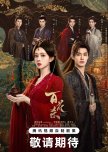
I didn't expect Blossoms of Power to get under my skin the way it did.I started watching for the palace intrigue, the costumes, the mystery, and—let's be honest—the handsome Crown Prince. I thought I'd simply enjoy the story, move on to the next drama, and forget about it.
Well… that didn't happen.
Some dramas entertain you. Some make you curious about what happens next.
And then there are dramas that quietly move into your head. This was one of those for me.
What I loved most was the relationship between Hua Yong and Xihe. It wasn't just about sweet moments or romantic chemistry. I loved how they respected each other's strength and how their relationship allowed both characters to grow.
They felt like the foundation and traveler, the wind and ship. Hua Yong gave Xihe support and a place to stand, but he never had to become the person who decided where she should go.
And Hua Yong?
His love language is basically EVERYTHING. lol
Acts of service? (check)
Gifts? (check)
Quality time? (check)
Words of affirmation? (check)
Physical affection? (check)
But what really got me was how thoughtful he could be. Some of his gestures seemed small at first, yet somehow became the moments I remembered most.
The lanterns.
The fireworks.
The little acts of care.
The quiet moments together.
Those were the things that made their relationship feel personal to me rather than simply romantic.
I also enjoyed that the drama didn't give me characters who were easy to put into neat little boxes. Changqing, in particular, made me think about the difference between loving someone and wanting to be chosen by them. His storyline was frustrating at times, but also genuinely interesting to watch.
And Junsho!
This little boy is ridiculously cute. He has that wonderful combination of being innocent enough to make you smile and unexpectedly clever enough to make you wonder if he will grow up as shameless as his father. hahaha
Of course, I had moments when I wanted to grab the screen and yell at the characters, especially Prince Lie. There was this scene where my reaction was basically:
WHY DID YOU DO THAT?! OMG! so stupid.
But that's also part of why I enjoyed watching. The characters actually made me feel something—whether I was smiling, getting annoyed, laughing, or staring at the screen in disbelief.
And somewhere along the way, I became emotionally invested enough that the drama actually managed to make me cry.
A LOT!
What stayed with me most wasn't a particular plot twist. It was the little moments—the kind you don't realize are important until you've finished watching and suddenly find yourself thinking about them again.
That's when I knew this drama had gotten me.
I came for the palace drama.
I stayed for Hua Yong and Xihe.
I was hit with emotional damage.
If you like palace intrigue, romance with substance, complicated characters, humor, beautiful symbolism, and dramas that can make you laugh one minute and hurt your feelings the next, Dong Feng Xin is worth giving a try.
Just come prepared.
-----
"People always measure marriage by its length. A resentful couple can spend decades together. If a union is true, then even if it’s as brief as the morning dew, a single night of true love is worth more than an eternity.” — Shen Xihe
Was this review helpful to you?
This review may contain spoilers
I Could See the Charm… I Just Couldn’t Feel It
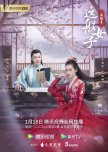
I wanted to like this drama more than I actually did.There are quite a few things I appreciated about it. The humor, even in the court and political scenes, kept things light, and Ban Hua's family was one of my favorite parts. They're incredibly protective and considerate toward her, but considering how she was raised and that she's royal kin, her personality actually makes sense. She's confident, outspoken, fearless, and refreshingly different from the usual historical female lead. I genuinely enjoyed her character.
I also appreciated the story, the characters, and the overall lighthearted approach. So I can understand why this drama has so many fans and such a high rating.
What I struggled with was the presentation. The dialogue, mannerisms, and delivery felt very theatrical and somewhat unnatural to me. Perhaps that's intentional for the historical setting, but it's simply not a style I'm comfortable watching. Rong Xia was particularly difficult for me to connect with. This isn't a criticism of Hou Minghao's acting—he's actually one of the Chinese actors I really like. I think he portrayed Rong Xia exactly as intended; it's just that the character's very restrained and formal manner didn't work for me.
I also didn't feel much chemistry between Hou Minghao and Guan Xiaotong. Maybe it's just me, because chemistry is subjective, but even their hugs and kisses didn't really give me that romantic feeling. 😂 I can usually tell when a couple's intimacy on screen actually affects me. With this pair, I could see the romance, but I didn't really feel it.
Overall, I can appreciate what this drama has to offer—the humor, the characters, the family dynamics, and the story itself. I just didn't connect with the overall presentation enough to become fully invested. Perhaps it's simply a matter of personal taste.
*************
XO's quote:
“When fate shows us what we might lose, it is love that teaches us to fight for what we can still save.” — XO ❤️
Was this review helpful to you?
This review may contain spoilers
I Didn’t Expect to Cry This Much Over an “Okay” Drama
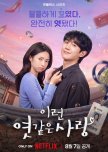
This drama was okay overall, but somehow, it managed to move me more than I expected. There were so many emotional moments that, honestly, I think I shed enough tears to fill a river. 😂😭What I really liked was their small community. I loved how the people around Eun-sae and Tae-ha gradually became like one big family. Their warmth, concern, and willingness to stand by one another made the story feel comforting, especially during the heavier moments.
I also found Tae-ha’s father’s story quite heartbreaking. What happened between him, Tae-ha, and the people connected to his past felt like such a cruel twist of fate. But what moved me most was seeing him eventually accept his defeat in life. After everything he had done and everything he had lost, there was something sad and strangely human about finally seeing him let go.
The drama wasn't perfect, and there were moments when I felt the story could have been better, but it still managed to leave an emotional impact on me. And for me, that's worth something.
XO’s Quote:
“Some hearts are bound by love, some by blood, and some by the cruel twists of fate.”
Was this review helpful to you?

Surprisingly Enjoyable
This is my first time writing a review, so I'll just share my honest thoughts.I know this is a low-budget drama, and the fighting scenes are quite slow, but it didn't really bother me because I became more interested in the story.
What I really liked was the concept of being pulled into another world and having to complete different missions. It made the drama fun to watch, and there were funny moments in every episode that kept things entertaining.
I also liked the relationship between the leads. Without giving away too much, I appreciated the idea that even when a relationship is going through a difficult time, there can still be love and hope. I enjoyed seeing them learn to work together, support each other, and solve the mysteries as a couple.
For me, their romantic chemistry wasn't particularly strong, but their teamwork was. They worked well together when facing challenges, and that was one of my favorite parts of the drama.
The supporting cast was okay, and the acting was also okay—not amazing, but not bad either. Since I wasn't expecting a high-budget production, I focused more on the story and whether it kept me interested.
I also liked the ending. It was satisfying and added to my overall enjoyment of the drama.
Overall, it may not have the best fighting scenes or the strongest acting, but the humor, story, teamwork, and message of hope made it a worthwhile watch for me.
Sometimes a drama doesn't have to be perfect to be fun. I'm glad I watched it.
Was this review helpful to you?


