



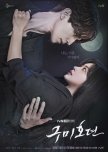
Foxes, folklore, and feelings that hit harder than the CGI ever could.
There’s something so quietly satisfying about a drama that leans into the supernatural and still manages to feel human. Tale of the Nine-Tailed didn’t need to convince me of its mythical rules or worldbuilding with exposition dumps or fancy lore charts. It just dropped me in — gumiho, gatekeepers, underworlds and all — and somehow, I went with it. Not because it always made perfect narrative sense, but because it felt emotionally true.Now, the central romance between Lee Yeon and Ji-ah did have its moments — it was sweet, wistful, a little doomed in the way all fox/human love stories seem contractually required to be. But it was the fractured, feral relationship between Yeon and his younger brother, Lee Rang, that really locked me in. That push and pull between love and resentment, betrayal and the aching hope of still being loved? That’s where the show’s heart lived.
Kim Bum gave Rang this incredible volatility — not just anger, but that deep, snarling kind of hurt that comes from having once trusted someone too much. His bitterness never read as villainy for villainy’s sake. It was bruised loyalty turned sour, and watching him teeter between revenge and reluctant vulnerability was way more gripping than any monster-of-the-week segment.
And then came Kim Soo-oh as the soul of Geomdung, Rang’s childhood dog reborn in a little boy’s body — and that just wrecked me. No words needed. Just this silent, devastating echo of unconditional love. Every time Rang’s expression softened around him, it cracked something open in the show that none of the epic fantasy stakes could touch. That bond didn’t just humanize Rang — it quietly gutted him. And, okay, maybe me too.
Visually, the series didn’t hold back. Glossy, stylized shots of city nights, ancient forests, shadowy temples — it all looked cinematic without screaming about it. The effects were hit-or-miss, but the aesthetic ambition? Solid. It knew what kind of story it was telling, and it committed. Even when the plot occasionally veered into the melodramatic or padded its runtime with less-than-compelling side quests, the emotional current stayed steady. Loss, love, sacrifice — all the usual big-ticket items, but handled with enough restraint that they didn’t feel hollow.
By the end, what lingered wasn’t the spectacle or the mythical creature lore. It was the loyalty between brothers frayed by centuries of pain, the love that refuses to die even when the body does, and that strange, beautiful ache of having been loved by something that never asked you to be anything more than you already were.
Tale of the Nine-Tailed didn’t reinvent the genre, but it didn’t need to. It simply told a fantasy story with real soul. Strange? Yes. Occasionally messy? Sure. But when it landed, it landed deep.

Beneath the Swagger, a Pulse That Caught Me Off Guard
This one wasn’t supposed to work on me — not on paper, anyway. I went in expecting sleek production, high-gloss action, chaebol antics dressed as crime-fighting. And it is all that. The cars are fast, the suits are tailored, and the premise practically screams product placement. But somewhere between the glitz and the gunfights, Flex X Cop pulled something real out of me.Ahn Bo-hyun’s Jin Yi-soo walks in like he owns every room — all bravado, designer arrogance, and too much charm for his own good. And at first, I rolled my eyes. But then the cracks showed. And behind them was someone not just lonely, but invisible in the way that wealth can sometimes erase identity rather than build it. That shift — from a man flashing his money to someone learning how to listen, to care, to earn his place — caught me off guard.
His chemistry with Park Ji-hyun’s Detective Lee felt grounded in something real. She doesn’t flinch around him, doesn’t fall for the charm, and more importantly, doesn’t need him. Watching her hold her line while he learned how to step into his own without stepping over others was one of the show’s quiet strengths. Their tension wasn’t flirtation-first — it was built on frustration, respect, and a growing ability to see one another beyond the surface.
The cases themselves? Sometimes sharp, sometimes predictable. The procedural rhythm wobbled here and there — a few episodes leaned too hard on convenience or style over substance — but the emotional thread held steady. It never stopped asking: what does justice look like when you’ve only ever lived above consequence?
What stuck with me wasn’t the clever reveals or the chase scenes — it was the shift in tone when Yi-soo stopped trying to prove himself with flash and started showing up for people. Not with power. Not with privilege. Just with presence. That’s what stayed.
Flex X Cop came dressed like entertainment, and it was — fun, sharp, fast. But beneath the branding and bulletproof confidence was something sincere. Something that asked what it means to matter, not just to the world, but to yourself.
Didn’t see that coming. And I’m glad I was wrong.
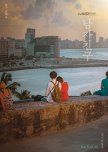
A Postcard Romance That Forgot to Send the Feelings
Encounter is the kind of drama that makes a stunning first impression. It arrives dressed in sunset tones, full of poetic framing and wistful music, whispering about fate and freedom and all the aching beauty of a love that feels slightly impossible. You sit down expecting to be swept off your feet — and for the first couple of episodes, you just might be. But then the story settles into a rhythm so soft, so cautious, that somewhere along the way, it loses its pulse.There’s no denying that Song Hye-kyo and Park Bo-gum look beautiful together. Their chemistry is tender, like a memory you don’t want to disturb. And that’s the thing: it’s all so delicate. Their relationship unfolds in polite conversation, lingering looks, and the kind of silences that are meant to speak volumes — but often feel more like ellipses that never finish their sentence.
Song Hye-kyo’s Cha Soo-hyun is a woman wrapped in quiet sorrow, composed almost to a fault. There’s a weariness to her that feels earned, but the drama seems afraid to let her fully unravel. And Park Bo-gum’s Jin-hyuk is essentially a walking warm breeze — idealistic, endlessly patient, and so pure-hearted it almost hurts. But that gentleness, while lovely in theory, leaves very little room for actual tension. You don’t wonder if they’ll be together. You wonder why the story seems afraid to let them actually feel the things it keeps hinting at.
Thematically, the show reaches for rich territory — the push-pull between personal freedom and social expectation, the quiet desperation of those who’ve lived for others for too long. But instead of diving into those ideas, Encounter tiptoes around them like it’s afraid of breaking its own aesthetic. Every confrontation is subdued. Every dramatic beat, muffled. It’s a drama more concerned with maintaining mood than deepening emotional stakes.
And look — the mood is gorgeous. The cinematography is soft and cinematic, with shots that linger like paintings. Havana is a dreamscape of color and contrast. The hotel sets are bathed in warm light. It’s all very romantic... visually. But at a certain point, I stopped feeling inside the story and started feeling like I was watching someone else’s carefully curated vacation photos. Beautiful, but distant.
There are moments of genuine connection — especially early on, when their meeting feels serendipitous and open-hearted — but they’re rarely followed by anything that builds. The show coasts on the idea of emotional depth without ever truly sinking into it. And as the episodes go on, that fragility becomes less poignant and more frustrating.
Encounter isn’t hollow. It’s thoughtful, intentional, and sincere in its way. But it’s also incredibly safe. It flirts with melancholy without ever embracing it, hints at rebellion without ever defying anything. By the time it wrapped, I wasn’t angry or disappointed — just slightly wistful, like I’d been promised a symphony and got a lullaby instead.
It’s not a bad drama. It’s just too polite to make a mess of your heart.
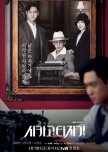
When Memory Writes Itself in Ghost Ink
Some stories don’t just entertain — they echo. Chicago Typewriter isn’t just a drama; it’s a séance wrapped in ink and resistance, summoning grief, love, and memory with the quiet ache of something half-remembered but never truly lost. Watching it felt less like watching a show and more like being gently haunted.On the surface, the premise sounds almost too rich to pull off: reincarnated lovers and comrades tangled in a forgotten past, all resurfacing through a haunted typewriter and the creative unraveling of a reclusive celebrity author. But somehow, Chicago Typewriter doesn’t trip over its ambition. It earns every reveal, every shift in tone, every ghost that refuses to stay buried.
Yoo Ah-in — and I don’t say this lightly — delivers a performance that cracked something open in me. As Han Se-joo, the tortured, brilliant writer slowly realizing his nightmares are old lives bleeding through, he doesn’t play the trauma loud. It comes in tremors — the way his voice falters, how he retreats when someone gets too close, how he fights himself harder than any enemy. There’s a scene where his past self (Seo Hwi-young) fully collides with his present, and Yoo carries it with such restraint that it hurts more than a monologue ever could. It’s devastating in the softest, most elegant way.
Lim Soo-jung’s Jeon Seol is the kind of female lead K-dramas don’t always know how to write — layered, scarred, both tender and furious. She’s not just a love interest; she’s a link to a past she doesn’t understand and a future she’s terrified to face. And Go Kyung-pyo, as ghostly Yoo Jin-oh, is an emotional Trojan horse — funny, charming, and then quietly tragic, until his absence in a scene starts to feel like a second loss. His arc wrecked me in a way I didn't see coming.
But this isn’t just about individual performances. It’s about chemistry that transcends timelines. The trio’s bond in the 1930s, forged in the fires of revolution, has gravity — a sense of shared sacrifice and doomed hope that pulses beneath every modern interaction. This isn’t a typical love triangle. It’s a triangle of memory, betrayal, and loyalty so old it feels sacred.
The writing is patient — maybe too patient for some — but every moment matters. It doesn’t hold your hand. It builds mood slowly, through rooms heavy with silence, through unfinished manuscripts and glances that speak entire lifetimes. Even the music — melancholic, lush, full of longing — feels like it’s carrying messages between lives.
And then there’s that typewriter. A literal ghost in the machine. It isn’t just a device. It’s a witness, a portal, a bridge between the person you were and the one you still might be. It’s one of the most poetic metaphors I’ve ever seen in a drama — and it’s not just clever. It feels. Every time those keys strike, it’s like memory forcing itself to be heard.
Is it perfect? Not quite. The pacing asks for patience. The political themes could’ve been even sharper. But honestly, I don’t care. What Chicago Typewriter gave me was more than plot. It gave me grief that lingers across generations. Love that endures reincarnation. And an ending that didn’t just move me — it stayed with me.
Some dramas finish when the credits roll. This one didn't. It still taps at the edges of my mind, like keys on a typewriter, spelling out things I didn't know I’d forgotten.

A Drama That Doesn’t Perform, It Just Breathes
There’s something about Be Melodramatic that felt like catching my own reflection in a window I didn’t realize I was walking past. It didn’t try to win me over. No big hooks, no emotional grandstanding — just three women talking, fighting, failing, laughing, and carrying invisible weights like people I know, like people I’ve been.The tone is dry — not emotionally distant, just honest in that unfiltered, sideways-glance kind of way. I found myself laughing not because the show was trying hard to be funny, but because it understood the absurdity of everyday life. Sadness sneaks up on you here. It’s not telegraphed with a score swell or a dramatic monologue — it lands in a casual comment, a pause that lingers a beat too long, a friend passing you a drink instead of an apology.
Chun Woo-hee, Jeon Yeo-been, and Han Ji-eun didn’t feel like characters crafted for television; they felt like they’d existed long before the first scene rolled. Their friendship isn’t flawless or performatively “ride or die.” It’s full of micro-resentments, awkward silences, emotional mismatches — and it still holds. That kind of bond? That’s real. That’s earned.
Sure, the show-within-the-show leans a little smug at times. The meta storytelling plays like it knows it’s clever — and to be fair, it often is — but occasionally it winks a little too hard. And yes, the pacing meanders. It doesn’t care about momentum so much as mood. But weirdly, that became part of why I loved it. It’s not trying to move fast. It’s trying to stay — in the moment, in the feeling, in the small stuff that other dramas skip past.
It didn’t change my life. But it did remind me what it feels like when a story just lets you exist beside it — no judgment, no manipulation, just quiet companionship.
Some dramas entertain. This one kept me company. And I’m really grateful for that.
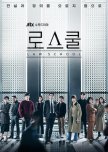
Truth Isn’t a Puzzle — It’s a Burden
Law School didn’t go easy on me. I thought I was stepping into a clean, intellectual mystery — a few sharp twists, maybe a courtroom climax, and lots of fast-talking brilliance. But it gave me something messier, heavier, and honestly, more valuable. It made me think. And it made me feel the weight of thinking.Kim Myung-min’s Professor Yang is a character I wasn’t sure I was supposed to root for at first. Cold, clinical, almost hostile in his precision. But that steel-trap mind, the way he dissected logic like he was doing surgery without anesthesia — it started to feel like a weird kind of refuge. Not because he was kind. But because he never lied. Even when it would’ve been easier to. Especially then.
And the students. I didn’t realize how attached I’d become until I found myself holding my breath during scenes that weren’t even high-stakes on paper. It was the emotional tension — how each of them carried their own version of disappointment, anger, or shame, and still kept trying. Not to be heroes, but just to be better. Kang Sol A, Han Joon-hwi, and the rest — their arcs weren’t smooth, but that was the point. Watching them get it wrong, question themselves, take detours… that was the human part. That’s what stayed.
There were bumps — some legal twists felt engineered more for shock than sense, and the pacing leaned into procedural territory that sometimes slowed the emotional rhythm. But I was still in it. Completely. Because it never treated the law like a stage prop. It treated it like a question: what do you do when justice and the system aren’t the same thing? And even more painfully: what do you do when truth comes at the cost of people you love?
What comforted me — strangely — was how the show refused to wrap that question up neatly. It let the discomfort linger. It let justice be hard, ugly, thankless. And it let people keep fighting for it anyway.
Law School didn’t just argue its case. It sat with the silence after the verdict. And that’s what made it unforgettable.

Love That Crosses Every Border, Even the Quiet Ones Inside Us
This should’ve been absurd. A chaebol heiress literally parachuting into North Korea and straight into the life of a stoic, duty-bound soldier? Everything about it screams melodrama. And yet, Crash Landing on You didn’t just make it work — it turned it into something transcendent.From the start, it felt like stepping into a fairytale with edges sharp enough to bleed. Son Ye-jin brought such radiant stubbornness to Se-ri, a woman who’s been hardened by expectation but never quite lost the pulse of her own heart. And Hyun Bin as Captain Ri — what do you even say about a performance that silent, that devastating? His stoicism never felt cold. It felt like a dam built out of necessity, cracking with every unspoken kindness.
Their chemistry wasn’t just electric. It was restrained, like two people terrified of what touching each other might break. Every look, every unspoken confession, carried so much tension it felt almost unbearable. But it never tipped into parody. The love between them wasn’t played for thrills. It was treated with reverence.
And then there was everything else — the borders beyond the literal one they stood on. Political borders, yes, but also the invisible ones between people: pride, fear, guilt, loyalty, grief. The show never pretended these barriers didn’t matter. It just insisted they could be crossed anyway.
The supporting cast added so much texture. The North Korean villagers, each drawn with such humor and quiet dignity; the loyal soldiers, equal parts comedic relief and emotional anchors. Even the villains felt shaped by the world they moved through rather than simply written to create friction.
Was it polished? Absolutely. Romanticized? Completely. But none of that dulled its sincerity. It believed in its own story — in longing that endures, in sacrifice that redefines, in love that chooses you back, even when the world says it shouldn’t.
By the time it ended, I didn’t just cry for the story. I grieved leaving it. It reminded me that some tales don’t just land softly in your memory. They set up camp there, quietly, insistently, refusing to let you go.
Some dramas entertain. Some break your heart. And then there are those rare few that make you believe again — in something bigger, braver, and impossibly human.
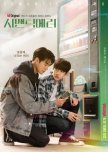
No Errors, Just Joy
Semantic Error felt like it arrived carrying everything I’d been waiting for — a Korean BL that didn’t flinch, didn’t dilute itself into subtext, and didn’t treat love between two men as something fragile or tragic. Instead, it gave me exactly what I’ve always craved: romance that felt alive, unapologetic, and full of small, electric moments that made my chest tighten in the best possible way.Part of it is my bias. I loved the manhwa so deeply that there was always going to be a thrill in seeing Jae Young and Sang Woo move beyond panels into breathing, shifting life. But this adaptation didn’t just replicate them. It understood them.
Park Seo Ham as Jae Young felt almost unfairly perfect — all that chaotic, teasing charisma, balanced by an undercurrent of sincerity that hit me harder than I expected. Every smirk carried layers: affection, annoyance, curiosity, longing. And Jae Chan’s Sang Woo was equally compelling in a completely different register. He wasn’t just logical and prickly for comedic effect; there was vulnerability flickering under every precise word, a sense of someone who didn’t know how to want without overthinking it to death.
Together, they felt like inevitability. Their shift from rivals to something warmer wasn’t forced, wasn’t rushed. It felt natural — like breathing. Every look between them carried meaning, every accidental brush of hands felt deliberate, every smile felt earned. The show didn’t pad their dynamic with needless angst; it let the tension and release play out with confidence, trusting that the heart of their story was enough.
Visually, it was crisp and intimate — sterile labs and silent study halls giving way to Jae Young’s messy studio and bursts of playful color. None of it felt cheap or pandering. It felt like care. Like someone behind the camera knew how important it was to make this story feel as real as any other romance, without caveats.
People might call it simple, and maybe it is. But sometimes simplicity is exactly what I need. No overworked metaphors, no tortured plot twists, just a story about two people learning to want each other honestly, without shame or hesitation.
Watching Semantic Error felt like being sixteen again in the best way — every side glance, every smirk, every tiny moment sparking joy so immediate it almost hurt. It reminded me why these stories matter, why they feel like a balm, why they’re not just fluff, but proof that love can exist without fear or apology.
For me, it was perfect. No semantic errors. Just love.

A Story About Everything, That Somehow Ended Up Saying Nothing
I’m still not entirely sure what I watched.There was reincarnation. Time travel, maybe. A cursed coat? Some incense. And a love story that was supposed to span centuries but barely held together scene to scene. Black Knight didn’t just fumble its plot — it buried it under so many tangled concepts that I felt like I was constantly trying to solve a puzzle without knowing what the picture was supposed to be.
It’s not like the ingredients weren’t there. A solid cast. Gorgeous cinematography. Hints of myth and mystery. But everything was so bloated and self-serious that it became impossible to care. I wasn’t emotionally checked out — I was just lost. Not in a fun, twisty, where-is-this-going way. More in a why-is-this-still-happening way.
The romance, which should’ve been the emotional spine, never clicked. Not because the actors lacked chemistry — they did what they could — but because the writing gave them no real human stakes. Everything was fate, destiny, past lives, soul bonds. But none of it felt earned. There were moments that should’ve landed, should’ve meant something, but the buildup wasn’t there. Just a lot of intense staring and vague declarations about protecting each other, forever or whatever.
It’s rare for a drama to leave me feeling absolutely nothing, but this one came pretty close. The tone was all over the place — melodrama crashing into mystical exposition, laced with random plot threads that never wove into anything coherent. I kept watching because I thought, surely this will come together. It never did. If anything, it unraveled more with every episode.
By the end, I wasn’t angry. Just exhausted. And vaguely amused at how far off the rails it all went.
I don’t throw around 1s lightly. But this? This earned it.

Bruises in Uniform: The Violence We Learn to Live With
There are shows that entertain, some that provoke. And then there are ones like D.P. — stripped down to nerve and bone, unwilling to blink, and impossible to forget.From the very first frame, it was clear this wasn’t just another military drama. There’s a hollow quiet to it, even in its loudest moments. A stillness that doesn’t soothe, but smothers. The premise alone — a unit tasked with hunting down military deserters — could’ve leaned procedural, even sensational. But D.P. chooses something harder. It doesn’t sensationalize. It documents. Painfully. Honestly. Without filter or apology.
Jung Hae-in delivers a performance that’s almost ghostlike. His An Jun-ho moves like someone constantly measuring the distance between doing the right thing and surviving the day. There’s no grand heroism here. Just observation. Reaction. A slow, soul-wearing evolution of a man trying to hold onto something soft in a place designed to strip softness away. His silence speaks louder than any monologue — because in a world where speaking out gets punished, silence is its own language of grief.
And then there’s Koo Kyo-hwan, whose presence injects a strange, volatile energy into the bleak machinery of the military world. As Ho-yeol, he walks the line between comic relief and aching vulnerability — the kind of guy who makes you laugh and then punches you in the gut with a single look. Their partnership doesn’t follow the usual arc of “buddy cop” tropes. It’s messier. More human. Built on friction, exhaustion, and unspoken understanding.
What hits hardest is how the show treats violence. Not as plot, not as shock — but as atmosphere. It’s everywhere. In every shouted command, in every sideways glance, in the daily routines twisted by cruelty passed down like tradition. D.P. doesn’t offer answers. It doesn’t soften the edges. It simply holds the lens steady while everything inside the frame fractures.
Each episode pulls deeper into the machinery — hazing that’s been normalized, abuse framed as discipline, silence demanded in place of justice. And while the show never yells, the quiet rage builds like pressure behind drywall. When it finally cracks, it’s not a twist. It’s inevitable. And devastating.
There’s no comfort here. No noble redemption. Just a bitter understanding that some systems aren’t broken — they were built this way. And the people trapped inside them? They bleed quietly. Until they don’t.
D.P. never begs to be admired. It simply exists — heavy, brutal, and achingly real. And in doing so, it doesn’t just tell a story. It leaves scars.
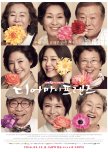
A Love Letter to Life, Written in Wrinkles and Laughter
Some dramas entertain. A few stick around. And then there are the rare ones that gently — and sometimes not so gently — rearrange you. Dear My Friends did that to me. It didn’t just hit close to home; it sat me down, poured me tea, and quietly dismantled my defenses.What I thought I was signing up for was a slow burn about old friends reminiscing their way into retirement. What I got was something else entirely — a raw, defiant, exquisitely crafted story about being alive. The women at the heart of this series aren’t supporting characters in someone else’s journey — they’re the protagonists of their own, and they demand your full attention.
Kim Hye-ja, Na Moon-hee, Youn Yuh-jung, Go Doo-shim… calling them legends feels too small. They don’t act — they inhabit. They bring these roles to life with a kind of fearless vulnerability that you don’t often get to see on screen, let alone from characters society usually shuffles into the background. These women fight, lie, forgive, fall apart, grieve, flirt, cook, break things, say cruel things, and then show up the next day anyway. It’s chaos. It’s truth. It’s friendship.
Go Hyun-jung as Park Wan — our emotional compass — couldn’t have been more perfectly cast. She’s the connective tissue between generations, pulled taut between the exhaustion of caretaking and the guilt of not being enough for everyone. Her evolving relationship with her mother (played with blistering complexity by Go Doo-shim) is one of the most honest and painful portrayals of a parent-child bond I’ve ever seen. It never flattens into clichés — it breathes. It hurts. It heals in fits and starts.
And then there’s the writing. Noh Hee-kyung doesn’t write dialogue; she writes confessions. Every conversation feels like it’s happening in a room you weren’t supposed to be in, and yet you can’t leave. There’s no filler here. Even the silences hum with meaning. And the show doesn’t tidy itself up for your comfort — it lets its characters be difficult, contradictory, full of regrets and still somehow brave enough to keep going.
The supporting cast — Jo In-sung as Wan’s on-again-off-again love, Park Won-sook as the chain-smoking divorcee with sass and sorrow to spare, Joo Hyun as the grumpy old husband who doesn’t quite know how to say “I’m sorry” until it’s almost too late — they’re not just background noise. They’re vital threads in this lived-in tapestry. Everyone’s carrying something, and the show never forgets that.
The final arc — the RV trip to the sea — could have so easily been schmaltz. But it isn’t. It’s transcendently human. It’s one last wild, beautiful, defiant ride toward the end, not with fear but with arms wide open. I wept, not because it was sad, but because it was true. That kind of truth doesn’t come along often.
Dear My Friends isn’t just a drama. It’s a quiet revolution. A reclamation of voices too often softened or silenced. A reminder that life doesn’t stop being messy and meaningful just because you’ve turned 60. Or 70. Or 80.
It left me gentler. Braver. More grateful. And if I could rate it higher than 10, I’d scribble it across the sky.
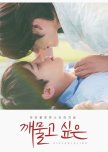
A Brief Flicker of Loneliness Disguised as a Love Story
Kissable Lips isn’t the kind of drama that leaves you reeling. It doesn’t roar, it doesn’t crescendo — it simply passes through like a quiet sigh in the night, brief but not without consequence. I went in expecting a cute spin on the overdone vampire trope, but instead found myself sitting with something smaller, quieter: a story about loneliness dressed up in fangs and romance.Kim Ji-woong’s Jun-ho wasn’t your typical vampire archetype — no brooding predator, no gothic seduction. He just looked… tired. Like someone who’d watched the world move on without him a hundred times too many, and was left floating somewhere between regret and resignation. There was no attempt to make vampirism seem glamorous; it felt more like a sentence than a superpower, and that quiet sadness gave the character surprising depth.
Then there was Yoon Seo-bin’s Min-hyun, who showed up like sunlight through an overcast sky — awkward but earnest, bringing that tentative hope that maybe, just maybe, life could be more than just surviving. Their connection wasn’t explosive, but it was sincere, even when the script rushed it. You could feel the unspoken hunger, not just for blood, but for understanding, for warmth, for a hand to hold without fear.
But here’s the catch — just as the emotional threads started to weave together, the show was already tying its final knot. The short run time was a double-edged sword: it kept things lean, but it also clipped the story’s wings before it could really fly. Whole emotional beats felt hinted at rather than explored. Scenes ended before they could dig into the messier, more interesting angles of immortal grief and fleeting human comfort.
There were moments where the dialogue stumbled — a little too on-the-nose, a little too stitched together from genre conventions — but there was enough rawness in the performances to smooth out the rough patches. It was never empty, just... brief. Like reading a beautiful first chapter and realizing there’s no book after it.
I didn’t walk away from Kissable Lips deeply changed, but I did walk away touched — the kind of soft ache that doesn’t demand attention but lingers quietly at the edges. Like a dream you forget as soon as you wake up, only to feel its ghost for the rest of the day.
Not a drama that stays forever. But one that, for a fleeting moment, made loneliness feel a little less lonely.

A Love Story Built on Awkwardness, Anxiety, and the Beauty of Falling Apart Together
There’s something magnetic about watching two broken people not fit into each other perfectly. Heart to Heart isn’t about cinematic meet-cutes or sweeping gestures. It’s about the clunky, halting, sometimes downright painful process of learning how to simply be with another person — especially when you’ve spent most of your life hiding.Choi Kang-hee’s Hong-do doesn’t ask for your sympathy; she earns your affection by just existing in all her jittery, hyper-alert, helmet-wearing glory. She’s not your typical K-drama heroine, and thank god for that. There’s a rawness to her that makes even her smallest triumphs — stepping outside, holding eye contact, speaking her mind — feel monumental. You feel her progress, and you root for her, not because she’s trying to be anyone else, but because she’s trying to be herself in a world that never made space for her.
Chun Jung-myung, as Go Yi-seok, is the perfect chaotic foil — a man who sells himself as the picture of control but is basically walking around with a “do not disturb” sign over a tornado. He’s smug, infuriating, emotionally stunted — and yet, as those cracks start to show, it’s incredibly satisfying. His unraveling is as important as Hong-do’s awakening, and their dynamic thrives in that messy middle ground where you’re not sure if you want them to kiss or just get intensive therapy (or both).
When Heart to Heart clicks, it really clicks. Their interactions aren’t dressed up with romantic perfection. They’re awkward, often uncomfortable, sometimes even ugly — and it makes their eventual closeness feel earned. You don’t get swept away by fairytale love; you witness two people clawing their way toward something healthier.
But it’s not a smooth ride. The show stumbles with its pacing, especially in the middle stretch where things drift without much forward motion. The tonal swings — from slapstick comedy to deeply traumatic emotional beats — don’t always land on their feet. There were episodes where I felt pulled in two directions emotionally, unsure if I should be laughing or bracing for another gut-punch.
And yet, I couldn’t walk away. Because even with its uneven rhythm, there’s a quiet pulse of realness running through it. It’s a drama that doesn’t pretend healing is linear, or that love cures everything. It shows you the stumbling, the regression, the awkward rebuilding of a self that’s been hidden or broken for too long.
Heart to Heart doesn’t deliver a grand romance. It delivers something messier, something quieter — the strange, beautiful relief of finding someone who doesn’t flinch when you take off the helmet. It’s imperfect, sometimes frustrating, but deeply, stubbornly human.
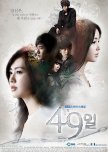
Three Tears, Two Souls, One Haunting Echo
49 Days didn’t grab me with urgency — it sort of drifted in, like a memory I wasn’t sure was mine, and then quietly took up space until I realized how much it was asking me to feel. There’s something so specifically early-2010s about it — the ethereal pacing, the moody lighting, the way grief and fate unfold like a soft wave instead of a crashing one. And that tone? It worked. Not in a flashy, addictive way — more like a long sigh I didn’t know I needed to exhale.The premise sounds whimsical when said out loud — three tears from people who truly love you while your body lies in a coma — but what it becomes is this gentle, aching exploration of how invisible we can be even to the people closest to us. Nam Gyu-ri’s performance was surprisingly affecting. I didn’t expect to connect so much with her, especially because she plays a character that, on paper, starts off a little too naïve, too sweet. But she earns the weight of her story with a kind of wide-eyed desperation that never feels manipulative. Just… real.
Still, Lee Yo-won was the anchor for me. The way she juggled grief, resentment, and reluctant empathy without ever tipping into melodrama? That’s what grounded all the metaphysical floatiness. Her restraint was the emotional floor I kept landing on when the show wandered off into existential corners.
It drags, yes. Some episodes stretch thin, and a few of the reveals come with the kind of soap-level dramatics that almost undercut the show's quiet dignity. But even in those moments, I stayed with it. Because beneath the fantasy was something much more intimate: the pain of not knowing if you’ve mattered enough. The slow realization that love and forgiveness might come from where you least expect — and that sometimes, closure doesn’t mean a happy ending, just an honest one.
By the time it ended, it hadn’t blown me away. It had just quietly broken my heart a little. And I was grateful for that.
This one didn’t shout. It lingered. Like a goodbye whispered too late, but still heard.
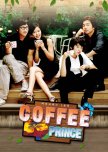
Gender Benders and Heart-Spillers
Revisiting Coffee Prince felt like cracking open a shoebox full of old love letters — some yellowed, a few awkward, maybe a little too earnest for their own good… but impossible to throw away. It’s messy in that very 2000s K-drama way: dramatic music swells, slow-mo glances, plot points that loop a few too many times — and yet? I felt something. A lot of something, actually.What struck me most was how ahead of its time it managed to be, even while stumbling through the execution. This wasn’t just a gimmick about a woman pretending to be a man. It asked, sincerely and repeatedly, “What does love look like when it challenges everything you think you know about yourself?” And it didn’t always answer that elegantly, but it did ask with guts.
Yoon Eun-hye’s Go Eun-chan is pure chaotic empathy — full of heart, full of hunger (both literal and emotional), and impossible not to root for. Her energy was so open, so unpolished, that I didn’t care whether the story was smooth. And Gong Yoo — well. His arc surprised me. I remembered the confusion, the brooding, the tension. I forgot how deeply vulnerable he allows himself to become once the armor cracks. When he breaks, it’s quiet and honest and a little bit beautiful.
Of course, the drama shows its age. The pacing limps in the back half. Some subplots feel like filler dressed up as meaningful side quests. And a few of the supporting characters deserved more than they got. But even when it dragged, I never wanted to walk away. Because underneath the outdated quirks and occasional melodrama, there was something true. A kind of raw sincerity I don’t always find in more polished dramas.
It’s not perfect. It meanders. But it also dares — in its own awkward, lovable way — to say that love isn’t about boxes or roles or labels. It’s about recognition. Soul-level stuff.
And for a drama about coffee, it gave me a whole lot more than caffeine.


