



This review may contain spoilers
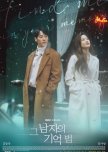
When Love Remembers What You’re Trying to Forget
Some dramas scream for attention. Others whisper their way into you — and Find Me in Your Memory didn’t just whisper, it settled somewhere deep, like a quiet scar you don’t want to heal too quickly. I didn’t expect much going in. I thought I was signing up for a pleasant romance with a slightly angsty twist. What I got was something infinitely more raw: a slow, aching meditation on grief, memory, and the way love doesn’t always save you by fixing you, but by seeing you.Kim Dong-wook wrecked me, but not in the usual melodramatic way. His Lee Jung-hoon doesn’t unravel through dramatic breakdowns — he unravels in the way he holds back, in how his voice catches when certain names are spoken, in the way remembering everything becomes both his curse and his armor. I could feel the weight he carried, not because the script spelled it out, but because every glance was heavier than dialogue could ever be.
Moon Ga-young as Ha-jin surprised me in the best way. She’s bright, she’s warm, she’s everything a K-drama heroine is supposed to be — but there’s an edge to her that never lets you forget she’s broken too. Her cheerfulness never felt fake, just carefully curated. The moments when the cracks show? That’s where the magic happens. Where her grief leaks out and collides with Jung-hoon’s relentless memory, and suddenly, you’re watching something real: not just attraction, but recognition.
The romance here isn’t fireworks. It’s a slow thaw. It’s trust earned scene by scene, smiles that don’t come easily, comfort that feels awkward before it feels safe. The best part? There’s no overwrought love triangle. No gimmicks. Just two people circling each other, cautious and scarred, until they realize they’ve found something rare: someone who sees both the damage and the beauty and doesn’t flinch.
And the grief — god, the grief is beautiful here. Not in a spectacle way, but in the stillness. In the unfinished sentences. The awkward silences. The sharp, quiet moments that stab you when you least expect it. This isn’t a drama about fixing grief; it’s about learning to hold it without letting it drown you. About learning that some things you never get over — you just get through.
Is it perfect? Of course not. Some side plots meander. The pacing has its odd moments. But none of that mattered to me because emotionally, this show found the exact frequency my heart beats on. It didn’t rush, didn’t force catharsis. It sat with me in the hard places, and by the time the final credits rolled, I felt like I’d been seen, not just entertained.
Find Me in Your Memory reminded me of something I often forget — healing doesn’t mean erasing pain. Sometimes, it means letting yourself be fully remembered. By someone else. And maybe more importantly, by yourself.
Was this review helpful to you?

This review may contain spoilers
We Were Never Just Young — We Were Trying
Go Back Couple didn’t just move me — it reached into the part of me that catalogues all the quiet things I never said, all the love I didn’t know how to hold when it mattered. I thought I was walking into a breezy time-travel rom-com, a light reset-button kind of story. But what I got was something so much more bruised and honest. It wasn’t asking how to fix a marriage. It was asking why we stop seeing each other — and ourselves — in the first place.Jang Na-ra doesn’t perform pain, she carries it. Her portrayal of Jin-joo hit in waves — the exhaustion, the resentment, the way her voice would falter not out of weakness but from years of shrinking into roles she never asked for. There were moments when she looked in the mirror, or sat in silence after a sharp word, and it wasn’t dramatic — it was familiar. Uncomfortably so.
Son Ho-jun surprised me with how vulnerable he let his character be, even when he was failing. Especially when he was failing. His Go Chan was never written as a savior, just a man who stopped understanding the woman he loved and didn’t know how to say he was sorry until the moment had already passed. His regret didn’t come with grand gestures. It came in cracked voices and missed opportunities. That kind of grief feels real.
What struck me most wasn’t the “what if” of youth regained, but the slow recognition of what they both lost in the in-between: themselves. This wasn’t about nostalgia. It was about rediscovery — how love gets buried under fatigue and ego, how resentment grows in the space where conversation should’ve been. Watching them relive those early years with hindsight was quietly devastating. Because knowing better doesn’t undo the damage. It just makes it clearer.
Yes, the pacing sagged a little in the middle. And some of the side plots leaned on lighter genre tropes. But the emotional core? Unshakable. There were scenes that made me cry without knowing why — not because they were sad, but because they reminded me of versions of myself I don’t think about anymore.
By the time it ended, I didn’t just want them to find their way back to each other. I wanted them to find their way back to who they used to be — to who they almost became. It made me want to forgive someone. To call someone. To say, “I remember when we were still trying.”
Some stories don’t offer healing. They just remind you it’s still possible.
Was this review helpful to you?

This review may contain spoilers
Love That Breaks, Heals, and Bruises All Over Again
I didn’t expect Emergency Couple to leave me feeling so much. On paper, it looked like standard rom-com fare — exes forced to work together in the chaotic environment of an ER, sniping at each other between treating patients. I thought I knew exactly what I was signing up for. But somewhere in the middle of all the bickering and comedic clashes, something deeper started to surface.What struck me wasn’t just the humor (though there was plenty of that, sharp and well-timed). It was how every fight, every sarcastic jab, carried history. Watching Oh Chang-min and Oh Jin-hee clash felt less like banter and more like two people testing the wounds they left behind. The chemistry wasn’t just romantic — it was layered with guilt, stubbornness, pride, and that unspoken ache of I hate how much you still matter to me.
Song Ji-hyo played Jin-hee with such quiet dignity. Even when she faltered, even when her vulnerability showed, there was a core of strength in her that never felt performative. She didn’t want to be rescued or pitied. She just wanted to stand on her own terms. Choi Jin-hyuk as Chang-min surprised me, too. His arrogance was easy to dismiss at first, but as cracks began to show, there was this blooming softness that felt earned. Not a complete transformation, just enough to remind me that love isn’t about fixing someone — it’s about them wanting to try.
The hospital setting added urgency, sure. The medical cases gave the plot rhythm. But the real tension wasn’t in the emergency calls or racing heartbeats on a monitor. It was in the quiet moments: a look held too long, an apology left unsaid, a memory resurfacing uninvited. It was watching two people navigate not just each other, but the damage they’d done — and the damage life had done to them while they were apart.
It was chaotic. Messy. Sometimes loud and immature. But that’s what made it feel real. Love isn’t clean. Especially love that’s been broken once before. There’s always history humming under every touch, every silence. And this drama understood that better than most.
I thought it would just entertain me. Instead, it reminded me why second chances ache the way they do. And that’s why I loved it.
Was this review helpful to you?

This review may contain spoilers
Love That Refuses to Leave, Even When We Do
Grief has never hit me the way Hi Bye, Mama! did — not with screaming or spectacle, but with these quiet, exacting cuts. The kind that show up when you least expect them: folding clothes, hearing a laugh that sounds like someone you lost, watching someone smile through pain because they don’t know how to stop taking care of everyone else. That’s the kind of grief this show understood.I didn’t start it expecting to unravel. I thought I was walking into something gentle — a touching ghost story, maybe a second-chance fantasy. But Hi Bye, Mama! doesn’t play in wish fulfillment. It sits with the ache of unfinished goodbyes, of memories that cling too tightly, and of a love so fierce it can’t bear to be forgotten.
Kim Tae-hee gave Cha Yu-ri a kind of radiance I wasn’t prepared for. She wasn’t just a mother who died too soon — she was a woman still full of life, overflowing with it, trying desperately to stay present even when the world had already moved on without her. The way she loved her daughter wasn’t soft-focus idealism. It was raw. Unapologetic. Desperate and beautiful. And when she smiled — when she chose to smile for the sake of others — I broke a little more.
What floored me most was the way the show treated death. There’s no horror here, no fear-mongering. The afterlife wasn’t a threat. It was just... waiting. Patient. Soft-edged. A space where ghosts watched the living with both joy and unbearable longing. It wasn’t cruel. It was just real. Because grief isn’t cruel. It’s just what’s left when love has nowhere to go.
Sure, not every subplot landed. Some stories felt stretched, and the pacing wobbled under the weight of its emotional scope. But none of that dulled the core. The show never lost sight of what it was about: not death, but the aftershocks of love. The kind that keeps echoing, even when the world says it’s time to move on.
It reminded me that we’re all walking around with our own ghosts — not always seen, but always felt. And that sometimes, the bravest thing we can do isn’t to hold on tighter. It’s to let go with love.
Hi Bye, Mama! didn’t ask for my tears. It earned them. Quietly. Fully. And I’m still carrying it, in all the best and hardest ways.
Was this review helpful to you?

This review may contain spoilers
Joy Without Apology
There’s a kind of magic in a drama that knows exactly what it is, doesn’t pretend to be more, and still ends up delivering more than expected. Business Proposal wasn’t subtle, and it didn’t need to be. It knew the tropes, loved them loudly, and let them play out with a confidence that felt like being invited into something gleefully unserious — and completely sincere.What pulled me in wasn’t just the setup — though fake dating, mistaken identity, and boardroom tension are catnip when done right. It was the tone. This wasn’t a drama winking at the audience, trying to be too clever for its genre. It trusted the rom-com blueprint, not to subvert it, but to celebrate it. And that sincerity? That’s what made it feel so good.
Kim Se-jeong was at the heart of that. She didn’t just carry the comedy — she lit it up. Her timing, her expressions, the way she gave her character both chaos and control… it was magnetic. And never one-note. Even at her most ridiculous, there was depth flickering beneath the surface. Ahn Hyo-seop played beautifully against that energy — polished and composed, but never cold. Just enough vulnerability tucked under the bravado to keep it all from tipping into caricature.
Every scene between them felt like a perfect rom-com beat: heightened, exaggerated, but always with a hint of truth that made it work. Their chemistry didn’t just sizzle — it sparkled. Like watching two people discover they’re in on the same joke, and the joke is somehow love.
There were no high-stakes emotional breakdowns. No gut-wrenching reveals. And that was the point. Business Proposal gave me permission to just enjoy. To laugh, to root for something light, to let my guard down and be swept up in a story that didn’t ask for emotional labor, only attention — and joy.
The colors were bright, the pacing was tight, and the whole thing moved like it had somewhere fun to be. And for once, I didn’t want to slow it down. It was sweet, a little chaotic, maybe even a bit too clean around the edges — but in the middle of all that gloss, it made me feel good. Not changed, not challenged — just happy.
Sometimes that’s everything.
Was this review helpful to you?

This review may contain spoilers
The Softest Kind of Strength
This one didn’t just move me. It reached into something quiet I hadn’t realized I’d muted — a part of me that still wonders what it means to belong when everything about you feels out of step with the world around you.Extraordinary Attorney Woo isn’t loud. It doesn’t try to impress. It simply offers itself, gently, and waits for you to feel it. And I did. Over and over again.
Watching Woo Young-woo navigate a world built for sameness, armed with logic, wonder, honesty, and an absolutely unwavering sense of right and wrong — it was beautiful in a way that didn’t need to be dramatic. Park Eun-bin didn’t just play her, she embodied her, not as a checklist of behaviors, but as a full, feeling person. It never felt like a performance. It felt like a conversation. And I listened to every word of it.
Each case the show presented had its own rhythm — some quirky, some painful, all of them layered with moral questions that never felt heavy-handed. What made them work wasn’t the verdicts. It was how they reflected back something bigger: how people see each other. How judgment is passed — in courtrooms, in offices, in families — long before a gavel falls.
And then there were the relationships. Her father, carrying guilt and pride in equal measure. Her best friend, loud and loyal and unafraid to tell the truth. Her co-workers, slowly shifting from curiosity to respect. And Jun-ho — kind, patient Jun-ho — who didn’t try to fix or explain her, just walked beside her. Their romance didn’t burn fast. It unfolded. Carefully. With pauses that felt as important as the words.
The tone wobbled at times. Moments of whimsy gave way to sudden weight, and not every subplot landed clean. But even then, the show never lost its center. It knew what story it was telling. And more than that, it knew how it wanted to tell it — with compassion, with clarity, and with the quiet conviction that difference isn’t something to overcome, but to honor.
I didn’t expect to cry as much as I did. Or to laugh, softly, at the little ways the show tucked in joy. But it all landed. Not with force, but with that rare kind of grace that doesn’t ask for attention — just trust.
Extraordinary Attorney Woo wasn’t just moving. It was affirming. And in its softest moments, it reminded me that being different is not a flaw. It’s a language. And sometimes, someone speaks it back.
Was this review helpful to you?
This review may contain spoilers
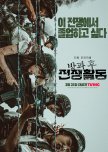
We Were Just Kids, and They Gave Us Guns
I thought I knew what I was walking into. A sci-fi thriller. Teen soldiers. High-stakes alien warfare. I figured it’d be tense, maybe clever. What I didn’t expect was to come out the other side hollowed out — mourning people who didn’t exist, carrying grief for something that felt far too close to real.Duty After School: Part 1 isn’t about aliens. Not really. It’s about being young and having that youth stolen by people in power who mistake bodies for strategy. It’s about kids forced to make sense of death before they even figured out who they were. There’s a quiet kind of devastation in watching someone still learning how to live suddenly being expected to kill.
Every student mattered. That’s what wrecked me. There were no cannon-fodder side characters, no one written just to be expendable. They were scared, selfish, compassionate, petty, brave — so human. And because the story gave them space to be all of that, every loss hit harder. Every goodbye felt like something real being torn away.
The anger I felt — not at the monsters, but at the adults, the system, the normalization of sacrifice — that stayed. There was no big villain monologue, no neat justification. Just failure. Repeated, systemic, cowardly failure. And the show didn’t try to smooth that over. It let the betrayal speak for itself.
What crushed me most were the moments of kindness — those quick glances, inside jokes, the way they looked out for each other even when everything around them was falling apart. That camaraderie felt sacred. Because they knew what they were losing. Maybe that’s why it hurt so much. Not just who died, but what was taken from the ones who lived.
I didn’t cry right away. I just sat there, still. Like the air had been knocked out of me. And then it came in waves. For the promises cut short. For the joy that never had a chance to grow. For how quietly the show let everything unravel.
It didn’t ask for tears. It earned them.
This isn’t something I’ll forget. Not because of the concept. Because of the kids. Because they were never just soldiers in training. They were people. And the world treated them like numbers.
I felt every step of it. And I’m still not done feeling.
Was this review helpful to you?

This review may contain spoilers
The Silence After the Shouting: Bearing Witness, Again
The return of D.P. didn’t come armed with spectacle. It came with silence — dense, suffocating, the kind that accumulates when speaking has proven useless. If the first season opened the wound, this one lingered at its edge, stared into the infection, and didn’t flinch. Not to diagnose it. Just to see it. Fully. Clearly. And without comfort.Season two doesn’t attempt reinvention. It leans into familiarity — not as nostalgia, but as indictment. The same patterns. The same power dynamics. The same violence rebranded as structure. That circular despair is the point. The series knows it’s not offering catharsis. It’s documenting exhaustion.
Jung Hae-in’s An Jun-ho walks through this season carrying weight in every step. Not dramatic weight — not the burden of heroism — but something heavier. The kind of weariness that comes from knowing exactly how systems fail, and exactly how little room there is to maneuver within them. His performance is so measured it borders on stillness, but that stillness holds multitudes: grief, fury, resignation, stubborn flickers of defiance. He doesn't collapse. He endures. And that feels far more devastating.
The writing tightens around that internal collapse. Everything feels one degree more subdued — less confrontation, more suffocation. Even the energy between Jun-ho and Ho-yeol is different. Koo Kyo-hwan is still brilliant, still offbeat and charismatic, but there's a distance now. Like they both know the mission they’re on has less to do with capturing deserters and more to do with surviving the psychic toll of the job itself.
There’s a narrative looseness this time around — threads introduced, then quickly swept under the rug, some arcs pushed forward without the breath they needed. But emotionally? It lands harder. Not because the scenes are more intense, but because the quiet is. There's no swelling soundtrack trying to cue what to feel. Just the ache of it. The slow erosion of belief. And somehow, the fragile insistence on caring anyway.
What this season understands is that the system doesn’t need to scream to do damage. It can break people with silence, with indifference, with the grinding repetition of harm passed down and shrugged off. And yet, in the cracks, there’s still that question — the same one season one asked, only now deeper: What happens when doing the right thing isn’t enough? What happens when it doesn’t even register?
D.P. 2 doesn’t offer an answer. It never pretends to. But it keeps asking. It keeps watching. And that refusal to look away — again — is what gives the show its staggering power.
Not louder. Not cleaner. Just truer.
Was this review helpful to you?

This review may contain spoilers
Grief, Grit, and Gut-Punches: Demon Hunting with a Soul
Some shows sneak in through the side door. The Uncanny Counter didn’t come with huge expectations — just the promise of a supernatural romp and some solid action. But it didn’t take long for that façade to crack and reveal something far more layered: a drama with fists and feelings, where demon hunting becomes a vehicle for exploring grief, justice, and the stubbornness of the human spirit.Jo Byeong-kyu’s So Mun is the kind of lead that grows not just in power, but in emotional weight. There's a vulnerability beneath his initial confusion and awkwardness that never fades, even as he becomes stronger. It’s what grounds him — and the story. Every fight scene felt like more than spectacle; it was a collision of rage, grief, and moral clarity. Watching him navigate loss, responsibility, and anger without losing his core was more affecting than any flashy CGI.
What made this drama soar wasn’t just So Mun, though — it was the team. Yoo Jun-sang as Ga Mo-tak, the gruff, memory-less ex-cop with fists of steel and a heart always two beats too tender. Kim Se-jeong’s Ha-na, stoic and sharp, holding her trauma just behind her eyes, letting it leak out only in the quietest, most vulnerable moments. And Yeom Hye-ran’s Ms. Chu, a healing force in every sense of the word, somehow managing to be the emotional center of gravity without ever stealing focus. Together, they weren’t just co-workers. They were a bruised, awkward, fiercely loyal family.
The chemistry among the Counters felt lived-in. Every inside joke, every shout across the noodle shop, every mid-fight glance said more than exposition ever could. That sense of found family hit hard — especially in a show that’s fundamentally about loss and trying to keep going despite it.
The action was stylish, yes — slick camera work, fluid choreography, the kind of kinetic energy that keeps pulses high. But it never felt hollow. Every punch landed with emotional context. Every villain was a little too familiar, which only made taking them down more satisfying. And somehow, amidst all the supernatural lore and red smoke showdowns, the story kept finding space for humanity — in hospital rooms, on empty rooftops, over shared meals.
Admittedly, the change in writers late in the season left a few seams showing. Some pacing wobbles, a tonal shift that felt slightly off from what came before. But even in those moments, the emotional throughline held steady. The foundation built in the early episodes was strong enough to weather the bumps. The core never cracked.
What lingered most wasn’t the powers or the plot twists — it was the grief. The forgiveness. The stubborn insistence that broken people can still fight, still love, still protect each other. That justice isn’t always clean, but it’s still worth chasing. That being chosen doesn’t make a person special — choosing to care, again and again, does.
By the final episode, the craving for more wasn’t about cliffhangers. It was about wanting to stay in that world a little longer. To see these characters heal, laugh, eat more noodles, take a breath.
The Uncanny Counter was supernatural, sure. But the way it punched straight through to the heart? That was all too human.
Was this review helpful to you?
This review may contain spoilers
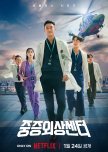
Adrenaline, Grace, and Guts: Where the Hurt Meets the Healing
The Trauma Code didn’t just raise the stakes — it tore through them. From the first emergency call, it pulled me into a world so charged with tension, grief, and grit that stepping away felt impossible. Every episode ran like a pulse under pressure, but what stayed long after the chaos faded were the quiet moments — the ones where everything wasn’t loud, just heavy.Ju Ji-hoon’s Baek Kang-hyuk is a force of nature — controlled chaos wrapped in surgical skill and past wounds that don’t scar over easily. There’s a storm in the way he moves, speaks, saves. Not a grandstanding kind of brilliance, but something earned — and haunted. The character doesn’t ask for sympathy, and maybe that’s why the empathy came in hard and fast. Watching him navigate not just trauma in others but his own unspoken damage hit with surprising force.
Choo Young-woo’s Jae-won brought a different kind of weight. His strength wasn’t in confrontation, but in restraint. There was something about his stillness — that kind of quiet resolve that builds under pressure, refuses to shatter even when everything else starts to. Not flashy, but deeply felt. Every small shift in his expression told a larger story of survival and fear and resilience.
The show never mistook speed for substance. Medical scenes were brutal, yes — high stakes, all adrenaline and clipped commands — but never empty spectacle. Behind every emergency was something more intimate: exhaustion, determination, fear, triumph. Every loss mattered. Every save felt like a victory earned in blood and sweat.
But the real brilliance came in the emotional aftermath. The lingering shots of gloved hands, eyes that couldn’t blink away the weight of what had just happened, bodies moving on autopilot because there wasn’t time to fall apart. That attention to what happens after the sirens stopped made it more than just a trauma drama — it made it deeply human.
The ensemble cast carried their weight beautifully, building a believable, worn-in kind of camaraderie. These characters didn’t feel written to bounce off each other — they felt like they’d already lived through hell together before the cameras started rolling. Even the most minor moments between them had that kind of lived-in ache, like no one was untouched.
By the time it ended, nothing felt unfinished — and yet, the need for more lingered. Not because something was missing, but because the connection ran so deep, letting go felt like walking out of the ER too soon.
There was no moment that didn’t matter. No scene wasted. No emotion unearned. This was a story told with unflinching urgency and unexpected tenderness. It didn’t just surge with energy. It carried something sacred.
A perfect 10, without hesitation — and if another chapter ever arrives, the scrubs are ready.
Was this review helpful to you?
This review may contain spoilers
Legacy in Every Stitch: Doldam’s Heart Beats On
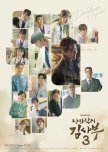
Some sequels feel like reunions. Dr. Romantic 3 felt like a homecoming — not just back to Doldam Hospital, but to a way of storytelling that never forgets where it started, even as it pushes forward. It’s rare to watch a three-season drama that evolves this organically. No whiplash. No gimmicks. Just deepening bonds, widening circles, and the kind of emotional consistency that speaks to the integrity behind the camera as much as on-screen.Teacher Kim, still magnetic, still maddeningly brilliant, remains the compass. Han Suk-kyu continues to play him with that now-signature mix of intensity and quiet grace. He’s older, maybe a touch wearier, but he hasn’t dulled. If anything, his fire burns brighter — not louder, just deeper. He teaches through challenge, through confrontation, through care disguised as frustration. He’s still the moral spine of the show, and watching him hold the line in a world that keeps moving the goalposts? It’s strangely comforting.
Seo Woo-jin and Cha Eun-jae return not as students this time, but as surgeons anchored in their roles. They’ve grown into themselves — Woo-jin no longer running from his ghosts, Eun-jae standing taller in her own name — and it shows. Their relationship feels lived-in now, all rough edges worn down by trust. No need for fireworks; this is the quiet loyalty of people who have been through hell together and decided to stay. Their journey isn’t about whether they can do it. It’s about how they choose to.
And the Doldam team? Now more ensemble than ever. What was once Teacher Kim’s world has expanded into a genuine ecosystem — nurses, administrators, residents, even the returning faces that pop in like old friends dropping by. The show doesn’t just give them names. It gives them purpose. Everyone’s part of the rhythm now, and that sense of camaraderie makes every crisis hit harder, because you care — not just about the patients, but about the people holding the scalpel.
What hit me hardest this season was how earned everything felt. The risks weren’t just medical. They were personal. Ethical. Institutional. And when they paid off — and they often did — it wasn’t because someone gave a dramatic speech. It was because we’ve watched these characters become the kind of people who choose to do the right thing, even when no one’s watching. That kind of payoff is rare, and god, it feels good.
But let’s talk about what you said — because yes, I feel it too: that deep, unshakable craving for one more chapter. A reunion. A collision of eras. Teacher Kim, Dong-joo, Seo-jung, Woo-jin, Eun-jae, In-beom, all in the same OR, clashing, learning, saving lives, driving each other up the wall. It’s the kind of dream that lingers after the final scene — not because the story was incomplete, but because it was so complete, so loved, that we’re not ready to let go.
If this really is the final season, it bowed out with elegance and fire. But something in me still hopes. Not for fanservice, not for nostalgia’s sake — but because Dr. Romantic has never been about just one doctor. It’s about legacy. About handing off the scalpel. And there’s one last handoff I’m still dying to see.
Was this review helpful to you?
This review may contain spoilers
Hope in Scar Tissue: The Heart Beats Louder at Doldam
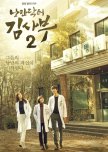
There’s something miraculous about a sequel not just holding its ground, but actually deepening the soul of what came before it. Dr. Romantic 2 doesn’t try to reinvent the Doldam blueprint — it refines it. Sharpens the edges. Softens the right corners. And somewhere in that mix, it becomes even more powerful than its predecessor.This time, the heartbeats we follow are new — raw, uncertain, bruised — but they fit into Doldam like they were always meant to be there. Ahn Hyo-seop’s Seo Woo-jin might be one of the most quietly devastating characters in the series. He walks in like a man who’s given up on the idea that the world can be decent, let alone fair — and yet, under that clinical detachment, there’s this flicker of hope he’s trying desperately to snuff out before it betrays him again. You don’t just root for him — you ache for him.
And then there’s Cha Eun-jae, brought to life with a kind of soft strength by Lee Sung-kyung. She’s not the firebrand some might expect in a high-stakes medical drama — instead, she stumbles. She second-guesses. She wrestles with panic and pressure. And that’s what makes her growth so satisfying. Her arc doesn’t come with a single triumphant “I’ve got this!” moment — it’s built in quiet wins, in the courage to show up again the next day and try. Together, she and Woo-jin don’t fall into romance so much as they find shelter in each other. It’s gentle. Earned. Real.
Of course, Teacher Kim is still the soul of the series — a masterclass in moral clarity delivered by Han Suk-kyu with the kind of presence that doesn’t need speeches to land. He’s still demanding, still disillusioned with the system, still utterly committed to lighting a fire in the people who’ve lost faith in themselves. But this season, there’s a slight shift — a softer edge, maybe, or simply a deeper weariness. The kind that comes not from giving up, but from having fought for so long.
What really makes Season 2 sing, though, is the expanded depth of the ensemble. The Doldam crew doesn’t feel like “background” — they feel like family. Nurse Oh, Dr. Nam, Mr. Jang, In-soo, Eun-tak — every one of them gets moments that matter. And every win, every heartbreak, ripples through the whole hospital. This place breathes. It has memory. You feel the weight of those who came before, and the cautious hope of those who are just now finding their place.
The show also resists the temptation to go louder just because it’s a sequel. Yes, the stakes are high, and yes, the medical cases are gripping, but Dr. Romantic 2 knows that tension without humanity is just noise. It balances both — the high-octane adrenaline of a collapsed lung or a surgical mishap, and the quiet devastation of a resident finally asking for help, or forgiving themselves after years of guilt.
By the final stretch, it doesn’t feel like you’ve just watched something — it feels like you’ve been through something. With these people. In that small, underfunded hospital that somehow always punches above its weight — not because it has the best tech or the biggest names, but because it has heart. And grit. And a stubborn refusal to let go of what matters.
Dr. Romantic 2 didn’t just match the first season — it matured it. Deepened it. Took the foundation of conviction and carved new rooms for grace, for healing, for second chances. It’s rare air for a sequel, and even rarer that it leaves you wanting more, not because anything was missing, but because you’re just not ready to say goodbye.
Was this review helpful to you?
This review may contain spoilers
Scalpel, Soul, and Spine: The Anatomy of Integrity at Doldam
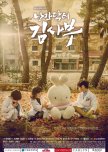
Some dramas race your heart. Others break it. But Dr. Romantic? It does surgery on it — precise, unflinching, and strangely comforting. What looks like a standard medical drama on the surface quietly unpacks into something far richer: a meditation on conviction, healing, and how much it costs to keep your conscience intact in a system designed to wear it down.Let’s start with Han Suk-kyu — because everything starts with Han Suk-kyu. Teacher Kim is the kind of character that other shows would flatten into trope: the eccentric genius, the grumpy mentor, the man with a mysterious past. But here, he’s alive in all his contradictions. He’s not interested in small talk or systems. He’s interested in truth. He’s surgical, not just with his hands, but with his values — always cutting through the noise. And yet, you feel the bruises he hides. The ones no scalpel can fix. He’s not just compelling to watch. He’s the moral axis of the entire show.
And then there’s Kang Dong-joo and Yoon Seo-jung — played by Yoo Yeon-seok and Seo Hyun-jin — two young doctors stumbling through ambition, guilt, and the desperate need to prove themselves. Their growth under Teacher Kim isn’t just a professional arc; it’s emotional excavation. Dong-joo’s anger, Seo-jung’s fear, their desire to be seen — all of it gets laid bare in the operating room, where ego and emotion have no place, but always find a way in.
What Dr. Romantic gets right — and so few dramas do — is that every patient story isn’t filler. Each one refracts something back onto the doctors, exposing cracks or forcing choices. A terminal diagnosis becomes a catalyst for forgiveness. A minor injury reveals decades of trauma. It’s never just blood and sutures — it’s people, at their rawest.
And the Doldam crew? That scrappy, overworked, underfunded team? I’d follow them into any ER. From Nurse Oh’s steady grace to Manager Jang’s tireless juggling act, even the smallest roles are given dignity. This place may be small and perpetually on the brink of disaster, but it feels like home — not just to the characters, but to us.
Of course, the hospital politics are infuriatingly real. The corruption, the hierarchy, the constant tension between doing what’s right and doing what’s safe. But that’s the point. This is a drama about standing firm in a world that keeps trying to make you compromise. And it never preaches. It just shows you a man who won’t bend, and asks: could you do the same?
The pacing? Tight. The dialogue? Razor-sharp. The emotion? Earned, never forced. There are no melodramatic swells for the sake of tears — the drama trusts the characters to carry the weight. And they do, every time.
By the end, I didn’t just care. I believed. In Teacher Kim. In his ragtag crew. In the idea that you can be brilliant without cruelty, and principled without arrogance. Dr. Romantic isn’t just gripping television. It’s a story about how you hold on to your humanity in a profession — and a world — that constantly tries to strip it away.
If all dramas were written with this kind of clarity, compassion, and craft, I’d never sleep again. Easily a 10/10 — and not just because it’s excellent. Because it matters.
Was this review helpful to you?

This review may contain spoilers
The Quietest Stories Are Sometimes the Truest
I didn’t expect this one to reach me the way it did. There was nothing flashy drawing me in — no twisty hook, no high-concept pitch — just a softness I couldn’t quite name at first. But Dear Hyeri didn’t come looking to impress. It came to sit. And somewhere in that stillness, it undid me.What struck me wasn’t what the show said — it was what it allowed to linger unsaid. The grief didn’t demand to be witnessed. It simply existed, in glances, in pauses, in the way people stumbled through ordinary days while carrying the weight of things they couldn’t speak aloud. The writing didn’t try to resolve the ache. It trusted it. Guilt, longing, memory — all of it was held, not fixed. And there’s something deeply rare in that kind of narrative patience.
Every frame felt intentional. Not in a stylistic sense, but in emotional architecture. Nothing wasted. No filler. Just slow, steady excavation. The lead performance especially — it didn’t feel acted. It felt lived. There was vulnerability, but it never asked to be admired. It just existed in the open, bare and careful and true.
And then there were the silences. I’ve never felt so much spoken through quiet. There were entire scenes where nothing happened — no music, no confrontation — just someone sitting, breathing, remembering. And somehow, those were the scenes that cracked me open the most. Because real grief doesn’t always arrive with tears. Sometimes it just lingers in the room with you, waiting to be noticed.
This wasn’t a show built for drama. It was built for recognition. And by the end, I wasn’t just moved — I felt seen. Not in some grand, sweeping way. Just gently. Honestly. Like the story had reached into something I hadn’t realized I was holding and said, me too.
I don’t know that I’d recommend it to everyone. It doesn’t chase attention. But for those it’s meant for, it lands quietly and fully — like a letter written in a voice you didn’t know you’d been missing.
And it stays.
Was this review helpful to you?


