
 Editorials

 2
2 1
1 1
1 1
1


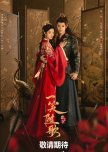
This serie is among the top 5 best Chinese dramas of 2025 in my opinion
It is a magnificent historical drama, created with deep emotion, where the director and screenwriter explore the human soul — power, loyalty, and the madness born of love.
Every character acts out of love: for a mother, a son, a country, or an ideal… yet that very love often becomes their downfall, and at times — a true obsession.
Feng Sui Ge — straightforward, sincere, free of political ambition but driven by a deep thirst for revenge — embodies a rare inner nobility.
Beside him, Yi Xiao shines with strength, courage, and devotion. Their bond is based on equality, trust, and mutual support — and that is precisely what makes it so beautiful.
The emperors of the two kingdoms and the second prince are mirror reflections of this integrity: prisoners of their political ambitions and thirst for recognition, they evoke reflection rather than sympathy.
The production is strikingly pictorial: the colors, the symbols, the visual parallels between scenes...
And Chen Zheyuan — what an actor! He transitions naturally from a charming military prince to a ruthless general, demonstrating remarkable charisma and inner strength. The scenes between father and son are among the most powerful and moving. He represents the ideal image of a Chinese drama prince.
Fu Yi Xiao is brave, convincing, and deeply human — a rare type of female general, realistic and believable (still an uncommon portrayal in the Chinese industry).
The supporting roles are no less impressive — which is also a rarity! The princess (Feng Xi Yang ) , initially criticized by viewers, gradually unfolds, gaining depth and evoking genuine empathy. Her duet with the emperor is simply mesmerizing. The emperor Xia Jing Yan) himself delivers one of the best performances in the series, a character who reveals new dimensions with each episode.
Only the second prince( Xia Jing Shi) left a sense of incompleteness: his story remains vague, and his acting lacks emotional depth.
The music, built on vivid leitmotifs, perfectly accompanies the scenes of cruelty and tension — appearing and disappearing sharply, just like the directing style itself.
The battles are theatrical, rhythmic, and choreographed to instrumental compositions.
From the very first minutes, one feels that the series speaks of an inner struggle — the struggle within the human heart, where kindness can at any moment turn into cruelty.
The sumptuous costumes and the symbolism in the staging of emotional scenes also deserve special mention.
Every character acts out of love: for a mother, a son, a country, or an ideal… yet that very love often becomes their downfall, and at times — a true obsession.
Feng Sui Ge — straightforward, sincere, free of political ambition but driven by a deep thirst for revenge — embodies a rare inner nobility.
Beside him, Yi Xiao shines with strength, courage, and devotion. Their bond is based on equality, trust, and mutual support — and that is precisely what makes it so beautiful.
The emperors of the two kingdoms and the second prince are mirror reflections of this integrity: prisoners of their political ambitions and thirst for recognition, they evoke reflection rather than sympathy.
The production is strikingly pictorial: the colors, the symbols, the visual parallels between scenes...
And Chen Zheyuan — what an actor! He transitions naturally from a charming military prince to a ruthless general, demonstrating remarkable charisma and inner strength. The scenes between father and son are among the most powerful and moving. He represents the ideal image of a Chinese drama prince.
Fu Yi Xiao is brave, convincing, and deeply human — a rare type of female general, realistic and believable (still an uncommon portrayal in the Chinese industry).
The supporting roles are no less impressive — which is also a rarity! The princess (Feng Xi Yang ) , initially criticized by viewers, gradually unfolds, gaining depth and evoking genuine empathy. Her duet with the emperor is simply mesmerizing. The emperor Xia Jing Yan) himself delivers one of the best performances in the series, a character who reveals new dimensions with each episode.
Only the second prince( Xia Jing Shi) left a sense of incompleteness: his story remains vague, and his acting lacks emotional depth.
The music, built on vivid leitmotifs, perfectly accompanies the scenes of cruelty and tension — appearing and disappearing sharply, just like the directing style itself.
The battles are theatrical, rhythmic, and choreographed to instrumental compositions.
From the very first minutes, one feels that the series speaks of an inner struggle — the struggle within the human heart, where kindness can at any moment turn into cruelty.
The sumptuous costumes and the symbolism in the staging of emotional scenes also deserve special mention.
Was this review helpful to you?


