
 Editorials

 2
2 1
1 1
1 1
1


Beyond Cunning: The Hidden Burden of the Chinese Heroine
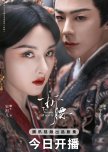
I can see that around this drama—one of the most-watched in 2025 and perhaps the most beloved—an extraordinarily intense discussion has unfolded. As for me, I wanted to look at the female heroine through different lenses: Chinese cultural tradition, historical context, and modern perception.
After all, the central theme here is “Female wisdom as a stratagem in the struggle against enemies.” This is an ancient legacy of Chinese culture, where feminine cunning was understood as an indirect strategy: in China’s literary traditions, the intelligent, resourceful heroine appears constantly, and there is nothing new about it. Once again, we see an old motif—the indirect path, ‘salvation through a detour.’
But why is this scheme fully justified in a historical context, yet far more problematic in a modern one?
Because in that era, social structures severely restricted women’s capacity for direct action; cunning then became a parallel form of power, an expression of intellect, and sometimes an ideal of a heroine capable of seeing deeper than others. It was not cunning for the sake of vice, but a way to restore a disturbed balance of forces.
From a feminist point of view, one could put it differently: cunning is not celebrated for the manipulation itself, but because historically it was the only domain of action left to women. When the direct path was closed, strategic thinking became a mode of political existence, a soft form of resistance, a subtle counter-movement against power.
This trope is still alive in contemporary dramas—extremely often. The problem is that the context is almost never articulated.
Hence my main question regarding the heroine’s interpretation: the actress had to embody a character rooted in deep emotional and intellectual layers. Yet, unfortunately, I did not see in her the emotional competence required for such a role: her diction is pale, and her gaze lacks the necessary inner intensity.
However, the entire success of the drama rests on something else: the romantic storyline and the chemistry she creates with the male lead. The scenes are sensual, the visual aesthetic is dizzyingly lavish, the costumes magnificent, the budget impressive—all of this forms its resounding success.
Add to this the incredibly charismatic Liu Yu Ning, who changes the energy of a scene with a single calm yet piercing look—and popular adoration is guaranteed. Liu Yu Ning’s transition from singer to actor is remarkably successful, and the soundtracks work flawlessly.
So, I have noted both the strengths and the weaknesses. The main challenge—the profound interpretation of the female stratagem—remains unresolved for the actress. Everything else is accomplished.
I would like to add one more thought: the theme of cunning and manipulation is glorified extremely often in Chinese dramas. But it is important not to allow it to become a cliché. One must remember the historical context and the real conditions in which women lived.
The question is: whom does her cunning serve, and at what moral cost—to herself and to those around her?
Cunning can be a virtue of survival, but it should not be thoughtlessly normalized for audiences who watch dramas at 2× speed or “just to relax.”
In another mode of perception, this trope changes radically: what was historically the only available path of action for women can, in modern contexts, be interpreted as an endorsement of everyday manipulativeness, as a justification for emotional pressure, as a banal ‘effective strategy’ in relationships
After all, the central theme here is “Female wisdom as a stratagem in the struggle against enemies.” This is an ancient legacy of Chinese culture, where feminine cunning was understood as an indirect strategy: in China’s literary traditions, the intelligent, resourceful heroine appears constantly, and there is nothing new about it. Once again, we see an old motif—the indirect path, ‘salvation through a detour.’
But why is this scheme fully justified in a historical context, yet far more problematic in a modern one?
Because in that era, social structures severely restricted women’s capacity for direct action; cunning then became a parallel form of power, an expression of intellect, and sometimes an ideal of a heroine capable of seeing deeper than others. It was not cunning for the sake of vice, but a way to restore a disturbed balance of forces.
From a feminist point of view, one could put it differently: cunning is not celebrated for the manipulation itself, but because historically it was the only domain of action left to women. When the direct path was closed, strategic thinking became a mode of political existence, a soft form of resistance, a subtle counter-movement against power.
This trope is still alive in contemporary dramas—extremely often. The problem is that the context is almost never articulated.
Hence my main question regarding the heroine’s interpretation: the actress had to embody a character rooted in deep emotional and intellectual layers. Yet, unfortunately, I did not see in her the emotional competence required for such a role: her diction is pale, and her gaze lacks the necessary inner intensity.
However, the entire success of the drama rests on something else: the romantic storyline and the chemistry she creates with the male lead. The scenes are sensual, the visual aesthetic is dizzyingly lavish, the costumes magnificent, the budget impressive—all of this forms its resounding success.
Add to this the incredibly charismatic Liu Yu Ning, who changes the energy of a scene with a single calm yet piercing look—and popular adoration is guaranteed. Liu Yu Ning’s transition from singer to actor is remarkably successful, and the soundtracks work flawlessly.
So, I have noted both the strengths and the weaknesses. The main challenge—the profound interpretation of the female stratagem—remains unresolved for the actress. Everything else is accomplished.
I would like to add one more thought: the theme of cunning and manipulation is glorified extremely often in Chinese dramas. But it is important not to allow it to become a cliché. One must remember the historical context and the real conditions in which women lived.
The question is: whom does her cunning serve, and at what moral cost—to herself and to those around her?
Cunning can be a virtue of survival, but it should not be thoughtlessly normalized for audiences who watch dramas at 2× speed or “just to relax.”
In another mode of perception, this trope changes radically: what was historically the only available path of action for women can, in modern contexts, be interpreted as an endorsement of everyday manipulativeness, as a justification for emotional pressure, as a banal ‘effective strategy’ in relationships
Was this review helpful to you?


