
 Editorials

 521
521 659
659 96
96 13
13 12
12 32
32 3
3 2
2 66
66 50
50 63
63 53
53 14
14 20
20 98
98 12
12 11
11 6
6 31
31 9
9 4
4 3
3 16
16 39
39 43
43 11
11 17
17 131
131 195
195 135
135 42
42


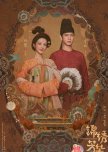
This review may contain spoilers
A beautiful tale of resilience, sisterhood & patient love, but S2 suffers from inconsistencies.
I just want to start off by saying that I absolutely loved season one of Flourished Peony. While the story itself wasn't anything new, the delivery was refreshing and it really resonated with me. I was captivated by the complexity of the characters, the pacing, the cultural richness of the Tang dynasty, the mature relationship and healthy communication between Mudan and Jiang Chang Yang, and the nuanced female friendships. Flourished Peony was incredibly well-written with beautiful cinematography and fantastic acting, and if the story had ended with just the first season, I would've been perfectly content with that.
Maybe that was why I was disappointed when I started watching In the Name of Blossom and realized that it was lacking many of the elements that I previously praised. For more than half of season two, the healthy communication between Mudan and Jiang Chang Yang was replaced with cliches and overused tropes, such as angsty misunderstandings — the foolish idea that you must push someone you love away in order to "protect" them. This extended the slowburn romance for even longer than it was necessary and dragged down the plot's already slow pace.
On top of that, there was a decline in the quality of storytelling / writing as well. For instance, there was a plot twist that occurred at the midway point, and although it was supposed to be a pivotal moment for Mudan, it was so poorly executed and underdeveloped that it became a jarring experience instead of a meaningful one. So much of season two was wasted on the miscommunication and unspoken feelings between our main characters, and I felt the writers could've used this time to establish the important plotlines in this story more effectively instead. Had I not known that season one and two were filmed together, I would've assumed they were produced by two completely different groups of creatives.
Despite my frustrations with season two though, I did appreciate that the story at least stayed true to its values and themes until the very end. The strong performances of the actors, the stunning cinematography, the message of fighting for a better tomorrow even when it felt like all hope was lost, the main couple's fate despite its rocky journey, and the inspiring female friendships — all of this made a weak narrative more tolerable for me and I found myself enjoying the second half of the season even with all of my criticisms.
At its core, Flourished Peony (and In the Name of Blossom) was a story about women empowerment and the beauty of sisterhood. It taught us the significance of women having their own identities, dreams and purpose — regardless of their relationships with men. It shed light on the brutality of domestic abuse and it encouraged us to offer hope and support to those struggling in toxic cycles. It reminded us that strong women came in many forms: some are physically strong like Zhu Fu, some are resilient like Shengyi, some are compassionate like Lv Geng Chun, some are graceful like Consort Shu, some are generous like Xiao Xuexi, some are independent like Aunt Feng, and some are intelligent like Mudan. We should celebrate our differences and strengths as women instead of seeing them as reasons for competition and division.
One singular message was constant throughout both seasons: Life is filled with hardships, and there will be times when it feels like there is no way out of the darkness. But you don't have to suffer in the silence alone. It is okay to seek help; it is okay to accept it. The strength of others can be a beacon of hope that reduce your worries, aid you in overcoming your challenges, and help you find your way back to the light.
In the end, In the Name of Blossom paled in comparison to Flourished Peony, but I do think it is still worthy of watching for those who are invested in the main characters' journeys and want to see how their stories conclude. However, I only recommend it for those who have the patience and tolerance for the criticisms I mentioned above.
Maybe that was why I was disappointed when I started watching In the Name of Blossom and realized that it was lacking many of the elements that I previously praised. For more than half of season two, the healthy communication between Mudan and Jiang Chang Yang was replaced with cliches and overused tropes, such as angsty misunderstandings — the foolish idea that you must push someone you love away in order to "protect" them. This extended the slowburn romance for even longer than it was necessary and dragged down the plot's already slow pace.
On top of that, there was a decline in the quality of storytelling / writing as well. For instance, there was a plot twist that occurred at the midway point, and although it was supposed to be a pivotal moment for Mudan, it was so poorly executed and underdeveloped that it became a jarring experience instead of a meaningful one. So much of season two was wasted on the miscommunication and unspoken feelings between our main characters, and I felt the writers could've used this time to establish the important plotlines in this story more effectively instead. Had I not known that season one and two were filmed together, I would've assumed they were produced by two completely different groups of creatives.
Despite my frustrations with season two though, I did appreciate that the story at least stayed true to its values and themes until the very end. The strong performances of the actors, the stunning cinematography, the message of fighting for a better tomorrow even when it felt like all hope was lost, the main couple's fate despite its rocky journey, and the inspiring female friendships — all of this made a weak narrative more tolerable for me and I found myself enjoying the second half of the season even with all of my criticisms.
At its core, Flourished Peony (and In the Name of Blossom) was a story about women empowerment and the beauty of sisterhood. It taught us the significance of women having their own identities, dreams and purpose — regardless of their relationships with men. It shed light on the brutality of domestic abuse and it encouraged us to offer hope and support to those struggling in toxic cycles. It reminded us that strong women came in many forms: some are physically strong like Zhu Fu, some are resilient like Shengyi, some are compassionate like Lv Geng Chun, some are graceful like Consort Shu, some are generous like Xiao Xuexi, some are independent like Aunt Feng, and some are intelligent like Mudan. We should celebrate our differences and strengths as women instead of seeing them as reasons for competition and division.
One singular message was constant throughout both seasons: Life is filled with hardships, and there will be times when it feels like there is no way out of the darkness. But you don't have to suffer in the silence alone. It is okay to seek help; it is okay to accept it. The strength of others can be a beacon of hope that reduce your worries, aid you in overcoming your challenges, and help you find your way back to the light.
In the end, In the Name of Blossom paled in comparison to Flourished Peony, but I do think it is still worthy of watching for those who are invested in the main characters' journeys and want to see how their stories conclude. However, I only recommend it for those who have the patience and tolerance for the criticisms I mentioned above.
Was this review helpful to you?


