
 K-Drama

 521
521 659
659 96
96 13
13 12
12 32
32 3
3 2
2 66
66 50
50 63
63 53
53 14
14 20
20 98
98 12
12 11
11 6
6 31
31 9
9 4
4 3
3 16
16 39
39 43
43 11
11 17
17 131
131 195
195 135
135 42
42


This review may contain spoilers
This one is for the lonely souls.
A very kind and thoughtful stranger recommended Our Unwritten Seoul to me last year, but like so many other dramas, it sat on my PTW list collecting dust until I eventually forgot all about it. Then, during the 2025 MDL challenge, I kept seeing it mentioned again and again. That piqued my interest and got me wondering, did I actually miss out on a gem of a story? Out of curiosity, I decided to take it out of its cold prison and make it my first kdrama of 2026 — and what a fantastic choice that was. This is a story for the burnouts, the aimless wanderers, the dreamers, the brokenhearted, and the lonely souls.
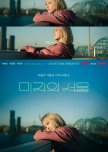
You need an exceptionally capable cast in order to bring a character-driven drama like this to life — and this production delivered exactly that. Every single actor gave an outstanding performance, but Park Bo-young was in a league of her own. She was essentially playing four different roles all at once: Miji, Mirae, Miji cosplaying as Mirae, and Mirae pretending to be Miji. Some of the other characters might have had difficulty telling the sisters apart, but as a viewer, I always knew who was who because each version was convincingly distinct. Miji carried an insecurity hidden behind a wall of defensive fire and Mirae possessed a quiet exhaustion that made it feel as though she was suffocating under the crushing weight of her life’s burdens. Park Bo-young's ability to create chemistry with every single one of her costars? Chef's kiss. She had to sell two different love stories as two different characters and she was so good that she made both feel equally important. This woman deserves her flowers, and then so much more.
Healing and self-discovery were the heart of the story, but the bond of love and family was what truly gave it a pulse. Our Unwritten Seoul doesn't just rely on the typical family structure that many of us are familiar with in kdramas — a man, a woman, and their child — it goes above and beyond. It shows us that sometimes family is a widow and her son clinging onto each other in the aftermath of loss. Sometimes it is just a woman taking her daughter away from a toxic and abusive household because that is the only way to protect them both. Sometimes it's two sisters refusing to let go of each other's hand even if it means they both fall. Sometimes it is two women creating a life together despite societal norms. The drama's exploration into unconventional yet vital family dynamics is what makes this story so brilliant. As the drama put me in the characters' shoes, I became an accomplice to their mischievous schemes and ended up on an intimate journey through their lives. Each character and relationship felt as beautifully written and complex as the next.
What could've been just a cliché identity-swapping trope turned into a deep dive on how different people react to hardship. Do you walk away to avoid the sting of failure like Miji? Do you bottle it all inside like Mirae? Do you fake it until you make it like Hosu? Do you hide behind humor like Sejin? Do you wear harshness as a shield like Ok-hui? Do you turn your pain into wisdom for others like Wol-sun? Or do you ignore your troubles entirely in fear of making things worse like Ro-sa? I love that this drama never judges the choices the characters make. In a world where we are afraid of how society perceives us — something our protagonists Miji and Mirae understand all too well — the writers gently remind us "it’s okay." It’s okay to hide when you are feeling overwhelmed. It’s okay to start over if life isn't what it is supposed to be. It’s okay to start later than never starting at all. It’s okay to try, and fail, and try again. Our fate isn't set in stone; it is unwritten. And Grandma Wol-sun said it best: "No matter how pathetic or messy it looks, anything you do to survive is brave."
I adore this drama to pieces and there are only two drawbacks if I am to nitpick. For starters, the episodes are quite long — about 80 to 90 minutes each — making it more emotionally draining to sit through than it needs to be. Each time I completed an episode, instead of hopping onto the next, I had to take a break to recharge my energy. The upside to this is my time never felt wasted. For those who have the patience to stay with the characters from beginning until end, the drama generously rewards them with heartfelt moments (that feel wholesome and earned!) My other minor gripe was the cinematography. I read so many praises for it, but for me, it was nothing special. Just okay. Although, I will give it credit for the way certain scenes were shot based on their locations. For instance, Seoul — the place that caused Mirae's depression — looked and felt sterile and cold; meanwhile Miji and Mirae's hometown — the place where their loved ones are — was bathed in warmth and coziness. It was a nice touch.
With that said, I'm so glad I finally gave Our Unwritten Seoul a chance. It is everything that everyone said it would be — relatable, healing, and inspirational. It didn't just consume my time; it occupied my mind, leaving me to ponder how survival is often messy, progress isn't always linear, and growth requires a lot of patience. It made me feel seen in a way I didn't expect, and even though I watched it later than most, I think it found me exactly when I needed it. This story will stay with me for a very long time and that is more than I could ever ask for.
You need an exceptionally capable cast in order to bring a character-driven drama like this to life — and this production delivered exactly that. Every single actor gave an outstanding performance, but Park Bo-young was in a league of her own. She was essentially playing four different roles all at once: Miji, Mirae, Miji cosplaying as Mirae, and Mirae pretending to be Miji. Some of the other characters might have had difficulty telling the sisters apart, but as a viewer, I always knew who was who because each version was convincingly distinct. Miji carried an insecurity hidden behind a wall of defensive fire and Mirae possessed a quiet exhaustion that made it feel as though she was suffocating under the crushing weight of her life’s burdens. Park Bo-young's ability to create chemistry with every single one of her costars? Chef's kiss. She had to sell two different love stories as two different characters and she was so good that she made both feel equally important. This woman deserves her flowers, and then so much more.
Healing and self-discovery were the heart of the story, but the bond of love and family was what truly gave it a pulse. Our Unwritten Seoul doesn't just rely on the typical family structure that many of us are familiar with in kdramas — a man, a woman, and their child — it goes above and beyond. It shows us that sometimes family is a widow and her son clinging onto each other in the aftermath of loss. Sometimes it is just a woman taking her daughter away from a toxic and abusive household because that is the only way to protect them both. Sometimes it's two sisters refusing to let go of each other's hand even if it means they both fall. Sometimes it is two women creating a life together despite societal norms. The drama's exploration into unconventional yet vital family dynamics is what makes this story so brilliant. As the drama put me in the characters' shoes, I became an accomplice to their mischievous schemes and ended up on an intimate journey through their lives. Each character and relationship felt as beautifully written and complex as the next.
What could've been just a cliché identity-swapping trope turned into a deep dive on how different people react to hardship. Do you walk away to avoid the sting of failure like Miji? Do you bottle it all inside like Mirae? Do you fake it until you make it like Hosu? Do you hide behind humor like Sejin? Do you wear harshness as a shield like Ok-hui? Do you turn your pain into wisdom for others like Wol-sun? Or do you ignore your troubles entirely in fear of making things worse like Ro-sa? I love that this drama never judges the choices the characters make. In a world where we are afraid of how society perceives us — something our protagonists Miji and Mirae understand all too well — the writers gently remind us "it’s okay." It’s okay to hide when you are feeling overwhelmed. It’s okay to start over if life isn't what it is supposed to be. It’s okay to start later than never starting at all. It’s okay to try, and fail, and try again. Our fate isn't set in stone; it is unwritten. And Grandma Wol-sun said it best: "No matter how pathetic or messy it looks, anything you do to survive is brave."
I adore this drama to pieces and there are only two drawbacks if I am to nitpick. For starters, the episodes are quite long — about 80 to 90 minutes each — making it more emotionally draining to sit through than it needs to be. Each time I completed an episode, instead of hopping onto the next, I had to take a break to recharge my energy. The upside to this is my time never felt wasted. For those who have the patience to stay with the characters from beginning until end, the drama generously rewards them with heartfelt moments (that feel wholesome and earned!) My other minor gripe was the cinematography. I read so many praises for it, but for me, it was nothing special. Just okay. Although, I will give it credit for the way certain scenes were shot based on their locations. For instance, Seoul — the place that caused Mirae's depression — looked and felt sterile and cold; meanwhile Miji and Mirae's hometown — the place where their loved ones are — was bathed in warmth and coziness. It was a nice touch.
With that said, I'm so glad I finally gave Our Unwritten Seoul a chance. It is everything that everyone said it would be — relatable, healing, and inspirational. It didn't just consume my time; it occupied my mind, leaving me to ponder how survival is often messy, progress isn't always linear, and growth requires a lot of patience. It made me feel seen in a way I didn't expect, and even though I watched it later than most, I think it found me exactly when I needed it. This story will stay with me for a very long time and that is more than I could ever ask for.
Was this review helpful to you?


