
 Editorials
 521
521 659
659 96
96 13
13 12
12 32
32 3
3 2
2 66
66 50
50 63
63 53
53 14
14 20
20 98
98 12
12 11
11 6
6 31
31 9
9 4
4 3
3 16
16 39
39 43
43 11
11 17
17 131
131 195
195 135
135 42
42


This review may contain spoilers
In the end, elitism wins.
And at last, I am free.
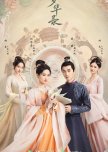
With a title as grand as A Dream of Splendor, I couldn't help but expect a compelling drama of great ambitions, evocative beauty, and gratifying success. After completing it, however, I found that while it offered glimpses of brilliance, they never fully evolved into anything more than that. At least, not for me. They were illusions masquerading as dreams — just moments. The romance between our leads, Zhao Pan Er and Gu Qianfan, relied too heavily on secrets, miscommunication, and noble idiocy for my liking. The bond between the women, specifically our heroines Zhao Pan Er, Song Yinzhang, and Sun Sanniang, was often tested and that was sometimes frustrating to witness, though their sisterhood remained the strongest and most interesting aspect of the story. The pacing was so inconsistent and slow that it made forty episodes feel like eighty, putting me into a slump after the first ten episodes only for the momentum to be slightly picked back up again in the last ten episodes. Yet, my biggest criticism of this drama is perhaps its ideological contradictions.
For women who hated how the higher social classes have mistreated them based simply on their positions in society, they sure did gatekeep a lot. They spent half of the drama fighting against social exclusion while trying to start and maintain a business in the capital — while also dealing with their own romantic hardships carrying the stigma of their lowly statuses — only to spend the second half making many of their goods and services inaccessible to the working class by pricing them so high that only the rich and powerful can comfortably afford them without breaking the bank.
I really thought this was going to be one of those dramas that proved we didn't need to cater to the scholars, nobles, and officials in order to be successful in life, but instead it was the opposite. Our trio of businesswomen used the common people when it served their needs, then they shut those very same people out once they'd made it. Aren't they doing the same thing to the average folks as the elites were doing to them? I know they were running a business and profit usually takes priority, even at the cost of our morals and values sometimes, but this actually made their "you are still worthy regardless of your social class" message ring hollow toward the end.
This story might be female-centric, but it was written with the male gaze in mind. All of the female acquaintances outside of the heroines' immediate circle were supportive of them, but they were all still striving for the same male attention as our heroines. While I can respect the hustle of women in a male-dominated industry, our trio's business model still consisted of women serving men — where they were the prized entertainers and hosts. Why were there no female patrons to be seen at any of their establishments? Certain facets of their idea of female empowerment felt a bit too much like individualism, because if this was truly a drama about feminism, shouldn't women of all walks of life also be given a safe haven to exist as customers and community members, without the need to please men? Instead of liberation from the confines of social constructs, they chose to assimilate into the system.
Pan Er continuously preached that women should be able to stand on their own two feet instead of leaning on men, but can we really say she and her sisters have truly attained that independence? Yes, they were incredibly talented and they worked extremely hard — there is no question about that — but in the environment they chose to take part in, they only improved their circumstances with the generosity of men who favored them. They received the riches and splendor that the title promised, so at least the drama managed to deliver that, but at what cost? Their success wasn't satisfying for me, in fact, it even felt a bit ironic. They gained a seat at the table with the backing of powerful male supporters and by seeking validation from the very same patriarchy and elites that once oppressed them. So, are they not still stuck in the same situation as before? After all, a gilded cage is still a cage, is it not?
-
Beautiful cinematography, high production value, complex yet sometimes infuriating characters, a plot built on conveniences and hypocrisy, and painfully slow pacing — it wasn't the absolute worst, but it was far from being the best.
I don't recommend binging all 40 episodes.
Final rating: 6.5/10
With a title as grand as A Dream of Splendor, I couldn't help but expect a compelling drama of great ambitions, evocative beauty, and gratifying success. After completing it, however, I found that while it offered glimpses of brilliance, they never fully evolved into anything more than that. At least, not for me. They were illusions masquerading as dreams — just moments. The romance between our leads, Zhao Pan Er and Gu Qianfan, relied too heavily on secrets, miscommunication, and noble idiocy for my liking. The bond between the women, specifically our heroines Zhao Pan Er, Song Yinzhang, and Sun Sanniang, was often tested and that was sometimes frustrating to witness, though their sisterhood remained the strongest and most interesting aspect of the story. The pacing was so inconsistent and slow that it made forty episodes feel like eighty, putting me into a slump after the first ten episodes only for the momentum to be slightly picked back up again in the last ten episodes. Yet, my biggest criticism of this drama is perhaps its ideological contradictions.
For women who hated how the higher social classes have mistreated them based simply on their positions in society, they sure did gatekeep a lot. They spent half of the drama fighting against social exclusion while trying to start and maintain a business in the capital — while also dealing with their own romantic hardships carrying the stigma of their lowly statuses — only to spend the second half making many of their goods and services inaccessible to the working class by pricing them so high that only the rich and powerful can comfortably afford them without breaking the bank.
I really thought this was going to be one of those dramas that proved we didn't need to cater to the scholars, nobles, and officials in order to be successful in life, but instead it was the opposite. Our trio of businesswomen used the common people when it served their needs, then they shut those very same people out once they'd made it. Aren't they doing the same thing to the average folks as the elites were doing to them? I know they were running a business and profit usually takes priority, even at the cost of our morals and values sometimes, but this actually made their "you are still worthy regardless of your social class" message ring hollow toward the end.
This story might be female-centric, but it was written with the male gaze in mind. All of the female acquaintances outside of the heroines' immediate circle were supportive of them, but they were all still striving for the same male attention as our heroines. While I can respect the hustle of women in a male-dominated industry, our trio's business model still consisted of women serving men — where they were the prized entertainers and hosts. Why were there no female patrons to be seen at any of their establishments? Certain facets of their idea of female empowerment felt a bit too much like individualism, because if this was truly a drama about feminism, shouldn't women of all walks of life also be given a safe haven to exist as customers and community members, without the need to please men? Instead of liberation from the confines of social constructs, they chose to assimilate into the system.
Pan Er continuously preached that women should be able to stand on their own two feet instead of leaning on men, but can we really say she and her sisters have truly attained that independence? Yes, they were incredibly talented and they worked extremely hard — there is no question about that — but in the environment they chose to take part in, they only improved their circumstances with the generosity of men who favored them. They received the riches and splendor that the title promised, so at least the drama managed to deliver that, but at what cost? Their success wasn't satisfying for me, in fact, it even felt a bit ironic. They gained a seat at the table with the backing of powerful male supporters and by seeking validation from the very same patriarchy and elites that once oppressed them. So, are they not still stuck in the same situation as before? After all, a gilded cage is still a cage, is it not?
-
Beautiful cinematography, high production value, complex yet sometimes infuriating characters, a plot built on conveniences and hypocrisy, and painfully slow pacing — it wasn't the absolute worst, but it was far from being the best.
I don't recommend binging all 40 episodes.
Final rating: 6.5/10
Was this review helpful to you?


