





IT WAS JUST LOVELY
Having just finished "My Stand In," where Up (Gene) delivered a captivating performance, I was curious to explore his earlier work in "Lovely Writer." While both series feature Up in leading roles, "Lovely Writer" adopts a decidedly lighter tone. It's a charming and heartwarming watch, perfect for unwinding after a long day. However, when compared to the depth and complexity of "My Stand In," "Lovely Writer" feels a touch less substantial.The characters in "Lovely Writer" are a delightful bunch. Up portrays Gene, a university student who dreams of becoming a novelist. He's paired with Kao, played by Kao (Nubsib), a fellow student and aspiring actor. Their journey from initial misunderstandings to a blossoming romance is both endearing and entertaining. However, the series falters slightly in its character development. The central conflict, where their relationship faces disapproval from their parents, is resolved rather quickly, leaving some room for a missed opportunity in terms of emotional payoff.
Another character, Aoey, initially comes across as sweet and supportive of Gene. However, his personality takes a peculiar turn later in the series, bordering on cringe-worthy and out of character. This inconsistency could have been rectified by giving Aoey a more defined antagonistic role. Up's performance is commendable, though it leans towards a more reserved portrayal compared to his more dynamic role in "My Stand In." Kao delivers an acceptable performance, but his character could have benefited from greater depth in his expressions. The supporting characters, including Gene's and Nubsib's families, are portrayed by familiar faces from Thai dramas and add a touch of warmth to the narrative. Notably, the revelation about Gene's father having a boyfriend before marrying his mother sheds light on his initial resistance to accepting his own relationship with Nubsib.
The plot of "Lovely Writer" revolves around the blossoming romance between Gene and Nubsib, fueled by their shared passion for storytelling. The series incorporates the unique concept of their fictional novel reflecting their real-life experiences. This adds a layer of meta-humor and keeps the narrative engaging. However, some conflicts, such as the aforementioned parental disapproval, are resolved rather swiftly, diminishing the potential for emotional impact. The series also introduces the intriguing character of Mhok, who could have played a more significant role in influencing Aoey's character development. An interesting aspect of the drama is the inclusion of a scene where producers, directors, and the CEO intervene to discuss the future of Gene and Nubsib's relationship. This scene adds a touch of realism, reflecting similar situations that might occur in the real BL production world.
"Lovely Writer" is a light and enjoyable watch, offering a delightful escape into the world of BL novels and budding romance. While the series stumbles slightly in its character development and occasional pacing issues, it makes up for it with its charm and feel-good atmosphere. If you're looking for a heartwarming and relaxing drama, "Lovely Writer" is definitely worth adding to your watchlist. However, if you crave something with more depth and emotional complexity, you might find "My Stand In," featuring a more nuanced performance by Up, to be a more satisfying choice.
Was this review helpful to you?

It was GOOD until it became confusing
"Jazz For Two" boasts a standout cast, featuring talented rookie actors who inject freshness into the series. However, the limited run time of only 8 episodes feels insufficient to fully explore the depth of the storyline, resulting in a rushed narrative that struggles to allow viewers ample time to absorb crucial story details.Backstories lack depth, with some introduced too late in the series to have a significant impact. The development of the main couple's relationship feels abrupt, lacking sufficient buildup, while the supporting couple's storyline is underutilized and would benefit from more screen time or a separate project to fully explore their dynamics.
Conflict resolutions are often too quick, leaving little room for tension or emotional payoff, such as a crucial moment where Tae Yi misinterprets Se Heon's intentions.
The series could also benefit from more exploration of the relationship between classical music and jazz and further delving into the characters' motivations.
Nonetheless, the friendship between Tae Yi and Do Yoon shines, portraying a ride-or-die dynamic that adds depth, while Do Yoon's unwavering support for Se Heon highlights the strength of their bond.
Cameo appearances from "A Shoulder to Cry On" provide enjoyable fan service and a hint of nostalgia. Regarding the "proper kiss" issue in the early episodes, it's likely a creative direction from the production team rather than a reflection of the actors' abilities. The exceptional OSTs add a magical touch to the series.
Despite its shortcomings, 'Jazz For Two' remains entertaining, with the potential for a Do Yoon x Joo Ha spin-off, which would be eagerly welcomed.
Was this review helpful to you?
Loved it!
The casting for 'Love for Love's Sake' is undeniably superb. Lee Tae Vin's portrayal of Tae Myung Ha is solid, fitting seamlessly into the role. Cha Joo Wan brings a delightful charm to Cha Yeo Woon, though some moments may come off as cringy, his genuine approach adds an endearing quality to the character. Meanwhile, Oh Min Su and Cha Woong Ki deliver commendable performances as Chun Sang Won and Ahn Kyung Hoon, respectively.However, the love triangle involving Myung Ha, Yeo Woon, and Sang Won could have been explored further. It felt as though the resolution came too abruptly, leaving much potential unexplored. Additionally, the decision to portray Sang Won and Kyung Hoon as cousins rather than potential love interests reflect South Korea's hesitance to fully embrace BL narratives.
Despite these shortcomings, the acting throughout the drama remains authentic, with no forced moments evident. While some scenes could have benefited from a longer runtime to allow for deeper exploration, the overall execution is commendable. Although the game concept could be further developed, the production team utilized their resources effectively, resulting in a satisfying drama experience
Was this review helpful to you?

Candid Charms of TayNew
"Cherry Magic," the Thai adaptation of the popular Japanese BL series, introduces Achi, an ordinary employee who discovers an extraordinary power on his thirtieth birthday – the ability to read minds through physical contact. Portrayed by Newwie, known for his role in "SOTUS" since 2016, it's evident that he has grown as an actor, delivering a commendable performance. His chemistry with Tay, who plays the charming colleague Karan, brings freshness to the screen, particularly for me who's accustomed to seeing Newwie with Earth (my last BL with Newwie starring on it)Tay's portrayal of Karan is engaging, although lacking a point of comparison since I haven't seen him in previous dramas. The storyline follows Achi's struggle to navigate his newfound ability, especially after unintentionally uncovering Karan's feelings for him. While the Thai adaptation stays faithful to the original premise, there are moments where the pacing feels sluggish, making some parts of the series less captivating.
One aspect that stands out is Newwie's handling of intimate scenes. Despite his experience, there's a noticeable awkwardness that detracts from the authenticity of those moments. However, it's worth acknowledging that this could be a result of various factors, including character dynamics and personal comfort levels.
Overall, "Cherry Magic" offers a decent adaptation for fans of the BL genre, with strong performances from its leads. While it may falter in pacing at times, it's a refreshing addition to Thai BL dramas, showcasing both familiar faces and new talent in the genre.
Was this review helpful to you?
BREATH OF FRESH AIR
I came across "A Breeze of Love" on Tiktok, and considering I've already watched 43 Korean BLs just this year, my options will either be to venture again with Thai BLs or just wait for any Korean BL releases this year or next year.To be honest, the pacing of the drama is "okay-ish" since the main focus is the main leads and their story. But considering how limited the run time is, especially for Korean BLs, they didn't manage to squeeze in any back story aside from the short flashbacks here and there.
1. The cinematography is great; there are some hiccups on some parts (and that's me nitpicking).
2. The plot is open for improvement.
3. The OST songs threw me off on some scenes; there are parts of the scene that really didn't require any emotional music, but I could accept their creative choices.
4. The run time could've easily been extended to ten episodes. This will focus more on understanding what happened after they became a couple.
This drama did not offer anything new (especially on the kinds of KBLs released this year), but you wouldn't hold it against them because, at the end of the day, a good drama will stand without any gimmicks.
Recovering from Bump Up Business, A Breeze of Love did end up meeting my expectations—a simple breath of fresh air.
Not too overcomplicated, just a good Korean BL.
Was this review helpful to you?
Rich, Cringe, and Charming
Me and Thee is one of those projects where I can confidently say I liked it as a whole, even if it knew exactly what kind of chaos it wanted to be. It is the perfect mix of too much and a little too much, wrapped into one very self aware package.Cringe? Yes.
Funny? Definitely.
Lovable? Somehow, yes.
Rich? Extremely.
To be fair, the only PondPhuwin project I have watched before this was We Are, so most of my comparisons naturally come from there. And compared to that, Me and Thee feels lighter, louder, and far less serious. The plot itself is nothing new. Pond’s character is rich in money, Phuwin’s character is rich in love, mainly coming from his sister. You already know the dynamic going in, and surprisingly, you do not really mind it as the episodes go by.
The only thing that really made me roll my eyes was the mafia angle. Once again, a “rich family with mafia ties” storyline was introduced and handled in the most predictable way possible. If they truly want to push that kind of backstory, then they really need to study how it is done properly. At this point, the mafia element felt more like decoration than an actual threat or narrative driver.
That said, Pond looked like he genuinely enjoyed this project. He felt more relaxed here than in We Are, more smiley, more playful, and that energy carried through the screen. His reactions whenever Phuwin goes full lovey dovey were genuinely funny, and I can see why viewers gravitated toward that. Phuwin, on the other hand, remains a solid actor. He has consistently strong moments, and his chemistry with Pond is undeniably natural. They balance each other well, and that chemistry is one of the drama’s strongest points.
If you break the drama down to its core, it is about a rich, awkward, slightly cringey businessman who believes money can move mountains (which I think Khun Thee does, because he tried to move Peach's house, pun intended), yes Khun Thee really does live up to his name, falling for a photographer fresh out of a breakup. And honestly, that concept alone already ticks most of the boxes. That is the show. Everything else feels secondary.
However, I do think the production company still struggles with writing something that is both entertaining and cohesive. This is not a new issue, and you can see traces of it in their previous projects as well. The ideas are there, but the execution often feels messy.
WilliamEst deserves a mention too. They were fun to watch, and it was refreshing to see a different side of Est after ThamePo. William’s yearning expressions alone could convince anyone, so it is no surprise Mok gave in. Performance wise, they were good, with moments that really stood out, similar to Phuwin.
At its heart, Me and Thee is a comedic disaster in the best way possible. You laugh at Khun Thee owning GMMTheeV. You laugh at his innocence, his stupidity at times, and how ridiculously lovesick he becomes. You laugh simply because he exists. That is what carried the drama. Everything else followed after.
This is another GMMTV drama that people will either find entertaining, just okay, or completely unwatchable. I fall into the entertained category. It is not perfect, and seriously, stop adding mafia plots if you are not going to commit to them. But the fluff and the cringe overshadow most of its flaws. Still, I hope future projects give PondPhuwin more substance because they are good actors who deserve better material. Underutilized, yes, but in this case, I was entertained.
Was this review helpful to you?
This review may contain spoilers
Where's the trap?
Peach Trap is the kind of drama you put on when you want something easy to digest. It is not mentally demanding or emotionally heavy, and while that makes it comfortable to watch, it also keeps it firmly in the “serviceable” category rather than something memorable. I first came across it through social media buzz, and I intentionally waited for the hype to settle before starting it.The premise is familiar from the get go. A three man dynamic circling around one main lead makes it obvious where the story is heading. Nothing about the setup feels new or daring. The first three episodes were genuinely entertaining and gave me hope that the series might elevate the formula. Unfortunately, the latter half slowed down significantly and became dull, though I still stayed to see if it could redeem itself.
One undeniable strength of Peach Trap is the face card. The cast is visually striking, and the framing and composition highlight that well. Su Bin and Do Han in particular stood out, and if I am being honest, this was a big reason why I finished the series. On a technical level, the drama does not disappoint. The cinematography is polished, the visual effects are clean, and the OST fits the mood nicely. The intimate scenes were also handled well, with the actors committing to them instead of awkwardly holding back.
Acting wise, the results were mixed. Su Bin unfortunately came across as monotonous and one dimensional most of the time. During the cute and fluffy moments, he struggled to fully embody the character despite having the perfect visuals for it. His constant pouty delivery made it hard for me to emotionally connect with Do Ha. The other three leads performed better, with Se Jin being the most expressive and engaging. Still, even their solid performances were not enough to fully pull me into their characters’ journeys.
As the story progressed, it became clear who Do Ha would end up choosing, turning the drama into a straightforward best friends to lovers arc rather than a compelling emotional tug of war. Personally, I found Do Ha and Yeonsang’s dynamic more appealing. Haram’s feelings for Do Ha also felt confusing and underdeveloped, especially at the beginning. The conflicts had the potential to explore themes of self realization and emotional honesty, but the writing chose the safest route possible, which dulled the impact.
In the end, Peach Trap is not a bad drama. It just does not make the most of its potential. It is watchable, pleasant to look at, and technically sound, but it is also easy to get bored with. If you need something light after finishing a heavy series, this might work for you. And if you dropped it halfway out of boredom, you are definitely not alone.
Was this review helpful to you?
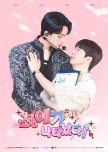
A Sweet Fantasy That Knows Exactly What It Is
I waited for this to be fully released, then waited again before finally watching it and honestly it was worth the delay. It delivered exactly what I hoped for: something fun, light, and charming enough to reset my brain after heavier dramas.One big motivation for me was Kevin from Omega X. With half the group already having acted, I was curious and a bit nervous to see how he’d do. I didn’t expect him to act, but he ended up doing a solid job and gave Ae Jun a believable mix of softness and sincerity. Given everything Omega X has been through and their lack of a group comeback, I’ll take any content they give us, and seeing Kevin shine made me genuinely happy.
The story itself uses an idol fan fantasy concept that we’ve seen in BLs many times. My Bias Is Showing?! doesn’t try to reinvent anything but instead embraces a simple plot and executes it cleanly. It’s fun, straightforward, light, and surprisingly balanced. The drama doesn’t collapse under its own tropes because it never tries too hard. And honestly, that worked.
My one gripe is something I will never understand about Korean BL pacing. Why do they always reveal the entire climax around episode seven when there are still a few episodes left? With a bit more breathing room, Siyeol and Gyu Seong’s confrontation could have been more emotional, and Ae Jun’s grief deserved a deeper, more gradual payoff. The story had space for more impact but chose to keep things fast and tidy.
Still, it stayed satisfying. The hints about the main conflict were repeated early, so I already had a feeling about where things were going, and surprisingly that didn’t ruin anything. It just made the reveal feel earned. Plus, the ending tied everything up without weird cliffhangers. If they want a season two, they left the door open. If not, the story still feels complete.
Now, the actors. Kangmin is a standout. He’s handsome, expressive, and knows how to switch between cute, emotional, and charismatic without looking forced. He’ll go far with the right scripts. Kevin held his own, which made their pairing easy to believe. And the proper kissing scene? Thank you. If you’re going to do it, do it right.
Their height difference also added a cute layer and the comedic scenes sprinkled throughout kept the drama bright. The cinematography was decent and the OST was good even if it didn’t hit as hard as classics from A Shoulder to Cry On or Jazz for Two. Still, having Omega X members in the soundtrack will always be a win for me.
Overall, My Bias Is Showing?! is a simple and effective KBL that’s perfect when you want something fun without emotional overload. It doesn’t demand much, but it gives enough charm, humor, and heart to keep you watching. I’d definitely rewatch it and I hope to see more projects from the actors. And maybe, just maybe, more Omega X members trying acting too.
Was this review helpful to you?

Business as Usual but Not Much Else
Business as Usual is exactly what the title suggests: predictable, safe, and serviceable. It doesn’t try to be revolutionary, and frankly, it doesn’t come close. But it’s not a total flop either. It gives you just enough to sit through it, but not enough to leave a lasting impression.It started off with promise. The setup was intriguing enough to catch attention, but as the episodes progressed, it became clear the drama was stretching out a storyline that could’ve been resolved in a single conversation. What could’ve been a more emotionally rich and tightly written series ended up being padded with avoidable miscommunication and narrative stalling.
Chemistry-wise, the leads had something, but just barely. You won’t swoon, but you’ll acknowledge it's there. With more training and time, I can see both actors evolving into roles that ask for deeper emotional work. Jin Hwan’s character carried a quiet emotional burden that resonated, while Minjun’s arc lacked growth, he stayed in the same emotional place for most of the drama. Even by episode 7, he was still whining. There was potential for a redemptive arc, but it never came.
One of the more disappointing aspects was the present-day storyline. While the past/present structure made sense conceptually, the execution was clunky. The present scenes felt shallow and rushed, making it hard to connect. It’s like they had all the right ingredients but cooked the dish on low heat and served it half-baked.
Romantic scenes? Decent. Korea continues to improve in portraying BL intimacy, though still somewhat restrained.
Speaking of clichés, the airport scene made me groan. That trope has been played out enough. Unless you're giving us a Call Me by Your Name level of heartbreak or Your Name Engraved Herein depth, maybe it’s time to leave that in 2024.
The ending? Rushed, disconnected, but at least not tragic. There's some satisfaction in the closure, though it felt more like a sigh than a moment of impact. The familial storyline felt like an afterthought tossed in for some emotional seasoning.
While Thai and Taiwanese BLs continue to push the envelope in plot, performance, and emotional weight, Korean BLs seem to be stuck in a cycle of safety and hesitation. Yes, restrictions may still exist, but if a story can’t be told with full commitment, perhaps it’s better left on the drawing board. Especially with rising actors, a BL role can either build a career or bury it.
The standout elements? Cinematography and OST, both top-tier, as expected of Korean production teams.
And as a side note, I couldn’t help but notice the office setup looked awfully familiar. Turns out, it's the same one from The New Employee. I guess I’ve officially watched too many BLs.
Overall, watchable, but ultimately forgettable.
Was this review helpful to you?

Burning Justice paired with Ice-Cold Chemistry
Judge From Hell delivers a captivating mix of fantasy and thriller, setting itself apart from other Korean dramas this year. The storyline is engaging and provides a refreshing approach, making it an entertaining watch for fans of the genre. Despite some predictable moments, the plot remains solid and well-executed.One downside was the prevalence of spoilers circulating on social media before the drama’s release, which slightly dampened the element of surprise. However, the show’s overall quality was unaffected, offering a rewarding viewing experience. The production benefitted significantly from its star-studded cast and budget, ensuring the drama met expectations both visually and narratively.
Park Shin Hye shines once again in her role as Kang Bit Na. Her experience and talent are evident, with her performance carrying much of the drama’s emotional weight. Fans familiar with her previous works, such as Doctors, will find her portrayal here equally impressive. On the other hand, Kim Jae Young, as Han Da On, delivered a commendable performance, proving himself a solid counterpart to Shin Hye’s character.
However, the lack of chemistry between the two leads was noticeable. While romance wasn’t the central focus of the story, the subplot felt underwhelming due to the absence of a genuine connection between the characters. This aspect might leave some viewers wanting more from their interactions.
The supporting cast added depth and intrigue, complementing the main narrative well. However, some unresolved questions linger, such as the fate of Kang Bit Na’s original soul and her reasons for calling off her engagement. These ambiguities might leave viewers speculating long after the final episode.
Overall, Judge From Hell is a satisfactory drama that excels in many areas, from its compelling plot to its standout performances. While not without flaws, it remains a worthwhile addition to this year’s lineup of Korean dramas, offering an entertaining and thought-provoking experience.
Was this review helpful to you?

the love we think we deserve
Before its release, Love in the Big City faced a lot of pushback and controversy. I admire the production team’s dedication in bringing this story to life despite the challenges.South Korea, like many places, still harbors prejudice toward LGBTQ+ themes, and BL dramas often face additional scrutiny. But it’s disappointing that this artistic expression, which reflects real experiences for so many in the LGBTQ+ community, would encounter so much resistance. This is the reality for countless people, and I can’t understand why two men sharing a love story on screen is any different from the heterosexual stories we’ve seen for years. Why should it be restricted when it’s simply another story about connection, pain, and growth?
Nam Yoon Su’s performance is a standout and exceeded my expectations. His portrayal was nuanced, layered, and showed a clear dedication to understanding and honoring his character’s experiences. It’s refreshing to see a character like Go Young evolve in multifaceted ways, allowing us to see vulnerability, strength, and a journey to self-understanding that isn’t one-dimensional.
Nam Yoon Su didn’t just bring Go Young to life; he made him feel relatable and genuine, and it’s clear he did his homework preparing for this role.
I’d been keeping Love in the Big City on my watchlist for a while, anticipating what the series would offer. When it was finally released, it delivered the satisfaction I expect from a well-made Korean drama. I’m not someone who often reads the original source material, but judging from feedback and reviews, it seems like the production team really respected the story’s roots. They captured the essence of the characters and crafted a realistic, engaging portrayal that felt true to the lives and relationships it was representing. I’m glad they paid attention to the finer details that make characters feel real, without compromising or simplifying their struggles.
The storyline can be complex and might feel a bit chaotic to those who prefer a straightforward plot. In reality, though, the mixed pacing and emotional highs and lows added a raw authenticity. Love in the Big City is definitely a roller-coaster of emotions, from heartfelt to heart-wrenching, with steamy and even uncomfortable moments mixed in. This range, I think, is part of its charm—it doesn’t sugarcoat relationships or emotions. Each of Go Young’s love interests brings their own traumas and past scars, adding depth to the plot and enhancing the storytelling. Their baggage isn’t there just for drama; it plays a role in their development and helps paint a fuller picture of who they are.
Despite initial expectations that it might lean into a sex-driven narrative, the series proves itself to be far more meaningful. It balances intimacy and substance thoughtfully, presenting a story that is about much more than physical attraction. As someone in the LGBTQ+ community, I found certain elements hit home, especially in how Mi Ae and Go Young’s partners portrayed their relationships and the complexities within them.
There’s a rawness here that resonates, particularly in Go Young’s romantic pursuits, which examine the universal truth that overfamiliarity can slowly erode relationships. His interactions with both Gyu Ho and Nam Gyu show how desire and boredom intertwine, a reality that often mirrors many modern-day relationships.
The chemistry among the actors was undeniable; nothing felt forced or out of place. Even the sensual scenes were handled delicately, with genuine connection in their kisses—a refreshing change from the lackluster, “fake” kisses we’ve seen in the past.
One of the most profound themes Love in the Big City explores is the idea of “the love we think we deserve versus the love others are actually able to give.” We often go through relationships looking for something specific, believing in an ideal form of love. But at the end of the day, real love is about mutual understanding, and we have to learn to accept the love that aligns with who we are. My only disappointment is in Go Young’s character arc; while he found solace and support among friends, I wanted to see a more resolved arc for him—a deeper, more satisfying exploration of self-love and fulfillment beyond friendship. The series does so much right, but leaving Go Young’s development open like that left me wishing for a bit more closure.
Was this review helpful to you?
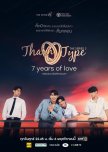
Some good laughs but didn't sell.
"TharnType: The Series" garnered acclaim during its release year; however, revisiting it in 2024 reveals a somewhat disappointing experience. Perhaps the series' reception was influenced by the demographic and the state of BL genre development in 2019, which may have been less mature compared to later years.The casting and storyline, while adequate, fail to leave a lasting impression, lacking the depth necessary to captivate viewers who have since been exposed to more refined offerings within the genre. Despite its initial acclaim, the series falls short in providing substantial character development beyond surface-level exploration, particularly in its handling of conflicts and narrative pacing.
Furthermore, the editing issues and excessive focus on intimate scenes detract from the overall viewing experience, making it difficult for the series to strike a balance between romantic elements and a cohesive storyline. While "TharnType: The Series" may have resonated with audiences in its time, it ultimately struggles to hold up to the evolving standards of the BL genre, leaving much to be desired for viewers seeking a more nuanced and engaging narrative.
Was this review helpful to you?


