News
News 


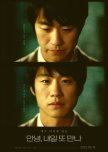
A gay man, Ko Yeong, and his straight roommate, Mi Ae, navigate love, societal judgment, and personal growth. Ko Yeong's love story unfolds through Mi Ae's perspective, as he faces his mother's denial of his sexuality and societal pressures. After experiencing a deep, pure love with Gyu Ho, Ko Yeong is forced to let him go. Following Gyu Ho's departure, he travels to Thailand, where he reflects on the past and achieves personal growth. (Source: kisskh) ~~ Adapted from the novel “Love in the Big City” (대도시의 사랑법) by Park Sang Young (박상영). Edit Translation
- English
- Українська
- Русский
- Français
- Native Title: 대도시의 사랑법
- Also Known As: Amor na Cidade Grande , Daedosiui Sarangbeob , Đôi Bạn Học Yêu , Кохання у великому місті , Любовь в большом городе
- Director: Hur Jin Ho, Hong Ji Young, Son Tae Gyum, Kim Se In
- Screenwriter: Park Sang Young
- Genres: Romance, Youth, Drama
Where to Watch Love in the Big City




Cast & Credits
-
 Nam Yoon SuKo YeongMain Role
 -
 Jin Ho EunSim Gyu HoMain Role
 -
 Lee Soo KyungChoi Mi Ae [Ko Yeong's friend]Support Role
 -
 Kwon HyukKim Nam Gyu [Ko Yeong's boyfriend]Support Role
 -
 Na Hyun WooNo Yeong Su [Ko Yeong's boyfriend]Support Role
 -
 Kim Won JoongHabibi [Ko Yeong's boyfriend]Support Role







Reviews

This review may contain spoilers
Yeong's worst enemy....
This series had me until episode 6 and then it just was a dull hum until the end. It's was a beautiful realistic story. One of the greatest joys was watching Yeong move from being self indulgent over exhuberent college kid to a self aware realist, a published writer. This is also the greatest sadness. He drew on his experiences, his environment and poured it into his writing. Along the way he lost his sparkle.Gyu Ho and Nam Gyu both suffered the same fate. Yeong's inability to accept love without expectations caused him to lose two people who truly love him. It seems all his relationships were doomed due to his desire to have the razzle dazzle fireworks to continue throughout, without being able to accept the mundane. Only after they were over, would he be able to see what he truly lost and regretted. Not knowing his true self and his inability to be alone encouraged two relationships that should never have been. Habibi and Yeong Su came with hidden baggage, one abusive and the other just sad. Yeong Su lived in shadows and manipulated Yeong's niaivete to live in his internalized homophobia. Habibi, with a hidden wife and child, embarks on a journey with him, hoping to capture a bit of Yeong's sparkle to relieve his boredom. Seeing him too drunk and overworked, Yeong chooses himself and walks away. Both relationships were poor choices to facing a life of solitude and expected failures.
His mother is shown to have moved from denial, abhorring, to knowing, to minimally discussing. She doesn't accept his life but still loves her son.
The real charmers, the electricity powering his life, were his close group of friends and roomate Mi Ae. Yet, even with them, some bits of his life were closed. His HIV status is only shown to be discussed with Gyu Ho, who loved him enough to truly accept him as he is. Gyu Ho, after the cowardly way Yeong breaks up with him, never contacts him again. Though, through the bartender at their favorite spot, he let's Yeong know, he is still loved. Not yet ready to make any contact, in the end, it is his friends that he is seen enjoying the fireworks.
The story was beautifully told, and with flashbacks in the last two episodes, we get a fuller history of the reality of his best relationship, Gyu Ho. The sad part for me is that he began to let his status have an effect on him and as he took stock of his life, became more subdued. The last two episode felt like a gradual slide down from the high.
Every character was skillfully brought to life. Yeong was a free spirited over the top whitty self accepting non judgemental dreamer who was scared to dream and Nam Yoon Su killed it. This is a must see at least once.
Note to directors and editors at large:
Flashbacks: This is how it's supposed to be done. Ever flashback should reveal something new and actually propel the story being told.
Was this review helpful to you?

This review may contain spoilers
To All The Boys I've Loved Before
Gyu Ho was God's apology to Go Young for all the boys he'd loved before, and I cried when he fumbled that blessing for a half eaten hamburger. But, thank God they met again in that bar, moved in together to the new place and decided to get married in the finale. #heartheart XDXDXDListen, this drama coming from SK in itself is a wonder. I went into this with high anticipation and I wasn't disappointed. I enjoyed it a lot. I liked the characters, the story, the education it gave me when it came to Kylie, and how realistic it was. I laughed, cried, and related so hard in some parts, I cried some more.
Go Young had three main lovers, one who was too boring to take karaoke-ing, a pretentious prick who came with a side of abs and left scars, and a happy-go-get it boy who wanted a home, and broke our hearts when he left the one he found. Let me explain.
MR SPLENDID:
Listen, Go Young and Nam Gyu could have worked. Sure, he was slow, a classic and drove like his grandmother, but my man was committed and serious. Frankly, I thought he was fast... he pulled out that ring faster than my internet connection. He genuinely loved Go Young. A bit obsessed, sure, but he came off as someone who loved with all his heart, and I felt sad when he was turned down, again and again. In the end, even his marinated crabs got rejected...poor guy. This is another guy, Go Young fumbled, and it's sad he only realised that when it was too late. Also, are we going to ignore the reason he was speeding or... anyway, rip.
MR. ACTIVIST:
Yeong Su was a fun hating, people pleasing, pretentious bummer! God, I couldn't stand his arse. Yes, I have eyes and went dayummm Susan, come here often?? And that table sexy time scene was... but damn, that brother sucked! I literally wanted to throw rocks at his head whenever he was on screen. Dafug you mean you don't celebrate Halloween because of its history and you look down on people who do? And the mfker even hated pasta. I clapped when Go Young finally clocked him, and threw his stupid arse case study away in the trash. I couldn't get why Go Young didn't see that glaring red flag, and kept letting himself be hurt to the point he took those meds. But then I understood, some hurt goes deeper than others. Either way, he was a beef cake, but if I ever see his arse on the street, it's on sight.
MR. NURSE
Gyu Ho, Gyu Ho, Gyu Ho, how I would have loved to be friends with you. Sure, they were not perfect, and his dingdong went on and off like a light bulb whenever they were doing the devil's tango--protected, but, these two were my main ship and I loved every moment with them. In the end, I understood that Go Young was scared, and perhaps wasn't sure why Gyu Ho was so accepting of Kylie and didn't even seem to care about it. Perhaps he didn't trust that Gyu Ho was truly okay with it, and that's why he had one foot out the door and took the first chance to accept their broken fate, but I still cried. They were in-tuned with each other, and Gyu Ho finally seemed so happy to have found him. In my head, I am full on delulu, and imagining them living together with a dog.
Anyway, I also liked the friendship between Choi Mi Ae and Go Young. I was sad when they had a fallen out, brought back memories of all the friends that were everything at one point, and then... we sort of dimmed out. Seeing their friendship from start to finish brought back memories that added to the tears.
All-in-all, a great show that many dramas and bl lovers would enjoy. It's a realistic portray and the ending would knock you back into reality. I highly recommend it. Kudos to the cast, especially Nam Yoon Su who did his thing. My man was on, and I loved him for it. I can't wait to see their future works.
Was this review helpful to you?