News


Ambos possuem fotografias muito bonitas, e também personagens complexos, são duas histórias que tem deixam a flor da pele, completamente submersa.
Both works depict challenges with being gay in South Korean society as well as experiences of familial relationships for gay people, and both works do so with a rather literary approach to writing (focusing on arranging words in a beautiful and profound way); a somewhat melancholic but also hopeful ending and overall emotional tone; and an achingly beautiful instrumental score for the soundtrack. The writing similarities are strongest with episodes 3-4 of "Love in the Big City", which (like "So Long, See You Tomorrow") makes heavy use of universe-related imagery.
the dynamic between ji yu and seung won reminds me of ko yeong and mi ae, also hui su is afraid that other people would judge him for being different, like he cant even tell his closest friends but with seung won hes not afraid of that and feels more relieved and free, in litbc ko yeong is afraid of telling his closet friends about kylie but when he found gyu ho he could find comfort and he could completly be himself around gyu ho

Main character is a gay man who rites about his live, his relationships (romantic and platonic) and issues that affect the lgbtq community.
Diary of Tootsies is a comedy series about a queer and diverse friend group and their shenanigens or the issues they encounter. There also a romance plot line. LITBC also has a gay mc with a close friend group but has a more serious vibe and the friendship is less of a focus.
Good shows about queer life and struggles

Both follow characters navigating love and life, going in and out of relationships, falling in love with people but also depecting relationship struggles and the ups and downs of life.
Theres a friendgroup that stick together through thick and thin, though, in wake up ladies the friendship aspect is much more relevant than in LITBC.
Queer characters, though, LITBC has an almost entirely queer/achillean cast while in wake up ladies its mainly the MC and his LIs.
Theres a friendgroup that stick together through thick and thin, though, in wake up ladies the friendship aspect is much more relevant than in LITBC.
Queer characters, though, LITBC has an almost entirely queer/achillean cast while in wake up ladies its mainly the MC and his LIs.
Shorter dramas about life as a gay man/the gay experience. Relationship, friendship, health, family, societal struggles. Realities of life.
Gay ok bangkok feels a bit more raw, in the sense that its not kdramafied (i dont mean this as like an attack on LITBC. It values things like telling a romance, typical visuals/aesthetics more than GayOkBangkok i feel. Its up to personal preference i guess).
Gay ok bangkok feels a bit more raw, in the sense that its not kdramafied (i dont mean this as like an attack on LITBC. It values things like telling a romance, typical visuals/aesthetics more than GayOkBangkok i feel. Its up to personal preference i guess).

Both are korean dramas with a kind of episodic feel but a central main character. They follow a young man and his development/coming of age. He meets different people -each episode contains its own little story
Navigating family, friendship
Main character rejected by society bc he belongs to a marginalised group of people
Dealing with grief/death of a parent
Very emotional shows about real life
Move to heaven ep5 features a sad gay storyline ... thats basically what love in the big city is lol
Navigating family, friendship
Main character rejected by society bc he belongs to a marginalised group of people
Dealing with grief/death of a parent
Very emotional shows about real life
Move to heaven ep5 features a sad gay storyline ... thats basically what love in the big city is lol

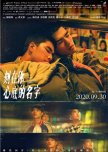
Queer coming of age stories about gay men navigating love, friendship, family, and a society hesitant to accept them. Very sad, emotional and compelling, not shying away from presenting the real life struggles
YNEH tackles christianity (in its relation to homosexuality, or more so, Christian people disproving of queer ppl), internalised homophobia which are also central aspects in at least one of the stories in LITBC
YNEH tackles christianity (in its relation to homosexuality, or more so, Christian people disproving of queer ppl), internalised homophobia which are also central aspects in at least one of the stories in LITBC
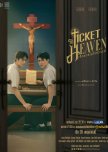
Queer coming of age stories about characters navigating their sexuality and romantic relationships to other people among an enviroment that may not be so accepting
Emotional, romantic
Try to be a realistic account of queer life
Themes of christianity are very central in TTH but also are brushed upon in LITBC
Emotional, romantic
Try to be a realistic account of queer life
Themes of christianity are very central in TTH but also are brushed upon in LITBC
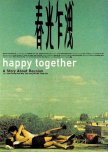
If you take Love in the Big City's episode-6 relationship arc; combine it with episode 8's nostalgic, melancholic, and temporally disjointed remembrance of times past (and idealized expectations pulled back down to reality) on vacation in a foreign land; intensify the moody sense of loneliness and dislocation; make the humor a bit more subtle; keep the attention to grittier dimensions of gay life, the more explicit elements of gay sex, and the questionable maturity of the very flawed (i.e. human) protagonist; and you film the story in an art-house style; then you might get something like Happy Together.
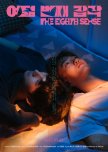
The tones of both dramas are similar, even though both plots are significantly different. Both are Koean BLs but are not your typical BLs. They explore the darker sides/tones of relationships in general while also including some aspects specific to LGBT relationships, such as social stigma. For me, I find that the best points of the dramas are not the relationships itself but the underlining currents surrounding the relationships.