


 3
3 2
2


This review may contain spoilers
Unique, Stylish, Bold, and Thought-Provoking
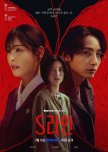
I decided to watch this because I am an avid fan of Lee Soo-hyuk. He has a knack for choosing very eccentric dramas, and I find that very intriguing about him. The central concept of S Line is a surreal and terrifying phenomenon: the sudden appearance of glowing red lines, or S-Lines, above people's heads. These lines are not just any visual gimmick; they represent a public record of an individual's past sexual relationships, connecting them to every person they've been intimate with, chaotic to say the least. The story unfolds as a mysterious murder mystery, triggered by the chaos that erupts when these private connections are suddenly made public. The show follows three main characters whose lives become intertwined with the S-Line phenomenon.
The three main characters, or should I say driving force, in this drama are Detective Han Ji-wook (Lee Soo-hyuk), assigned to a bizarre death case tied to the S-Lines. He initially dismisses the phenomenon as an urban legend. Still, after acquiring a special pair of glasses that allows him to see the lines, he is shocked to discover a tangled web of connections above his own head. This discovery forces him to confront his past and dive deep into the mystery. Shin Hyun-heup (Arin), a high school student, is the only person who has been able to see the S-Lines since birth. She has lived a reclusive life, burdened by this curse-like ability and the tragic family secret it exposed. She becomes a key figure in the investigation, as her unique perspective is crucial to understanding the phenomenon. Lee Gyu-jin (Lee Da-hee) is a mysterious high school teacher who appears calm and collected on the surface but harbors dark secrets. She is a central antagonist, revealed to be behind many disturbing events and using her own ability to see the S-Lines to manipulate others and orchestrate a twisted plan.
As the series progresses, the plot delves into a murder investigation, a shocking family tragedy, and a commentary on how society would react if all intimate secrets were laid bare. The finale culminates in a climactic confrontation where the S-Lines, once only visible to a select few, become visible to everyone, plunging the world into a state of chaos and forcing humanity to grapple with radical honesty. The ending is both haunting and thought-provoking, leaving a wide-open ending for a potential second season.
Taking a deep dive into the characters, I have to say that as complex as S Line is as a story, as fascinating is the cast of S Line for their praiseworthy performances, particularly in how they each handle their roles within the bigger scheme of the drama's dark and multifaceted themes.
Lee Soo-hyuk as Han Ji-wook brings his signature charismatic and icy elegance to the role of a detective grappling with a personal and professional crisis. His portrayal of a man whose own secrets are exposed is layered and compelling.
Arin, as Shin Hyun-heup, is the surprise for me in her dramatic transformation from her bubbly idol image as a member of the K-pop group Oh My Girl. She delivers a nuanced and emotional performance as a young adult burdened by a profound psychological trauma. Her character is the emotional anchor of the story, representing the vulnerability of those who cannot hide their past.
Lee Da-hee as Lee Gyu-jin is the outlier for me in that I didn't recognize Lee Gyu-jin as Lee Da-hee until the last episode. She was quite enchanting in her portrayal of the mysterious and manipulative high school teacher. Her performance is chilling and captivating, as she embodies a character who believes she is cleansing the world by exposing secrets.
I am not at all surprised that S Line received a mixed but generally positive reception or that reviewers and viewers alike admired the show for its innovative and daring premises and ability to use a fantastical concept as a potent metaphor for real-world issues, such as online surveillance, cancel culture, and the double standards of sexual shame. I also think it's fast-paced, and a six-episode format is one of its biggest strengths as it prevents the story from dragging and keeps me engaged and on the edge of my seat. The cinematography is also admirable for its use of dark, eerie visuals that complement the psychological thriller genre. I am not surprised at all that it won the Best Music award at the Cannes International Series Festival, highlighting its strong production value.
This drama is not for everyone, and I may be among the very few who gave it a 10-star rating, but that is okay. Not everything is for everybody. I enjoyed it for its uniqueness, style, boldness, and thought-provoking nature, particularly in how it challenges conventional K-drama storytelling. It is a must-watch for fans of psychological thrillers, and if you are looking for something outside the norm.
The three main characters, or should I say driving force, in this drama are Detective Han Ji-wook (Lee Soo-hyuk), assigned to a bizarre death case tied to the S-Lines. He initially dismisses the phenomenon as an urban legend. Still, after acquiring a special pair of glasses that allows him to see the lines, he is shocked to discover a tangled web of connections above his own head. This discovery forces him to confront his past and dive deep into the mystery. Shin Hyun-heup (Arin), a high school student, is the only person who has been able to see the S-Lines since birth. She has lived a reclusive life, burdened by this curse-like ability and the tragic family secret it exposed. She becomes a key figure in the investigation, as her unique perspective is crucial to understanding the phenomenon. Lee Gyu-jin (Lee Da-hee) is a mysterious high school teacher who appears calm and collected on the surface but harbors dark secrets. She is a central antagonist, revealed to be behind many disturbing events and using her own ability to see the S-Lines to manipulate others and orchestrate a twisted plan.
As the series progresses, the plot delves into a murder investigation, a shocking family tragedy, and a commentary on how society would react if all intimate secrets were laid bare. The finale culminates in a climactic confrontation where the S-Lines, once only visible to a select few, become visible to everyone, plunging the world into a state of chaos and forcing humanity to grapple with radical honesty. The ending is both haunting and thought-provoking, leaving a wide-open ending for a potential second season.
Taking a deep dive into the characters, I have to say that as complex as S Line is as a story, as fascinating is the cast of S Line for their praiseworthy performances, particularly in how they each handle their roles within the bigger scheme of the drama's dark and multifaceted themes.
Lee Soo-hyuk as Han Ji-wook brings his signature charismatic and icy elegance to the role of a detective grappling with a personal and professional crisis. His portrayal of a man whose own secrets are exposed is layered and compelling.
Arin, as Shin Hyun-heup, is the surprise for me in her dramatic transformation from her bubbly idol image as a member of the K-pop group Oh My Girl. She delivers a nuanced and emotional performance as a young adult burdened by a profound psychological trauma. Her character is the emotional anchor of the story, representing the vulnerability of those who cannot hide their past.
Lee Da-hee as Lee Gyu-jin is the outlier for me in that I didn't recognize Lee Gyu-jin as Lee Da-hee until the last episode. She was quite enchanting in her portrayal of the mysterious and manipulative high school teacher. Her performance is chilling and captivating, as she embodies a character who believes she is cleansing the world by exposing secrets.
I am not at all surprised that S Line received a mixed but generally positive reception or that reviewers and viewers alike admired the show for its innovative and daring premises and ability to use a fantastical concept as a potent metaphor for real-world issues, such as online surveillance, cancel culture, and the double standards of sexual shame. I also think it's fast-paced, and a six-episode format is one of its biggest strengths as it prevents the story from dragging and keeps me engaged and on the edge of my seat. The cinematography is also admirable for its use of dark, eerie visuals that complement the psychological thriller genre. I am not surprised at all that it won the Best Music award at the Cannes International Series Festival, highlighting its strong production value.
This drama is not for everyone, and I may be among the very few who gave it a 10-star rating, but that is okay. Not everything is for everybody. I enjoyed it for its uniqueness, style, boldness, and thought-provoking nature, particularly in how it challenges conventional K-drama storytelling. It is a must-watch for fans of psychological thrillers, and if you are looking for something outside the norm.
Was this review helpful to you?


