

 3
3 2
2


Political Intrigue vs. Family Drama
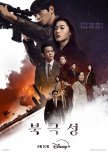
The highly anticipated spy thriller Tempest, marking the return of the incomparable Jun Ji-hyun, is a show that feels like a cinematic, high-octane political chess match. It's sleek, the action is gripping, and the chemistry between the leads is absolutely electrifying. However, this drama hasn't just brought the heat on-screen; it has practically ignited a wildfire of controversy and debate, especially when it comes to international relations and casting choices. The storyline starts with a bang: a presidential candidate’s assassination that unravels a massive conspiracy involving North Korea, South Korean politics, and American intelligence. The initial episodes are tight, slick, and full of gripping action sequences, perfectly paced to hook a global audience. The creative team, including the writer of Decision to Leave and the director of Vincenzo, truly knows how to create atmosphere and suspense.
However, a recurring criticism is the delivery and pacing of this drama, and I concur. I felt like this complex geopolitical thriller often got bogged down by predictable chaebol family conflicts (scheming in-laws, power plays over inheritance, sibling rivalries). These sections felt distinctly more makjang (melodrama) than espionage, weakening the main narrative drive and causing the suspense to lose momentum. I also thought that the script underutilized the talents of its leads and the compelling international spy elements by pivoting too heavily into domestic squabbles. With all this said, though, Tempest is a well-produced, high-stakes political thriller that is carried by the phenomenal chemistry and layered performances of its two leads and supporting cast. It’s an urgent, engaging watch, even if it occasionally loses its footing balancing a local family drama with an international tempest.
I can’t talk about Tempest without addressing the massive elephant in the room. The female lead, Seo Mun-ju (Jun Ji-hyun), a former UN Ambassador and presidential candidate, was inadvertently at the center of a genuine diplomatic headache. The whole thing blew up over two core issues: the line where Mun-ju says, "Why does China prefer war?" It was a brief phrase that sparked an instantaneous, fiery backlash from Chinese viewers. They called it an insult, slander, and a malicious distortion of their country's image. I say this: it’s a fictional story, for crying out loud, and the outcry spoke more to those viewers’ thoughts about their country than to the drama, just saying. The other issue is that Drama faced heavy criticism for its negative portrayal of the Chinese city of Dalian, allegedly depicting it as a dilapidated shantytown when, in reality, it's a modern metropolis. Viewers felt this was a deliberate attempt to "uglify" the city. I doubt that was the intention, but who am I to judge.
For Jun Ji-hyun, a massive Hallyu star who has built a substantial following and secured numerous brand endorsements in China over the past two decades, this controversy was likely a crisis. Suddenly, her career and even her commercial deals were in question, with brands reportedly distancing themselves to avoid the fallout. It’s a harsh reminder of how fragile the balance between entertainment, culture, and business is in the global sphere. It raises the uncomfortable question of whether an actor can truly be divorced from the political implications of their script, mainly when the script deals with such high-stakes international politics, especially in this part of the world. The second point of debate is one that frequently arises in international K-dramas: the use of English-language dialogue. In a show centered on a former UN Ambassador and American political figures, English proficiency is crucial for realism. I understand where this is coming from, but I thought everyone did pretty well, especially Gang Dong-won. I was very impressed with his diction, accent, intuition, everything – his voice, I mean, he is a package deal.
Rather than point out negatives, I like to focus on the positive. I think the production wisely cast established Korean-American actors, such as John Cho (as Deputy Secretary of State Anderson Miller), in key US-based roles. I especially appreciated that the American characters were played by legitimate Hollywood talent, which is a massive improvement over the often-criticized casting of non-native speakers or random expats in past K-dramas. When Cho's character spoke, the authenticity was there. Where things get nuanced is with the Korean main cast, specifically Jun Ji-hyun, and the main reason is that her character is supposed to be a highly educated former US Ambassador. While her English is generally competent, fitting for a diplomat, there were occasional moments where the delivery felt slightly stiff, but other than that, I thought she did a pretty good job. Frankly, I think the intention to make the show truly international was commendable, and casting John Cho was a genius move.
The show’s emotional core hinged entirely on its two leads, which is understandable. However, I think the supporting cast, composed of veteran actors, was critical in escalating the tension from a political thriller to a full-blown family and international conspiracy. Their characters are the primary drivers of the "chaebol family conflicts" that interweave with the espionage plot, creating multiple, simultaneous layers of threat around the leads, and so on to character analysis:
Seo Mun-ju (Jun Ji-hyun): The Sharp Diplomat Mun-ju is no mere "politician's wife"; she is the driving force of the plot. She's a skilled former UN Ambassador, sharp, principled, and an intellectual force. Jun Ji-hyun plays her with a marvelous balance of polished stoicism and deep, suppressed pain following her husband’s assassination. The brilliance of her character is that she remains active and resilient, never a passive victim, as she navigates the treacherous waters of her influential, chaebol in-laws and international espionage. She uses her intelligence as her weapon, a refreshing contrast to the action hero.
Paik San-ho (Gang Dong-won): The Brooding Mercenary Gang Dong-won, returning to TV after a long hiatus, embodies San-ho as a mysterious, near-mythical international agent. He is the quiet shadow, the physical force who protects Mun-ju with deadly efficiency. Their relationship is a masterclass in slow-burning, intense chemistry. It’s the classic "spy protects diplomat" trope, but their dynamic—her poise and his quiet, almost obsessed protectiveness—is electric. The actors themselves have been praised for redefining on-screen tension; every loaded glance or moment of shared silence is more compelling than any overt romantic gesture.
The Architect of Domestic Intrigue: Lim Ok-seon (Lee Mi-sook), the influential Chairwoman of Aseom Shipping and Seo Mun-ju's mother-in-law, embodies the ruthless chaebol matriarch with a lethal political edge. Veteran actress Lee Mi-sook imbues the character with an imposing, calculating presence, drawing comparisons from critics to iconic cinematic villains. Ok-seon is initially Mun-ju's chief antagonist, driven by contempt for her daughter-in-law's humble background. However, her primary motivation is power and control. Following her son's assassination, she swiftly pivots her political ambitions, realizing Mun-ju is her new, albeit reluctant, vehicle to maintain influence. This creates a fascinating and dangerous dynamic: their relationship is not one of trust, but of an uneasy, high-stakes alliance where every shared glance is a battle of wits. Ok-seon is the primary driver of the domestic threats, ensuring that Mun-ju cannot escape the chaebol family power struggle even while facing international conspiracies.
The Volatile Insider: Jang Jun-sang (Oh Jung-se), Mun-ju's brother-in-law and a prosecutor, functions as the most volatile and unpredictable internal threat. Played by the versatile Oh Jung-se, Jun-sang is a man consumed by deep-seated inferiority and sibling rivalry. Despite his professional competence and standing within the legal system, he has always lived in the shadow of his now-deceased brother, a former presidential candidate. His character arc is rooted in his emotional wounds, which manifest as complicated motivations, anger, and professional jealousy. His position as a prosecutor gives him access to information and resources that can either aid or critically undermine Mun-ju's investigation. He is a powder keg in the narrative, always threatening to derail the larger mission due to his own personal resentments.
The International Power Player: Anderson Miller (John Cho), the U.S. Deputy Secretary of State, is vital to the show’s geopolitical credibility. The decision to cast an established Hollywood figure like John Cho ensures a level of authenticity and gravity often missing in K-dramas' portrayals of Western characters. His character is a high-ranking Korean-American official caught in the thick of the US government's response to the crisis on the Korean Peninsula. Miller serves as a crucial bridge—a source of intelligence, a potential ally, and a reminder of the massive international forces at play. His involvement instantly elevates the conspiracy from a regional affair to a global power struggle, providing the diplomatic context that Mun-ju, as a former ambassador, must navigate.
The Inciting Incident: Jang Jun-ik (Park Hae-joon) Mun-ju's late husband is the origin point of the entire tempest. Although his screen time is minimal, his character’s past actions and secrets were the lifeblood of the conspiracy. By far the most important character who was initially presented as a charismatic and peace-loving presidential candidate, however, as Mun-ju investigates his assassination, she uncovers a legacy of hidden information, paranoia, and deep entanglement with both the North Korean and chaebol world. He is a portrait of a man who was clearly not who he appeared to be, setting up the central mystery and forcing Mun-ju to confront the dangerous truth about the man she married.
Ultimately, Tempest is undeniably a gripping drama, but its script has proven to be a dangerous territory. It’s a show that forces its audience to think not just about the fictional spy plot, but about the real-world issues of cultural representation, political sensitivity, and the heavy cross an actor has to bear for the words in their script. At the very least, it's made me think. With all that said, it's a must-watch for fans of high-quality action thrillers and political dramas. It succeeds as a gripping espionage story elevated by a world-class cast and a taut script, offering both intellectual intrigue and heart-pounding action.
However, a recurring criticism is the delivery and pacing of this drama, and I concur. I felt like this complex geopolitical thriller often got bogged down by predictable chaebol family conflicts (scheming in-laws, power plays over inheritance, sibling rivalries). These sections felt distinctly more makjang (melodrama) than espionage, weakening the main narrative drive and causing the suspense to lose momentum. I also thought that the script underutilized the talents of its leads and the compelling international spy elements by pivoting too heavily into domestic squabbles. With all this said, though, Tempest is a well-produced, high-stakes political thriller that is carried by the phenomenal chemistry and layered performances of its two leads and supporting cast. It’s an urgent, engaging watch, even if it occasionally loses its footing balancing a local family drama with an international tempest.
I can’t talk about Tempest without addressing the massive elephant in the room. The female lead, Seo Mun-ju (Jun Ji-hyun), a former UN Ambassador and presidential candidate, was inadvertently at the center of a genuine diplomatic headache. The whole thing blew up over two core issues: the line where Mun-ju says, "Why does China prefer war?" It was a brief phrase that sparked an instantaneous, fiery backlash from Chinese viewers. They called it an insult, slander, and a malicious distortion of their country's image. I say this: it’s a fictional story, for crying out loud, and the outcry spoke more to those viewers’ thoughts about their country than to the drama, just saying. The other issue is that Drama faced heavy criticism for its negative portrayal of the Chinese city of Dalian, allegedly depicting it as a dilapidated shantytown when, in reality, it's a modern metropolis. Viewers felt this was a deliberate attempt to "uglify" the city. I doubt that was the intention, but who am I to judge.
For Jun Ji-hyun, a massive Hallyu star who has built a substantial following and secured numerous brand endorsements in China over the past two decades, this controversy was likely a crisis. Suddenly, her career and even her commercial deals were in question, with brands reportedly distancing themselves to avoid the fallout. It’s a harsh reminder of how fragile the balance between entertainment, culture, and business is in the global sphere. It raises the uncomfortable question of whether an actor can truly be divorced from the political implications of their script, mainly when the script deals with such high-stakes international politics, especially in this part of the world. The second point of debate is one that frequently arises in international K-dramas: the use of English-language dialogue. In a show centered on a former UN Ambassador and American political figures, English proficiency is crucial for realism. I understand where this is coming from, but I thought everyone did pretty well, especially Gang Dong-won. I was very impressed with his diction, accent, intuition, everything – his voice, I mean, he is a package deal.
Rather than point out negatives, I like to focus on the positive. I think the production wisely cast established Korean-American actors, such as John Cho (as Deputy Secretary of State Anderson Miller), in key US-based roles. I especially appreciated that the American characters were played by legitimate Hollywood talent, which is a massive improvement over the often-criticized casting of non-native speakers or random expats in past K-dramas. When Cho's character spoke, the authenticity was there. Where things get nuanced is with the Korean main cast, specifically Jun Ji-hyun, and the main reason is that her character is supposed to be a highly educated former US Ambassador. While her English is generally competent, fitting for a diplomat, there were occasional moments where the delivery felt slightly stiff, but other than that, I thought she did a pretty good job. Frankly, I think the intention to make the show truly international was commendable, and casting John Cho was a genius move.
The show’s emotional core hinged entirely on its two leads, which is understandable. However, I think the supporting cast, composed of veteran actors, was critical in escalating the tension from a political thriller to a full-blown family and international conspiracy. Their characters are the primary drivers of the "chaebol family conflicts" that interweave with the espionage plot, creating multiple, simultaneous layers of threat around the leads, and so on to character analysis:
Seo Mun-ju (Jun Ji-hyun): The Sharp Diplomat Mun-ju is no mere "politician's wife"; she is the driving force of the plot. She's a skilled former UN Ambassador, sharp, principled, and an intellectual force. Jun Ji-hyun plays her with a marvelous balance of polished stoicism and deep, suppressed pain following her husband’s assassination. The brilliance of her character is that she remains active and resilient, never a passive victim, as she navigates the treacherous waters of her influential, chaebol in-laws and international espionage. She uses her intelligence as her weapon, a refreshing contrast to the action hero.
Paik San-ho (Gang Dong-won): The Brooding Mercenary Gang Dong-won, returning to TV after a long hiatus, embodies San-ho as a mysterious, near-mythical international agent. He is the quiet shadow, the physical force who protects Mun-ju with deadly efficiency. Their relationship is a masterclass in slow-burning, intense chemistry. It’s the classic "spy protects diplomat" trope, but their dynamic—her poise and his quiet, almost obsessed protectiveness—is electric. The actors themselves have been praised for redefining on-screen tension; every loaded glance or moment of shared silence is more compelling than any overt romantic gesture.
The Architect of Domestic Intrigue: Lim Ok-seon (Lee Mi-sook), the influential Chairwoman of Aseom Shipping and Seo Mun-ju's mother-in-law, embodies the ruthless chaebol matriarch with a lethal political edge. Veteran actress Lee Mi-sook imbues the character with an imposing, calculating presence, drawing comparisons from critics to iconic cinematic villains. Ok-seon is initially Mun-ju's chief antagonist, driven by contempt for her daughter-in-law's humble background. However, her primary motivation is power and control. Following her son's assassination, she swiftly pivots her political ambitions, realizing Mun-ju is her new, albeit reluctant, vehicle to maintain influence. This creates a fascinating and dangerous dynamic: their relationship is not one of trust, but of an uneasy, high-stakes alliance where every shared glance is a battle of wits. Ok-seon is the primary driver of the domestic threats, ensuring that Mun-ju cannot escape the chaebol family power struggle even while facing international conspiracies.
The Volatile Insider: Jang Jun-sang (Oh Jung-se), Mun-ju's brother-in-law and a prosecutor, functions as the most volatile and unpredictable internal threat. Played by the versatile Oh Jung-se, Jun-sang is a man consumed by deep-seated inferiority and sibling rivalry. Despite his professional competence and standing within the legal system, he has always lived in the shadow of his now-deceased brother, a former presidential candidate. His character arc is rooted in his emotional wounds, which manifest as complicated motivations, anger, and professional jealousy. His position as a prosecutor gives him access to information and resources that can either aid or critically undermine Mun-ju's investigation. He is a powder keg in the narrative, always threatening to derail the larger mission due to his own personal resentments.
The International Power Player: Anderson Miller (John Cho), the U.S. Deputy Secretary of State, is vital to the show’s geopolitical credibility. The decision to cast an established Hollywood figure like John Cho ensures a level of authenticity and gravity often missing in K-dramas' portrayals of Western characters. His character is a high-ranking Korean-American official caught in the thick of the US government's response to the crisis on the Korean Peninsula. Miller serves as a crucial bridge—a source of intelligence, a potential ally, and a reminder of the massive international forces at play. His involvement instantly elevates the conspiracy from a regional affair to a global power struggle, providing the diplomatic context that Mun-ju, as a former ambassador, must navigate.
The Inciting Incident: Jang Jun-ik (Park Hae-joon) Mun-ju's late husband is the origin point of the entire tempest. Although his screen time is minimal, his character’s past actions and secrets were the lifeblood of the conspiracy. By far the most important character who was initially presented as a charismatic and peace-loving presidential candidate, however, as Mun-ju investigates his assassination, she uncovers a legacy of hidden information, paranoia, and deep entanglement with both the North Korean and chaebol world. He is a portrait of a man who was clearly not who he appeared to be, setting up the central mystery and forcing Mun-ju to confront the dangerous truth about the man she married.
Ultimately, Tempest is undeniably a gripping drama, but its script has proven to be a dangerous territory. It’s a show that forces its audience to think not just about the fictional spy plot, but about the real-world issues of cultural representation, political sensitivity, and the heavy cross an actor has to bear for the words in their script. At the very least, it's made me think. With all that said, it's a must-watch for fans of high-quality action thrillers and political dramas. It succeeds as a gripping espionage story elevated by a world-class cast and a taut script, offering both intellectual intrigue and heart-pounding action.
Was this review helpful to you?


