
 K-Drama


This review may contain spoilers
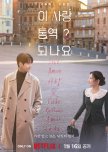
A Visually Stunning Romance That Struggles to Fully Connect
Story & Plot---
This drama had a very strong start and immediately pulled me in with its atmosphere and presentation. The premise felt refreshing at first, especially with how language, culture, and emotional barriers were woven into the experience. I enjoyed the tone that the drama began with, which made it feel a little different from typical romantic comedies.
That said, the storytelling became increasingly frustrating as there was a lot of back and forth. With some miscommunication. While this fits Muhee's internal struggles, it was getting to the point where it wasn't so meaningful. I didn't find the pacing to be slow, but there was certain narrative choices that left me confused rather than emotionally satisfied. I was expecting more. The drama had a lot of good moments, but the resolution felt less impactful than it should have been.
Despite these issues, the story isn't that bad. It simply didn't fully deliver on the emotional depth it was clearly aiming for.
Characters & Acting
---
The acting was consistently strong throughout the drama. Kim Seonho and Go Youn Jung conveyed their characters beautifully through subtle glances, body language, and silence. Their chemistry feels gentle and authentic, particularly in the initial episodes.
Hojin, while likable, doesn't undergo much noticeable growth, which leaves his character feeling a bit flat by the end. Muhee, on the other hand, does experience growth as she slowly faces her trauma. However, her development feels limited due to the audience spending a considerable amount of time focused on Do Rami. While Do Rami is an interesting narrative device, her presence sometimes overshadows Muhee.
My favorite character was Hiro. His arc went from childish/petty to someone who was able to allow himself to love someone and even learning Korean. This is probably the best part of this drama. His effort to learn Korean in order to better communicate with Muhee is genuinely touching and adds depth to his role. His dynamic with Muhee feels natural, warm, and so sincere, making it hard not to root for him. Second lead syndrome strikes again!
Music
---
The OST is a highlight. "Lay Down Together" by off the menu, "Daydream" by WENDY, and "Promise" by WONSTEIN are all memorable tracks, that I enjoyed, that elevate the emotional tone of the drama. The music plays a crucial role in grounding scenes and enhancing the atmosphere. I felt that some of the background tracks—particularly English ones—felt oddly artificial??? Overall the main OST left a strong impression.
Rewatch Value
---
This isn't a drama that makes me want to STRONGLY rewatch it. While episode one, scenes with Hiro, and the breathtaking scenery are tempting reasons to return, the narrative confusion, random timeskips, and emotional frustration makes me less likely to rewatch it. The drama is best appreciated for its experience rather than revisited for comfort.
Overall
---
"Can This Love Be Translated?" is a well-produced, thoughtfully acted drama that doesn't fully live up to its potential, but still offers an engaging experience. Its strengths lie in its cinematography, international settings, strong performances, and memorable OST. While the script of Hojin and Muhee's romance sometimes feels forced and super back and forth—along with the confusing storytelling—the emotional themes and character dynamics keep it engaging.
This drama is easy to recommend to viewers who enjoy travel-heavy stories, co-productions, and stories centered on language, identity, and internal struggle. Polyglots and language enthusiasts, in particular, may find it especially appealing. However, those who prefer straightforward storytelling/romance or are easily frustrated by miscommunication may want to take their time with this drama.
In the end, this drama is true to its title—occasionally confusing, undeniably beautiful, and emotionally imperfect. It may get lost in translation, but for viewers willing to follow the storyline, it's a meaningful and visually rewarding watch.
Was this review helpful to you?

This review may contain spoilers
A Drama That Asks the Wrong Questions on Purpose
Story & Plot---
"Meet Me After School" is intense, messy, and morally complex. The story focuses on a controversial relationship between a teacher and a student, layered with societal pressures, personal insecurities, and forbidden attraction. The premise is uncomfortable—Akira is a minor, Hijiri is his teacher, but the drama does not shy away from this, which makes it uncomfortable to watch.
The initial five episodes are particularly gripping, with push-and-pull tension, awkward silences, and unexpressed feelings keeping you constantly on edge. Two timeskips which is interesting , but the ending feels rushed and wanting a better closure for the two leads.
Aside from the romance, the drama raises bigger questions about adulthood, societal expectations, and "normality". It reminded me of my own youth of "what kind of adult I want to be" and how to navigate societal norms. Certain conflicts, like Hijiri's passivity and Akira's relentless pursuit are irritating, yet they heighten the tension and keeps you engaged.
Characters & Acting
---
Mizukami Koshi as Akira is the standout. For a debut role, he conveys teenage rebellion, vulnerability, and emotional intensity well. Kasumi as Hijiri handles the moral dilemmas and emotional uncertainty well, though her passivity can be incredibly frustrating at times.
Runa and other supporting characters add tension and complexity, although certain actions feel unnecessary. Overall, the cast is cohesive, and their emotions feel believable, particularly Akira's anger and Hijiri's inner conflict. While there's minimal character growth, the raw emotional performances makes it easy to stay invested.
Music
---
The OST is truly outstanding. Piano-driven background tracks by Akira Kosemura and with the main theme, "Prologue" by URU. It enhances nearly every scene, amplifying tension, angst, and unspoken emotions. The music doesn't just accompany the drama, it also shapes it. It turns uncomfortable or tense scenes into emotionally captivating moments. I was completely obsessed with the soundtrack; it lingered in my mind long after finishing the series.
Rewatch Value
---
I binged this drama in one go (because of Mizukami Koshi), which says a lot about how intense, nerve-wracking, and emotionally gripping this drama is. With the exception of Mizukami Koshi, I don't see myself rewatching it often. The taboo themes, moral tension, and angst can be tiring at times.
Mizukami Koshi's visuals, the cinematography, and the OST make it tempting to rewatch. Returning primarily for aesthetic reasons rather than reliving the tension or story again. Watching it again, I don't get too tense about rewatching specific scenes as I already know what comes next.
Overall
---
"Meet Me After School" is visually striking, emotionally intense, and a morally challenging drama to watch. It's messy, uncomfortable, and occasionally frustrating—Hijiri's passivity, Akira's persistence, and the abrupt ending can test your patience—but it's also thought-provoking and well executed.
The romance is unconventional, awkward, and anxiety-inducing, yet it captivates viewers. the cinematography and OST enhances the drama, Kasumi brings depth to a conflicted character, and Mizukami Koshi's debut is the biggest highlight.
If you're into messy, taboo stories with heavy emotional stakes, this drama is definitely worth watching. If you prefer comfort, clear romance, or traditional narratives, then this drama is not for you.
It's not perfect, but it's unforgettable. It's a drama that lingers, keeps you at the edge of your seat, and makes you reflect long after the series ended.
Was this review helpful to you?

This review may contain spoilers
“Only If I Die...”
Story & Plot---
"A Love to Kill" is unapologetically intense, tragic, and emotionally exhausting, exactly what I expected from a 2000s Korean melodrama. Having grown up seeing trailers and clips of this drama as a child, it almost felt inevitable that I would come back to it one day. I grew up on Korean melodramas, and watching this now, I completely understand why it left such a strong impression back then.
The plot is very much "Romeo & Juliet". The doomed lovers, misunderstandings, revenge, and a love that feels destined to end in tragedy. Although the overall trajectory of the story is predictable, the drama constantly throws emotional surprises. Just when I thought I knew what was coming, it managed to surprise me again. Even knowing how these stories usually end didn't lessen the impact.
The pacing is slow and, at times, genuinely exhausting, but that is the entire point. This is a melodrama in its purest form. Everything is dramatized to make the viewer sit in discomfort. I cried a lot while watching this drama, but one scene in particular absolutely destroyed me: when Eunseok's father visits Minku and talks about the things Minku bought for him. That moment made me cry a lot.
I was impressed how well the drama did when it comes to balancing the romance, tragedy, and revenge. It never felt super frustrating or repetitive. Instead, it felt like a deliberate emotional spiral. By the end, I cried after finishing the final episode. Despite how heavy it was, the story was gripping enough that I finished the entire drama in just four days, which says a lot about how invested I was.
Characters & Acting
---
Bokgu is, without a doubt, the standout character for me (maybe it's because it's Bi Rain...). He is incredibly complex and intentionally hard to read. As a viewer, you're never fully sure what he's going to do next, and that unpredictability keeps you constantly on edge. Even Bokgu himself doesn't understand why he feels like this. That emotional confusion is the core of his character.
When the viewer first meets Bokgu, he doesn't come across as particularly likable. He seems rough and somewhat mean towards his ex, and it's clear that this isn't his first time casually messing around with women. That aspect of his character is important. Bokgu isn't presented as a morally clean or purely sympathetic male lead. He knows how to charm people, and we see that repeatedly in the way he draws Eunseok in throughout the drama. It's like second nature to him.
He spends most of the drama bottling up his emotions, torn between revenge for his brother and his growing love for Eunseok. Having been abandoned by his family, Bokgu is accustomed to loss. Because of that, he keeps people at a distance. Whenever his feelings for Eunseok begin to surface, he immediately pushes her away or clings harder to the idea of revenge. What makes him so tragic is that he's actually quite selfless. Despite his cold exterior, you rarely see him act purely for himself.
One of my favorite aspects of Bokgu's characterization is the physical detail. The way his tongue presses against his cheek whenever he's angry/annoyed. How he rubs his face to stop himself from crying. The gradual shift from lollipops to cigarettes. Even small one-off moments, like spitting foam after drinking beer in Episode 2. Moments like this make his character come to life.
Eunseok, on the other hand, is the emotional core of the drama. She is a victim in almost every sense. She's used by Junseong for public opinion, by her family for her career and image, and by Bokgu as part of his revenge plan. She carries deep trauma from losing her mother as a child and being abandoned by her boyfriend of five years. While the drama positions her as a victim, she isn't passive or brainless. She lies to herself often, struggles with intense self-doubt, and makes emotionally driven decisions that aren't always rational, but they are human.
Eunseok is an emotional thinker. She is brave, stubborn, and willing to risk her fame and even her life for Bokgu. Unlike some characters, she shows clear growth. In the beginning, she exists largely as a tool for others. As the story progresses, she reflects more, pushes back, and begins making choices for herself, even when those choices hurt others and herself.
Eunseok doesn't have that much characterization like Bokgu, but she does have a few unique traits. Some physical details that occur often are her heels breaking. She also tends to "eat" her feelings.
Rain and Shin Min-ah were both at their peaks during this time and were somewhat kind of new to the acting scene. Rain fits Bokgu visually well. Rain has always had this "bad boy" look to him in the 2000s. Though there were moments of overacting, which was very common in the 2000s, his acting was great. Especially some of his crying scenes. He was crying hard and he had snot and everything. It felt so real. Shin Min-ah completely shined. Her crying scenes are phenomenal. Whenever she cried, I cried (a majority of times). Her performance felt so raw and deeply sincere. The entire cast was strong, especially Lee Ki-Woo as Junseong. His character's drastic personality shift was shocking, but surprisingly believable, especially as his styling softens alongside his emotional change. No character felt completely flat or one-dimensional. Everyone felt morally gray and human.
Music
---
The OST is one of the most memorable parts of this drama. It is deeply nostalgic and takes me back to my childhood. Songs like “이 죽일 놈의 사랑” by Lee Soo Young, “꿈” by K.Will, and “그래도 사랑이다” by Shin Seung Hun play constantly throughout the series. While they are undeniably overused, that repetition is exactly why they stick in your head.
“꿈” playing during cliffhangers made me desperate to watch the next episode. The background tracks are just as beautiful, filled with piano, classical guitar, and strings. I love that kind of instrumentation, and it elevated every scene. There were moments where the characters were being emotional, and once the OST kicked in, I found myself crying even harder. The music doesn't just enhance the drama, it emotionally anchors it.
Rewatch Value
---
Emotionally, this is not an easy drama to revisit. It's incredibly heavy and draining. While I would rewatch it for the story, the characters, the acting, and especially the OST, this is very much a "watch once and suffer" kind of drama. It is far more powerful on the first watch, when the emotional blows land unexpectedly.
Overall
---
"A Love to Kill" is a devastating, emotionally heavy melodrama that fully embraces tragedy, moral ambiguity, and emotional pain. The casting was done perfectly, and Lee Kyung-hee's writing shines through in the way each character feels flawed, human, and painfully real. While the drama shows its age with odd camera angles and sudden cuts. It adds a certain charm from the 2000s. There are times where the boom mic is visible in some shots that kind of break the immersion, but still, the drama aged quite nicely.
This drama is for viewers who enjoy emotional rollercoasters, tragic romance, morally gray characters, character lore, and nostalgia. If you're sensitive, prefer newer dramas, or want faster pacing, this likely isn't for you. But if you're willing to suffer emotionally, this drama delivers completely.
Was this review helpful to you?

This review may contain spoilers
A Thai Lakorn with Heartfelt Chemistry & Memorable Romance!
Story & Plot---
Many Thai Lakorns tend to follow familiar patterns, and this drama is no exception—the basic Rich Guy, Poor Girl scenario. However, what sets it apart is how nicely it's executed. It wasn't as overly dramatic (except, maybe near the end) as many Lakorns. This drama had a balance of predictability and engagement, making it enjoyable.
The budding romance between the leads was the strongest aspect of the story. The progression of the relations felt natural and had moments that genuinely made me kick my feet in excitement. That said, the pacing wasn't perfect. The story was slow sometimes, and the same topic of marriage or a situation would make it incredibly boring. The drama also leaned heavily into the tropes, misunderstandings, assumptions, and near-tragic moments. While this is typical in the genre, they were frustrating at times and made me want to throw my remote at the screen. These moments weren't excessive; they were noticeable enough not to be ranked too high and dock some points.
Despite these minor flaws, the storyline was memorable overall. Details and events stayed in my mind even after watching it. The show was easy to follow, even for newcomers to Thai Lakorns. It is a breath of fresh air into a well-known formula, making it enjoyable. I can see myself recommending to others.
Characters & Acting
---
The chemistry between Bella and James is phenomenal! The portrayals of their characters felt realistic and genuine, elevating the drama greatly. This is James's first leading role, and I was particularly impressed. His performance had this charm that made his character's story seem believable and enjoyable to watch. Krongkaew and Phutthiphat didn't start on good terms, but the sparks were there for sure. You could tell from the way Phutthiphat looked at Krongkaew, he was IN LOVE. Their romantic moments were so beautifully executed that they made up for these flaws. Bella and James's chemistry was super good and kept me glued to the screen, even during the dramatic parts. Their dynamic alone is a reason to watch this drama.
However, the characters lacked some depth. Most of the characters were inherently good or bad, just super black and white. Had some characters that just annoyed me. For example, Kaew was THE definition of "good girl" or the damsel in distress, so she was just inherently good, with no faults whatsoever. I wanted to see more layers or something more relatable. Similarly, Phuttiphat had some character growth, but it was mostly just him falling in love with Kaew. Like how he's usually logical about stuff, but this man was IN LOVE, so from being proactive to reactive.
Music
---
Music wasn't too memorable just mainly the main theme song for it and that's it. I just don't really care about it too much. I wouldn't skip it if I were to listen to it though.
Rewatch Value
---
This drama has an okay rewatch value, though it's definitely better to watch it the first time. I've rewatched it about six times now, which speaks to how much I enjoy the chemistry between the leads. Watching their love story unfold never gets old. It still makes me smile and kick my feet, even after multiple viewings.
That said, it's not an easy series to rewatch frequently. The drama's dramatic and romantic parts hit hard when you're watching it blind. Once you know the twists and turns, the pacing issues and predictable elements become more noticeable, which makes rewatching it feel slow. I definitely noticed how aged it is throughout the years of rewatching it. I tend to rewatch this series only after a long break, but then again I came back for the love story. Not a drama I could watch repeatedly for days. It holds a special place in my heart though.
Overall
---
This drama is a hidden gem among Thai Lakorns. It definitely has flaws—pacing issues, flat characters, and some dated styling—but its strengths outweighs its weaknesses. The chemistry between Bella and James is the highlight, and their performances is a fresh of breath air into a well-known formula. The romance is heartfelt, engaging, and satisfying, making the drama worth watching despite the imperfections.
As someone who doesn't usually enjoy Thai Lakorns (I did grow up on them though), I was surprised by how much I liked this one. It had its frustrating moments, especially the tropes, but it manages to execute it nicely.
I would recommend this drama to anyone looking for a beginning point into Thai Lakorns. It's an easy watch that is still dramatic, but has plenty memorable moments. However, I'd advise sensitive viewers to approach with caution, as some scenes might be triggering (would recommend to watch other ones instead then).
All in all, this is a diamond in the rough. A drama that stands out in a crowded genre (or else I haven't found a drama that's topped this one yet) and leaves a lasting impression. While it's not perfect, it's one I look back fondly, and I'm glad I gave it a chance.
Was this review helpful to you?


