

 130
130 245
245 23
23 2
2 4
4 6
6 10
10 5
5 7
7 6
6 4
4 10
10 5
5 2
2 7
7 38
38 3
3 4
4 4
4 2
2 1
1 3
3 4
4 5
5 2
2 6
6 30
30 38
38 13
13 23
23


This review may contain spoilers
LOVE IS TEMPORARY AND MARRIAGE IS A SERVICE
In The Trunk, appearances are deliberately deceptive. The series situates its characters within polished, affluent environments that suggest security and order, yet beneath these glassy surfaces lie decay, repression, and unresolved trauma.
The title refers to a baby-blue designer suitcase trimmed in red, first discovered abandoned beside a lake at dawn. The lake reappears later when a woman kayaks serenely across its surface. In both images, an unsettling red intrusion disrupts the calm. These recurring visual motifs signal the drama’s central preoccupation with concealed truths. The trunk functions as a metaphor for the emotional and psychological burdens each character carries, histories sealed away but never truly discarded.
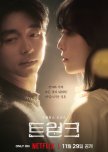
Gong Yoo stars as Han Jeong-won, a traumatised music producer plagued by insomnia and pill dependency. He resides in an expansive house weighed down by memories of childhood abuse and his mother’s violent death. Recently divorced from his childhood sweetheart, Lee Seo-yeon, Jeong-won remains deeply and painfully attached to her.
Seo-yeon abruptly leaves him, marries a younger man, and later presents an unsettling proposal. If Jeong-won agrees to remain married for one year to a stranger of her choosing, she will return to him. That stranger is Noh In-ji, played by Seo Hyun-jin, a professional “field wife” employed by NM (New Marriage), a shadowy company that provides contractual spouses to clients. In-ji has already completed four such marriages. When she arrives at Jeong-won’s home with her red-and-blue suitcase, she begins her fifth assignment.
Their marriage is governed by a detailed instruction manual that enforces shared routines and constant proximity. Initially distant and methodical, In-ji gradually reveals warmth and emotional intelligence, transforming Jeong-won’s cold, cavernous mansion into something approaching a home. As Jeong-won begins to heal, sleeping naturally again and relinquishing his reliance on medication, Seo-yeon grows increasingly jealous and disturbed by his emotional recovery outside her control.
In-ji’s backstory, while occasionally convoluted, lends her character a sense of depth and complexity. Jeong-won, by contrast, feels less fully realised on the page, though Gong Yoo’s restrained performance lends credibility and emotional weight to his vulnerability.
The Trunk excels in atmosphere. Visually elegant and emotionally restrained, it is dense with symbolism. Objects such as the titular suitcase or a chandelier fashioned from knife-like glass reflect the darkness the characters attempt to suppress. Although a crime mystery simmers beneath the narrative, it remains secondary to the drama’s true focus, which is marriage as performance and as a constructed façade through which distorted self-images are maintained.
Where the series falters is in its eventual revelations. Seo-yeon’s motivations become increasingly opaque, and NM, introduced as a powerful and ominous organisation, never develops beyond a vague conceptual threat. When the series finally opens its metaphorical trunk, the contents fail to fully justify the prolonged suspense.
Visually refined and emotionally compelling, The Trunk captivates through mood and symbolism, but ultimately loses force when pressed to explain itself.
The title refers to a baby-blue designer suitcase trimmed in red, first discovered abandoned beside a lake at dawn. The lake reappears later when a woman kayaks serenely across its surface. In both images, an unsettling red intrusion disrupts the calm. These recurring visual motifs signal the drama’s central preoccupation with concealed truths. The trunk functions as a metaphor for the emotional and psychological burdens each character carries, histories sealed away but never truly discarded.
Gong Yoo stars as Han Jeong-won, a traumatised music producer plagued by insomnia and pill dependency. He resides in an expansive house weighed down by memories of childhood abuse and his mother’s violent death. Recently divorced from his childhood sweetheart, Lee Seo-yeon, Jeong-won remains deeply and painfully attached to her.
Seo-yeon abruptly leaves him, marries a younger man, and later presents an unsettling proposal. If Jeong-won agrees to remain married for one year to a stranger of her choosing, she will return to him. That stranger is Noh In-ji, played by Seo Hyun-jin, a professional “field wife” employed by NM (New Marriage), a shadowy company that provides contractual spouses to clients. In-ji has already completed four such marriages. When she arrives at Jeong-won’s home with her red-and-blue suitcase, she begins her fifth assignment.
Their marriage is governed by a detailed instruction manual that enforces shared routines and constant proximity. Initially distant and methodical, In-ji gradually reveals warmth and emotional intelligence, transforming Jeong-won’s cold, cavernous mansion into something approaching a home. As Jeong-won begins to heal, sleeping naturally again and relinquishing his reliance on medication, Seo-yeon grows increasingly jealous and disturbed by his emotional recovery outside her control.
In-ji’s backstory, while occasionally convoluted, lends her character a sense of depth and complexity. Jeong-won, by contrast, feels less fully realised on the page, though Gong Yoo’s restrained performance lends credibility and emotional weight to his vulnerability.
The Trunk excels in atmosphere. Visually elegant and emotionally restrained, it is dense with symbolism. Objects such as the titular suitcase or a chandelier fashioned from knife-like glass reflect the darkness the characters attempt to suppress. Although a crime mystery simmers beneath the narrative, it remains secondary to the drama’s true focus, which is marriage as performance and as a constructed façade through which distorted self-images are maintained.
Where the series falters is in its eventual revelations. Seo-yeon’s motivations become increasingly opaque, and NM, introduced as a powerful and ominous organisation, never develops beyond a vague conceptual threat. When the series finally opens its metaphorical trunk, the contents fail to fully justify the prolonged suspense.
Visually refined and emotionally compelling, The Trunk captivates through mood and symbolism, but ultimately loses force when pressed to explain itself.
Was this review helpful to you?


