
 News
News 

 3
3 1
1 1
1 1
1


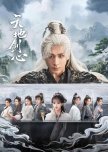
This review may contain spoilers
The Duel of Destiny: Why Wangquan Fugui's Awakening Earned Sword and Beloved a Perfect Score
Sword and Beloved: A Deep Dive Review – The 10/10 Triumph of Character
Final Verdict & Rating: 10/10 (Justified by the groundbreaking character portrayal and the transcendent first act)
The drama Sword and Beloved (part of the Fox Spirit Matchmaker: Wangquan series) stands as a fascinating, and at times frustrating, case study in narrative execution. While it grappled with significant structural imperfections in its middle and latter sections, the drama unequivocally secured its status as a profoundly good and worthwhile viewing experience. This positive assessment is driven almost entirely by the monumental success of its central character arc—the awakening of Wangquan Fugui—and the sheer brilliance of the performance that brought him to life. The 10/10 rating is not a reflection of flawless plot mechanics, but rather an acknowledgment of the masterpiece level of character depth achieved, which, for many viewers, is the highest measure of dramatic success.
I. The Zenith of Character Arc: Wangquan Fugui's Awakening
The narrative engine of Sword and Beloved is the journey of Wangquan Fugui, a character conceived not as a person, but as an instrument. Born into the powerful Wangquan family, Fugui's existence was predetermined: to wield his family’s immense power for a singular, destructive purpose. He was raised in absolute isolation, shielded from the concepts of freedom, choice, or self-interest. He was a flawless, sentient weapon—a state of being that is inherently tragic and dramatically rich.
The Concept of the "Weaponized" Protagonist
Fugui represents the ultimate thematic confrontation: the struggle between fate and self-determination. His entire identity was a rigid construct of duty and lethal efficiency. The genius of the premise lies in establishing this foundation so firmly. The audience witnesses a soul completely detached, moving through life with the practiced, emotionless grace of a mechanism built for war. This setup intensifies the impact of the inevitable disruption.
Love as the Catalyst for Selfhood
In this drama, love is not the goal of the character, but the necessary catalyst for his birth. The relationship with Qing Tong does not serve merely as romantic entanglement; it functions as Fugui’s introduction to humanity. It is through her lens—her simple desires, her willingness to engage with the world outside the Wangquan compound—that he first perceives the possibility of an existence beyond his mandated mission. The initial act of rebellion—choosing to protect her, choosing to leave—is not an act of romance; it is the moment of his true self's awakening. He does not fight for her love; he fights because she taught him that he is worth fighting for. This powerful narrative inversion elevates the theme far above standard romantic fantasy fare.
II. Cheng Yi's Unmatched Embodiment: A Masterclass in Subtlety
The success of Fugui's arc hinges on the actor's ability to transition convincingly from the void of the weapon to the fire of the man. The consensus across all critical reception is that Cheng Yi's performance is not merely good, but a foundational pillar that carries the entire production. His portrayal deserves the highest acclaim, acting as the primary justification for the drama's definitive 10/10 achievement in acting and character study.
Physicality, Commitment, and Emotional Gradation
Cheng Yi's commitment was evident not just in the high-octane fight choreography—which critics hailed for its striking, almost dance-like quality—but in the minute details of his performance. His initial scenes conveying Fugui’s detached, almost inert demeanor, required intense internal control. This was followed by a masterful gradation as emotions slowly seeped in: a flicker of curiosity, a hesitant smile, and finally, the fierce, passionate determination to claim his own destiny.
The preparation for the blind scenes—reportedly involving three months of dedicated practice—is a testament to this commitment. The execution was noted for its striking authenticity, ensuring that even when physically impaired, the character's internal resolve and struggle remained palpably clear. This level of dedication translates directly into screen presence, cementing Fugui as one of the most compelling dramatic protagonists in recent memory.
Authenticity and the Arc’s Defining Look
The performance captures the profound loneliness of the character. Cheng Yi utilizes a potent economy of expression, making every slight shift in his gaze or posture significant. The "look" repeatedly cited in reviews—a potent blend of melancholy, intensity, and deep-seated yearning—became shorthand for the drama's entire emotional core. This authenticity allowed the audience to feel the weight of Fugui's past and the hope of his nascent future, providing the necessary emotional investment that made the early episodes resonate as an "epic" and a "solid 10/10" cinematic experience.
III. The First Arc: Pacing, Promise, and Perfect Execution (The 10/10 Segment)
The narrative segment encompassing Wangquan Fugui's liberation and his initial bond with Qing Tong (roughly the first 13 episodes) is where Sword and Beloved achieves undisputed excellence. This opening chapter functions as a perfectly honed short-form drama, tightly focused and brilliantly paced.
Narrative Tightness and Focused Theme
In this first act, the narrative had a clear, driving momentum: Fugui’s defiance of the Wangquan regime and his literal escape from bondage. Every scene served this purpose—establishing the suffocating environment, introducing the key catalyst, and executing the monumental break from his past. The stakes were high, the antagonists clearly defined, and the emotional payoff of his first, truly free steps was overwhelming. This sustained intensity and clarity of purpose created a dramatic curve that felt exhilarating and complete, justifying the initial, rapturous critical praise.
Emotional Investment and Viewer Hook
The initial bond between the leads, irrespective of later romantic failings, was emotionally necessary and deeply engaging in its capacity to facilitate Fugui’s growth. It wasn't about conventional "shipping" at this point; it was about watching a soul learn to breathe. This powerful emotional investment established a high watermark that, unfortunately, subsequent episodes failed to maintain, but it remains the indelible core memory of the series.
IV. The Central Conflict: The Disconnect of the "Beloved"
Despite the flawless execution of Fugui’s individual arc, a major flaw emerged as the drama progressed: the disappointing execution of the main romance. The central relationship, which should have been the thematic anchor justifying the title Sword and Beloved, was often perceived as flat and lacking in the necessary romantic spark.
Analysis of Romantic Chemistry
The paradox here is striking: the love was narratively essential for Fugui’s awakening, yet the on-screen chemistry between the main leads often failed to convey the passionate, consuming love implied by such a foundational sacrifice. This disconnect posed a significant problem, creating an emotional vacuum at the very center of the story. The intense individual performance of Cheng Yi required an equally intense counterpoint from his partner to complete the romantic equation, and when that counterpoint was perceived as muted, the relationship defaulted to a platonic, rather than passionate, connection.
Narrative Undermining: From Passion to Pedagogy
The writing seemed to shift focus away from developing the romantic passion and towards showcasing shared adversity, which, while strengthening their bond as allies, weakened their connection as lovers. The emotional temperature dropped, confusing the audience who had been promised a love worth fighting destiny for. This thematic dissonance created a narrative conflict where the primary external plot (challenging fate) remained strong, but the primary internal plot (the love story) felt neglected, failing to reach the heights promised by the initial premise.
V. Mid-Series Decline: Fragmentation, Filler, and Fumbled Pacing
The period around episodes 19 to 30 became the critical Achilles' heel of the drama, leading to the widely reported impression that the mid-section was a "total mess." This decline was characterized by a loss of narrative efficiency, structural weaknesses, and inconsistent character writing.
The Challenge of Sustaining Momentum
After the high-stakes escape in the first arc, the middle section struggled to establish equally compelling new stakes. Instead, the narrative structure devolved into episodic padding and what critics identified as "filler." This type of structural weakness—excessive scenes that do not advance the plot or deepen the character—is lethal to momentum. The pacing slowed dramatically, creating a perceived plot fragmentation where storylines felt tangential and disconnected from the main, overarching destiny narrative.
Character Inconsistency and Shifting Focus
A particular point of critique was the inconsistent characterization of Qing Tong. When a central character’s motivations or actions begin to feel ill-defined or contradictory to their established personality, it signals a deeper issue with the script. It created a sense that the writers were either struggling to manage the complexity of the larger mythology or had, as suggested, forgotten the original emotional focus in favor of expanding the supporting world-building or adding unnecessary subplots.
Structural Weakness in Separation Arcs
The decision to implement overlong separation arcs for the main couple further exacerbated the problem. While separation can heighten dramatic tension, prolonged, drawn-out absences—especially when the romantic foundation was already perceived as shaky—only deepened the sense of narrative stalling and contributed to the "friendship" rather than "beloved" dynamic. The core emotional experience was put on hold, allowing secondary elements to overshadow the central relationship.
VI. The Unintended Heroes: Secondary Couples and Narrative Relief
Ironically, the flaws in the main romance highlighted the remarkable success of the drama's secondary storylines. These pairings provided the "relief, energy, humor, and genuine chemistry" that the main couple lacked in the mid-series, effectively stealing the show.
The Power of Contrast
The secondary couples were praised for their well-developed, organic, and genuinely heartfelt relationships. They exemplified the very elements of passionate, committed "Beloved" connection that the main romance struggled to portray. Their chemistry was immediate and visible, offering a refreshing counterpoint to the more reserved, often platonic-feeling dynamic of the leads.
Defining "Beloved" Through Side Stories
In a curious turn of fate, the secondary characters ended up embodying the thematic promise of the title Sword and Beloved more faithfully than the leads themselves. These side stories offered simpler, cleaner romantic arcs that provided immediate emotional payoff and structural efficiency, proving that when the script was focused, the writers were capable of crafting compelling love stories. They offered a critical glimpse of what the main story could have been, further emphasizing the perceived fumble in the lead relationship's execution.
VII. Final Synthesis: A Triumphant Character, A Flawed Narrative
The collective viewing experience of Sword and Beloved is defined by this striking duality: a perfect, 10/10 individual performance and character arc existing within a fluctuating, sometimes structurally unsound, larger narrative.
Justifying the "Sword and Friendship" Moniker
The sentiment that the drama should be retitled “Sword and Friendship” or “Sword and Family” summarizes the ultimate thematic shift. The narrative ceased prioritizing romantic passion and instead focused on themes of loyalty, chosen family, and collective destiny. While these are profound themes, they conflict with the expectation set by the original title and the premise of love as the singular catalyst for self-discovery. The drama’s strength ultimately rested on its successful exploration of challenging destiny and self-discovery, not on the passionate union of two souls.
Context: Standalone Viewing and The Preceding Drama
It is worth noting that while Sword and Beloved can be watched as a standalone, its place as a sequel (to Love in the Pavilion) adds crucial context. Viewers who were already invested in the larger world-building and lore found the emotional payoff and grand narrative design more satisfying. However, even accounting for the sequel context, the structural issues and the main romance's flatness remain valid internal critiques.
Conclusion: A Good Drama, Flawlessly Performed
Despite the acknowledged issues concerning plot fragmentation and romantic chemistry in the middle episodes, Sword and Beloved remains a deeply impactful and ultimately good drama. The weaknesses in the script pale in comparison to the sheer power of the character study.
The definitive recommendation stands: Watch this drama if you value an exceptional character arc centered on self-discovery, challenging fate, and the profound brilliance of Cheng Yi's performance. His journey alone—from the emotionless soldier to the man who chooses his own existence—is an unparalleled achievement in performance art and character writing, securing the first arc's standing as a "solid 10/10" and elevating the entire drama's status. It is a triumphant journey of a man saved by his own will, albeit with the help of a 'Beloved' who functioned more as a philosophical guide than a passionate lover. The drama is thus a narrative saved by its transcendent star and a premise that, even when undercut by a meandering script, was simply too strong to fail.
Final Verdict & Rating: 10/10 (Justified by the groundbreaking character portrayal and the transcendent first act)
The drama Sword and Beloved (part of the Fox Spirit Matchmaker: Wangquan series) stands as a fascinating, and at times frustrating, case study in narrative execution. While it grappled with significant structural imperfections in its middle and latter sections, the drama unequivocally secured its status as a profoundly good and worthwhile viewing experience. This positive assessment is driven almost entirely by the monumental success of its central character arc—the awakening of Wangquan Fugui—and the sheer brilliance of the performance that brought him to life. The 10/10 rating is not a reflection of flawless plot mechanics, but rather an acknowledgment of the masterpiece level of character depth achieved, which, for many viewers, is the highest measure of dramatic success.
I. The Zenith of Character Arc: Wangquan Fugui's Awakening
The narrative engine of Sword and Beloved is the journey of Wangquan Fugui, a character conceived not as a person, but as an instrument. Born into the powerful Wangquan family, Fugui's existence was predetermined: to wield his family’s immense power for a singular, destructive purpose. He was raised in absolute isolation, shielded from the concepts of freedom, choice, or self-interest. He was a flawless, sentient weapon—a state of being that is inherently tragic and dramatically rich.
The Concept of the "Weaponized" Protagonist
Fugui represents the ultimate thematic confrontation: the struggle between fate and self-determination. His entire identity was a rigid construct of duty and lethal efficiency. The genius of the premise lies in establishing this foundation so firmly. The audience witnesses a soul completely detached, moving through life with the practiced, emotionless grace of a mechanism built for war. This setup intensifies the impact of the inevitable disruption.
Love as the Catalyst for Selfhood
In this drama, love is not the goal of the character, but the necessary catalyst for his birth. The relationship with Qing Tong does not serve merely as romantic entanglement; it functions as Fugui’s introduction to humanity. It is through her lens—her simple desires, her willingness to engage with the world outside the Wangquan compound—that he first perceives the possibility of an existence beyond his mandated mission. The initial act of rebellion—choosing to protect her, choosing to leave—is not an act of romance; it is the moment of his true self's awakening. He does not fight for her love; he fights because she taught him that he is worth fighting for. This powerful narrative inversion elevates the theme far above standard romantic fantasy fare.
II. Cheng Yi's Unmatched Embodiment: A Masterclass in Subtlety
The success of Fugui's arc hinges on the actor's ability to transition convincingly from the void of the weapon to the fire of the man. The consensus across all critical reception is that Cheng Yi's performance is not merely good, but a foundational pillar that carries the entire production. His portrayal deserves the highest acclaim, acting as the primary justification for the drama's definitive 10/10 achievement in acting and character study.
Physicality, Commitment, and Emotional Gradation
Cheng Yi's commitment was evident not just in the high-octane fight choreography—which critics hailed for its striking, almost dance-like quality—but in the minute details of his performance. His initial scenes conveying Fugui’s detached, almost inert demeanor, required intense internal control. This was followed by a masterful gradation as emotions slowly seeped in: a flicker of curiosity, a hesitant smile, and finally, the fierce, passionate determination to claim his own destiny.
The preparation for the blind scenes—reportedly involving three months of dedicated practice—is a testament to this commitment. The execution was noted for its striking authenticity, ensuring that even when physically impaired, the character's internal resolve and struggle remained palpably clear. This level of dedication translates directly into screen presence, cementing Fugui as one of the most compelling dramatic protagonists in recent memory.
Authenticity and the Arc’s Defining Look
The performance captures the profound loneliness of the character. Cheng Yi utilizes a potent economy of expression, making every slight shift in his gaze or posture significant. The "look" repeatedly cited in reviews—a potent blend of melancholy, intensity, and deep-seated yearning—became shorthand for the drama's entire emotional core. This authenticity allowed the audience to feel the weight of Fugui's past and the hope of his nascent future, providing the necessary emotional investment that made the early episodes resonate as an "epic" and a "solid 10/10" cinematic experience.
III. The First Arc: Pacing, Promise, and Perfect Execution (The 10/10 Segment)
The narrative segment encompassing Wangquan Fugui's liberation and his initial bond with Qing Tong (roughly the first 13 episodes) is where Sword and Beloved achieves undisputed excellence. This opening chapter functions as a perfectly honed short-form drama, tightly focused and brilliantly paced.
Narrative Tightness and Focused Theme
In this first act, the narrative had a clear, driving momentum: Fugui’s defiance of the Wangquan regime and his literal escape from bondage. Every scene served this purpose—establishing the suffocating environment, introducing the key catalyst, and executing the monumental break from his past. The stakes were high, the antagonists clearly defined, and the emotional payoff of his first, truly free steps was overwhelming. This sustained intensity and clarity of purpose created a dramatic curve that felt exhilarating and complete, justifying the initial, rapturous critical praise.
Emotional Investment and Viewer Hook
The initial bond between the leads, irrespective of later romantic failings, was emotionally necessary and deeply engaging in its capacity to facilitate Fugui’s growth. It wasn't about conventional "shipping" at this point; it was about watching a soul learn to breathe. This powerful emotional investment established a high watermark that, unfortunately, subsequent episodes failed to maintain, but it remains the indelible core memory of the series.
IV. The Central Conflict: The Disconnect of the "Beloved"
Despite the flawless execution of Fugui’s individual arc, a major flaw emerged as the drama progressed: the disappointing execution of the main romance. The central relationship, which should have been the thematic anchor justifying the title Sword and Beloved, was often perceived as flat and lacking in the necessary romantic spark.
Analysis of Romantic Chemistry
The paradox here is striking: the love was narratively essential for Fugui’s awakening, yet the on-screen chemistry between the main leads often failed to convey the passionate, consuming love implied by such a foundational sacrifice. This disconnect posed a significant problem, creating an emotional vacuum at the very center of the story. The intense individual performance of Cheng Yi required an equally intense counterpoint from his partner to complete the romantic equation, and when that counterpoint was perceived as muted, the relationship defaulted to a platonic, rather than passionate, connection.
Narrative Undermining: From Passion to Pedagogy
The writing seemed to shift focus away from developing the romantic passion and towards showcasing shared adversity, which, while strengthening their bond as allies, weakened their connection as lovers. The emotional temperature dropped, confusing the audience who had been promised a love worth fighting destiny for. This thematic dissonance created a narrative conflict where the primary external plot (challenging fate) remained strong, but the primary internal plot (the love story) felt neglected, failing to reach the heights promised by the initial premise.
V. Mid-Series Decline: Fragmentation, Filler, and Fumbled Pacing
The period around episodes 19 to 30 became the critical Achilles' heel of the drama, leading to the widely reported impression that the mid-section was a "total mess." This decline was characterized by a loss of narrative efficiency, structural weaknesses, and inconsistent character writing.
The Challenge of Sustaining Momentum
After the high-stakes escape in the first arc, the middle section struggled to establish equally compelling new stakes. Instead, the narrative structure devolved into episodic padding and what critics identified as "filler." This type of structural weakness—excessive scenes that do not advance the plot or deepen the character—is lethal to momentum. The pacing slowed dramatically, creating a perceived plot fragmentation where storylines felt tangential and disconnected from the main, overarching destiny narrative.
Character Inconsistency and Shifting Focus
A particular point of critique was the inconsistent characterization of Qing Tong. When a central character’s motivations or actions begin to feel ill-defined or contradictory to their established personality, it signals a deeper issue with the script. It created a sense that the writers were either struggling to manage the complexity of the larger mythology or had, as suggested, forgotten the original emotional focus in favor of expanding the supporting world-building or adding unnecessary subplots.
Structural Weakness in Separation Arcs
The decision to implement overlong separation arcs for the main couple further exacerbated the problem. While separation can heighten dramatic tension, prolonged, drawn-out absences—especially when the romantic foundation was already perceived as shaky—only deepened the sense of narrative stalling and contributed to the "friendship" rather than "beloved" dynamic. The core emotional experience was put on hold, allowing secondary elements to overshadow the central relationship.
VI. The Unintended Heroes: Secondary Couples and Narrative Relief
Ironically, the flaws in the main romance highlighted the remarkable success of the drama's secondary storylines. These pairings provided the "relief, energy, humor, and genuine chemistry" that the main couple lacked in the mid-series, effectively stealing the show.
The Power of Contrast
The secondary couples were praised for their well-developed, organic, and genuinely heartfelt relationships. They exemplified the very elements of passionate, committed "Beloved" connection that the main romance struggled to portray. Their chemistry was immediate and visible, offering a refreshing counterpoint to the more reserved, often platonic-feeling dynamic of the leads.
Defining "Beloved" Through Side Stories
In a curious turn of fate, the secondary characters ended up embodying the thematic promise of the title Sword and Beloved more faithfully than the leads themselves. These side stories offered simpler, cleaner romantic arcs that provided immediate emotional payoff and structural efficiency, proving that when the script was focused, the writers were capable of crafting compelling love stories. They offered a critical glimpse of what the main story could have been, further emphasizing the perceived fumble in the lead relationship's execution.
VII. Final Synthesis: A Triumphant Character, A Flawed Narrative
The collective viewing experience of Sword and Beloved is defined by this striking duality: a perfect, 10/10 individual performance and character arc existing within a fluctuating, sometimes structurally unsound, larger narrative.
Justifying the "Sword and Friendship" Moniker
The sentiment that the drama should be retitled “Sword and Friendship” or “Sword and Family” summarizes the ultimate thematic shift. The narrative ceased prioritizing romantic passion and instead focused on themes of loyalty, chosen family, and collective destiny. While these are profound themes, they conflict with the expectation set by the original title and the premise of love as the singular catalyst for self-discovery. The drama’s strength ultimately rested on its successful exploration of challenging destiny and self-discovery, not on the passionate union of two souls.
Context: Standalone Viewing and The Preceding Drama
It is worth noting that while Sword and Beloved can be watched as a standalone, its place as a sequel (to Love in the Pavilion) adds crucial context. Viewers who were already invested in the larger world-building and lore found the emotional payoff and grand narrative design more satisfying. However, even accounting for the sequel context, the structural issues and the main romance's flatness remain valid internal critiques.
Conclusion: A Good Drama, Flawlessly Performed
Despite the acknowledged issues concerning plot fragmentation and romantic chemistry in the middle episodes, Sword and Beloved remains a deeply impactful and ultimately good drama. The weaknesses in the script pale in comparison to the sheer power of the character study.
The definitive recommendation stands: Watch this drama if you value an exceptional character arc centered on self-discovery, challenging fate, and the profound brilliance of Cheng Yi's performance. His journey alone—from the emotionless soldier to the man who chooses his own existence—is an unparalleled achievement in performance art and character writing, securing the first arc's standing as a "solid 10/10" and elevating the entire drama's status. It is a triumphant journey of a man saved by his own will, albeit with the help of a 'Beloved' who functioned more as a philosophical guide than a passionate lover. The drama is thus a narrative saved by its transcendent star and a premise that, even when undercut by a meandering script, was simply too strong to fail.
Was this review helpful to you?


