
 K-Drama

 3
3 1
1 1
1 1
1


This review may contain spoilers
A Masterpiece of Medical Mystery: A Comprehensive Review of Treasure at Dawn
Introduction
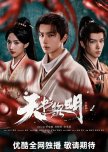
Finding a show that successfully juggles medical intrigue, suspenseful mystery, and rich character arcs is a rarity in the world of historical dramas. Yet, Treasure at Dawn (also known as Tian Shu Li Ming) does exactly that. After following Hua Fu Sheng, Wen Jue, and Gu Tian on their journey. It deftly combines the allure of ancient legends with the grounded, gritty reality of medical practice. For those seeking a narrative that respects the intelligence of its audience while delivering heart pounding suspense, this show is a mandatory watch.
The premise attracts immediate attention: a brilliant but socially inept doctor, a noblewoman with the power to shield him, and a street smart performer with hidden depths. Together, they form an investigative trio that rivals the best in the genre. This review will delve deep into the characters, the plot intricacies, and the production quality that justifies a perfect 10/10 rating.
The Enigmatic "Madman": Hua Fu Sheng
The heart of Treasure at Dawn beats within the chest of Hua Fu Sheng. Played with remarkable nuance, Hua Fu Sheng is not your typical dashing hero. He is defined by his obsession medicine. The scriptwriters made a bold choice to portray him as "ignorant of the world." This does not mean he is unintelligent; rather, his genius is so focused on the human body and pathology that he lacks common social graces.
What makes him a compelling protagonist is the duality of his reputation. To the common people, he is a savior; to the establishment, he is a threat. The drama does not shy away from the darker aspects of his practice. His methods are unconventional, often bordering on what the traditional world considers "poisonous" or heretical. There is a palpable tension in every scene where he treats a patient, as the viewer is left wondering if his risky gambits will pay off.
Li Hongyi’s performance here is a career high. He sheds the "cold idol" persona often seen in C-dramas to embody a character who is frantic, intense, and deeply misunderstood. The look in his eyes when he encounters a new disease is not fear, but excitement. This characterization drives the narrative forward because his motivation isn't fame or justice in the abstract sense it is the pursuit of medical truth, regardless of the cost.
The Iron Triangle: Chemistry and Dynamics
A mystery drama is only as good as its investigative team, and Treasure at Dawn excels here. The dynamic between Hua Fu Sheng, Wen Jue, and Gu Tian is the engine of the show.
Wen Jue, the daughter of the Liangzhou City Lord, serves as the perfect foil to Hua Fu Sheng. Where he is chaotic and reckless, she is composed and politically astute. Su Xiaotong brings a quiet strength to the role. She is not merely a damsel or a romantic interest; she is the shield. The narrative choice to have her use the City Lord’s mansion to protect Hua Fu Sheng’s clinic is a brilliant plot device. It establishes immediate stakes: she is risking her family's reputation for him. Her belief in his innocence regarding the "hundred doctors" murder case grounds the story emotionally.
Then there is Gu Tian, the successor of the "hundred operas." Yu Chengen plays this role with an infectious energy. Initially appearing as the comic relief a man of "eloquent tongue" who can talk his way out of anything he quickly proves to be the eyes and ears of the group. His background in the opera and arts gives him access to the lower rungs of society and the gossip channels that Wen Jue and Hua Fu Sheng cannot reach. Furthermore, his skills in performance and acrobatics translate surprisingly well to combat and evasion, making him a formidable ally physically as well as verbally.
The interactions between these three are organic. They bicker, they doubt each other, but they ultimately coalesce into a unit where each member covers the others' weaknesses. This "found family" aspect is written with such warmth that you find yourself rooting for their friendship as much as the resolution of the mystery.
The Mystery: The Book from Heaven and the Hundred Doctors
The central mystery of the show is gripping from the first episode. The inciting incident Hua Fu Sheng being mistaken for a murderer responsible for the deaths of a hundred doctors is a hook that demands attention. The stakes are personal from the start.
The script weaves a complex web around the "Book from Heaven." In many dramas, a MacGuffin like this is just a magical object. However, Treasure at Dawn treats the Book from Heaven as a piece of medical or scientific history that has been mythologized. The letter left by Hua Fu Sheng’s master serves as a treasure map, not to gold, but to forbidden knowledge.
Minor Spoilers Ahead:
One of the most engaging aspects of the early plot is how the investigation in Liangzhou unfolds. When the trio arrives, they don't just find clues; they find a city undercurrent with fear. The "strange things" mentioned in the synopsis are not just random jump scares. We see instances where patients exhibit symptoms that defy traditional medical logic symptoms that mimic hauntings or curses but are actually biological.
For example, the way Hua Fu Sheng deciphers the "curse" plaguing the poor districts of Liangzhou is a highlight. While the townsfolk scream of ghosts, he looks at water sources, food supplies, and insect bites. The show brilliantly juxtaposes superstition against science. The "Book from Heaven" seems to be the key to these biological anomalies. The revelation that the "deaths of a hundred doctors" might be a silencing campaign rather than the work of a serial killer adds a layer of political conspiracy that elevates the story above a simple whodunit. The shadows in Liangzhou are long, and the antagonist forces are intelligent, often using the city's own rumors against the protagonists.
Production Value and Atmosphere
Visually, Treasure at Dawn is stunning. The setting of Liangzhou is rendered with a distinct color palette dusty golds and deep shadows that reflect the desert-adjacent location. The cinematography emphasizes the isolation of the city and the claustrophobia of the conspiracy.
The medical scenes are handled with a surprising amount of detail. The props department deserves praise for the acupuncture sets, the herbal concoctions, and the gritty realism of the clinic. It feels like a lived-in world. The costume design also tells a story: Hua Fu Sheng’s robes are often practical and slightly disheveled, contrasting with Wen Jue’s structured, elegant attire, visually representing the order she tries to bring to his chaos.
Why I Love It
The reason I give this drama a 10/10 is that it respects the viewer's time. The pacing is tight. There are no "filler" episodes where characters wander aimlessly. Every conversation advances either the character development or the mystery of the Book from Heaven.
I particularly appreciated the subversion of the romance trope. While there is chemistry between the leads, the romance does not derail the plot. The focus remains on survival and the pursuit of truth. The writers understand that in a life or death mystery, romance is a slow burn that happens in the quiet moments between chaos, not the main focus.
Furthermore, the moral ambiguity of Hua Fu Sheng is refreshing. He is not a "nice" doctor. He is an effective one. He often makes decisions that seem cold to the observer but are medically necessary. Watching Wen Jue and Gu Tian come to understand and accept his morality is one of the most rewarding emotional arcs of the series.
Conclusion
Treasure at Dawn is a triumph. It successfully blends the excitement of an adventure serial with the intellectual satisfaction of a medical procedural. The acting is top-tier, the mystery is genuinely puzzling, and the world-building is immersive.
If you are looking for a drama that will keep you guessing until the very end, while simultaneously making you fall in love with a ragtag team of investigators, this is the show for you. The journey to uncover the "Book from Heaven" is fraught with danger, but for the viewer, it is a journey of pure delight. Do not miss the chance to watch Hua Fu Sheng, Wen Jue, and Gu Tian unravel the secrets of Liangzhou. It is, without a doubt, a masterpiece of the genre. I HIGHLY RECOMMEND it.
Finding a show that successfully juggles medical intrigue, suspenseful mystery, and rich character arcs is a rarity in the world of historical dramas. Yet, Treasure at Dawn (also known as Tian Shu Li Ming) does exactly that. After following Hua Fu Sheng, Wen Jue, and Gu Tian on their journey. It deftly combines the allure of ancient legends with the grounded, gritty reality of medical practice. For those seeking a narrative that respects the intelligence of its audience while delivering heart pounding suspense, this show is a mandatory watch.
The premise attracts immediate attention: a brilliant but socially inept doctor, a noblewoman with the power to shield him, and a street smart performer with hidden depths. Together, they form an investigative trio that rivals the best in the genre. This review will delve deep into the characters, the plot intricacies, and the production quality that justifies a perfect 10/10 rating.
The Enigmatic "Madman": Hua Fu Sheng
The heart of Treasure at Dawn beats within the chest of Hua Fu Sheng. Played with remarkable nuance, Hua Fu Sheng is not your typical dashing hero. He is defined by his obsession medicine. The scriptwriters made a bold choice to portray him as "ignorant of the world." This does not mean he is unintelligent; rather, his genius is so focused on the human body and pathology that he lacks common social graces.
What makes him a compelling protagonist is the duality of his reputation. To the common people, he is a savior; to the establishment, he is a threat. The drama does not shy away from the darker aspects of his practice. His methods are unconventional, often bordering on what the traditional world considers "poisonous" or heretical. There is a palpable tension in every scene where he treats a patient, as the viewer is left wondering if his risky gambits will pay off.
Li Hongyi’s performance here is a career high. He sheds the "cold idol" persona often seen in C-dramas to embody a character who is frantic, intense, and deeply misunderstood. The look in his eyes when he encounters a new disease is not fear, but excitement. This characterization drives the narrative forward because his motivation isn't fame or justice in the abstract sense it is the pursuit of medical truth, regardless of the cost.
The Iron Triangle: Chemistry and Dynamics
A mystery drama is only as good as its investigative team, and Treasure at Dawn excels here. The dynamic between Hua Fu Sheng, Wen Jue, and Gu Tian is the engine of the show.
Wen Jue, the daughter of the Liangzhou City Lord, serves as the perfect foil to Hua Fu Sheng. Where he is chaotic and reckless, she is composed and politically astute. Su Xiaotong brings a quiet strength to the role. She is not merely a damsel or a romantic interest; she is the shield. The narrative choice to have her use the City Lord’s mansion to protect Hua Fu Sheng’s clinic is a brilliant plot device. It establishes immediate stakes: she is risking her family's reputation for him. Her belief in his innocence regarding the "hundred doctors" murder case grounds the story emotionally.
Then there is Gu Tian, the successor of the "hundred operas." Yu Chengen plays this role with an infectious energy. Initially appearing as the comic relief a man of "eloquent tongue" who can talk his way out of anything he quickly proves to be the eyes and ears of the group. His background in the opera and arts gives him access to the lower rungs of society and the gossip channels that Wen Jue and Hua Fu Sheng cannot reach. Furthermore, his skills in performance and acrobatics translate surprisingly well to combat and evasion, making him a formidable ally physically as well as verbally.
The interactions between these three are organic. They bicker, they doubt each other, but they ultimately coalesce into a unit where each member covers the others' weaknesses. This "found family" aspect is written with such warmth that you find yourself rooting for their friendship as much as the resolution of the mystery.
The Mystery: The Book from Heaven and the Hundred Doctors
The central mystery of the show is gripping from the first episode. The inciting incident Hua Fu Sheng being mistaken for a murderer responsible for the deaths of a hundred doctors is a hook that demands attention. The stakes are personal from the start.
The script weaves a complex web around the "Book from Heaven." In many dramas, a MacGuffin like this is just a magical object. However, Treasure at Dawn treats the Book from Heaven as a piece of medical or scientific history that has been mythologized. The letter left by Hua Fu Sheng’s master serves as a treasure map, not to gold, but to forbidden knowledge.
Minor Spoilers Ahead:
One of the most engaging aspects of the early plot is how the investigation in Liangzhou unfolds. When the trio arrives, they don't just find clues; they find a city undercurrent with fear. The "strange things" mentioned in the synopsis are not just random jump scares. We see instances where patients exhibit symptoms that defy traditional medical logic symptoms that mimic hauntings or curses but are actually biological.
For example, the way Hua Fu Sheng deciphers the "curse" plaguing the poor districts of Liangzhou is a highlight. While the townsfolk scream of ghosts, he looks at water sources, food supplies, and insect bites. The show brilliantly juxtaposes superstition against science. The "Book from Heaven" seems to be the key to these biological anomalies. The revelation that the "deaths of a hundred doctors" might be a silencing campaign rather than the work of a serial killer adds a layer of political conspiracy that elevates the story above a simple whodunit. The shadows in Liangzhou are long, and the antagonist forces are intelligent, often using the city's own rumors against the protagonists.
Production Value and Atmosphere
Visually, Treasure at Dawn is stunning. The setting of Liangzhou is rendered with a distinct color palette dusty golds and deep shadows that reflect the desert-adjacent location. The cinematography emphasizes the isolation of the city and the claustrophobia of the conspiracy.
The medical scenes are handled with a surprising amount of detail. The props department deserves praise for the acupuncture sets, the herbal concoctions, and the gritty realism of the clinic. It feels like a lived-in world. The costume design also tells a story: Hua Fu Sheng’s robes are often practical and slightly disheveled, contrasting with Wen Jue’s structured, elegant attire, visually representing the order she tries to bring to his chaos.
Why I Love It
The reason I give this drama a 10/10 is that it respects the viewer's time. The pacing is tight. There are no "filler" episodes where characters wander aimlessly. Every conversation advances either the character development or the mystery of the Book from Heaven.
I particularly appreciated the subversion of the romance trope. While there is chemistry between the leads, the romance does not derail the plot. The focus remains on survival and the pursuit of truth. The writers understand that in a life or death mystery, romance is a slow burn that happens in the quiet moments between chaos, not the main focus.
Furthermore, the moral ambiguity of Hua Fu Sheng is refreshing. He is not a "nice" doctor. He is an effective one. He often makes decisions that seem cold to the observer but are medically necessary. Watching Wen Jue and Gu Tian come to understand and accept his morality is one of the most rewarding emotional arcs of the series.
Conclusion
Treasure at Dawn is a triumph. It successfully blends the excitement of an adventure serial with the intellectual satisfaction of a medical procedural. The acting is top-tier, the mystery is genuinely puzzling, and the world-building is immersive.
If you are looking for a drama that will keep you guessing until the very end, while simultaneously making you fall in love with a ragtag team of investigators, this is the show for you. The journey to uncover the "Book from Heaven" is fraught with danger, but for the viewer, it is a journey of pure delight. Do not miss the chance to watch Hua Fu Sheng, Wen Jue, and Gu Tian unravel the secrets of Liangzhou. It is, without a doubt, a masterpiece of the genre. I HIGHLY RECOMMEND it.
Was this review helpful to you?


