
 News
News 

 1
1 1
1 1
1


This review may contain spoilers
A story about rebellion and female awakening, not romance
This drama is often misunderstood. People see the premise and immediately label it as sensational. But it's not about lust or shock value. It’s a quietly devastating critique of a society that dictates what women should do, who they should marry, and how they should live一 all under the illusion of respectability.
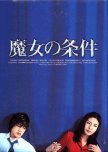
In a world where obedience is the only virtue, a woman who chooses differently becomes dangerous一 and in that danger, they called her a witch. The female lead, Michi, isn’t simply “cheating” or being reckless. She’s a woman trapped in a life she never chose: an arranged fiancé, an emotionally hollow job, and a suffocating household. She is not celebrated for who she is, but for how well she fits into a respectable mold. When she meets Hikaru, she doesn’t just fall in love一 she begins to question everything. Their relationship isn’t glamorized. It’s painful, full of fear, backlash, loss, and moral conflict. She doesn’t escape unscathed: she loses her job, her safety, her child, but through it all, she finally starts living as herself. There are no victories here, no grand speeches about “true love wins.” Instead, there’s a quiet desperation: two people desperately trying to hold on to something real in a world that refuses to let them.
What’s most powerful is that the story isn’t just about Michi. Every major female character represents a different face of female constraint in a deeply repressive environment. Some comply, some rebel, some betray, some quietly endure. But all are shaped by the same unspoken rule: women must not want too much.
Highly recommended if you’re looking for something emotionally complex, socially aware, and unafraid to be uncomfortable. Not a fantasy, but a tragedy about freedom, and what it costs to choose it.
In a world where obedience is the only virtue, a woman who chooses differently becomes dangerous一 and in that danger, they called her a witch. The female lead, Michi, isn’t simply “cheating” or being reckless. She’s a woman trapped in a life she never chose: an arranged fiancé, an emotionally hollow job, and a suffocating household. She is not celebrated for who she is, but for how well she fits into a respectable mold. When she meets Hikaru, she doesn’t just fall in love一 she begins to question everything. Their relationship isn’t glamorized. It’s painful, full of fear, backlash, loss, and moral conflict. She doesn’t escape unscathed: she loses her job, her safety, her child, but through it all, she finally starts living as herself. There are no victories here, no grand speeches about “true love wins.” Instead, there’s a quiet desperation: two people desperately trying to hold on to something real in a world that refuses to let them.
What’s most powerful is that the story isn’t just about Michi. Every major female character represents a different face of female constraint in a deeply repressive environment. Some comply, some rebel, some betray, some quietly endure. But all are shaped by the same unspoken rule: women must not want too much.
Highly recommended if you’re looking for something emotionally complex, socially aware, and unafraid to be uncomfortable. Not a fantasy, but a tragedy about freedom, and what it costs to choose it.
Was this review helpful to you?


