


 1
1 1
1


This review may contain spoilers
Park Chan Wook's most entertaining movie yet. Maybe one that finally earns him his Oscar nom?
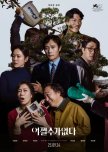
No Other Choice is one of those rare films that made me laugh, squirm, and quietly question how far I'd go if pushed into a corner. It's darkly funny, beautifully made, and a little too close to home--a story about pride, desperation, and what’s left of us when survival becomes the only goal. The title insists there's "no other choice", but that's the cruel irony, there are always other choices, just not the kind that let you keep everything you've built your pride on.
The setup hits hard. Man Su (played by Lee Byung Hun) loses his job and starts to unravel, and the fear isn't just about money but also identity, about what is left when the work that defined your worth disappears. In a capitalist world obsessed with efficiency and cost-cutting, and how human labor can be easily replaced by robots/AI, that anxiety feels sharper than ever. [Ironically, Park Chan Wook was expelled from the WGA just two months ago for continuing work as an editor during the 2023 WGA strike, which protested the use of AI to replace writers. Timing doesn’t get sharper than that.]
No Other Choice treats unemployment as transformation, but for the people living it, it still feels like failure. The job competitors Man Su meets along the way mirror parts of himself, and the less time we spend with them, the less human he seems to become. Even his toothache, throbbing whenever guilt creeps in and ending in its removal, quietly tracks how far he is willing to go.
The movie walks a fine line between empathy and irony, treating the absurd premise of "eliminating" job competitors with the dry rhythm of office bureaucracy. The humor doesn't come from punchlines, it comes from restraint--the awkward gestures, the small silences, the moments that feel too human to laugh at without guilt.
Park Chan Wook lets those moments breathe. He stretches time just enough for the absurdity to hit, so you end up laughing and immediately wondering if you should have. It's darkly comic in that uncomfortable, Park Chan Wook way.
There's one scene I keep thinking about: a tense confrontation that should've been horrifying but somehow becomes comedic. The music swells until it drowns out all dialogue, leaving only gestures and anxious movement. It's one of those moments where you're half-laughing, half-holding your breath, wondering if you even want him to succeed. It's the movie's tonal centerpiece, the best example of how Park folds comedy and dread into one perfect beat.
Visually, No Other Choice is stunning. It's a full cinematic experience. Every frame feels intentional, even when no one’s speaking. The cinematography is so deliberate that the images often carry the story themselves. The direction is precise almost to a fault. Every camera move, cut, frame and screen transition suggests control, even as the story unravels underneath.
Light becomes its own character. The film starts in warm sunlight, matching Man Su's illusion of stability, and slowly fades into gray and artificial tones as his humanity erodes and his world turns mechanical. Even in the opening barbecue, when clouds slide over his smiling family, the coming darkness is already there. The autumn palette--all muted golds and dying reds--turns beauty into warning. Everything glows because it’s decaying.
The camera placement is equally purposeful. It doesn't follow Man Su, it watches him. It's like we're standing behind a window or bushes or trees, quietly complicit, as he prunes away his conscience, just like the bonsai in his greenhouse.
Characters are often shot through glass or metal reflections, showing not who they are but who they pretend to be. One shot splits the frame with rocks: on one side, a storm rages; on the other, Man Su carries out his plan. It's a simple composition, but it captures everything the film is about, the inner storm of a man convincing himself he has "no other choice".
If the direction is the engine, then Lee Byung Hun is the heartbeat. His performance is all about the quiet breakdowns and small, painful attempts to stay composed. The guilt shows in his eyes, in the smile that never quite fits, in every hesitation. Even his comedy comes from that restraint, until he suddenly breaks it with an awkward dance or clumsy movement.
Son Ye Jin doesn't need big gestures to leave a mark. You can see her thoughts shift across her face as she processes everything quietly falling apart around her. Her smile tightens scene by scene, her wardrobe fades from bright to muted, and that subtle change says everything about what she’s holding in.
Yeom Hye Ran is the scene stealer for me. I've always loved her in everything, and this is no exception. I'm used to seeing her in more ordinary ahjumma roles, so it caught me off guard how elegant and beautiful she looks here. She brings a sharp, unpredictable energy, switching from tense to funny in a heartbeat, and she makes every darkly comic moment land without ever breaking tone.
The rest of the cast fits perfectly around them. Lee Sung Min’s quiet desperation made me feel for him, Cha Seung Won brings a worn out melancholy, and Park Hee Soon adds just the right amount of smugness. Together, they make the movie feel deeply human. It's not about heroes or villains, just people trying to survive and losing small pieces of themselves along the way.
Compared to the operatic violence of Oldboy, the seductive chaos of The Handmaiden, or the quiet yearning of Decision to Leave, No Other Choice feels like a more grounded Park Chan Wook, more deliberate, and less interested in shock than precision. The violence here is quieter but hits closer to home.
In some ways, it reminded me of Parasite: that same perfect balance between arthouse and crowd-pleaser. It might even be Park Chan Wook's most accessible film, and honestly, his funniest. And really, if anyone deserves an Oscar nomination at this point, it's him. This could finally be the one.
On a cerebral level, there's almost nothing to fault about the movie. Maybe the third act stretches a bit long, or the final twist feels a bit tacked on, but those are minor personal quibbles. What stuck with me most was that slight sense of detachment while watching this move. It's fascinating, funny, and beautifully made, but I never felt fully immersed in its world the way I did with Parasite.
That said, just like Parasite, you don't have to catch every symbol or metaphor to enjoy the movie. It's engaging, darkly funny, and sharply observed in a way that lingers. I'm giving the rewatch value a 10, because I'm sure seeing it again would reveal more, the small visual cues, the quiet ironies, the things I only notice when I already know how it ends.
The setup hits hard. Man Su (played by Lee Byung Hun) loses his job and starts to unravel, and the fear isn't just about money but also identity, about what is left when the work that defined your worth disappears. In a capitalist world obsessed with efficiency and cost-cutting, and how human labor can be easily replaced by robots/AI, that anxiety feels sharper than ever. [Ironically, Park Chan Wook was expelled from the WGA just two months ago for continuing work as an editor during the 2023 WGA strike, which protested the use of AI to replace writers. Timing doesn’t get sharper than that.]
No Other Choice treats unemployment as transformation, but for the people living it, it still feels like failure. The job competitors Man Su meets along the way mirror parts of himself, and the less time we spend with them, the less human he seems to become. Even his toothache, throbbing whenever guilt creeps in and ending in its removal, quietly tracks how far he is willing to go.
The movie walks a fine line between empathy and irony, treating the absurd premise of "eliminating" job competitors with the dry rhythm of office bureaucracy. The humor doesn't come from punchlines, it comes from restraint--the awkward gestures, the small silences, the moments that feel too human to laugh at without guilt.
Park Chan Wook lets those moments breathe. He stretches time just enough for the absurdity to hit, so you end up laughing and immediately wondering if you should have. It's darkly comic in that uncomfortable, Park Chan Wook way.
There's one scene I keep thinking about: a tense confrontation that should've been horrifying but somehow becomes comedic. The music swells until it drowns out all dialogue, leaving only gestures and anxious movement. It's one of those moments where you're half-laughing, half-holding your breath, wondering if you even want him to succeed. It's the movie's tonal centerpiece, the best example of how Park folds comedy and dread into one perfect beat.
Visually, No Other Choice is stunning. It's a full cinematic experience. Every frame feels intentional, even when no one’s speaking. The cinematography is so deliberate that the images often carry the story themselves. The direction is precise almost to a fault. Every camera move, cut, frame and screen transition suggests control, even as the story unravels underneath.
Light becomes its own character. The film starts in warm sunlight, matching Man Su's illusion of stability, and slowly fades into gray and artificial tones as his humanity erodes and his world turns mechanical. Even in the opening barbecue, when clouds slide over his smiling family, the coming darkness is already there. The autumn palette--all muted golds and dying reds--turns beauty into warning. Everything glows because it’s decaying.
The camera placement is equally purposeful. It doesn't follow Man Su, it watches him. It's like we're standing behind a window or bushes or trees, quietly complicit, as he prunes away his conscience, just like the bonsai in his greenhouse.
Characters are often shot through glass or metal reflections, showing not who they are but who they pretend to be. One shot splits the frame with rocks: on one side, a storm rages; on the other, Man Su carries out his plan. It's a simple composition, but it captures everything the film is about, the inner storm of a man convincing himself he has "no other choice".
If the direction is the engine, then Lee Byung Hun is the heartbeat. His performance is all about the quiet breakdowns and small, painful attempts to stay composed. The guilt shows in his eyes, in the smile that never quite fits, in every hesitation. Even his comedy comes from that restraint, until he suddenly breaks it with an awkward dance or clumsy movement.
Son Ye Jin doesn't need big gestures to leave a mark. You can see her thoughts shift across her face as she processes everything quietly falling apart around her. Her smile tightens scene by scene, her wardrobe fades from bright to muted, and that subtle change says everything about what she’s holding in.
Yeom Hye Ran is the scene stealer for me. I've always loved her in everything, and this is no exception. I'm used to seeing her in more ordinary ahjumma roles, so it caught me off guard how elegant and beautiful she looks here. She brings a sharp, unpredictable energy, switching from tense to funny in a heartbeat, and she makes every darkly comic moment land without ever breaking tone.
The rest of the cast fits perfectly around them. Lee Sung Min’s quiet desperation made me feel for him, Cha Seung Won brings a worn out melancholy, and Park Hee Soon adds just the right amount of smugness. Together, they make the movie feel deeply human. It's not about heroes or villains, just people trying to survive and losing small pieces of themselves along the way.
Compared to the operatic violence of Oldboy, the seductive chaos of The Handmaiden, or the quiet yearning of Decision to Leave, No Other Choice feels like a more grounded Park Chan Wook, more deliberate, and less interested in shock than precision. The violence here is quieter but hits closer to home.
In some ways, it reminded me of Parasite: that same perfect balance between arthouse and crowd-pleaser. It might even be Park Chan Wook's most accessible film, and honestly, his funniest. And really, if anyone deserves an Oscar nomination at this point, it's him. This could finally be the one.
On a cerebral level, there's almost nothing to fault about the movie. Maybe the third act stretches a bit long, or the final twist feels a bit tacked on, but those are minor personal quibbles. What stuck with me most was that slight sense of detachment while watching this move. It's fascinating, funny, and beautifully made, but I never felt fully immersed in its world the way I did with Parasite.
That said, just like Parasite, you don't have to catch every symbol or metaphor to enjoy the movie. It's engaging, darkly funny, and sharply observed in a way that lingers. I'm giving the rewatch value a 10, because I'm sure seeing it again would reveal more, the small visual cues, the quiet ironies, the things I only notice when I already know how it ends.
Was this review helpful to you?


