


 1
1 1
1


This review may contain spoilers
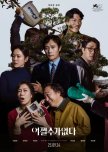
Park Chan Wook's most entertaining movie yet. Maybe one that finally earns him his Oscar nom?
No Other Choice is one of those rare films that made me laugh, squirm, and quietly question how far I'd go if pushed into a corner. It's darkly funny, beautifully made, and a little too close to home--a story about pride, desperation, and what’s left of us when survival becomes the only goal. The title insists there's "no other choice", but that's the cruel irony, there are always other choices, just not the kind that let you keep everything you've built your pride on.The setup hits hard. Man Su (played by Lee Byung Hun) loses his job and starts to unravel, and the fear isn't just about money but also identity, about what is left when the work that defined your worth disappears. In a capitalist world obsessed with efficiency and cost-cutting, and how human labor can be easily replaced by robots/AI, that anxiety feels sharper than ever. [Ironically, Park Chan Wook was expelled from the WGA just two months ago for continuing work as an editor during the 2023 WGA strike, which protested the use of AI to replace writers. Timing doesn’t get sharper than that.]
No Other Choice treats unemployment as transformation, but for the people living it, it still feels like failure. The job competitors Man Su meets along the way mirror parts of himself, and the less time we spend with them, the less human he seems to become. Even his toothache, throbbing whenever guilt creeps in and ending in its removal, quietly tracks how far he is willing to go.
The movie walks a fine line between empathy and irony, treating the absurd premise of "eliminating" job competitors with the dry rhythm of office bureaucracy. The humor doesn't come from punchlines, it comes from restraint--the awkward gestures, the small silences, the moments that feel too human to laugh at without guilt.
Park Chan Wook lets those moments breathe. He stretches time just enough for the absurdity to hit, so you end up laughing and immediately wondering if you should have. It's darkly comic in that uncomfortable, Park Chan Wook way.
There's one scene I keep thinking about: a tense confrontation that should've been horrifying but somehow becomes comedic. The music swells until it drowns out all dialogue, leaving only gestures and anxious movement. It's one of those moments where you're half-laughing, half-holding your breath, wondering if you even want him to succeed. It's the movie's tonal centerpiece, the best example of how Park folds comedy and dread into one perfect beat.
Visually, No Other Choice is stunning. It's a full cinematic experience. Every frame feels intentional, even when no one’s speaking. The cinematography is so deliberate that the images often carry the story themselves. The direction is precise almost to a fault. Every camera move, cut, frame and screen transition suggests control, even as the story unravels underneath.
Light becomes its own character. The film starts in warm sunlight, matching Man Su's illusion of stability, and slowly fades into gray and artificial tones as his humanity erodes and his world turns mechanical. Even in the opening barbecue, when clouds slide over his smiling family, the coming darkness is already there. The autumn palette--all muted golds and dying reds--turns beauty into warning. Everything glows because it’s decaying.
The camera placement is equally purposeful. It doesn't follow Man Su, it watches him. It's like we're standing behind a window or bushes or trees, quietly complicit, as he prunes away his conscience, just like the bonsai in his greenhouse.
Characters are often shot through glass or metal reflections, showing not who they are but who they pretend to be. One shot splits the frame with rocks: on one side, a storm rages; on the other, Man Su carries out his plan. It's a simple composition, but it captures everything the film is about, the inner storm of a man convincing himself he has "no other choice".
If the direction is the engine, then Lee Byung Hun is the heartbeat. His performance is all about the quiet breakdowns and small, painful attempts to stay composed. The guilt shows in his eyes, in the smile that never quite fits, in every hesitation. Even his comedy comes from that restraint, until he suddenly breaks it with an awkward dance or clumsy movement.
Son Ye Jin doesn't need big gestures to leave a mark. You can see her thoughts shift across her face as she processes everything quietly falling apart around her. Her smile tightens scene by scene, her wardrobe fades from bright to muted, and that subtle change says everything about what she’s holding in.
Yeom Hye Ran is the scene stealer for me. I've always loved her in everything, and this is no exception. I'm used to seeing her in more ordinary ahjumma roles, so it caught me off guard how elegant and beautiful she looks here. She brings a sharp, unpredictable energy, switching from tense to funny in a heartbeat, and she makes every darkly comic moment land without ever breaking tone.
The rest of the cast fits perfectly around them. Lee Sung Min’s quiet desperation made me feel for him, Cha Seung Won brings a worn out melancholy, and Park Hee Soon adds just the right amount of smugness. Together, they make the movie feel deeply human. It's not about heroes or villains, just people trying to survive and losing small pieces of themselves along the way.
Compared to the operatic violence of Oldboy, the seductive chaos of The Handmaiden, or the quiet yearning of Decision to Leave, No Other Choice feels like a more grounded Park Chan Wook, more deliberate, and less interested in shock than precision. The violence here is quieter but hits closer to home.
In some ways, it reminded me of Parasite: that same perfect balance between arthouse and crowd-pleaser. It might even be Park Chan Wook's most accessible film, and honestly, his funniest. And really, if anyone deserves an Oscar nomination at this point, it's him. This could finally be the one.
On a cerebral level, there's almost nothing to fault about the movie. Maybe the third act stretches a bit long, or the final twist feels a bit tacked on, but those are minor personal quibbles. What stuck with me most was that slight sense of detachment while watching this move. It's fascinating, funny, and beautifully made, but I never felt fully immersed in its world the way I did with Parasite.
That said, just like Parasite, you don't have to catch every symbol or metaphor to enjoy the movie. It's engaging, darkly funny, and sharply observed in a way that lingers. I'm giving the rewatch value a 10, because I'm sure seeing it again would reveal more, the small visual cues, the quiet ironies, the things I only notice when I already know how it ends.
Was this review helpful to you?
This review may contain spoilers
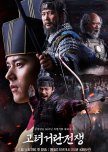
A captivating look into the intricacies of war, wrapped in the charm of old-school sageuk
Plot/Story:The Goryeo-Khitan War begins with the crucial Battle of Kwiju, a key conflict during the Third Goryeo-Khitan War in 1019. The narrative then rewinds a decade to provide context for the second war between the Khitan-led Liao dynasty and the Goryeo dynasty. Set against the backdrop of the Third Goryeo-Khitan War, the series meticulously explores the tensions throughout the Second and Third Khitan invasions. It also depicts the challenges Goryeo faced following the Second invasion and how the dynasty united to face the impending attacks from the Khitans.
The drama, despite containing some anachronisms, is still mindful of historical accuracy. These anachronisms enrich the narrative, emphasizing the importance of national unity and adding some edges to otherwise perfect characters. This approach can slow the pace, making it feel somewhat dragging. However, with patience, the payoff is quite satisfying. Even with these minor modifications, the series stays close to historical truth (based on my research on Wikipedia and Google) and kept me engrossed in a world of politics and impending conflicts, and even kept me at the edge of my seat despite knowing the outcome.
At its heart, the Goryeo Khitan War is about human strength during war. It deeply explores reactions to conflict and political plans linked to war. It shows power struggles, ambitions, alliances, and betrayals that affect the outcome of battles. It also focuses on how characters grow through these challenges and how this changes their perspectives on life and humanity.
Character and Relationship:
Just like in most traditional sageuks, politics, court intrigues, and epic battles take center stage in this drama. However, the true stars of the show for me were the characters and their very human stories. King Hyun Jong, who evolved from a naive figure into a powerful leader under the mentorship of Gang Gam-chan, is a character that I found endearing. Their bond forms the pulsing beat of the show, symbolizing the perfect dynamic between a king and his minister. It's all about loyalty, reciprocal appreciation, immense capability, and heaps of trust.
Yang Kyu's character strikingly portrayed the harsh realities of war and the steep price of victory, which deeply resonated with me. His struggle against adversity and his spirit in the face of overwhelming odds painted a vivid picture of the human cost of war and the sacrifices made for victory. One thing to note is that since this is a war drama, female characters mostly occupy peripheral roles, yet thanks to the superb performances and concise writing, they still resonate as vivid and authentic. I particularly appreciate the portrayal of the enduring marriage between Gang Gam Chan and his wife, and how, despite decades of marriage and constant bickering, her unwavering loyalty shines through.
Acting/Cast:
The cast, packed with familiar faces and veteran actors, brought their A-game to this sageuk. Choi Soo Joon's portrayal of Gang Gam-chan is impeccable, as expected from the King of Sageuk. His performance captured Gam-chan's essence in a way that was both captivating and genuine. I was also impressed by Kim Dong Jun's portrayal of King Hyun Jong. His transition from uncertainty to authority was smooth and convincing, embodying the regal air of a king as his character evolved. But the real standout for me was Ji Seung Hyun. His portrayal of Yang Gyu tugged at my heartstrings. He encapsulated the harsh realities and raw emotions associated with this historical event, painting a vivid picture of not just the physical struggles, but also the emotional turmoil faced by the characters.
In summary, to me, "Goryeo-Khitan War" is more than just a historical drama. It's a captivating exploration of personal growth, power struggles, and the intricacies of war and politics, all wrapped in the charm of old-school sageuk. Unlike many modern sageuks targeting younger audiences, or those blending with fusion sageuk subgenres, this drama is a refreshing change of pace. It stays true to its style and prioritizes historical accounts over romance or fantasy. If you're a fan of classic sageuk, this is one for your watchlist.
Was this review helpful to you?
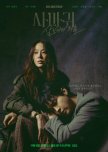
Copycat May Kill, but Go Hyun Jung Slays
If you tell me a story about a killer mom roped in to catch a copycat, I am already intrigued. Tell me Go Hyun Jung is playing her, and I am clearing my schedule. It is a premise that practically begs to be watched, and one that delivers plenty of curiosity right from the start.That curiosity carries through the mystery itself, with enough twists to keep the journey engaging. The show knows how to tease out its central puzzle, but at times it asks for a bit too much patience. Tension is often stretched through contrived conflicts or stretches of police incompetence. The directing leans on a Scooby Doo effect where nearly everyone looks suspicious at some point. It did not weaken the suspense for me, though it did make me overthink every odd glance and twitch, chasing shadows the show may not have intended. At the same time, the violin string woven through the score adds an extra shiver of tension, sharp enough to keep you leaning forward.
At the center is the shifting lens on one woman, Jung I Shin. To some she is only a monster, to others a source of warmth, and still a reminder of justice where the system failed. Even those carrying their own scars use her as a mirror, projecting their pain or survival onto her. The word "monster" itself becomes less a truth than a reflection, revealing more about the speaker than about her. The most compelling arc belongs to her estranged son, Cha Su Yeol, who begins in denial and resentment but is gradually forced to confront both the trauma he buried and the truth of who his mother is. Around him are mirrors and counterpoints that challenge his hatred and deepen the story's themes. Some arcs frustrate in how they are written to drive conflicts, but the strongest ones underline the larger questions of inheritance, guilt, and identity. In the end, it is the mother-son bond that holds the story together, carrying both its pain and its humanity.
And then there is Go Hyun Jung. She carries this drama with an extraordinary performance, the kind that commands even the quietest scenes. She can be chilling without raising her voice, show joy or concern with the smallest shift, or find subtle comedy in a wry smile. Her restraint makes her unnerving, her precision makes her compelling, and her presence makes the drama linger even when the writing falters. Because of her strength, everyone else inevitably pales in comparison. I expected excellence the moment she was cast, and she delivered exactly that.
This is not a flawless drama. The plotting is uneven, some of the supporting cast often forgettable or frustrating, and some contrivances will test your patience. Yet its strength lies in how it uses its premise to explore weightier questions of justice, monstrosity, and the burden of the past. It may stumble, but the emotional weight and Go Hyun Jung's brilliance made it well worth watching.
Was this review helpful to you?
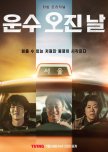
When Gullibility Undermines the Thrills
A decent thriller. I probably would have enjoyed it more if it didn't rely so heavily on a gullible protagonist and incompetent authorities to create the twists and turns. I don't mind these elements in moderation, but this drama had too many contrivances, one after another, that killed the suspense for me. Contrary to popular opinion, I enjoyed the latter half more, perhaps because it felt like a more balanced cat-and-mouse game. The acting and the female characters carried the show for me.Was this review helpful to you?
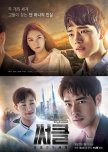
Black Mirror’s cousin, but make it K-drama and less existential dread
I don't know if a review is really required after 8 years, but Circle feels like one of those rare dramas I couldn't finish without writing down my thoughts. Back in 2017, I only made it through the first episode while it was airing, not because it was bad, but because I was still in a drama hangover after finishing Rebel Thief Who Stole the People. Now, 8 years later, I'm kicking myself for waiting this long. With the amount of money Netflix is pouring into Korean sci-fi today, Circle feels even more ahead of its time. It doesn’t lean on flashy CGI, but it doesn’t need to, the sci-fi core is more than strong enough.From the outside, Circle looks like a drama that tries to squeeze every sci-fi concept into 12 episodes. Aliens? Check. Memory tech? Check. Emotion control, dystopian cities, clones? Double check. But in reality, the concepts stack on top of each other like dominoes. Each one feels like the natural consequence of the one before, creating a chain of ethical dilemmas about memory, identity, and what it means to be human. And because Circle leans into soft sci-fi rather than hard sci-fi, it doesn't pause to explain alien origins or the inner mechanics of the technology. Instead, the tech serves as a backdrop for exploring ethical questions similar to Black Mirror rather than The Martian, for example.
The drama's strength is in using characters to embody those dilemmas. Characters who forget their past wrongs live in harmony, but their peace is built on illusion. Others battle with the question of whether carrying painful memories makes life heavier or more fully human. And some face the question of whether memory or biology defines identity. These character arcs give emotional depth to the high concept premise and keep the drama grounded.
Another strength of the drama is its structure. Circle runs on 2 separate timelines that at first feel disconnected, almost like parallel stories. But as the episodes unfold, threads from the past and future start weaving together, with the bond between the twins serving as the emotional bridge that connects them. The connections grow clearer until they converge in a way that feels both logical and satisfying. It's a storytelling choice that not only heightens the mystery but also makes the eventual payoffs hit harder.
The fundamentals of the show are handled well: the what, who, where, when, and why are clear, and the twists feel like natural outcomes of character traits rather than cheap surprises. Where Circle falters is not in pacing or depth, but in narrative stitching. Again, the emotional beats breathe, the stakes feel urgent, and the questions are answered, but the connective mechanics are often choppy. Key events unfold through abrupt flashbacks as if they were patched in during post production, and sometimes the way characters get from point A to point B stretches believability. The "how" of the story occasionally shows the seam, even as the "why" remains compelling.
What helps smooth those seams is the acting. Yeo Jin Goo anchors the story, Kim Kang Woo adds a layer of grit and intensity, and Gong Seung Yeon carries the emotions naturally without overshadowing the scene. Lee Gi Kwang is fine in parts, though sometimes you can see the effort behind the emotion. Still, the cast does its job, and the side characters add enough humor and humanity to balance the heavy themes.
In the end, Circle is ambitious, emotional, and thought-provoking, though rough around the edges. It's a soft sci-fi at heart, dressed in classic K-drama tropes: flashbacks, cliffhangers, bromance, hints of romance, and the legendary longing gazes backed by an OST swelling as if the fate of humanity depended on it. If Black Mirror is the brooding cousin who ruins Christmas by asking questions that trigger existential dread, Circle is the Seoul cousin who asks the same ones but insists on answering with cliffhangers, tears, and eyes that carry the weight of the moment rather than plunging you into existential dread.
Was this review helpful to you?


