







 1
1

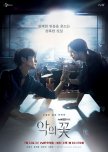





 Kim Bo Ra confirmed to join Jang Dong Yoon and Go Hyun Jung in a new SBS K-drama!
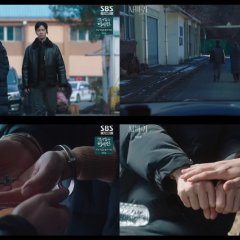
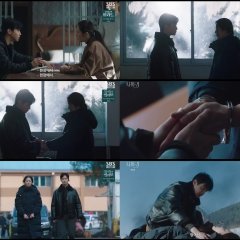
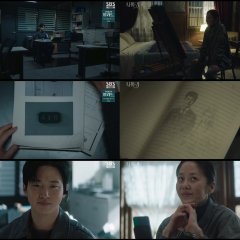
 Jung I Sin is a serial killer with the nickname of the Mantis. She brutally murdered 5 men 20 years ago. Her son is Cha Su Yeol. He has loathed his mother for his entire life. He now works as a police officer. One day, a murder case takes place. The murder seems to be a copycat crime copied from Mantis. To catch this culprit, Cha Su Yeol enlists the help of his mother, Jung I Sin. (Source: AsianWiki) ~~ Remake of the French online series "The Mantis" (La Mante) [2017]. Edit Translation
- English
- Русский
- Українська
- Français
- Native Title: 사마귀 : 살인자의 외출
- Also Known As: La Mante , Samagwi , The Mantis , The Mantis: Original Sin
- Director: Byun Young Joo
- Screenwriter: Lee Young Jong
- Genres: Thriller, Mystery, Psychological, Crime
Where to Watch Queen Mantis

Subscription (sub)

Subscription

Subscription (sub)

Subscription (sub)

Subscription
Cast & Credits
-
 Go Hyun JungJung I SinMain Role
 -
 Jang Dong YoonCha Su YeolMain Role
 -
 Cho Seong HaChoi Jung HoMain Role
 -
 Lee ElKim Na HuiMain Role
 -
 Kim Bo RaLee Jung Yeon [Su Yeol’s wife]Support Role
 -
 Lee Hwang UiJung Hyeon Nam [I Sin's father]Support Role
Reviews
This review may contain spoilers
Queen Go Hyun Jung
If there's one thing to summarize the entire series - it is to establish Go Hyun Jung as the queen.This gripping and dark slowburn thriller is an exaggerated study of genes vs nurture - is someone pre-disposed to be something because of your blood or do we actually have the freedom to shape what we want to be according to our freewill and upbringing?
Okay lets backtrack a litlle bit, because there was a bit of backlash when the show was airing when they revealed that the copycat killer is a trans character but we also have to understand that this is an adaptation and the same backlash happened during the airing of the original french series which it was based on. Yes in the original the copycat was also a transwoman.
I know the progressives hated that twist and most of the question hovered around the reasoning they had to demonize a transwoman. I have a little bit of theory about the reason and i know a lot of people will hate it. Here it goes - a boy was brutally abused by his father and a woman came to save his life - yes the killing was sloppy and irresponsible but to his eyes it was also empowering and it set him free. He idolized the woman who defeated the demon for him and he fashioned a new life to MIRROR the life of his saviour - thats why he chose to become a woman. Was he actually a transperson or was he just copying the queen mantis? That is the mystery. I didnt see it as an attack to the trans community.
For me this show is a lot better than the original - first and foremost is the acting - Go Hyun Jung's Jung I Sin is so different from the original and made the role her own, her acting was subtle and so much scarier - that scene when she pulled and strangled the first suspect (which is not ont he original) is etched in my mind as it was so calculating believable awesome and terrifying. Jang Dong Yoon also did an excellent job as Cha Su Yeol who showed so much more vulnerability and his dynamics with Jung I Shin is much more believable compared to the original. The support cast also did a good job.
I also liked how they changed the ending a little bit which made it more effective like when Jung I Shil overpowered and stabbed Seo A Ra ,and when she actually prevented her son from killing her father (which kept him from becoming a criminal himself) and did it herself through that fire. And that open-ended ending - were they hoping to do a season 2?
The makeup to deglamorize Go Hyun Jung was also spot on and perfect for the character.
Would i reccommend? Yes the acting alone makes it worth it. Would i rewatch? Probably not as the topic is too heavy for repeated viewing. Overall i give it an 8.
Was this review helpful to you?

This review may contain spoilers
More than a remake. And more than a thriller.
A woman locked away because she dared too much. She is called “Queen Mantis,” and the name itself is a portent—or a threat. The praying mantis, after all, is known for devouring the head of her mate once he is no longer useful. A provocative metaphor in a society that prefers to see women as victims, but not as avengers.The Korean remake of the French La Mante transplants the original plot into distinctly South Korean terrain: abandoned mining towns that lie across the country like open wounds. Places where children once grew up, only to become perpetrators or victims later—or both at once. Here, the hunt is not only for a serial killer, but also for a social catastrophe: domestic violence so widespread in South Korea that it has become almost invisible. The police, who should protect, look the other way.
The women in this series are no saints. They are opaque, contradictory, dangerous. Go Hyun‑jung plays the Mantis with brilliance—her presence both magnetic and repellent. A woman one is not meant to love, but impossible to forget. The other female characters, too, are layered and elusive. By contrast, the men appear as clichéd shadows: policemen, perpetrators, fathers, all in familiar costumes.
Perhaps this is deliberate: a reversal of the usual roles, where women are mere decoration and men drive the plot. Here, the crime drama is solid—its subject matter not entirely new, but its execution striking.
Queen Mantis is more than a remake. And more than a thriller. It is a mirror of Korean contradictions: between victimhood and vigilantism, between patriarchal violence and female resistance. It shows that murder—even as revenge—does not lead to justice, but only opens new abysses.
The series poses an uncomfortable question: when institutions fail, when private violence goes unpunished—does vigilantism become a crime, or a necessity? The answer is as clear as it is unclear: murder remains murder, even when disguised as justice. Yet viewers are invited to linger at this moral precipice, to look into it, perhaps even to understand.
At the heart of Queen Mantis lies not only the pursuit of a serial killer, but also the fractured relationship between mother and son. Jung Yi‑shin and Cha Su‑yeol meet like strangers—bound by blood, yet separated by silence and guilt. Their conversations are less investigative work than tentative steps through the ruins of a shared past.
The series reflects this damaged bond in other parent‑child relationships as well: fathers who could not protect, mothers who wounded while trying to shield, children who inherit not only trauma but also silence. A web of reflections emerges, showing how violence does not remain isolated but travels through generations, warping love and corroding trust. Queen Mantis offers no solution, but leaves viewers suspended—between closeness and repulsion, between connection and rupture.
One thorn remains: the portrayal of a trans character, framed in proximity to mental disorder. In a country where trans identity is already marginalized, this feels like a relapse into old patterns. A small but not insignificant shadow on a series that otherwise illuminates social fault lines with such precision.
Overall: Remarkable, and worth watching.
----------------------------------------------------------------------------------------------
SIDE NOTE: The End of South Korea’s Mining Towns
Until the 1970s and 80s, South Korea had numerous coal and ore mines, especially in Gangwon‑do (Taebaek, Sabuk, Hwangji) and Chungcheongbuk‑do. With economic restructuring and the move away from coal energy, many mines closed in the 1980s and 90s.
What remained were “ghost towns”: half‑abandoned settlements, decaying workers’ housing, sealed shafts. Entire generations crumbled along with the homes they once inhabited. Alcohol, violence, loneliness—the social aftershocks were as reliable as the tremors that once shook the ground.
Some places, like Taebaek or Jeongseon, later reinvented themselves as tourist destinations (ski resorts, festivals). Others remained melancholically hollowed out. These towns carry an aura of social trauma: unemployment, out‑migration, fractured communities. That is precisely what makes them so charged as settings for thrillers and dramas.
Was this review helpful to you?
Recent Discussions
| Title | Replies | Views | Latest Post | |
|---|---|---|---|---|
 | Ep 8 - Crying Scene by MistyMaid | 1 | 0 |  Another Stranger Dec 19, 2025 |