

 2
2 9
9 1
1 1
1


Complex, Intriguing and Heart-Wrenching
This story is complex and twisted, but at the same time intriguing and heart-wrenching. The plot is initially very hard to understand, as I have felt I needed 10 brains to dissect and digest the story. The journey to discovering and finally understanding the plot is littered with blood and romance, love and hate, trust and betrayal, friendship and animosity. The story telling and the acting are amongst the best in recent dramas.Yu Sifeng (Cheng Yi) is a son of a human mother and Golden Bird race which disguises as a cultivator sect wearing masks. He's the top disciple of the sect and his biological father is the sect leader. Their masks are never to be removed but somehow Yu Sifeng's mask is removed by Chu Xuanji (Yuan Bing Yan aka Crystal Yuan). This is their 10th lifetime meeting each other. For his past 9 lives, Yu Sifeng has loved and been devoted to Chu Xuanji but dies in her hands or under her who doesn't even know of his love and devotion. In this tenth lifetime, she finally falls in love with him but he's now a Golden Bird that is considered demonic and persecuted by the cultivation sects. The couple goes through a lot of trials and heartaches, especially for Yu Sifeng. In every episode from beginning of the drama till the end, he suffers enormous pains, both physically and emotionally, and each time, his love and devotion for Chu Xuanji never wane. Their love story and romance are beautiful and heart-wrenching. All the viewers' hearts go out to Yu Sifeng because of his sufferings and committed devotion to Chu Xuanji. As the story develops, we begin to see this is only part and puzzle of the overall plot. Who is Chu Xuanji? Who is Yu Sifeng?
Cheng Yi’s acting is fabulous. As Yu Sifeng, he’s quiet, patient and reserved but compassionate and passionate. He’s the kindest being ever, protecting others and sacrificing himself. He’s always the last to speak and endures all the mistreatment others throw at him. His face is always emotionless and leaves everyone guessing what he is thinking. And yet, Cheng Yi speaks with his emotions. The viewers can feel his agony, torments, despairs, pains, resignation and anger. With Chu Xuanji, he is always patient and forgiving. He loves her so much that viewers can feel his affection by how he looks at her, so tenderly and lovingly. Cheng Yi delivers 100 percent of Yu Sifeng to the viewers.
Yuan Bingyan’s portrayal of Chu Xuanji is close to perfection. She is beautiful and young with a naïve and innocent look. Time and time again as Chu Xuanji, she hurts and torments Yu Sifeng, either unintentionally or intentionally, physically or emotionally, and then she would return to him to help him heal, only to throw him back into his misery again. However, when the lives of those she loves are threatened, she changes into a fearsome warrior that is completely different from that silly young girl. Yuan Bingyan is very believable as Chu Xuanji and has had a great performance.
Other cast members are equally impressive in their acting. I’m particularly impressed by Bai Shu’s acting as Teng She; the way he talks and slithers, exactly like a snake which he has transformed from.
The CGIs in this drama are not too bad. The backgrounds are pretty well done. I love the golden wings that come out from Yu Sifeng. They’re so beautiful and look so authentic, and Cheng Yi’s acting blends right in with the wings naturally as if those are part of him. I absolutely love those ethereal visuals of him.
Of all the three realms – heaven, underworld, and mortal world, both Yu Sifeng and Chu Xuanji want to live in their current lifetime in the mortal world – as they put it, it’s great to be humans. The endings are satisfactory to most viewers with all characters having proper closures, the deserving awarded and the villains redeemed.
Despite its length of 59 episodes as I was hesitant initially, this drama is a great watch that tugs at our hearts. I have truly enjoyed the journey. Strongly recommended. Two thumbs up!
Was this review helpful to you?
An Epic Drama
I watched the Legend of Mi Yue many years ago while it was airing. Recently I came across Wang Bei, the composer for the sound tracks in the drama, in Music Talks podcast on Spotify. It reminds me all the emotions I was going through while watching this amazing drama. I feel I need to write something here for helping new viewers to appreciate this wonderful story that has brought me to the world of Chinese drama. And I would also like to share this fantastic Music Talks podcast with viewers who love Chinese traditional music: https://open.spotify.com/episode/0loDu2MPaECwJouuE3bC1Z?si=97ebacaa59ed4787Mi Yue was said to be the great-grandmother of Qin Shi Huang (The First Emperor of China), Ying Zheng (Qin Dynasty Epic). This story is about her romance, her odyssey from the Kingdom of Chu to the Kingdom of Qin including her exile, her multiple near-death experiences, ultimately her eventual rise to power and becoming the first empress dowager in China’s history. And the thousands of terracotta soldiers and horses that were discovered in Xi'an are said to have been buried for her, contrary to the common view that they were buried for Qin Shi Huang. How much of this story is fictional and how much of it is based on actual events happened more than 2,300 years ago, no one knows, but the story ties up every event masterfully, making the overall story logical and believable. This is a masterpiece that deserves to be revered by the masses. Deservingly, it receives many awards.
This drama boasts some very seasoned actors, in particular Sun Li (Betty Sun), Liu Tao (Tamia Liu), Huang Xuan and Alex Fong. Sun Li’s Mi Yue is beautiful, courageous and intelligent. I really enjoy watching her romance with Huang Zi Xie (Huang Xuan), my heart aches seeing their pains and sufferings, and sigh a joy of relief when they are together, enjoying each other’s company. Both have given the viewers a wonderful and believable love affair here and their chemistry is unbeatable. Sun Li’s performance is so good especially towards the ending when she becomes the Empress Dowager. She is regal, elegant, beautiful and strong. The performance I love equally well is Liu Tao’s performance as the Mi Shu character. Mi Shu, sister of Mi Yue, is timid and gentle, but grows to become cruel and evil as power blinds her. Her character development from a protagonist to an antagonist is simply so convincing, well written and performed. Liu Tao’s acting here is absolutely perfect; she gives us an evil empress (think of Snow White), having that piercing look with fire in her eyes, which is simply not replicable by any other actors. Alex Fong’s character as King Huiwen of Qin is equally wonderful. A Hong Konger and a veteran, his performance is convincing, giving us a lovable character that we come to empathize with, and his chemistry with his women is undeniable.
My Verdict
This is a very heavy historical based story with a lot of palace politics. But the writing is not dry and the drama is action-packed. If you’re a history buff, this is a must-watch. If you’re a Chinese classical music lover, you must listen to the music too, which have been carefully composed for effects and emotions; with imagination, it is also trying to emulate music sung 2,300 years ago and the result is applaudable. I particularly love the sound track “Waning Moon” performed by the pan flute or cello. The solo music sings out the sorrow and loneliness of Mi Yue as she plays the tune with her little pan flute. Melancholic and nostalgic, this is the most beautiful tune for the whole drama. I can just close my eyes and listen to it for the whole night, imagining life more than two thousand years ago, sad and hopeless.
For viewers who are interested in the pan flute music “Waning Moon”, check it out here: https://youtu.be/wQIjz68rr2E. Also available in cello version.
This is a TWO THUMBS UP for me. A must watch!
Was this review helpful to you?
Age Gap? No Kissing? No Problem
The title of this drama, Key to the Phoenix Heart, actually refers to a legendary key created by the late Empress Wenxi. Broken into four parts and safeguarded by trusted but anonymous guardians, legend has it that whoever pieces the key together conquers the world. And that’s exactly where the ball starts rolling behind the scenes, as every faction scrambles to find the pieces and unravel their hidden secrets.Xie Jia Yu, the adopted young daughter of the Grand Tutor, is a total tech prodigy who invents and sells clever little gadgets just to earn some pocket money. Then we have Xiao Wu Yi, the fearsome commander of the Northern Army, who built and controls the mighty forces guarding the northern border.
The kingdom is currently under the rule of a sickly emperor who is essentially a puppet controlled by the ruthless and ambitious Empress Dowager. When Xiao Wu Yi discovers that a faulty crossbow design led to the annihilation of his 30,000-strong army, he's determined to find the culprit. Suspecting his enemy, the Prince of Changsha, is behind the scheme and who is seeking Xie Jia Yu’s hand to secure the Grand Tutor’s support for his own throne ambitions, Xiao Wu Yi beats him to the punch. He petitions the Empress Dowager for a marriage decree to Xie Jia Yu, which is promptly granted.
To make matters more complicated, Xiao Wu Yi is already a married man with two wives and a child. One wife is He Yuan Ji, the Empress Dowager’s niece and a total bookworm whom he has never even met; the other is Rui Sheng, a capable military medical doctor. Meanwhile, Xie Jia Yu and Li Mao, a student of the Grand Tutor, have been childhood sweethearts and lovers. On the Grand Tutor's advice, the emperor also appoints Li Mao as regent. This messy arrangement creates a ton of conflict and sets up what looks like a classic love triangle—or so we thought.
After the wedding, young Xie Jia Yu quickly navigates Xiao Wu Yi's complex household dynamics. In a refreshing twist, the women actually become best friends. What starts as a forced contract marriage full of mutual suspicion and a battle of wits between Xiao Wu Yi and his young wife quickly blossoms into a beautiful, true-life partnership. Their journey together is incredibly sweet, humorous, and heartwarming.
The Characters
Xiao Wu Yi is the feared commander of the Northern Army, known for his cold and ruthless reputation. But only his inner circle—his adoptive family and his wives—know the truth: he is deeply forbearing, carrying the heavy burden of his true lineage and a sacred vow to protect the innocent. He endures humiliation while secretly investigating a past injustice, as well as the shadowy hands behind the faulty weapons that caused his army's annihilation. His family loves and respects him dearly, and he’d do anything for them. A really compelling aspect of his character is that he was severely injured in war and suffers from relapses that cause him to temporarily lose his sight. This vulnerability makes him feel like a real, flawed human rather than an invincible trope, which just makes viewers root for him even more. His ultimate ambition is to end all wars, even if it costs him his own life. His willingness to abandon absolute power for a genuine, mutual relationship makes him so much more compelling than our generic domineering male lead.
Xie Jia Yu, despite being a teenager, is the exact opposite of the typical passive, tropey female lead. She is sharp, resourceful, and fiercely independent. In fact, her intelligence surpasses most of the men around her, and she even manages to outsmart Xiao Wu Yi on occasion! Her mastery of technology isn't just a neat gimmick; it serves as a practical tool for survival and a symbol of her resilient, multi-faceted personality. The character is incredibly refreshing and lovable. She actively drives the plot and becomes Xiao Wu Yi’s most crucial strategic ally.
Acting and Chemistry
Hou Minghao is incredibly engaging as Xiao Wu Yi. He perfectly captures the character’s dual nature: the imposing, ruthless battlefield general and the hidden, gentle, and deeply aggrieved soul. His ability to convey complex emotions—especially the "brokenness" and vulnerability during his battle-injury relapses—is top-tier and highly immersive.
Ai Mi delivers a truly impressive performance as Xie Jia Yu. Despite being only 18 years old at the time, her acting is lively and authentic. She completely avoids the stereotypes often given to very young female characters, delivering a nuanced performance with rich emotional layers. She transitions beautifully from a witty, vibrant, and slightly mischievous girl in the early episodes to a calm, resilient young woman facing deadly court conspiracies. Holding her own alongside veteran actors and maintaining such strong atmospheric tension is highly commendable. Bravo for such fine acting!
The two actors share fantastic on-screen chemistry, and their interactive scenes are truly the emotional core of the drama. Because there is an 11-year age difference between the actors, some viewers initially felt the pairing sometimes leaned into an "uncle and niece" dynamic, which briefly took them out of the romance. However, Ai Mi’s natural, flexible acting and Hou Minghao’s grounded performance successfully bridge this gap. Their characters' bond becomes highly convincing, and they absolutely deserve our applause.
Final Thoughts
I'll be honest—I originally came to watch this series because of Hou Minghao, but I ended up being utterly blown away by Ai Mi.
Are there plot holes? Yes, plenty. It’s important to note that Key to the Phoenix Heart is an original screenplay, not a novel adaptation. While this means we get a fresh story, it also highlights a common pitfall of original scripts: they sometimes introduce grand, mysterious concepts to hook viewers but struggle to wrap them up neatly. More frustratingly, major lore elements like the four-part Phoenix Key are not properly developed and are wrapped up far too briefly. For something so monumental (it is the title of the show, after all!) that so many have died for, its resolution feels like a letdown, leaving many questions unanswered.
Despite the plot holes, Key to the Phoenix Heart is still an absolute joy to watch. It’s packed with palace power struggles, conspiracies, and treasons, but it never loses its sense of humor. It’s hilarious to watch Xie Jia Yu fumble when she first meets Xiao Wu Yi, and how he patiently tolerates her. I laughed out loud when Xie Jia Yu tries to "save" Xiao Wu Yi by accidentally shooting him in the butt! Another hilarious scene is when Xiao Wu Yi tries to help Xie Jia Yu escape his mansion by giving her a map, yet even with this help, she still manages to get lost and takes forever to find her way out. These are the small, charming details that make the drama so enjoyable.
The fight choreography for Xiao Wu Yi is engaging and beautifully executed. The flaming spear he uses in the opening scenes adds a unique, striking aura to the character. Meanwhile, seeing Xie Jia Yu brilliantly improvise by turning everyday items into weapons—or always having clever little gadgets and tiny grenades on hand to help her escape—is so refreshing. It's wonderful knowing she is never helpless and doesn't just sit around waiting for Xiao Wu Yi to swoop in and save her. Though innocent, she's never naive. She figures things out quickly on her own and is never a burden to anyone around her. I absolutely love both lead characters and the actors who bring them to life.
For anyone wary of the age gap, I'd say don't let it scare you off—it's really not as bad as it sounds. Ai Mi's natural youthfulness fits the role perfectly, and it feels far more authentic than casting an older actress trying to play a teenager. The whole show feels genuine and avoids the cringiness we sometimes get in other dramas with young characters. Despite the real-life age difference, their romantic relationship never feels forced or uncomfortable at all.
Overall, it's a fantastic watch that you absolutely shouldn't miss!
Was this review helpful to you?

Witty, Humorous and Happy
Set in the Song Dynasty, Perfect Match follows the unwavering Madam Li as she embarks on a singular mission: securing the best possible husbands for her daughters—no matter what it takes. Widowed and left to raise five daughters, a son, and an adopted daughter on her own, Madam Li’s resilience is tested time and again. Tragedy strikes when her young son vanishes after an accident, leaving his fate uncertain. To make matters worse, the family is ruthlessly stripped of their home and possessions by greedy relatives.Rather than succumbing to despair, Madam Li instills in her daughters a sense of unity, independence, and fearlessness—qualities rarely seen in women of their time. Her daughters grow into strong-willed, capable young women, standing in stark contrast to the traditionally meek and homebound women of the era.
Determined to rebuild their lives, Madam Li moves the family to Bianjing (Kaifeng), the capital city, where they start anew. Together, they establish an eatery directly across from the most prestigious restaurant in town. With each daughter contributing her unique skills, their business flourishes, proving that perseverance and family unity can overcome any hardship.
A Mother’s Role in Marriage
In ancient times, a parent’s duty extended beyond raising children—it included arranging advantageous marriages. Madam Li is no exception. However, unlike many parents of the era, she carefully selects husbands who will not only elevate the family’s status but also truly cherish her daughters. The daughters, though dutiful, are not passive in this process; each love story unfolds with mutual admiration and heartfelt connections.
The drama weaves together these individual love stories with humor, charm, and intrigue. As one couple’s journey concludes, they gracefully step into the background, allowing the next romance to take center stage. This seamless transition keeps the narrative fresh and engaging throughout.
Characters and Performances
I have no complaints about the acting—everyone delivers their roles convincingly, and I can’t get enough of the main characters.
Madam Li (Ni Hong Jie) – The Unyielding Matriarch
Madam Li is an extraordinary woman for her time—fierce, shrewd, and devoted to her daughters. Having lost everything to greedy relatives, she rebuilds her life through sheer willpower and business acumen. Despite being known as a "shrew" in her neighborhood, her daughters adore her, returning home often for family reunions—an unusual dynamic in a time when married daughters rarely visited their maternal homes. Their bond is a testament to her unwavering love and sacrifice.
Shou Hua (Liu Xie Ning) – The Strategist
The eldest daughter, Shou Hua, is a widow—intelligent, reserved, and deeply thoughtful. A natural strategist, she offers wise counsel to her sisters. She agrees to remarry as per her mother’s wishes, and fate rewards her with Du Yang Xi (Chen He Yi), a brilliant scholar who tops the imperial examination and rises to prominence as a government official.
Fu Hui (Wu Xuan Yi) – The Matriarch-in-the-Making
Married into a wealthy family, Fu Hui’s husband, Fan Liang Han (Huang Sheng Chi), is naive and childlike, often yielding to her authority. Despite living under her in-laws’ roof, she establishes herself as the true head of the household.
Kang Ning (Lu Yu Xiao) – The Sharp-Tongued Twin
Kang Ning, twin to the lost brother, is quick-witted with a razor-sharp tongue. She clashes with Chai An (Wang Xing Yue), a proud and cunning businessman who owns the rival restaurant across the street. Their fiery banter and stubborn personalities make for an entertaining and endearing romance.
Hao De (Ke Ying) – The Pure-Hearted 4th Child
Unlike her outspoken sisters, Hao De is kind, naive, and sincere. She falls for Shen Hui Zhao (Liang Yong Qi), the stern and incorruptible magistrate of Kaifeng. With numerous enemies plotting against him, Shen vows never to marry, fearing for his wife’s safety. However, Hao De’s unwavering honesty and warmth gradually melt his icy exterior.
Le Shan (Huangyang Tian Tian) – The Fearless Youngest Daughter
Le Shan despises the powerful who prey on the weak. Ironically, she ends up marrying Yang Xian (Winwin), a wealthy man she initially detests. Over time, she discovers his hidden vulnerabilities, and their rocky relationship gradually evolves into a deep and meaningful bond.
The Sons-in-Law Alliance
One of the most enjoyable aspects of Perfect Match is the camaraderie among the sons-in-law. They form their own alliance, frequently gathering at Chai An's restaurant to strategize, support one another, and solve both family and external conflicts. It is deeply satisfying to watch a group of intelligent, upstanding men work together, balancing their individual strengths to navigate the challenges that arise. Their interactions add depth to the drama, showcasing the importance of partnership—not just in marriage, but in brotherhood as well.
My Favorite Son-in-Law: Shen Hui Zhao
Among all the sons-in-law, Shen Hui Zhao stands out as my favorite. As the eldest of the group, he embodies righteousness and unwavering integrity. In court, his cold, unreadable demeanor strikes fear into wrongdoers. Yet, in private, his subtle smirks reveal a hidden tenderness, making his character all the more compelling.
My Favorite Couple: Le Shan & Yang Xian
Every couple in this drama is well-matched, but the most intriguing transformation belongs to Le Shan and Yang Xian. Initially despised by everyone—including the audience—Yang Xian evolves into a devoted and responsible husband, while Le Shan matures into a woman who learns to love and respect him. Their journey is one of the most satisfying arcs in the series.
Final Thoughts
Perfect Match is a refreshing, witty and heartwarming drama. It is not a mindless comedy, but a story of resilience, love, and familial strength. Despite the hardships the Li family endures, they stand united, facing challenges with intelligence and unwavering support for one another.
With the addition of their capable sons-in-law, the family gains even more strength, proving that love and partnership can be powerful tools against injustice. Amidst crime, danger, and false accusations, they emerge victorious, stronger than ever.
If you enjoy well-written dramas with intelligent humor, compelling romances, and strong female leads, Perfect Match is a must-watch.
Was this review helpful to you?
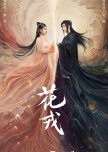
It's Hard to be a Phoenix
"Beauty of Resilience" is an enchanting tale of love between a phoenix and a son of God, intertwined with themes of duty, sacrifice, and the pursuit of immortality. In a world where chaos looms over the three realms, the forbidden romance between a beautiful phoenix, disguised as a human girl, and a handsome young man, burdened with the task of ending her existence, takes center stage. As their love transcends time and challenges, they must navigate a treacherous path of love, loss, and the relentless pursuit of power. Unbeknownst to everyone, the fateful mission to kill the phoenix is driven by a personal obsession for immortality, setting the stage for a series of life-altering choices.As the story unfolds, the true motivations behind the decree to kill the phoenix are revealed. It is discovered that the insatiable desire for immortality drives the selfish personal obsession of the one in power. The phoenix possesses a mysterious spirit flower called "hua rong", capable of enhancing its power and granting immortality. This misguided and deadly fixation wreaks havoc on the lives of the main characters, causing them to experience a rollercoaster of emotions, including love, hate, happiness, pain, gains, loss, togetherness, and separation, across multiple lifetimes.
Ju Jingyi delivers a convincing performance, taking on multiple roles throughout the series. As Wei Zhi, a humble and low self-esteemed maid servant with a mysterious power, she embarks on a journey that leads her to the cultivator academy. Her portrayal captures the essence of Wei Zhi's transformation into a phoenix, showcasing a delicate balance between strength and vulnerability. However, in her role as Sima Wangyue, a male military general, Ju Jingyi's feminine appearance becomes a noticeable aspect, though her ability to deceive the entire army is reminiscent of the conventions in Chinese cross-dressing dramas. Nevertheless, her overall performance remains commendable and believable, despite her lack of character change as she assumes the roles of the sacred lady of the demonic sect and the demon queen.
Guo Junchen's portrayal of Yan Yue is commendable, showcasing his versatility as an actor through multiple character interpretations. However, there are instances where the writing of his characters seems inconsistent and confusing. In his role as the conflicted lover tasked with killing the phoenix, his lack of emotional display during crucial moments leaves the audience longing for a deeper connection with his internal struggles.
The drama introduces several memorable supporting characters, adding depth to the storyline. Yi Er, portrayed by Lu Tingyu, captures hearts with her bubbly personality as an explorative cook betrothed to Yan Yue. Liu Dongqin's Mu Nan, the secret admirer turned demon chief who is unable to laugh, and Lin Fengsong's reluctant sit-in heavenly king, Yan Luo, also bring unique elements to the narrative. Additionally, Zhang Zhihao as Ou Ya, the wolf, and Song Xinran as Lan Su, the fox, add intrigue and depth to the story. On the other hand, the antagonists, portrayed as atrocious and hateful, provide a sense of relief when their fate is sealed. However, their actions also result in the loss of beloved side characters, which feels like a missed opportunity for more nuanced storytelling.
The drama excels in its authentic and visually stunning portrayal of the settings, costumes, and overall production design. While the headgears worn by Ju Jingyi may appear distracting in some scenes, the attention to detail and commitment to authenticity are praiseworthy.
My Verdict
One recurring flaw in the story lies in the characters' repetitive experiences and their failure to learn from past mistakes, resulting in a somewhat predictable narrative. Additionally, the presence of loose ends, plot holes, and weak logical explanations can detract from the overall viewing experience. The ending leaves certain aspects of the main characters' fate ambiguous, leaving the audience wondering if Wei Zhi and Yan Yue have returned to a time where their lives can begin anew without the burden of the phoenix. Furthermore, the conclusion for Yi Er feels far-fetched and some of the side characters' untimely deaths seem unnecessary, suggesting a lack of creativity in the writing process.
Despite these shortcomings, " Beauty of Resilience" remains an engaging drama, albeit with less humor and a heavier emphasis on evoking emotional responses from viewers. Although it may not have garnered favorable ratings on MDL, it still deserves recognition as a decent production with compelling performances and an intriguing storyline.
In conclusion, " Beauty of Resilience" is a captivating love story that explores themes of sacrifice and redemption within a fantastical realm. Its visually appealing aesthetics and committed performances make it a worthy addition to the genre. Don't miss the opportunity to experience this enchanting tale of love and fate.
Was this review helpful to you?
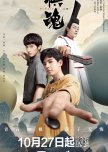
Sweet & delightful story, top notched acting, wonderful bromance
This drama is adapted from a very popular Japanese manga (comic) which was later also made into an anime (cartoon) in the early 2000s. The adapted story tells the struggle in bringing awareness of weiqi and retaining interests in the game among the youths, and the arduous path to fame and glory for the successful players. Weiqi is also known as GO in Japan and Baduk in Korea.Despite being one of the oldest board games and was started in China more than 2,500 years ago, weiqi has not received a lot of attention, especially among the Chinese youths who favor Chinese chess. For years, Korea has been the champion and in recent years China produces multiple world class players to challenge the champions. Weiqi is a must-have and common item in all Chinese historical dramas today. All emperors, scholars, officials and generals are expected to be well versed at the game.
What seemingly a very simple board game, using only any drawn grid boards or tiles on the ground with any black and white pieces, weiqi is one of the most complex games. There are no complicated pieces, no complicated moves. Anyone can play it anywhere, any time. And yet it can be challenging and difficult to master. For me, weiqi is a philosophy; it helps us realize many analogies in life and understand the philosophy of life. It has no restrictive form and yet there is a name for every position on the board and a term for every action a player takes; it is intriguing and mesmerizing.
All the actors are unrecognizable to me, but their acting is one of the best - natural and believable. Shi Guang (played by Hu Xian Xu) is just like a kid in your neighborhood. He’s not very fond of academic work and fully absorbed into his toy cars (when he was a little boy). He is restless and at times, reckless, but he is the most endearing character who has great dynamics with everyone he encounters. Often, he is unintentionally funny.
When the spirit of Chu Ying (played by Zhang Chao aka Juck Zhang) appears to him, they become friends. Chu Ying uses Shi Guang as a medium to play weiqi, and his first opponent is Yu Liang (Hao Fu Shen) who is the youngest and the best weiqi player and his (Yu Liang’s) father is the nation’s number one weiqi player. To Yu Liang’s dismay, he loses the game and it is the most unforgettable event for him. He vows to work harder and wins back his honor. Since Shi Guang is not interested in weiqi in the first place and doesn’t want to be used by Chu Ying, he refuses to comply to Chu Ying’s instructions in playing the game. Chu Ying disappears. For years Shi Guang is happy with his life and has forgotten about Chu Ying until one day he’s back playing weiqi again in high school. Chu Ying returns. This time, they become pals. Chu Ying teaches Shi Guang all the skills, polishing him up for competitions. They love each other and they are inseparable. Chu Ying is Shi Guang’s angel but others think Shi Guang is having an active imagination and an imaginary friend. The path to become a professional player is covered with challenges and obstacles as Shi Guang finds out. Like all other weiqi players, his daily life is mundane; he plays weiqi eating, sleeping and all the time. I wish the drama has focused and showed the viewers more on how he has won playing with the more seasoned players with his strategic and unconventional moves. Unfortunately, all these are skipped and we only know of the results at the end of the competitions.
When the time comes and he has to leave, Chu Yin leaves without saying goodbye. Shi Guang is devastated. He grieves for the loss of a good friend who is also a part of him. For months, he’s lost, rendering him dropping out of weiqi. He returns when he realizes Chu Ying is now in his weiqi; they have become one.
Hu Xian Xu’s acting here is amazing. He captures the whole essence of the character of Shi Guang who is a happy-go-lucky kid with not much on his mind. He loves his friends but at the same time, mischievous to everyone. He may not be intelligent academically, but he is quick witted and can always find a way out of his predicament. His final few episodes are heart wrenching, crying for the loss of his soulmate, and I cry with him. Hu Xian Xu’s acting is so natural and so authentic, making the viewers laugh and love him.
Chu Ying is the spirit of an ancient weiqi player who is being slandered and whose name disgraced. He comes to Shi Guang by accident and piques Shi Guang’s interest in weiqi. They form a formidable alliance and become soulmates. For years, he helps Shi Guang realizing his potential. To others, Shi Guang seems like having an imaginary friend, speaking to himself and playing with himself all the time. The scenes are sweet and funny.
Zhang Chao’s depiction of Chu Ying is commendable. His portrayal is so real and makes the character such a lovable and beautiful ghost for all to enjoy. The contrast in their outfits is just so hilarious and yet so outstanding. His chemistry with Hu Xian Xu is undeniable.
Shi Guang has many buddies like Hong He (Zhao Hao Hong) and Shen Yi Lang (Sun Can), but none have the chemistry like he has with Yu Liang (Hao Fu Shen). Though they have met each other in episode one, they have not been together until the final episode when they are building a double team for the world championship. They bicker and banter a lot like young boys do, but their chemistry is amazing. I wish they have shown the scenes how the duo beat other renown weiqi couples with their unspoken communication, a look in the eyes, reading each other’s body language. For Yu Liang, Shi Guang is the light that brightens him up, and with his brightness, Shi Guang shines (their names).
This drama deals in depth with the relationships of Shi Guang with his mother, with Yu Liang, with his friends, and most of all, with his teacher, Chu Ying. It is delightful, funny, humorous and meaningful. The characters are flawed, interesting and well developed. This is one of the dramas that I’ve enjoyed thoroughly. It is also one of the very few that respects viewers’ intelligence. I love how they use the child actors for juveniles Shi Guang and Yu Liang, both children have resemblances of the older Shi Guang and Yu Liang, and the kid actors are adorable and great in their acts. I find myself smiling from episode one until the last. My only qualm is perhaps with the fan that Chu Ying has left for Shi Guang. I wish the writer has done it differently than giving a physical object of Chu Ying to tell the viewers that Chu Ying has never left Shi Guang but with him in his weiqi. I would love to have thought there has never been a Chu Ying but an inner voice of an unwoken prodigy. But with the fan, this has ruined the scenario for me; Chu Ying does exist but it’s hard to fathom how his immaterial fan materializes and becomes a solid object in front of Shi Guang.
Seeing the dedication of each player, their respect for each other and their humbleness, really makes my heart warm and brings a warm tear to my eyes. Winning is not everything, but the process in taking part in a competition is the most exhilarating experience one can enjoy. As with everything we may do in life, winning doesn’t really mean success and losing doesn’t really mean failure; it’s how we look at winning and losing.
As the world moves towards popular culture, ancient board games such as weiqi is being forgotten. Like ancient languages, fewer and fewer people know how to play and have the interest in weiqi. This drama tries to create awareness of the most wonderful game and promote interest among the youths. I hope after this drama, more people pick up playing weiqi. As for me, I am definitely doing so, crossing out one of the items which has been on my bucket list forever.
My verdict
This drama does not have all the big names, and yet it is well written and performed. The attention to details, in particular the norms of the era, is both immaculate and applaudable. This is an endearing and my most favorite non rom-com drama that evolves around weiqi and competitions. Even if viewers think weiqi is not their favorite subject, this drama is still an amazing watch because the story is so well told, the acting is fabulous and authentic, and the subject weiqi is deep and fascinating.
Some viewers have complained the final few episodes that the director has spent too much time dwelling into Shi Guang's pain and his breaking down. I actually love this breaking down period. It's a period of discovery and realization for him; I feel many people have missed that element here and therefore couldn't understand what the director's intention is. I wish the director has also delved further into Shi Guang's relationship with Yu Liang after Chu Ying, how the duo have communicated with each other silently, especially during their double competitions. Their body language part is too short and shallow without the depth like how it's been done for others.
This is a drama that deserves to be on everyone’s to-watch list. Strongly recommended.
TWO THUMBS UP!
Was this review helpful to you?
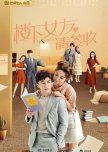
Cutest CEO in Love
This is a sweet, sweet, sweet romance comedy. It also has a love triangle, or love square rather. Basically it’s a story of a want-to-be female actor meets cold, wealthy, young, good looking CEO and both fall in love rather quickly. The storyline is cliché and tropey. However, I have to say I’ve thoroughly enjoyed the whole drama because of its wonderful actors. If you have watched My Girlfriend is an Alien, this drama has the same vibes.Ye Fei Mo (Lawrence Wong) is perhaps the funniest cold CEO I’ve ever seen. Lawrence Wong the actor is not that tall compared with contemporary Chinese actors, but he is extremely good looking with a crazy physique. He definitely has the charisma of a successful CEO who doesn’t come under the control of his family. I really enjoy watching Ye Fei Mo’s hilarious and silly meanness and bossiness, and his unreasonable demands which can be changed as according to his whims. As much as we hate an authoritarian government, being bossy in a jealous boyfriend can be cute to watch, though not tolerable in real life. Ye Fei Mo rehearses his lines, or his expressions repeatedly to find the perfect one, and the process is simply hilarious to see such accomplished CEO overthinking such trivial matters because he’s head over heels in love. Lawrence Wong delivers every time with his little hidden smirks here and there. His tenderness mixes with bossiness is really a joy to watch, and I laugh out loud each time. Lawrence Wong’s crying scene is epic; he’s so convincing, perhaps the best crying from a male actor. Great acting.
Ye Fei Mo’s love, Wen Xiao Nuan (Xu Hao) is a pragmatic, down-to-earth, hardworking girl trying to save the legacy of her parents’ theater arts. Xu Hao is a wonderful actor. Her portrayal of Wen Xiao Nuan is authentic, lovable and convincing. Perhaps an accomplished ballet dancer in real life, Wen Xiao Nuan’s intensive training is executed beautifully with actual dance movements by the actor herself; she has great poise and she is simply amazing.
For once, I love a powerful wealthy CEO’s mom, Big Princess (played by Li Ying) as nicknamed by her son Fei Mo. She’s shrewd and knows her son inside out. There are a couple of side couples with rather deep character development. I really enjoy watching the Gu Yun Zhou character (Wu Hao Ze) though the acting part is not top notched. Having said that, we can tell the actor is working hard to bring out his best performance, and I commend him for that.
This drama also reminds us the power of social media. It can create as well as destroy, especially in the entertainment industry which is the setting of this drama. One of the main flaws for me, apart from some of the logic, is perhaps the outfits of the actors. It appears that they wear the same outfits for days and for various different events (I understand that they may have shot the scenes on the same days, but still, these are the little details Chinese dramas tend not to take care of). I also find the complexion of the actors almost totally whitewashed. Though looking beautiful without blemishes, they look very unrealistic.
The last scene of the last episode reveals the identify of the mysterious girl with the “birthmark” who has also rescued Ye Fei Mo from drowning years ago. This is a great ending with all loose ends closed, rewards awarded and justice served.
If you want a good laugh and don’t mind the repeated storyline, this is a good drama to put on your to-watch list.
Was this review helpful to you?
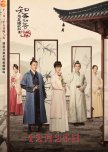
Two thumbs up. Strongly recommended!
Finally, I completed watching this drama, almost 6 months after its airing. My delay in completing this drama was not only because it’s a long drama of over 70 episodes, but also for other reasons. This is a drama that is totally different from most other historical dramas – in visuals, sound effects, costumes, etiquettes, how people speak, how real families lived more than 1,000 years ago, to name a few. Unlike most historical Chinese dramas which emphasize on its beautiful eye-catching costumes, unreal politics and dramatic effects, “The Story of Ming Lan” tries to depict how the Chinese society was like more than 1,000 years ago. The producers even used the sepia tone effect to capture the mood, making it even more so authentic. How accurate such depiction is to actual life in that era perhaps only historians can tell.The real reason for my delay was how much I relished this drama that I didn’t want to simply skimp through the episodes without truly understanding and appreciating every nuance of the story. I researched into Chinese history of the Song Dynasty, in particular during that era, and tried to understand its social ethics and geo-politics.
The period depicted in this drama is a very interesting one, with political turmoil and constant worries of foreign invasion from the north. All these political upheaval and socio-cultural scenes were captured realistically in the drama.
I love the OST of this drama, sung at the end of the episodes. The lyrics (also the Chinese title of this drama) was from a poem by a very famous female poet, Li Qingzhao, during that era. She was a rare breed, not only living in a suppressive environment in the Chinese society, also in the world. Her poems were mostly very free-spirited or of care-free style, something unthinkable from a woman of that era in that society.
It is painful to see how women were oppressed and suppressed in the orthodox conservative Chinese society, and such treatment of women is still prevalent in many modern societies. The glaring injustice in gender inequality is so entrenched in most cultures that it is literally an uphill battle if one wants to change it. Sadly, a lot of the enhancers for the inequality are also women themselves. On the brighter side, the current trend in women liberty is very encouraging especially in the western world. I hope, we will one day, truly achieve equality for all.
This drama is truly a gem, and one deserved to be watched and relished by all.
Two thumbs up. Strongly recommended!
Was this review helpful to you?
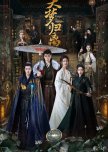
Tears, Humor, Love & Stunning Looking Actors
After a hiatus of more than a year from watching dramas, I was eager to dive into something captivating. Fangs of Fortune caught my eye, largely because I’ve enjoyed Neo Hou’s performances in his previous works. All the stunningly good looking main cast members have also attracted me. However, the 4.9 rating on Douban gave me pause. Still, knowing how meme bots, stealth accounts and contemporary competing dramas can skew ratings hence opinions in today's world, I decided to take the plunge.I’m glad I did. For the past two weeks, I’ve been immersed in a breathtaking journey with a group of closely knitted friends who love and trust each other, and willing to die for each other. Almost 100% of the dialog time between our main characters, the actors have tears streaming down their faces as the writer(s) and directors try to capture viewers' heart. The sheer volume of tears is astonishing—this is, without a doubt, the most tear-filled series from the actors I’ve ever watched. It felt like every conversation started and ended in tears, to the point where crying became so normal that it lost its emotional impact on me.
Storyline
The plot is surprisingly compelling. It revolves around a love story between a demon who has a conscience and a human girl, exploring themes of redemption, transformation, and the power of love. Another human who vows vengence against the demon, but becomes empathizing with the demon as he turns into one himself. The story takes the characters through harrowing trials, strengthening their bonds and forcing them to grow amidst relentless antagonists who seem nearly invincible.
If not for the hints of romance between the demon and the girl, viewers might mistake the dynamic between the two male leads for a bromance, which is one of my most enjoyable moments. It's heartening to see a deep confidant friendship between the two main male characters.
While the central narrative relies on familiar xianxia tropes, the journey itself is engaging. The characters' struggles, setbacks, and triumphs create a tapestry of perseverance and emotional growth.
The Characters
I thoroughly enjoyed all the characters, but I was particularly drawn to Zhu Yan/Zhao Yuan Zhou (Neo Hou) and Zhuo Yi Chen (Tian Jia Rui). Their interactions are captivating, and the chemistry between them is both endearing and compelling. Despite Zhuo Yi Chen's vow to kill Zhao Yuan Zhou for vengeance and Zhao Yuan Zhou's desire to sacrifice himself for redemption, their emotional struggles are portrayed so authentically that viewers can't help but be moved as their relationship evolves into a deep bond of mutual understanding and trust.
Although Wen Xiao (Chen Du Ling) is a main character meant to complement Zhao Yuan Zhou, her role feels comparatively weak, ultimately overshadowed by the more dynamic presence of Zhuo Yi Chen.
I also found myself appreciating the character of Li Lun (Yan An), despite his role as the antagonist. His character elicits a complex mix of emotions—hatred intertwined with pity—as his tragic backstory gradually comes to light, adding depth and nuance to his character.
Performances
The acting is another highlight. The young cast is talented, particularly the two male leads, who deliver strong performances and exhibit great potential for their careers. The ensemble cast is full of visually striking actors, making even the villains such as Li Lun, Fei, Ran Yi, Cheng Huang etc charismatic and memorable.
Dialogue and Humor
The dialogue is often predictable and at times even childish, but as I settled into the story, I began to find its quirks endearing. There’s a paradoxical charm in the light-hearted humor that surfaces during dire situations. The rivalry between the two alpha male leads, for instance, injects a layer of amusement as they constantly try to outdo each other and earn approval, eliciting genuine chuckles from viewers.
Visuals and Special Effects
As is typical of xianxia dramas, the fight scenes are fast-paced and visually dazzling, with special effects that are remarkably well-executed. The visuals are well polished, and the characters, even the demon antagonists, are stunningly portrayed. With the flip of a coin, the pace slows, allowing viewers a moment to catch their breath. These slower, dialogue-heavy scenes often unfold with an abundance of tears from our characters, adding an emotional weight that permeates the narrative.
Music
As a fan of Chinese historical music, the OST is a major draw for me. The songs are beautiful, especially Zhao Yuan Zhou’s character song which is my favorite. The lyric is deeply moving and capture the essence of the character, allowing listeners to visualize the emotions and scenes of the character even without context.
Ending and Final Thoughts
Like many dramas in this genre, Fangs of Fortune doesn’t shy away from bittersweet endings. Some beloved characters meet untimely fates, which might leave viewers with heavy hearts. If you’re someone who gets attached to characters, prepare for an emotional rollercoaster.
While there are occasional editing flaws—some scenes feel out of sequence or poorly spliced—the drama overall is enjoyable. If you can handle a few heartbreaks and a steady stream of tears, Fangs of Fortune is worth your time.
Two thumbs up! Great watch! Don't miss this great drama!
Was this review helpful to you?
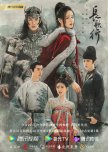
大道无为 (Dàdào wúwéi) For The Noble Deeds
Since “Nirvana In Fire”, I have dreaded watching a grown-up Wu Lei (he was only 15/16 in Nirvana In Fire) because I fear his grown up image may ruin my fond memory of the juvenile Wu Lei as the Fei Liu (Nirvana In Fire) character. To my pleasant surprise, Wu Lei has grown up into a fine young man with a chiseled good look. Together with Dilraba who doesn’t seem like an ideal partner in the beginning, this drama has taken me by surprise and totally out of my expectation.Adapted from a manhua (comic), the story begins at the Xuanwu Gate incident in 626 during the Tang Dynasty when Li Shimin assassinated his brother the Crown Prince, Li Jiancheng, and his younger brother, Prince Li Yuanji, and later became the emperor (Emperor Taizong) himself. This story is based on real historical events and people, interjected with fictional characters and incidents. The story is captivating, nail-biting and well told. The fictional parts fit in perfectly with the actual historical events.
Li Changge is a fictional character whose father was the Crown Prince assassinated by Li Shimin. She vows revenge. Her quest takes her through the plains to the steppes. She meets friends and foes. She loses ones she loves and meets new ones. Ultimately, she finds the love of her life whom she would sacrifice everything to be with.
Both Dilraba and Wu Lei were not on my favorite actor list. I also didn’t think very highly of the matching of the couple. I was so wrong. Here in this drama, both are amazing, in their acting and their styling. As Li Changge, Dilraba is strong, tough, decisive and strategic without the cringe-worthiness which I have always associated her with. The two strands of her hair become her trademark and is very pleasant to watch but criticized by some viewers. Whether dressed as a man or as a girl, Dilraba is beautiful and her acting is convincing. Wu Lei has an aura of a man with few words but a lot goes through his mind at every instant. As Ashile Sun, he’s extremely charismatic and authentic, looking stunning in tribal costumes with braids on horseback, fearsome and stunning in war helmet. With Li Changge, their chemistry is wonderful and reassuring.
My Verdict
I love all the characters, friends or foes. Each has a story and the cast is well selected. The acting is convincing and authentic. Some scenes can be heart wrenching and tear jerking. The pace is just right with actions and connivance packed for every episode, making the whole drama irresistible to watch. And the OSTs are some of the best.
Everything looks good until the fighting comes. The substitution of expensive scenes (such as wars) with cheap manhua blemishes this wonderful drama. For me, it hasn’t diminished my pleasure and would have given this a 10/10 had it not been the little blemish.
An absolutely wonderful drama. Highly recommended!
Was this review helpful to you?
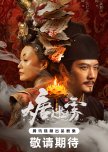
Eerie, Horror, with Di Renjie Guesses his Password
If there is a museum dedicated to atmospheric Chinese mysteries, The Tang Mist belongs in the exhibit titled "The Illusion of Deduction." It serves as a fascinating case study in how far striking cinematography and gothic horror aesthetics can carry a narrative before the audience realizes the legendary detective is essentially just guessing.And to be fair, the illusion holds. At first.
On the surface, the show delivers a potent dose of eerie, horror-adjacent dread. The opening sequence—featuring 42 young women dying with unsettling smiles—is a masterclass in Chinese-style gothic horror, backed by striking cinematography and a genuinely superb opening animation. The pacing is brisk, resolving each mystery in about two episodes, with roughly ten minutes of actual new plot content per installment. Feng Shaofeng’s portrayal of a middle-aged Di Renjie is dignified, his voice anchoring the character. And, to my relief, no forced romantic subplots are derailing the crime-solving.
There is a distinct line between being charmed by a spooky facade and being actively drained by a hollow core. The Tang Mist manages the rare and impressive feat of being both visually arresting and intellectually vacant.
The issue is that the writing eventually stops functioning on even basic detective logic.
Di Renjie is supposed to be the Chinese Sherlock Holmes. Yet, instead of rigorous, methodical deduction, he solves cases through sudden, convenient "flashes of inspiration" or dramatic exclamations of "I know!" The script bends over backward to validate his genius without actually making him earn it.
Almost the entire cast is one-dimensional, offering no depth nor emotional resonance. I get it. Given the short 10-minute core episodes, there's no time to develop the characters. Wu Zetian, despite her minimal screen time, is reduced to a caricature, literally, saddled with ugly makeup and styling that serve no narrative purpose other than to distract.
And then there is the historical world-building.
The show throws around supernatural dread, bloody deaths, and eerie Jiangnan folklore with absolute confidence, while possessing zero percent of the historical discipline required to ground it. It is bizarre to watch women casually strolling alone outdoors in bright red clothing in the middle of the night, and they were eventually murdered. This isn't just a minor oversight; it directly contradicts the strict, well-documented curfew systems of the Tang Dynasty.
At times, it feels like the writers vaguely remembered "ancient China" but forgot the actual rules of the era.
Condensing mysteries into ten-minute chunks of actual plot per episode makes the show feel less like a cohesive narrative and more like a beautifully edited highlight reel. The gothic aesthetic is fantastic, but it becomes a veneer. Great historical storytelling feels tactile and grounded. It has grit, uneven shadows, and lived-in textures. Instead, the atmosphere here feels like a haunted house ride: thrilling for a minute, but entirely artificial once you step off.
Eventually, the facade cracked for me.
I realized I was no longer watching a brilliant detective unravel a complex conspiracy. I was watching well-lit actors wander through a gothic-themed escape room where the detective just guesses the password, and the script aggressively applauds him for it.
The production team bets that if the gothic aesthetics are eerie enough and the opening animation is gorgeous enough, audiences will happily forgive almost anything—they are so wrong.
Was this review helpful to you?
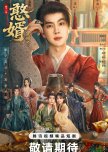
Smart, Fast, and Funny
If you’re looking for a binge-worthy, "fast-food" style historical drama, Royal Upstart (Season 2 of 贤婿) is a fantastic choice. The best part? You don’t need to have seen the first season to dive right into this one.The drama follows a classic but addictive trope: a modern man time-travels into the body of an ancient elite. In the first season, he saved a bankrupt family fortune. This season, our protagonist possesses the body of Wei Hao, a supposedly simple-minded and honest man known for beating up anyone he finds unworthy. He starts as a zhuìxù (uxorilocal son-in-law) for the insufferable Su family. I actually breathed a sigh of relief the moment he tore up that marriage contract—the Su family was truly intolerable!
Wei Hao (Pan Yihong) brings a distinct Gen-Z energy to the past. It’s incredibly fun to watch him "disrupt" the ancient economy using modern knowledge. His highlights, among others, include:
- Opening a hot pot restaurant that becomes the talk of the town.
- Establishing a glass factory to create "treasures" out of thin air.
- Teaching the palace how to make salt to fix the state’s empty coffers.
My personal favorite: helping the Ministry of Works create bombs—specifically using them to literally blow up his rivals' houses.
Despite the light-hearted tone, the story feels surprisingly relevant. Wei Hao comes from an elite background himself, but he uses that position to fight "societal parasites" and corrupt officials who control the government and businesses. Watching him take down bullies and fight injustice mirrors the frustrations many people feel about modern-day affairs.
This was my first time seeing Pan Yihong, and he is a revelation. Not only is he amazingly good-looking, but he plays the character with a convincing blend of humor and heart. He makes it very easy to empathize with the lead.
At only 10 minutes per episode, this is the definition of "easy watching." It’s funny, cute, and completely devoid of unnecessary angst. I finished the whole thing in just a few sittings and highly recommend it if you want a high-energy, feel-good story.
Was this review helpful to you?
Simple XianXia, Great ML, Awful FL
Love of Petals is a simple, easy-to-follow xianxia drama that’s perfect for a casual watch. It’s not trying to reinvent the wheel—just a straightforward story about love, sacrifice, and a world where humans, gods, and devils live side by side without any fuss. The drama dropped all 24 episodes at once, which is great if you’re the binge-watching type. But while the story has its charms, it’s held back by one big problem: the female lead just doesn’t fit the role.The Story
The plot revolves around Gu Qing Cheng, a sweet little gardener who has a special talent for bringing plants back to life. Her dream is to become a flower goddess so she can go to heaven and see her parents again, who passed away when she was little. To do that, she needs to heal 9,999 dying plants. One day, she finds a dying peony in a graveyard, takes it home, and nurses it back to health. What she doesn’t know is that the peony is the original form of Lv Geng Yun, a half-god, half-devil who’s been through a lot. When the peony transforms into a man, they fall in love—but there’s a catch. His soul is now tied to hers, and if he takes it back, she could die. And without it, he could die too.
This creates a sense of urgency as Gu Qing Cheng goes through trials and tribulations to find a way to save Lv Geng Yun without losing her own life because Lv Geng Yun wouldn't let her to. Along the way, there’s an antagonist stirring up trouble, making their journey even harder.
What’s interesting about this drama is how casual the relationship between humans, gods, and devils is. Unlike other xianxia stories where humans are terrified of gods and devils, here they all just kind of live together. It’s normal for humans to bump into a goddess or a devil on the street, which gives the story a laid-back, almost cozy vibe.
The Characters and Acting
Here’s where things get a bit messy. The casting for the female lead is... not great.
Gu Qing Cheng (Li Lin Fei)
Gu Qing Cheng is supposed to be this cute, sunny, slightly naive girl who loves plants and has a big heart. But Li Lin Fei just doesn’t fit the role. She looks too mature for the part, and her acting doesn’t help. Her crying scenes feel awkward, and her overall vibe is more “serious adult” than “charming flower girl.” Her styling doesn’t do her any favors either—she often ends up looking like a Holland maid instead of a budding sweet flower goddess. There’s only one scene where she actually looks the part as a snobbish goddess, and it’s a dream that lasts about two minutes. It’s a shame because the character had so much potential, but Li Lin Fei just doesn’t bring it to life.
Lv Geng Yun (He Chang Xi)
Lv Geng Yun’s backstory is one of the more compelling parts of the drama. He’s the son of a flower goddess and the king of the devils—a union that was forbidden and ultimately led to his parents’ execution. Growing up in the heavenly realm, Lv Geng Yun is constantly bullied and ostracized because of his mixed heritage. The heavenly gods see him as an abomination, a living reminder of his mother’s “shameful” love for a devil. He’s punished regularly, treated like an outcast, and forced to endure the hatred of those around him.
When the heavenly realm finally condemns him and leaves him to die on earth, it’s almost a relief for him. He’s tired of the cruelty and hypocrisy of the gods, and he finds solace in the human world, where he’s free to live without judgment. That’s where he meets Gu Qing Cheng, who saves his life and shows him kindness he’s never experienced before. He Chang Xi does a fantastic job portraying Lv Geng Yun’s pain, anger, and eventual softening as he falls in love. His chemistry with the world and the supporting cast is great—it’s just a shame that his chemistry with the female lead is so lacking.
Supporting Cast
The side characters are actually pretty good. The second couple has a nice little storyline, and their chemistry is way better than the main couple’s. The villain is your typical meddling antagonist, but they do their job well enough.
The OST
One of the standout aspects of Love of Petals is its soundtrack. The OSTs are absolutely beautiful and perfectly capture the emotions of the story—love, longing, and separation. The songs are melodic and haunting, with lyrics that reflect the struggles and heartaches of the characters. Whether it’s the tender moments between Gu Qing Cheng and Lv Geng Yun or the bittersweet scenes of sacrifice and loss, the music enhances every emotional beat. It’s one of those soundtracks that stays with you long after the drama ends.
Final Thoughts
Love of Petals is a decent drama if you’re looking for something simple and easy to watch. The story is sweet, the concept of humans, gods, and devils living together is fun, and He Chang Xi is a great male lead. The urgency of the soul-sharing dilemma adds some tension, and Gu Qing Cheng’s efforts to save Lv Geng Yun give the plot some emotional weight. Lv Geng Yun’s backstory as a bullied outcast adds depth to his character, making him one of the highlights of the drama.
But the miscasting of Li Lin Fei as Gu Qing Cheng really drags the whole thing down. She doesn’t look or act the part, and it’s hard to get invested in the romance when the female lead feels so off.
If you can overlook that, it’s a nice little xianxia drama to pass the time. But if you’re looking for something with strong leads and great chemistry, this might not be it.
Was this review helpful to you?
A Ventriloquist in an Isekai
“Catch Up My Prince” is an isekai story in which the main characters enter into a game world and experience various events including falling in love. The ventriloquist here refers to Liu Yichang’s way of speaking. As this is not a serious historical palace story, the tone here lacks the usual palace decorum. The female lead behaves and speaks just like a modern-day youth, and a Cinderella story whereby a lowly maid becomes a prince consort. It’s quite an enjoyable watch which I had not expected.Lu Ranran (Xu Ruohan) is a young doctor. One day while playing a virtue game in an ancient world, she is somehow trapped in the game world and unable to return to the real world until she completes the task of marrying one of the male characters. In the ancient world, she meets 4 princes. While searching for the one whom she likes the most to marry, she finds herself falling in love with the 4th Prince, Zhao Chenyi (Liu Yichang). Having spent a lot of time with Lu Renjia (Xu Ruohan), Lu Ranran’s character name in the game, Zhao Chenyi finds her different from other girls and begins to fall for her too. However, when Lu Renjia checks her dashboard for the princes’ fondness of her, she finds, while all princes are very fond of her, Zhao Chenyi’s fondness score remains at zero. No matter what Lu Renjia does, his score continues to stay at zero. Out of desperation, she agrees to marry any prince so that she can get out of the game, which she comes to regret and replay the game.
Though not a breath-taking beauty like other more popular actors, Xu Ruohan exudes an aura of modern-day youthfulness and optimism. Watching her feels natural and soothing, and her portrayal of Lu Renjia is lovable and convincing.
Looking cold and indifferent, Zhao Chenyi is actually a romantic and affectionate person. He puts up a front as a playboy so that he can be considered as useless by his enemies and stay away from palace politics. Hidden, he is waiting and planning to avenge his slain teacher together with the teacher’s surviving daughter whom he had rescued. Constantly he faces assassinations from his enemy. To safeguard Lu Renjia and to prevent her from being embroiled in his scheme, he repeatedly rejects Lu Renjia and sends her away to live in his brothers’ palaces so that she can be protected.
Visually, Liu Yichang’s portrayal is very good. Unfortunately, he lacks the appropriate facial expressions especially when he speaks; he is like a ventriloquist, speaking without moving his lips. Having said, I do like the Zhao Chenyi character though Liu Yichang’s performance is lacking.
There are multiple very interesting characters in the story, such as the Crown Prince and his beloved wife, the second prince who is cold and nasty but devoted to the Crown Prince, the eleventh prince who is inventive, playful, pure and innocent, the villain who is in love with Lu Renjia’s best friend, etc. The actors give an impressive performance with their respective roles.
My Verdict
As the story mainly revolves around a game, whatever plot holes there might be, they can be taken as deliberate, just as stop-start and replay in a game. Though not shown for some, most characters face their consequences at the end. Some plots remain open as the game continues even after the drama has ended. Whenever Lu Renjia makes a mistake or gets a result she doesn’t like, such as the death of a character, she presses replay and returns to the point where she could change her choice or the scenario, hence an alternative outcome. In the real world, we don’t have such luxury; when a choice is made, good or bad, we’ll have to face up to the consequence.
A fun and non-serious watch. Recommended for the fun.
Was this review helpful to you?
Perfect!
I started watching this series after a long day of work. My cloggy mind didn't allow me to digest the story properly. Heck! I couldn't even distinguish the bearded characters one from another; they all looked alike to me. This was such a heavy drama for me wanting something light and funny to end my day, so I put it aside. Then I read my good friend's, PeachBlossomGoddess's, amazing review. Her articulation and insightful analysis piqued my curiosity and encouraged me to pick this drama up again. I'm glad I did. Since then, there's no one moment that was not filled with heart pounding excitement, suspense and intrigues.The Wind Blows From Longxi is not your normal Chinese historical drama with beautiful faces and costumes, light hearted dialogues or "wirefu" fighting scenes. There are no wuxia elements nor romance here. This drama is heavy, authentic, and fast moving, with vicious killings and amazingly believable combat scenes. The acting is immaculate. The plot is tight with plots within plots, and twists and turns. Every episode is nail-bitingly tensed and enjoyable.
Set in the Three Kingdoms period (220 to 280), some very famous historical figures such as Zhuge Liang, are featured (not main role), with the capital city of Chengdu, and the chants of restoration of the Han Dynasty are repeatedly echoed. The settings, costumes, decorum and some events follow closely the historical records though the main characters are fictional.
I have thoroughly enjoyed this drama. This is a must-watch for history buffs and anyone who loves spy stories and espionage, and values authentic acting and believable settings with great plot.
TWO THUMBS UP!
Was this review helpful to you?


