
 News


 2
 11
 1
 2
 1


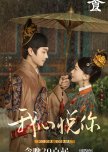
Exquisite Costumes, Mouth-Watering Culinary, Cat Fights from Royal Harem to Royal Kitchen
Royal Feast is a story of Zhu Zhanji (Xu Kai), the Ming Dynasty Emperor Xuande (reigned 1425 to 1435) and his fictionalized romance with the woman he loves, who later becomes his empress, Empress Xiaogongzhang (Wu Jinyan) of the Sun clan, and (not shown in this drama) bares him his successor, Zhu Qizhen (Emperor Yingzong). Apart from the very authentic looking exquisite costumes of Ming Dynasty and mouth-watering culinary, the whole script is poor with very little substance and it is frustrating to watch. In fact while watching the emperors and their harem enjoy laboriously prepared culinary to fill their stomachs, I'm filled with a stomach full of “qi” (anger).More than 50% of the time is spent on food - cuisine preparation and presentation, food tasting, picky mouths, food wasting etc. Granted. The title of the drama is also named Royal Feast, so food is to be expected. But I've never expected to watch a drama that focuses so much on deliciously looking cuisines with tons of boring cat fights from the royal harem to the kitchen. Each episode, especially for the first 30 episodes, gives me a full stomach of fire. (I know I keep referring to my own stomach, well, you get what I mean.)
Here we have a prince who is groomed to be an emperor (Xu Kai) since he was born because his grandfather, the Emperor, favors him. He is powerful, and yet what he says doesn’t match with what he wants, especially when dealing with his relationship, be it with the woman he loves or with his friend and subordinates, and this has created a lot of misunderstandings that make him brood. Then we have a palace chef that turns empress who plays hard-to-catch with the broody prince all the time.
The plot is a mix of real and fictional events with real and fictional historical figures. Many of the fictional events are illogical with overdone plot twists. None of the characters are impressive and likable except only, perhaps for me, the eunuch, Chen Wu (Zhu Zhi Ling) who is a very small side character (you can see how poor the overall character development is for everyone).
By episode 29, the plot thickens slightly when Zhu Zhanji becomes the Emperor, and the romance improves after episode 33 when the main couple comes closer together, and there are fewer kitchen and food preparation scenes though many bad logics still remain. The whole drama doesn't show much what Zhu Zhanji has done politically and in running the country or defending his throne from his uncles, though briefly shown he does visit the farmers in plain clothes and puts down a revolt by one of his uncles.
Xu Kai’s acting is decent here. We know he broods because he shows it on his face and in his body language. But the female lead character is quite another thing. I really don’t like Wu Jinyan’s acting here. She looks pretentious and her acting is confusing. Maybe that's how her character is being written. There are so many ironies and inconsistencies with this character. She is initially the chosen one for Zhu Zhanji as his Empress. After years of grooming, she is being replaced by another girl who is said to be very auspicious. She is bitter, so she changes her name to Yao Zijin (Wu Jinyan) and enters the palace as a royal cook (what the heck for?). As a kitchen chef, Yao Zijin is kind and cheery, and yet at the same time, secretly schemy. How can a person be still cheery when a friend she trusts attempts to kill her? Seemingly innocent, she also schemes to plot against her main competitor in the kitchen. She says she doesn’t want to be married to Zhu Zhanji and wants to stay in the kitchen to do what she loves. Then, immediately, to attract the prince’s attention, she purposely falls in front of him (roll eyes). Time and time again, those who try to murder her escape with impunity and continue to live normal lives. And in the kitchen, when the emperors hate everyone’s cooking, she’s the one who always saves the day. There are always incidence happening at the elaborate royal feasts -- assassinations, poisoning, allergies, deaths etc. Yes, you get the gist, an utterly ridiculous script and terrible plotline. Oh, have I mentioned Wang Yizhe’s acting as You Yifan, head of the Imperial Guard? His portrayal is really poor – stiff and awkward, and constantly showing a sulky face doesn’t pass as a cold and bitter man as the character is supposed to possess.
My Verdict
At the beginning, many viewers claim Royal Feast is similar to the Korean drama, Jewel In the Palace (Dae Janggeum, 2003). Far from it. A bad script and shitty plot can hardly save a drama despite its exquisite costumes, culinary arts and big-name actors. In fact I continue watching because of Xu Kai and I like the concept of “Let food be thy medicine and medicine be thy food” which is quite elaborately displayed here, explaining how each cuisine is being made and its medicinal benefits for the body. Apart from these, there is very little meat, and I’m sorry for spoiling the soup.
The drama stops short before the Empress bares Zhu Zhanji his first son, and the Emperor’s untimely death at 38, so this may have saved a lot of broken hearts. Historically, Emperor Xuande (Zhu Zhanji) had many consorts and at least 10 died with him under the Ming’s royal house tradition when he died. He also didn’t dispose of his first Empress the way it is shown in the drama, and the revolt from his uncle is a joke here.
Overall, I am neutral on this drama. My score here is all awarded to the costumes, food and official sound tracks only, and zero to the story and the script.
Was this review helpful to you?
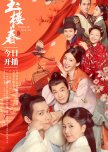
A Satire of the Ming Dynasty Society
Watching this drama from a satirical perspective of the society during the Ming Dynasty, when Confucianism was practiced at its utmost height, decorum and protocols were strict, harsh and repressive especially for the women, makes it a very enjoyable watch for me. Seemingly unlikely, we get a couple of very strong female characters in particular a know-it-all Mary Sue who always saves the day. All the characters and their relationships have realistically captured life in that orthodox and conservative society, and that can even be relevant in today’s world.This story takes a bold look into the Ming dynasty society, its orthodoxy and conservatism, its inequality, protocol, manners, expectations, and consequences, with the hidden criticisms that all these had led to the slow decline of the society and the ending of the dynasty.
Accordingly, the drama draws its inspirations from the great classical “Dream of the Red Chamber” with several of the characters deriving their names in a combination of words from the classic novel. The whole story revolves around the high status, wealthy and powerful Sun (pronounced Soon) family, narrated from the perspective of the youngest son, Sun Yulou (Wang Yizhe) who has a high powered father, a doting mother, three brothers and four sisters, each has a story to tell.
Like in the classical “Dream of the Red Chamber”, this story also hints at “truth becomes fiction when the fiction’s true; real becomes not-real where the unreal’s real” by the use of a puppet show in telling the story. Cleverly constructed, there are hints and cross-references to hidden (and obvious) meanings throughout. Truth and falsity, reality and illusion are constant displays.
Undoubtedly marriages by the order of the parents tend to be the most painful experiences for almost every couple even in a society where filial piety is held as the highest order of all. In the high society, statuses and face are always the forefront consideration of any marriages which are used to advance the careers of family members, usually at the expense of daughters, though some sons don’t fare too well either. The consequences are expected: extra marital affair, adultery, love triangle, elope, rebellion - all brilliantly captured in the story.
Sun Yulou rebels against his stern father and the social barriers of the time. He and Lin Shaochun (Bai Lu) pursue individual freedom, gender equality and to marry the partner of one’s choice. This couple has an initial sense of democracy, a rebellious spirit and courageous pursuit of love. Though well-read with traditional books of morals and ethics, Lin Shaochun toes the line from time to time. She convinces Sun Yulou to pass the Imperial exam so that he could become a government official and ask for her hand in marriage.
This is the first drama for Wang Yizhe as the main male lead. Many viewers don't feel he deserves such a role. For me, I would like to give him a chance without looking at him through tinted lenses. I feel his acting has brilliantly brought out the youthfulness of the character. He can look serious when he needs to, but in front of the family, especially his wife, he's just a big sunny boy that can be silly and Wang Yizhe delivers. Despite this being a main lead, it feels more like a supporting role because of how the character is being written, shot and edited.
Many viewers feel the main couple don't have the chemistry. Though they are both of the same age at 18, Lin Shaochun is more mature compared with Sun Yulou, and he always lets her have the final say. With that, it does feel that Sun Yulou a little brother who depends heavily on Lin Shaochun the big sister. For me, the lacking perhaps lies more on Bai Lu as she seems to be less enthusiastic and doesn’t share the same adoration and affection towards her supposedly husband as he has on her.
My Verdict
Despite some flaws here and there, this is a very enjoyable story with a series of side stories which are very well developed and in fact more interesting than the lead couple’s story. It consists a blend of realism and romance, psychological motivation and fate, and daily life with a grand plot hidden and span across multi side storyline. It can be hilarious at times, yet, bitter and resigned when it comes to the fate of some characters. The first episode is comedic and funny. I thought it's going to be light and laughable, but by episode 8, it becomes heavy and bitter.
This is a satire about misogyny, hypocrisy, class system, conservatism, inequality, all told in a very humorous way. Some parts are so funny that I laugh so hard.
The final narrative about how people make choices that determine their eventual endings: take kindness one ends well, take hatred one loses everything, seems to be a just decoy for the deeper meaning of the overall story – a silent criticism of the paternalistic system of the country.
Great story telling. Don’t miss it!
BRAVO!
Was this review helpful to you?
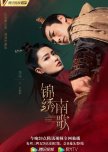
Amazing Acting | Brilliant Ending
This is the story of Liu Yikang, a real historical figure in the Liu Song Dynasty (420-479 AD). It was one of the most tumultuous eras of Chinese history. The aristocrats were wealthy and powerful, and the commoners were poor and suppressed. Parricides, filicides and fratricides were rampant. Historically Liu Yikang’s life ended tragically, killed by his own beloved and trusted brother The Emperor. The drama stops short of his tragic end (fortunately or unfortunately?).In this drama, a lot of the events and villains are fictionalized. Though Liu Yikang (played by Qin Hao) is a real figure historically, his beloved wife Shen Li Ge (played by Li Qin) and her family are fictional. Despite their more than 10 years age difference, Qin Hao and Li Qin have very courteous chemistry together as a couple as there are no passionate kisses nor hugs (just a peck on the lips or a lean on the shoulder). Nonetheless, such chemistry doesn’t reduce our enjoyment of the plot and story. There are quite a few nail-biting close calls and frustrating near misses scenes throughout the drama, keeping the viewers sitting at the edge of the couch and captivating our full attention.
The drama starts with a bang, introducing Shen Li Ge as a beautiful and talented assassin. Li Qin is so beautiful that she looks amazing in every costume and hairstyle that she wears. As a fearless badass, Li Qin is convincing without losing her elegance. Her acting is on the notch.
Qin Hao is a veteran actor. He has the charisma as a powerful ruler. At the beginning of the drama, many viewers complain that Qin Hao is too mature to play the role. But Liu Yikang was exactly as this age during the time of the story. As the story develops, Qin Hao melts together as the Liu Yikang character; he gives a very convincing performance.
Both Shen Li Ge and Liu Yikang are facing a faceless mastermind. Despite taking down various powerful aristocrats who conspire to hurt them and their family, the plot continues to the very end, eventually revealing the identity of the mastermind behind all the destruction and killings, and his motivation for doing so. Though going through a lot of hardship and heartaches, Shen Li Ge and Liu Yikang combat the villains hand in hand and continue to outwit them with their determination and conviction.
This drama is filled with tropes, such as evil sister, falling off cliff (but not dead), loss of memory, accidentally kisses etc. There are also multiple unnecessary deaths just to make the characters martyrs. Many of the logic is illogical with flaws and plot holes. By the end of the story, there are still multiple unexplained loose strings.
I believe the visual director has had a field day with the palace décor. This is the first time I have ever seen such European inspired décor of the palaces with giant statues and water fountains. The mother consort’s clothing even matches her walls and furniture which may be a bit on the wild side of the imagination.
The ending is very typical of Chinese dramas – open to interpretations. Overall, if you like slimy infallible villains who always seem to outsmart the good guys, you may find this an exciting watch. If you’re an emotional person and have a tendency to invest deeply into likable characters, you may be in for some heartaches. For me, this is quite a good watch mainly because of the two main characters, Shen Li Ge and Liu Yikang and the fine acting of the actors.
With my epiphany which came one day later after the final episode, I find the ending brilliant. This is a drama strongly recommended (despite the tropes).
Was this review helpful to you?
Intriguing Story, Great Acting
This story reminds me of the 1993 movie “Groundhog Day”. It stars Bill Murray who portrays a cynical television weatherman covering the annual Groundhog Day event in Punxsutawney, Pennsylvania. He becomes trapped in a time loop, forcing him to relive February 2nd repeatedly. This drama has a similar storyline whereby a young girl encounters a life threatening event and is trapped in a time loop to relive her life changing moment, and eventually she conjures up the courage to break away from it.Xu Xiaodong (Zheng Yecheng) is an artificial intelligence genius. For 10 years he has been trying to find out the person behind the scheme that has stolen his father’s work and slandered his father for plagiarism that has led to his death. Xu Xiadong is devastated and has been living through his pain. I have always liked Zheng Yecheng. I have been rather disappointed with the endings of most of the characters he has played in his previous dramas. Here, as a hidden genius with a sense of humor, Zheng Yecheng has brought his character to life. He is really convincing with great acting.
Lei Chuxia (Ju Jingyi) is a business owner. After a life threatening event, she disappears and travels 10 years to the present time and meets Xu Xiaodong. She repeatedly returns to 10 years ago and back, trying to figure out what has happened and how to change the outcome of the events. Despite of her unfortunate encounter, she always remains cheerful and optimistic. Ju Jingyi is beautiful with a natural happy-go-lucky aura that fits the Lei Chuxia character so well. With wonderful acting, Ju Jingyi gives us a very genuine and lovable Lei Chuxia.
All the side couples are great though initially I didn’t like Zheng Fanxing’s acting very much but as the story progresses, his acting becomes more natural and his character Jin Xiaorui very adorable.
My Verdict
Even though unthinkable and a fantasy, I really like the story. It makes me think of the “what-ifs”. What if I can time travel and go to the future and see the outcome of my decision like Lei Chuxia does, and then go back to the past to fix my choices. Changing my choices may definitely change the outcome, but doesn’t necessary mean a better one. These thoughts play on my mind while watching this drama, and help me look deep into myself. This story believes that there are many paths to get from point A to point B. If you persist, you would always reach your destination, no matter which path you take. Do you have any regrets that you wish you could go back to 10 years ago to fix? Do you believe you’ll always reach your destination no matter which paths you choose if you are determined enough?
Great entertainment. Great watch!
Was this review helpful to you?
Confusing and Disappointing
I was initially attracted to this drama because of its director who had also directed The Untamed. It has quite similar cinematography for some scenes, and the styling of some actors is also similar. I was very excited and thought it’s going to be another great drama just like The Untamed. I was pretty disappointed with how it turns out to be.This is a rather confusing drama with lots of plot holes and flaws. There are many tropes. The editing is choppy and disjointed. I cannot even tell if the acting of the female lead is fine or bad because I’m not even sure if her acting is intended or simply just bad acting. Frequently the situations and the emotions of the actors are totally out of synchronization. The logic is inconsistent and befuddling at times, so are the inconsistency of the characters. The dialogues are simple and shallow. There’s hardly a plot, or rather the plot is so simplistic that the writing has made it confusing to try to give it some layers. It fails miserably. It begins to drag a lot half-way through the drama. I’ve almost given it up had I not wanted to know who Feng Wu (Yang Chao Yue) actually is.
I have to admit there are some really good scenes here with beautiful actors, in particular, Wang Hao Xuan. I love his styling and portrayal of the mischievous Yu Ming Ye, and his relationship with Jun Lin Yuan (Xu Kai Cheng). In fact, I find him to have more chemistry with Feng Wu than Jun Lin Yuan has with her. I also enjoy watching the second couple. And I really love the visual of Mu Jiu Chuan (Li Chuan) who is Feng Wu’s shifu, but unfortunately he doesn’t have many scenes. I also love the dynamics of the 3 childhood friends, and the funs they have together overthinking trivial matters, giving simplistic reasoning that leads to jumping into wrong conclusions. These are rather fun watch. The ending is not sad nor happy. It’s just it, and I've never found out who Feng Wu is and where she has come from.
Overall, I’m not at all impressed by this drama.
Was this review helpful to you?
Wonderful Engaging Production
This is a through and through wuxia drama like in the old days with a mixture of seriousness and playfulness. Some scenes and dialogues are hilarious with simple, childish logic but I have thoroughly enjoyed the series. Being only 24 episodes long, every scene is a clue and every sentence can be a cue. The pace is perfect without any fillers. The scenes and dialogues are funny but without crassness. It has an Agatha Christie vibe, like gatherings of people who have all become suspects of a murder, and the case is solved by the process of elimination.The names of the characters are so funny and oxymoron - Jian Buzhi literally means "don't know a thing" but he's the brain; Zhao Wohuan literally means "I'll pay for everything" but he doesn't have a dime; Sima Dang literally means "take it as a dead horse" but he's the fastest person on earth; and there are many more names as such. The introduction of the Ming Yue (Miranda Ma) character was somber but then it starts to play the Beethoven Moonlight sonata for the background music because Ming Yue literally means "bright moon", and I laughed till I cried; it's just so hilarious and I love it.
There are many combatant sword fighting scenes with beautiful wuxia acrobatic moves, "qing gong", "nei gong" (inner energy), flying daggers and secret weapons. After each case is being solved, another different group of people re-gather and another mystery begins. All the mysteries and murders eventually tie to the bigger scheme of the overall mystery which is eventually revealed in the final episode.
The costumes of the characters are pretty basic except for Jian Buzhi who wears the most beautiful ropes with vibrant colors and patterns, and furs. His costumes make him stands out in the crowd of people whom he is constantly being surrounded by, and that's a very clever use of the costumes.
I love the bromance (if you want to call that) and romance in this drama; the bromance is good but the romance is greater. In fact, there are two main romantic couples in this story. Character development and the acting cast are fabulous. Everyone's acting is indeed very good, especially by Wang Yan Yang who portrays Zhao Wohuan. In fact, he's my favorite character. Despite physically well developed, he has a very innocent pure mind and always stands up for the weak. Wang Yan Yang's portrayal is absolutely amazing.
I also love how each episode ends. The editing is remarkable with the episodes cleverly end just before the revelation of the murderers or the next secrets, keeping the viewers suspended and hooked on to the story for the next episode. Just when you think all the mysteries are solved and the ending is nigh, an unexpected twist comes and blows my mind off. It's so wonderfully done and sets the expectation for a next season.
Yes, strongly recommended. A drama well done in every sense. TWO THUMBS UP!
Was this review helpful to you?
A Dry Story Based on Actual Event
Under the Microscope is a story adapted from the Silk Case, one of the six cases under Ma Boyong’s historical textbook. The author has also written numerous well-loved novels, among others, Secret of Three Kingdoms, Luoyang, and The Wind Blows from Longxi. Like the other dramas, the mood of this drama is serious albeit with subtle humor. It is a departure from the usual stories of royalty, noblemen and aristocrats, and instead looks microscopically into the issues faced by the commoners during the Ming Dynasty.The tax and financial system during the Ming era was a very complicated subject, and the story revolves around a tax called the “ren ding sijuan” (silk by head count). Shuai Jiamo (Zhang Ruoyun) accidentally discovers a silk tax entry on the county’s account book with a questionable amount. He deems it erroneous and requests the county official to rectify the error but is told he needs to appeal to higher up. While attempting to do so, he meets all kinds of obstacles, including attempts on his life; someone is trying to prevent him from appealing and digging deeper. Together with his only friend, Feng Baoyu (Fei Qiming), they are determined to get to the bottom of it despite putting themselves in great danger.
Shuai Jiamo is a young mathematical genius with signs of autism. To him, math always tells the truth and he doesn’t allow a speck of inaccuracy in it. Because of his obsession, most people regard him as an idiot, except Feng Baoyu who thinks Shuai Jiamo very special and would do anything for him. Zhang Ruoyun is an incredible actor. As the autistic Shuai Jiamo, he is genuine and very believable.
To readjust the tax amount on the account book, Shuai Jiamo is told to bring his appeal to court. While in court, he meets Cheng Renqing (Wang Yang), a talented but morally and ethically questionable lawyer working for a shadowy character to try to throw Shuai Jiamo’s case out. He has been successful, but Shuai Jiamo and Feng Baoyu do not give up easily despite getting thrown into prison and their life being threatened. Wang Yang is a veteran actor, and has a charismatic aura. With a smirk on his face and a sharp tongue, his performance is on script and has no holes to poke.
All the other actors give a wonderful and believable performance. I particularly love the Magistrate Fang character (Hou Yansong). Seemingly lazy and useless, he turns out to be the hero of the people and the actor Hou Yansong has performed with full marks. I also like the Feng Baoyu character who loves gambling and is a real friend worth having for anyone. Fei Qiming’s portrayal is outstanding, bringing out the essence of the character convincingly.
My Verdict
This is a true story based on a historical event but not a drama for everyone. Some of the characters such as Shuai Jiamo and Cheng Renqing (written differently but with same homophones) were real historical figures. Shuai Jiamo’s obsession in math and in going to court to correct the tax errors can bore many viewers unless one is very interested in the complicated and confusing Chinese bureaucratic and financial system during Ming Dynasty. To add fireworks to a dry story to make it more palatable for entertainment consumption, some ninjas and wuxia sword fights are added. The scene when Cheng Renqing comes to the rescue of Shuai Jiamo and Feng Baoyu in the nick of time on the beheading tables by throwing out two knives is simply hilarious and unreal.
Though at the end of the drama, it seems everyone receives their justifiable rewards or punishments, it doesn’t feel right to me. Despite all the heinous acts by the villains, the ultimate culprit’s punishments seem like just a slap on the wrist compared to what Shuai Jiamo and Feng Baoyu receive for pointing out the problem -- some of the culprit's wealth is confiscated while the good guys are beaten and imprisoned -- this is probably quite realistic.
In the real event, Shuai Jiamo’s and Cheng Renqing’s fates were not as rosy as shown here; they were both sent away in exile for stirring up "trouble". In other words, the best way to deal with any problems at the local level was to punish those who pointed out the problems. As always, the drama depicts the aristocrats are the ones suppressing and stealing from the people, and the government the enhancer and the gestapo police -- a satire of wealth inequality, the world is never fair nor just.
Overall, this is a dry drama based on a real story full of ironies and paradoxes. The acting is very good and the script writing is tight and logical but too bad, as much as I have enjoyed it, the drama doesn’t make a compelling story for most casual viewers.
Was this review helpful to you?
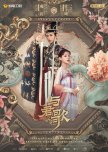
Who Is the Third Person?
This is a story fictionalizing and romanticizing the actual historical events and characters of the late Tang Dynasty during the reign of Emperor Wuzong (r. 840 – 846). Apart from a few actual historical characters such as Emperor Li Yan (Wuzong) himself and the eunuch Qiu Shiliang, most of the other characters and events are fictional, though certain events are inspired by actual account based on historical records. Adapted from a novel, the overall story is fascinating and nail-biting, at the same time heart-wrenching when it comes to the fate of the Emperor and his romance with the only woman he loves and trusts.Probably in order to pass censorship, the names of the characters have been slightly altered: Tang Dynasty has been changed to the fictional Xing Kingdom, the Emperor’s name from Li Yan to Qi Yan, and the eunuch’s name Qiu Shiliang to Qiu Ziliang. Such changes unfortunately have not been totally incorporated in the initial few episodes where the names Qi Yan and Li Yan are used interchangeably, bagging the suspicion that they were done haphazardly in the last minutes. Nonetheless, by episode 9, everything finally settles down and the names straightened up.
The Story
In a fictional setting mirroring the reign of Wenzong towards the end of the Tang Dynasty when the eunuchs have gained full control of the palace, the Xing Emperor and his ministers attempt to dispose of the evil head eunuch Qiu Ziliang (He Chengming aka Mickey He) to regain control, but the scheme fails. Prime minister Wang Ya and his whole family are executed. His two young granddaughters escape death and are separated. The younger girl loses memory and is adopted by Cheng Xi (Xi Xue) of the Ziyi (Purple Robe) Bureau and renamed Cheng Ruoyu (Zhang Yuxi). She’s being trained as a sword fighter. Her older sister vows revenge, changes her name to Qiu Yanzhi (Xuan Lu aka Lulu Xuan) and becomes Qiu Ziliang's adopted daughter, waiting for her time to pounce. After the death of Emperor Wenzong, his younger brother, Qi Yan (Cheng Yi) is installed by the eunuch to the throne and Cheng Ruoyu is assigned the duty to protect the Emperor. Since then, Qi Yan has been a puppet emperor with no power as all the military power is in the hand of the evil eunuch. Here, the two sisters cross path in opposing camps without recognizing each other, but somehow they have an unexplained liking and bonding to each other. They join hands secretly and overcome many deadly schemes by the eunuch. Qiu Yanzhi finally finds out Cheng Ruoyu’s real identity in episode 34.
Throughout the drama, one question arises repeatedly: Who is the third person? It feels as if there’s a hidden force, planning the grand scheme of things and playing everyone like a pawn. Viewers are left guessing and the mysterious figure propels the story along.
The Acting
In the actual historical record, it is said that “Li Yan was silent, intelligent, and decisive, not showing his emotions easily”. Who is better to take up this role than Cheng Yi? He fits this description to the dot. I have to applaud the production team in selecting Cheng Yi for the Qi Yan character. As I get to know this actor better, Cheng Yi is really the perfect choice for this miserable role as the puppet emperor. Like in his previous dramas, Cheng Yi has the quality and ability in bringing out the helplessness and hopelessness his characters are facing, making them authentic and believable. With a suave look most viewers would squeal, and walks swaying side to side in his emperor robe, Cheng Yi evokes Qi Yan’s resignation and sickly health that digs deep into the viewers’ hearts. His acting is remarkable with every facial expression and sad look in his eyes, capturing all the subtle emotions hidden within Qi Yan. As a royalty, Qi Yan is arrogant but at the same time suspicious of everyone around him. Though surrounded by people, he is lonely. Most of all, like in all Cheng Yi’s other dramas, he brings out the best suppressed emotions no others can; no one can replace Cheng Yi in acting as this complex and yet miserable character.
As a lonely person at the top perceived by many as a villain, Qi Yan finds a soulmate in Cheng Ruoyu. I’m not that familiar with Zhang Yuxi’s acting but here, she is convincing as a talented sword fighter who has a pure heart. It is this pure heart that Qi Yan has fallen in love with.
I have always enjoyed Hang Dong' s acting. Here as Prince Guang, he is authentic and believable. According to historical record, Prince Guang later became the emperor after Li Yan died. Three quarter of the way in, viewers still don’t know if Prince Guang a protagonist or an antagonist because Hang Dong is that good in hiding his emotions without betraying his role in the drama, leaving viewers continue guessing.
Last but now least, I’m impressed by He Chengming’s acting as Qiu Ziliang. The blinking of his eyes when he is suspicious and furious, the cunningness showing in his eyes, his every move, bring up fear and hatred of the character for the viewers.
Official Sound Tracks (OSTs)
As usual in most Chinese historical dramas, the OSTs are beautiful with touching lyrics, reminiscing the longing, love, resignations, and hope for the kingdom.
My Verdict
This is a wuxia romance story of Tang Wuzong with a little comedy. There are intrigues and mysteries at every turn. When one thinks everything is revealed and that’s that, things change and assumptions all out of the window. There’s always this mysterious “third person or party” lurking behind the scene. No one knows who he/she is, friend or foe. Every character has his or her own agenda and most motives spur on with revenge. Subtle comedies are dotted lightly here and there to balance the intensity of the plot, giving viewers a much needed breath of air.
According to some viewers, many scenes have been edited out. This could explain why there are some plot holes and logical flaws. Nonetheless, the story overall is still intact and rather well-told. Don’t miss it.
TWO THUMBS UP! Bravo!
Was this review helpful to you?
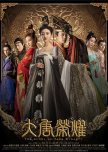
A Real Chinese History Drama
This is the story of Li Chu (Tang Dynasty Emperor Daizong) and it is divided into 2 seasons with 60 and 32 episodes respectively. For this drama, it is during the reign of his grandfather Emperor Xuanzong (712-756 AD) and later the reign of his father Emperor Suzong (756-762 AD). The time was a tumultuous period of Chinese history. There were the An Lushan Rebellion, the loss of Chang’an to the rebels, the escape of the royal family, the capture of Li Chu’s consort by the rebels, power struggle, usurpation, filicides and fratricides. Many of these historical events and important figures are depicted in the drama, and it’s an enthralling watch.The drama romanticizes Li Chu’s and his favorite consort, Shen Zhen Zhu’s love affair and their devotion for each other. Understandably, some of the events may not be true historically but only for dramatic effect. This has been done rather well with few noticeable plot holes. However, there are also many tropes and clichés. Some of the logic seems to be over simplistic and unrealistic. Some historical characters are depicted as villains, cunning and sinister. Li Chu (Ren Jialun) and Shen Zhen Zhu (Sally Jing) are living in a dangerous environment that they both have to tread extremely carefully with every step they move and every word they say. One wrong move or word would immediately lead to their deaths. It is this angst that has captured the viewers attention throughout the drama.
Ren Jialun’s acting is acceptable in this drama. In fact, he’s rather convincing as the character Li Chu, except he may not look his best in armor and helmet (his head looks weird in the helmet). However, I’m not so comfortable with Sally Jing, and not very impressed by the Shen Zhen Zhu character that she plays despite she (Shen Zhen Zhu) is supposed to be very intelligent; time and time again, Shen Zhen Zhu is fooled by her own cleverness and that has created a lot of frustration over the character for viewers. I also find the pairing of Ren Jialun and Sally Jing not ideal as Ren Jialun has a small boyish face whereas Sally Jing (she has a large face) looks very mature with disproportionately large eyes laced with plastic brush-like eye lashes. There’s hardly any chemistry between the duo.
The side couple story is sweet and heart wrenching. Lin Zhi (Jennifer Shu) and Li Tan (Qin Jun Jie) are the saddest couple as Lin Zhi’s experience is very real to many women who have to live through such pain everyday and she is totally relatable. Jennifer Shu’s portrayal is wonderful and very convincing. Qin Jun Jie’s performance portraying Li Tan as an impulsive man is equally laudable. This pair has wonderful chemistry together and their story is painful. Despite Lin Zhi may not have been a real figure historically (Li Tan is real as Li Chu's younger brother), I find the side couple story more compelling.
.
The general tone of this drama is somber. Apart from some flaws here and there, there are also some hilarious moments that are really fun to watch. Overall, this is a fine drama based on real events, but the story interjected with too much fantasy may have been a bit overdone. After completing the 60 episodes, I find myself needing a break before continuing on to season 2. I wish the series had not been this long.
This is a good watch for history buff if you don't mind some added fantasy.
Was this review helpful to you?
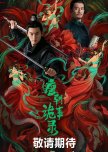
An Underrated Gem
I love this drama. It is a gem under the radar. It has a great plot with unusual and interesting criminal cases filled with man-made supernatural phenomena, magic and mysteries. Each case is different with unpredictable outcomes. The main characters are intelligent and lovable. The pace is good, the story telling is excellent and logical. All these are built upon a real historical background which is authentic and fascinating, albeit violent and stormy. Most of all, it’s a page turner and very addictive.Set in the Tang Dynasty during the tumultuous second reign of Emperor Ruizong (r. 684-690, 710-712) (not explicitly stated) who was one of the sons of the infamous female Emperor Wu Zetian, the era saw the Dynasty as the center of the world with exquisite material life and fusion of diverse cultures. Consistently behind the scene is the power struggle, which is historically recorded, between the Emperor’s younger sister, Princess Taiping (youngest daughter of Wu Zetian) and the Crown Prince, Li Longji. It was said the Princess was the real power behind the throne. Many court officials and military personnel flattered to join her camp, and her power exceeded even that of the emperor’s. In this drama, we see deadly political conflicts and manifestation of conspiracy between the Crown Prince and the Elder Princess. And both of our main leads are embroiled in the conflicts which are linked to the cases they have to solve.
Yang Xuwen as Lu Lingfeng is convincing as the proud general who is not too flexible but very good in martial art fighting especially with his long spear. He is upstanding and will do anything to uphold justice. He is loyal to the Crown Prince but is warned to hands off from his investigation of the Chang'an Tea mystery which he's deeply involved and couldn't withdraw himself. So after the mystery is being solved, Lu Lingfeng is stripped of his title and ordered to leave the capital. Behind his background, he has a secret which he doesn’t know himself. Yang Xuwen has a rather rigid look and his portrayal of Lu Lingfeng is very believable.
Su Wuming (Yang Zhigang) is a student of the genius investigative judge Di Renjie. He is humble and resourceful, and is appreciated by the Princess. Su Wuming doesn’t want to be involved in the royal court disputes and is sent away from the capital to the regional office. He is meticulous and observant of the tiniest details, and he is wise but often underestimated by his enemies. Yang Zhigang’s portrayal is very authentic with his suave demeanor, bringing the character alive and loved by viewers.
On their way out of Chang'an, Lu Lingfeng and Su Wuming meet again. Lu Lingfeng initially has a grudge against Su Wuming over some personal issues. After solving their first case together, they become rather fond of each other and the two become good partners, and from thereon, jointly solving cases after cases. Both characters have opposite personalities and strengths, complimenting each other in their investigative work. The bromance between the two is funny and lovable. Their formidable team later includes a talented artist who is in love with Lu Lingfeng, a brilliant doctor disguised as a beggar who loves to eat chicken, and a boy who is talented in martial arts and later becomes Lu Lingfeng’s disciple. I really enjoy watching all of them working together, fending off enemies and solving cases.
My Verdict
If you love The Imperial Coroner, The Detective, Ancient Detective, or Miss Truth, you may love this drama as well. Though with less romance than the other aforementioned, this drama has, among others, few plot holes, good storytelling, and high quality plops. The cases are intriguing and complicated, and the characters are equally lovable and intelligent.
The drama showcases phantoms, illusions, legendary beasts with the ample use of CGIs, some very good as (such as those with the giant crocodiles, phantoms), some less so (such as those with the giant bear). Every seemingly unimportant detail is a clue. Each case is different like an adventure. The case solving techniques involve new way of thinking, understanding of human psychology and most of all, common sense. The culprit in each case has compelling human reasons for committing crimes. A lot of the plots and dialogs are oxymoronic and comical without brazenly admitting so.
Romance is not the focus here as both men are tsunderes and practically run away from romantic relationships despite both men so have love interest with two women. For me, no romance is better than bad romance.
A great watch for thriller buffs.
TWO THUMBS UP! BRAVO!
Was this review helpful to you?

Mysterious FL, Gorgeous ML
Memory loss is a popular theme in Chinese dramas. But the memory loss in this story is slightly different - the character’s memory is surgically removed. Despite the confusion of the beginning episodes because of poor writing, and poor acting by the female lead, I press on as her mysterious background combined with the mysteries around her captivate me. A murderous hidden antagonist, an investigative journalist, and most of all, a devoted and gorgeous male lead, all these intrigue me with a plot propelled by the mysteries.When everyone thinks she has died in a car fire accident, Su Yi (Yuan Yu Xuan) comes back to seek for answers of what had happened 7 years ago when her father was slandered and killed in the same accident with her. She has lost memory of a big chunk of her life, including her time with her lover, Li Jia Shang (Liu Yi Chang) whom she doesn’t even know now. For Li Jia Shang, Mu Xiao (aka Su Yi) is his only love and has remained single since she’s gone. The dynamics between the couple, with the assistance of their buddies, Zheng He (Zhang Si Fan) and Xia Xi Yang (Xu Xiao Nuo), are wonderful to watch. Though I didn’t like the FL’s character in the beginning, I began to understand her better as the story unfolds. Having said that, Yuan Yu Xuan’s acting still requires improvement as she’s rather confusing with inappropriate expressions that do not synch with the moments; she is at times stiff and unnatural though she dresses extremely well. I do enjoy Liu Yi Chang’s and other cast members’ acting. I find Liu Yi Chang charismatic and fits the character he plays very well.
My Verdict
The plotline is quite intriguing as viewers want to find out what actually had happened 7 years ago, who Su Yi is, why she cannot remember Li Jia Shang at all, and who the obnoxious hidden villain is. There is a lot of twists and turns, intimacy and passionate kisses, and two pairs of lovely side couples.
There are certainly many flaws and plot holes but everything manages to brush through rather nicely for the ending. Having said that, many events and actions are of no consequence and do not provide additional information for the viewers, understandably they are merely there as fillers. Time and time again, a super nasty annoying character gets away with impunity. The dubbed voices also do not synch very well with the mouth movements.
For romance buffs, the main couple has never split up and has always remained true to each other. I love how devoted and committed Li Jia Shang is. He's always there to help Su Yi whenever she's in trouble.
Easy to watch, relatively short drama with less than 30 mins for each episode. Good enough to entertain.
Was this review helpful to you?
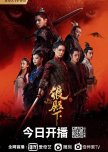
Love and Redemption for the Beauty and the Beast
This is a long awaited drama. Many viewers have come to watch Xiao Zhan's other dramas after his phenomenal acting in The Untamed. The storyline for The Wolf is intriguing. Perhaps more so for the original story, but in the drama adaptation, the supernatural elements have almost disappeared; there are no "werewolf" nor "interspecies" as tagged. The "wolf" here is a real human raised by wolves, without any human's social skills but with some traits of a wolf and extraordinary capabilities,This is an amazing story that should not be judged prematurely; viewers must be patient with the beginning CGI wolf scenes (they are not of their best but they don't really bother me), and also not be put off by what happens to the Ma family. Persisting in continuing viewing, you'd be rewarded as the drama gets better and amazing in later episodes. The story turns and twists with plots within plots.
The Story
This is the love story of a wolf boy and a daughter of a general. Their odyssey for finding each other and reuniting takes them through a lot of pains and sacrifices; their devotion for each other finally wins.
Langzai (wolf boy, played by Wang Dalu) and Xing'er (Ma Zhaixing, played by Li Qin) have grown up together, each day accompanying each other and playing in the wolves mountain (where the boy lives). They care and love each other deeply. She teaches him human skills and he teaches her about nature. Something happens and they are separated for years. Both grow up and the wolf boy is adopted by the Emperor and becomes a prince. They meet again and she is to become his consort. Due to some misunderstanding in the past when they were first separated, he has mixed feelings for her but falls back in love with her when he realizes his mistake, and for her, she still misses and loves her wolf boy. Unbeknownst to her, he is involved in the killing of her family. When she finds out his involvement, she is devastated. Despair and revenge overwhelm her. And for him, he is buried in remorse. They become enemies - one searches for revenge, the other searches for redemption. Their rift is irreconcilable and they part ways. When she eventually finds out that he has not directly killed her family and has been trying to make amends to redeem himself, she comes back to him, only to find him dying. She knows she cannot live without him. With uncompleted missions he needs to carry out before his death, she helps him and perishes. As with wolves that mate for life, he follows her in death soon after.
The Plot
A ruthless, suspicious, manipulative and power crazy Emperor creates a war machine from the Wolf Boy and makes him one of his sons to conquer lands around his kingdom. To bring peace to the world, Wolf Boy eventually restores his youngest and compassionate brother to the throne.
One amazing viewer pointed out that some of the characters did exist during the Five Dynasties and Ten Kingdom periods. I was so shocked to learn that Bo Wang (Prince of Bo) was actually a real person, and how the events happen in the palace are actually based on some of the real historical events.
The Romance
Unmistakably, the romance is one of the best and the selling point of this drama. The heartaches, sacrifices, agonies, remorse, separations make this such an unforgettable watch. There are various reasons for Prince Bo (Wang Dalu aka Darren Wang) to sever ties with Ma Zhaixing (Li Qin) and push her as far away as possible despite how much he loves her. Firstly, he's involved in the killings of her family (though he hasn't given the order) and secondly, he is trying to protect her, because he knows she is his Achilles' heel and she would be hurt by others to hurt him. But on the other hand, he loves her so much that it's painful to hurt her in order to push her away, hence creating the push and pull romance that I love so much here; my heart hurts seeing his agony and her misery. Despite himself hurting her with his words, he would not permit anyone else doing it; the outcome of any disrespect towards his love is pretty serious, like losing all one's fortune or demoting from a city mayor to a standing city gate guard. He's remorseful for the killings of her family. To redeem, he helps her take her revenge on himself; he teaches her how to hit himself hardest and deadliest. However, he also knows for her to go against him, it means she's also going against the Emperor whom he is still loyal to. He needs to make her hate him so much that she's strong enough to stand up for herself and fight him. He figures, if she can fight him, that means she is strong enough and will not be hurt by the devious Emperor. He uses hurting words to make her hate him and motivate her to stand up to fend for herself. What he says (the nasty words) and how he acts (the seemingly despicable actions) are not how he feels inside. As much as I love Xiao Zhan, the chemistry between Li Qin and Wang Dalu is so incredible that Xiao Zhan stands no chance at all in overtaking it; Ma Zhaixing and Wolf Boy make a perfect pair with contrasting visuals and yet beautiful chemistry -- they are the Beauty and the Beast.
From Episode 38 onwards, I cry in almost every episode thereafter. Seeing how the characters suffer and continue to be devoted and determined really makes one tear up.
The Characters and The Acting
The acting by the whole cast is fabulous, in particular the main leads. They all have made the story come alive, some with inner animal traits, adding more intrigues into the story, mesmerizing the viewers.
- Wolf Boy (Prince Bo/Chu Youwen) and Wang Dalu
Wolf Boy (Wang Dalu aka Darren Wang) is an orphan raised by the wolves. He is kind and compassionate. Having grown up with the wolves, Wolf Boy has extra ordinary power – he's agile (he can survive jumping into the abyss), he has sensitive senses (he can see winds, hear the flapping wings of the butterflies, smell and see in the dark), and his powerful physical strength is unmatchable by any humans (he can single handedly kill two attacking tigers). It is this incredible ability that the Emperor takes him in and makes him a prince, only to use him as a killing weapon. Since then, he becomes heartless and cruel. He is sent out to fight all the wars; he is an unbeatable war machine. He rehumanizes when he meets up with Ma Zhaixing (Li Qin) again. She is given to him to be his future consort. Prince Bo does not have a beautiful face, but he has a beautiful heart. Despite being a wolf boy or a cold hearted war machine, he is always gentle and loving towards Ma Zhaixing. He loves his subordinates and his adoptive brothers, and always willing to die for them. He is loyal to the manipulative cruel Emperor because he wants to repay the kindness that his adoptive family has given him, in particular to the Emperor who has saved his life. Though he kills but he doesn't hurt innocents. When he refuses to kill for the Emperor, it becomes a predicament because to disobey means to be ungrateful to the one who has given him a second life, and to obey means he has to numb his own feelings. This predicament is central to his character development and the decisions he makes later. Despite losing his innocence as a wolf boy, I would have loved to see more scenes of Prince Bo retaining his prowess as a wolf, powerful and unbeatable; I wish he were as ferocious as he looks at the beginning.
Wang Dalu is the perfect actor for this character. With natural tan skin and a well built body, he really looks like a man who has lived in the wild and exposed to the elements. It is exactly this look that makes him a convincing ferocious wolf king. Carrying a sly hideous smile that tilts at the corner of his lips, Wang Dalu projects a fearsome and chilling image. As I get more familiar with the actor, oh boy, he grows on me. By the end of the drama, I find him so attractive, charismatic and irresistible. As I re-watched some of the episodes, I come to realize how difficult his role is. On one hand, he has to show he is a cold, war machine with no emotions, but on the other hand, he has to let the viewers see his agony, turmoil and most of all his love for the woman of his life. Despite some viewers criticize him for not emoting very well, I feel Wang Dalu has done exactly what he is supposed to do - his expressions should be subtle and cannot be easily understood by others. He has to hide his emotions, and with any feelings that he may show, it's always fleeting. I can definitely feel him when he is in turmoil and agonizing over his love and loyalty. Wang Dalu's acting is perfect!
- Ma Zhaixing and Li Qin
Ma Zhaixing (Li Qin) is the daughter of a general who controls the Armies of Ma. She is beautiful, kind, intelligent and delightful like a butterfly. She loves Wolf Boy whole heartedly and doesn’t care how he looks and what he is; she just loves him as he is and his kind heart. As the story unfolds, Ma Zhaixing’s experiences are painful and heart wrenching, hurting over and over again by the man she loves. She’s forced to become strong and take charge to avenge for those she’s lost.
Li Qin is beautiful and adorable as Ma Zhaixing as a young girl (about 10 years old, it's a long stretch but well... ) or later as an adult. She has that gentle and delightful demeanor, and has played her role so well and convincing, bringing out the pains and agonies Ma Zhaixing is going through and making the viewers empathize and sympathize with her.
- Ji Chong (Prince Chuan/Li Juyao) and Xiao Zhan
Ji Chong is a wandering prince disguised as a mercenary. He can communicate with the eagle and has excellent martial art skills. He falls in love with Ma Zhaixing who takes him as a good friend. Despite not reciprocating his love, he continues to help Ma Zhaixing getting through her most painful moments. Like an eagle roaming the sky, Ji Chong is free-spirited and resourceful, and a very well-loved character.
Xiao Zhan has an untamed aura that fits perfectly into the Ji Chong character here as a flamboyant and yet compassionate person. However, Xiao Zhan doesn't come on screen until Episode 11. Once on screen, his character is colorful and mesmerizing, and his performance is natural and believable. He compliments the character of Prince Bo who has a more serious and solid personality.
- Other Cast
Other cast members are equally impressive. As the Emperor of Yang, Chu Kui (Ding Yongdai) is ruthless, suspicious, manipulative and power crazy. Ding Yongdai’s acting is simply amazing, capturing all these elements of the character, making the viewers hate and yet fear him. All acting is just fabulous and immaculate.
The Official Sound Tracks (OSTs)
This drama produces some amazing OSTs. As a lover of classical music, I wasn't into the rapping parts in the song Who Am I initially. However, as the drama grows on me, the song sinks deep into me; I come to love it. Another song I love is the OST Heavenly Wolf Star. The instrumental Bo Wang's Heartache is another of my favorites. Each song digs deep into the listeners, helping the viewers feel the resignation and helplessness of the fate of our characters. The instrumental tunes are sad, mysterious and heart pounding, capturing everything in the story. Must listen!
My verdict
This drama has attracted a lot of attention because of Xiao Zhan after The Untamed. The Wolf was made before he became a superstar, therefore there is dissatisfaction with his fans for him playing a second male lead. Despite being a fan of Xiao Zhan myself, Wang Dalu has made a more convincing wolf king than Xiao Zhan would have; Wang Dalu has the look, physique and charisma for the role. The production team has made a perfect selection.
This is a rather heavy drama, with few dark jokes, such as the mantis analogy (the Khitan princess Bao Na [Guo Shuyao] depicts the relationship between Ma Zhaixing and Prince Bo as if they were the mantises, one eating the other after copulation, and Prince Bo rebuffs that it's the male mantis that gets eaten - I've laughed for days over this joke).
The storyline is intriguing and the characters are well developed and acted. There are no indications of any interspecies nor werewolf as suggested by the tags though there is supernatural power exhibited by The Wolf. The overall cinematography is fantastic despite some poor wolf CGIs in the beginning (actually they're not too bad), but others are pretty decent, especially the CGI tiger scenes (those are epic together with the acting of Wang Dalu). By looking at the cast that have not appeared and some disjointed editing, it is pretty obvious that some interesting scenes may have been cut abruptly to shorten the length of the drama (or due to censorship?). Whatever it is, this is still an amazing and enjoyable drama that depicts love and redemption, loyalty and betrayal, sincerity and deception, remission and revenge, humanity and atrocity, harmony and warfare, with amazing fighting scenes, and most of all, a beautiful love story of a beauty and a beast.
The ending may not be placatable for some viewers, but it is beautiful at the same time, regretful. For me, a good drama should not depend on whether it is a happy or sad ending; it is about the overall story and acting.
This drama is one of my all-time favorites and deserves a rare 10/10. Don't miss it!
TWO THUMBS UP!
Want more about the actual historical story? Read this:
https://en.wikipedia.org/wiki/Zhu_Wen
Was this review helpful to you?
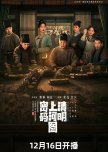
以恶制恶 Yǐ è zhì è (Fight Evil with Evil)
The Chinese drama Riverside Code at Qingming Festival weaves a captivating tale of mystery, murder, and resistance against corruption, resonating with audiences worldwide. Its theme of "fighting evil with evil" brings to mind real-world incidents, such as the recent controversial U.S. case where the murder of a CEO—a powerful yet allegedly corrupt figure—drew public support for the killer. Similar to the drama, this highlights a broader societal frustration with the unchecked power of elites, offering a powerful parallel to the struggles depicted in the show.Historical Inspiration: Qingming Shanghe Tu
The drama is rooted in the famous Chinese painting Qingming Shanghe Tu (Along the River During the Qingming Festival) by Zhang Zeduan from the Northern Song period. This five-meter-long masterpiece is considered a national treasure for its vivid depiction of everyday life in Bianjing (modern-day Kaifeng). Unlike typical artworks of the era, which focused on aristocracy or nature, this painting showcases over 800 figures engaged in various crafts and daily activities.
The painting’s mysteries are as intriguing as its details. Scholars debate whether it symbolizes the kingdom's prosperity or foreshadows its decline. Even the title, “Qingming,” is ambiguous—does it reference the Qingming Festival, or does it literally mean "clear and bright"? This ambiguity adds layers of meaning, making it an ideal foundation for a fictional story.
The painting includes fascinating details: fortune tellers, flower sellers, barbers, teahouses, wine shops, bustling city gates, and even early equivalents of modern conveniences like food delivery. It paints a picture of a progressive society, alive with the vibrancy of urban life over 1,000 years ago. Against this rich backdrop, the drama reconstructs many of the painting’s scenes, breathing new life into its legacy.
Storyline
Riverside Code at Qingming Festival delivers a dark yet humor-infused tale of murder and justice. The plot revolves around the killings of corrupt officials and wealthy socialites despised by the common people. Drawing inspiration from The Da Vinci Code and its integration of historical art, the drama masterfully uses elements of Qingming Shanghe Tu to drive its suspenseful narrative.
What I Loved
֍ Historical Integration: The drama’s creative use of a historic painting brings the past alive. Iconic scenes, like the red bridge, are given intriguing backstories.
֍ Educational Value: Each episode ends with fascinating insights into Song dynasty inventions and culture, such as the construction of the red bridge (Hong Qiao) and the creation of moving horse lanterns (Zhou Ma Deng). These snippets enrich the viewer’s understanding of ancient Chinese ingenuity.
֍ Focus on Commoners: The absence of palace intrigue and the spotlight on everyday life is refreshing. The familial love and resilience of the characters shine without reliance on romantic subplots.
Areas for Improvement
֍ Acting: While the cast is commendable, Bai Baihe’s portrayal of the assassin could use more nuance. Her calm demeanor suits the role but lacks subtle emotional depth, which could have added realism, especially in private moments.
֍ Plot Holes: Key elements, such as how the vigilante obtained a diary containing a murdered official’s confession or his resources for elaborate schemes, are left unexplained. Filling these gaps would have made the story more cohesive.
֍ Ending: Though full of twists and turns, the final episode felt overly straightforward compared to the preceding suspense. A more layered conclusion could have been more satisfying.
Final Thoughts
I thoroughly enjoyed this drama’s unique premise, rich historical setting, and focus on commoners’ lives. It avoids overused tropes, offering an intellectually engaging narrative. Riverside Code at Qingming Festival not only entertained me but also inspired me to delve into the mysteries of Qingming Shanghe Tu. This series is a must-watch for anyone interested in history, art, and thrilling storytelling.
Was this review helpful to you?
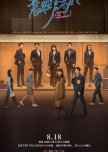
What Does Life Truly Mean?
In this compelling story of "Fake It Till You Make It ", we embark on a profound journey to unravel the essence of life itself. Is it akin to a meticulously scripted movie where every piece effortlessly falls into place? Or do we navigate its twists and turns while relentlessly pursuing our desires? Our story delves into the myriad relationships and perspectives of a group of industrious young individuals from diverse professions. Even within the cocoon of love, there exist two distinct vantage points, each held by the parties involved.In the pursuit of dreams and desires within the relentless rat race of our world, we often wear masks of pretense. We mold ourselves into someone we believe will garner admiration from others, for we reside in a world where pretense is the norm. We toil relentlessly, pushing our boundaries, sometimes sacrificing relationships, health, and happiness along the way. And then, at the culmination of it all, we find ourselves asking the ultimate question: Is it all worth it? Does it carry meaning?
Our story explores the very essence of falling in love, the significance of marriage, and the enigmatic nature of attraction between people. Should we surrender to the whims of fate, letting life take its course, or should we seize control and fight for our desires?
Throughout the story, we witness multiple examples that illuminate the diverse relationships and perspectives of our characters. Tang Ying, haunted by past heartache, yearns for a new relationship but fears rejection. Xu Ziquan, a flamboyant individual, shies away from committing to a lasting relationship. When their paths cross, burdened by their respective baggage and consumed by their careers, they struggle to prioritize their love. Eventually, they come to a realization: they must take a leap of faith, committing to each other wholeheartedly, regardless of the outcome, as long as they give it their all.
Lin Xinzi has always sought the perfect love, envisioning it with a man who embodies ideal looks, status, and wealth. Yet, when she believes she's found the one, she discovers herself suffocating in the suffocating embrace of Xu Jiabai's obsessiveness. After parting ways with Xu Jiabai and meeting Xia Tian, she learns that relationships need not adhere to a script, and life rarely unfolds as planned.
Every character depicted here exudes a striking realism. Encounters with individuals akin to Xu Ziquan, who shy away from commitment, are a common occurrence in our lives. Simultaneously, we often encounter characters like Tang Ying who crave reassurance and commitment at the same time also keeping an eye out for potentially better partners. While the Xu Jiabai character may be toxic, it undeniably mirrors a prevalent archetype in society. This dynamic is a familiar facet of the human experience. The value of this drama lies in its effort to delineate the characteristics of such individuals, enabling viewers to recognize them in real-life scenarios and make informed choices when navigating such relationships.
All the characters are meticulously crafted and portrayed, evolving authentically throughout their journeys. Elvis Han portrays Xu Ziquan's character with a familiarity that resonates with many viewers, while Elvira Cai's Tang Ying is captivating and utterly believable.
As the author poetically observes, "The city never stops; it won't pause for anyone, just like our lives. When we reflect upon the people we encounter, we realize that from the outset, we all strive to move forward and upward. Between pretense and reality, let's offer ourselves some soulful nourishment. Superiors, subordinates, rivals, friends - we often find ourselves trapped in various roles. We say what must be said and do what must be done, staunchly believing that this is life. However, as if scripted, just as pretense reaches its zenith, we stumble upon a universal truth -- prosperity, success, and happiness - these elements are never meticulously planned but are derived from our actual experiences."
"The city has introduced us to countless souls, each revealing the vastness of the world, beyond our wildest imagination. The path we choose should be uniquely ours; discard the well-crafted script. Through struggle and determination, seek a life that truly belongs to us. It's alright if we falter, and it's perfectly fine if we lose our way. What matters most is living in accordance with our heart's desires, for that is the essence of true freedom."
My Verdict
In our relentless pursuit of life's ambitions, there often comes a price. Tang Ying pays with her health, Xu Ziquan carries the weight of a broken relationship. As viewers, we too navigate life's labyrinth, occasionally finding ourselves adrift, much like Tang Ying and Xu Ziquan. However, if we view the lowest moments as transformative phases, we may eventually find our way, just as they do. Above all, let us approach life with expectations, appreciating the occasional moments of reaping its rewards, for therein lies the true essence of our existence, as the author puts it, "常常期待 有時收獲"
This captivating drama unfolds as a rich tapestry of life's profound lessons. It comes highly recommended for those seeking inspiration and introspection.
Was this review helpful to you?
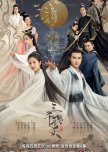
Love Story between a Mortal and an Immortal
This drama starts off very good – beautiful actors, beautiful costumes, interesting story line. After the first couple of episodes, it begins to go all over the place. Poor script writing, plenty of plot holes, editing flaws (they even photoshop an actor's face onto another), confusing acting from the female lead, among others.I was initially put off by Fu Jiuyun (Zheng Yecheng) for his flamboyance, especially towards Qing Chuan (Zhao Lusi); his hands are all over her and she doesn’t seem to care. In fact, she gives the impression of liking such attention – being teased and pinched by Fu Jiuyun. As a Princess, Yanyan is dignified, determined and worshipped by all. In her disguise as Qing Chuan, a maid servant under Fu Jiuyun, waiting for her revenge, she has a total change in character. She loses her initial charisma which I feel is a poor script writing and also poor acting. Though I like Zhao Lusi as an actor and I like her other dramas, I don’t feel she fits into this Qing Chuan character very well. Zhao Lusi is cute and can be silly, but her acting is confusing as the Qing Chuan character who is supposed to be dignified, determined and strong. Zhao Lusi doesn’t have the charisma a princess normally exudes. On top of that, Zhao Lusi tends to take a long pause before she starts talking. It really feels weird for me that she’s not spontaneous in answering even the most trivial questions. The only consolation I find is she pairs very well with Zheng Yecheng visually.
Zheng Yecheng has a layback carefree spirit to him. With his outrageously gorgeous face with soft features, acting as a celestial being with no worldly concerns, Zheng Yecheng fits perfectly as the Fu Jiuyun character. I love the scenes of him gazing at Qing Chuan with those loving eyes. One can really feel his love for her, unreserved and unconditional. He has great chemistry with Zhao Lusi.
There is a lot of illogical dialogues and scenes, even the logic itself is weird. Despite the poor storytelling, I find the costumes to be intriguing with great details. I love Fu Jiuyun’s simple white gowns. I also love those sophisticated gowns worn by Yanyan especially the gown she dances in. The sound track that plays whenever Jiuyun longs for Qing Chuan or vice versa is beautiful and heart-wrenching.
There is also a couple of scenes I love the most. The first one is the scene of Yanyan dancing to the song composed by Fu Jiuyun. The scene is so beautiful and breathtaking. The second scene is the very last scene when Qing Chuan runs towards Fu Jiuyun under the peach blossom tree. That scene is celestial and can only be found in legend.
The final episode is a lazy ending. It seems that the whole thing is just a dream by Yanyan as a little girl, or is it her reincarnation, or is it a parallel dimension thing? It’s confusing. The weirdest thing is our female lead just goes poof and reappears with her love in a different dimension.
I would watch this drama for Zheng Yecheng if you’re a fan. For me, he’s the only thing that keeps me going in completing the whole series.
Was this review helpful to you?


