
 News


 2
 11
 1
 2
 1


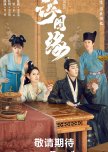
Most Frustrating and Infuriating Love Triangle
The storyline of massacring concubines when an emperor dies, the absolute power of the eunuchs, the heinous schemes of the various factions in the palace power struggle for the throne, and most of all, a forbidden love that the lovers go underground and the yearning look for each other from afar – all these, while cruel, are intriguing and make a great tragic and somber drama. The trailer looked so good and this was what I had expected. Instead, I was caught off-guard by what I saw -- a slapstick comedy, especially at the beginning.The opening scene is a disaster. I was utterly confused and flabbergasted - is it supposed to be a serious and heart-wrenching drama with pains and deaths, or is it a comedy where deaths are being treated as jokes? Some viewers said this is meant to be a dark comedy. I was not alone; many other viewers were aghast.
Many viewers have come to watch Unchained Love for Wang Hedi after his bombshell acting in Love Between Angel and Devil, and this is exactly what its marketing team is counting on – an exploitation of his fame after his last aired drama. As much as I love Wang Hedi's acting in the previous drama, it doesn't mean I need to blindly extol him regardless of the story telling, actor selection and many other aspects of this drama. My review here is going to be blunt and unforgiving which may not augur well with many fans.
Story: Is there a future for a eunuch and an emperor's woman to share an illicit love, and to elope to live a happily-ever-after life? Xiao Duo (Wang Hedi) and Bu Yinlou (Chen Yuqi) think there is. However, there are many treacherous obstacles they must cross, and heartaches to bear before they can finally find safety. If caught, both are doomed, and will die of horrid deaths. The sense of danger spurs the story on.
The first half of the drama is chaotic, in its writing, editing, and acting, with a supposedly horrendous hanging scene made into a slapstick comedy. As the drama progresses, the whole story becomes a rom-com with the couple going about their romantic activities, while all the other plots become insignificant side stories. Editing is terrible, making an already incoherent script even more confusing and the relationship unconvincing. The actual plot picks up at around episode 23 when the actions thicken and danger looms, and the whole story becomes more captivating.
Acting: Many viewers have given high rating here because of Wang Hedi, regardless of whether the drama deserves it. Others find Chen Yuqi's acting lackluster; most complain about her lack of facial expressions and her unnatural wide-eyed stares. For me, I only have issues with her acting in the beginning. As she gets more into her role, she seems to have improved. However, her expressions and actions don’t seem to synchronize with the situations of the scenes from time to time. The Bu Yinlou character has two personalities: she is very smart, but she acts silly in front of people to fool them. For this, Chen Yuqi appears to capture the essence of the character albeit inconsistently, but she lacks the charisma that makes this character lovable. As for Wang Hedi, his acting is convincing, and his styling is cool. However, how the camera captures his face at times has given him a rather unflattering impression.
Romance: The romance is not a love at first sight, but its lack of emotional development in the initial episodes, probably due to scene deletion, makes the rocket-speed romantic relationship feel weird and uncalled for. Despite their later treacherous encounters, their romance doesn’t capture my heart.
My Verdict
Disappointing, unnatural acting, poor writing, flabbergasted storytelling, dog blood.
Was this review helpful to you?
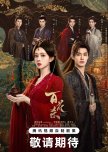
How to choose a husband from a list of desirable princes?
Yeah, pick the one with the shortest life span! Welcome to another epic power couple.In recent months, there’s been a massive wave of rebirth-and-revenge dramas, and Blossoms of Power is no exception. Meng Ziyi actually played a very similar role not too long ago in Blossom. But honestly speaking, I prefer this drama over Blossom.
The story kicks off with Gu Qing Zhi, the wife of the Fifth Prince and the sole survivor of a brutal family massacre. To avenge her family, she frames her enemies by drinking a poisoned wine she claims was gifted by them. Three years later, Shen Xi He—the Princess of the Northwest—is almost murdered by her maid on her way to the palace to marry one of the princes under the Emperor's edict. In a wild twist, their souls merge.
When she wakes up, Gu Qing Zhi finds herself under a new identity: Shen Xi He, Before the incident, Shen Xi He was a naive, innocent girl raised in the northern border army barracks, protected by her doting father and brother. But this new Shen Xi He transforms into a cold, calculating, and ruthless strategist. She is determined to control her own destiny and become the "chess player" rather than a pawn in the capital's deadly political games. This time, she’s ready for the dog-eat-dog world of palace politics.
Meanwhile, Crown Prince Xiao Hua Yong was poisoned when he was a little boy and was sent away to recuperate, only recently returning to the palace. He is known as a prodigy—extremely intelligent and the Emperor's favorite son. Though the poison didn't kill him immediately, it left him physically weak. However, during his years away, he secretly learned martial arts and became a formidable fighter, determined to find out who poisoned him. To survive the treacherous court, he hides his sharp intellect and ambition behind a facade of being frail, sickly, and non-threatening. In reality, he is deeply calculating, secretly investigating traitors, and biding his time to seize control.
When Shen Xi He finally chooses Xiao Hua Yong, it’s not out of love, but a marriage of convenience, at the beginning anyway. She picks him because he appears upstanding and has a clean slate without hidden agendas like the others; he seems like a "safe" bet. Little does she know that he manipulates her selection by exposing the others' weaknesses and hidden agendas without raising any suspicions. However, after agreeing to marry the crown prince and as she discovers more about him, she eventually falls for him. The process is both endearing and hilarious.
The Characters
Shen Xi He is highly independent and direct to a fault—she hates beating around the bush. She actually tells Xiao Hua Yong that if she likes him, she’ll tell him straight up (and she does!). This is so refreshing, as female characters in historical dramas rarely disclose their feelings so directly.
Before her death, Gu Qing Zhi was a fragrance expert who specialized in making sachets and incense. This unique skill transfers to Shen Xi He, giving her a superhuman sense of smell like a dog—she can detect any scent, no matter how faint. This expertise becomes her unconventional strategic weapon to gather intel, set traps, and exact revenge. It’s also how she catches Xiao Hua Yong in his multiple identities, which almost costs him a wife! She is calm, analytical, and decisive, avoiding unnecessary emotional friction or petty female rivalry. She resolves conflicts quickly and bluntly, which is a joy to watch.
Xiao Hua Yong is a character I absolutely adore. Though sickly, he is incredibly sharp-minded. I love how he feigns innocence while being deeply calculating. Despite his initial manipulative motives to secure his position, his character arc reveals profound devotion. He ultimately sacrifices his own interests to protect Shen Xi He and pave the way for her family's survival. I really loved the touching scenes where he lays out all the education and plans he wants to leave for his future child, just in case he isn't around to see them grow up.
Perhaps the character I feel the most sympathy for is Xiao Chang Qing, the Fifth Prince, played by Jeremy Xu. He is completely devoted to his wife, who took her own life to avenge her family—and the most heartbreaking part is that he was the one forced to be the executioner. This massive, tragic conflict sets the path for everything he goes through later. He mourns her deeply for three long years, and when she essentially "comes back" as Shen Xi He, he recognizes her immediately.
Even though Shen Xi He eventually ends up with the Crown Prince, it leaves a slightly bitter taste in the back of my mind. Think about it from Xiao Chang Qing's perspective: she’s basically "his woman" who moved on and fell in love with another man. And as for the Crown Prince? He’s actually fallen in love with his own brother’s wife—a woman he probably never even met before she died! Despite all this heavy, messy baggage, you can tell the Fifth Prince is actually a decent person deep down. You can see his kind heart in how he cares for his younger brother, the Ninth Prince, and even in how he patiently tolerates the Crown Prince when he’s being all clingy and acting helpless.
The Acting
I want to applaud both Meng Ziyi and He Yu—they both did a fantastic job here. Meng Ziyi successfully embodies the "cold, ruthless county princess," and her large expressive eyes manage to convey micro-emotions without saying a word.
He Yu was a breath of fresh air for me, as I’ve never watched his previous dramas. He has a very adorable, boyish look with a gorgeous cleft chin. Honestly, he’s so cute I couldn't take my eyes off him! He perfectly brings the complex, dual-faced Crown Prince to life. His portrayal of the "sickly but secretly powerful" character is full of refined micro-expressions, and he conveys deep emotion beautifully, even in silent scenes. I especially loved watching him feign weakness and act like a clingy kid demanding love and attention from his brother, wife, father, and the Empress Dowager.
The OST
The soundtrack is phenomenal—a massive shoutout to the theme song, Restless World by Zhou Shen. The melody perfectly captures the tumultuous, high-stakes journey of the protagonists as they navigate a chaotic and treacherous political landscape.
Final Thoughts
Did he die? Is it a happy ending? I know this question is on everyone's mind! I can't tell you that without spoiling it, but I can tell you this drama is surprisingly cute and humorous. The comedic timing is top-notch. Often, when things get romantic with soft music playing, an action happens completely out of the blue and the music abruptly cuts.
One of my favorite scenes was when the couple was watching a rare flower bloom. The flower finally opened; Xiao Hua Yong was appreciating it with soft romantic music ringing in the background, and suddenly, Shen Xi He swiftly plucked it, said "Done," and the music stopped abruptly. Xiao Hua Yong was left totally speechless and puzzled. What a killjoy—the scene was absolutely hilarious!
Another thing that really stood out to me was how devoted these princes are to the women in their lives. The Fifth Prince is devoted to his dead wife, Gu Qing Zhi, and has been mourning her for three years; the Fourth Prince mourns his dead wife after his failed grasp for power; and knowing his end is imminent, the Crown Prince paves the way for his wife, devoted to her until the very end.
Visually, even though the actors are similar in age, Meng Ziyi looks a bit older than He Yu on screen. It gives off a "big sister / little brother" vibe, but it actually works quite well for the story, especially since her role demands a mature demeanor while his character acts more childish (constantly feigning weakness and demanding love from his family).
Are there any flaws? Sure! Nonetheless, they didn't ruin the overall experience for me at all.
Overall, this is a fantastic watch. Strongly recommended!
Was this review helpful to you?
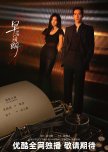
Sexy Underground Romance. Great Chemistry.
When I saw the extraordinary 8.7 rating for The Early Spring (at least when I first started watching it), I wondered: what kind of modern office romance, with the usual CEO-and-young-intern trope, could possibly deserve a rating that high? So I gave it a try. Four episodes in, I was already on the verge of dropping it. However, as I plodded along, the great acting persuaded me to stay.It turns out the boss is basically a two-faced creep. In public, he's serious, always wearing a stern expression, and rude to the extreme. But in private, he's a sexy, aspiring singer—and, well, pretty horny. Despite all that, he's upstanding and devoted. And the female lead? She's timid, awkward, and naive—the perfect prey for a hungry wolf. And yes, she falls for him.
I was actually surprised that I haven't seen more criticism from the "Me Too" viewers about the male lead taking advantage of his subordinate. Yes, their sexual encounters are consensual, but she was still under 18 (according to her employment record which I feel could be a mistake because she has just graduated college, so she must be in her early 20s unless she's a prodigy) when they first slept together. Add the boss-subordinate power imbalance to the mix, and it's hard not to feel uncomfortable with the setup.
That said, I think the biggest appeal of this drama is exactly that: the secret, intimate, forbidden office romance. Despite the tropey and predictable plot, I was mesmerized by the cities—Beijing and Harbin, which helped me continue, especially in the beginning.
On the funny side, I was surprised to discover that quite a few of the high ratings seem to come from middle-aged women. They are completely mesmerized by Jin Bo Ran's sexiness and happily compare him with their own husbands and bosses, whom they say "make them puke." Apparently, Jin Bo Ran is giving a lot of viewers something their real-life men aren't!
Despite my rocky start with the drama, I have to admit that I eventually came to enjoy the drama—and a big reason is the acting.
Jin Bo Ran and Sun Qian are both excellent.
Jin Bo Ran naturally has a stern-looking face, so playing Luan Nian is almost a perfect fit for him. His serious, restrained, and unwavering demeanor feels very natural. But what really impressed me was watching Luan Nian completely break down and cry. Those scenes were genuinely heartbreaking, and Jin Bo Ran absolutely nailed them. His performance made the character much more complicated and vulnerable than he first appeared.
Sun Qian is equally convincing as Shang Zhi Tao, the timid and naive young intern who gradually grows into a confident professional. Her transformation feels believable and unforced. And honestly, I can understand why Shang Zhi Tao is attracted to Luan Nian from the moment she sees him. Young women can certainly be drawn to mature, powerful, successful, and good-looking men—and Sun Qian does a great job making that attraction feel natural and believable.
And then there's the chemistry between Sun Qian and Jin Bo Ran.
It's amazing.
Their on-screen chemistry is intense, sensual, and probably the biggest reason romance fans will keep watching. There are substantial intimacy scenes throughout almost the entire drama, so if you're looking for a romance with plenty of physical chemistry, this drama definitely delivers.
So, would I recommend The Early Spring?
Yes—but with a big caveat.
If you can get past the uncomfortable premise of a boss seducing his very young intern, and you're willing to stick with it beyond the tropey beginning, there's actually a lot to enjoy here: beautiful city scenery, strong performances, emotional moments, and some seriously impressive chemistry between the leads.
For romance buffs, especially those who enjoy a secret office romance with lots of intimacy, this may be one worth watching.
Was this review helpful to you?
Hair Pulling Script
Though not overly exciting, I have sort of enjoyed the first half of the story (season 1) because there is nothing out there to watch. I thought the second half would more or less be the same, continue from the first half. To my disappointment, the writing gets really bad and childish, though the storyline continues. Throughout, I have been suppressing myself from hurling pillows at my computer. And I’m glad it’s over.From season 1, we have established that Jun Wujiu (Li Xizi) is a genius investigator, and he works seamlessly with Cheng Yang (Chen Ziyou), who wears many hats (he is a police officer cum prosecutor cum magistrate - what a conflict of interest here), in solving criminal cases after cases. What seemingly unrelated, in fact all these cases are associated with each other and ultimately, pointing to a couple of villains who are behind all the killings in broad daylight. When the dots are connected, it is not difficult for the team to find evidence to put the villains away, and that’s the boring and frustrating part because of the bad writing. Though the villains are blatant and out in the open, the protagonists become very stupid and do all the dumb things that even a 3-year old wouldn’t do (well, maybe I exaggerated, but you get what I mean). The dialogues become kiddie with a bunch of noise and no substance. The timeline is all messed up (when it’s broad daylight, the dialogues refer to midnight etc.) causing eye-rolls constantly. Glaring flaws and plot holes run every minute. From episode 8 onwards, every episode is a torture – I feel like vomiting blood.
My Verdict
This is a very disappointing drama. There’s no character development, no plot build-up, no epiphany, and no planning because the protagonists are always reactionary. If you are looking for romance, there’s none either (I don’t care so much about romance here). Not one character stands out that makes viewers love and remember. The male lead character, Cheng Yang, is not very impressive though the actor looks very nice in his uniform. Perhaps that’s the only thing I like the most – beautiful constable uniform (call me skin deep).
Was this review helpful to you?
2ML - The Most Intriguing Character
The Legend of Rosy Clouds is a pretty weird watch. Parts of it are honestly super boring, but the humor is quite good that it kept me hooked. I think the drama has a low rating because it starts with a trope that a lot of romance fans aren't crazy about: an immediate divorce and a messy love triangle. The main couple gets married right in the first episode, but they split up almost immediately, even though they still care about each other.The reason? The female lead, Fan Yun (played by Li Yi Tong), doesn’t want to be a traditional housewife. Her dream is to become a government official. Her husband, Governor Qi Zheng (played by Joseph Zeng), sees her potential, grants her the divorce, and actually helps her chase her dreams. He is totally devoted to her, but unfortunately, she just doesn't feel the same way. Then we have a second guy who also adores Fan Yun. He will do absolutely anything to protect her, in his weird way, even though Qi Zheng usually beats him to it.
At its heart, this is a story about a woman fighting for equal rights so that everyday people and women can work in the government. It feels really modern, and it definitely reminded me of the real world, where older men still hold all the power.
The show takes way too long to get going. The first 20 episodes are a slow burn just setting up Fan Yun’s character, her goals, and her relationships with the two guys. Because it takes so long to build up, the first half of the drama feels like a drag. If it weren't for the funny moments, I might have dropped it.
Things finally pick up after Episode 20, but the writing is still all over the place. For example, a massive rebellion randomly happens out of nowhere. There is no buildup and no introduction to the rebels; they just suddenly appear. It felt like lazy writing just to force a plot twist. The villains are confusing too. One of the powerful "Elders" starts off looking like the big bad guy, but by the end, the show tries to make him a hero. It’s fine to keep the audience guessing, but it doesn't work when the character is just unlikable. To top it off, a whole new family (the Zheng family) pops up in the final episodes. Most of them are totally flat characters, yet they suddenly become a huge part of how the story ends, making the finale feel messy.
The best part of the show is how weird and quirky the characters are, though the writers didn't really do much with them.
There is a guy who constantly gets lost, but somehow he is a top official. There is a guy who plays a flute that everyone hates; he wins second place in the court exam and then just vanishes from the show for no reason. Then there's a boy medical genius who wins first place in the court exam and turns into a master martial artist whenever he drinks alcohol. He was cool, but his character development just stops, and he becomes background decoration. There is even a masked official who wears super bright, colorful outfits but never takes off his mask or contributes much after his introduction. They are all fascinating concepts, but they end up being pretty one-dimensional.
On the bright side, Joseph Zeng does a great job as Qi Zheng. The character isn't written very well, but Joseph’s acting and his big, expressive eyes completely save the character. I also really liked Deng Wei’s character, Zheng Shi (who goes by Lou Qi Yan when pretending to be a foreign trader). He leads a double life, defying his grandfather's wishes to become a top official so he can live a free life as a merchant instead. He’s a morally grey character, and Deng Wei totally aced the role.
For me, the sweetest part of the whole show was the relationship between Zheng Shi and his grandfather. It was so heartwarming. Honestly, I gave the drama a higher rating just because of them. It really hits home because anyone who has lost a parent or grandparent knows that feeling of regret for not listening to them while they were here.
Because I loved that relationship so much, I am disappointed about how the writers ruined Zheng Shi's ending. He was such a cool, complex character who started as a villain (kind of) but became a trusted friend to Fan Yun. But in the end, the writers turned his love into a toxic obsession. It totally ruined his image and ruined what could have been a really tragic, beautiful love triangle.
My Final Verdict
The Legend of Rosy Clouds has major pacing issues and sloppy writing. It spends way too much time spinning its wheels on character introductions and side characters that don't matter. But even with all the plot holes and frustrating choices, the comedy and the occasional emotional moments make it a decent watch. Watch it when nothing else to watch.
Was this review helpful to you?
Great Acting by Ryan Cheng. Great Character Development.
If I had my way, the English title for this drama would simply be its native name, Mo Li, rather than The First Jasmine. The original title is a brilliant double entendre: it combines "Mo" from Mo Xiuyao and "Li" from Ye Li. But phonetically, Mo Li (莫离) translates to "don't leave." This hidden meaning perfectly captures Ye Li’s deep devotion to her loved ones, echoing the tragic backstory of her life long before she ever married Mo Xiuyao.At its core, The First Jasmine is a deeply touching story with beautifully written characters. Even though it’s a costume drama set in what appears to be the Tang Dynasty era, its moral dilemmas and emotional beats feel incredibly relevant to our modern world.
Both Bai Lu and Ryan Cheng (Cheng Lei) are veteran actors, and they both deliver incredibly convincing performances. However, I have to give a special shoutout to Ryan Cheng. His character, Mo Xiuyao, is wonderfully complex and layered. On the surface, he appears bitter, angry, and resigned to his fate. But beneath that exterior is a hot-blooded man fiercely determined to bring his enemies to justice. Confined to a wheelchair for years, he is deeply frustrated by his physical limitations. Imagine having to sit face-to-face with the person responsible for the massacre of your brother and your army, yet being unable to strike back because doing so would plunge the country and his own family into ruin. He has no choice but to endure the pain in silence.
Yet, when he’s with Ye Li, we see a completely different side of him. He starts off bemused and puzzled by her, which gradually melts into profound gentleness and care. Ryan Cheng captures this emotional duality flawlessly, bringing out the exact nuances the character requires. Bravo to him for such a stellar performance!
What I also loved is that every character is deeply human. There are no cartoonish, one-dimensional villains here. Everyone’s actions are rooted in their lived experiences and circumstances. Every major character has a compelling, understandable motivation: Ye Li and Mo Xiuyao are driven by a desire for truth and justice for their fallen loved ones; the Empress Dowager seeks power out of a desperate need to protect herself and her son; Mo Jingli just wants to reclaim what he believes is rightfully his. This nuanced portrayal feels much closer to the messy reality of real life, which is a refreshing change from the black-and-white morality we often see in Hollywood.
Ultimately, The First Jasmine grapples with a profound question: How should you act when facing an enemy who has slandered your family and murdered thousands of your people? Mo Xiuyao has to bow to the Empress Dowager regularly, knowing she orchestrated his brother's death. Ye Li faces a similar struggle—how do you treat the woman who was your mother’s best friend, even when you know she’s responsible for ruining the prestigious academy your grandfather built? Should they just accept the status quo to maintain national stability? Or should they risk everything to seek justice for the dead?
The author brilliantly resolves this agonizing dilemma with a beautiful philosophical anchor: a passage from Confucius’s The Great Learning (Daxue). It reminds the audience that true change and justice must begin from within:
"Ancient leaders who wanted to spread virtue throughout the world began by governing their own states well.
To govern their states well, they first harmonized their families.
To harmonize their families, they cultivated their own character.
To cultivate their character, they aligned their minds.
To align their minds, they made their intentions completely sincere.
And to make their intentions sincere, they extended their knowledge to the absolute limit.
This expansion of knowledge began with investigating the nature of things."
The First Jasmine is a gorgeous, thought-provoking journey. It asks the hard questions about duty, revenge, and forgiveness, and answers them with grace. Highly recommended!
Was this review helpful to you?
Decent Story & Acting, Weak Writing
Despite some plot holes here and there, My Destined Consort is a watchable drama centered on power struggles—both in the open conflict between two brothers vying for their father’s succession and in the shadows between their scheming wives. The villains are no mystery, as their true nature is revealed early on. While the storyline, setting, and acting could use some refinement, they’re generally acceptable. Since the plot leans heavily into political maneuvering, don’t expect much action. That said, the scheming itself offers decent entertainment value.Storyline
The story is set in the fictional Dong Zhou (East State), one of four states in a larger kingdom—the others being Xi (West), Bei (North), and Nan (South). Shen Jiangli (played by Hai Lu) is married to Lu Jing Ming (Xu Hai Qiao), the second son of Dong Zhou’s ruler. Jing Ming has an older half-brother, Lu Jing Xiu (Wang Luo Jia), born to their father’s first wife. Though the younger brother has never fought for succession, Jing Xiu grows increasingly insecure, convinced their father favors Jing Ming for his intelligence and compassion. Determined to eliminate his brother, Jing Xiu begins plotting against him.
Just within days after Jing Ming and Jiangli’s wedding, he is summoned to battle an emergency war. Meanwhile, Jing Xiu’s wife schemes against Jiangli, framing her for a crime and getting her banished to guard the ancestral mausoleum for life. When Jing Ming returns from war—his entire platoon slaughtered—he blindly accepts the false accusation that his new wife attempted to kill his mother and sister. Angered and feeling betrayed, he cuts ties with her, though she remains in his heart.
Five years later, Shen Jiangli returns to the Lu mansion, no longer the timid, naive bride but a skilled physician seeking justice and revenge. Her transformation shocks the household, and to make matters worse for the villains, she brings with her a son—Jing Ming’s heir, now a direct threat to their power.
The rest of the drama follows the relentless schemes of Jing Xiu’s wives as they try to harm Jiangli and her child. Yet, each of their plots backfires, forcing them to reap what they sow.
Acting & Characters
Shen Jiangli’s evolution from a meek girl to a confident woman who protects herself and aids her husband against his brother’s schemes is compelling. Her medical expertise and newfound boldness make her a formidable force. Hai Lu delivers a convincing performance, portraying Jiangli’s solemn and stoic demeanor with nuance. Though she’s been in numerous dramas, this is one of her stronger leading roles.
Xu Hai Qiao, a seasoned actor, does a passable job as Lu Jing Ming. My only gripe is his hairstyle, which looks oddly bulky, almost like a hat. Otherwise, he carries himself with regal charm, though his role feels secondary compared to Jiangli’s dramatic comeback.
Lu Jing Xiu, the eldest son, is ruthlessly ambitious. As the rightful heir to his father’s throne, his obsession with eliminating his younger brother, Jing Ming, seems excessive—until it becomes clear that his ambitions stretch far beyond Dong Zhou. He dreams of conquering the other states, even if it means plunging civilians into suffering—something his benevolent father would never condone. But Jing Xiu couldn’t care less; power is his only goal. Though thoroughly unlikable, Wang Luo Jia’s portrayal is spot-on, making the character chillingly believable.
The rest of the villains are equally detestable—but not in a mysterious way. Their wickedness is laid bare from the start, so there’s no suspense about their intentions. While some characters may grate on the nerves, they’re more irritating than truly menacing.
Plot Holes & Weak Writing
One glaring plot hole involves a character who is mentioned but holds no real significance to the family—despite supposedly being one of the daughters. It’s revealed that Jing Xiu and Jing Ming had another sister who was allegedly killed in the same fabricated battle that wiped out Jing Ming’s platoon. Yet, throughout the entire drama, this sister is never acknowledged, mourned, or even referenced. Then, out of nowhere in the final episodes, her name suddenly surfaces, and Jing Ming accuses Jing Xiu of orchestrating the battle that has caused her death as well. The lack of buildup makes this twist feel forced and emotionally hollow.
Another instance of weak writing is the confusing timeline surrounding Jing Ming and Jiangli’s romance that may have given them their son. Jing Ming was supposedly sent off to war right after their wedding, leaving viewers puzzled about when they even had the opportunity to conceive a child. The drama never clarifies this inconsistency, making the son’s existence feel like a convenient afterthought rather than a well-planned narrative element.
Final Thoughts
The storyline isn’t groundbreaking, but it’s engaging enough when you’re in the mood for a scheming-heavy period drama. The romance isn’t a typical push-and-pull dynamic; instead, it’s about rekindling love between a married couple bound by a child. It’s a tale of a husband seeking redemption after wronging his wife through mistrust. The drama also touches on the harsh reality of politics—where there’s no right or wrong, only strength and weakness—a theme that still resonates today.
I wouldn’t call My Destined Consort a must-watch, but if you’re looking for something to pass the time, it’s an acceptable choice.
Was this review helpful to you?
Earthling Versus Alien, Who Wins?
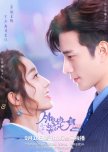
I have always dreaded a sequel. That is because, despite how good the original story is, a sequel usually ruins it with a lack of new ideas and originality; it becomes repetitive and boring. For this drama, at first I thought Season 2 is one such disaster. To my surprise, not so. At the end of Season 1, Chai Xiaoqi (Wan Peng) left earth. Two years later, she returns. It was a happily-ever-after ending. The sequel starts off with her wedding with Fang Leng in 2021 upon her return. In the midst of their wedding, Chai Xiaoqi is being recalled and returned by force to her planet again.After wiping off her memories with Fang Leng (Xu Zhi Xian aka Thassapak Hsu), and reinjecting misinformation about him, Chai Xiaoqi is again sent back to earth with a mission: to steal the human's hormone from Fang Leng’s company. While traveling in her spaceship, there’s a mishap and she travels back in time to the year 2018 instead, a year before she actually met Fang Leng in the prequel (Season 1).
I was getting rather revolted for the first five episodes as Chai Xiaoqi is once again attracted to Fang Leng’s hormone; she is lustful and hovers all over his body, touching everywhere (he seems to enjoy it though). I was considering dropping the series. However, I was curious to see how the writer reconciles Season 2 with Season 1 giving that there are now two timelines. So I plodded on.
As the two meet again, everything starts with a clean slate except for Chai Xiaoqi, she has been told that Fang Leng is her husband, but for Fang Leng, he has never known her and finds her queer and annoying. The story gets better after episode 11 when she stops acting lustful. From there on, in fact it’s quite a decent watch with Fang Leng falling head over heels in love with Chai Xiaoqi, and she him.
My Verdict
This drama has so much sugar that I'm worried I may get diabetes by just watching it. There’s a lot of explicit intimacy gestures, touching, embracing and kissing. Viewers don’t need to watch Season 1 to follow Season 2 because they are standalone dramas. The writer has never attempted to reconcile the timeline with Season 1.
In Season 1, which comes later than Season 2 in terms of timeline, Fang Lie (Wang Youjun)’s mother and uncle, who were basically some cartoonish characters (even more so in Season 2), were Fang Leng’s nemeses. Here, Fang Lie’s mother becomes supportive of Fang Leng towards the last few episodes. Fang Lie himself was in love with Chai Xiaoqi in Season 1, whereas in Season 2, Fang Lie has his own love interest. Therefore, take Season 1 and Season 2 as two separate dramas that have some similarities, but that’s it. Season 2 is not really a continuation, but rather the same story told in a different way.
There is some very fine acting here by the two main leads, Xu Zhi Xian and Wan Peng. I love how Wan Peng acts when she becomes concerned and motherly, towards almost everyone in particular towards Fang Leng. I especially love Xu Zhi Xian’s portrayal as the cold CEO but without being robotic. His facial expressions and body language are very convincing, and his crying scenes can make viewers cry with him. I did.
There is also a romance between a human and a robot. I even sympathize with the alien antagonist who is perhaps the most unfortunate alien. In today’s world that is so lack of true love, affection and intimacy, this drama makes up the deficiency. If you crave for intense love, lots of kisses and hugs, this is it.
Great watch for romance buffs! Don’t miss it!
Was this review helpful to you?
An Undervalued Precious Gem
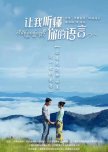
This drama has not been discovered and watched by many. What a pity! It is a wonderful drama and I'm glad I found it and wanted to watch it. The scenery of the Yunnan region is simply breath-taking -- so natural and so beautiful. The minority group living there, the Dai, is one of the most beautiful people with beautiful costumes, graceful culture and traditions. People, together with the scenery, make the setting of this drama out of this world.The Dai people are very spiritual people. They live with nature. They are contented. They love life. And most importantly, they are grateful for what they have.
I love the simplicity of life living in the rural areas. No traffic, no smog, no noises, no high rises. You're surrounded by fresh air and trees. Nature abounds and time stands still. One really doesn't need a lot of money to live a meaningful life. If not for the story, one can still enjoy watching this drama for the beautiful scenery, exotic minority people, and most of all, the cultivation of tea. I hope more viewers discover this wonderful drama like I did, and decide to give it a try.
All the main actors are new to me. The male lead, Xu Hao Ning played by Roy Chiu, is one of those wealthy princelings living in Shanghai. He is also a doctor. But despite his wealth, he is lost. He is spoiled and doesn’t take responsibility seriously, but he has a kind heart. Roy Chiu is amazingly handsome. So good looking that he may melt many hearts with his wonderful acting skills. He convinces me that he is really Xu Hao Ning, the character he portrays.
Lu Kira, the female lead, has a quiet and unpretentious persona, perfect for her role as the Dai ethnic Yu Bo who is shy and timid. Her beauty and acting skills simply fit into the portrayal of an ethnic girl living in a tucked-away community, far away from the cities.
The love story between the two is seemingly doomed from the beginning as both have come from totally different backgrounds. They don’t seem to have anything in common. Their value systems are totally different and may even be opposite; they know very little about each other’s values. They fall in love at first sight which seems frivolous; their relationship seems like a fantasy and a spur-of-the-moment. Any yet, with their deep love for each other, they are willing to learn and make sacrifices for each other.
The predicaments faced by these two lovers are actually what we are facing ourselves in our own life. If we stop and think for awhile and ask ourselves this question - what do we want in life? Religions tend to tell people to stop asking such question as God has already planned everything out for us. But for non-believers, this is a real question. The searching and discovery is really a process we all should do, just like Xu Hao Ning and Yu Bo do.
The story also touches on a current sensitive issue about development, something many governments are facing. Should a government allocate funds to develop a seemingly poor and backward area, and bring its residents out of poverty? What seems like a noble intention may not end up as the best choice - many communities suffer the so-called development; they get exploited, their culture, traditions and way-of-life lost. However, if a government does nothing and let the communities live as they do for probably as long as they have existed, the government is being criticized as unfair and uncaring. This situation really echoes what we are seeing in China at the Xizhang and Xinjiang areas; when the government tries to improve the areas, they are being seen as trying to take away the identify of the people by the conservatives; when they leave the areas alone, they are being seen as ignoring the needs of the people by the liberals and progressives. Either way, they will be criticized. Striking a balance perhaps is the hardest thing to do.
Then we have to ask the question - what is development? Is it to make more money and have a "better" lifestyle, or is it to conserve one's culture, tradition and way of life for the future generations? This is a difficult question to answer. No matter what, this drama has brought up all these questions and let viewers to ponder and search our souls.
A lovely romantic story - a true gem waiting to be discovered.
Was this review helpful to you?
Great Performance by Little Actor
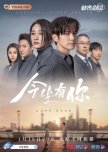
Any family that has a sicken child with a serious disease from birth can empathize with this story. In this drama, the whole story revolves around the child, trying to get him back to health. It’s tormenting and painful to see the child’s little body going through all the pains and sufferings. If you have experienced the anxiety before a surgical operation, you could empathize with the characters’ anxiety here too. This is a story that is full of loneliness, despair, longing, waiting, at the same time, lavished with determination and devotion.How this drama is being cut and edited is rather confusing at the beginning. As the story is unfolding, there is a lot of flashbacks and backstories. In fact, two timelines are playing out concurrently, one telling the present story and the other the story of how Nie Yusheng (Chung Hon Leung aka Wallace Chung) and Tan Jing (Li Xiaoran) have met during their adolescent years in high school.
I find it strange that when ex-lovers meet again, they act like strangers to each other; there’s no surprise, no nods, no eye contacts, no nervousness -- nothing, as if they have never met before. This strange phenomenon doesn’t only apply to our main leads, it also applies to our second lead couple, and even between father and son. Only the backstories reveal that these people indeed are no strangers to each other, and with flashbacks, only then viewers see their emotions and subtle expressions. As viewers get accustomed to the style of storytelling, it becomes rather enjoyable as the details are explained well in the backstories and flashbacks.
Nie Yusheng is almost like a walking corpse haunted by the past. Playing a tormented and bitter heart surgeon, Chung Hon Leung’s acting is very convincing, especially with the scene when Nie Yusheng breaks down and sobs. However, as many viewers have commented, dubbing in his own voice, it has given inconsistencies to the character. There are times when dubbing with the actors’ own voice is good, but not here because Chung Hon Leung’s native tongue is Cantonese. This has made him speaking Mandarin with a Cantonese accent which doesn’t go very well in this drama because he speaks differently, perhaps too differently from everyone else. It is even harder not to notice when the adolescent Nie Yusheng speaks perfect Mandarin and an adult Nie Yusheng doesn’t. I also find it hard to watch Chung Hon Leung playing the role of the adolescent Nie Yusheng when he loses memory as this is really a long stretch for the actor.
Tan Jing (Li Xiaoran) is mature and patient, enduring all the hardships that are thrown at her, at work and in life. A devoted mother, she would do anything for her child. Li Xiaoran has played her character convincingly showing the motherly side of her character with full marks.
I have really enjoyed watching the two young actors playing the adolescent Nie Yusheng (Zhan Yu) and Tan Jing (Fan Shiran). These two talented actors have truly captured the essence of the young couple and their amazing chemistry. I wish the director had continued to use the same actors into their adulthood instead of switching to Chung Hon Leung and Li Xiaoran because with the older pair, the whole feel of the story has shifted. Perhaps this is the effect that the director has wanted to show the viewers: how growing up has changed the couple and their chemistry.
My most enjoyable moments are probably when little Ping Ping (Mi Ke) comes on screen. The little actor is a gem and he nails the role so naturally. All his dialogues are intelligent and heart touching. His moments with his grandfather are precious as the viewers can really feel the love, joy and resignation of the relationship.
My Verdict
This is an adult romance drama that cannot be watched with skipping episodes nor with fast-forwarding as every scene is a hint to the next part of the story. From the beginning until about episode 12, it’s a rather excruciating watch as the viewers experience the longing and emotional pains of the characters. Misunderstandings are abound with words heard out of context and being misconstrued. This drama perhaps has the greatest and longest misunderstanding, from episode 1 to the last, that has kept our main characters apart. It is also a drama with mysteries, murder, coverup, office politics, family conflicts, revenge, and more. It is the little Ping Ping that has brought the adults back to reality and sanity, as watching him is the most heart warming experience. The story carries the message that, the one who is obsessed with revenge ends up with nothing; the one who leaves power and materialism aside and holds on to the people he loves gains everything.
A drama worthy of our time. Recommended!
Was this review helpful to you?
How to Catch a Seditionist
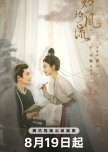
In "The Legend of Zhuohua," we follow the journeys of two determined women in a society that doesn't always favor them. Our main character, Mu Zhuohua (played by Jing Tian), studies hard, passes her exams and rises in the government. Another woman, Princess Rou Jia (played by Wang Likun), secretly aspires to become the Emperor. Both women dream of bringing positive changes and cleaning up corruption in the government.Their goals are similar, but they have different approaches. Mu Zhuohua wants an honest government and a stable monarchy. Meanwhile, Rou Jia gets consumed by revenge and a thirst for power, and she hides her true intentions behind a mask of philanthropy.
The story begins with Mu Zhuohua focused on her career, putting love and family on the backburner. Even though there's a deep connection between her and Liu Yan (played by Feng Shaofeng), they choose a unique path, deciding not to get married or have children. But as the story progresses, it shifts towards a full-blown romance, with Mu Zhuohua and Liu Yan growing closer. Unfortunately, Mu Zhuohua loses some of her initial spark as an ambitious woman striving for success. Nonetheless together, they crack the greatest conspiracy and catch the seditionist who is the mastermind of the whole thing.
It's said that the author was asked to change the storyline involving a female emperor. This shift causes Princess Rou Jia to end up as another negative character with a predictable ending, and perhaps the tone down has also weaken Mu Zhuohua's character.
In terms of acting, Wang Likun does an impressive job portraying Princess Rou Jia. Her transformation from grace and benevolence to calculated malevolence feels genuine and leaves a strong impression. Jing Tian's acting is decent, although it's a bit hard to picture her as the young and brilliant Mu Zhuohua due to her mature appearance. Feng Shaofeng's portrayal of Liu Yan, ailing but with a magnetic allure of a mature man in a deep voice with few words, is fine. However, the robotic voice dubbing is unbearable and distractive.
My Verdict
I initially liked the drama, but as it progressed, it became slow and filled with plot holes. The main lead characters seem to magically know the thoughts of their enemies. When they discover Princess Rou Jia's true nature, they show no surprise, which doesn't make much sense. The main female characters also become somewhat passive, and the male characters become rather banal.
My suggestion? Watch this drama while doing something else, like cooking or working out. It can be a background entertainment option!
Was this review helpful to you?
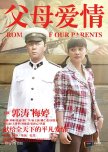
Sounds of A Family
This story is set at the onset of the Cultural Revolution in the 1950s/1960s. It was the times when all capitalist families were banished, western ideas were deemed corrupt and any association with elitism was seen as unpatriotic and condemned. Family members were pitted against each other, separated and moved away to be ‘rehabilitated’. This story is about what we call a true family. It is humorous and warm despite the trying times many were going through.The Story
A divorced naval officer, Jiang De Fu (Guo Tao) falls in love with a beautiful girl, An Jie (Mei Ting) from a wealthy family. She is sophisticated and well educated whereas he is crude and poorly read. At first, she looks down on him, but because of her family background of being a capitalist, she is being sneered at and shunned, and can have no choice for a partner for marriage; any association with her is uncalled for. After some time getting to know him under various circumstances, she begins to see his qualities – kind, honest, humorous, witty, and compassionate among others. After a speech he gives about his own life, she is totally moved and falls in love with him, and they get married. After marriage, they continue to have 5 children, and this story is written by their youngest daughter who is a writer. In their old age looking back, despite all the ups and downs, bringing up a whole family and growing old together hand in hand perhaps is the best thing in life, and should be what life is all about - life is good.
The dialogues in this drama are hilarious, witty and unforgiving, and yet cute and endearing. Constantly sharp tongues lash out at each other, insulting with harsh words and yet, this is just harmless interactions soon forgotten; love often exudes in every word between the couple and within the family. Everyone talks this way, making it normal and no one feels insulted or upset. The dynamics between husband and wife, parents and children, siblings and siblings, friends and friends, are incredible, and well written and executed.
The story is told as it, exactly how things are. There’s no beautification for romantic effect. Everything is mature and up in the open including finding partners and having children. This is a great departure from the rom-coms that we are so used to involving younger actors with prudish characters.
The Characters and The Acting
This drama boasts some very fine veteran actors. Their acting is simply natural and convincing as if they are the real characters themselves. There’s some really amazing acting here by the whole cast too, in particular the child actors who are so wonderful showing the viewers amazing sibling dynamics and their relationship with the adults.
There are many flaws in each of the characters, but like us, no one is perfect. How the dynamics between the characters play out eventually make all these characters alive, realistic and relatable.
Jiang De Fu (Guo Tao) is perhaps the most lovable character in the story. Guo Tao may look too mature for a male lead in the beginning as a young naval officer, but as Jiang De Fu becomes a father and continues to be promoted to the position of a commanding officer, Guo Tao is perfect for the role. He looks amazing in his white naval officer uniform and his distinguishable charisma overpowers everything around him. Respected by all and yet warm and sincere to everyone, Jiang De Fu is simply an amazing husband, father, co-worker, subordinate and superior. He is tactful and articulate, manages to get the points forward without hurting feelings. With his wife, his subordinates, his children, his sister, his best friend, they banter, bicker and fight, yet they care for each other. Only he can deal with the strong character of his wife and defuse any tense situations with his negotiating skills.
An Jie (Mei Ting) comes from a wealthy family owning businesses. She is intelligent and well read. With a sharp tongue and unforgiving demeanor, she initially looks down on Jiang De Fu and his people for being ignorant and uncouth. She even feels his name is too unsophisticated and teases him. Since marriage, she constantly teaches him about hygiene and cleanliness. How she banters with her husband and bickers with his sister is really a joy to watch. Mei Ting’s portrayal is 100% as a by-gone ‘da xiao jie’ to a wife of a military officer with 5 kids. She is so natural and convincing.
As the younger sister of Jiang De Fu, Jiang De Hua (Liu Lin) has come from the rural area and is crude and simple minded. Despite the constant fights with her sister-in-law An Jie, she is loyal to her brother and his family. She helps take care of the household and all the children, and has become a very important part of the family. Over the years, her relationship with An Jie improves and they each care deeply for one another. Liu Lin’s performance is absolutely fantastic and applaudable.
My Verdict
This is a really delightful drama for the whole family. The inter-personal dynamics are very well written and performed. For a span of over 50 years, we see how life changes, from dating to marriage to parenting to growing old. Despite all the ups and downs, raising children and taking care of a household, life passes us quickly. Taking life as it comes, as how the characters in this story do, can help us see life with more enthusiasm, and love the people around us. Like we all have experienced, all the characters here bicker and fight all the time, as well as they tease and joke. After their harmless encounters, they make up and life moves on.
Life is good. Don’t miss this amazing family drama!
Was this review helpful to you?
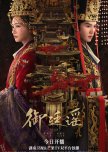
Fast Paced, Good Drama Generally, Lousy Last Few Episodes, Limited Romance
I loved this drama for the first stretch, but by the last 10 episodes, I was giving it a "meh." Don't get me wrong—the acting is genuinely good. It's just that the logic sometimes dips below what I'd expect from a show this ambitious. At its core, this is a story about fighting the untouchable elite—the kind of people who think they're above the law (sound familiar?). It tackles corruption, fraud, and girl trafficking woven deep into the government (again, sound familiar?). And more than that, it's about women fighting against impossible odds with nothing but their wits, clawing their way into positions of power not for themselves, but for the greater good.What I Loved
I loved Meng Ting Hui as a street urchin. Watching her fight tooth and nail just to survive, refusing to bow down to bullies no matter how outmatched she was—it was a very satisfying watch. When she witnesses injustice, she's dead set on making things right, even if it costs her everything. And Wu Jinyan nails these scenes. The way she plays that suppressed rage when her hands are tied, the way she finally explodes when the weight becomes too much—it's the best. The scene where she tries to kill the child trafficker from her childhood in broad daylight, completely disregarding the fact that she's now a public official with all eyes on her? Absolutely gripping.
Then there's Ying Gua. What a complex character. On the surface, he lets his chancellors push him around like a puppet. But behind closed doors? He's the mastermind, quietly orchestrating a massive purge of his corrupt court. I loved his free spirit when he roams the jianghu incognito—a decisive, unshackled swordsman with no imperial constraints weighing him down. And I loved how he uses Meng Ting Hui as his blade, turning their relationship into a tense, high-stakes game of cat-and-mouse. Neither fully trusts the other. Both need the other. It's enjoyable to watch.
And Chen Zheyuan? Outstanding. I know some viewers find him wooden, but to me, that calm, regal stillness is exactly how a young emperor raised under strict grooming should carry himself. He's not allowed to show emotion on his face—yet Chen Zheyuan lets it bleed through his big, round eyes, and the subtle twitches at the corners of his mouth—it all paints an emperor whose mind is as deep and unfathomable as the sea. His ability to flip between the gentle, almost cowardly mask he wears in front of ministers and the ruthless, calculating reality when he's out saving Meng Ting Hui or cutting down enemies, it is so satisfying to watch. And somehow, even in plain clothes, wandering the world as a nobody, he still exudes this unmistakable royal aura.
I loved the themes. Fighting the untouchable ruling class. Going against the trafficking and corruption rotting the government from within. Watching women use their brains—not their bodies—to claw their way into rooms they were never meant to enter, and then using that power to protect others. It resonates.
The romance? Refreshingly restrained. Both leads clearly fall for each other, but the show never lets it hijack the plot. They stay focused on the mission, on fighting crimes, on surviving. I also appreciated the side couples—at least three of them, two of which are tragically short-lived (one ultra-short-lived), adding just enough tenderness to soften the otherwise heavy world of palace politics.
And that third couple—the one where the love wasn't reciprocated until it was far, far too late— it's a quiet but powerful reminder: treasure the people around you while you still can.
But what I loved most is how the leads place duty and nation above their personal feelings. There's a maturity to their love story that blurry-eyed, lovey-dovey romances simply can't match.
The OSTs are surprisingly good as well. My favorite is "Beholding Mountains and Rivers" sung by Liu Yuning.
What Didn't Work for Me
Okay, the not-so-great stuff.
I hated the scene where Meng Ting Hui pretends she is drunk and conveniently falls in front of the emperor. It felt so beneath her character. It reminded me of Yao Zijin (played by Wu Jinyan as well) in Royal Feast—a woman who deliberately threw herself at the crown prince to get his attention (for me, she was a completely unlikeable character). Meng Ting Hui is smarter than that. She shouldn't need to seduce her way into relevance.
I also didn't like how the show takes a sweet, decent man and twists him into a hate-driven, power-thirsty antagonist. It felt totally out of character.
Some characters are written off so quickly that it feels like lazy writing to me. The viewers invest in them, and then—gone. No weight, no consequence.
Some of the coincidences are wild, like Meng Ting Hui directed the lightning to strike the scoundrel in the middle of a tiny alleyway. It's trying so hard to make her seem above normal that it loops right back around to feeling completely unreal.
I wasn't thrilled about the princess reveal as well.
I get it—it's from the source material, and narratively, it gives her the "proper" status to stand beside the emperor. But honestly, I would've loved it more if the emperor married a street urchin. That would've been truly outside the box. Instead, we get the same old tradition: an emperor must marry royalty, even if it's foreign royalty. It undercuts the very theme the show spent 30 episodes building.
And the villains, almost all of them, end with a villainous shrieking laugh. It feels ... like a template.
Final Thoughts
From what I've gathered from novel readers, the adaptation deliberately shifted focus from romance to political thriller. The original title, "The Empire as a Betrothal Gift", was switched to "Yu Ting Yao" (but the English title "Royal Betrothal" remains)—a clear screenwriting choice to downplay the romance and lean into court intrigue. That actually suits me just fine, though I know it left some romance lovers disappointed.
The pacing is fast. No filler, no wasted time, no meandering side plots that go nowhere. The desert landscapes are gorgeous (even if some are AI/CGI-assisted), the sets are stunning, and the costumes are immaculate—you can tell the production team poured serious effort into the visuals.
But here's the thing: I can't say I love this drama. It's enjoyable. It's well-acted. But it's not memorable. I didn't miss it when it ended. And don't worry—it's not a sad ending. It's just... expected. And maybe that's why it didn't leave a lasting mark on me.
Overall, still a very solid watch, especially compared to a lot of what's airing right now. Just don't walk in expecting a blockbuster, and you'll have a great time.
Was this review helpful to you?
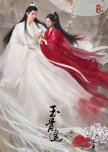
A Perfect Mismatch
"The Longest Promise" is the most excruciating lack of mutual understanding I’ve ever seen in a drama! It's supposed to be a romance between a teacher and his pupil, but it's like watching two people trying to solve a Rubik's Cube with their eyes closed! They're attracted to each other, but they're so clueless about what's going on in the other's head, it's like a never-ending game of emotional hide-and-seek.This drama is adapted from a novel called "Zhu Yan," written by Cang Yue who has also written the story for “Mirror: A Tale of Two Cities”, another poorly conceived drama which tells the story of the fish people of Su Mo, a character appears in “The Longest Promise”. While everyone else seems to be raving about this drama, I find myself fighting off yawns. The plot revolves around Zhu Yan's emotional rollercoaster ride, and it's like they're dissecting her feelings with a microscope. Talk about overanalyzing!
Zhu Yan is supposed to be a sweet, kind, and innocent girl, but the poor script writing makes her come off as plain stupid and unbearable. Ren Min's portrayal doesn't help much either. Every time she calls out to her shifu, I can't help but cringe. It's like innocence and seduction got tangled up in a messy knot!
Likewise for the Shi Ying character. Don't get me wrong, I love Xiao Zhan, but even his talent can't save this inconsistent and lackluster portrayal of Shi Ying. Blame it on the poor script writing, I guess. In fact, almost all the character writing is very poor; they are inconsistent and full of logic flaws.
My Verdict
The writers are on a mission to extract emotions and tears from the viewers, but it just feels forced and dry. The dialogues are as predictable as counting sheep to fall asleep, and plot holes are everywhere. And can we talk about that resurrection ending? It’s bizarre. Luckily there were no halos and water-walking this time (which happened in “Mirror: A Tale of Two Cities”), thank goodness!
I hate to be a party pooper, but this drama is just not my cup of tea, even with the talented Xiao Zhan and Ren Min on board. Sometimes, you just gotta accept that not every drama can hit the mark, no matter how much we adore the actors. Let's shake our heads, move on, and find something that'll tickle our funny bones for real! This drama is for Xiao Zhan’s hardcore fans.
Was this review helpful to you?
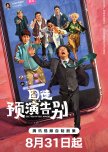
不生不死 Unable to Live, Unable to Die
If I had to describe See You Later… Maybe in one phrase, it would be "reality through exaggeration." The show brilliantly highlights the ironies of life and the misnomer of modern success. Let’s be honest: in today’s internet and social media age, talent without a marketing package is practically buried alive. Virality is the key to exposure, and virality depends on extremities. The more extreme an event or action is, the more viral it goes, and the more "success" one can garner. That’s the formula of our world, and this drama perfectly illustrates the sheer absurdity of it all.The story follows a washed-up writer, Fang Haowen (played by Jia Bing), and his only true fan, Bie Fan (played by Tian Jiarui). Bie Fan is a brilliant young man on the autism spectrum who happens to be a phenomenal chef because he can memorize every recipe he comes across.
Right off the bat, I should mention the humor. The jokes here often come from laughing at the characters' misery—they are dark, cruel, and incredibly cynical. Yet, as exaggerated as it sounds, the show depicts how the social media marketing world actually works with terrifying realism. Fang Haowen is a mediocre writer, but to market his books today, he is forced to make a choice: sales or dignity? The show perfectly captures the effectiveness of influencer livestreams, while also exposing the truth behind them: despite the "live" label, everything is heavily scripted. It’s all fake.
Plot-wise, the story is a wild fusion of Forrest Gump and a fever dream. It’s filled with bizarre events and a chain of hilariously failed suicide attempts (drinking poison, hitting himself with a spade, hanging, jumping off bridges—you name it). From there, things jump from one surreal scenario to the next, almost like a dream. At one point, he encounters characters from Journey to the West; when Tang Sanzang refuses to take him to the "West" (death), Fang Haowen ends up meeting various sages. He even meets Vincent van Gogh! They have a surprisingly nice conversation where, despite speaking different languages (Mandarin and French), they perfectly understand each other. Van Gogh complains about how poor he was because he couldn't sell his paintings. Later, Fang Haowen and Bie Fan are chased by a tiger that eats Fang Haowen's ear, causing them to fall into a giant hole. After starving for days, a python shows up to eat them, but they end up killing and eating the python instead!
When they finally return to civilization, the story takes a fascinating turn, exploring how AI might replace creative writing. It shows a dystopian future where new books are produced even after the writer dies, and the AI's writing is technically "better." But the catch? AI can't feel. It has no emotions, no tastes, no physical senses. This is exactly when Fang Haowen finally has his realization.
Amidst all this chaos, Bie Fan’s storyline is incredibly heartwarming, tear-jerking, and funny. I love how humor is woven into almost all of his scenes. One of my absolute favorite moments is a very subtle one: he places his mother’s ashes in an urn and puts it right next to the other condiments on his restaurant's seasoning shelf. It’s a quick shot that many viewers might miss, but it is so deeply moving.
Final Thoughts
This drama makes us laugh—not necessarily because the punchlines are traditional jokes, but because we are laughing at the characters' misfortunes. In a way, each character’s story reflects our own lives. But when we watch our own struggles played out on screen, we find it funny. It also doesn't shy away from exposing the dark sides of the publishing and marketing industries, like plagiarism.
The moral of the story asks: What is success? Success isn't about what people say about you; it’s about how meaningfully you live your life. As Bie Fan’s mother told him in her final words: Don't fear failure. Hope is always there. By the end, Fang Haowen realizes that the destination isn't what's important; the important thing is that we finally understand ourselves during the journey.
A quick warning before you watch: if you only watch dramas for the "eye candy" and incredibly good-looking actors, you might want to skip this one, as looks aren't the focus here. But if you appreciate phenomenal acting (especially a standout, transformative performance by Tian Jiarui) and a brilliant, thought-provoking satire about life, you are in for a great watch!
Was this review helpful to you?


