
 Celebrity

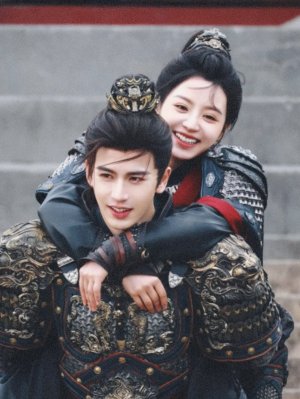
 1
1 2
2 1
1


'‘The jianghu calls itself righteous, yet every blade carries its own ambition’”
This drama is not a typical wuxia story about heroes defeating villains. Instead, it is a melancholic exploration of identity, memory, loyalty, and the emotional cost of living in the jianghu.
At its heart, the story revolves around two contrasting yet deeply connected characters:
Their story unfolds like a melancholic wuxia poem, filled with subtle emotion, philosophical dialogue, and powerful symbolism.
In Generation to Generation (江湖夜雨十年灯), Mu Qingyan stands out because he resembles protagonists from classic wuxia literature rather than modern action-focused heroes. His personality is built around melancholy, reflection, moral conflict, and quiet yearning, which are hallmarks of literary wuxia characters.Zhou Yiran plays the drama’s central anti-hero, Mu Qingyan.
Having survived a devastating tragedy in his past, he enters the martial world with a hidden identity of CHANG NING and a carefully constructed emotional armor. Outwardly, he appears calm, calculating, and detached.
Yet beneath this composure lies:
unresolved grief
deep loneliness
a quiet desire for belonging.
Unlike traditional wuxia protagonists who pursue glory or revenge straightforwardly, Mu Qingyan constantly questions his own motives.
His internal conflict revolves around three struggles:
revenge vs justice
control vs vulnerability
isolation vs the need to trust.
This psychological depth makes him feel closer to the tragic heroes of classical wuxia literature.
small shifts in facial expression
quiet pauses in dialogue
restrained body language.
Instead of portraying Mu Qingyan as cold or ruthless, Zhou Yiran shows that the character’s detachment comes from deep emotional scars.
-The lantern-in-the-rain scene — his silent expression conveys years of loneliness without any dialogue.
- Confession scenes with Cai Zhao — his voice softens almost imperceptibly, revealing vulnerability beneath the character’s strategic exterior.
Because of this subtle acting style, I felt that Zhou Yiran successfully captured Mu Qingyan’s quiet yearning.
Cai Zhao — The Moral Compass
Cai Zhao enters the jianghu with a completely different mindset.
She is independent, perceptive, and emotionally open. Instead of viewing people as potential enemies or strategic tools, she approaches the world with sincerity.
However, she is not naïve. As the story progresses, she witnesses the corruption and hypocrisy within the martial world.
What makes her character powerful is that she refuses to let the jianghu destroy her humanity.
Cai Zhao feels natural and grounded because Bao Shangen uses:
relaxed body language
expressive eyes
an easy conversational tone
Within the narrative she functions as:
the story’s moral center
the emotional balance to Mu Qingyan’s darkness - the light to his darkness
the catalyst for his gradual transformation.
This creates a striking contrast with Mu Qingyan’s guarded personality.
The scene where she calmly listens to Mu Qingyan’s painful past shows her character’s empathy and emotional maturity.
Combat scenes demonstrate Cai Zhao’s confidence and fluidity, reflecting the character’s free-spirited nature.
On-Screen Chemistry
One of the strongest aspects of the drama is the chemistry between Zhou Yiran and Bao Shangen. Their interactions rely on quiet emotional tension rather than overt romance. Instead of dramatic love confessions, their relationship develops through:
lingering looks
hesitant conversations
moments of mutual understanding.
This slow-burn dynamic makes their connection feel believable and emotionally satisfying.
Supporting Cast
While the story focuses primarily on Mu Qingyan and Cai Zhao, the supporting characters help build the morally complex world of the jianghu.
Sect leaders, disciples, and rival factions all contribute to the central theme that the martial world is rarely as righteous as it claims to be. These performances create a layered environment where alliances constantly shift and motives remain uncertain.
I believe The cast of Generation to Generation (江湖夜雨十年灯) succeeds because their performances emphasize emotional nuance rather than spectacle.
A Literary Romance
Their dynamic evolves through several stages:
cautious cooperation
ideological conflict
growing trust
emotional intimacy.
Mu Qingyan initially views relationships strategically, while Cai Zhao believes in honesty and compassion. Through their interactions, each gradually reshapes the other’s worldview.
while often she displayed the fact she does not want to love someone against the beliefs of the six sects.Yet the love that endured everything kept drawing her back to Mu Qingyan. After his betrayal, she still went with him to the Li Sect. There, she finally confessed her feelings in a deeply emotional moment.
Mu Qingyan, who had never truly known the warmth of a home, found himself longing for the comfort of Luoying Valley—especially after hearing Cai Zhao’s childhood story. She shared a piece of that memory with him, drawing it and giving him half of it, as if to let him experience the warmth she once knew.
Through tears, she confessed that she would have loved him even if she had known all his lies from the beginning. Her love was so deep that she was even willing to lie for him.
After a quiet, tender kiss, she left.
But her return home came with a price: she was punished with seven lashes from the python whip.
Themes Explored in the Drama
The Illusion of Righteousness
The drama challenges the traditional wuxia divide between righteous and evil sects.
Many powerful sect leaders hide corruption behind the label of morality, suggesting that power often disguises itself as righteousness
Identity and Masks
Several characters conceal their true identities or intentions.
Mu Qingyan himself lives behind multiple masks, representing the broader theme that survival in the jianghu often requires hiding one’s true self.
Yet the drama also asks:
If someone lives behind a mask for too long, can they still remember who they really are?
THE DRAMA QUITE DEBATE OF WHO REALLY IS THE MAN IN BLACK AND IS THE PAST REPEATING ITSELF YET AGAIN
Trauma and Healing
Mu Qingyan represents the emotional scars left by tragedy, while Cai Zhao represents the possibility of healing.
Their relationship suggests that human connection can slowly restore what trauma has damaged.
Belonging
Many characters in the story wander through the martial world without a true home. The emotional heart of the drama lies in the question:
Where does one belong in a world defined by conflict and betrayal?
Iconic Scenes
🌧 The Lantern in the Rain
One of the most memorable scenes shows Mu Qingyan standing alone at night, holding a lantern in the rain. There is almost no dialogue. The scene visually expresses his isolation and resilience.
It also mirrors the poetic meaning of the drama’s title.
Their First True Partnership
During one battle, Mu Qingyan and Cai Zhao fight side by side for the first time.
Their contrasting fighting styles reflect their personalities:
Mu Qingyan’s movements are precise and calculated
Cai Zhao’s technique is fluid and instinctive with her sword 'sunshine blade' gifted by her aunt Cai pingshu
This moment marks the beginning of their emotional partnership.
The Confession of the Past
When Mu Qingyan finally reveals part of his tragic past, he speaks calmly, as if recounting someone else’s story.
Cai Zhao responds not with pity but with understanding, allowing him to be seen without his usual emotional defenses.
The Moment He Pushes Her Away
At one point, Mu Qingyan deliberately distances himself from Cai Zhao to protect her.
He pretends their relationship was merely strategic, even though the audience can clearly see the pain behind his words.
This moment highlights his belief that his life is too dangerous to allow someone else close.
After Cai zhao was punished for betrayal, he told his sect members to not to mention her name.
Memorable Lines
Several lines capture the philosophical tone of the drama.
“The jianghu calls itself righteous, yet every blade carries its own ambition.”
“I learned long ago that trust is a luxury.”
“If no one dares to trust, then the jianghu will never change.”
“Some wander the jianghu seeking fame. Others wander because they have nowhere left to return.”
The Meaning of the Title
The poetic title “江湖夜雨十年灯” roughly translates to “A Lantern in the Night Rain of the Jianghu for Ten Years.”
Each element carries symbolic meaning.
Night rain represents loneliness and wandering.
The lantern symbolizes fragile hope and memory.
Ten years reflects endurance through hardship.
The title can be interpreted as a metaphor for Mu Qingyan’s life — a man wandering through a dark and turbulent martial world while protecting a small light of hope.
Many viewers interpret that lantern as Cai Zhao, the person who restores his faith in trust and belonging.
《清风醉》 (“Drunk on the Clear Breeze”) — Theme Song by Chris Lee
This song functions as the emotional signature of the entire series. It plays in key moments and in the ending credits, reinforcing the mood that lingers after each episode.
At a surface level, the title evokes freedom and wandering — drifting like wind and unable to settle. But beneath that imagery lies a deeper emotional complexity:
The “clear breeze” represents the fleeting, fragile moments of peace in the jianghu.
The idea of being “drunk” suggests being overwhelmed by something beautiful yet transient — much like Mu Qingyan’s emotional experience.
It captures the tension between longing for freedom and being bound by memories, duty, and pain.
The song’s tone — mellow, reflective, and lightly melancholic — mirrors the central emotional arc:
Mu Qingyan’s internal conflict: He yearns to be free from his past but carries it with him always.
Cai Zhao’s influence: Her sincerity becomes a clear breeze in his closed-off world, stirring feelings he rarely acknowledges.
The jianghu itself: Beautiful but unpredictable, inviting yet treacherous.
So even without hearing words, the emotional core of the music feels like a breath between storms — a moment of peace before the next challenge.
《应如是》 (“As It Should Be”) — Insert Song by Wang Zhengliang & Huang Ling
This is the emotional anchor for character relationships. It typically plays during pivotal scenes between Mu Qingyan and Cai Zhao — moments of understanding, unspoken connection, or quiet emotional shift.
The title “As It Should Be” suggests acceptance — not resignation, but a mindful acceptance of the realities that characters can no longer control:
The world is flawed.
Hearts are guarded.
Yet some truths remain inevitable.
It reflects an emotional state where characters stop forcing outcomes and begin acknowledging what is real and true in front of them.
This song’s tone — gently evocative, warm but tinged with vulnerability — fits scenes where:
Trust begins to form between Mu Qingyan and Cai Zhao, even when spoken affection is absent.
A character admits a quiet truth about themselves without explicitly saying it.
Emotional resonance lingers after a scene, rather than being resolved in dialogue.
In essence, this track is used to underline emotional recognition — the moment when a character (or the audience) realizes something fundamental about someone else.
《赴》"Bound For" by Liu Yutong
This track often underscores turning points — scenes where the narrative or the relationships shift in meaning or resolve.The title “赴” means “to go toward,” “to meet,” or “to commit to.” It’s a single-word phrase, but it carries emotional weight:
It implies movement toward something purposeful — not aimless wandering.
It suggests a decision to engage rather than retreat.
This aligns perfectly with key narrative beats where characters decide to face something difficult rather than avoid it.
This song’s tone — contemplative with rising emotional tension — is typically used when:
Mu Qingyan decides to confront his past rather than hide from it.
A character chooses loyalty over fear.
Cai Zhao moves toward a dangerous situation not because she must, but because she chooses to.
The music mirrors the emotional shift from hesitation to resolve — the moment when someone steps forward despite risk.
CGI EFFECTS
In Generation to Generation (江湖夜雨十年灯), CGI and visual effects are used with subtlety and purpose, enhancing the drama’s poetic and introspective tone rather than overshadowing the story. Wirework is augmented with light CGI in martial arts sequences to emphasize the precision and fluidity of Mu Qingyan and Cai Zhao’s fighting styles, while environmental effects like rain, mist, and glowing lanterns heighten the emotional atmosphere, reflecting the characters’ inner states of loneliness, longing, and hope. Symbolic imagery—such as lanterns floating in the night or faint shadows in battle—reinforces themes of legacy, perseverance, and the burdens of the past, and set extensions create a grand but believable jianghu world. Overall, the visual effects support both the narrative and the emotional arcs, making the jianghu feel alive and immersive while keeping the focus on character and story.
MY FAVORITE DIALOGUES - QUOTES
MU QINGYAN -
“I learned long ago that trust is a luxury.”
Captures his guarded, anti-hero nature and the scars of his past.
“If you are here, I do not need to watch my back.”
A subtle confession of trust and vulnerability, usually reserved for Cai Zhao.
“The jianghu calls itself righteous, yet every blade carries its own ambition.”
Reflects his perception of the moral ambiguity in the martial world.
CAI ZHAO -
“You survived. That alone is not something to be ashamed of.”
Shows her empathy and ability to see humanity in others, even wounded anti-heroes.
“Some wander the jianghu seeking fame; others wander because they have nowhere left to return.”
Highlights her reflective, poetic view of the world.
“Strength is not in the blade, but in knowing when to protect and when to let go.”
Reveals her moral clarity and wisdom beyond martial skill.
PLOT HOLES
MANY of these lies within the directors but indeed covered by our flawless couple and Safe to say Novel is written in a amazing way. I won't directly say anything but i do agree the drama is flawed in some aspects.
Overall Rating: 9.5 / 10
Generation to Generation is a poetic, character-driven wuxia drama that explores trust, legacy, and moral dilemmas. With Mu Qingyan’s complex anti-hero journey, Cai Zhao’s sincerity, and a hauntingly atmospheric world, it balances emotion, philosophy, and subtle action. Even with minor plot gaps, its emotional depth and immersive storytelling make it a must-watch.
IT MADE IT TO TOP 10 FAVOURITE DRAMA LIST .
NO OFFENSE, I LOVE WHEN I FLY TOWARDS YOU.BUT, THIS IS MY FAVOURITE ZHAO YIRAN DRAMA
HE IS VERY ALLURING WITH LONG HAIR AND TRADITIONAL COSTUMES, OF COURSE VERY HAMDSOME
NO WONDER, CAI ZHAO WAS SURPRISED.
FEMALE LEAD IS SOOO PRETTY NO WORD.
THIS is one of MY TOP 10 FAVOURITE COUPLE.
visual x visuals
I believe people have different opinion on the drama but this is mine, hopefully everyone respect this and enjoy the drama.
At its heart, the story revolves around two contrasting yet deeply connected characters:
Their story unfolds like a melancholic wuxia poem, filled with subtle emotion, philosophical dialogue, and powerful symbolism.
In Generation to Generation (江湖夜雨十年灯), Mu Qingyan stands out because he resembles protagonists from classic wuxia literature rather than modern action-focused heroes. His personality is built around melancholy, reflection, moral conflict, and quiet yearning, which are hallmarks of literary wuxia characters.Zhou Yiran plays the drama’s central anti-hero, Mu Qingyan.
Having survived a devastating tragedy in his past, he enters the martial world with a hidden identity of CHANG NING and a carefully constructed emotional armor. Outwardly, he appears calm, calculating, and detached.
Yet beneath this composure lies:
unresolved grief
deep loneliness
a quiet desire for belonging.
Unlike traditional wuxia protagonists who pursue glory or revenge straightforwardly, Mu Qingyan constantly questions his own motives.
His internal conflict revolves around three struggles:
revenge vs justice
control vs vulnerability
isolation vs the need to trust.
This psychological depth makes him feel closer to the tragic heroes of classical wuxia literature.
small shifts in facial expression
quiet pauses in dialogue
restrained body language.
Instead of portraying Mu Qingyan as cold or ruthless, Zhou Yiran shows that the character’s detachment comes from deep emotional scars.
-The lantern-in-the-rain scene — his silent expression conveys years of loneliness without any dialogue.
- Confession scenes with Cai Zhao — his voice softens almost imperceptibly, revealing vulnerability beneath the character’s strategic exterior.
Because of this subtle acting style, I felt that Zhou Yiran successfully captured Mu Qingyan’s quiet yearning.
Cai Zhao — The Moral Compass
Cai Zhao enters the jianghu with a completely different mindset.
She is independent, perceptive, and emotionally open. Instead of viewing people as potential enemies or strategic tools, she approaches the world with sincerity.
However, she is not naïve. As the story progresses, she witnesses the corruption and hypocrisy within the martial world.
What makes her character powerful is that she refuses to let the jianghu destroy her humanity.
Cai Zhao feels natural and grounded because Bao Shangen uses:
relaxed body language
expressive eyes
an easy conversational tone
Within the narrative she functions as:
the story’s moral center
the emotional balance to Mu Qingyan’s darkness - the light to his darkness
the catalyst for his gradual transformation.
This creates a striking contrast with Mu Qingyan’s guarded personality.
The scene where she calmly listens to Mu Qingyan’s painful past shows her character’s empathy and emotional maturity.
Combat scenes demonstrate Cai Zhao’s confidence and fluidity, reflecting the character’s free-spirited nature.
On-Screen Chemistry
One of the strongest aspects of the drama is the chemistry between Zhou Yiran and Bao Shangen. Their interactions rely on quiet emotional tension rather than overt romance. Instead of dramatic love confessions, their relationship develops through:
lingering looks
hesitant conversations
moments of mutual understanding.
This slow-burn dynamic makes their connection feel believable and emotionally satisfying.
Supporting Cast
While the story focuses primarily on Mu Qingyan and Cai Zhao, the supporting characters help build the morally complex world of the jianghu.
Sect leaders, disciples, and rival factions all contribute to the central theme that the martial world is rarely as righteous as it claims to be. These performances create a layered environment where alliances constantly shift and motives remain uncertain.
I believe The cast of Generation to Generation (江湖夜雨十年灯) succeeds because their performances emphasize emotional nuance rather than spectacle.
A Literary Romance
Their dynamic evolves through several stages:
cautious cooperation
ideological conflict
growing trust
emotional intimacy.
Mu Qingyan initially views relationships strategically, while Cai Zhao believes in honesty and compassion. Through their interactions, each gradually reshapes the other’s worldview.
while often she displayed the fact she does not want to love someone against the beliefs of the six sects.Yet the love that endured everything kept drawing her back to Mu Qingyan. After his betrayal, she still went with him to the Li Sect. There, she finally confessed her feelings in a deeply emotional moment.
Mu Qingyan, who had never truly known the warmth of a home, found himself longing for the comfort of Luoying Valley—especially after hearing Cai Zhao’s childhood story. She shared a piece of that memory with him, drawing it and giving him half of it, as if to let him experience the warmth she once knew.
Through tears, she confessed that she would have loved him even if she had known all his lies from the beginning. Her love was so deep that she was even willing to lie for him.
After a quiet, tender kiss, she left.
But her return home came with a price: she was punished with seven lashes from the python whip.
Themes Explored in the Drama
The Illusion of Righteousness
The drama challenges the traditional wuxia divide between righteous and evil sects.
Many powerful sect leaders hide corruption behind the label of morality, suggesting that power often disguises itself as righteousness
Identity and Masks
Several characters conceal their true identities or intentions.
Mu Qingyan himself lives behind multiple masks, representing the broader theme that survival in the jianghu often requires hiding one’s true self.
Yet the drama also asks:
If someone lives behind a mask for too long, can they still remember who they really are?
THE DRAMA QUITE DEBATE OF WHO REALLY IS THE MAN IN BLACK AND IS THE PAST REPEATING ITSELF YET AGAIN
Trauma and Healing
Mu Qingyan represents the emotional scars left by tragedy, while Cai Zhao represents the possibility of healing.
Their relationship suggests that human connection can slowly restore what trauma has damaged.
Belonging
Many characters in the story wander through the martial world without a true home. The emotional heart of the drama lies in the question:
Where does one belong in a world defined by conflict and betrayal?
Iconic Scenes
🌧 The Lantern in the Rain
One of the most memorable scenes shows Mu Qingyan standing alone at night, holding a lantern in the rain. There is almost no dialogue. The scene visually expresses his isolation and resilience.
It also mirrors the poetic meaning of the drama’s title.
Their First True Partnership
During one battle, Mu Qingyan and Cai Zhao fight side by side for the first time.
Their contrasting fighting styles reflect their personalities:
Mu Qingyan’s movements are precise and calculated
Cai Zhao’s technique is fluid and instinctive with her sword 'sunshine blade' gifted by her aunt Cai pingshu
This moment marks the beginning of their emotional partnership.
The Confession of the Past
When Mu Qingyan finally reveals part of his tragic past, he speaks calmly, as if recounting someone else’s story.
Cai Zhao responds not with pity but with understanding, allowing him to be seen without his usual emotional defenses.
The Moment He Pushes Her Away
At one point, Mu Qingyan deliberately distances himself from Cai Zhao to protect her.
He pretends their relationship was merely strategic, even though the audience can clearly see the pain behind his words.
This moment highlights his belief that his life is too dangerous to allow someone else close.
After Cai zhao was punished for betrayal, he told his sect members to not to mention her name.
Memorable Lines
Several lines capture the philosophical tone of the drama.
“The jianghu calls itself righteous, yet every blade carries its own ambition.”
“I learned long ago that trust is a luxury.”
“If no one dares to trust, then the jianghu will never change.”
“Some wander the jianghu seeking fame. Others wander because they have nowhere left to return.”
The Meaning of the Title
The poetic title “江湖夜雨十年灯” roughly translates to “A Lantern in the Night Rain of the Jianghu for Ten Years.”
Each element carries symbolic meaning.
Night rain represents loneliness and wandering.
The lantern symbolizes fragile hope and memory.
Ten years reflects endurance through hardship.
The title can be interpreted as a metaphor for Mu Qingyan’s life — a man wandering through a dark and turbulent martial world while protecting a small light of hope.
Many viewers interpret that lantern as Cai Zhao, the person who restores his faith in trust and belonging.
《清风醉》 (“Drunk on the Clear Breeze”) — Theme Song by Chris Lee
This song functions as the emotional signature of the entire series. It plays in key moments and in the ending credits, reinforcing the mood that lingers after each episode.
At a surface level, the title evokes freedom and wandering — drifting like wind and unable to settle. But beneath that imagery lies a deeper emotional complexity:
The “clear breeze” represents the fleeting, fragile moments of peace in the jianghu.
The idea of being “drunk” suggests being overwhelmed by something beautiful yet transient — much like Mu Qingyan’s emotional experience.
It captures the tension between longing for freedom and being bound by memories, duty, and pain.
The song’s tone — mellow, reflective, and lightly melancholic — mirrors the central emotional arc:
Mu Qingyan’s internal conflict: He yearns to be free from his past but carries it with him always.
Cai Zhao’s influence: Her sincerity becomes a clear breeze in his closed-off world, stirring feelings he rarely acknowledges.
The jianghu itself: Beautiful but unpredictable, inviting yet treacherous.
So even without hearing words, the emotional core of the music feels like a breath between storms — a moment of peace before the next challenge.
《应如是》 (“As It Should Be”) — Insert Song by Wang Zhengliang & Huang Ling
This is the emotional anchor for character relationships. It typically plays during pivotal scenes between Mu Qingyan and Cai Zhao — moments of understanding, unspoken connection, or quiet emotional shift.
The title “As It Should Be” suggests acceptance — not resignation, but a mindful acceptance of the realities that characters can no longer control:
The world is flawed.
Hearts are guarded.
Yet some truths remain inevitable.
It reflects an emotional state where characters stop forcing outcomes and begin acknowledging what is real and true in front of them.
This song’s tone — gently evocative, warm but tinged with vulnerability — fits scenes where:
Trust begins to form between Mu Qingyan and Cai Zhao, even when spoken affection is absent.
A character admits a quiet truth about themselves without explicitly saying it.
Emotional resonance lingers after a scene, rather than being resolved in dialogue.
In essence, this track is used to underline emotional recognition — the moment when a character (or the audience) realizes something fundamental about someone else.
《赴》"Bound For" by Liu Yutong
This track often underscores turning points — scenes where the narrative or the relationships shift in meaning or resolve.The title “赴” means “to go toward,” “to meet,” or “to commit to.” It’s a single-word phrase, but it carries emotional weight:
It implies movement toward something purposeful — not aimless wandering.
It suggests a decision to engage rather than retreat.
This aligns perfectly with key narrative beats where characters decide to face something difficult rather than avoid it.
This song’s tone — contemplative with rising emotional tension — is typically used when:
Mu Qingyan decides to confront his past rather than hide from it.
A character chooses loyalty over fear.
Cai Zhao moves toward a dangerous situation not because she must, but because she chooses to.
The music mirrors the emotional shift from hesitation to resolve — the moment when someone steps forward despite risk.
CGI EFFECTS
In Generation to Generation (江湖夜雨十年灯), CGI and visual effects are used with subtlety and purpose, enhancing the drama’s poetic and introspective tone rather than overshadowing the story. Wirework is augmented with light CGI in martial arts sequences to emphasize the precision and fluidity of Mu Qingyan and Cai Zhao’s fighting styles, while environmental effects like rain, mist, and glowing lanterns heighten the emotional atmosphere, reflecting the characters’ inner states of loneliness, longing, and hope. Symbolic imagery—such as lanterns floating in the night or faint shadows in battle—reinforces themes of legacy, perseverance, and the burdens of the past, and set extensions create a grand but believable jianghu world. Overall, the visual effects support both the narrative and the emotional arcs, making the jianghu feel alive and immersive while keeping the focus on character and story.
MY FAVORITE DIALOGUES - QUOTES
MU QINGYAN -
“I learned long ago that trust is a luxury.”
Captures his guarded, anti-hero nature and the scars of his past.
“If you are here, I do not need to watch my back.”
A subtle confession of trust and vulnerability, usually reserved for Cai Zhao.
“The jianghu calls itself righteous, yet every blade carries its own ambition.”
Reflects his perception of the moral ambiguity in the martial world.
CAI ZHAO -
“You survived. That alone is not something to be ashamed of.”
Shows her empathy and ability to see humanity in others, even wounded anti-heroes.
“Some wander the jianghu seeking fame; others wander because they have nowhere left to return.”
Highlights her reflective, poetic view of the world.
“Strength is not in the blade, but in knowing when to protect and when to let go.”
Reveals her moral clarity and wisdom beyond martial skill.
PLOT HOLES
MANY of these lies within the directors but indeed covered by our flawless couple and Safe to say Novel is written in a amazing way. I won't directly say anything but i do agree the drama is flawed in some aspects.
Overall Rating: 9.5 / 10
Generation to Generation is a poetic, character-driven wuxia drama that explores trust, legacy, and moral dilemmas. With Mu Qingyan’s complex anti-hero journey, Cai Zhao’s sincerity, and a hauntingly atmospheric world, it balances emotion, philosophy, and subtle action. Even with minor plot gaps, its emotional depth and immersive storytelling make it a must-watch.
IT MADE IT TO TOP 10 FAVOURITE DRAMA LIST .
NO OFFENSE, I LOVE WHEN I FLY TOWARDS YOU.BUT, THIS IS MY FAVOURITE ZHAO YIRAN DRAMA
HE IS VERY ALLURING WITH LONG HAIR AND TRADITIONAL COSTUMES, OF COURSE VERY HAMDSOME
NO WONDER, CAI ZHAO WAS SURPRISED.
FEMALE LEAD IS SOOO PRETTY NO WORD.
THIS is one of MY TOP 10 FAVOURITE COUPLE.
visual x visuals
I believe people have different opinion on the drama but this is mine, hopefully everyone respect this and enjoy the drama.
Was this review helpful to you?


